ORIGINAL RESEARCH ARTICLE
Long-term effectiveness of conservative management for lateral epicondylitis: a meta-analysis
Qiaojie Chena, Pingping Shenb, Bo Zhanga, Yang Chena, Chunli Zhengc
aDepartment of Orthopedics, Ningbo No.2 Hospital, Ningbo, China; bDepartment of Gastroenterology, Ningbo Yinzhou No.2 Hospital, Ningbo, China; cDepartment of TCM Rehabilitation, Ningbo No.2 Hospital, Ningbo, China
ABSTRACT
Objective: To investigate the long-term (>12 months) effectiveness of conservative management for lateral epicondylitis.
Data Sources: PubMed and Embase databases were searched for relevant studies from inception to March 2023.
Study Selection and Data Extraction: Only English-written randomized controlled trial (RCT) with data download as well as follow up ≥12 months were acceptable. Raw data were extracted into a predefined worksheet, and quality analysis was conducted based on the Cochrane risk-of-bias tool version 2 (RoB2).
Data Synthesis: The standardized mean difference (SMD) with 95% confidence interval (CI) were calculated.
Results: Extracorporeal shock wave therapy (ESWT) could significantly relive pain for lateral epicondylitis patients in the long term (SMD: −0.19, 95% CI [−0.36, −0.02]); however, there was no significant difference between ESWT and control groups in long-term function outcome (SMD: 0.24, 95% CI [−0.02, −0.49]). No significant difference could be observed between (1) exercise and control groups in pain (SMD: −0.21, 95% CI [−0.60, 0.18]) or function (SMD: 0.06, 95% CI [−0.11, 0.23]), (2) corticosteroids and placebo groups in pain (SMD: 0.70, 95% CI [−0.43, 1.82]) or function (SMD: −0.02, 95% CI [−0.36, 0.31]), and (3) platelet-rich plasma (PRP) in pain (SMD: −0.30, 95% CI [−0.85, 0.25]) and function (SMD: −0.08, 95% CI [−0.78, 0.62]).
Conclusion: The present conventional conservative management for lateral epicondylitis, with the exception of ESWT, a lack adequate evidence supporting their long-term effectiveness.
KEYWORDS: lateral epicondylitis; tennis elbow; conservative management; therapy; interventions; treatment.
Citation: Journal of Plastic Surgery and Hand Surgery 2023; 58: 67–73. DOI: https://doi.org/10.2340/jphs.v58.12333.
Copyright: © 2023 The Author(s). Published by MJS Publishing on behalf of Acta Chirurgica Scandinavica. This is an Open Access article distributed under the terms of the Creative Commons Attribution-NonCommercial 4.0 International License (https://creativecommons.org/licenses/by-nc/4.0/), allowing third parties to copy and redistribute the material in any medium or format and to remix, transform, and build upon the material for non-commercial purposes, provided proper attribution to the original work.
Received: May 19, 2023; Accepted: June 5, 2023. Published: August 24, 2023.
CONTACT Qiaojie Chen francisqiaojie@163.com Department of Orthopedics, Ningbo No.2 Hospital, Ningbo, China, No. 41 Xibei Rd, Haishu District, Ningbo 315000, China. Tel: 86-13516889636.
Competing interests and funding: All authors declare that they have no conflicts of interest.
This research is Supported by Medical Scientific Research Foundation of Zhejiang Province (Grant No.2023KY278).
Introduction
Lateral epicondylitis, a prevalent elbow injury, presents with pain and tenderness localized to the lateral epicondyle alongside grip weakness and hindrance of forearm rotation [1]. It affects 1% of the adult population globally, with highest incidence observed between ages 35 and 55. The disorder is colloquially referred to as ‘tennis elbow’ because it displays a higher incidence rate of 40–50% among tennis players over the course of their lifetime [2].
Lateral epicondylitis was first labeled as ‘tendinitis’; however, histopathological studies have revealed no discernable signs of acute or chronic inflammation in surgical pathology specimens collected from primary lateral epicondylitis patients. Current theories attribute lateral epicondylitis to ‘tendinosis’ resulting from repetitive microtrauma to the origin of both the extensor carpi radialis brevis (ECRB) and the extensor digitorum communis (EDC) [3, 4].
Conservative management typically involves therapies that do not require invasive procedures or the removal of tissue. Conservative interventions such as extracorporeal shock wave therapy (ESWT), exercise-based physiotherapy, and corticosteroid injections have emerged as first-line treatment options for lateral epicondylitis, providing symptomatic relief and improving function in the short term (<12 months) compared with placebo or no intervention [5–7]. However, there is limited evidence regarding the long-term (≥12 months) effectiveness of these non-surgical therapies beyond the timeframe. Moreover, 80% cases of lateral epicondylitis resolve spontaneously within 6–12 months, whereas a substantial proportion of patients remain symptomatic and experience functional limitations beyond this timeframe [8]. This suggests that short-term symptom relief may not necessarily translate to sustained improvements in pain, function, and quality of life. In essence, the extent to which conservative interventions contribute to the long-term resolution of symptoms remains unclear.
Therefore, our study aims to conduct a meta-analysis of existing literature to evaluate the long-term efficacy of conservative interventions for lateral epicondylitis. By synthesizing data from high-quality randomized controlled trials (RCTs), we aim to provide clinicians and patients with a comprehensive understanding of conservative management for lateral epicondylitis, enabling them to make informed decisions about their care.
Methodology
Search strategy
A systematic literature search was conducted in March 2023, including PubMed and Embase databases. The explicit search strategies were presented in Table 1. The references included in these candidate studies were also manually searched to supplement access to relevant literature.
Inclusion and exclusion criteria
Two authors/reviewers (Q.C. & P.S.) independently performed the screening and assessed the eligibility of candidate studies. Any discrepancies were resolved by a consensus discussion, with inclusion of a third party (C.Z.) if necessary. We included RCTs that compared conservative management versus no active treatment or placebo control for treating lateral epicondylitis patients. The studies written in non-English languages or those that do not provide data download should also be excluded. A minimum follow-up period of 12 months was required. Only conservative treatments with at least three RCTs that fulfill the criteria described here were taken into consideration within the further meta-analysis.
Risk of bias assessment
Risk of bias assessment was performed by the Cochrane risk-of-bias tool version 2 (RoB2) and visualized by R package ‘robvis’ [9, 10]. RoB2 was specially designed for RCTs studies, and each domain in RoB2 was rigorously evaluated for its susceptibility to bias, resulting in categorization as low risk, some concerns, or high risk. The domains are as follows:
- Bias arising from the randomization process
- Bias due to deviations from intended interventions
- Bias due to missing outcome data
- Bias in measurement of the outcome
- Bias in selection of the reported result
Types of outcome measures
- Pain: Visual analogue scale (VAS), Likert scale, Nirschl Phase Rating Scale (NPRS), Roles Maudsley score (RMS)
- Function: Grip Strength (GS), Pain-free Grip Strength (PFGS), Disabilities of the Arm, Shoulder, and Hand (DASH), Pain-Free Function Questionnaire (PFFQ), Roles Maudsley score (RMS)
Data analysis
Data for patient-reported pain and function was used R package ‘meta’ for statistical analysis [11]. The standardized mean difference (SMD) with 95% confidence interval (CI) was used as the effect analysis statistic for the measures. The magnitude of heterogeneity was also determined by combining I2 quantification and Q statistic. If the I2 value exceeded 50% or the Q-statistic p-value was less than 0.05, indicating significant heterogeneity among the included studies, the random effects model was considered to be more appropriate. Otherwise, the common effect model (also known as fixed effect model) was preferred.
Results
Search results
A total of 2035 papers were obtained for the initial review. After full-text assessment, 16 studies reached our retention criteria for further meta-analysis (Figure 1). Characteristics of all included studies were listed in Table 2.
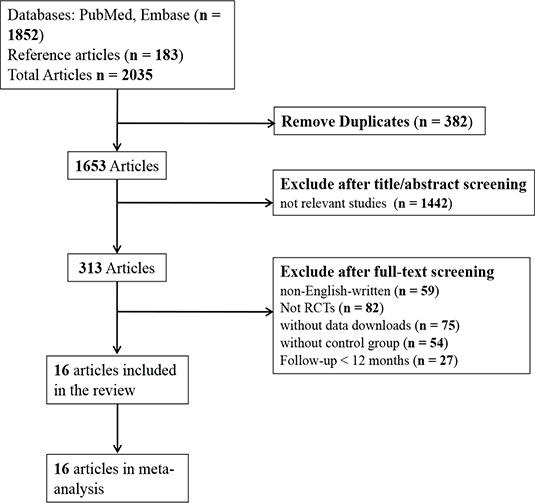
Figure 1. Flow diagram of search strategy and articles selection.
Assessment of risk of bias
The result of ‘risk of bias’ assessment for 16 studies were presented in Figure 2. Most studies were evaluated as low or moderated risk of bias, and two studies were assessed to be high risk of bias in at least one domain.
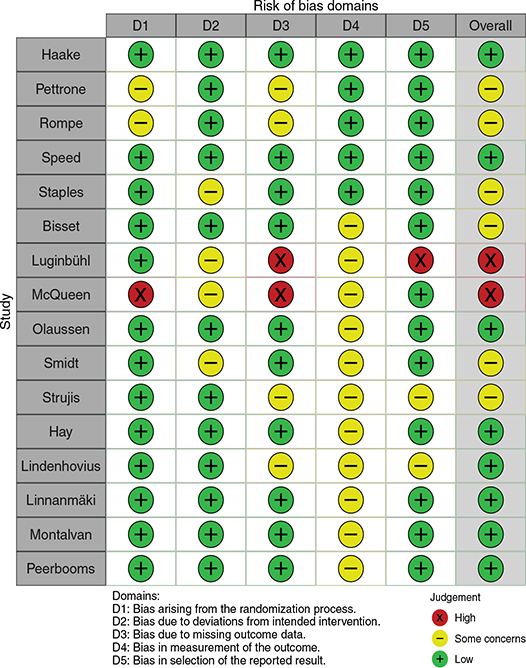
Figure 2. Risk of bias assessment of the selected 16 studies.
It is worth noting that, the assessment of function outcome in some RCTs was in the form of patients’ own ratings or questionnaires (DASH, PFFQ), leading to lower quality than other studies, so we have filled in the ‘Bias in measurement of the outcome’ domain of these studies as ‘some concerns’.
Extracorporeal shock wave therapy
A total of five studies explored the long-term effectiveness of ESWT for lateral epicondylitis [7, 12–15]. All five RCTs provided VAS as pain outcome measure, and three RCTs provided GS as function outcome measure. ESWT could significantly relive pain for lateral epicondylitis patients in the long term (Figure 3a, SMD: −0.19, 95% CI [−0.36, −0.02], p-value = 0.03); however, there was no significant difference between ESWT and control groups in long-term function outcome (Figure 3b, SMD: 0.24, 95% CI [−0.02, −0.49], p-value = 0.07).
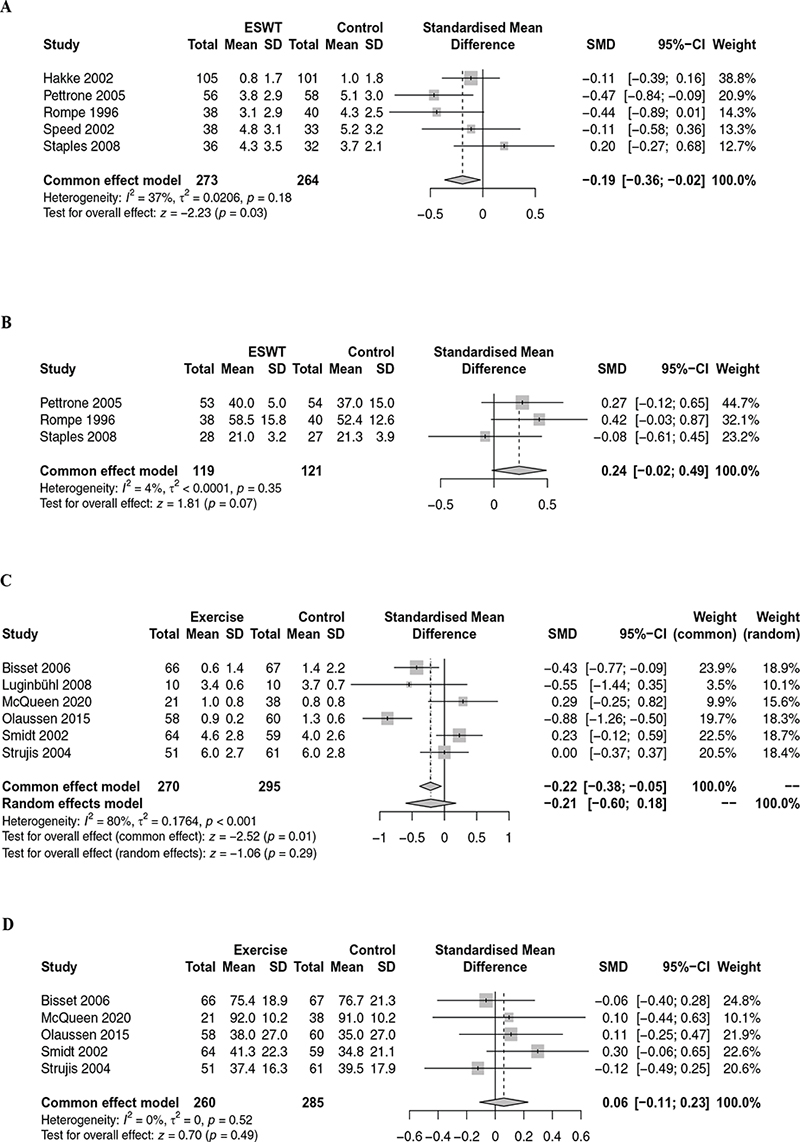
Figure 3. Forest plot for long-term effectiveness between (a) ESWT and control groups in pain outcome. (b) ESWT and control groups in function outcome. (c) exercise and control groups in pain outcome. (d) exercise and control groups in function outcome.
Exercise
A total of six studies explored the long-term effectiveness of exercise-based physiotherapy for lateral epicondylitis patients [16–21]. Three RCTs provided VAS, two RCTs provided Likert scale, and one RCT provided NPRS as pain outcome measure. We standardized these three indicators (VAS, Likert scale, NPRS) by converting them into a single indicator with values ranging from 0 to 10, considering their similar characteristics and higher values indicating greater pain intensity. Four RCTs provided PFFQ, one RCT provided DASH, and one RCT provided PFGS as function outcome measure. PFGS differs from the other two indicators in that higher values indicate better function recovery. Therefore, we had to exclude PFGS, resulting in only five RCTs included in the meta-analysis for function outcome.
Since I2 = 80% and Q-statistic p-value < 0.001, we conducted random effect model for exercise-based physiotherapy pain outcome meta-analysis. There was no significant difference between exercise and control groups in long-term pain (Figure 3c, SMD: −0.21, 95% CI [−0.60, 0.18], p-value = 0.29) or function outcome (Figure 3d, SMD: 0.06, 95% CI [−0.11, 0.23], p-value = 0.49).
Corticosteroids injection (CI)
A total of four studies explored the long-term effectiveness of corticosteroids injection for lateral epicondylitis patients [5, 16, 20, 22]. Two RCTs provided VAS and two RCT provided Likert scale as pain outcome measure. Three RCTs provided PFFQ, one RCT provided DASH as function outcome measure. We adopted the same standardized approach as mentioned here.
Both pain (I2 = 96% and Q-statistic p-value < 0.001) and function (I2 = 67% and Q-statistic p-value = 0.03) outcome meta-analysis should be performed by random effect model. No significant difference could be observed between corticosteroids injection and placebo groups in long-term pain (Figure 4a, SMD: 0.70, 95% CI [−0.43, 1.82], p-value = 0.23) or function outcome (Figure 4b, SMD: −0.02, 95% CI [−0.36, 0.31], p-value = 0.90).
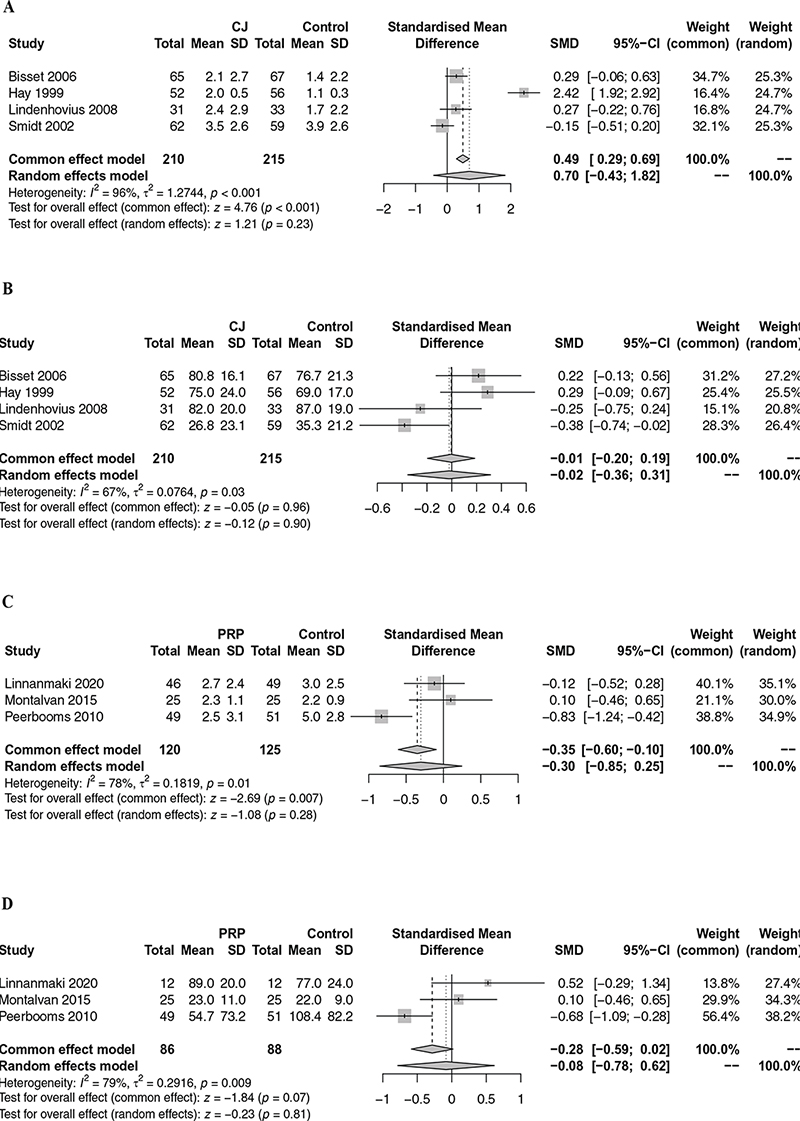
Figure 4. Forestplot for long-term effectiveness between (a) corticosteroids injection and control groups in pain outcome. (b) corticosteroids injection and control groups in function outcome. (c) PRP and control groups in pain outcome. (d) PRP and control groups in function outcome.
Platelet-rich plasma
A total of three studies explored the long-term effectiveness of platelet-rich plasma (PRP) therapy for lateral epicondylitis patients [23–25]. Two RCTs provided VAS and one RCT provided RMS as pain outcome measure. Two RCTs provided DASH and one RCT provided RMS as function outcome measure. We adopted the same standardized approach as mentioned here.
Both pain (I2 = 67% and Q-statistic p-value = 0.03) and function (I2 = 78% and Q-statistic p-value = 0.01) outcome meta-analysis should be performed by random effect model. No significant difference could be observed between PRP and placebo groups in long-term pain (Figure 4c, SMD: −0.30, 95% CI [−0.85, 0.25], p-value = 0.28) or function outcome (Figure 4d, SMD: −0.08, 95% CI [−0.78, 0.62], p-value = 0.81).
Discussion
ESWT, exercise, CI and PRP are widely used conservative management for lateral epicondylitis patients. Although a significant number of researchers have investigated the efficacy of these conservative therapies and compared their advantages, their studies have only focused on short-term outcomes (<12 months) and neglected their long-term effectiveness [26–28].
Our meta-analysis including 16 RCTs measured the long-term efficacy of four conservative therapies – ESWT, exercise, CI and PRP – on lateral epicondylitis in terms of both pain and function outcome. In comparison to the control group, ESWT demonstrated a significant reduction in pain; however, it did not exhibit any significant enhancement in function outcome (grip strength). Our findings partially align with Yao’s study. Yao demonstrated a significant positive impact of ESWT on both pain relief and function recovery. However, it is worth observing that their study have included more RCTs with a follow-up period of <12 months compared with our analysis, which only focused on RCTs with a follow-up duration ≥12 months [29].
Exercise-based physiotherapy failed to show any significant improvements in either pain relief or functional recovery. The finding contradicts the results of Kim’s study, which indicates that physiotherapy can provide long-term benefits for individuals with tennis elbow. However, Kim’s study lacks rigor in distinguishing between the different types of physiotherapy, as exercise is only one form of physiotherapy [30].
The long-term efficacy of two injectable therapies (corticosteroid injection, PRP) was not established in terms of pain and function. The administration of corticosteroid injections for treating lateral epicondylitis could be linked to the erroneous belief that it was a form of ‘tendinitis’. However, surgical pathological evidence indicates that the underlying cause of lateral epicondylitis is repetitive microtrauma other than inflammation, which may explain why corticosteroid injections are ineffective in producing long-lasting outcomes [3, 4]. Historically, PRP is not considered to be superior to other conservative treatments. More recent studies have revealed that PRP could demonstrate notable long-term effectiveness in patients with genetic variants of PDGFB, which may help to elucidate the reasons behind such outcomes [31].
Based on our meta-analysis results, it appears that the currently available conventional non-surgical treatments for lateral epicondylitis, except for ESWT, lack sufficient evidence of long-term efficacy. Considering that most tennis elbow symptoms tend to resolve within 12 months without intervention, we recommend that medical practitioners and patients prioritize ESWT, and adopt a more cautious approach toward other conservative management.
Our study also has some limitations. The meta-analysis has a limited sample size due to the scarcity of studies with follow-up periods ≥12 months. Additionally, all the original data used in our analysis were derived from studies conducted in Western countries, and there is a paucity of data available from other regions. As mentioned in the ‘risk of bias’ section, a considerable number of studies utilized patients’ self-reported ratings or questionnaires (e.g., DASH, PFFQ) to measure functional outcomes. The approach could potentially affect the quality of data in these studies and even influence the final conclusion.
Conclusion
The present conventional conservative management for lateral epicondylitis, with the exception of ESWT, lack adequate evidence supporting their long-term effectiveness. Both healthcare providers and patients should adopt a more cautious approach toward the implementation of conservative treatment for lateral epicondylitis.
References
[1] Ahmad Z, Siddiqui N, Malik SS, Abdus-Samee M, Tytherleigh-Strong G, Rushton N. Lateral epicondylitis: a review of pathology and management. Bone Joint J. 2013;95-b:1158–1164. Epub 2013/09/03. https://doi.org/10.1302/0301-620x.95b9.29285
[2] Nirschl RP, Pettrone FA. Tennis elbow. The surgical treatment of lateral epicondylitis. J Bone Joint Surg Am. 1979;61:832–839. Epub 1979/09/01.
[3] Khan KM, Cook JL, Taunton JE, Bonar F. Overuse tendinosis, not tendinitis part 1: a new paradigm for a difficult clinical problem. Phys Sportsmed. 2000;28:38–48. Epub 2000/05/01. https://doi.org/10.3810/psm.2000.05.890
[4] Kraushaar BS, Nirschl RP. Tendinosis of the elbow (tennis elbow). Clinical features and findings of histological, immunohistochemical, and electron microscopy studies. J Bone Joint Surg Am. 1999;81:259–278. Epub 1999/03/12.
[5] Hay EM, Paterson SM, Lewis M, Hosie G, Croft P. Pragmatic randomised controlled trial of local corticosteroid injection and naproxen for treatment of lateral epicondylitis of elbow in primary care. BMJ (Clinical research ed). 1999;319:964–968. Epub 1999/10/08. https://doi.org/10.1136/bmj.319.7215.964
[6] Peterson M, Butler S, Eriksson M, Svärdsudd K. A randomized controlled trial of exercise versus wait-list in chronic tennis elbow (lateral epicondylosis). Upsala J Med Sci. 2011;116:269–279. Epub 2011/11/10. https://doi.org/10.3109/03009734.2011.600476
[7] Staples MP, Forbes A, Ptasznik R, Gordon J, Buchbinder R. A randomized controlled trial of extracorporeal shock wave therapy for lateral epicondylitis (tennis elbow). J Rheumatol. 2008;35:2038–2046. Epub 2008/09/17.
[8] Keijsers R, de Vos RJ, Kuijer PPF, van den Bekerom MP, van der Woude HJ, Eygendaal D. Tennis elbow. Shoulder Elbow. 2019;11:384–392. Epub 2019/09/20. https://doi.org/10.1177/1758573218797973
[9] McGuinness LA, Higgins JPT. Risk-of-bias VISualization (robvis): an R package and Shiny web app for visualizing risk-of-bias assessments. Res Synth Methods. 2021;12:55–61. Epub 2020/04/27. https://doi.org/10.1002/jrsm.1411
[10] Sterne JAC, Savović J, Page MJ, et al. RoB 2: a revised tool for assessing risk of bias in randomised trials. BMJ (Clinical research ed). 2019;366:l4898. Epub 2019/08/30. https://doi.org/10.1136/bmj.l4898
[11] Balduzzi S, Rücker G, Schwarzer G. How to perform a meta-analysis with R: a practical tutorial. Evid Based Ment Health. 2019;22:153–160. Epub 2019/09/30. https://doi.org/10.1136/ebmental-2019-300117
[12] Pettrone FA, McCall BR. Extracorporeal shock wave therapy without local anesthesia for chronic lateral epicondylitis. J Bone Joint Surg Am. 2005;87:1297–1304. Epub 2005/06/03. https://doi.org/10.2106/jbjs.C.01356
[13] Rompe JD, Decking J, Schoellner C, Theis C. Repetitive low-energy shock wave treatment for chronic lateral epicondylitis in tennis players. Am J Sports Med. 2004;32:734–743. Epub 2004/04/20. https://doi.org/10.1177/0363546503261697
[14] Haake M, Böddeker IR, Decker T, et al. Side-effects of extracorporeal shock wave therapy (ESWT) in the treatment of tennis elbow. Arch Orthop Trauma Surg. 2002;122:222–228. Epub 2002/05/25. https://doi.org/10.1007/s00402-001-0362-7
[15] Speed CA, Nichols D, Richards C, et al. Extracorporeal shock wave therapy for lateral epicondylitis – a double blind randomised controlled trial. J Orthop Res. 2002;20:895–898. Epub 2002/10/18. https://doi.org/10.1016/s0736-0266(02)00013-x
[16] Bisset L, Beller E, Jull G, Brooks P, Darnell R, Vicenzino B. Mobilisation with movement and exercise, corticosteroid injection, or wait and see for tennis elbow: randomised trial. BMJ (Clinical research ed). 2006;333:939. Epub 2006/10/03. https://doi.org/10.1136/bmj.38961.584653.AE
[17] Luginbühl R, Brunner F, Schneeberger AG. No effect of forearm band and extensor strengthening exercises for the treatment of tennis elbow: a prospective randomised study. Chir Organi Mov. 2008;91:35–40. Epub 2008/03/06. https://doi.org/10.1007/s12306-007-0006-3
[18] McQueen KS, Powell RK, Keener T, Whalley R, Calfee RP. Role of strengthening during nonoperative treatment of lateral epicondyle tendinopathy. J Hand Ther. 2021;34:619–626. Epub 2020/12/01. https://doi.org/10.1016/j.jht.2020.10.009
[19] Olaussen M, Holmedal Ø, Mdala I, Brage S, Lindbæk M. Corticosteroid or placebo injection combined with deep transverse friction massage, Mills manipulation, stretching and eccentric exercise for acute lateral epicondylitis: a randomised, controlled trial. BMC Musculoskelet Disord. 2015;16:122. Epub 2015/05/21. https://doi.org/10.1186/s12891-015-0582-6
[20] Smidt N, van der Windt DA, Assendelft WJ, Devillé WL, Korthals-de Bos IB, Bouter LM. Corticosteroid injections, physiotherapy, or a wait-and-see policy for lateral epicondylitis: a randomised controlled trial. Lancet (London, England). 2002;359:657–662. Epub 2002/03/07. https://doi.org/10.1016/s0140-6736(02)07811-x
[21] Struijs PA, Kerkhoffs GM, Assendelft WJ, Van Dijk CN. Conservative treatment of lateral epicondylitis: brace versus physical therapy or a combination of both-a randomized clinical trial. Am J Sports Med. 2004;32:462–469. Epub 2004/02/24. https://doi.org/10.1177/0095399703258714
[22] Lindenhovius A, Henket M, Gilligan BP, Lozano-Calderon S, Jupiter JB, Ring D. Injection of dexamethasone versus placebo for lateral elbow pain: a prospective, double-blind, randomized clinical trial. J Hand Surg. 2008;33:909–919. Epub 2008/07/29. https://doi.org/10.1016/j.jhsa.2008.02.004
[23] Linnanmäki L, Kanto K, Karjalainen T, Leppänen OV, Lehtinen J. Platelet-rich plasma or autologous blood do not reduce pain or improve function in patients with lateral epicondylitis: a randomized controlled trial. Clin Orthop Relat Res. 2020;478:1892–1900. Epub 2020/08/01. https://doi.org/10.1097/corr.0000000000001185
[24] Montalvan B, Le Goux P, Klouche S, Borgel D, Hardy P, Breban M. Inefficacy of ultrasound-guided local injections of autologous conditioned plasma for recent epicondylitis: results of a double-blind placebo-controlled randomized clinical trial with one-year follow-up. Rheumatology (Oxford, England). 2016;55:279–285. Epub 2015/09/10. https://doi.org/10.1093/rheumatology/kev326
[25] Peerbooms JC, Sluimer J, Bruijn DJ, Gosens T. Positive effect of an autologous platelet concentrate in lateral epicondylitis in a double-blind randomized controlled trial: platelet-rich plasma versus corticosteroid injection with a 1-year follow-up. Am J Sports Med. 2010;38:255–262. Epub 2010/05/08. https://doi.org/10.1177/0363546509355445
[26] Karjalainen TV, Silagy M, O’Bryan E, Johnston RV, Cyril S, Buchbinder R. Autologous blood and platelet-rich plasma injection therapy for lateral elbow pain. Cochrane Database Syst Rev. 2021;9:Cd010951. Epub 2021/10/01. https://doi.org/10.1002/14651858.CD010951.pub2
[27] Landesa-Piñeiro L, Leirós-Rodríguez R. Physiotherapy treatment of lateral epicondylitis: a systematic review. J Back Musculoskelet Rehabil. 2022;35:463–477. Epub 2021/08/17. https://doi.org/10.3233/bmr-210053
[28] Yan C, Xiong Y, Chen L, et al. A comparative study of the efficacy of ultrasonics and extracorporeal shock wave in the treatment of tennis elbow: a meta-analysis of randomized controlled trials. J Orthop Surg Res. 2019;14:248. Epub 2019/08/08. https://doi.org/10.1186/s13018-019-1290-y
[29] Yao G, Chen J, Duan Y, Chen X. Efficacy of extracorporeal shock wave therapy for lateral epicondylitis: a systematic review and meta-analysis. BioMed Res Int. 2020;2020:2064781. Epub 2020/04/21. https://doi.org/10.1155/2020/2064781
[30] Kim YJ, Wood SM, Yoon AP, Howard JC, Yang LY, Chung KC. Efficacy of nonoperative treatments for lateral epicondylitis: a systematic review and meta-analysis. Plast Reconstr Surg. 2021;147: 112–125. Epub 2020/10/02. https://doi.org/10.1097/prs.0000000000007440
[31] Niemiec P, Szyluk K, Balcerzyk A, et al. Why PRP works only on certain patients with tennis elbow? Is PDGFB gene a key for PRP therapy effectiveness? A prospective cohort study. BMC Musculoskelet Disord. 2021;22:710. Epub 2021/08/20. https://doi.org/10.1186/s12891-021-04593-y