ORIGINAL RESEARCH ARTICLE
Expander prosthesis and DIEP flaps in delayed breast reconstruction: Sensibility, patient-reported outcome, and complications in a five-year randomised follow-up study
Linda Tallrotha, Nathalie Mobarghab, Patrik Velandera,c, Magnus Beckera,c, Stina Klassona,c
aDepartment of Clinical Sciences in Malmö, Lund University, Lund, Sweden; bDepartment of Reconstructive Plastic Surgery, Karolinska University Hospital, Stockholm, Sweden; cDepartment of Plastic and Reconstructive Surgery, Skåne University Hospital, Malmö, Sweden
ABSTRACT
Breast reconstruction is a given choice for many women following mastectomy. There are a multitude of methods available today, and thus, comparative studies are essential to match patients with suitable methods. The aim of this study was to compare 5-year outcomes following delayed breast reconstruction with expander prosthesis (EP) and with deep inferior epigastric perforator (DIEP) flaps.
Seventy-three patients, previously randomised to either a permanent EP or a DIEP flap breast reconstruction, were invited for a 5-year follow-up. Assessments included symmetry measurements, breast sensibility with Semmes-Weinstein monofilaments and patient-reported outcome (PRO) with the BREAST-Q. Complications within the first 5 postoperative years were recorded. Additionally, BREAST-Q questionnaires were collected from non-randomised patients with an EP breast reconstruction.
Between 2019 and 2022, 65 patients completed the follow-ups. Symmetry and PRO were significantly higher in the DIEP flap group. However, EP-reconstructed breasts were significantly more sensate and demonstrated areas with protective sensibility, unlike the DIEP flap breasts. The overall complication rates were comparable between the two groups (p = 0.27). Regression analysis identified body mass index as a risk factor for reoperation in general anaesthesia and for wound infection. No significant differences were found in a comparison of the randomised and the non-randomised EP groups’ BREAST-Q results.
This randomised 5-year follow-up study found PRO to be favourable following a DIEP flap reconstruction and sensibility to be better in EP reconstructions. The complication rates were comparable; however, longer follow-ups are warranted to cover the complete lifespans of the two breast reconstruction methods.
KEYWORDS: 5-year outcome; expander prosthesis; DIEP flap; BREAST-Q; breast sensibility
Citation: Journal of Plastic Surgery and Hand Surgery 2023; 58: 101–109. DOI: https://doi.org/10.2340/jphs.v58.13477.
Copyright: © 2023 The Author(s). Published by MJS Publishing on behalf of Acta Chirurgica Scandinavica. This is an Open Access article distributed under the terms of the Creative Commons Attribution-NonCommercial 4.0 International License (https://creativecommons.org/licenses/by-nc/4.0/), allowing third parties to copy and redistribute the material in any medium or format and to remix, transform, and build upon the material for non-commercial purposes, provided proper attribution to the original work.
Received: 11 June 2023; Accepted: 17 August 2023; Published: 22 September 2023.
CONTACT Linda Tallroth Linda.tallroth@med.lu.se Department of Clinical Sciences, Jan Waldenströms gata 18, 205 02 Malmö, Sweden.
Competing interests and funding: None.
Introduction
Breast cancer is the leading cause of cancer in women. In Sweden, approximately 26% of women diagnosed with breast cancer between the age of 40 and 74 undergo a mastectomy, and according to a nation-wide survey study, 30% proceed with a breast reconstruction [1,2]. In delayed breast reconstruction, the most common methods are either implant-based breast reconstructions (IBBRs) with tissue expanders or autologous breast reconstruction (ABR). Currently, the deep inferior epigastric perforator (DIEP) flap is the first choice for ABR.
Long survival is anticipated for most patients with breast cancer today, implying a need for long-lasting breast reconstruction with qualities that mimic the natural breast. When comparing IBBR with ABR, quality of life (QoL) data have shown better results following ABR [3–5]. One of the measures used for patient-reported outcome (PRO) evaluations is the validated BREAST-Q questionnaire [6]. The BREAST-Q Reconstruction Module entails many aspects of breast reconstruction that may influence satisfaction and QoL. A sensate breast is one important aspect which may facilitate the feeling of a natural breast. Unsurprisingly, better sensibility has been associated with higher QoL [7,8]. However, there are as yet very few studies comparing objective sensibility between IBBR and ABR.
In the short term, IBBR presents with fewer complications compared to ABR. Hence, in longer follow-up studies, the discrepancy between the methods tends to decrease [9–11]. When compared to IBBR, DIEP flaps have been associated with more general complications but with fewer reconstructive failures, proposing the DIEP flap to be more durable [12]. There are, however, variations in how complications are defined. The Clavien-Dindo Classification (CDC) provides a standardised definition of surgical complications and has previously been applied in breast reconstruction research [13–16].
The main purpose of this study was to investigate 5-year outcomes in patients randomised to breast reconstruction with either expander prosthesis (EP) or DIEP flap. We aimed to compare symmetry, breast sensibility, PRO and complications. A secondary aim was to compare PRO between patients randomised to an EP breast reconstruction, opting for a DIEP flap, with patients who had EP as their choice of method.
Material and methods
Patients
Between 2012 and 2018, 135 patients who previously had undergone unilateral mastectomy but no radiation therapy were invited to participate in this study on delayed breast reconstruction. The participating women were randomised to breast reconstruction with the standard method at this time, a permanent EP, or to an alternative method, the DIEP flap. Each patient was allocated to one of the two methods by pulling a slip of paper from an envelope. All EPs used in this study were permanent. Seventy-three patients underwent breast reconstruction, and the short-term outcomes have been described previously [17]. Of the 135 eligible patients, 27 declined participation as they desired an EP.
The follow-up
All patients were invited to a follow-up at a plastic surgery outpatient clinic. Assessments were made bilaterally by the first author (LT) according to a study protocol. Jugulum-nipple distance and ptosis were recorded. Breast volumes were measured with plastic breast cups (Emballageform AB, Limhamn, Sweden) and breast softness with an applanation tonometer [18]. An applanation tonometer is a plexiglass disc that may be used to estimate the intramammary pressure. This method has been described in previous studies [19,20]. A Semmens-Weinstein Monofilament five-piece hand-kit (Aesthesio®, DanMic Global LLC, USA) was used to assess the sensibility of the breasts. Nine areas of the breast were measured, as illustrated in Figure 1. The measurements were conducted by placing the patients in the supine position with eyes closed. Starting with the thinnest monofilament, nine areas of each breast were tested by pressing a monofilament perpendicularly onto the skin until it bent into a C shape. The procedure was repeated three times per monofilament and per area.
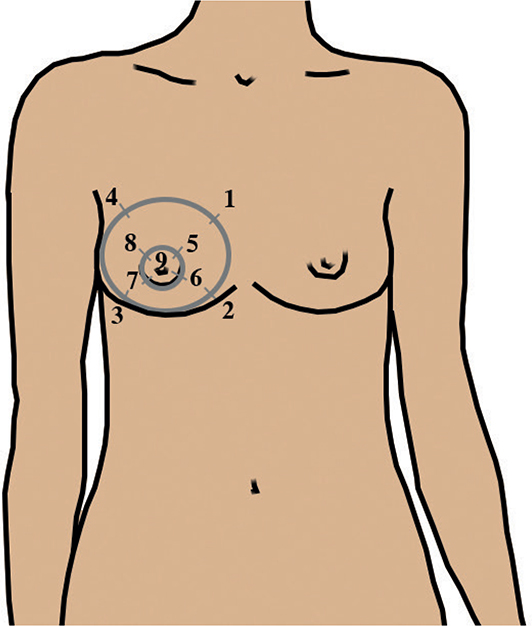
Figure 1. Breast sensibility measurement areas.
At the end of the follow-up visit, patients were asked to complete the BREAST-Q postoperative Reconstruction Module Version 1.0. In addition, BREAST-Q questionnaires were collected from patients who had declined participation in the randomised study in favour of an EP reconstruction. Furthermore, this group is referred to as the non-randomised EP group.
A medical chart review was performed to collect data regarding 5-year complications as an intention-to-treat analysis. Grading was made according to the CDC. Each patient’s complications were classified into one grade, and if there was more than one complication, the most severe grade was chosen. The CDC was developed to define postoperative complications and includes grades I to V [13,21]. The CDC grades are clarified and displayed in Table 1.
Statistical analysis
Normal distribution was checked with the Shapiro-Wilks test and with histograms. Comparisons were conducted with the Student’s t-test for parametric, continuous data and the Mann–Whitney U test for nonparametric, continuous data. The Chi2-test was used for categorical data. Odds ratios (ORs) with 95% confidence intervals (CIs) were calculated for overall complications, reoperation in general anaesthesia and superficial wound infection with unadjusted logistic regression. No adjusted logistic regression calculations were made as there were too few events for the independent variables. Linear regression models were made to predict Satisfaction with breast (SATBR) scores, including adjustment for the reconstruction method. Statistical analyses were conducted with the Statistical Package for Social Sciences version 28 (IBM Corp., Armonk, NY: IBM Corp. Released 2022), and an alpha value of ≤0.05 was set as statistically significant.
Ethics
This study was approved by the Regional Ethical Review Board in Lund (ref. no. 2012/187) and the Swedish Ethical Review Authority (ref. nos. 2021-00555 and 2020-00809) and follows the principles of the Declaration of Helsinki.
Results
Patients
Follow-up visits were performed between October 2019 and November 2022. Five patients declined participation. One patient had moved to another part of the country, one had difficulties attending due to comorbidities and one had no reconstruction anymore as her EP had been removed. In addition, one patient did not respond to contact made by phone or letter. In total, 65 patients completed the follow-ups. Of these, one patient had undergone a contralateral breast reconstruction and was therefore excluded. Twenty-five were reconstructed with an EP, and in this group, the mean age was 54.8 (SD, standard deviation, ±8.7) years. In the DIEP flap group, comprising 39 patients, the mean age was 52.0 (SD ± 10) years. Patient characteristics were comparable between the groups; however, completed contralateral symmetrising surgery differed significantly (Table 2). Of the 27 patients in the non-randomised EP group, three had not proceeded with a breast reconstruction, one underwent surgery at a private clinic, two had removed their EPs before the follow-up and six did not return the questionnaires. In total, 15 patients completed the BREAST-Q questionnaire, and the median age in this group was 61 (range: 43–79) years. Figure 2 shows the flow chart of this study.
| EP (n = 25) | DIEP flap (n = 39) | p | |
| Age, years | 54.8 ± 8.7 | 52.0 ± 10 | 0.27a |
| Mean ± SD | |||
| BMI, kg/m2 | 25.2 ± 2.6 | 26.2 ± 3 | 0.18a |
| Mean ± SD | |||
| Former smoker, n (%) | 10 (40) | 11 (28.2) | 0.33b |
| Chemotherapy, n (%) | 11 (44) | 24 (61.5) | 0.17b |
| Endocrine therapy, n (%) | 17 (68) | 27 (69.2) | 0.91b |
| HER2-targeted therapy, n (%) | 4 (16.0) | 6 (15.4) | 0.95b |
| Contralateral surgery, n (%) | 0.02b | ||
| Reduction | 8 (32) | 11 (28.2) | |
| Mastopexy | 7 (28) | 2 (5.1) | |
| Augmentation | 1 (4) | 0 | |
| Nipple reconstruction, n (%) | 20 (80) | 30 (76.9) | 0.77b |
| Tattoo, n (%) | 22 (88) | 29 (74.4) | 0.19b |
| EP: Expander prosthesis; DIEP: Deep inferior epigastric perforator; BMI: Body mass index. | |||
| aStudent’s t-test. | |||
| bChi2-test. | |||
| Significant p-value is in bold. | |||
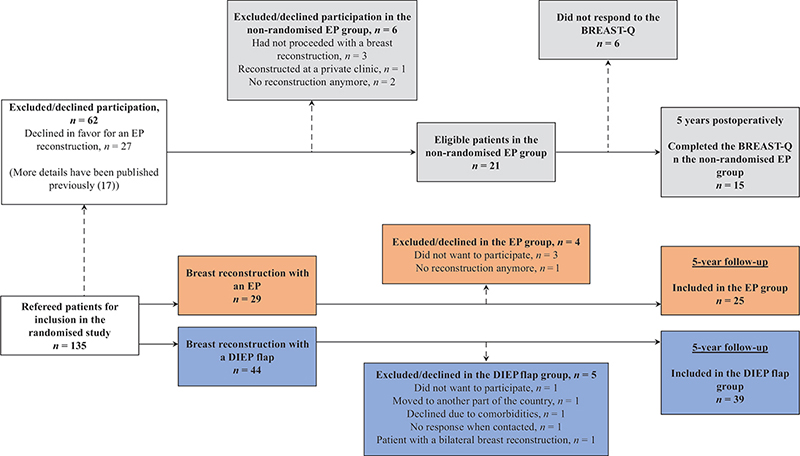
Figure 2. A flow chart of the study with the non-randomised EP group (grey), the randomised EP group (orange) and the DIEP flap group (blue).
Symmetry and sensibility
The results from the measurements of breast volume, jugulum-nipple distance, ptosis, tonometric area and breast sensibility are presented in Table 3. A fractional value represents the ratio of the measured variable between the reconstructed and the contralateral breast. A fractional value of 0.5 indicates perfect symmetry. The DIEP flap group had significantly higher symmetry between the breasts regarding jugulum-nipple distance, ptosis and tonometric area. Breast sensibility was significantly better in the EP group for all areas, except 7 and 9, compared with the DIEP flap group, with median overall monofilament values of 4.56 and 6.65, respectively. In areas 1–3 in the EP group, there was protective sensibility. The DIEP flap group had no areas with protective sensibility. The follow-ups were performed at a mean of 5.6 years (SD ± 0.8) postoperatively.
| EP (n = 25) | DIEP flap (n = 39) | p | |
| Breast volume, ml Median (IQR) |
|||
| Reconstructed breast | 475 (275, 800) | 625 (300, 1050) | 0.05 |
| Fractional valuea | 0.50 (0.38, 0.58) | 0.50 (0.36, 0.61) | 0.24 |
| JM distance, cm Median (IQR) |
|||
| Reconstructed breast | 21 (19, 24) | 24 (20, 28) | < 0.01 |
| Fractional valuea | 0.48 (0.45, 0.50) | 0.49 (0.47, 0.43) | < 0.01 |
| Ptosis, cm Median (IQR) |
|||
| Reconstructed breast | 0 (0, 0.5) | 1.5 (0.5, 3) | < 0.01 |
| Fractional valuea | 0 (0, 0.19) | 0.35 (0.27, 0.43) | < 0.01 |
| Tonometric area, cm2 Mean ± SD |
|||
| Reconstructed breast | 27.8 ± 8.7 | 59.3 ± 14.0 | < 0.01 |
| Fractional valuea | 0.29 ± 0.08 | 0.48 ± 0.07 | < 0.01 |
| Monofilament index valueb Median (IQR) | |||
| 1 | 4.31 (3.61, 4.31) | 6.65 (4.31, 6.65) | < 0.01 |
| 2 | 4.31 (3.61, 4.56) | 6.65 (4.56, 6.65) | < 0.01 |
| 3 | 4.31 (3.22, 4,56) | 6.65 (4.56, 6.65) | < 0.01 |
| 4 | 4.56 (3.61, 4.56) | 6.65 (4.31, 6.65) | < 0.01 |
| 5 | 6.65 (4.44, 6.65) | 6.65 (6.65, 6.65) | 0.03 |
| 6 | 4.56 (4.31, 6.65) | 6.65 (6.65, 6.65) | < 0.01 |
| 7 | 6.65 (4.31, 6.65) | 6.65 (6.65, 6.65) | 0.08 |
| 8 | 6.65 (4.31, 6.65) | 6.65 (6.65, 6.65) | < 0.01 |
| 9 | 6.65 (6.65, 6.65) | 6.65 (6.65, 6.65) | 0.51 |
| EP: Expander prosthesis; DIEP: Deep inferior epigastric perforator; JM: Jugulum-nipple; IQR: Interquartile range. | |||
| aFractional value: value of the reconstructed breast added with value of the contralateral breast, divided by value of the reconstructed breast. | |||
| bThe monofilaments range from an index value of 2.83 (indicating normal touch), 3.61 (diminished light touch), 4.31 (diminished protective sensation), 4.56 (loss of protective sensation), to 6.65 (deep pressure sensation). The unit of the index values is the logarithm of the force in millimetres needed to bend the monofilament. | |||
| All p-values apart from tonometric area were calculated with the Mann–Whitney U test. Significant p-values are in bold. | |||
BREAST-Q scores
In Table 4, the median BREAST-Q scores are presented per subscale for the reconstruction groups. The subscales SATBR and Physical well-being of chest had significantly higher scores in the DIEP flap group compared with the EP group. In Appendix S1; Figures S1–S5 show graphs with changes in median scores between the preoperative, the 2-year and the 5-year postoperative BREAST-Q results for the study group.
| BREAST-Q subscale | EP (n = 25) | DIEP flap (n = 39) | pa |
| Satisfaction with breast | 58 (49, 69) | 70 (61, 80) | 0.02 |
| Satisfaction with outcome | 75 (67, 100) | 100 (75, 100) | 0.23 |
| Psychosocial well-being | 78 (57, 100) | 86 (70, 100) | 0.20 |
| Sexual well-being | 65 (33, 83) | 67 (50, 75) | 0.49 |
| Physical well-being of chest | 71 (60, 91) | 89 (77, 100) | 0.05 |
| Physical well-being of abdomen | n/a | 89 (70, 100) | |
| Satisfaction with nipples | 50 (45, 70) | 61 (41, 89) | 0.55 |
| Satisfaction with information | 64 (55, 88) | 71 (58, 91) | 0.53 |
| Satisfaction with surgeon | 100 (87, 100) | 100 (90, 100) | 0.60 |
| Satisfaction with medical staff | 100 (100, 100) | 100 (100, 100) | 0.51 |
| Satisfaction with office staff | 100 (100, 100) | 100 (100, 100) | 0.46 |
| Values presented in median (IQR). | |||
| EP: Expander prosthesis; DIEP: Deep inferior epigastric perforator; IQR: Interquartile range; n/a: Not applicable. | |||
| aMann–Whitney U test. | |||
| Significant p-values are in bold. | |||
Comparison of the median BREAST-Q scores between the randomised EP group with the patients in the non-randomised EP group showed no significant differences in any subscale (Appendix S1; Table S1). The median time to complete BREAST-Q in the non-randomised EP group was 5.0 (range: 3.1–7.3) years. In Figure 3, the three groups’ median BREAST-Q scores are visualised.
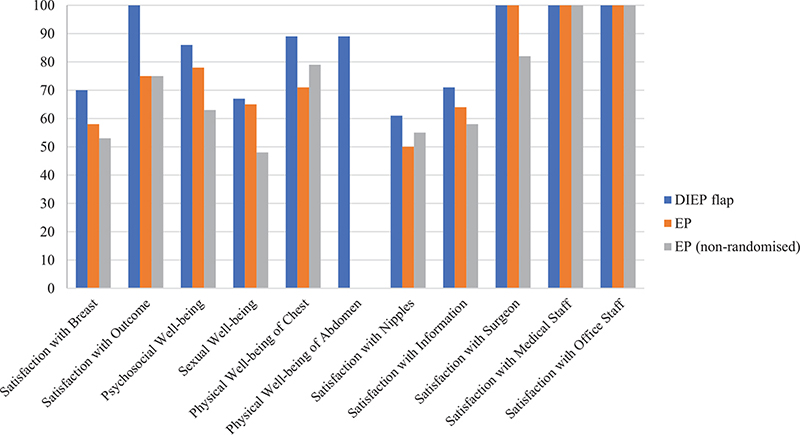
Figure 3. The median BREAST-Q scores in all groups 5 years following breast reconstruction.
EP: Expander prosthesis; DIEP: Deep inferior epigastric perforator.
Complications
Complications were defined as overall complications, which includes any adverse event but not additional corrections or complications following contralateral symmetrising surgery; overall late complications, which includes any adverse event following the first 30 postoperative days; superficial wound infection, which is defined as a local infection requiring administration of oral antibiotics; additional corrections, which were elective procedures and included scar revisions, excision of dog ears, flap symmetry surgery or fat transplantation following rib cartilage removal. Tables 5a and 5b illustrate both the overall late complications and additional corrections separated by the reconstruction method. In the EP group, 17 patients (17/29) had an overall complication within the 5 first postoperative years, whereof 16 patients (16/29) had an overall late complication. The corresponding numbers in the DIEP flap group were 20 (20/44) and nine (9/44) patients. A total of nine patients (9/29) in the EP group underwent surgery due to problems with the EP’s filling system. Eleven (11/29) of the original EPs had been replaced or removed during the first 5 years, whereof two were due to capsular contracture. There were no flap losses. Two patients in the EP group and 13 in the DIEP flap group had one or more additional corrections. The overall 5-year complications were comparable between the groups (p = 0.27). Figure 4 shows the distribution according to the CDC. CDC did not differ significantly between the groups (p = 0.19).
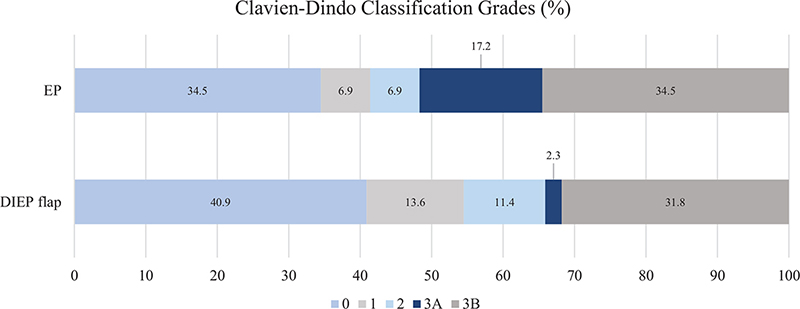
Figure 4. Distribution according to the Clavien-Dindo Classification per reconstruction method presented in percentages.
EP: Expander prosthesis; DIEP: Deep inferior epigastric perforator.
In a linear regression analysis, compared with EP, undergoing a DIEP flap reconstruction increased the median SATBR score by 10.13 (95% CI: 1.99–18.27, p = 0.02) points. Overall complications, reoperation in general anaesthesia and CDC, were negative predictors for SATBR. Adjusted for the reconstruction method, overall complications, reoperation in general anaesthesia and CDC, remained negative predictors for SATBR, and in addition, having a tattoo was found to be a positive predictor (Table 6).
| Independant variable | Unadjusted | Adjusteda | ||
| Beta (95% CI) | p | Beta (95% CI) | p | |
| Reconstruction methodb | 10.13 (1.99 to 18.27) | 0.02 | ||
| Age | −0.11 (−0.55 to 0.33) | 0.62 | ||
| BMI | −0.20 (−1.66 to 1.26) | 0.78 | ||
| Overall complications | −11.37 (−18.92 to −3.82) | < 0.01 | −10.77 (−18.11 to −3.43) | < 0.01 |
| Reoperation in general anaesthesia | −10.14 (−18.56 to 1.72) | 0.02 | −10.22 (−18.33 to 2.12) | 0.01 |
| Superficial wound infectionc | −3.55 (−14.81 to 7.70) | 0.53 | ||
| Clavien−Dindo Classification grade | −0.38 (−0.63 to −0.14) | < 0.01 | −0.35 (−0.60 to −0.11) | 0.04 |
| Monofilament value (median) | 4.74 (1.42 to 8.06) | < 0.01 | 3.50 (−0.39 to 7.49) | 0.08 |
| Tattood | 9.88 (−0.31 to 20.08) | 0.06 | 13.45 (3.70 to 23.20) | < 0.01 |
| Nipple reconstructiond | 8.70 (−0.98 to 18.26) | 0.08 | 9.19 (−0.05 to 18.42) | 0.05 |
| CI: confidence interval; BMI: body mass index. | ||||
| aAdjusted for reconstruction method, bReference groups are expander prosthesis, cno wound infection and dno tattoo/nipple reconstruction. | ||||
| Significant p-values are in bold. | ||||
Univariate logistic regression analyses are presented in Table 7. Age was a risk factor for an overall complication with an OR of 1.06 (95% CI: 1.00–1.11, p = 0.04). The odds for reoperation in general anaesthesia increased by 1.23 (95% CI: 1.02–1.49, p = 0.03) for every increase in body mass index (BMI) unit. BMI was also identified as a risk factor for developing a superficial wound infection with an OR of 1.30 (95% CI: 1.03–1.65, p = 0.03).
| Independant Variable | Unadjusted odds ratio (95% CI) | p |
| Overall complications | ||
| Age | 1.06 (1.00 – 1.11) | 0.04 |
| BMI | 1.13 (0.96 – 1.34) | 0.16 |
| Reconstruction methoda | 0.59 (0.23 – 1.52) | 0.27 |
| Former smoker (yes/no) | 2.46 (0.93 – 6.52) | 0.07 |
| Chemotherapy | 0.76 (0.30 – 1.90) | 0.56 |
| Endocrine therapy | 0.80 (0.29 – 2.18) | 0.67 |
| Immune therapy | 0.50 (0.13 – 1.89) | 0.31 |
| Reoperation in general anaesthesia | ||
| Age | 1.03 (0.98 – 1.09) | 0.22 |
| BMI | 1.23 (1.02 – 1.49) | 0.03 |
| Reconstruction methoda | 0.89 (0.33 – 2.40) | 0.81 |
| Former smoker (yes/no) | 0.73 (0.26 – 2.02) | 0.54 |
| Chemotherapy | 0.69 (0.26 – 1.84) | 0.46 |
| Endocrine therapy | 0.45 (0.16 – 1.29) | 0.14 |
| Immune therapy | 0.73 (0.18 – 3.05) | 0.67 |
| Superficial wound infection | ||
| Age | 1.04 (0.97 – 1.11) | 0.31 |
| BMI | 1.30 (1.03 – 1.65) | 0.03 |
| Reconstruction methoda | 4.50 (0.92 – 22.07) | 0.06 |
| Former smoker (yes/no) | 3.20 (0.93 – 11.03) | 0.07 |
| Chemotherapy | 1.60 (0.47 – 5.46) | 0.45 |
| Endocrine therapy | 1.55 (0.38 – 6.27) | 0.54 |
| Immune therapy | 1.03 (0.20 – 5.45) | 0.97 |
| BMI: Body mass index; CI: Confidence interval. | ||
| aExpander prosthesis is the reference group. | ||
| Significant p-values are in bold. | ||
Discussion
This 5-year prospective follow-up study compares unilateral breast reconstruction with EP and DIEP flaps. Our data demonstrate that patients with DIEP flaps had overall more symmetrical breasts, higher satisfaction rates with their reconstructed breasts as well as fewer overall late complications. Contrarily, patients reconstructed with EP demonstrated better breast sensibility.
To date, there are few studies that have objectively compared breast sensibility between IBBR and DIEP flap breast reconstructions. In a recently published study, DIEP flap reconstructions were reported to have significantly higher sensibility in the lateral areas of the breast when compared with implants at a 1-year follow-up [22]. In contrast to our study, the DIEP flap group in their study had a better overall sensibility (mean index value 4.19), and the implant groups, less overall sensibility (mean index values 4.99 and 4.94). In the same study, all breast reconstructions were preceded by skin-sparing mastectomies, which probably explains the disparity between our DIEP flap groups [22]. In another study, breasts reconstructed with implants had protective sensibility in the outer quadrants of the breast and diminished protective sensibility in the lower lateral [23]. These findings were more similar to our results, although, in our EP group, the lower lateral outer quadrant had somewhat better sensibility than the upper lateral. These results suggest partial spontaneous reinnervation of nerves that supply the breast, the anterior and lateral cutaneous branches of the second to sixth intercostal nerves, which are transected during a conventional mastectomy [24]. The discrepancy in sensibility between the outer lateral quadrants may be explained by different dissection techniques when creating the submuscular pocket. Different from the study by Hwang et al., the presence of deep pressure sensation only has been reported previously following non-innervated DIEP flap reconstructions [25,26]. Recently, the use of the new BREAST-Q Sensation Module demonstrated no difference between IBBR and non-innervated ABR regarding subjective breast sensibility. Thus, the autologous group scored higher on QoL impact and breast symptoms [27]. In terms of nerve coaptation in DIEP flaps, promising results have been reported [26]. To further investigate the importance of breast sensibility, the BREAST-Q Sensation Module could be used to compare DIEP flaps with and without nerve coaptation.
In agreement with a number of previous studies comparing IBBR and ABR, the DIEP flap group provided higher satisfaction than the EP group [3–5,28]. In an 8-year follow-up study, ABR had higher SATBR at all measured time points compared with implants. Another interesting finding was that IBBR tended to be stable regarding SATBR during the follow-up period [3]. In the current study, the median SATBR scores decreased by three points and two points for the EP and the DIEP flap groups, respectively, between the 2-year and the 5-year follow-ups. Voineskos et al. published a recommendation on how to interpret changes in subscale scores. The authors set the minimal important difference to four points, and, thus, the changes in SATBR in this study were considered clinically non-significant [29]. The stability in satisfaction is important to share with patients during the decision-making process. One of the major drawbacks with IBBR is that complications, as with capsular contracture, develop over time. Potentially, as these complications are common, corrective procedures are anticipated and do not impact the general satisfaction [3,5].
Previous reports evaluating breast cancer patients have demonstrated lower satisfaction and QoL in patients who were less involved in the decision-making process regarding surgical options [30,31]. Therefore, we hypothesised that the non-randomised EP group would be more satisfied than the randomised EP group. We did not, however, find any discrepancy between the two groups. One explanation could be that the randomised EP group had more clinical visits as a part of the ongoing study. At these visits, the patients were able to express concerns regarding their breast reconstruction and be examined by a plastic surgeon. Another potential explanation could be that a long time had passed since the decision-making, and with time, this aspect had become less important. However, a more optimal evaluation would have had larger and more comparable groups. The higher median age in the non-randomised EP group may be a result of loss to follow-up. Thus, the potential selection bias should be considered when interpreting these results.
In contrast to many previous reports with long-term follow-ups, we found that the EP group had accumulated a higher percentage of overall complications in relation to the DIEP flap group [9,10,12]. One study reported overall complication rates of 26.6% in an implant group and 47.7% in a DIEP flap group 2 years after breast reconstruction [9]. In comparison to this study, the authors reported lower complication rates in their IBBR group. A 2-year follow-up period is probably insufficient for the detection of late implant-related complications. Thus, in a 5-year follow-up study, Naoum et al. reported comparable cumulative incidence rates for complications of ABR and for direct-to-implant breast reconstructions, which results are similar to ours [32]. In summary, our results suggest that DIEP flaps have a high complication burden in the early postoperative period, but that EP reconstructions take over with time.
Complications have been defined and classified differently in previous studies [9,33,34]. Subsequently, comparisons between studies are difficult to conduct. Grading according to the CDC may mitigate this problem. DIEP flap breast reconstructions, separated into different BMI groups, were graded according to CDC in a previous study [14]. Comparison of our DIEP flap group with the corresponding DIEP flap group in their study displayed more grade I complications (23.7%) but considerably fewer grade III complications (7.9%) [14]. We believe that this can be explained by the high number of early complications in our cohort, which has been discussed previously [17]. In contrast, the findings in a 30-day follow-up study better reflected our results. Despite the short follow-up, the DIEP flap group had 32% grade IIIB complications, indicating that most complications requiring general anaesthesia occur in the early postoperative period [15].
The high number of additional corrections reported in this study is a finding worth reflecting on and has been confirmed previously [11]. The longevity of DIEP flaps is indisputably very favourable, but, if one out of three patients undergo one or more additional corrections during a 5-year follow-up, the impact on resources in a public health care system must be considered. Additionally, regarding the EP group, the rotation of the injection dome is a known previously reported issue, could be a result of its positioning during surgery or could be device-related [35,36]. Further investigation on the injection dome positioning could potentially reduce the incidence of this type of complication. Moreover, it is questionable whether the removal of the filling tube should be considered a complication. At our institution, the filling tube remains attached to the EP even after the expansion is completed. However, this is not advised by Mentor®, the manufacturer of the EP [37].
BMI and age are well-known risk factors for complications following breast reconstruction [9,12,15,38]. The current recommendation for breast reconstructive surgery accepts patients with BMI up to 30 kg/m2. Fewer reoperations and less use of antibiotics are probable benefits of a lower BMI limit. The specific advantages with a normal BMI should be emphasised and carefully explained in preoperative patient consultations.
This study contributes with its randomised design, which was made possible by the national guidelines in Sweden of 2011, recommending DIEP flap breast reconstruction only for irradiated patients [39]. Another strength of this study is that all measurements were performed by the same investigator. There are also limitations to this study. The data are from one institution only, and the sample size is small. A selection bias may have been introduced in the recruitment of patients to this study as participation was the only chance for women to be reconstructed with a DIEP flap before 2018 [17]. This may have affected the generalisability of the study population. Furthermore, we acknowledge that the BREAST-Q reconstruction module has an updated version, which we chose not to use. Version 1.0 was used for the early evaluation of this study group, starting in 2012, and, thus, we decided to stay with the same version. Finally, there is still a need for long-term follow-up studies comparing complications between IBBR and ABR.
Conclusion
This 5-year follow-up study has shown that unilateral DIEP flap breast reconstruction provides a more symmetrical result, and the patients are more satisfied with their breasts and have a similar complication rate when compared with EP breast reconstruction. Conversely, EP reconstructions were more sensate. In comparison of randomised and non-randomised patients who had undergone reconstruction with an EP, no differences in PROs were found. In conclusion, patients deciding for a breast reconstruction should be informed of advantages and disadvantages of available methods and, in addition, the potential risk of having a high BMI.
Acknowledgement
This study received funding from the Skåne County Council’s Research and Development Foundation. The funding organisation was not involved in any part of the study.
ORCIDs
Linda Tallroth  https://orcid.org/0000-0002-3469-9361
References
[1] National Board of Health and Welfare, Stockholm, Sweden. National performance assessment of breast cancer screening with mammography. 2022.
[2] Unukovych D, Gümüscü R, Wärnberg F, et al. Breast reconstruction patterns from a Swedish nation-wide survey. Eur J Surg Oncol. 2020;46(10 Pt A):1867–1873. https://doi.org/10.1016/j.ejso.2020.04.030
[3] Nelson JA, Allen RJ, Jr, Polanco T, et al. Long-term patient-reported outcomes following postmastectomy breast reconstruction: an 8-year examination of 3268 patients. Ann Surg. 2019;270(3):473–483. https://doi.org/10.1097/SLA.0000000000003467
[4] Ticha P, Mestak O, Wu M, Bujda M, Sukop A. Patient-reported outcomes of three different types of breast reconstruction with correlation to the clinical data 5 years postoperatively. Aesthetic Plast Surg. 2020;44(6):2021–2029. https://doi.org/10.1007/s00266-020-01926-5
[5] Santosa KB, Qi J, Kim HM, Hamill JB, Wilkins EG, Pusic AL. Long-term patient-reported outcomes in postmastectomy breast reconstruction. JAMA Surg. 2018;153(10):891–899. https://doi.org/10.1001/jamasurg.2018.1677
[6] Pusic AL, Klassen AF, Scott AM, Klok JA, Cordeiro PG, Cano SJ. Development of a new patient-reported outcome measure for breast surgery: the BREAST-Q. Plast Reconstr Surg. 2009;124(2):345–353. https://doi.org/10.1097/PRS.0b013e3181aee807
[7] Cornelissen AJM, Beugels J, van Kuijk SMJ, et al. Sensation of the autologous reconstructed breast improves quality of life: a pilot study. Breast Cancer Res Treat. 2018;167(3):687–695. https://doi.org/10.1007/s10549-017-4547-3
[8] Bijkerk E, Beugels J, van Kuijk SMJ, Lataster A, van der Hulst R, Tuinder SMH. Clinical relevance of sensory nerve coaptation in DIEP Flap breast reconstruction evaluated using the BREAST-Q. Plast Reconstr Surg. 2022;150(5):959e–969e. https://doi.org/10.1097/PRS.0000000000009617
[9] Bennett KG, Qi J, Kim HM, Hamill JB, Pusic AL, Wilkins EG. Comparison of 2-year complication rates among common techniques for postmastectomy breast reconstruction. JAMA Surg. 2018;153(10):901–908. https://doi.org/10.1001/jamasurg.2018.1687
[10] Thorarinsson A, Frojd V, Kolby L, et al. A retrospective review of the incidence of various complications in different delayed breast reconstruction methods. J Plast Surg Hand Surg. 2016;50(1):25–34. https://doi.org/10.3109/2000656X.2015.1066683
[11] Lagares-Borrego A, Gacto-Sanchez P, Infante-Cossio P, Barrera-Pulido F, Sicilia-Castro D, Gomez-Cia T. A comparison of long-term cost and clinical outcomes between the two-stage sequence expander/prosthesis and autologous deep inferior epigastric flap methods for breast reconstruction in a public hospital. J Plast Reconstr Aesthet Surg. 2016;69(2):196–205.
[12] Wilkins EG, Hamill JB, Kim HM, et al. Complications in postmastectomy breast reconstruction: one-year outcomes of the Mastectomy Reconstruction Outcomes Consortium (MROC) study. Ann Surg. 2018;267(1):164–170. https://doi.org/10.1097/SLA.0000000000002033
[13] Dindo D, Demartines N, Clavien PA. Classification of surgical complications: a new proposal with evaluation in a cohort of 6336 patients and results of a survey. Ann Surg. 2004;240(2):205–213. https://doi.org/10.1097/01.sla.0000133083.54934.ae
[14] Mani M, Wang T, Harris P, James S. Breast reconstruction with the deep inferior epigastric perforator flap is a reliable alternative in slim patients. Microsurgery. 2016;36(7):552–558. https://doi.org/10.1002/micr.22524
[15] Brorson F, Thorarinsson A, Kolby L, Elander A, Hansson E. Early complications in delayed breast reconstruction: a prospective, randomized study comparing different reconstructive methods in radiated and non-radiated patients. Eur J Surg Oncol. 2020;46(12):2208–2217. https://doi.org/10.1016/j.ejso.2020.07.010
[16] Morandi EM, Winkelmann S, Pülzl P, et al. Long-term outcome analysis and technical refinements after autologous breast reconstruction with PAP flap: what we have learnt. Breast Care (Basel). 2022;17(5):450–459.
[17] Tallroth L, Velander P, Klasson S. A short-term comparison of expander prosthesis and DIEP flap in breast reconstructions: a prospective randomized study. J Plast Reconstr Aesthet Surg. 2021;74(6):1193–1202. https://doi.org/10.1016/j.bjps.2020.10.104
[18] Hansson E, Manjer J, Ringberg A. Reliability of plastic cups to measure breast volume. J Plast Surg Hand Surg. 2014;48(4):254–258.
[19] Edsander-Nord A, Brandberg Y, Wickman M. Quality of life, patients’ satisfaction, and aesthetic outcome after pedicled or free TRAM flap breast surgery. Plast Reconstr Surg. 2001;107(5):1142–1153; discussion 54–55. https://doi.org/10.1097/00006534-200104150-00007
[20] Tallroth L, Brorson H, Mobargha N, Velander P, Klasson S, Becker M. Breast softness in patients randomised to postmastectomy breast reconstruction with an expander prosthesis or DIEP flap. Eur J Plast Surg. 2021;44:601–608. https://doi.org/10.1007/s00238-021-01835-z
[21] Clavien PA, Sanabria JR, Strasberg SM. Proposed classification of complications of surgery with examples of utility in cholecystectomy. Surgery. 1992;111(5):518–526.
[22] Hwang YJ, Lee HC, Park SH, Yoon ES. A comparative study of breast sensibility and patient satisfaction after breast reconstruction: autologous, 2-stage implant-based, and prepectoral direct-to-implant reconstruction. Ann Plast Surg. 2022;88(3):262–270. https://doi.org/10.1097/SAP.0000000000003034
[23] Bijkerk E, van Kuijk SMJ, Beugels J, et al. Breast sensibility after mastectomy and implant-based breast reconstruction. Breast Cancer Res Treat. 2019;175(2):369–378. https://doi.org/10.1007/s10549-019-05137-8
[24] Sarhadi NS, Shaw Dunn J, Lee FD, Soutar DS. An anatomical study of the nerve supply of the breast, including the nipple and areola. Br J Plast Surg. 1996;49(3):156–164. https://doi.org/10.1016/S0007-1226(96)90218-0
[25] Klasson S, Svensson K, Wollmer P, Velander P, Svensson H. Blood flow dynamics and sensitivity in breasts after reconstruction with DIEP-flap. J Plast Surg Hand Surg. 2014;48(6):407–411. https://doi.org/10.3109/2000656X.2014.903194
[26] Bijkerk E, van Kuijk SMJ, Lataster A, van der Hulst R, Tuinder SMH. Breast sensibility in bilateral autologous breast reconstruction with unilateral sensory nerve coaptation. Breast Cancer Res Treat. 2020;181(3):599–610. https://doi.org/10.1007/s10549-020-05645-y
[27] Voineskos SH, Olaiya OR, Tsangaris E, Kaur M, Klassen AF, Pusic AL. Comparing breast sensation between alloplastic and autologous breast reconstruction patients using the BREAST-Q sensation module. Plast Reconstr Surg. 2022;150(6):1202e–1213e. https://doi.org/10.1097/PRS.0000000000009723
[28] Kouwenberg CAE, de Ligt KM, Kranenburg LW, et al. Long-term health-related quality of life after four common surgical treatment options for breast cancer and the effect of complications: a retrospective patient-reported survey among 1871 patients. Plast Reconstr Surg. 2020;146(1):1–13. https://doi.org/10.1097/PRS.0000000000006887
[29] Voineskos SH, Klassen AF, Cano SJ, Pusic AL, Gibbons CJ. Giving meaning to differences in BREAST-Q scores: minimal important difference for breast reconstruction patients. Plast Reconstr Surg. 2020;145(1):11e–20e. https://doi.org/10.1097/PRS.0000000000006317
[30] Ashraf AA, Colakoglu S, Nguyen JT, et al. Patient involvement in the decision-making process improves satisfaction and quality of life in postmastectomy breast reconstruction. J Surg Res. 2013;184(1):665–670. https://doi.org/10.1016/j.jss.2013.04.057
[31] Hack TF, Degner LF, Watson P, Sinha L. Do patients benefit from participating in medical decision making? Longitudinal follow-up of women with breast cancer. Psychooncology. 2006;15(1):9–19. https://doi.org/10.1002/pon.907
[32] Naoum GE, Salama L, Niemierko A, et al. Single stage direct-to-implant breast reconstruction has lower complication rates than tissue expander and implant and comparable rates to autologous reconstruction in patients receiving postmastectomy radiation. Int J Radiat Oncol Biol Phys. 2020;106(3):514–524. https://doi.org/10.1016/j.ijrobp.2019.11.008
[33] Jia-Jian C, Nai-Si H, Jing-Yan X, et al. Current status of breast reconstruction in Southern China: a 15 year, single institutional experience of 20,551 breast cancer patients. Medicine (Baltimore). 2015;94(34):e1399. https://doi.org/10.1097/MD.0000000000001399
[34] Frey JD, Choi M, Salibian AA, Karp NS. Comparison of outcomes with tissue expander, immediate implant, and autologous breast reconstruction in greater than 1000 nipple-sparing mastectomies. Plast Reconstr Surg. 2017;139(6):1300–1310. https://doi.org/10.1097/PRS.0000000000003340
[35] Farace F, Faenza M, Bulla A, Rubino C, Campus GV. Is mammary reconstruction with the anatomical Becker expander a simple procedure? Complications and hidden problems leading to secondary surgical procedures: a follow-up study. J Plast Reconstr Aesthet Surg. 2013;66(6):741–746. https://doi.org/10.1016/j.bjps.2013.02.004
[36] Goh SC, Thorne AL, Williams G, Laws SA, Rainsbury RM. Breast reconstruction using permanent Becker expander implants: an 18 year experience. Breast (Edinburgh, Scotland). 2012;21(6):764–768. https://doi.org/10.1016/j.breast.2012.03.007
[37] Mentor Medical Systems B.V. Leiden, The Netherlands. MENTOR®. MENTOR® Memorygel® Siltex™ Becker Expander/Breast Implants Product Insert Data Sheet. 2022.
[38] Heidekrueger PI, Fritschen U, Moellhoff N, et al. Impact of body mass index on free DIEP flap breast reconstruction: a multicenter cohort study. J Plast Reconstr Aesthet Surg. 2021;74(8):1718–1724. https://doi.org/10.1016/j.bjps.2020.12.043
[39] National Board of Health and Welfare, Stockholm, Sweden. National Guidelines for breast reconstruction with autologous tissue. 2011.