ORIGINAL RESEARCH ARTICLE
The effect of muscle defect size on donor site hernia and bulge after transverse rectus abdominis flap
Yumin Kim, Ji-Young Kim and Hak Chang
Department of Plastic and Reconstructive Surgery, Seoul National University Hospital, Seoul National University School of Medicine, Seoul, Republic of Korea
ABSTRACT
Background: Muscle sparing-transverse rectus abdominis flap has been widely used for breast reconstruction and the abdominal hernia or bulging at the donor site is relatively common complication. Previous studies have emphasized the fascial defects and the defect of muscle has been neglected. This study aims to investigate the relationship between the size of the rectus abdominis muscle defect and its impact on hernia or bulge formation after muscle sparing-transverse rectus abdominis flap.
Materials and methods: A retrospective study of patients undergoing unilateral or bilateral breast reconstruction with muscle sparing-transverse rectus abdominis myocutaneous flap was performed. We compared the patient group with postoperative abdominal hernia or bulging requiring surgery with the patient group without hernia. The surgical specific data of the size of rectus abdominis muscle defect, muscle sparing type and flap weight are analyzed.
Results: We conducted a survey on a total of 160 patients, of which six patients experienced abdominal hernia or bulging requiring surgery. Comparing patient group requiring surgical treatment for hernia or bulging with patient group without hernia, there was a significant difference of the width of rectus abdominis muscle defect. The cut-off value of the width was 4.5 cm.
Conclusion: When performing MS-TRAM, minimizing the resection of rectus abdominis muscle remains crucial, especially the horizontal width.
KEYWORDS: Hernia; rectus abdominis muscle; transverse rectus abdominis myocutaneous flap
Citation: Journal of Plastic Surgery and Hand Surgery 2025; 60: 67–70. DOI: https://doi.org/10.2340/jphs.v60.42961.
Copyright: © 2025 The Author(s). Published by MJS Publishing on behalf of Acta Chirurgica Scandinavica. This is an Open Access article distributed under the terms of the Creative Commons Attribution 4.0 International License (http://creativecommons.org/licenses/by/4.0/), allowing third parties to copy and redistribute the material in any medium or format and to remix, transform, and build upon the material, with the condition of proper attribution to the original work.
Received: 20 September 2024; Accepted: 15 January 2025; Published: 19 March 2025
CONTACT: Hak Chang hchang@snu.ac.kr Department of Plastic and Reconstructive Surgery, Seoul National University Hospital, 101 Daehak-ro, Jongno-gu, Seoul, Korea
Competing interests and funding: The authors declare no conflicting of interests.
None.
Introduction
Since its introduction in 1982, the transverse rectus abdominis myocutaneous (TRAM) flap has been regarded as a reliable source of soft tissue and has established itself as the gold standard in breast reconstruction [1]. Among various flaps, it typically allows for the harvesting of the largest amount of tissue with a stable blood supply, providing aesthetic advantages and resulting in a donor scar covered by undergarments. Some obese women may also experience the potential benefits of abdominoplasty at the donor site. However, abdominal hernia or bulging at the donor site is a relatively common complication, leading to the evolution of various techniques aimed at minimizing these issues. The concept of muscle-sparing (MS) TRAM flaps (MS-0, MS-1 and MS-2) emerged to reduce defects of the rectus muscle, which are known contributors to such complications. In 1989, the deep inferior epigastric perforator (DIEP) flap, also known as MS-3, was introduced and since then, it has been popularized because of minimal defect of the rectus muscle [2–6]. However, the MS-TRAM flap continues to be widely used because it is technically easier to harvest than a DIEP flap. This study aims to investigate the relationship between the size of the rectus abdominis muscle defect and its impact on hernia or bulge formation after the MS-TRAM flap.
Methods
This retrospective study was conducted following the ethical standards of the Declaration of Helsinki. Informed consent was obtained from all patients, and the Institutional Review Board approved the study (Seoul National University Hospital Institutional Review Board Approval No. IRB-2401-007-1499). We collected the following data from 160 patients who underwent surgery for unilateral or bilateral breast reconstruction with MS-TRAM excluding DIEP flap, between January of 2017 and December of 2022. The demographic data and surgical details of reconstruction were recorded. The exclusion criteria were unclear or missing documentation of muscle resection size or missing follow-up. The intercostal nerve sacrifice during flap harvest was performed in all patients.
The fascial defect was minimized during flap harvest, and the fascial defect was repaired with primary closure or acellular dermal matrix (ADM) insertion. The rectus muscle defect was measured both horizontally and vertically.
Two drains were inserted into the abdomen and on average the hospitalization period was 1 week after the surgery. All drains were removed before discharge. Subsequently, outpatient observation was conducted and abdominal binders were worn for 3 months each. The average follow-up period was 36.1 months, excluding follow-up within 1 year.
Statistical analyses
Statistical analyses were performed using SPSS 17.0 (SPSS, Inc., Chicago, Ill.). Continuous data with normal distribution were presented as means with standard deviation, and comparisons were performed with the t-test. Non-normally distributed data were reported as medians with interquartile ranges for the 25th to 75th percentile, and comparisons were performed with the Mann–Whitney and Wilcoxon test. Categorical data were presented as a percentage and analyzed using the chi-square test. Values of p < 0.05 were considered to be statistically significant.
Results
We conducted a survey on a total of 160 patients, of which six patients experienced abdominal hernia or bulging requiring surgery. The median age was 60 years (52–65) in the hernia (A) group, and 50 years (45–56) in the ‘non-hernia’ (B) group (P = 0.035). With the exception of age, all other demographic characteristics were comparable between both groups (Table 1). Patients with hernia underwent surgical correction after diagnosis through preoperative examination and computed tomography (CT) imaging (Figure 1). Surgery involved reinforcing the thin abdominal wall by applying ADM in the affected area and there were no cases requiring reoperation (Figure 2).

Figure 1. Computed tomography of one of the patients who required surgery for abdominal bulging.
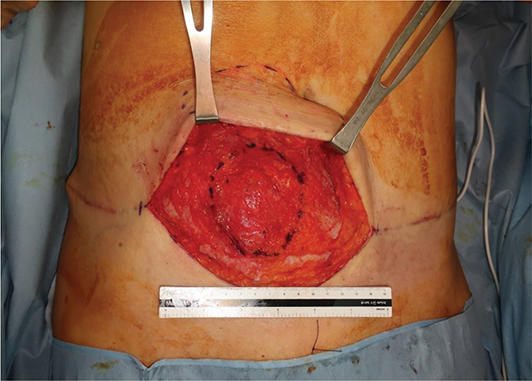
Figure 2. Intraoperative photograph of the patient in revision surgery for abdominal bulging. (same patient in Figure 1)
In the patient group requiring surgical treatment for hernia or bulging, there was a generally wider tendency of rectus muscle defects. The median horizontal width of the defects (cm) in A group (5.0 cm) was larger than B group (4.0 cm), p = 0.031. However, for vertical height(cm) of the defects, the median of A group (4.5 cm) and the median of B group (5.0 cm) did not show statistical significance, p = 0.724. For the area (cm2) of muscle defects, the median of A group (25.0 cm2) and the median of B group (20.0 cm2) also did not show statistical significance, p = 0.184 (Table 2).
When applying statistics according to the MS type, MS-1 type counts 83.3% in A group compared to 61.7% in B group, P = 0.007. This may also suggest correlation with the extent of horizontal defect. The significant cut-off value for horizontal defect was 4.5 cm, calculated using Youden’s index, which maximizes the sum of sensitivity and specificity, to choose the best cut-point.
Discussion
Breast reconstruction surgery using flaps after mastectomy has been widely practiced since its initial introduction and remains prevalent today. Among various flaps, abdominal flaps are particularly useful when considering both the ability to achieve sufficient volume and overall external appearance. Among the complications that may arise after flap surgery using the rectus abdominis muscle, one relatively common issue is the occurrence of hernia or bulging due to abdominal wall weakening. Factors contributing to such hernia may include high body mass index (BMI), obesity, age, the number of pedicles, and muscle or fascia defects [7–9]. Among these factors, to minimize the defect of muscle and fascia, MS-TRAM and DIEP flap have evolved.
In the case of unavoidable muscle loss when performing MS-TRAM, our statistical analysis aimed to identify which factors might have a more significant impact and determine the limits to be cautious about in terms of abdominal hernia and bulging. The results of statistics revealed a gradual trend for higher width, height, and area of the muscle in the group where hernia occurred. In the group with hernia or bulging, only the horizontal width was statistically significantly higher, while the vertical height and defect area did not show statistical significance. During the harvest of MS-TRAM, sacrifice of the intercostal nerve branches occurred, making it impossible to anticipate the force contraction of the remaining rectus abdominis muscle. However, it can be inferred that the absence of muscles preventing intra-abdominal pressure horizontally may be implicated in abdominal wall weakness. The reason why only the width had an impact is because, during the donor closure process, the direction of advancing the fascia is horizontal rather than vertical. Therefore, the horizontal length deficit in the muscle, which is the direction where tension acts, would have influenced the abdominal wall weakness. Although the precise cause or relevant previous literature could not be found in this regard, it is hoped that further verification will be conducted anatomically or physically in the future.
Our conclusion is that the horizontal width had the most significant impact, and we were interested in determining at what point the impact becomes significant. The threshold value was found to be when it exceeds 4.5 cm. This implies that when the width of the muscle defect surpasses 4.5 cm, there is a statistically significant increase in the risk of hernia, highlighting the importance of careful consideration and monitoring during the surgical procedure. In situations where anticipating muscle contraction is not possible due to intercostal nerve damage, we can present this value not in terms of the size of the remaining muscles but based on the size of the defect as a result. As far as we know, this article is the first one to statistically validate the impact of muscle defects on postoperative hernia or bulging providing limit of the defect.
In the previous literature, there have been studies suggesting some techniques to minimize the occurrence of abdominal hernia or bulging after TRAM surgery. Stephan S. Kroll et al. [10] presented that the risks of abdominal wall weakness, bulges and hernias can be minimized by strong and careful abdominal wall repair. They suggest two-layer fascial repair emphasizing approximation of the lateral sheath remnant to the strong midline fascia lying deep to the linea alba and using selective reinforcement with synthetic mesh. Methods using autologous tissue flaps to reinforce the abdominal wall have also been previously described [11–13]. Additionally, approaches using ADM inlay techniques or layering them after primary closure to reinforce the abdominal wall have emerged later and cases demonstrated the safety of such approaches [14–19].
In addition to some research on reinforcement after cutting fascia, there have been studies aiming to minimize manipulation of fascia. N. Lindenblatt et al. [20] reported that regarding abdominal wall morbidity, the incision of the fascia to harvest the perforator vessel should be as short as possible and motor branches of the intercostal nerves should be preserved. Kim et al. [21] presented, the cohort with mean fasciotomy incision of 6.6 cm in length had less bulging or hernia occurrence rate.
While there has been extensive research on methods to reduce fascia defects and minimize tension during surgery, there is a significant lack of research on the extent of muscle resection during the surgical procedure. Even in MS-TRAM procedures, where only part of the muscle is resected, bulging and hernias still occur, highlighting the need for further investigation.
The recent trend has been advanced toward harvesting less abdominal fascia and muscle. However, there has been a relative lack of research on how much resection is acceptable and what precautions should be taken over some degree. The choice of MS-TRAM versus DIEP flap differs regarding the surgeon’s preference. In cases where muscle defects are unavoidable, having a preconceived idea of how much detachment is permissible could potentially prevent complications such as hernia. This study may be seen as providing suggestions in this regard.
There are several limitations of this study. Firstly, the study was performed retrospectively by reviewing operation and outpatient follow-up medical records. Secondly, the sample size is small and all included cases are from a single institution. Thirdly, the hernia and bulging criteria were established based on the necessity for revisional surgery. The patients with mild abdominal wall weakening might have been overlooked. Lastly, in our institution, we aimed to minimize fascia defects to reduce the impact, but the absence of individual records makes it difficult to determine whether the difference may have varied among patients. So, randomized controlled study with a larger sample size and objective measurements is needed.
Conclusion
With advancements in surgical techniques, there have been many methods to reduce donor site morbidity. While DIEP flap has been widely accepted as a trend among many surgeons, MS-TRAM flap stands out as a surgical approach with various compromises and advantages, making it a frequently used method by many surgeons. When performing MS-TRAM, minimizing the amount of excised muscle remains crucial, and this article represents the first to provide numerical evidence in this regard. Further research is still needed in this aspect.
Ethical statement
This study was approved by the Institutional Review Board of Seoul National University Hospital (H-2401-007-1499).
References
[1] Hartrampf C, Scheflan M, Black PW. Breast reconstruction with a transverse abdominal island flap. Plast Reconstr Surg. 1982;69: 216–225. https://doi.org/10.1097/00006534-198202000-00007
[2] Koshima I, Soeda S. Inferior epigastric artery skin flaps without rectus abdominis muscle. Br J Plast Surg. 1989;42:645–648. https://doi.org/10.1016/0007-1226(89)90075-1
[3] Allen RJ, Treece P. Deep inferior epigastric perforator flap for breast reconstruction. Ann Plast Surg. 1994;32:32–38. https://doi.org/10.1097/00000637-199401000-00007
[4] Egeberg A, Rasmussen MK, Sorensen JA. Comparing the donor-site morbidity using DIEP, SIEA or MS-TRAM flaps for breast reconstructive surgery: a meta-analysis. J Plast Reconstr Aesthetic Surg. 2012;65:1474–1480. https://doi.org/10.1016/j.bjps.2012.07.001
[5] Wu LC, Bajaj A, Chang DW, Chevray PM. Comparison of donor-site morbidity of SIEA, DIEP, and muscle-sparing TRAM flaps for breast reconstruction. Plast Reconstr Surg. 2008;122:702–709. https://doi.org/10.1097/PRS.0b013e3181823c15
[6] Futter CM, Webster MH, Hagen S, Mitchell SL. A retrospective comparison of abdominal muscle strength following breast reconstruction with a free TRAM or DIEP flap. Br J Plast Surg. 2000;53:578–583. https://doi.org/10.1054/bjps.2000.3427
[7] Rossetto LA, Alba LE, Vidal R et al. Factors associated with hernia and bulge formation at the donor site of the pedicled TRAM flap. Eur J Plast Surg. 2010;33(4):203–208. https://doi.org/10.1007/s00238-010-0418-4
[8] Chang EI, Chang EI, Soto-Miranda MA, et al. Comprehensive analysis of donor site morbidity in abdominally based free flap breast reconstruction. Plast Reconstr Surg. 2013;132:1383–1391.
[9] Vyas RM, Dickinson BP, Fastekjian JH et al. Risk factors for abdominal donor-site morbidity in free flap breast reconstruction. Plast Reconstr Surg. 2008;121(5):1519–1526. https://doi.org/10.1097/PRS.0b013e31816b1458
[10] Kroll SS, Marchi M. Comparison of strategies for preventing abdominal-wall weakness after TRAM flap breast reconstruction. Plast Reconstr Surg. 1992;89(6):1045–1051. https://doi.org/10.1097/00006534-199206000-00007
[11] Spear SL, Walker RK. The external oblique flap for reconstruction of the rectus sheath. Plast Reconstr Surg. 1992;90:608–613. https://doi.org/10.1097/00006534-199210000-00009
[12] Kroll SS, Schusterman MA, Mistry D. The internal oblique repair of abdominal bulges secondary to TRAM flap breast reconstruction. Plast Reconstr Surg. 1995;96(1):100–104. https://doi.org/10.1097/00006534-199507000-00015
[13] Amir A, Siflen R, Hauben DJ. Rotation flap of the anterior rectus abdominis sheath for hernia prevention in TRAM breast reconstruction. Ann Plast Surg. 2003;50:207. https://doi.org/10.1097/01.SAP.0000029631.35768.1B
[14] Siegwart LC, Sieber L, Fischer S, et al. The use of semi-absorbable mesh and its impact on donor-site morbidity and patient-reported outcomes in DIEP flap breast reconstruction. Aesthetic Plast Surg. 2021;45:907–1916.
[15] Cicilioni Jr O, Araujo G, Mimbs N, Cox MD. Initial experience with the use of porcine acellular dermal matrix (Strattice) for abdominal wall reinforcement after transverse rectus abdominis myocutaneous flap breast reconstruction. Ann Plast Surg. 2012;68:265–270. https://doi.org/10.1097/SAP.0b013e31822af89d
[16] Brunbjerg ME, Jensen TB, Christiansen P, Overgaard J, Engberg Damsgaard T. Reinforcement of the abdominal wall with acellular dermal matrix or synthetic mesh after breast reconstruction with the pedicled transverse rectus abdominis musculocutaneous flap. A prospective double-blind randomized study. J Plast Surg Hand Surg. 2021;55:202–209. https://doi.org/10.1080/2000656X.2020.1856673
[17] Ramirez OM, Ruas E, Dellon AL. ‘Components separation’ method for closure of abdominal wall defects: an anatomic and clinical study. Plast Reconstr Surg. 1990;86:519–526. https://doi.org/10.1097/00006534-199009000-00023
[18] Glasberg SB, D’Amico RA. Use of regenerative human acellular tissue (AlloDerm) to reconstruct the abdominal wall following pedicle TRAM flap breast reconstruction surgery. Plast Reconstr Surg. 2006;118(1):8–15. https://doi.org/10.1097/01.prs.0000220470.97776.f5
[19] Brunbjerg ME, Jensen TB, Christiansen P, et al. Reinforcement of the abdominal wall with acellular dermal matrix or synthetic. mesh after breast reconstruction with the pedicled transverse rectus abdominis musculocutaneous flap. A prospective double-blind randomized study. J Plast Surg Hand Surg. 2021;55(4):202–209. https://doi.org/10.1080/2000656X.2020.1856673
[20] Lindenblatt N, Gruenherz L, Farhadi J. A systematic review of donor site aesthetic and complications after deep inferior epigastric perforator flap breast reconstruction. Gland Surg. 2019;8(4):389–398. https://doi.org/10.21037/gs.2019.06.05
[21] Kim J, Lee KT, Mun GH. Short fasciotomy-deep inferior epigastric perforator flap harvest for breast reconstruction. Plast Reconstr Surg. 2023;152(6):972e–984e. https://doi.org/10.1097/PRS.0000000000010382