ORIGINAL RESEARCH ARTICLE
Can artificial ıntelligence detect the anti-aging effect of rhinoplasty?
Muhammed Zeki Yalçına, Yuksel Toplub and Osman Kurtc
aDepartment of Otorhinolaryngology and Head and Neck Surgery, Corum Private Hospital, Corum, Turkey; bDepartment of Otorhinolaryngology and Head and Neck Surgery, Private Park Hospital, Malatya, Turkey; cDepartment of Public Health, Inonu University, Malatya, Turkey
ABSTRACT
Background: The quest for eternal youth has been a common theme in many cultures for centuries. While we have yet to discover a way to preserve youth eternally, we have made significant progress in understanding the aging process and in developing pharmaceuticals, surgical techniques, and technologies.
In addition to rhinoplasty’s facial beautification effect, we investigated whether it had a facial anti-aging effect using an artificial intelligence (AI)-based program. We also examined the correlation between patient satisfaction and the anti-aging effect of rhinoplasty.
Methods: This study included 244 patients who underwent functional septorhinoplasty (FSRP) between January 2018 and August 2020 at Inonu University, Department of Otorhinolaryngology. Preoperative and postoperative photographs in our archive were evaluated using an AI-based age analysis program. In addition, the participants evaluated preoperative and postoperative nose satisfaction with the FACE-Q survey in the postoperative period.
Results: One hundred two males (41.8%) and 142 females (58.2%) were included in the study. The mean preoperative age determined by the program was 25.9 ± 6.1, and the mean postoperative age was 25.7 ± 5.8. Despite the mean follow-up period of the patients was 25.3 ± 8.7 months, our study showed no significant difference between the mean preoperative and postoperative ages. The mean general satisfaction of the patients increased postoperatively.
Conclusion: Despite the average follow-up period, the absence of a significant difference between preoperative and postoperative perceived mean age may be interpreted as a possible anti-aging effect of rhinoplasty. This effect was more prominent in older patients and in women.
KEYWORDS: Rhinoplasty; artificial intelligence; aging
Citation: Journal of Plastic Surgery and Hand Surgery 2025; 60: 84–90. DOI: https://doi.org/10.2340/jphs.v60.43316.
Copyright: © 2025 The Author(s). Published by MJS Publishing on behalf of Acta Chirurgica Scandinavica. This is an Open Access article distributed under the terms of the Creative Commons Attribution 4.0 International License (http://creativecommons.org/licenses/by/4.0/), allowing third parties to copy and redistribute the material in any medium or format and to remix, transform, and build upon the material, with the condition of proper attribution to the original work.
Received: 30 October 2024; Accepted: 4 March 2025; Published: 3 April 2025
CONTACT: Muhammed Zeki Yalcin zekieru91@gmail.com ENT Specialist, Medical Doctor. Postal address: Uctutlar Mah. Binevler 100. Sokak Yesil Vadi Sit. No:45/1 19030 Merkez/Corum/ Turkey
Competing interests and funding: The authors declare no potential conflicts of interest with regard to this article’s research, authorship, or publication.
The authors received no financial support for this article’s research, authorship, or publication.
Introduction
Functional septorhinoplasty (FSRP) is one of the most frequently performed aesthetic and functional surgeries in Turkey and around the world. According to a 2019 report by the International Society of Aesthetic Plastic Surgery (ISAPS), rhinoplasty is the most performed aesthetic surgery in Turkey [1]. Although it is a frequently performed procedure, rhinoplasty is a complicated surgery in which functional nose correction and aesthetic improvement are essential [2]. A comprehensive preoperative clinical analysis is the critical first step in successful rhinoplasty [3]. Preoperative clinical analysis includes anamnesis, determination of the patient’s motivation and expectations, a psychological evaluation, a physical examination, standardized photography, and digital imaging. Photo analysis provides a medicolegal record and a comparison with the postoperative period.
The human face provides essential clues about identity, age, gender, emotion, and ethnicity. Age is a facial feature that plays a vital role in social communication. The natural aging process causes a gradual deterioration in the function of individual cells and structural components, including bone, muscles, and ligaments. These changes are particularly evident in the face and are essential to human identity and social interactions. For these reasons, people want to look younger to increase their social status.
The facial beautification effects of rhinoplasty are well known. Still, there is little scientific evidence of the rejuvenating effect of rhinoplasty in comparison with anti-aging treatments, such as botox, facelifts, and fillers [4, 5].
Artificial intelligence and its sub-branch machine learning are contributing to groundbreaking developments in diagnosis, monitoring, imaging, and treatment in the medical field [6]. Facial recognition and age analysis are used in security, education, social media, and the medical field, especially in forensic medicine.
In deep learning, a convolutional neural network (CNN) uses neurons with biases and weights that can be learned. The classification score is generated after each neuron computes the dot product using the data it has been given. CNN is the branch of the deep neural network that is most commonly applied to analyze visual imagery because CNNs use convolutional layers to detect patterns such as edges, textures, and shapes, which is crucial in face recognation and medical images [7]. This study aimed to use CNN to determine whether rhinoplasty has an anti-aging effect.
Materials and methods
This retrospective study included patients who underwent FSRP by the same surgeon between January 2010 and August 2020 in the Department of Otorhinolaryngology, Head, and Neck Surgery, Faculty of Medicine, Inonu University. The facial anti-aging effect of FSRP was investigated using an artificial intelligence (AI)-based age analysis program to compare preoperative frontal plan photographs of patients with postoperative photographs. In addition, patients completed the FACE-Q satisfaction questionnaire postoperatively to investigate whether there was a correlation between facial anti-aging effect and satisfaction. The FACE-Q rhinoplasty module was created to assess the quality of life of rhinoplasty patients. This questionnaire is applied to evaluate the cosmetic and psychosocial effects of rhinoplasty. An open or closed technique and primer or revision FSRP were applied to the patients as a surgical treatment.
The inclusion criteria were as follows:
- Open approach FSRP was applied.
- The patient was aged 16 years and older for women, and 17 years and older for men at the time of the surgery.
- The patient had received no previous application of facial rejuvenation techniques, such as botox, filler, facelift, or eyebrow lift.
- The patient participated in at least 12 months of follow-up after FSRP.
- The patient’s facial appearance preoperatively and postoperatively (e.g. make-up, beard, and accessories such as glasses, etc.) were similar as much as possible.
- Preoperative and postoperative frontal plane photographs were taken under the same appropriate light conditions with a proper device.
In our study, information about demographic characteristics, occupation, chronic diseases, alcohol consumption, smoking status, skin disease, facial rejuvenation attempts, depression history, weight gain/loss history, pregnancy, and drug use was collected from patients who underwent FSRP. Postoperative frontal plan photos were taken with a professional camera from a distance of approximately 1.5–2 meters in a double-flash environment. After the photo was taken, the patients completed FACE-Q satisfaction questionnaire . The patients answered each question on a Likert-type scale, in which 1 = very dissatisfied, 2 = somewhat dissatisfied, 3 = somewhat satisfied, and 4 = very satisfied. The patients’ age data, satisfaction/side affect scores, and other characteristics were recorded. In addition, all preoperative and postoperative patient photos were analyzed utilizing a pre-trained ranking CNN algorithm (‘AgeBot: How Old am I? App.’), which is based on ‘Microsoft Azure AI Servise Vision’ estimates the apparent age of a face by cropping the face from the photograph and then placing 68 landmarks on each patient’s face employing the recently proposed Conditional Local Neural Fields programming code [8]. This program aimed to achieve better accuracy in age analysis. Since the program can analyze age of patients by taking certain points of the face into account, it can minimize the impact of the features such as make-up and beard on analyze ability.
Furthermore, only frontal plane patient photographs with the face in a neutral position are included, and the CNN algorithm is specifically programmed to resize and crop. This eliminates the ‘smiling’ or ‘frowning’ effects that may affect mood, self-perception, and age determination.
Statistical analyses
Statistical analyses were performed using the Statistical Package for the Social Sciences (SPSS) version 22 (SPSS Inc., Chicago, IL). The study presents descriptive data as n and % values for categorical data and mean ± standard deviation (mean ± SD) values for continuous data. The conformity of constant variables to normal distribution was evaluated using the Kolmogorov–Smirnov test. The t-test was applied to the dependent groups to compare preoperative and postoperative age measurements. The Student’s t-test was used to compare paired groups, and one-way ANOVA(Analysis of variance) analysis was used to compare more than two groups. The Pearson correlation test was used to examine the relationship between the continuous variables. The statistical significance level in the analysis was accepted as p < 0.05.
Ethics
The Declaration of Helsinki guidelines were followed throughout the study. In addition, approval was obtained from the Inonu University Clinical Research Ethics Committee. Written and verbal informed consent were obtained from all patients participating in the study. 2021/1780.
Results
The study included 244 patients who underwent FSRP – 102 males (41.8%) and 142 females (58.2%). The mean age of the patients was 28.4 ± 7.3 (minimum age = 17; maximum age = 56). Of the patients, 168 (68.9%) were in the 17–30 age group, 67 (27.5%) were in the 31–45 age group, and nine (3.7%) were over 45 years old. Forty-five (18.4%) of the patients smoked cigarettes, and nine (3.7%) consumed alcohol. Revision FSRP was applied to 13 (5.3%) patients. The mean AI-determined preoperative age of the patients was 25.9 ± 6.1 years, and the mean AI-determined postoperative age was 25.7 ± 5.8 years. Despite the mean follow-up period of 25.3 ± 8.7 months, no significant difference was found between the patients’ preoperative and postoperative ages (p = 0.228) (Table 1).
The patients’ mean score for general satisfaction was 1.2 ± 0.4 preoperatively and 3.4 ± 0.8 postoperatively, showing a significant increase postoperatively (p < 0.001) (Figure 1).
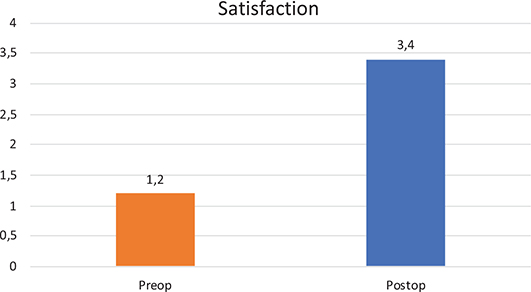
Figure 1. Preoperative and postoperative total satisfaction scores of the patients.
An examination of the differences in the patients’ answers to the satisfaction questions preoperatively and postoperatively showed that the patients’ postoperative scores for all questions were significantly higher than their preoperative scores (p < 0.001) (Figure 2).
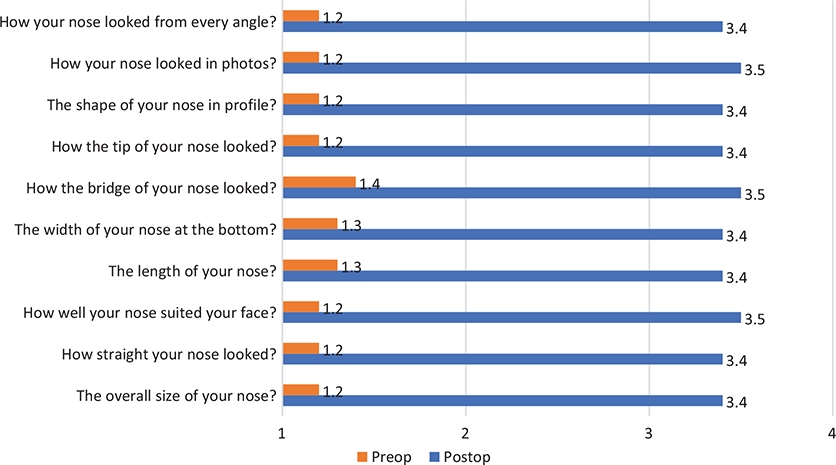
Figure 2. Patients’ preoperative and postoperative satisfaction averages for each question.
The correlation analysis found no correlation between preoperative and postoperative satisfaction and the other parameters (Table 2).
A significant positive correlation was observed between age and age change (r = 248, p < 0.001) (Figure 3).
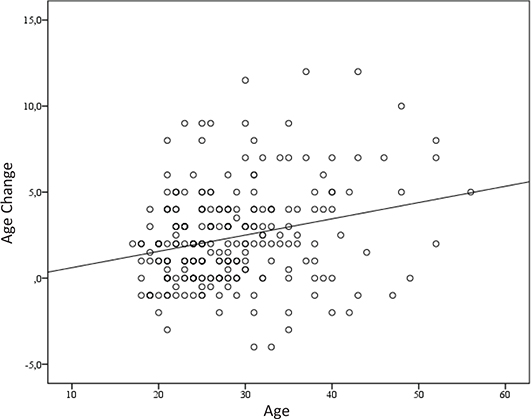
Figure 3. Correlation of age with age change.
A significant difference between the age groups was found with regard to age change (p = 0.002). This difference was only because of the difference between the 17 and 30 age group and the >45 age group. The AI-determined age changes of the female patients were significantly greater than the AI-determined age changes of the male patients (p = 0.001). No significant difference was found between the genders regarding postoperative satisfaction (p = 0.347) and no significant correlations were found between age change/satisfaction level and the other parameters (p > 0.05) (Table 3).
| Various Parameters | Age change | Postop satisfaction | |||
| Mean | p* | Mean | p* | ||
| Age | 17–30 | 2.0 ± 2.4a | 0.002** | 3.5 ± 0.7 | 0.067** |
| 31–45 | 2.9 ± 3.4a,b | 3.2 ± 0.9 | |||
| > 45 | 4.8 ± 3.7b | 3.5 ± 1.0 | |||
| Gender | Male | 1.7 ± 2.4 | 0.001 | 3.4 ± 0.7 | 0.347 |
| Female | 2.8 ± 3.0 | 3.5 ± 0.8 | |||
| Smoking | + | 2.1 ± 2.8 | 0.426 | 3.5 ± 0.6 | 0.173 |
| - | 2.4 ± 2.8 | 3.4 ± 0.8 | |||
| Alcohol | + | 1.6 ± 2.8 | 0.417 | 3.5 ± 0.5 | 0.756 |
| - | 2.4 ± 2.8 | 3.4 ± 0.8 | |||
| Revision FSRP | + | 2.1 ± 2.5 | 0.750 | 3.8 ± 0.5 | 0.167 |
| - | 2.4 ± 2.8 | 3.4 ± 0.8 | |||
| FSRP: functional septorhinoplasty. *Student t-test, **One Way ANOVA test were applied. |
|||||
Discussion
The natural aging process causes a gradual deterioration in the function of cells and tissues as structural components. These changes are particularly evident in the face, which plays a vital role in social life.
Audrey et al. [5] summarized the physiology of facial aging and treatment options in a 2017 publication. Surgical treatment options include treatments applied to the upper, middle, and lower face. The endoscopic approach is the most aesthetically appropriate for forehead and eyebrow lifting. Upper and lower eyelid blepharoplasty is among the most common surgical procedures on the upper third of the face [9]. Patients with significant midface ptosis can be treated with an endoscopic midface lift [9], but patients with considerable midface volume loss may require volume restoration in addition to surgical lifts. All the patients in this study were asked about previous invasive and noninvasive procedures that they may have undergone. Rhinoplasty is performed to address both functional and aesthetic concerns at the same time anti-aging affect is underemphasized than other concerns.
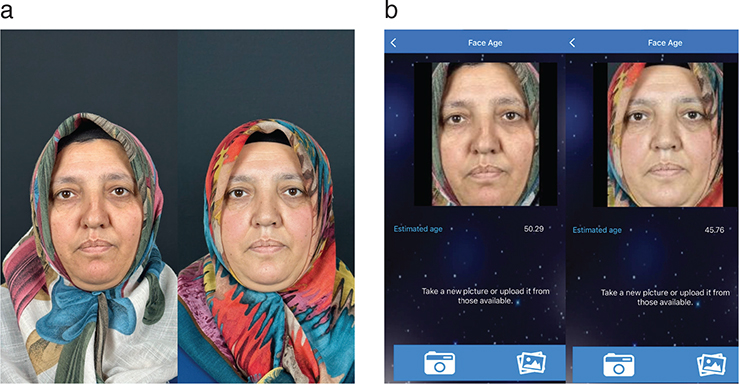
Image 1. a-preoperative and postoperative photos(follow-up period is 14 months); b-Age analysis of preoperative and postoperative photos by the application.
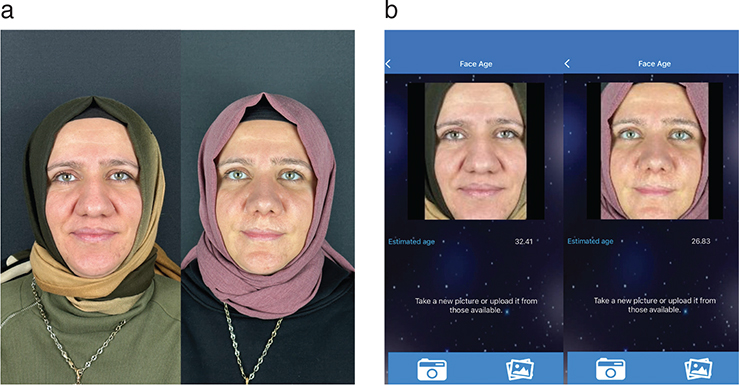
Image 2. a-preoperative and postoperative photos(follow-up period is 12 months); b-Age analysis of preoperative and postoperative photos by the application.

Image 3. a-preoperative and postoperative photos(follow-up period is 18 months). b- Age analysis of preoperative and postoperative photos by the application.
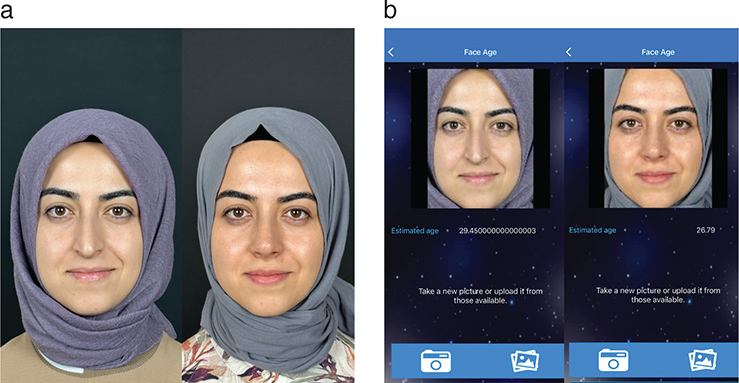
Image 4. a-preoperative and postoperative photos(follow-up period is 12 months; b-Age analysis of preoperative and postoperative photos by the application.
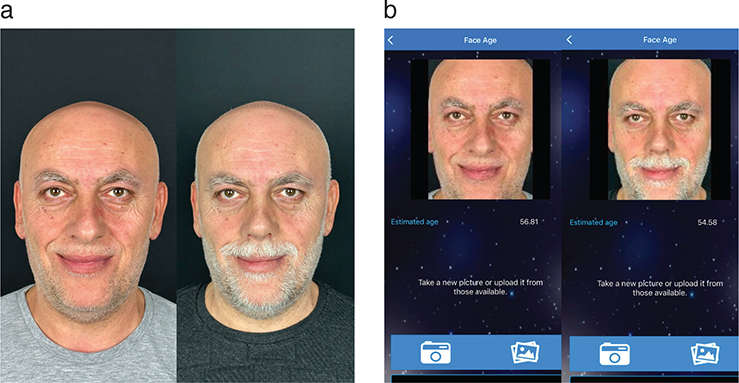
Image 5. a-preoperative and postoperative photos(follow-up period is 24 months); b-Age analysis of preoperative and postoperative photos by the application.
Our study presents objective evidence that rhinoplasty, as an aesthetic procedure, has an possible anti-aging effect.
Few previous studies have attempted to measure the anti-aging effects of rhinoplasty [10–12]. In 2019, Dorfman et al. conducted the first study that objectively measured rhinoplasty’s anti-aging effect [4]. The authors worked with the same sequential CNN algorithm-based program that we used in our study. Only female patients who underwent open-technique rhinoplasty were included in Dorfman et al.’s study. Those who underwent closed technique rhinoplasty, revision cases, and male patients were excluded from the study. After following up 100 patients for at least 12 weeks (average: 29 weeks), preoperative and postoperative AI age analyses were performed, which determined that rhinoplasty reduced the AI-determined age of the patients on average by 3 years. In our study, 244 men and women who underwent open technique FSRP were included, and 13 of these patients underwent revision FSRP. The mean follow-up period was 25 months. This follow-up period was valuable in finalizing the appearance of the patients’ noses and their facial structure and, thus, in determining patient satisfaction with the final result of the surgery. The average follow-up period in Dorfman et al.’s study [4] was approximately 6 months.
Our study showed no significant difference between the mean preoperative and postoperative ages despite the mean 25-month follow-up period. Taking follow-up period into account, the anti-aging effect of rhinoplasty can be mentioned.
In addition, our study, similar to that of Sepehr et al., [12] showed a significant correlation between the age at which the patient underwent rhinoplasty surgery and its rejuvenation effect, revealing that the anti-aging effect of rhinoplasty was more pronounced in older patients. In addition, ours is the first published study to demonstrate that the anti-aging effect of rhinoplasty is more pronounced in female patients than in male patients. As age progresses, major and minor nasal tip support mechanisms weaken, leading to nasal tip deprojection and the development of a structure called dorsal pseudohump. In addition, ligamentous laxity leads to lobular descent, causing nasal elongation and counter-rotation [13]. In addition, the rate of facial aging in women is approximately twice that of men, and increases approximately threefold between the ages of 50 and 60 (post-menopausal hormonal change) [14]. The reason why rhinoplasty has a greater anti-aging effect in the elderly and women may be that correcting changes such as deprojection, dorsal pseudohumo and nasal elongation, which develop more with age in this population, may cause more significant differences. In addition, increasing nasal tip rotation more in women than in men may create a statistically significant difference.
In our study, patients with a wide age distribution were divided into three groups based on the age classification established by the World Health Organization: young adults aged 17–30, middle-aged adults aged 31–45, and adults over 45. A significant difference in terms of age change was found between patients over 45 and patients aged 17–30 years.
We chose to use the ‘AgeBot: How Old Do I Look’ application in our study because it uses the Microsoft Azure Face application programming interface (API), which is an advanced AI sequential CNN algorithm. Rezende et al. [15] compared two age analysis applications that can be downloaded to smartphones. However, we chose not to use either of these applications due to their low rating rates. The application used by Dorfmann et al. was unavailable.
In the study titled Evaluating the Accuracy of Public Cloud Vendor Face Detection APIs, Microsoft Azure App was found to have the highest accuracy rate among five applications [16]. In addition, another study showed that Microsoft Azure achieved the best analytical ability results acording to the lowest Mean Absolute Error. This means that across the entire range of all subjects, the average difference between the predicted age and the actual age was 7.614 years [17].
In our review of the literature on AI and rhinoplasty, we found that Chinsk et al. [18] investigated whether an AI model was capable of learning a surgeon’s rhinoplasty style and criteria, which is important for deciding performing rhinoplasty. They showed that the AI model learned the simulation performed by the surgeon on the preoperative photographs and was able to perform similar simulations. Borsting et al. [19] developed a deep-sequence artificial neural network called ‘Rhinonet’ to determine whether a photograph depicted a before or after rhinoplasty surgery. RhinoNet was trained using a dataset of 22,686 before and after photos collected from publicly available sites, and showed an accuracy rate of 85%.
In this study, the FACE-Q rhinoplasty satisfaction questionnaire was administered to the participants postoperatively to investigate whether there was a relationship between their younger appearance after surgery and their postoperative satisfaction. The FACE-Q rhinoplasty module is a meticulously developed professional instrument for assessing the quality of life of rhinoplasty patients and complies with the requirements of international guidelines [20, 21]. This questionnaire was designed to evaluate rhinoplasty’s cosmetic and psychosocial impacts and has been recommended as the most appropriate tool for assessing aesthetic outcomes [22]. Schweitzer et al. [23] were the first to use FACE-Q to measure changes in patient satisfaction with overall facial appearance, nasal appearance, and quality of life in the rhinoplasty population. The creators of the FACE-Q rhinoplasty modüle [18] reported an increase in scores on the Nose and Nostril Satisfaction scale when they compared the preoperative and postoperative scores of 23 patients. In our study, a significant difference was observed preoperatively and postoperatively in each parameter of the FACE-Q satisfaction questionnaire. The correlation analysis showed no significant correlation between preoperative and postoperative satisfaction scores and mean age, age change, and follow-up time. This analysis revealed no correlation between satisfaction rates and age changes.
Limitations
Although the accuracy of the AI application’s age estimation is considered a limiting factor in our study, the fact that the same program was used to determine both preoperative and postoperative age essentially removed this limitation. Although Microsoft Azure can minimize the impact of the features such as make-up and beard on analyze ability, face Recognition Tools were found less better in terms of age analysis because of cosmetic surgeries, the use of make-up, hair coloring, etc. [24]. One of the limiting factors in the our study was the difficulty in maintaining pre- and post-operative conditions (make-up, beard etc.) due to the long follow-up period.
The results of rhinoplasty should be evaluated with postoperative photographs of the frontal, oblique, lateral, and basal planes and compared with similar photographs taken preoperatively. However, AI programs that perform age analysis can only analyse photographs of the frontal plane. On the other hand, while photos of the frontal plane are limited to evaluating the patient’s dorsal hump, nasofrontal angle, tip projection and rotation, columella, and alar base, Sepehr et al. [12] found that dorsal hump removal and increased tip rotation had the most substantial rejuvenating effect. Still, the inability of AI age analysis programs to analyse the oblique and lateral planes, which clearly show these two features, is a limitation of our study.
A control group could not be created due to the long follow-up period. Performing an age analysis by taking photographs of a group that did not undergo rhinoplasty under the same environmental conditions and during similar follow-up periods would have made the study more valuable.
Another limitation of this study is that the patients did not complete a preoperative satisfaction questionnaire. In future studies, patients should complete a satisfaction questionnaire both preoperatively and postoperatively, which would allow for a more accurate evaluation of postoperative satisfaction.
Finally, the ‘Satisfaction with the Nostrils’ questionnaire was not applied in this study (as it was in the study conducted by Kalaaji et al. [25]) because this scale was considered unsuitable for all patients wishing to undergo rhinoplasty.
Conclusions
The facial beautifying effect of FSRP, which is one of the most frequently applied functional and aesthetic surgical procedures, is well established, as is the fact that the surgery reduces social withdrawal and increases self-confidence. However, little attention has been paid to its facial rejuvenating and anti-aging effects. This is the first study to objectively investigate the facial anti-aging effects of FSRP in men and women and the relationship between these effects and patients’ satisfaction.
According to the AI age analysis of the patients included in our study, the mean age was 25.9 preoperatively and 25.7 postoperatively after a mean follow-up period of 25.3 months. Taking into account the follow-up period, the AI-determined age change, which showed the possible anti-aging effect of FSRP. The mean anti-aging effect of FSRP was 2.8 years for the female patients and 1.7 years for the male patients; thus, a significant difference was found between men and women. Significant differences were found in the facial anti-aging effects in the three age groups: the anti-aging effect was found to be 2 years in patients aged 17–30, 2.9 years in patients aged 31–45, and 4.8 years in patients over 45. According to the correlation analysis between age and age change, the facial anti-aging effect of FSRP was greater in older patients.
The patients’ scores on the FACE-Q rhinoplasty satisfaction questionnaire showed a significant difference in postoperative satisfaction compared to preoperative satisfaction on all questions. No correlation was found between patient satisfaction scores and the level of facial anti-aging effect. According to the AI age analysis, high satisfaction rates were also observed in patients who did not experience facial anti-aging effect.
The results of this study objectively determined that FSRP had a possible anti-aging effect on the participating patients.
To better analyze the facial anti-aging effects of FSRP, multicenter and more comprehensive studies should be conducted. In addition, as AI and machine learning continue to develop, age-analysis programs will become capable of greater accuracy in determining age through facial characteristics. In addition, these analyses, which are generally performed only in the frontal plane, should be performed in the oblique, lateral, and basal planes, as better results may be obtained with combined analyses.
References
[1] Domestic G. ISAPS. International survey on aesthetic/cosmetic procedures. International Society for Aesthetic Plastic Surgery: West Lebanon, NH 03784-3402 United States. 2019. p. 1–16.
[2] Lee MK, Most SP. Evidence-based medicine: rhinoplasty. Facial Plast Surg Clin North Am. 2015;23(3):303–312. https://doi.org/10.1016/j.fsc.2015.04.004
[3] Rohrich RJ, Afrooz PN. Primary open rhinoplasty. Plast Reconstr Surg.2019;144(1):102e–117e.https://doi.org/10.1097/PRS.0000000000005778
[4] Dorfman R, Chang I, Saadat S, et al. Making the Subjective objective: machine learning and rhinoplasty. Aesthet Surg J. 2020;40(5):493–498. https://doi.org/10.1093/asj/sjz259
[5] Ko AC, Korn BS, Kikkawa DO. The aging face. Surv Ophthalmol. 2017;62(2):190–202.https://doi.org/10.1016/j.survophthal.2016.09.002
[6] Kanevsky J, Corban J, Gaster R, et al. Big data and machine learning in plastic surgery: a new frontier in surgical ınnovation. Plast Reconstr Surg. 2016;137(5):890e–897e. https://doi.org/10.1097/PRS.0000000000002088
[7] Valueva MV, Nagornov NN, Lyakhov PA, et al. Application of the residue number system to reduce hardware costs of the convolutional neural network implementation. Math Comput Simul. 2020;177:232–243. https://doi.org/10.1016/j.matcom.2020.04.031
[8] Baltrusaitis T, Robinson P, Morency L-P. Constrained local neural fields for robust facial landmark detection in the wild. [cited 2019 Sep 17]. Available from: https://www.cv-foundation.org/openaccess/con-tent_iccv_workshops_2013/W11/papers/Baltrusaitis_Constrained_Local_Neural_2013_ICCV_paper.pdf
[9] Park DM. Total facelift: forehead lift, midface lift, and neck lift. Arch Plast Surg. 2015;42(2):111–125. https://doi.org/10.5999/aps.2015.42.2.111
[10] Romo 3rd T, Soliemanzadeh P, Litner JA, et al. Rhinoplasty in the aging nose. Facial Plast Surg. 2003;19(4):309–315. https://doi.org/10.1055/s-2004-815650
[11] Cochran CS, Ducic Y, DeFatta RJ. Restorative rhinoplasty in the aging patient. Laryngoscope. 2007;117(5):803–807. https://doi.org/10.1097/01.mlg.0000248240.72296.b9
[12] Sepehr A, Chauhan N, Alexander A, et al. The effect of rhinoplasty on perceived age. Arch Facial Plast Surg. 2012;14(1):68–70. https://doi.org/10.1001/archfacial.2011.1233
[13] Stupak HD, Johnson Jr, CM. Rhinoplasty for the aging nose. Ear Nose Throat J. 2006;85(3):154–5.
[14] Windhager S, Mitteroecker P, Rupić I, et al. Facial aging trajectories: a common shape pattern in male and female faces is disrupted after menopause. Am J Phys Anthropol. 2019;169(4):678–688. https://doi.org/10.1002/ajpa.23878
[15] Rezende Machado AL, Dezem TU, Bruni AT, et al. Age estimation by facial analysis based on applications available for smartphones. J Forensic Odontostomatol. 2017;35(2):55–65.
[16] Malone A, Burns J. Evaluating the accuracy of public cloud vendor face detection API’s. J Image Graphics. 2021;9:1. https://doi.org/10.18178/joig.9.1.20-26
[17] Anda F, Lillis D, Le-Khac NA, et al. Evaluating Automated Facial Age Estimation Techniques for Digital Forensics. In: 2018 IEEE Security and Privacy Workshops (SPW). IEEE; 2018:129-139. https://doi.org/10.1109/SPW.2018.00028
[18] van Zijl FVWJ, Mokkink LB, Haagsma JA, et al. Evaluation of measurement properties of patient-reported outcome measures after rhinoplasty: a systematic review. JAMA Facial Plast Surg. 2019;21(2):152–162. https://doi.org/10.1001/jamafacial.2018.1639
[19] Schwitzer JA, Sher SR, Fan KL, Scott AM, Gamble L, Baker SB. assessing patient-reported satisfaction with appearance and quality of life following rhinoplasty using the FACE-Q appraisal scales. Plast Reconstr Surg. 2015;135(5):830e–837e. https://doi.org/10.1097/PRS.0000000000001159
[20] Chinski H, Lerch R, Tournour D, Chinski L, Caruso D. An artificial ıntelligence tool for ımage simulation in rhinoplasty. Facial Plast Surg. 2022;38(2):201–206. https://doi.org/10.1055/s-0041-1729911
[21] Borsting E, DeSimone R, Ascha M, Ascha M. Applied deep learning in plastic surgery: classifying rhinoplasty with a mobile app. J Craniofac Surg. 2020;31(1):102–106. https://doi.org/10.1097/SCS.0000000000005905
[22] Klassen AF, Cano SJ, East CA, et al. Development and psychometric evaluation of the FACE-Q scales for patients undergoing rhinoplasty. JAMA Facial Plast Surg. 2016;18(1):27–35. https://doi.org/10.1001/jamafacial.2015.1445
[23] Barone M, Cogliandro A, Di Stefano N, Tambone V, Persichetti P. A systematic review of patient-reported outcome measures after rhinoplasty. Eur Arch Otorhinolaryngol. 2017;274(4):1807–1811. https://doi.org/10.1007/s00405-016-4359-9
[24] Jung S-G, An J, Kwak H, Salminen J, Jansen B. Assessing the accuracy of four popular face recognition tools for ınferring gender, age, and race. Proceedings of the International AAAI Conference on Web and Social Media, 2018;12(1).
[25] Kalaaji A, Dreyer S, Schnegg J, Sanosyan L, Radovic T, Maric I. Assessment of rhinoplasty outcomes with FACE-Q rhinoplasty module: Norwegian Linguistic validation and clinical application in 243 patients [published correction appears in Plast Reconstr Surg Glob Open. 2020 Mar 25;8(3):e2773. Plast Reconstr Surg Glob Open. 2019;7(9):e2448. https://doi.org/10.1097/GOX.0000000000002448