ORIGINAL RESEARCH ARTICLE
Birth prevalence of cleft lip and/or palate – a register study of all children born in Sweden years 2000–2020
Måns Cornefjorda,b  , Karin Källénc , Kristina Klintöd,e , Mia Stiernmana,b , Anna-Paulina Wiedelb,f and Magnus Beckera,b
aDepartment of Plastic and Reconstructive Surgery, Skåne University Hospital, Malmö, Sweden; bDepartment of Clinical Sciences in Malmö, Lund University, Malmö, Sweden; cInstitution of Clinical Sciences, Department of Obstetrics and Gynecology, Centre of Reproduction Epidemiology, Tornblad Institute, Lund University, Lund, Sweden; dDivision of Speech Language Pathology, Phoniatrics and Audiology, Department of Clinical Sciences in Lund, Lund University, Sweden; eDivision of Speech Language Pathology, Department of Otorhinolaryngology, Skåne University Hospital, Malmö, Sweden; fDepartment of Oral and Maxillofacial Surgery, Skåne University Hospital, Malmö, Sweden
ABSTRACT
This study investigated the birth prevalence of cleft lip and/or palate (CL/P) in Sweden between 2000 and 2020 using data from the Swedish National Medical Birth Register, which includes over 97% of children born in the country, and its subregister the National Register of Congenital Anomalies. The dataset included 2,230,771 anonymized children, with the variables year of birth, sex and diagnoses according to ICD-10. Computed variables were any CL/P diagnosis, cleft palate without cleft lip (CP), cleft lip with or without cleft palate (CL ± P), bilateral cleft lip with or without cleft palate (BCL ± P), unilateral cleft lip and palate (UCLP), bilateral cleft lip and palate (BCLP), and maternal smoking. Overall cleft birth prevalence was 1.52 / 1,000 births, with a yearly risk ratio of 0.989. Trends in the birth prevalences of different cleft types showed a decrease in CL ± P, BCL ± P, UCLP, and BCLP, while CP birth prevalence remained stable. CL/P, CL ± P, BCL ± P, UCLP, and BCLP were significantly more common in boys than girls, but the opposite was shown for CP. The overall birth prevalence was relatively coherent with previous findings, and the decreasing trend seemed to be attributable to the decreasing occurrence of visible clefts (CL ± P, BCL ± P, UCLP, and BCLP). Possible explanations for this are yet to be examined but could include better management of risk factors, demographic changes, or shifts in attitudes toward cleft pregnancy termination. The study provides reliable epidemiological data on CL/P, suggesting a decreasing birth prevalence and changing distribution of cleft types that may require future adjustments of cleft care protocols.
KEYWORDS: cleft lip and palate; cleft lip; cleft palate; birth prevalence; incidence; Sweden; cleft types; trends
Citation: Journal of Plastic Surgery and Hand Surgery 2025; 60: 120–126. DOI: https://doi.org/10.2340/jphs.v60.43739.
Copyright: © 2025 The Author(s). Published by MJS Publishing on behalf of Acta Chirurgica Scandinavica. This is an Open Access article distributed under the terms of the Creative Commons Attribution 4.0 International License (http://creativecommons.org/licenses/by/4.0/), allowing third parties to copy and redistribute the material in any medium or format and to remix, transform, and build upon the material, with the condition of proper attribution to the original work.
Received: 05 February 2025; Accepted: 22 April 2025; Published: 03 June 2025
CONTACT: Måns Cornefjord mans.cornefjord@med.lu.se Department of Plastic and Reconstructive Surgery, Skåne University Hospital, Jan Waldenströms gata 18, SE21428 Malmö, Sweden
Competing interests and funding: The authors have no conflicts of interest to declare.
Introduction
Cleft lip and/or palate (CL/P) is a congenital craniofacial malformation resulting from the incomplete fusion of embryonic segments during early pregnancy [1]. The causes of the condition are not entirely understood, but there are both genetic and environmental risk factors that can increase the risk of a child being born with a cleft [2]. The cleft can affect the lip, alveolus, and/or palate in different combinations.
CL/P is the most common congenital craniofacial malformation globally, with an estimated global birth prevalence of 1–2 / 1,000 births [3–6]. However, the birth prevalence differs greatly in different regions of the world [6, 7]. Clefts occur more often in certain ethnic groups, such as Asian or Native American children [5, 6, 8], and more seldom in the African population [5, 6, 8]. Even though this could be partly a result of environmental factors, it has been suggested that there are differences in the occurrence of CL/P in different ethnic groups even if they live in the same geographical area [8]. Furthermore, estimations of birth prevalence might be uncertain in regions lacking reliable reporting infrastructure, and reliable registries regarding malformations are lacking in many regions of the world, especially in low-income countries [9, 10].
CL/P occurs more commonly in boys than in girls [11–13]. This goes for the group as a whole, as well as for cleft lip with or without cleft palate (CL ± P) [14]. However, cleft palate without cleft lip (CP) occurs more frequently in girls than in boys [14]. CL/P can be diagnosed prenatally using ultrasound although not all clefts are detected. Detection rates for CP are significantly lower than for CL ± P [15, 16].
In Sweden, the birth prevalence of CL/P has been studied before. One reference that is commonly used is a study published by Hagberg et al in 1998 [17]. There, the authors studied the birth prevalence of CL/P in the city of Stockholm during the period 1991–1995. The birth prevalence was 2.0 / 1,000 for all types of clefts. An older study by Beckman and Myrberg from 1992 studied children born in Northern Sweden in 1958–1970 and found a birth prevalence of 1.7 / 1,000 [18]. More recently in 2010, Chetpakdeechit et al. examined the birth prevalence of CP in Southwestern Sweden during the years 1975–2005 and found it to be 0.64/1,000 [19]; however, this study did not include other cleft subtypes. These studies all focused on subgroups of the Swedish population based on geography, but there is a lack of recent studies on the matter and especially of studies that include the entire Swedish population.
The Swedish National Medical Birth Register (MFR) has coverage of approximately 97–99% of all births in Sweden [20]. MFR also has a subregister, the National Register of Congenital Anomalies (FOK). Data included in FOK but not in MFR mostly refer to stillbirths, or children who deceased before registrations were made in MFR. These registries provide a great opportunity for a large, reliable study of CL/P incidences or birth prevalences, also from a global perspective.
New, reliable estimations regarding the birth prevalence of CL/P have been requested by the scientific community both in Sweden and globally. Furthermore, in our clinical practice, we have noticed a potential decrease in certain cleft types, more specifically bilateral clefts, something that we wanted to examine further.
Aims
The primary aim of this study was to determine the birth prevalence of CL/P in Sweden during a 21-year period from 2000 to 2020. We also aimed to examine trends in total birth prevalence and birth prevalence of specific cleft types during the period 2000–2020. Lastly, we wanted to examine the differences in CL/P birth prevalence between boys and girls.
Research questions
- What was the birth prevalence of CL/P and certain types of clefts in Sweden during the years 2000–2020?
- Did the overall birth prevalence change significantly during this period?
- Did the birth prevalence of certain types of clefts change significantly between 2000 and 2020?
- Did the birth prevalence of CL/P and certain subtypes differ depending on gender?
Methods
The study was designed as a register study based on data from MFR and the National Register of Congenital Anomalies (FOK), a subregister of MFR.
Ethics
This study was approved on the 29th of March 2023 by the Swedish Ethical Review Authority with reference number 2023-00945-01.
Participant selection
All children born in Sweden during the years 2000–2020 and registered in MFR were included in the study. The data from MFR and FOK were received from the National Board of Health and Welfare (SoS), which is the organization that manages the registries. Data in MFR are collected at specific timepoints in infancy or computed from data collected at these timepoints. The variables used in this study were collected or computed at the standardized pediatric evaluation that is performed during the first day of life. Exemptions were the year of birth of the child, which was calculated based on the social security number, and maternal smoking, which was registered at admission to the maternal health care during pregnancy.
Variable selection and data processing
As the datasets from MFR and FOK provided by SoS were designed to be used in more studies than the present one, several variables that were not relevant to this study were included in the original datasets. At the start of the present study, a new dataset only including variables relevant to the present study was created. In this dataset, data from MFR and FOK were merged and matched using the individual anonymized ID numbers that were the same for all research persons in both original datasets. Variables included in the dataset used for the present study were: anonymized ID number, year of birth of the child, sex of the child, maternal smoking habits on a four-grade scale, and the child’s diagnoses from MFR or FOK according to ICD-10 [21]. New variables were computed, specifically whether or not the child had been given certain diagnoses: CL/P, CP, CL ± P, bilateral cleft lip with or without cleft palate (BCL ± P), unilateral cleft lip and palate (UCLP), or bilateral cleft lip and palate (BCLP). A new dichotomized variable regarding maternal smoking habits (smoker/nonsmoker) was also computed.
Cleft type subgroups
For the analyses focusing on cleft subtypes, five different subgroups were used. The first group included all children with CP (given a Q35.X diagnosis according to ICD-10 [21]). The second group included all children with clefts that are more likely to be diagnosed with ultrasound prenatally, meaning all clefts including the lip: CL ± P (Q36.X or Q37.X). The third group included children with BCL ± P (Q36.0, Q37.2, Q37.4, or Q37.8). The two last groups included children with UCLP (Q37.3, Q37.5, or Q37.9) or BCLP (Q37.2, Q37.4, or Q37.8), respectively.
Children with more than one registered cleft diagnosis were in-/excluded from the subgroups depending on a rationale where bilateral clefts were seen as more extensive than unilateral clefts, and cleft lip and palate (CLP) was seen as more extensive than CP. Following this rationale, children with a CP diagnosis in combination with a CLP diagnosis were excluded from the CP group. All children with a CL ± P diagnosis were included in the CL ± P group, regardless of if they also had a CP diagnosis. For the BCL ± P and BCLP groups, all children with these diagnoses were included, even if they were also given a unilateral CL ± P diagnosis or a CP diagnosis. Lastly, the UCLP group excluded children who also had a BCLP diagnosis but included children who also had a CP diagnosis.
Some cleft subtypes can occur simultaneously, and hence a small number of children were included in more than one group. Those children either had both a CP and a cleft lip without cleft palate (CL-P) diagnosis or both a bilateral cleft lip without cleft palate (BCL-P) and a UCLP diagnosis. In the first case, they were included in both the CP and the CL ± P group. In the second case, they were included in both the BCL ± P and the UCLP group but not in the BCLP group.
Statistics
Statistical calculations were performed in IBM SPSS Statistics (version 29.0.2.0) and Microsoft Excel for Mac (version 16.92). Birth prevalence was calculated by dividing the number of cases by the total number of births. Ninety-five % confidence intervals for birth prevalences were calculated using the following equation: Brith prevalence ± 1.96 standard deviations (SD). SDs were calculated using:

For trends in birth prevalence over time, modified Poisson regression analyses were used. This method was chosen to study the number of events (cleft births) over time in the population, with a binary dependent variable (cleft diagnosis: yes/no) and year of birth as an independent continuous variable. Poisson regression models adjusted for smoking were also fitted, as were models adjusted for sex. Cases missing data for maternal smoking or sex, respectively, were excluded from the adjusted models. Birth prevalences for boys and girls were compared using the chi2 test.
Results
In total, 2,230,771 children were born and registered in MFR between 2000 and 2020 in Sweden. Among them, 3,386 children were given a cleft diagnosis. Characteristics of the dataset used in the statistical calculations are shown in Table 1.
Overall birth prevalence and trend over time
During the entire period 2000–2020, 2,230,771 children were born in Sweden, and among them, 3,386 children had any type of cleft. This gives a birth prevalence of 1.52 / 1,000 births, with a 95% confidence interval of 1.47–1.57 / 1,000. These results are shown in Table 2. Figure 1 shows the birth prevalence as point estimates for every year separately as a line diagram and a Poisson regression model of the trend in birth prevalence over time. The risk ratio was 0.989, suggesting a decreasing birth prevalence, and the result was statistically significant. Details are shown in Table 3. A separate Poisson regression model showed that maternal smoking decreased significantly during the studied period (risk ratio 0.946), but adjusting for smoking did not significantly change the risk ratio.
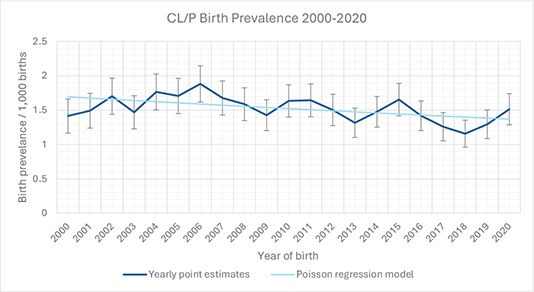
Figure 1. Cleft lip and/or palate birth prevalence, Sweden 2000-2020.
Error bars represent 95% confidence intervals. CL/P: cleft lip and/or palate.
Cleft type subgroups
Of the 3,386 children born with CL/P, 100 were given more than one cleft diagnosis. Following the rationale for in- and exclusion of children with more than one cleft diagnosis, explained in the methods section, eight children were excluded from the CP group as they also had a CLP diagnosis. Twenty-three children were excluded from the UCLP group as they were also given a BCLP diagnosis in the register. Twenty-nine children were included in both the CP and CL ± P groups as they were given both diagnoses in the register, and five children were included in both the BCL ± P and the UCLP groups for the same reason. A flowchart illustrating the number of children included in each cleft type subgroup is shown in Figure 2.
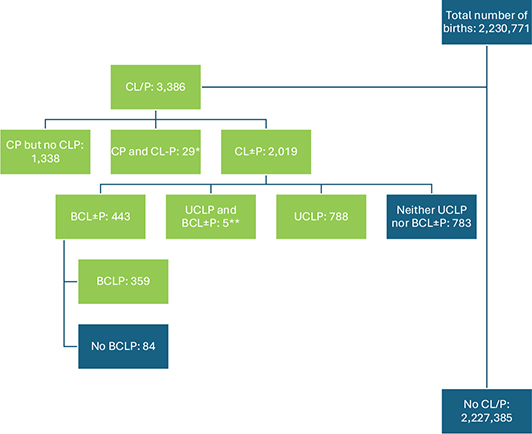
Figure 2. Flowchart illustrating cleft type subgroup inclusion.
*Included in both CP and CL ± P group. **Included in both BCL ± P and UCLP group. Green boxes indicate subgroups used in analyses. CL/P: cleft lip and/or palate; CP: cleft palate without cleft lip; CLP: cleft lip and palate; CL - P: cleft lip without cleft palate; CL ± P: cleft lip with or without cleft palate; BCL ± P: bilateral cleft lip with or without cleft palate; UCLP: unilateral cleft lip and palate; BCLP: bilateral cleft lip and palate.
During the whole period, the birth prevalences per 1,000 births were 0.61 for CP, 0.92 for CL ± P, 0.20 for BCL ± P, 0.36 for UCLP, and 0.16 for BCLP. Details are shown in Table 2.
To further analyze the birth prevalence trends for the different cleft types over time, Poisson regression analyses were performed for each subgroup separately. The yearly point estimates for CP, UCLP, and BCLP together with the corresponding Poisson regression models are shown in Figure 3. Yearly point estimates and Poisson regression models for CL ± P and BCL ± P are shown in Figure 4. Details are shown in Table 3. For CP, the Poisson regression risk ratio was 1.001, but the result was not statistically significant. The results for CL ± P and BCL ± P were both statistically significant, and the risk ratios were 0.981 and 0.967, respectively. The same was true for UCLP and BCLP, with risk ratios 0.987 and 0.966, respectively. This suggests a decreasing birth prevalence for CL ± P, BCL ± P, UCLP, and BCLP but not for CP. When adjusting for maternal smoking, the decreasing trend for UCLP was no longer statistically significant, with a risk ratio of 0.989 (0.978–1.001, p-value 0.081). For the other cleft subtypes, adjusting for smoking did not significantly change the risk ratios.
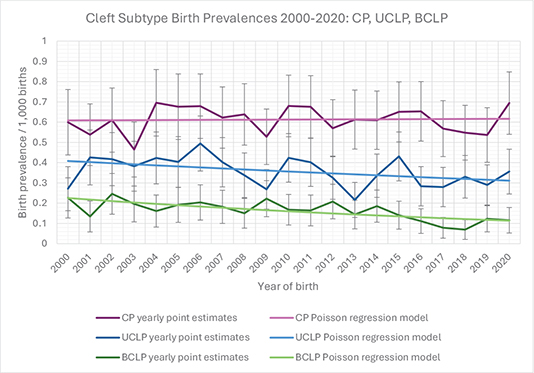
Figure 3. Cleft lip and/or palate subtype birth prevalence, Sweden 2000-2020: CP, UCLP, BCLP.
Error bars represent 95% confidence intervals. CP: cleft palate without cleft lip; UCLP: unilateral cleft lip and palate; BCLP: bilateral cleft lip and palate.

Figure 4. Cleft lip and/or palate subtype birth prevalence, Sweden 2000-2020: CL ± P, BCL ± P.
Error bars represent 95% confidence intervals. CL ± P: cleft lip with or without cleft palate; BCL ± P: bilateral cleft lip with or without cleft palate.
Sex
The birth prevalences of CL/P and the studied subgroups during 2000–2020, for boys and girls, respectively, are shown in Table 4. The groups were compared using the chi2 test. The analyses showed that CL/P was more commonly found in boys (1.67 / 1,000) compared to girls (1.36 / 1,000), and that the difference was statistically significant. The birth prevalences for CL ± P, BCL ± P, UCLP, and BCLP were also significantly higher for boys than for girls, while girls were significantly more often diagnosed with CP. Details are shown in Table 4.
| CL/P | CP | CL ± P | BCL ± P | UCLP | BCLP | |
| Birth prevalence in boys / 1,000 (95% CI) | 1.67 (1.60–1.75) | 0.52 (0.48–56) | 1.16 (1.10–1.22) | 0.26 (0.23–0.29) | 0.45 (0.41–0.49) | 0.20 (0.18–0.23) |
| Birth prevalence in girls / 1,000 (95% CI) | 1.36 (1.29–1.43)* | 0.71 (0.66–0.76)* | 0.66 (0.61–0.71)* | 0.14 (0.12–0.16)* | 0.25 (0.22–0.28)* | 0.11 (0.09–0.13)* |
| Chi2 test, boys versus girls | p < 0.001 | p < 0.001 | p < 0.001 | p < 0.001 | p < 0.001 | p < 0.001 |
| Birth prevalences of cleft lip and/or palate and certain subtypes, for boys and girls, Sweden 2000-2020. *Indicates significant difference compared to boys using chi² test. CL/P: cleft lip and/or palate; CP: cleft palate without cleft lip; CL ± P: cleft lip with or without cleft palate; BCL ± P: bilateral cleft lip with or without cleft palate; UCLP: unilateral cleft lip and palate; BCLP: bilateral cleft lip and palate; CI: confidence interval. |
||||||
The Poisson regression models were adjusted for sex. The results showed no significant changes in the risk ratios for either CL/P or the studied subtypes when adjusting for sex.
Discussion
The primary aim of this study was to determine the birth prevalence of CL/P in Sweden during the studied period 2000–2020. This was found to be 1.52 / 1,000 births. There was a statistically significant trend of a decreasing birth prevalence, with a yearly risk ratio of 0.989. In the analysis of cleft subtypes, significantly decreasing birth prevalences were found for CL ± P, BCL ± P, UCLP, and BCLP, but not for CP. The subgroups included in the present study were chosen as we wanted to examine the trends in birth prevalence not only for CL/P but also for all bilateral cases as a decreasing trend had been observed in clinical practice. The CL ± P group was included as it can be antenatally diagnosed through ultrasound, which might be one of the reasons behind the decreasing birth prevalence, as discussed below. CP, UCLP, and BCLP are relevant groups often used in both clinical practice and in research, and therefore they were also included in the analyses.
The overall birth prevalence of 1.52 / 1,000 births is somewhat lower than numbers presented in previous studies in Sweden, such as those published by Hagberg [17] (2.0 / 1,000 live births) and Beckman and Myrberg [18] (1.7 / 1,000 live births). The lower birth prevalence in the present study is supported by the fact that we also found a decreasing trend, suggesting that the birth prevalence should be higher in the mentioned previous studies as they are both more than 25 years old. The more recent Swedish study that focused on CP birth prevalence, published by Chetpakdeechit et al. [19] in 2012, found numbers (0.64 / 1000 births) that are similar to those found in our study (0.61 / 1000 births). In 2018, Tillman et al. published a large study including children born with cleft in Sweden during a 40-year period (1973–2012) [22]. The study was based on MFR in combination with other Swedish registers. Its focus was not on cleft birth prevalence, but the number of children born with a cleft during the 40-year period can be compared to the 21-year period in our study. In the study by Tillman et al., 7,842 children with cleft were included, compared to 3,386 in our study, suggesting a similar but somewhat higher birth prevalence as the period was approximately twice as long. Similarly, the findings presented in our study can be compared to data from the Swedish National CL/P Register, which has a 94.6% degree of coverage for children born in 2009–2022 [23]. According to the latest annual report from the register, 2,501 children born with cleft in Sweden during a 15-year period (2009–2023) were included [23]. Extrapolating this number to represent a 21-year period, the number becomes 3,501, which is similar to the number presented in our study (3,386).
Internationally, a study from 2012 [24] including data from 57 different registries suggested a mean CL/P birth prevalence in Europe of 1.36 / 1,000 births, with a higher prevalence of 2.0 / 1,000 in Northern Europe. Hence, these findings also correspond rather well with our findings, albeit with somewhat higher numbers in Northern Europe than were found in our study. A Taiwanese study from 2016 included 7282 children born with cleft between 1994 and 2013 [25]. There, the birth prevalence of CL/P was 1.48 / 1000, close to that found in our study. They observed a similar decreasing trend in the birth prevalence of CL ± P but a slightly increasing trend for CP.
The differences in cleft birth prevalences between boys and girls observed in this study are mostly in accordance with what has been shown in earlier studies, with higher CL/P [11–13] and CL ± P [14] birth prevalences in boys, but higher CP [14] birth prevalence in girls. When it comes to bilateral cases, there are few reliable studies, but a higher birth prevalence of BCLP in boys hase been shown in a few studies [17, 26]. The overall birth ratio between boys and girls was not expected to have changed in a significant way during the studied period. However, to ensure the changes in cleft birth prevalences were not attributable to changing gender distribution at birth, the Poisson regression models were adjusted for sex. As expected, the risk ratios did not change significantly when adjusting for sex, implying that the decreasing birth prevalences of CL/P, CL ± P, BCL ± P, UCLP, and BCLP cannot be explained by changing gender distributions at birth.
There are several different potential explanations for the decreasing CL/P birth prevalence found in the present study. One is that pregnancies where the cleft is diagnosed prenatally are more frequently terminated, something that has been suggested in a previous study when it comes to more severe clefts [27]. This could go toward explaining why the present study showed that clefts including the lip (CL ± P, BCL ± P, UCLP, and BCLP) are decreasing in birth prevalence while that of CP seems to be static. A Swedish report published by the National Board of Health and Welfare in 2024 showed that during the period 1999–2017, 22 out of 3,160 pregnancies (0.7%) where an orofacial cleft had been diagnosed were terminated because of the cleft. During the period 2018–2022, the numbers were 24/761 (3.2%) [28]. Although this suggests the frequency of planned abortions due to cleft might be increasing, the percentage of pregnancies that are terminated is still low in Sweden. All pregnant women in Sweden are offered an ultrasonography during gestation weeks 18–20, and those who wish may also undergo an early ultrasonography during gestation weeks 12–13 in combination with biochemical testing. Although CL/P can be diagnosed on an early ultrasonography during the first trimester, reports regarding the accuracy are scarce [29]. According to Swedish legislation, abortions are allowed until the end of gestation week 18. After that, abortion can be permitted until the end of gestation week 21 with special permit from the National Board of Health and Welfare (SoS). Specifying the reason for terminating a pregnancy is voluntary in Sweden, which means that pregnancies that are terminated because of a cleft might be missing in the available data. Studies from other countries have shown that abortion because a cleft has been antenatally diagnosed might be significantly more frequent than in the aforementioned Swedish report [27, 30]. However, the findings in the present study can neither confirm nor reject the hypothesis that the decreasing birth prevalence of CL/P is attributable to increasing abortion rates.
Another explanation of the decreasing CL/P birth prevalences could be an increased awareness of the risk factors for cleft and actions taken to decrease these risks. One known factor that could contribute to the decreasing birth prevalence is maternal smoking [31]. Smoking is becoming less common in Sweden [32], hence decreasing the exposure to this risk factor. This was the reason separate Poisson regression models adjusted for maternal smoking were fitted. However, although maternal smoking decreased during the studied period, adjusting for it did not change the observed trends in cleft birth prevalences. This suggests that changing smoking habits cannot entirely explain the decreasing birth prevalence. UCLP was an exception, as the decreasing trend in birth prevalence was no longer statistically significant after adjusting for maternal smoking. The details of the Poisson regression for UCLP when adjusting for smoking showed p-value of 0.081 and a risk ratio confidence interval that barely includes 1.000 (0.978–1.001), suggesting the decreasing trend is still there although no longer statistically significant. However, the findings highlight the effect of maternal smoking on the risk of cleft development.
It is known that the birth prevalence of clefts differs between populations [6, 7]. Thus, another explanation for the decreasing prevalence in Sweden could be the increasingly multi-ethnic population in the country. As of 2023, more than two million people in Sweden (with a total population approx. 10 million) were born abroad, compared to one million in 2000 [33].
The decreasing birth prevalence of CL/P, with CL ± P, BCL ± P, UCLP, and BCLP decreasing but CP being static, should lead to a higher proportion of children with CP compared to children with clefts affecting the lip. As the different cleft morphologies require different methods for treatment, this will affect cleft care. Firstly, children with CP require fewer primary surgical procedures. Secondly, the clefts involving the lip can lead to esthetic issues even after surgery and cause a significant psychosocial stress for the child [34]. This might not be the case with clefts only involving the palate although it should be noted that a study from 2017 found that children with only cleft lip were more satisfied with their appearance than those with CLP or CP [35]. On the other hand, speech can be affected by both CP and CLP, with some studies even suggesting speech problems might be more common in the CP group [36].
The main strength of the present study is the high number of included children, representing almost all children born in Sweden during the studied period. The high coverage rate of the MFR is a strength that increases the reliability of the data. Weaknesses include the fact that only children born in Sweden were included, meaning the possibilities of coming to conclusions that are valid in other populations are limited. There is also a risk of missing data on CL/P diagnoses in the register; however, this risk is likely to be small as the standardized pediatric evaluation that all children are subject to includes examination of the palate, and clefts affecting the lip are unlikely to be overseen. Another related limiting factor is the heterogeneity of the CL/P group when it comes to cleft morphology. Clefts occur in many different combinations and variants that are difficult to fit entirely into larger subgroups such as those used in this study. The heterogeneity also increases the risk of erroneous reporting in MFR and other registers. For example, one can imagine that a cleft lip in combination with a cleft palate might sometimes be reported as a CLP. This makes the data in the registers less reliable. Nevertheless, the subgroups included in the present study are commonly used, and our assessment based on clinical practice is that data should be relatively reliable on a group level.
The vast dataset, with several variables that have not been used in the present study, offers an opportunity to perform further analyses; however, with the intentions of answering the research questions of this study, we chose to limit the number of analyses. We plan on using the dataset for further analyses and scientific articles regarding the epidemiology of CL/P and its risk factors, such as maternal smoking, maternal body mass index, and maternal diagnoses. It would also be interesting to examine differences in cleft occurrence in different geographical regions of Sweden, as such differences have been noted earlier [18]. Furthermore, the present study did not differentiate between syndromic and nonsyndromic CL/P, something that would be possible to do by determining which children had a syndrome diagnose registered.
In conclusion, this study produced a reliable estimate of the birth prevalence of CL/P in Sweden during the years 2000–2020. Three thousand three hundred and eighty-six children were born with CL/P during the period, out of a total 2,230,771 births, giving a birth prevalence of 1.52 / 1,000. Reliable estimates of birth prevalence contribute to the general knowledge about the condition, as well as valuable input when it comes to the planning of CL/P care in Sweden. CL/P was more common in boys than in girls, in accordance with previous findings. During the 21-year period, the yearly risk ratio of a child being born with CL/P was 0.989. This decreasing birth prevalence can be attributed to a decrease in the birth prevalences of clefts affecting the lip (CL ± P, UCLP), among them bilateral clefts (BCL ± P, BCLP). The birth prevalence of cleft palate without cleft lip (CP) did not change significantly during the period, which over time will lead to a larger proportion of children with CP. This may affect clinical cleft care, as treatment protocols differ depending on cleft subtype. The reasons for the decreasing birth prevalence have not been examined in the present study, and there are several potential explanations that need to be explored further in future research.
References
[1] Moore G, Ivens A, Chambers J, et al. The application of molecular genetics to detection of craniofacial abnormality. Development. 1988;103 Suppl:233–239. https://doi.org/10.1242/dev.103.Supplement.233
[2] Kohli SS, Kohli VS. A comprehensive review of the genetic basis of cleft lip and palate. J Oral Maxillofac Pathol. 2012;16(1):64-72.
[3] Aslar Oner D, Taştan H. Cleft lip and palate: epidemiology and etiology. Otorhinolaryngol Head Neck Surg. 2020;5: 1-5 https://doi.org/10.15761/OHNS.1000246
[4] Mossey PA, Little J, Munger RG, et al. Cleft lip and palate. Lancet. 2009;374(9703):1773–1785. https://doi.org/10.1016/S0140-6736(09)60695-4
[5] Murray JC. Gene/environment causes of cleft lip and/or palate. Clin Genet. 2002;61(4):248–256. https://doi.org/10.1034/j.1399-0004.2002.610402.x
[6] Panamonta V, Pradubwong S, Panamonta M, et al. Global birth prevalence of orofacial clefts: a systematic review. J Med Assoc Thai. 2015;98 Suppl 7:S11–S21.
[7] Stoll C, Alembik Y, Roth MP. Co-occurring anomalies in congenital oral clefts. Am J Med Genet A. 2022;188(6):1700–1715. https://doi.org/10.1002/ajmg.a.62689
[8] Croen LA, Shaw GM, Wasserman CR, et al. Racial and ethnic variations in the prevalence of orofacial clefts in California, 1983–1992. Am J Med Genet. 1998;79(1):42–47.
[9] Moorthie S, Blencowe H, Darlison MW, et al. Estimating the birth prevalence and pregnancy outcomes of congenital malformations worldwide. J Community Genet. 2018;9(4):387–396. https://doi.org/10.1007/s12687-018-0384-2
[10] Cardoso-Dos-Santos AC, Alves RSM, et al. National congenital anomaly registers in the world: historical and operational aspects. Epidemiol Serv Saude. 2021;30(4):e2021075. https://doi.org/10.1590/s1679-49742021000400015
[11] Aljohar A, Ravichandran K, Subhani S. Pattern of cleft lip and palate in hospital-based population in Saudi Arabia: retrospective study. Cleft Palate Craniofac J. 2008;45(6):592–596. https://doi.org/10.1597/06-246.1
[12] Yılmaz HN, Özbilen E, Üstün T. The prevalence of cleft lip and palate patients: a single-center experience for 17 years. Turk J Orthod. 2019;32(3):139–144. https://doi.org/10.5152/TurkJOrthod.2019.18094
[13] Al Omari F, Al-Omari IK. Cleft lip and palate in Jordan: birth prevalence rate. Cleft Palate Craniofac J. 2004;41(6):609–612. https://doi.org/10.1597/03-034.1
[14] Matthews JL, Oddone-Paolucci E, Harrop RA. The epidemiology of cleft lip and palate in Canada, 1998 to 2007. Cleft Palate Craniofac J. 2015;52(4):417–424. https://doi.org/10.1597/14-047
[15] Clementi M, Tenconi R, Bianchi F, et al. Evaluation of prenatal diagnosis of cleft lip with or without cleft palate and cleft palate by ultrasound: experience from 20 European registries. EUROSCAN study group. Prenat Diagn. 2000;20(11):870–875. https://doi.org/10.1002/1097-0223(200011)20:11<870::AID-PD940>3.0.CO;2-J
[16] Guichoud Y, El Ezzi O, de Buys Roessingh AS. Cleft lip and palate antenatal diagnosis: a Swiss University center performance analysis. Diagnostics. 2023;13: 1-10 https://doi.org/10.3390/diagnostics13152479
[17] Hagberg C, Larson O, Milerad J. Incidence of cleft lip and palate and risks of additional malformations. Cleft Palate Craniofac J. 1998;35(1):40–45.
[18] Beckman L, Myrberg N. The incidence of cleft lip and palate in Northern Sweden. Hum Hered. 1972;22(5):417–422. https://doi.org/10.1159/000152519
[19] Chetpakdeechit W, Mohlin B, Persson C, et al. Cleft extension and risks of other birth defects in children with isolated cleft palate. Acta Odontol Scand. 2010;68(2):86–90. https://doi.org/10.3109/00016350903258003
[20] Rydberg H, Månsson H. Statistical register’s production and quality National Medical Birth Register. National Board of Health and Welfare, 2021; p. 210914.
[21] World Health Organization. International statistical classification of diseases and related health problems 10th revision (ICD-10) Internet. World Health Organization; 2016. [cited 2025-01-31] Available from: https://icd.who.int/browse10/2016/en
[22] Tillman KK, Hakelius M, Höijer J, et al. Increased risk for neurodevelopmental disorders in children with orofacial clefts. J Am Acad Child Adolesc Psychiatry. 2018;57(11):876–883. https://doi.org/10.1016/j.jaac.2018.06.024
[23] LKG-registret. Årsrapport avseende data och aktiviteter 2023. Registercentrum Syd. [cited 2025-04-01] 2024. https://rcsyd.se/lkg-registret/wp-content/uploads/sites/11/2024/09/Arsrapport-avseende-data-och-aktiviteter-2023.pdf
[24] Mossey PA, Modell B. Epidemiology of oral clefts 2012: an international perspective. Front Oral Biol. 2012;16:1–18. https://doi.org/10.1159/000337464
[25] Chang WJ, See LC, Lo LJ. Time trend of incidence rates of cleft lip/palate in Taiwan from 1994 to 2013. Biomed J. 2016;39(2):150–154. https://doi.org/10.1016/j.bj.2015.10.003
[26] Blanco-Davila F. Incidence of cleft lip and palate in the northeast of Mexico: a 10-year study. J Craniofac Surg. 2003;14(4):533–537. https://doi.org/10.1097/00001665-200307000-00027
[27] Emodi O, Capucha T, Shilo D, et al. Trends in cleft palate incidence in the era of obstetric sonography and early detection. J Matern Fetal Neonatal Med. 2022;35(25):9350–9355. https://doi.org/10.1080/14767058.2022.2032635
[28] Källén K. Fosterskador och kromosomavvikelser 2022. Socialstyrelsen; 2024. https://www.socialstyrelsen.se/globalassets/sharepoint-dokument/artikelkatalog/ovrigt/2024-6-9179.pdf
[29] Divya K, Iyapparaja P, Raghavan A, et al. Accuracy of prenatal ultrasound scans for screening cleft lip and palate: a systematic review. J Med Ultrasound. 2022;30(3):169–175. https://doi.org/10.4103/jmu.jmu_20_22
[30] Lau WHE, Lai F, Lo T, et al. Ethical discussion: termination of pregnancy after prenatal diagnosis of cleft lip in a Chinese population in Hong Kong. Hong Kong J Gynaecol Obstet Midwifery. 2023;13: 74-80
[31] Källén K. Maternal smoking and orofacial clefts. Cleft Palate Craniofac J. 1997;34(1):11–16. https://doi.org/10.1597/1545-1569_1997_034_0011_msaoc_2.3.co_2
[32] Public Health Agency of Sweden. Towards a smoke-free Sweden. Public Health Agency of Sweden; 2024. [cited 2024-12-15] Available from: https://www.folkhalsomyndigheten.se/the-public-health-agency-of-sweden/living-conditions-and-lifestyle/andtg/tobacco/towards-a-smoke-free-sweden/
[33] Statistics Sweden. Utrikes födda i Sverige Internet. Statistics Sweden; 2024 [cited 2025-01-31] Available from: https://www.scb.se/hitta-statistik/sverige-i-siffror/manniskorna-i-sverige/utrikes-fodda-i-sverige/
[34] Hunt O, Burden D, Hepper P, et al. The psychosocial effects of cleft lip and palate: a systematic review. Eur J Orthod. 2005;27(3):274–285. https://doi.org/10.1093/ejo/cji004
[35] Glener AD, Allori AC, Shammas RL, et al. A population-based exploration of the social implications associated with cleft lip and/or palate. Plast Reconstr Surg Glob Open. 2017;5(6):e1373. https://doi.org/10.1097/GOX.0000000000001373
[36] Klintö K, Eriksson M, Abdiu A, et al. Inter-centre comparison of data on surgery and speech outcomes at 5 years of age based on the Swedish quality registry for patients born with cleft palate with or without cleft lip. BMC Pediatr. 2022;22(1):303. https://doi.org/10.1186/s12887-022-03367-2