ORIGINAL RESEARCH ARTICLE
Empowering women considering reconstructive breast surgery – a Danish cohort study on decisional conflict and regret
Bekka Christensena, Karina Steffensenb, Anna Mejldalc and Vibeke Koudahld
aPlastic Surgery Section. Lillebaelt Hospital, Vejle, Denmark; bLillebaelt Hospital – University Hospital of Southern Denmark, Center for Shared Decision Making, Vejle, Denmark; cOPEN, Open Patient Data Explorative Network, Odense Universitetshospital, Odense, Denmark; dDepartment of Plastic Surgery, Odense University Hospital, Odense, Denmark
ABSTRACT
Backround: Breast reconstructive surgery following mastectomy or lumpectomy presents a significant decisional challenge for patients. The emotional weight of a cancer diagnosis and the complexity of surgical options necessitate a comprehensive support system to guide patients through their choices. This study investigates the implementation of a structured information process using patient decision aids (PtDAs) to enhance the decision-making process, increase patient engagement, and reduce decisional conflict and regret.
Methods: From 2018 to 2021, Vejle Hospital, Denmark, invited 104 patients at risk or diagnosed with breast cancer to participate in a study of shared decision making in reconstructive surgery. Participants were offered two independent consultations with a plastic surgeon, and in the intervention group, a PtDA, which included a paper folder and short films on breast surgery. Outcomes were measured with validated questionnaires.
Results: The study found no significant difference in decisional conflict or regret between patients who used shared decision making and the PtDA and those who did not. However, there was a significant reduction in decisional conflict within both groups between the first and second consultations.
Conclusion: The results indicate that our consultations, with the structured information process, successfully reflected patient engagement and supported patients in making informed decisions about breast reconstruction, leading to low levels of decision conflict and regret in both groups. This approach could serve as a model for other institutions aiming to improve patient-centered care.
KEYWORDS: Breast cancer; breast reconstruction; Breast; Oncoplastic breast surgery; shared decision making; decision conflict; decisional regret; patient decision aid
Citation: Journal of Plastic Surgery and Hand Surgery 2025; 60: 164–170. DOI: https://doi.org/10.2340/jphs.v60.44584.
Copyright: © 2025 The Author(s). Published by MJS Publishing on behalf of Acta Chirurgica Scandinavica. This is an Open Access article distributed under the terms of the Creative Commons Attribution 4.0 International License (https://creativecommons.org/licenses/by/4.0/), allowing third parties to copy and redistribute the material in any medium or format and to remix, transform, and build upon the material, with the condition of proper attribution to the original work.
Received: 31 January 2025; Accepted: 26 July 2025; Published: 25 August 2025
CONTACT: Bekka Christensen bekka.christensen@rsyd.dk Plastic surgery section, Lillebaelt Hospital, Beridderbakken 4, 7100 Vejle, Denmark
Supplemental data for this article can be accessed online at https://doi.org/10.2340/jphs.v60.44584
Competing interests and funding: The authors report there are no competing interests to declare.
Introduction
Breast reconstruction following mastectomy or oncoplastic surgery is an essential aspect of breast cancer treatment. As medical advancements provide more surgical options, including reconstruction with implants, autologous tissue, or a combination, women are confronted with highly complex decisions about their surgical choices. These decisions are difficult, often irreversible, and deeply personal, impacting body image, quality of life, and emotional well-being [1–3]. The risk of complications, reconstructive failure, or disappointing esthetic results further complicates the decision-making process when considering the tradeoff between results and risks [1–5].
Health-related decision-making is a complex process given the variability of treatment options, conflicting treatment plans, time constraints, and variable outcomes. This complexity may result in patients experiencing both a conflict regarding their treatment decision and decisional regret following decision-making. We regret choices we make, especially with conflict and worry that we should have made different choices. There are developed questionnaires that try to capture and define these experiences of conflict and regret [6, 7].
A breast cancer diagnosis is a profoundly life-altering event, emphasizing the critical need for a supportive process to help women make informed decisions about surgical treatment options. In addition, the Danish Health Authority has established time-sensitive patient pathways for breast cancer care, leaving women with only weeks to process information and make informed decisions. This creates a delicate balance between ensuring timely treatment and fostering meaningful patient involvement.
Shared decision making provides a structured approach to addressing the complexity of medical decision making, particularly in situations where patient preferences play a crucial role [8, 9]. As a collaborative process, shared decision making facilitates discussions between patients and healthcare professionals, integrating clinical evidence and patient preference to guide decision making during consultations [9, 10]. Patient decision aids (PtDAs) play a pivotal role in shared decision making. These tools provide structured balanced information, clarify options, and facilitate a meaningful dialogue. While previous studies have predominantly focused on either shared decision making or PtDAs, there is limited research on breast reconstructive surgery that examines the decision process within a specifically optimized clinical setting using shared decision making and a patient decision aid.
In this article, we report the first Danish study, including the development and integration of a patient decision aid with shared decision making among women considering breast reconstructive surgery following mastectomy or oncoplastic lumpectomy. The hypothesis is that shared decision making in combination with a customized patient decision aid in a standardized clinical setting will increase patient engagement in the decision making process for women considering reconstructive surgery, thereby increasing patient involvement and decreasing decisional conflict and decisional regret.
Materials and methods
Study design
We conducted a prospective, controlled cohort study at the Plastic Surgery Section, Lillebaelt Hospital – University of Southern Denmark, Vejle, Denmark in 2018–2021. In our outpatient clinic, all patients eligible for inclusion in this study were invited to participate before their first consultation with a plastic surgeon. Inclusion criteria were patients referred with a diagnosis of breast cancer, carcinoma in situ, genetic disposition, or prior mastectomy and considering breast reconstructive surgery. Exclusion criteria were age under 18 or over 70 years, BMI above 30, smoking, and patients not fluent in Danish. Based on available literature on film and decisions regarding literature regarding the inclusion of film in surgical decision making [11], we aimed at including 80 patients.
Patients in the control group were included continuously from August 2018 to August 2019, while those in the intervention group were included from September 2019 to January 2021.
Patients in the control group were offered two standard consultations before making a decision regarding surgery. In these consultations the patients’ surgical options and preferences were discussed in addition with a clinical examination’. Patients in the intervention group were offered the same two standard consultations and were also introduced to the patient decision aid at the first preoperative consultation.
Demographic data were recorded prospectively, including diagnosis, data on adjuvant therapy, and if the patient was accompanied by a companion during decision making.
Decision aid
The patient decision aid consists of two parts and was developed specifically for women considering reconstructive breast surgery. The included information was based on a review of the available evidence on reconstructive procedures.
The format of the patient decision aid was based on an existing generic patient decision aid template that was designed for tailoring to unique areas of health care [12]. The patient decision aid was developed according to the development process described by Coulter et al [13] in collaboration with the Department of Plastic Surgery and the Center for Shared Decision Making, Lillebaelt Hospital – University of Southern Denmark, Vejle, Denmark, following the International Patient Decision Aid Standards (IPDAS) [12].
The first part of the patient decision aid was a pamphlet with option cards that include text and icons presenting information about the different options for reconstructive surgery, including the option of ‘no reconstructive surgery’. Each card had a pro and con section [14, 15]. Home access to the patient decision aid was established with the application ‘Mit Sygehus’, a feature in the electronic patient journal in the Region of Southern Denmark enabling direct communication with patients.
The PtDAs assisted in structuring the information and discussion in the consultation, starting with the acknowledgement that the patient had multiple surgical options. The consultation covered discussing options, took into account the patients’ personal circumstances, and addressed the significance of breast reconstruction in relation to the potential for extended recovery time and increased risk of surgical complications [2, 8, 9].
The second part of the PtDAs consisted of short films assessable from outside the hospital in between consultations. The purpose of utilizing films as a patient decision aid was to provide patients with a framework for non-written knowledge about their options, addressing common concerns, ensuring a knowledge base, and showing visual results of different surgical procedures. The developed seven films included informative stories about the general circumstances of breast surgery, the anatomic structures of the breast, the most common reconstructive procedures, and interviews with patients sharing their experiences. The information was adjusted to require minimal academic training, using simplified phrasing combined with graphics and pictures to enhance comprehension for patients. For further details, please refer to supplementary material.
Measurements
To investigate the patients’ experience of shared decision making with a patient decision aid, we used the validated questionnaire CollaboRATE [16]. The questionnaire measures the degree of patient-perceived involvement in the consultation, assessing the extent to which shared decision making was present in the clinical encounter. This was administered to the patient after the first consultation. Figure 1 shows the timeline graphically and displays the different questionnaires in relation to the consultations. CollaboRATE is a 3-item, 10-point scale ranging from zero (no effort was made) to nine (every effort was made). A higher score indicates greater patient involvement, inclusion, and integration of their preferences. We calculated the top score as a percentage according to the scoring manual [17]. To elucidate the awareness of being invited to be a part of the decision process, we used an additional question: ‘was it made clear to you that you were asked to take part in decision making?’
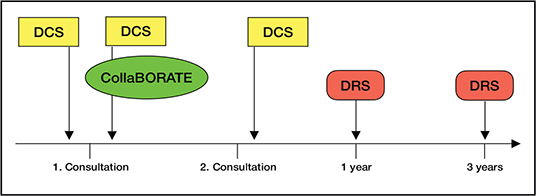
Figure 1. Presents the consultation process indicating the timeline of measurements in the study using validated questionnaires: Decisional Conflict Score (DCS), CollaBoRATE and Decisional Regret Score.
We used the validated questionnaire Decisional Conflict Scale (DCS) [6, 7, 18, 19] to measure the patients’ perception of decision making difficulty, focusing on the degree of the patient’s internal conflicts and uncertainty (Figure 1). The decisional conflict score is a 16-item, 5-point Likert scale. The scale consists of five subscales containing three to four questions regarding uncertainty, information, values clarity, support, and effective decision. The overall score and sub-scores were calculated according to the decisional conflict score user manual. The total score ranges from zero (no decisional conflict) to 100 (extremely high level of decisional conflict). Scores lower than 25 are associated with readiness to decide, and scores above 37.5 are associated with feeling unsure and not ready to execute a decision.
The validated questionnaire Decisional Regret Scale (DRS) [6, 18] was used to assess the patients’ distress or remorse following a healthcare (surgical) decision. We measured decisional regret after 12 and 36 months, allowing patients time to reflect. The questionnaire was distributed automatically according to inclusion date, thereby ensuring the same average follow-up time for all participants. All women received an invitation to answer our questionnaires, and if they did not respond within a week, they were sent two reminder letters at 1-week intervals. The DRS is a 5-item, 5-point Likert scale. The overall score and sub-scores were calculated according to the DRS user manual [19]. The total score ranges from zero (no regret) to 100 (high regret). Twenty-five points or higher indicates high regret. Inspired by other studies [20] we introduced a cut-off at 25 points, dividing patients into 2 groups; that is, scores below and above 25 were categorized as mild regret and high-level regret.
The Danish versions of CollaboRATE, DCS, and DRS were translated using forward-backward translation procedures in accordance with established guidelines and, to varying degrees, pilot-tested prior to use. They have not been psychometrically validated in Danish, but in the original languages.
Statistical analysis
Based on available literature regarding the inclusion of film in surgical decision making, a sample size of 50 patients (standardized difference of 0.8, p < 0.05, power of 80%) was required for this study [11]. Anticipating a 20% rate of missing data and patient drop-out over time, we aimed to include 80 patients. Descriptive statistics summarized baseline demographic and clinical characteristics, with means or proportions depending on the variable type. Independent two-sample t-tests or Wilcoxon rank-sum tests were used for continuous data, and chi-square tests for categorical data. Significance was determined at p < 0.05. All statistical analyses were conducted using STATA version 17. Linear mixed models were employed to analyze the DCS scores, including subscales, to account for repeated measures and within-subject correlation. Assumptions were tested, and a robust method was applied to address slight deviations from normality. For DRS scores, differences between 12 and 36 months were assessed using the Wilcoxon rank-sum test for continuous outcomes. For the categorical version of the DRS, the marginal homogeneity test was applied to evaluate changes over time within groups. The continuous Collaborate score was analyzed using the Wilcoxon rank-sum test, and the dichotomous version was analyzed using the chi-square test. Significance was determined at a p of < 0.05. All analyses were undertaken using STATA 17. Study data were collected and managed using REDCap electronic data capture tools hosted at The Department of Plastic Surgery, Lillebaelt Hospital – University of Southern Denmark, Vejle, Denmark [21].
Ethical considerations
The Region of Southern Denmark registered and approved the project according to the EU’s General Data Protection Regulation (17/31271). The study was presented to the Regional Committee on Health Research and was approved (Project-ID: S-20180038).
Results
Patients in the control group (n = 39) were included from August 2018 to August 2019, and the intervention group (n = 65) from September 2019 to January 2021. All patients invited to participate accepted, except for two women invited to the control group; one requested exclusion after the first consultation due to personal life changes and the second after 1 year, expressing increased nervousness at receiving the invite to answer questionnaires. Women were invited to answer follow-up questions online; we therefore have no knowledge of their reasons not to participate. There was no statistically significant difference in patient characteristics between the two groups (Table 1).
| Patients (n = 104) mean (SD) | Control group (n = 39) (%) | Intervention/SDM** group (n = 65) (%) | p |
| Age | 48.5 (10.8) | 48.2 (10.6) | 0.88 |
| Body mass index | 23 (3.3) | 24 (3.0) | 0.05 |
| Diagnosis cancer | 24 (64.9) | 41 (64.1) | 0.88 |
| Diagnosis DCIS | 6 (15) | 9 (14) | 0.83 |
| Radiation therapy | 17 (44) | 20 (31) | 0.95 |
| Chemotherapy | 21 (54) | 34 (52) | 0.28 |
| Genetically known high risk of breast cancer | 13 (33) | 15 (23) | |
| Comorbidity (min 1) | 9 (23) | 16 (25) | 0.81 |
| Cohabitant | 37 (79) | 50 (77) | 0.82 |
| Accompanying companion | 23 (59) | 42 (65) | 0.54 |
| Working | 25 (64) | 37 (57) | 0.97 |
| *Not working | 9 (23) | 27 (23) | |
| *Includes retired, sick leave and unemployed. **SDM: Shared decision making |
|||
Patient Involvement in Decision Making (CollaboRATE)
There was no significant difference in the measured patient engagement. The median CollaboRATE score (IQR) in the control group was (n = 39): 8.7 (7.7, 9.0) and in the intervention group the median was (n = 61): 9.0 (8.0, 9.0), p = 0.75.
The top score by definition is calculated as a percentage. In the control group, 49% of the 39 patients reported a full CollaboRATE maximum top score after the consultation. In the intervention group, this was 51% of the 61 patients. There was no statistical difference between the groups p = 0.84. The question ‘Was it made clear to you that you were asked to take part in decision making?’ was not significantly different between the groups. Of the 104 patients included in the study, only six answered below seven, and no patients answered below four on a scale from 0 to 9. Four patients were excluded due to missing questionnaire answers.
Decisional conflict
As expected, there was no difference in decisional conflict, at baseline, between the control group and the intervention group before their first consultation (control: 42.07 [34.32–49.82], intervention: 43.68 [38.32–49.03], p = 0.87). Further, the two groups did not have any demographically significant differences at baseline. Decisional conflict decreased, in both groups, over the course of the consultations as patients became more informed and engaged in the decision-making process (Figure 2). Specifically, the total reduction in decisional conflict was –33.63 points in the intervention group compared to –31.22 points in the control group. Both groups exhibited low DCS scores throughout the study, with no statistically significant differences observed at any time point (Tables 2 and 3). There was a significant decrease in decisional conflict scores for both groups in the total score and all five subunits from before the first consultation to after the first consultation. Most importantly, the study revealed a further significant decrease from the first consultation to after the second consultation. The two consultations resulted in a significant decrease in decisional conflict in both groups (Tables 2 and 3).
| Decisional conflict Scale after first consultation | Control | SDM** | Difference from baseline between groups (95%CI) | P- value, difference from baseline |
| Mean Total Score | 20.34 (14.33;26.35) | 22.53 (18.31;26.75) | 0.58 (–6.10;7.26) | 0.865 |
| Mean Uncertainty Subscore | 30.77 (21.94;39.60) | 34.30 (27.62;40.97) | 1.99 (–7.55;11.53) | 0.683 |
| Mean Informed Subscore | 13.89 (8.90;18.88) | 15.78 (12.24;19.33) | 2.62 (–7.21;12.45) | 0.601 |
| Mean Clarity Subscore | 20.30 (13.84;26.76) | 23.31 (18.29;28.34) | 2.84 (–6.98;12.67) | 0.570 |
| Mean Support Subscore | 11.97 (6.72;17.21) | 12.97 (9.27;16.66) | –4.55 (–9.87;0.76) | 0.093 |
| Mean Effective Decision Subscore | 23.53 (15.73;31.34) | 25.09 (20.01;30.18) | 0.02 (v7.57;7.61) | 0.996 |
| **SDM: Shared decision making | ||||
| Decisional conflict Scale after second consultation | Control | SDM** | Difference from baseline between groups (95%CI) | p-value, difference from baseline |
| Mean Total Score | 10.85 (6.39;15.30) | 10.05 (6.21;13.89) | –2.41 (–11.60;6.79) | 0.608 |
| Mean Uncertainty Subscore | 20.74 (12.76;28.73) | 17.20 (11.63;22.77) | –5.08 (–17.84;7.67) | 0.435 |
| Mean Informed Subscore | 7.88 (2.78;12.98) | 6.84 (3.68;10.00) | 2.71 (–9.35;14.78) | 0.955 |
| Mean Clarity Subscore | 10.03 (5.26;14.79) | 12.91 (7.82;18.00) | –0.31 (–11.15;10.52) | 0.659 |
| Mean Support Subscore | 5.74 (1.55;9.94) | 12.97 (9.27;16.66) | –4.73 (–12.28;2.82) | 0.219 |
| Mean Effective Decision Subscore | 11.23 (5.26;17.20) | 7.86 (3.05;12.67) | –4.91 (–15.59;5.77) | 0.367 |
| **SDM: Shared decision making | ||||
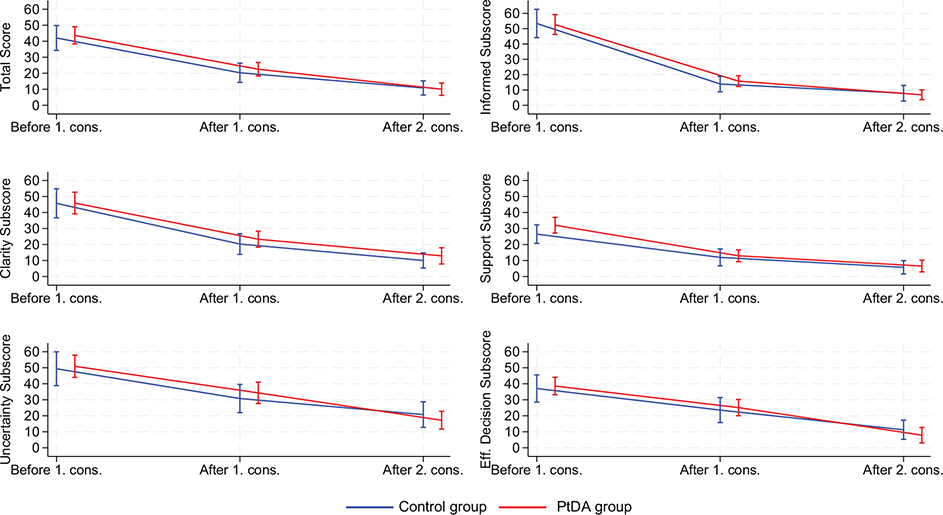
Figure 2. Presents the differences in mean scores between the two groups (shared decision making with a patient decision aid as intervention) for the Decisional Conflict Scale (DCS) overall score and its five subscales: uncertainty, information adequacy, clarity of values, support, and effective decision making.
Decisional regret
There was very low decisional regret in both the control and intervention groups. No significant difference in decisional regret was observed between the two groups.
After 1 year, the control group had a median decisional regret score of 0.0 (0.0, 20.0), while the intervention group had a score of 5.0 (0.0, 25.0), p = 0.19. (Table 4, supplementary material).
Further, 12 (52%) in the control group had no regret, while in the intervention group it was 19 (40%), p = 0.58. However, in the control group there was a significantly higher level of regret after 3 years compared to 1 year (p = 0.01). We did not find the same difference in the intervention group (p = 0.57). Although there were very few patients with high regret in both groups (Table 4, supplementary material). After 3 years, 11 (48%) in the control group had no regret, while in the intervention group it was 22 (47%), p = 0.99. In the control group, after 3 years, 84% of the 31 patients had no/mild regret, and in the intervention group, the percentage was 83% of 47 patients.
Discussion
This study demonstrates that incorporating shared decision making and PtDAs into the Danish breast reconstructive consultations is feasible within the cancer pathway time constraints set by the Danish Health Authorities.
In the intervention group, nearly half the women reported a maximum level of engagement following their consultations. Additionally, there was a significant reduction in decisional conflict from before the first consultation, after the first consultation and again after the second consultation.
There was a very low decisional regret in the intervention group, which was persistent even after 3 years of follow-up. However, there was no significant difference regarding engagement, decisional conflict, and regret between the intervention and the control group. At our hospital, patients referred for breast reconstructive surgery are routinely offered two consultations with a plastic surgeon. The first consultation focuses on discussing the advantages and disadvantages of the various reconstructive options, leading to the creation of an individualized reconstructive plan. The second consultation allows patients time to reflect, address any uncertainties, and clarify their preferences, incorporating both their wishes and the available surgical options.
This approach to a clinical setup involving the two consultations, one of which includes a meeting with the performing surgeon, may introduce an important element of personal security in the decision-making process.
This may explain partly the surprising lack of significant difference in the levels of patient engagement, decisional conflict, and decisional regret between the two groups. In addition, the low regret in general points to the importance of two consultations. Further, women in both groups indicated awareness that they were asked to take part in decision making after the first consultation, thus confirming the value of our current clinical setup, which includes several elements of shared decision making. It is likely that this two-step clinical approach contributes to the significant decline in decisional conflict score between the two consultations and very low levels of decisional regret shown in both groups.
The intervention group had a significant reduction in decisional regret from 1 year to 3 years, a change not observed in the control group. The overall decisional regret was so low that this further supports the perception that both approaches are beneficial, with PtDAs potentially offering a slight long-term advantage. To further examine these findings, a larger cohort is needed.
In a retrospective study of 100 women after their breast reconstruction, they experienced less regret if satisfied with their preoperative consultation [20]. This response underscores the importance of clear communication and patient education in reducing decisional regret and supports our result of low decisional conflict and regret in both our groups.
There are few studies examining decisional conflict both before and after consultations using a patient decision aid. In a recent study by Su-Ying Fang et al. including 96 women randomized to a decision support application, reported similar findings, with decisional conflict scores at baseline showing a mean of 38 in the control group and 43 in the intervention group. After 1 week, the control group had a mean score of 19, while the intervention group had a mean score of 21 [22]. Consistent with our findings, there was no significant difference in decisional regret between the groups. A randomized trial of 60 women considering reconstructive surgery tested an online patient decision aid between two consultations. They found a significant reduction in decisional conflict between the first and the second consultation, but no significant difference between the groups. The study also reported very low decisional regret (median = 0) with no significant difference between their groups. The results in this randomized trial support the value of two consultations as in our cohort study [23].
In a recent review of shared decision making and breast reconstruction [24], consistent with our findings, there was no significant difference in decisional regret between the groups, although one study [25] found that a patient decision aid was associated with lower decisional conflict and less decisional regret after 6 months, with no difference observed at the 12-month mark.
In this study, the timing of decisional conflict measurements was determined by the patient flow within our outpatient clinic. The baseline and first follow-up assessments were standardized across participants, occurring immediately before and after the initial consultation. In contrast, the timing of the second follow-up measurement varied, influenced by the scheduling of other treatments and individual patient preferences. Ideally, the timing of decisional conflict assessments should align with key moments in the decision-making process, particularly when patients are actively considering treatment options. Persistent decisional conflict over time may indicate that patients feel responsible for making treatment decisions without adequate support from healthcare professionals. Our findings showed a significant reduction in decisional conflict from pre- to post-first consultation, highlighting the importance of integrating reconstructive information into the breast cancer care pathway and underscoring the value of offering two consultations. However, this study has limitations that require consideration. One limitation is the non-randomized design, which introduces the potential for selection bias. Nonetheless, in line with Stege et al. [26] we did not observe any significant demographic differences between the groups. Decisional conflict scores were initially similar between the control and intervention groups, indicating that both groups started with comparable levels of uncertainty and internal conflict regarding their surgical decisions. These findings further confirm the uniformity of the two groups. While patient-reported outcomes provide important insights, reliance on self-reported measures may introduce response bias, as patients may either overestimate or underestimate their level of involvement or satisfaction.
The Danish versions of CollaboRATE, DCS, and DRS were translated using forward-backward translation procedures in accordance with established guidelines and, to varying degrees, pilot-tested prior to use. To our knowledge, the questionnaires have not been psychometrically validated in Danish, only in the original languages, although they have been applied in multiple Danish studies, including large RCTs [27]. Finally, as the study was conducted at a single center, the findings may not be fully generalizable to other settings or populations. In a different center, they may only have one pre-surgical consultation and in such a setting integrating shared decision making with a patient decision aid may result in significantly lower conflict and regret.
The main strength of this study is the comprehensive approach to integrating shared decision making and a patient decision aid in the clinical setting by adjusting patient pathways, thus providing a holistic view of patient involvement in breast reconstructive surgery decisions. The prospective cohort design allowed for the collection of real-time data, enhancing the reliability and validity of the findings. The study focused on patient-centered outcomes, such as decisional conflict, decisional regret, and patient involvement, which are crucial for improving shared decision making and ensuring satisfying long-term results. Patients were not randomized, as we estimated that working with shared decision making and PtDAs in one group would impact the other if done in parallel by the same healthcare professionals.
The use of validated questionnaires ensured the accuracy and consistency of the measurements. The instruments are frequently used in research, ensuring reliability and comparability. Additionally, the inclusion of long-term follow-up (1 and 3 years) provides valuable insights into the sustained impact of shared decision making and PtDAs on patient-reported outcomes.
Conclusion
The results of our study indicate that our setting with two pre-surgical consultations results in a very high degree of engagement, low decisional conflict and regret. Additional decisional support using shared decision making and a patient decision aid does not further enhance these results. Overall, this study indicates that integrating shared decision making and PtDAs into the clinical pathway for breast reconstructive surgery is feasible. While the results are not definitive due to the study’s limitations, they are encouraging and consistent with existing literature on the advantages of shared decision making and PtDAs.
The knowledge of a setting with two pre-surgical consultations yielding low conflict and regret in reconstructive breast surgery is a promising result for implementation and further research.
Future research with larger, multi-center studies is needed to further support these findings and investigate their long-term impact on psychosocial well-being. By addressing a broader range of outcome measures, such as physical recovery, psychological well-being, and quality of life, as well as a more holistic view of patient experiences, future research can provide a deeper insight into the long-term effectiveness of shared decision making and PtDAs in breast reconstructive surgery and help develop more effective strategies to support patients throughout their decision making journey.
Acknowledgments
To Christian Juul Mikkelsen, Film and Media Producer, Team Film & Photo, Corporate Communication, Vejle, for your exceptional work in producing our film.
This project was made possible through a grant provided by the research council at Lillebaelt Hospital and Overlæge Jørgen Werner Schous og hustru, Else-Marie Schou, født Wonge’s foundation.
References
[1] Overgaard J, Kettner LO et al. Long-term evaluation of postmastectomy breast reconstruction. Acta Oncol. 2011;50(7):1053–1061. https://doi.org/10.3109/0284186X.2011.584554
[2] Kouwenberg CAE, et al. Long-term health-related quality of life after four common surgical treatment options for breast cancer and the effect of complications: a retrospective patient-reported survey among 1871 patients. Plast Reconstr Surg. 2020;146(1):1–13.
[3] Gümüscü R, et al. National long-term patient-reported outcomes following mastectomy with or without breast reconstruction: the Swedish Breast Reconstruction Outcome Study Part 2 (SweBRO 2). BJS Open. 2024;8(1).
[4] Rose M, et al. Patient-reported outcome after oncoplastic breast surgery compared with conventional breast-conserving surgery in breast cancer. Breast Cancer Res Treat. 2020;180(1):247–256.
[5] Woo SH, et al. Outcomes of smooth round implant-based immediate breast reconstruction: long-term follow-up results. J Plast Surg Hand Surg. 2023;57(1–6):370–375.
[6] Brehaut JC, et al. Validation of a decision regret scale. Med Decis Making. 2003;23(4):281–292.
[7] O’Connor AM. Validation of a decisional conflict scale. Med Decis Making. 1995;15(1):25–30.
[8] Elwyn G, et al. A three-talk model for shared decision making: multistage consultation process. BMJ. 2017;359:j4891.
[9] Stacey D, et al. Decision aids for people facing health treatment or screening decisions. Cochrane Database Syst Rev. 2014;1:CD001431.
[10] Metcalfe K, et al. Development and testing of a decision aid for women considering delayed breast reconstruction. J Plast Reconstr Aesthet Surg. 2018;71(3):318–326.
[11] Video som patient beslutningsstoette [Internet]. [cited 2018 Feb]. Available from: https://patientsikkerhed.dk/content/uploads/2015/12/video_patientbeslutningsst_tte_rapport_final.pdf
[12] Joseph-Williams N, et al. Toward minimum standards for certifying patient decision aids: a modified Delphi consensus process. Med Decis Making. 2014;34(6):699–710.
[13] Coulter A, et al. A systematic development process for patient decision aids. BMC Med Inform Decis Mak. 2013;13(Suppl 2):S2. https://doi.org/10.1186/1472-6947-13-S2-S2
[14] Olling K, et al. Development of a patient decision aid template for use in different clinical settings. Eur J Person Center Healthc. 2019;7(1).
[15] Steffensen KD, et al. Lessons in integrating shared decision- making into cancer care. J Oncol Pract. 2018;14(4):229–235. https://doi.org/10.1200/JOP.18.00019
[16] Barr PJ, et al. The psychometric properties of CollaboRATE: a fast and frugal patient-reported measure of the shared decision-making process. J Med Internet Res. 2014;16(1):e2. https://doi.org/10.2196/jmir.3085
[17] CollaboRATE Danish Version, 2016 [Internet]. [cited 2017 Feb]. Available from: https://www.glynelwyn.com/scoring-collaborate.html
[18] Becerra Pérez MM, et al. Extent and predictors of decision regret about health care decisions: a systematic review. Med Decis Making. 2016;36(6):777–790.
[19] The PtDA Research Group. The Ottowa Hospital [Internet]. 2018 [cited 2017 Feb]. Available from: https://decisionaid.ohri.ca/docs/develop/Tools/DCS_Danish.pdf
[20] Zhong T, et al. Decision regret following breast reconstruction: the role of self-efficacy and satisfaction with information in the preoperative period. Plast Reconstr Surg. 2013;132(5): 724e–734e.
[21] Harris PA, et al. Research electronic data capture (REDCap) – a metadata-driven methodology and workflow process for providing translational research informatics support. J Biomed Inform. 2009;42(2):377–381.
[22] Fang SY, Lin PJ, Kuo YL. Long-term effectiveness of a decision support app (pink journey) for women considering breast reconstruction surgery: pilot randomized controlled trial. JMIR Mhealth Uhealth. 2021;9(12):e31092.
[23] Mardinger C, et al. Breast reconstruction decision aids decrease decisional conflict and improve decisional satisfaction: a randomized controlled trial. Plast Reconstr Surg. 2023;151(2): 278–288. https://doi.org/10.1097/PRS.0000000000009830
[24] Chen L, et al. Effect of shared decision-making in patients with breast cancer undergoing breast reconstruction surgery: a systematic review and meta-analysis. Asia Pac J Oncol Nurs. 2024;11(11):100596. https://doi.org/10.1016/j.apjon.2024.100596
[25] Paraskeva N, et al. A multi-centred sequential trial comparing PEGASUS, an intervention to promote shared decision making about breast reconstruction with usual care. J Plast Reconstr Aesthet Surg. 2022;75(4):1342–1351. https://doi.org/10.1016/j.bjps.2021.11.033
[26] Ter Stege JA, et al. Decisional conflict in breast cancer patients considering immediate breast reconstruction. Breast. 2021;55:91–97. https://doi.org/10.1016/j.breast.2020.12.001
[27] Søndergaard SR, et al. Shared decision making with breast cancer patients – Does it work? Results of the cluster-randomized, multicenter DBCG RT SDM trial. Radiother Oncol. 2024;193:110115.