ORIGINAL RESEARCH ARTICLE
Public healthcare costs of complications of cosmetic surgery in Sweden – a regional study
Sebastian Holma,b  , Reza Tabrisia,b, Emma Walla, Carolina Nilssona, Rodi Alia and Johann Zdolseka,b
aDepartment of Plastic and Reconstructive Surgery, Örebro University Hospital, Örebro, Sweden; bFaculty of Medicine and Health, School of Medical Sciences, Surgical Sciences, Örebro University, Örebro, Sweden
ABSTRACT
Background: Cosmetic surgery has increased during recent decades, both domestically and through cosmetic tourism. Patients who develop postoperative complications frequently seek care in the public healthcare system. The extent to which these complications generate healthcare workload and costs within Swedish public hospitals remains poorly described.
Methods: This retrospective cohort study includes patients presenting with acute complications after cosmetic surgery to the three hospitals in Region Örebro County, Sweden, between 2018 and 2024. Patients were identified through medical records and administrative systems. Cosmetic procedures performed locally, elsewhere in Sweden, or abroad were included. The primary outcome was direct hospital cost per patient estimated using diagnosis-related group weights. Secondary outcomes included emergency department attendance, hospital admission, length of stay (LOS), diagnostic investigations, surgical interventions and outpatient follow-up. Statistical comparisons between groups were performed using chi-square tests, independent sample t-tests and non-parametric tests where appropriate.
Results: A total of 53 patients were included. The majority were female (88.7%) with a mean age of 42.1 years. The most common procedures associated with complications were abdominoplasty, breast augmentation and reduction mammoplasty. Infection with or without abscess was the most frequent complication. Patients operated in Sweden had a higher rate of hospital admission compared with patients operated abroad (48.0% vs 13.6%, p = 0.01), while LOS was similar between groups. In contrast, patients operated abroad required more outpatient physician follow-up. The mean estimated healthcare cost per patient was 45,956 SEK, Swedish crowns (€3890). Patients operated in Sweden generated higher average costs compared with patients operated abroad (58,460 SEK vs 28,688 SEK). The total estimated cost for managing complications in the cohort was approximately 2.3 million SEK.
Conclusions: Complications after cosmetic surgery generate a measurable workload and cost for the public healthcare system. In this regional Swedish cohort, a substantial proportion of complications originated from procedures performed domestically rather than abroad. These findings challenge the perception that the public healthcare burden from cosmetic surgery complications is primarily driven by cosmetic tourism. Improved coordination between private cosmetic providers and the public healthcare system may help reduce the clinical and economic impact of these complications.
KEYWORDS: cosmetic surgery complications; medical tourism; cosmetic tourism; emergency department; hospital admission; healthcare costs; Sweden
Citation: Journal of Plastic Surgery and Hand Surgery 2026; 61: 132–139. DOI: https://doi.org/10.2340/jphs.v61.46115.
Copyright: © 2026 The Author(s). Published by MJS Publishing on behalf of Acta Chirurgica Scandinavica. This is an Open Access article distributed under the terms of the Creative Commons Attribution 4.0 International License (http://creativecommons.org/licenses/by/4.0/), allowing third parties to copy and redistribute the material in any medium or format and to remix, transform, and build upon the material, with the condition of proper attribution to the original work.
Received: 13 March 2026; Accepted: 4 May 2026; Published: 26 May 2026.
CONTACT: Sebastian Holm sebastian.holm@oru.se Department of Plastic and Reconstructive Surgery, Örebro University Hospital, Örebro, Sweden; Södra Grev Rosengatan, 701 85, Örebro, Sweden.
Competing interests and funding: The authors report no competing interests.
No funding was received for this study.
Introduction
Region Örebro County (RÖC) is a centrally located region in Sweden, with Örebro city as its administrative and economic hub. Örebro University Hospital provides specialist plastic surgery care for RÖC with a catchment area of approx. 306,000 inhabitants [1]. The median monthly income in 2024 in RÖC was 28,166 SEK (approx. €2462), which is lower than the median monthly national income of 35,600 SEK (approx. €3111) [2]. Cosmetic surgery is offered at two local private clinics, but some patients choose to go elsewhere nationally or internationally for cosmetic procedures.
During recent years there have been reports in Swedish media of increasing numbers of patients with complications after cosmetic tourism and after domestic cosmetic surgery. There is among private cosmetic clinics a duty of care for postoperative complications but without a defined clinical or legal framework. It has further been implied by public health representatives that resources are drawn from the public health sector when caring for acute complications after cosmetic procedures [3]. Cosmetic tourism and cosmetic surgery in general have, over the last few decades, become more and more popular due to increased marketing, with overseas clinics offering lower prices, no waiting times, increased privacy, cheap flights and the combination of plastic surgery procedures and a holiday [4–7].
Cosmetic procedures performed overseas are typically abdominoplasty, liposuction, breast augmentation, injection treatment, breast reduction/mastopexy and gluteal augmentation [8]. Several studies have demonstrated increased mortality with cosmetic tourism due to shortfalls in perioperative care as well as increased complications such as infection, pain, wound dehiscence or poor aesthetic outcome [8, 9]. In a study from the United Kingdom (UK), almost all patients seeking public healthcare due to cosmetic complications had their procedure performed abroad, mainly in Türkiye [7]. Usually, patients having had overseas procedures have no follow-up with their surgeon after returning home and are left to deal with potential complications on their own or to seek public healthcare [6, 10].
Due to difficulties in finding these patients retrospectively and a lack of specific registration, it is still largely unknown how many Swedish patients suffer from complications from cosmetic procedures either in Sweden or overseas. No study has so far been published in Sweden investigating the extent to which complications and failed cosmetic surgery performed nationally and internationally burden the public healthcare system, where at least most of the more serious complications are treated. This study aimed to analyse the cohort of patients seeking public healthcare due to complications following cosmetic surgery and quantify the clinical workload and costs related to their management in an entire Swedish public healthcare region.
Methods
This retrospective cohort study was conducted at the three hospitals in RÖC – Örebro University Hospital in collaboration with the hospitals in Karlskoga and Lindesberg.
Eligible patients were those presenting at one of the RÖC hospitals between January 1, 2018, and December 31, 2024, due to an acute postoperative complication after cosmetic surgery at a private cosmetic clinic in Sweden or abroad. Data were retrieved from medical records and administrative healthcare systems for all included patients. Patients presenting for reasons unrelated to postoperative complications or who underwent surgery prior to 2018 were excluded. Patients were eligible for assessment and admission to RÖC hospitals regardless of where in Sweden the cosmetic procedure had been performed. This study did not compare admission routines between different Swedish regions. Patients presenting with complications after cosmetic surgery were assessed through standard emergency department (ED) routines or established referral pathways. Management was based on clinical need, irrespective of whether the primary cosmetic procedure had been performed locally, elsewhere in Sweden, or abroad. Admission was considered when inpatient observation, intravenous antibiotics, imaging, surgical intervention, or other hospital-based resources were required. Patients suitable for conservative treatment were managed as outpatients with physician or nurse follow-up.
Acute complications were defined as any postoperative adverse event after a cosmetic procedure requiring medical assessment or treatment within the public healthcare system, ED attendance, inpatient stay, investigations, surgical interventions and/or outpatient follow-up. Geographical location of surgery was classified into three categories: (1) locally performed surgery – defined as cosmetic surgery performed within 100 km of Örebro, (2) nationally operated – beyond 100 km but still in Sweden and (3) surgery abroad, that is, cosmetic surgery performed outside of Sweden. ED attendance was defined as a registered ED visit related to the postoperative complication. Weekend presentation was defined as patients attending an ED between Friday 6 PM and Monday 8 AM. Doctoral supervision was defined as one documented physician/surgeon contact related to complication management. Nurse supervision was defined as a documented nurse-led procedure such as wound care, follow-up or postoperative management. Each contact was counted as a separate event.
The primary outcome was total diagnosis-related group (DRG)-based direct hospital cost per patient during the study period. Secondary outcomes were hospital admission rate, length of stay (LOS), surgical procedures, diagnostic imaging, intravenous antibiotics and admission to intensive care unit (ICU). To estimate direct medical costs, we applied DRG weights. The DRG system categorises patient cases based on diagnosis, performed procedures and investigations. This is a reliable source for cost estimation within the Swedish healthcare system [11]. Cost per DRG weight was retrieved from the healthcare administration in RÖC and was estimated at 78,069 SEK (approx. €6610) in 2024.
All eligible patients were informed of the study and given the opportunity to opt out of study inclusion. The study was approved by the Swedish Ethical Review Authority (Dnr: 2024-06575-01).
Statistical analysis
Age, LOS and number of complications were normally distributed. An independent samples t-test was thus used to compare means between the two groups. The number of ED visits and physician or nurse interventions were not normally distributed; as the samples were less than 30 patients in each group, a non-parametric Friedman’s test was used to compare the means. For other parameters such as day of ED attendance, gender and type of medical treatment, the Chi-Square test was used to compare the groups.
Results
Basic characteristics
A total of 55 patients with complications after cosmetic surgery performed at local, national and overseas cosmetic clinics were identified as eligible for this RÖC study. Two patients decided to opt out and were excluded, leaving 53 patients for inclusion. The majority of patients were female 48 (90.6%). Mean patient age was 42.1 ± 11.4 (20–68) years. There were no statistically significant differences between the age and gender of the patients who had surgery at a cosmetic clinic in Sweden or abroad. The mean number of ED visits for patients operated in Sweden (1.5 ± 1.3) was slightly, but not significantly, higher than that for patients operated abroad (1.0 ± 0.8). Hospital admissions were significantly higher for patients operated in Sweden compared to abroad, 48.0 vs. 13.6% (p = 0.01). LOS for locally and nationally operated patients compared to patients operated abroad were similar, 2.9 ± 2.0 vs. 4.0 ± 2.6. In contrast, patients operated overseas tended to require more doctor’s visits and follow-ups compared to patients operated in Sweden, 3.0 ± 2.8 vs. 1.2 ± 2.8 (p = 0.059) (Table 1).
Day of ED presentation
Weekend presentation occurred less often in patients operated abroad, 3/22, while 21/31 operated in Sweden, that is, locally or nationally presented on the weekend, which corresponds to 13.6 vs. 64.5% (p < 0.001). For patients operated abroad, a majority, 15/22, presented at the ED on Monday through Wednesday (Figure 1).
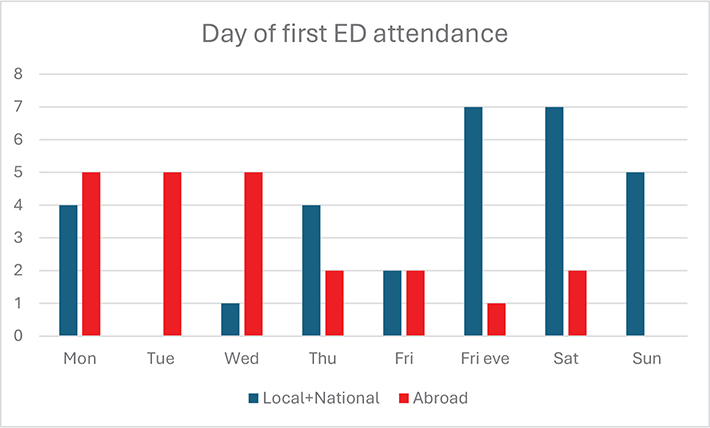
Figure 1. Day of the first visit to the emergency department. ED: Emergency department.
Trends over time
On average, 7.6 ± 3.3 patients with complications from cosmetic surgery presented yearly at the three RÖC hospitals. There was no statistical difference in the yearly number of patients with cosmetic complications from local and national clinics vs. patients operated abroad (4.4 ± 2.1 respective 3.1 ± 1.6, p = 0.490). There was a decline in complications during the early COVID-19 period, followed by an increase in 2021 (Figure 2). This increase should be interpreted cautiously because the cohort was small, and annual denominator data for the total number of cosmetic procedures were not available (Figure 2).
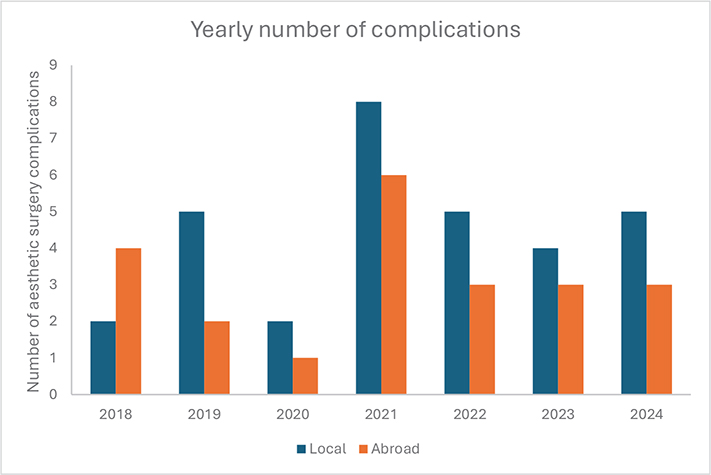
Figure 2. Number of patients with cosmetic surgery complications seen at RÖC hospitals between 2018 and 2024. RÖC: Region Örebro County.
Type of surgery
Patients presenting with complications after cosmetic surgery were subdivided into two groups: single-site and combined surgery. A wide spectrum of surgical procedures or combinations thereof was found (Table 2). The majority of the operations were single-site (n = 41, 77.3%). Abdominoplasty had the highest number of complications 13 (31.7%). Thereafter, breast augmentation 5 (12.2%), reduction mammoplasty 4 (9.8%), abdominal liposuction 3 (7.3%) and Brazilian butt lift (BBL) 3 (7.3%) were the most common procedures. Among combined procedures, 12 (22.6%), abdominoplasty combined with some other procedure had the highest number of complications, 5 (41.6%).
Complications
The most common complication was cellulitis (without abscess), n = 30 (50.8%), followed by abscess, n = 11 (18.6%), and haematoma, n = 7 (11.9%). Other common complications were seroma, wound rupture and skin necrosis (Table 3). One locally operated patient did not wake up after anaesthesia until 24 h after the cosmetic procedure (unclear aetiology). No significant difference in complication spectrum was seen when comparing patients operated in Sweden and overseas.
Interventions
To address complications, surgical interventions (Table 4) were performed in both local, n = 28 (62.2%), and general anaesthesia, n = 17 (37.8%). The most common surgical intervention in local anaesthesia was wound revision, n = 13 (46.4%), followed by drainage of abscess, 6 (21.4%), and evacuation of haematoma, 3 (10.7%). Surgical interventions in general anaesthesia included drainage of abscess 8 (47.1%), evacuation of haematoma 4 (23.5%) and extraction of implants 5 (29.4%). Other interventions, n = 153, were administration of oral antibiotics in 35 cases (22.9%), CT scans in 21 cases (13.7%) and IV antibiotics in 10 cases (6.5%).
Geographical location
Depending on where the primary cosmetic surgery was performed, patients were subdivided into local, national and international surgery. Overall, most complications presenting at a RÖC hospital followed cosmetic surgery performed in Sweden (n = 32), and of these, 15 (47%) were local, originating from Örebro. The remaining Swedish cases were distributed across other regions, although most commonly from the capital, Stockholm. Approximately 40% (n = 21) of complications followed surgery performed abroad. Due to the small number of patients from each individual country, no reliable country-specific complication pattern could be identified. Türkiye was the most common international destination in this cohort, which should be interpreted as a frequent destination among the presenting patients rather than evidence of a higher country-specific complication risk. The complication spectrum was broadly similar between patients operated in Sweden and abroad (Figures 3A and 3B).
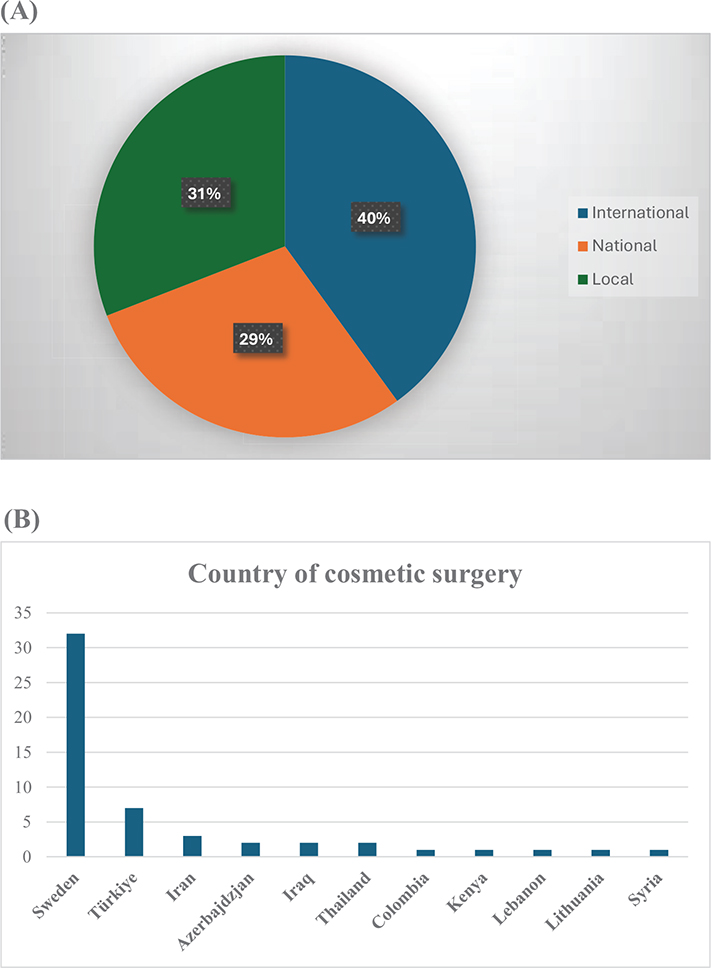
Figure 3. (A) Distribution of patients from Sweden, Örebro and abroad. (B) Origin of complications after cosmetic surgery.
When analysing the annual number of complications managed, depending on where the cosmetic surgery was performed (Örebro county, other Swedish city, abroad), no statistically significant differences were found Local/Örebro (2.1 ± 1.6), National/other Swedish city (2.0 ± 2.0) or abroad (3.1 ± 1.6).
Cost of complications
An evaluation of accumulated costs with DRG-scoring was possible in 50 of the 53 study patients. The average cost for each of the 50 patients was 45,956 SEK (approx. €3890) (n = 50), (SD 54,872, CI 30,361 – 61,550). Patients operated abroad (n = 21) had an average cost of 28,688 SEK (approx. €2622), and patients operated in Sweden (n = 29) 58,460 SEK (approx. €5343). The total cost for all patients operated abroad was 602,448 SEK (approx. €51,000) and 1,695,346 SEK (approx. €143,700) for patients operated in Sweden. The total cost for all 50 patients was thus estimated at 2.3 MSEK (approx. €195,000).
Discussion
This retrospective cohort study presents a unique regional overview of complications and costs generated after treating acute complications from cosmetic surgery performed nationally and overseas. In the RÖC public healthcare region and over a 7-year period, we found 53 patients with cosmetic complications with an estimated average cost of treatment of at least 46,000 SEK/patient (€3900). There was thus a non-negligible number of acute complications following cosmetic surgery performed domestically or abroad. The present study was, however, not designed to evaluate differences or similarities in complication patterns or admission policy between Swedish regions. These complications often utilised significant healthcare resources, including hospital admission, surgical interventions and outpatient care. The most common cosmetic procedure associated with an acute complication was abdominoplasty, with the main complication being infection with or without abscess, followed by haematoma. These findings are consistent with the spectrum of complications reported from Europe and North America [8, 12–14]. The most common overseas destination for cosmetic procedures was Türkiye, which aligns with the literature from Europe [13–15]. Although Türkiye was the most common international destination, the study was not powered to compare complication profiles between individual countries. The number of cases from each country was small, and no specific complication appeared to be reliably overrepresented in a single country. Therefore, the country of surgery should be interpreted descriptively rather than as a measure of country-specific risk.
The present cohort should be interpreted as a minimum estimate and/or extrapolations of the regional hospital burden rather than as a basis for national, Nordic, or global estimates. The ambition of the study was not to capture all cosmetic complications but rather to describe the cases and related costs presenting at our three regional hospitals. Cases not captured were most likely patients managed by the original private clinic, primary or private healthcare providers, other Swedish regional hospitals, or overseas healthcare before returning home. As specific diagnostic codes for complications after cosmetic surgery are absent, there is a risk of missed cases. Therefore, any numerical estimate based on this cohort would be theoretical and likely to underestimate the true burden. This interpretation is supported by a recent systematic review of 58 studies including 1249 patients with complications after cosmetic tourism, which shows that the available literature mainly captures patients presenting for treatment of complications rather than a defined denominator population [16]. The same review found substantial heterogeneity across outcomes and concluded that reported complication and cost patterns should be interpreted descriptively rather than as true epidemiological estimates.
A key finding in our study, however, was that more than half of the acute complications treated by us actually originated from cosmetic surgery performed with 31% of local origin and 29% national. This fact has rarely been investigated or described in the literature, which largely has focused on cosmetic tourism. Domestic cases were associated with a higher mean cost per patient, SEK 58,460 (€5343), compared to overseas, SEK 28,688 (€2622), and more often required inpatient care, 48% vs. 14%. The higher admission rate among patients operated in Sweden should not be interpreted as favoured admission. Admission decisions in the public healthcare system were based on clinical severity, need for monitoring, intravenous antibiotics, surgical intervention, or other inpatient resources, irrespective of where the index procedure had been performed. A possible explanation for the higher hospital admission rate for patients operated in Sweden is that minor complications are probably taken care of by the index surgeon, leaving the more serious cases to be tended to by the public system. In contrast, patients operated abroad may have had early severe complications treated by the original clinic before returning to Sweden, while later complications after return may have been more suitable for outpatient management at home.
LOS was similar, as was the spectrum of complications. This challenges the common perception that the public healthcare burden from cosmetic surgery complications is largely driven by cosmetic tourism, at least in our hospital region. Cosmetic tourism cases thus had relatively fewer admissions and, in comparison, less inpatient care. The relatively low number of hospital admissions for cosmetic tourists may be a result of acute complications occurring soon after the primary surgery, while still being abroad and close to their primary operating clinics. Cosmetic tourism cases, on the other hand, were more reliant on public assistance with outpatient visits.
As data on the actual number of cosmetic surgeries performed yearly on patients from RÖC and where the surgery was performed are lacking, incidence numbers are difficult to assess. It would seem reasonable to assume that the majority of cosmetic patients in RÖC seek a local clinic for their cosmetic surgery, to a lesser degree a national clinic and to an even lesser degree cosmetic surgery overseas. This assumption, in conjunction with our findings, suggests that the public healthcare providers will see most of the complications originating from (1) overseas surgery, (2) some of the national patients and (3) fewer of the local patients, where we assume that the local cosmetic service providers, to a large extent, tend to their own complications. The higher cost of care with patients operated in Sweden could reflect that minor complications generally are taken care of by the original surgeon. It is, however, interesting that a majority of ED attendance due to complications from local and national clinics, that is, Swedish clinics, present on weekends between Friday 6 PM and Monday 8 AM, leading us to speculate if limited access to their original operating surgeons on weekends may result in patients resorting to seeking public assistance instead. A majority of patients operated abroad tend to seek the ED on Monday through Wednesday, possibly after returning from the visit abroad on the preceding weekend.
The higher number of cases observed in 2021 should also be interpreted cautiously. One possible explanation is a rebound effect after the early COVID-19 period, when elective surgery and international travel were restricted. As restrictions eased, cosmetic surgery activity and travel may have increased, leading to more patients presenting with complications. These findings are also in alignment with other studies [17–22]. However, because the study lacks annual denominator data for the total number of cosmetic procedures performed in Sweden and abroad among residents of the region, we cannot determine whether the 2021 increase reflects higher procedure volume, altered care-seeking behaviour, a true increase in complications, or random year-to-year variation.
The cost of cosmetic complications has previously been analysed in different countries. Cost analyses are, to a large extent, dependent on national pricing of healthcare procedures which can vary considerably between countries making comparisons difficult. Livingston et al. [4] from Australia reported the average cost of patients treated after complications from cosmetic surgery abroad being $AUD 12,597 (€7800) for the 12 patients included. The average cost per patient in an Irish study was €15,912, and a study by Farid et al. [13] from UK, reporting a cost of £42,083 (€49,200) for major complications. In a study from the US, Venditto et al. [12] reported an average cost of $26,657 (€24,500) for complications related to cosmetic surgery tourism. In contrast to many previous reports, the mean cost in our Swedish cohort was only approximately 45,000 SEK (€3890), which is substantially lower than in many comparable studies, likely reflecting differences in healthcare pricing, reimbursement models and cost structures within the different healthcare system. There are, however, also studies reporting mean patient costs below our reported mean cost per patient [7, 13, 23–25]. Taken together, the reported costs in our cohort are significant but fall within the lower range of previously described studies.
Overall, our findings show that public healthcare costs for managing complications after cosmetic surgery are not solely driven by cosmetic surgery performed abroad, but also to a large extent by national and local providers of cosmetic surgery. Irrespective of where a patient in need has been operated, that is, domestically or abroad, the Swedish public healthcare system must provide help to patients in line with the Health and Medical Service Act and treat acute complications.
As resources in most public healthcare systems are chronically scarce, it could be discussed who should pay for the care of these cosmetic complications [26]. It could be argued that human activities sometimes result in the need of healthcare and that complications to cosmetic surgery could be seen as an analogue to, for example, sustaining a knee injury after a skiing accident, which generally is cared for by public healthcare and that sustaining unwanted complications could be argued to fall into the same category.
We see a need for dialogue regarding guidelines and respective responsibilities of private clinics and of the public health system, at least in Sweden, in the care of cosmetic complications, irrespective of where the cosmetic surgery has been performed.
Limitations
The number of included patients was low, although we believe that we identified most patients who required hospital-based care for cosmetic surgery complications in our region. The total number of complications is likely underestimated. Some patients may have been managed by the original private clinic, by primary care, by private healthcare providers, in other Swedish regions, or abroad before returning home. In addition, the absence of specific diagnostic codes for complications after private cosmetic surgery increases the risk of missed cases in retrospective register and medical record searches. The small cohort size may also reflect that RÖC is one of the smaller Swedish healthcare regions, with approximately 306,000 inhabitants, and has a lower median income than the national average, which may also influence the local volume of cosmetic surgery. Finally, some retrospective patient-reported data were incomplete, which may have introduced selection bias.
Conclusion
This regional study highlights the cost and spectrum of complications from both national and overseas cosmetic surgical procedures in a Swedish public healthcare region. We not only found patients with complications after cosmetic tourism but, to a non-negligible extent, also after locally and nationally performed cosmetic surgeries. Nationally operated patients seek ED care more frequently on weekends than patients operated abroad. The findings underscore the need for improved cooperation between private and public clinics with clear guidelines regarding responsibilities to address the possibly growing impact of cosmetic surgery complications on public healthcare resources.
References
[1] About Region Örebro County [Internet]. 2021. [cited 2026 Jan 5] Available from: https://utveckling.regionorebrolan.se/en/about-us
[2] Statistikdatabasen. Average income in Sweden [Internet]. 2024. [cited 2026 Jan 5] Available from: https://www.scb.se/hitta-statistik/sverige-i-siffror/utbildning-jobb-och-pengar/medelloner-i-sverige/
[3] Gavelin M. They make big money and leave the problems to us [Internet]. Sjukhusläkaren. [cited 2025 May 22]. Available from: https://www.sjukhuslakaren.se/wp-content/uploads/2023/04/sjukhuslakaren20230412.pdf
[4] Livingston R, Berlund P, Eccles-Smith J, et al. The real cost of ‘cosmetic tourism’ cost analysis study of ‘cosmetic tourism’ complications presenting to a public hospital. Eplasty. 2015;15:e34.
[5] Hanefeld J, Smith R, Horsfall D, et al. What do we know about medical tourism? A review of the literature with discussion of its implications for the UK National Health Service as an example of a public health care system. J Travel Med. 2014;21(6): 410–417. https://doi.org/10.1111/jtm.12147
[6] Ross KM, Moscoso AV, Bayer LR, et al. Plastic surgery complications from medical tourism treated in a U.S. Academic Medical Center. Plast Reconstr Surg. 2018;141(4):517e–523e. https://doi.org/10.1097/PRS.0000000000004214
[7] Whiteman E, Romain K, Welman T, et al. The rising NHS burden from cosmetic surgery procedures performed abroad and non-surgical procedures performed in the United Kingdom. J Plast Reconstr Aesthetic Surg. 2025;102:39–41. https://doi.org/10.1016/j.bjps.2025.01.017
[8] McAuliffe PB, Muss TEL, Desai AA, et al. Complications of aesthetic surgical tourism treated in the USA: a systematic review. Aesthetic Plast Surg. 2023;47(1):455–464. https://doi.org/10.1007/s00266-022-03041-z
[9] Qureshi AA, Gould DJ, Stevens WG, et al. Report on current experience of ASAPS membership and management of cosmetic tourism complications. Aesthetic Surg J Open Forum. 2019;1(2):ojz009. https://doi.org/10.1093/asjof/ojz009
[10] Hery D, Schwarte B, Patel K, et al. Plastic surgery tourism: complications, costs, and unnecessary spending? Aesthetic Surg J Open Forum. 2024;6:ojad113. https://doi.org/10.1093/asjof/ojad113
[11] Špacírová Z, Epstein D, Espín J. Are costs derived from diagnosis-related groups suitable for use in economic evaluations? A comparison across nine European countries in the European Healthcare and Social Cost Database. Eur J Health Econ HEPAC Health Econ Prev Care. 2022;23(9):1563–1575. https://doi.org/10.1007/s10198-022-01444-y
[12] Venditto C, Gallagher M, Hettinger P, et al. Complications of cosmetic surgery tourism: case series and cost analysis. Aesthet Surg J. 2021;41(5):627–634. https://doi.org/10.1093/asj/sjaa092
[13] Farid M, Nikkhah D, Little M, et al. Complications of cosmetic surgery abroad – cost analysis and patient perception. Plast Reconstr Surg Glob Open. 2019;7(6):e2281. https://doi.org/10.1097/GOX.0000000000002281
[14] Roberts JL, Eckersley M, Davies KJ, et al. The cost of cosmetic surgery tourism complications to the NHS: a retrospective analysis. Surg J R Coll Surg Edinb Irel. 2024;22(5):281–285. https://doi.org/10.1016/j.surge.2024.04.012
[15] Thacoor A, van den Bosch P, Akhavani MA. Surgical management of cosmetic surgery tourism-related complications: current trends and cost analysis study of the financial impact on the UK National Health Service (NHS). Aesthet Surg J. 2019;39(7):786–791. https://doi.org/10.1093/asj/sjy338
[16] Holm S, Mobargha N, Edsander-Nord Å, et al. Complications and health costs of cosmetic tourism. A systematic review. J Plast Reconstr Aesthet Surg. Published online March 2026:S1748681526001798. https://doi.org/10.1016/j.bjps.2026.03.034
[17] Lem M, Kim JK, Pham JT, et al. Effect of the COVID-19 pandemic on global interest in plastic surgery. JPRAS Open. 2023;37:63–71. https://doi.org/10.1016/j.jpra.2023.05.002
[18] Bennett R, Sugden P, Wokes J. Response to ‘cosmetic tourism amidst the Covid-19 global pandemic’. J Plast Reconstr Aesthet Surg. 2022;75(2):893–939. https://doi.org/10.1016/j.bjps.2021.11.053
[19] Dalmar M, El Sheikh M, Baker R, et al. Managing complications following cosmetic surgery after the COVID pandemic: a study of a year at an NHS plastic surgery unit. J Plast Reconstr Aesthetic Surg. 2024;88:47–50. https://doi.org/10.1016/j.bjps.2023.10.135
[20] Varma P, Kiely J, Giblin AV. Cosmetic tourism during the COVID-19 pandemic: dealing with the aftermath. J Plast Reconstr Aesthet Surg. 2022;75(1):506–508. https://doi.org/10.1016/j.bjps.2021.11.013
[21] Murphy D, Lane-O’Neill B, Dempsey MP. COVID-19 and cosmetic tourism: a Google trends analysis of public interests and the experience from a tertiary plastic surgery centre. J Plast Reconstr Aesthet Surg. 2022;75(4):1497–520. https://doi.org/10.1016/j.bjps.2022.01.040
[22] McCrossan S, Jivan S. Letter comments on: cosmetic tourism during the COVID-19 pandemic: dealing with the aftermath. J Plast Reconstr Aesthet Surg. 2022;75(5):1765–1779. https://doi.org/10.1016/j.bjps.2022.01.045
[23] Klein HJ, Simic D, Fuchs N, et al. Complications after cosmetic surgery tourism. Aesthet Surg J. 2017;37(4):sjw198. https://doi.org/10.1093/asj/sjw198
[24] Ahari D, Zaccariah ZR, Preston M, et al. The impact of cosmetic tourism across one year on an NHS breast surgery unit. J Plast Reconstr Aesthet Surg. 2024;99:462–467. https://doi.org/10.1016/j.bjps.2024.10.036
[25] Hummel CE, Klein HJ, Giovanoli P, et al. Complications arising from aesthetic surgery procedures in foreign countries and Switzerland. Swiss Med Wkly. 2023;153(4):40077. https://doi.org/10.57187/smw.2023.40077
[26] Mayer SA, Struckmann VF, Diehm YF, et al. Wer zahlt? Postoperative Komplikationen und Behandlungskosten als Folge ästhetischer Operationen im In- und Ausland. Handchir Mikrochir Plast Chir. 2025;57(4):276–282. https://doi.org/10.1055/a-2616-0691