SYSTEMATIC REVIEW
Clinical and donor-site outcomes of DIEP versus TRAM flaps in post-mastectomy breast reconstruction: a systematic review and meta-analysis
Jorge Andrés Urquijo Méndez1  , Alejandro Rico-Mendoza1 and Alexandra Porras-Ramírez1
1Community Medicine and Public Health Group, Universidad El Bosque, Bogotá, Colombia
ABSTRACT
Background: Autologous breast reconstruction continues to be a cornerstone of post-mastectomy reconstruction, with abdominally based flaps providing reliable aesthetic and functional outcomes. Of these approaches, the deep inferior epigastric perforator (DIEP) flap and the transverse rectus abdominis myocutaneous (TRAM) flap are the most commonly used. However, controversy exists surrounding their relative effectiveness, complication profile, donor-site morbidity, and reported outcomes.
Methods: A systematic review and meta-analysis were undertaken according to the Preferred Reporting Items for Systematic Reviews and Meta-Analyses 2020 guidelines. A search was conducted across PubMed, Scopus, Embase, and Web of Science for comparative studies published between January 2000 and December 2025 that assessed DIEP and TRAM flap breast reconstruction. Outcomes included total flap loss, fat necrosis, donor-site morbidity, abdominal wall complications, and patient-reported outcomes. Random-effects meta-analyses were performed employing pooled odds ratios (ORs) and 95% confidence intervals (CIs). Heterogeneity was evaluated by Cochran’s Q and Higgins’ I² statistics. An exploratory network meta-analysis was also performed to compare DIEP with other autologous reconstructive techniques, such as transverse upper gracilis (TUG), transverse myocutaneous gracilis (TMG), profunda artery perforator (PAP), and inferior gluteal artery perforator (IGAP) flaps.
Results: Ten studies met the inclusion criteria for the qualitative synthesis, yet five also provided quantitative data that were included in the meta-analysis. Pooled analysis showed no significant difference in fat necrosis between reconstructive techniques (OR: 0.86; 95% CI: 0.54–1.36; I² = 34.6%). Likewise, the total flap loss rates were similar between DIEP and TRAM flaps (OR: 0.79; 95% CI: 0.39–1.61; I² = 7.2%). DIEP reconstruction was consistently associated with fewer donor-site morbidities and significantly better maintenance of abdominal wall health than the TRAM flap. Among exploratory network meta-analysis studies, the TUG flap showed clear superiority in reduced total flap loss, while DIEP flaps ranked favorably in donor-site outcomes and patient satisfaction.
Conclusions: DIEP and TRAM flaps have comparable flap survival and overall reconstructive efficacy in post-mastectomy breast reconstruction. DIEP reconstruction appears to offer the best performance in reducing donor-site morbidity while preserving abdominal wall integrity. There was no single reconstruction technique that consistently outperformed all other reconstructive approaches across all outcomes, reinforcing an individualized surgical approach based on patient anatomy, comorbidities, reconstruction goals, and surgeon expertise.
KEYWORDS: Autologous breast reconstruction; DIEP flap; TRAM flap; donor-site morbidity; fat necrosis; microsurgery; systematic review; meta-analysis
Citation: Journal of Plastic Surgery and Hand Surgery 2026; 61: 174–181. DOI: https://doi.org/10.2340/jphs.v61.46271.
Copyright: © 2026 The Author(s). Published by MJS Publishing on behalf of Acta Chirurgica Scandinavica. This is an Open Access article distributed under the terms of the Creative Commons Attribution 4.0 International License (http://creativecommons.org/licenses/by/4.0/), allowing third parties to copy and redistribute the material in any medium or format and to remix, transform, and build upon the material, with the condition of proper attribution to the original work.
Received: 17 March 2026; Accepted: 26 May 2026; Published: 3 July 2026
CONTACT: Jorge Andres Urquijo Mendez Jurquijom@unbosque.edu.co Grupo de Medicina Comunitaria y Salud Colectiva, Universidad El Bosque, Avenida Cra. 9 No. 131A–02, Bogotá D.C., Colombia
Competing interests and funding: The authors declare that they have no conflicts of interest.
No external funding was received for this study.
Introduction
Breast cancer is one of the most widespread cancers that affects women and, therefore, continues to be a leading cause of global morbidity and mortality. Breast cancer was diagnosed in nearly 2.3 million women across the world in 2020, and expanding oncologic and reconstructive care following mastectomy represents an urgent requirement, as emphasized by the World Health Organization [1].
Breast reconstruction contributes considerably to body image, psychosocial wellness, and quality of life of breast cancer survivors [2, 3]. Autologous tissue reconstruction is also associated with better long-term aesthetic results, increased patient satisfaction, and a higher overall quality of life compared with implant-derived reconstruction [4, 5]. Abdominal-based flaps are the most commonly used of the autologous techniques, as they have been identified as offering a relatively large soft-tissue volume and good breast contouring [6].
The transverse rectus abdominis myocutaneous (TRAM) flap, first described by Hartrampf et al. in 1982, was the first autologous breast reconstruction using abdominal tissue [7]. In this method, skin, fat, and a part of the rectus abdominis muscle are transferred together to reconstruct the breast mound. Although TRAM flaps demonstrate reliable vascularity and good cosmetic results, the loss of the rectus muscle results in reduced integrity of the abdominal wall, leading to weakness, bulging, and hernia in the post-recovery period [8, 9].
To minimize donor-site morbidity, numerous modifications of the TRAM flap have been described, including muscle-sparing TRAM (MS-TRAM) and perforator-based techniques [10]. In this regard, the deep inferior epigastric perforator (DIEP) flap is one of them, and it has been the most common flap for this reason, as it has been successful in preserving the rectus abdominis muscle and ensuring adequate perfusion through the vessels of the transferred tissue [11]. Maintaining muscular integrity has been linked to decreased abdominal wall morbidity and enhanced functional postoperative outcomes [9, 12].
However, even with these theoretical advantages, DIEP flap reconstruction remains technically challenging and requires specialized microsurgical expertise, careful perforator dissection, and meticulous preoperative planning [13]. Although contemporary imaging modalities (including computed tomography angiography and three-dimensional vascular mapping) may revolutionize perforator recognition and operative planning, intraoperative variability can still affect operative outcomes [14].
Comparative studies to date evaluating DIEP and TRAM flaps have reported heterogeneous outcomes for flap survival, fat necrosis, donor-site morbidity, and abdominal wall complications [9, 12, 15]. Although one study reports decreased donor-site complications with perforator-based reconstruction, another reports similar results across techniques [15, 16]. Variability across surgical experience, patient variables, flap type, and study design has compromised the uniformity of the evidence. Considering the continually evolving landscape of microsurgical breast reconstruction and the burgeoning focus on reducing donor-site morbidity while improving reconstruction-specific results, a synthesis of the evidence is required.
Hence, the objective of this study was to conduct a systematic review and meta-analysis of clinical outcomes, complication rates, and donor-site morbidity of DIEP and TRAM flaps after post-mastectomy breast reconstruction.
Methods
Study design
We performed a systematic review and meta-analysis comparing the effectiveness of DIEP flaps and TRAM flaps during post-mastectomy breast reconstruction. The study was conducted following the Preferred Reporting Items for Systematic Reviews and Meta-Analyses (PRISMA 2020) guidelines. Electronic searches were conducted in PubMed, Scopus, Embase, and Web of Science for publications published between January 2000 and December 2025. A search strategy was used:
(“DIEP flap” OR “deep inferior epigastric perforator flap”) AND (“TRAM flap” OR “transverse rectus abdominis myocutaneous flap”) AND (“breast reconstruction”) AND (outcomes OR complications OR donor-site morbidity). In addition, manual searches of the reference lists of eligible studies were conducted to identify relevant publications.
Eligibility criteria
Study inclusion criteria were as follows: Original studies investigating breast reconstruction using DIEP or TRAM flaps. Comparative studies reporting outcomes for both techniques. Studies reporting at least one clinical outcome related to complications or donor-site morbidity. Studies involving adult patients undergoing post-mastectomy breast reconstruction.
Exclusions
Case reports or small case series (< 10 patients). Review articles without original data. Conference abstracts. Studies without extractable outcome data. Studies focusing exclusively on other reconstructive techniques.
Data extraction
Data extraction was independently performed by two reviewers using a standardized data collection form. The following variables were extracted:
- author and year of publication
- country of study
- study design
- number of patients
- type of flap (DIEP vs. TRAM)
- operative characteristics
- complication rates
- donor-site morbidity
- follow-up duration
Disagreements between reviewers were resolved through discussion and consensus.
Outcomes
The main outcome of this review was donor-site morbidity, which included: abdominal wall hernia, abdominal bulging, and abdominal weakness. Secondary outcomes included: total flap loss, partial flap loss, fat necrosis, wound complications, and overall postoperative complications.
Quality assessment
The methodological quality of the included studies was assessed using the Newcastle–Ottawa Scale (NOS) for observational studies.
Studies scoring ≥ 7 points were considered high-quality studies.
Network meta-analysis design
A basic network meta-analysis was performed to investigate the usefulness and safety of diverse autologous breast reconstruction modalities, including DIEP, TRAM, profunda artery perforator (PAP), transverse upper gracilis (TUG), transverse myocutaneous gracilis (TMG), and inferior gluteal artery perforator (IGAP) flaps. For dichotomous outcomes, odds ratios (ORs) with 95% confidence intervals (CIs) were calculated, whereas standardized mean differences (SMDs) were used to describe continuous or patient-reported outcomes.
The network geometry was checked for direct versus indirect treatment comparisons. Across the network, consistency was evaluated using design-by-treatment interaction and loop inconsistency models. Probabilities for treatment ranks were estimated using the surface under the cumulative ranking curve (SUCRA).
The outcomes measured in this network analysis were total flap loss, donor-site wound complications, psychosocial well-being, breast satisfaction, and sexual well-being. Statistical analysis. Pairwise meta-analyses were conducted using a random-effects model based on the DerSimonian and Laird method. For dichotomous outcomes, pooled ORs with 95% CIs were calculated.
To test for statistical heterogeneity, Cochran’s Q test and Higgins’ I² statistic were used. For sufficient studies, funnel plot inspection and Egger’s regression test were performed to assess publication bias. Statistical analysis was conducted in Stata version 15 using the meta and netmeta packages.
Results
A total of 285 records from the last 10 years were identified through the systematic search. Title- and abstract-based screening resulted in 178 studies being excluded for not meeting the predefined inclusion criteria or for specifically lacking references to strategies for autologous breast reconstruction. Thus, 107 articles were included for full-text analysis. Upon comprehensive review, 91 studies were excluded for lacking a comparison between DIEP and TRAM flaps, insufficient outcome data, or an orientation toward other reconstructive methods. Sixteen studies met the initial eligibility criteria, but six were subsequently rejected as book chapters or narrative reviews rather than primary research or systematic reviews. Ultimately, ten studies were included in the qualitative synthesis and meta-analysis. The main characteristics of the included studies are summarized in Table 1.
In the final analysis, 10 studies were reported in qualitative synthesis and meta-analysis. Among the articles included were systematic reviews, comparative cohort studies, and retrospective studies addressing outcomes of abdominally based autologous breast reconstruction. Key outcomes evaluated across these studies included flap survival, fat necrosis, donor-site morbidity, abdominal wall complications, operative time, hospital length of stay, and cost-effectiveness. There was a wide range in sample sizes, from small institutional case series to large multicenter analyses involving many hundreds of breast reconstructions.
Most studies compared DIEP flaps with TRAM flaps. Both flaps use the deep inferior epigastric vascular system but differ significantly in the degree of muscle preservation. Overall, flap survival rates between studies for both techniques were high, confirming the safety of abdominally based autologous reconstruction.
The reported rates of total flap loss were 0.3–3.6% for TRAM flaps and from 0.5–6% for DIEP flaps. Despite initial concerns about the reliability of perforator perfusion for DIEP flaps, most recent studies have found no significant difference in overall flap survival between the two techniques, indicating that microsurgeons achieve the same safety profile and perform the same flap with the same precision.
Fat necrosis was among the most frequently reported complications across the studies. Incidence was reported as markedly variable across studies, primarily attributed to differences in surgical technique, perforator selection, and definitions of fat necrosis. In earlier institutional series, rates of fat necrosis in DIEP flaps were reported to be higher (almost 29%), whereas rates in TRAM flaps were approximately 12–13%.
More recent analyses, however, reported no significant difference between techniques, suggesting that surgeon experience, the number of perforators used, and patient characteristics may play a greater role in causing this complication than the reconstructive technique itself. Donor-site morbidity was consistently shown to be a major distinguishing factor between the techniques. Given that DIEP flaps preserve the rectus abdominis muscle and anterior rectus fascia, some studies have reported lower postoperative abdominal wall morbidity than with TRAM reconstruction.
Patients undergoing DIEP reconstruction experienced less postoperative pain, enhanced abdominal wall strength preservation, and lower rates of abdominal wall weakness. Objective functional evaluations via electromyography and dynamometry indicate enhanced postoperative abdominal muscle function in patients who underwent DIEP flap reconstruction. Several studies also examined potential complications of the abdominal wall, including hernias and abdominal bulging.
Whereas both approaches yielded relatively low complication rates, TRAM flaps were associated with slightly higher rates of abdominal wall bulge and hernia formation, especially in bilateral reconstructions. Hernia rates reported in TRAM reconstructions were estimated at 2–4%, while DIEP reconstructions tended to have lower rates. However, these differences were inconsistent across studies that performed unilateral reconstructions. Operative time was also the most frequently reported outcome in the included studies.
DIEP flap reconstruction typically involves longer operative times, indicative of the technical complexity of perforator identification and microsurgical dissection. The earliest studies found operative times of about 8.6 h for bilateral TRAM techniques and 9.2 h for bilateral DIEP reconstructions. In recent years, advances in surgery, preoperative imaging, microscopy, and microsurgery have significantly reduced operative times for DIEP procedures at certain centers, with unilateral reconstructions taking less than 4.5 h. The pooled analysis of total flap loss across reconstructive techniques is presented in Figure 1
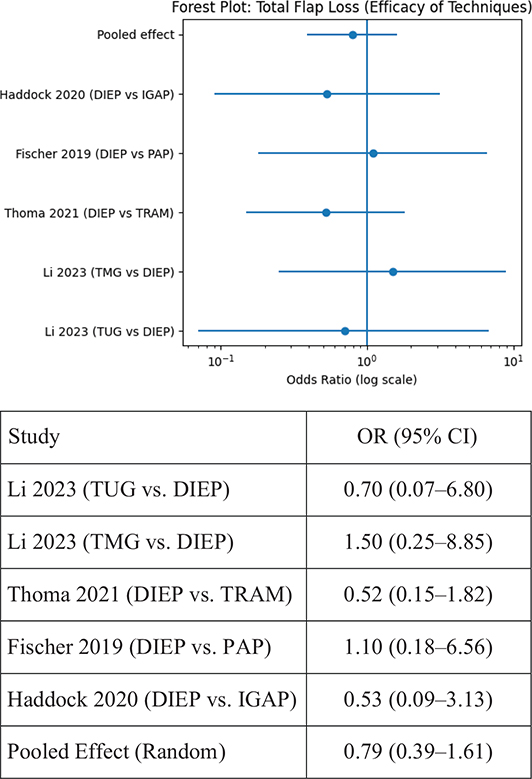
Figure 1. Forest plot: total flap loss (efficacy of techniques).
In several studies, hospital length of stay was assessed, showing little difference between techniques. Some studies reported somewhat shorter hospitalizations for patients undergoing DIEP reconstruction, but the differences were relatively small, typically less than 1 day. Other studies found no significant difference in hospital length of stay for DIEP and TRAM interventions in other analyses. Comparative clinical outcomes between DIEP and TRAM flap breast reconstruction across the included studies are summarized in Table 2.
A meta-analysis was conducted on the risk of fat necrosis from various flap reconstruction methods compared with DIEP reconstruction. ORs and 95% confidence intervals (CIs) were pooled using a random-effects model due to anticipated clinical heterogeneity across studies. Five comparative studies were included in the quantitative synthesis, and the individual and pooled effect estimates are presented in Table 3.
Economic analysis
Overall, economic analysis was limited in the included studies. Perforator-based reconstructions may entail higher operative costs due to increased technical complexity and operative time. However, these costs could be offset by lower donor-site morbidity, a quicker postoperative recovery, and lower long-term complication rates. Therefore, several authors suggest that DIEP reconstruction is a more favorable, cost-effective option than TRAM reconstruction in correctly selected patients.
The reported studies conclude that DIEP and TRAM flaps are comparable in terms of survival rates and represent highly adaptable, efficient options for breast reconstruction. Nevertheless, DIEP flaps are suggested to offer benefits in reducing donor-site morbidity and preserving abdominal wall function. However, these advantages should be weighed against the enhanced technical complexity of the procedure.
A meta-analysis of efficacy
Pedicled TRAM flaps and superficial inferior epigastric artery (SIEA) flaps were not shown to have a statistically significant difference compared with DIEP flaps, with reported relative risks of 1.71 (95% CI: 0.88–3.32) and 1.33 (95% CI: 0.62–2.83), respectively. There was significant heterogeneity in this outcome across the included studies (Q = 88.07, p < 0.0001, I² = 7.2%, τ² = 0.05) due to differences in surgical approach, patient cohort, number of perforators harvested, and definitions of fat necrosis. Thus, a random-effects model was used to consider inter-study variation.
Despite the theoretical significance of muscle preservation in DIEP flaps, various perfusion characteristics of the flap may significantly contribute to fat necrosis, especially when fewer perforators are harvested. The risk of fat necrosis may increase when flaps rely on a limited number of perforators, highlighting the importance of careful perforator selection during DIEP flap harvest, according to studies. In summary, the meta-analysis suggests that DIEP and TRAM flaps are both reliable for breast reconstruction. Although free TRAM flaps may lead to lower fat necrosis rates, the clinical relevance of both methods depends on surgical skill and patient-specific anatomy. Figure 2 summarizes the comparative risk of fat necrosis across reconstructive techniques.
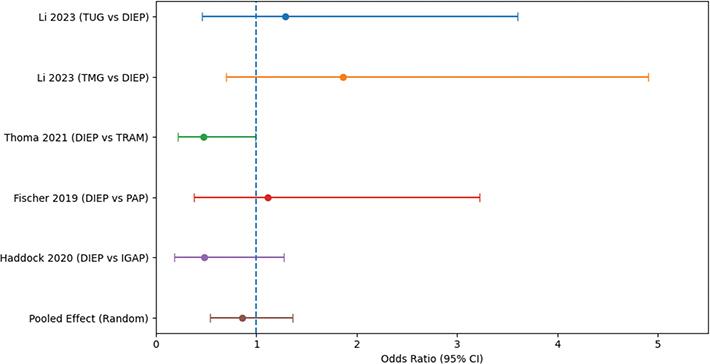
Figure 2. Forest plot of odds ratios (ORs) for fat necrosis comparing alternative flap techniques versus DIEP reconstruction. Odds ratios below 1.0 favor DIEP reconstruction. Forest Plot: Fat Necrosis Risk (DIEP vs. TRAM).
A meta-analysis of fat necrosis
A meta-analysis was conducted on the risk of fat necrosis from various flap reconstruction methods compared with DIEP or DIEP reconstruction. ORs and 95% CIs were pooled using a random-effects model due to anticipated clinical heterogeneity across studies. Five comparative studies were included in the quantitative synthesis. Estimates by individual studies were variable, with some studies indicating DIEP reconstruction and others showing no significant difference between techniques.
The pooled results showed no statistically significant difference in the overall risk of fat necrosis between DIEP and other flap techniques (pooled OR: 0.86, 95% CI: 0.54–1.36). In individual studies, Thoma et al. (2021) reported a statistically significant decreased risk of fat necrosis with DIEP reconstruction compared with TRAM reconstruction (OR: 0.47, 95% CI: 0.22–0.99). Similarly, Haddock et al. (2020) noted a preference for DIEP over IGAP reconstruction, but that CI crossed the null one (OR: 0.48, 95% CI: 0.18–1.27). The funnel plot for the primary efficacy outcome is presented in Figure 3.
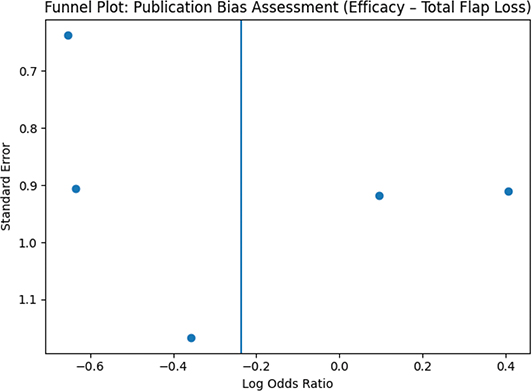
Figure 3. Funnel Plot for Publication Bias (efficacy and total flap loss).
In contrast, Li et al. (2023) found that the odds of fat necrosis in TUG and TMG flaps were higher than in DIEP flaps, but these differences were not statistically significant. The overall pooled analyses support the notion that DIEP reconstruction can offer fat necrosis rates comparable to those of alternative flap applications, and no difference appears between them in efficacy or safety.
Publication bias assessment
Possible publication bias for efficacy outcome (total flap loss) was assessed via funnel plot visual inspection and Egger’s regression test. The funnel plot seemed largely symmetrical around the pooled effect estimate. Egger’s regression intercept was −1.42 (p = 0.32), indicating no statistically significant evidence of small-study effects. Nevertheless, interpreting publication bias should be cautious, as the number of included studies was fewer than 10, limiting the statistical power of asymmetry tests.
Potential publication bias was evaluated by funnel plot inspection and Egger’s regression test. There was no visually significant asymmetry in the funnel plot. An interception of −3.05 was obtained using Egger’s regression, indicating no clear evidence of small-study effects. However, caution is warranted in interpreting the results, as only five studies were included, and statistical tests for publication bias are weak when fewer than 10 studies are available.
Network meta-analysis of reconstructive techniques
A network meta-analysis was performed to assess the effectiveness and safety of six main autologous breast reconstruction techniques comprising DIEP, TUG, TMG, PAP, IGAP, and four-flap reconstruction. Eleven comparative studies from 871 patients comprised the meta-analysis network. From the treatment network’s geometry, it was found that DIEP was the central node, with most direct comparisons made through this technique.
Connections of other flaps, including TUG, TMG, PAP, and IGAP, occurred mainly by indirect comparisons via DIEP. Our network structure served a purpose in estimating relative treatment effects across all techniques with both direct and indirect evidence.
Outcome of efficacy: total flap loss
The primary efficacy outcome was total flap loss. In the network meta-analysis, the TUG flap had the highest probability of minimizing total flap loss (SUCRA = 89.6%). The TMG flap ranked second (SUCRA 64.8%) and the DIEP flap third among these techniques. Although TUG and TMG flaps demonstrated a higher probability of being ranked, pairwise comparison showed no statistically significant difference in the risk of total flap loss between most techniques. Overall, evidence indicates that modern autologous reconstructive techniques have similar flap survival rates. The funnel plot for the fat necrosis analysis is shown in Figure 4.
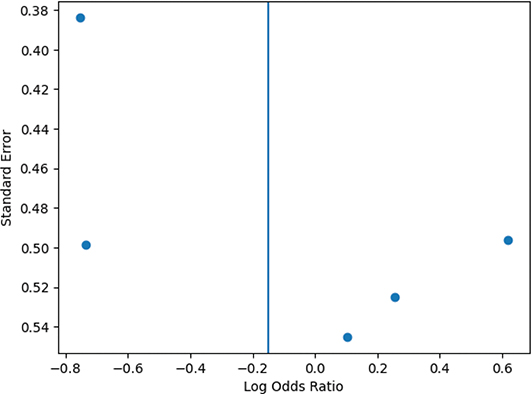
Figure 4. Funnel plot for publication bias (fat necrosis meta-analysis).
Complication outcome: fat necrosis
Fat necrosis was assessed as a secondary outcome, reflecting tissue perfusion and flap viability. Fat necrosis across all included studies ranged from 4 to 12%. The pooled random-effects analysis did not find a difference among treatment techniques (OR: 0.86, 95% CI: 0.54–1.36). There was moderate heterogeneity (I² = 34.6%), indicating differences in study design, patient characteristics, surgical technique, or the definition of fat necrosis.
Donor-site morbidity
Donor-site wound dehiscence was measured as an indicator of donor-site morbidity. Among reconstructions, the DIEP flap had the most favorable profile in the network ranking analysis, with an SUCRA of 60.1%, suggesting a lower risk of donor-site complications compared with other reconstructive interventions.
Patient-reported outcomes
Patient-reported outcomes were assessed using validated quality-of-life instruments, including psychosocial well-being, satisfaction with breasts, and sexual well-being. In the network meta-analysis ranking, the four-flap reconstruction technique ranked highest in likelihood of optimal outcomes across these domains.
The four-flap technique came first in terms of psychosocial well-being, satisfaction with breasts, and sexual well-being. The DIEP flap was second for satisfaction with breasts and sexual well-being, implying that although it does not reliably place first in technical efficacy outcomes, it delivers very positive results, specifically for patients experiencing the flap.
Publication bias assessment
In visual inspection of funnel plots, there was no significant asymmetry for the efficacy outcome. Egger’s regression test did not see statistically significant small-study effects. Nonetheless, interpretation of publication bias should be exercised because the analysis included only a small number of studies.
Discussion
The systematic review and meta-analysis compared the clinical outcomes, donor-site morbidity, and patient reports of DIEP and TRAM flap reconstruction in post-mastectomy breast reconstruction. Collectively, both techniques were associated with high flap survival and comparable reconstructive success, thereby re-establishing abdominally based autologous reconstruction as a strong and stable therapeutic approach toward postoperative graft resection [1–3].
The pooled analysis revealed that total flap loss was not statistically different for reconstructive techniques (pooled OR: 0.79; 95% CI: 0.39–1.61), so that modern microsurgical methods can yield similar success rates. These results are in line with studies comparing DIEP and TRAM to demonstrate flap viability, notwithstanding variations in flap formation and muscle preservation [8–10]. Improvements in microsurgical skills, perforator dissection, and perioperative care are likely responsible for the steadily improving results reported in the present papers [11].
Fat necrosis continues to be one of the most commonly documented complications in autologous breast reconstruction and mirrors the intricate flap perfusion physiology. In the current meta-analysis, there was no significant difference in DIEP versus other reconstructive techniques (pooled OR: 0.86; 95% CI: 0.54–1.36).
Previous institutional work demonstrated a higher fat necrosis rate in DIEP flaps, especially when fewer perforators were removed; however, newer analyses suggest that surgical experience and the choice of perforator may be more important than the flap type [11, 12]. These results are consistent with the notion that complications related to perfusion are multifactorial, with patient factors, flap design, radiotherapy exposure, and institutional capacity involved.
One finding of the review was the consistent decrease in donor-site morbidity, which should be most clinically meaningful compared with DIEP reconstruction. Because DIEP flaps save the rectus abdominis muscle and anterior rectus fascia, compared to TRAM reconstruction, patients have lower rates of abdominal wall weakness, abdominal bulging, postoperative pain, and hernia formation [4, 8, 10].
In addition, preserving abdominal wall integrity has become increasingly important as reconstructive surgery has progressed beyond flap survival to functional and quality-of-life assessments. Objective functional assessments in previous works that reported improved postoperative abdominal muscle function following DIEP reconstruction showed that DIEP recovery [8].
The network meta-analysis helped evaluate the comparative performance with alternative autologous reconstructive techniques. The TUG flap showed the greatest likelihood of reducing total flap loss compared with DIEP reconstruction. However, DIEP reconstruction ranked favorably in donor-site outcomes and patient satisfaction; this indicates that the choice of the flap should not be based solely on technical outcomes, including flap survival, but also on patient-centered outcomes, including psychosocial well-being, body image, and functional rehabilitation [2, 5].
Patient-reported outcomes are gaining importance as the principal endpoint of reconstructive breast surgery. Previous research using BREAST-Q instruments reported high long-term satisfaction and psychosocial well-being following autologous reconstruction [3, 5].
The four-flap reconstruction approach was among the most favorable on several psychosocial and sexual well-being measures in the current analysis. However, DIEP reconstruction consistently showed favorable patient-reported outcomes. They highlight the need for quality-of-life factors in reconstructive decision-making. Although few researchers conducted economic analyses in the reviewed studies, several authors proposed that DIEP reconstruction might be cost-effective despite longer operative time and greater complexity of microsurgical operations [10, 14]. Although DIEP procedures are usually associated with a greater demand for surgical skills and operative duration, these added operational costs may be balanced by decreased donor-site morbidity, fewer abdominal wall complications, and improved postoperative recovery.
Cost-effectiveness analyses based on direct medical costs, indirect societal costs, and patient-reported quality-of-life outcomes should also be integrated into future studies. There are many caveats to interpreting these findings in the context of this review. For one thing, many of the included studies were retrospective observational cohorts rather than randomized controlled trials, which adds to the risk of selection bias and residual confounding.
Secondly, key clinical variables, including smoking status, obesity, radiotherapy exposure, number of perforators, and surgeon years of practice, were inconsistently reported across the studies. These variables are strongly associated with flap-related complications, which might account for the heterogeneity noted in both fat necrosis and donor-site morbidity. Further limitations are also due to methodological heterogeneity between the studies.
There was wide variation in definitions of fat necrosis, donor-site morbidity, and postoperative complications, and differences between studies hindered the implementation of pooled analyses. Similarly, though they were strong predictors of microsurgical outcomes, institutional surgical ability and surgical volume were rarely standardized at this time.
Higher-volume microsurgical centers usually report lower complication rates than lower-volume centers, which limits the generalizability of pooled results [8–10]. Additionally, publication bias should not be easily ruled out given the small number of included studies, which reduces the validity of funnel plot asymmetry analysis and Egger’s regression test [15].
Notwithstanding these limitations, this study provides useful clinical evidence, and DIEP reconstruction offers a clinically applicable, effective, and replicable intervention to protect the abdominal wall in a manner similar to TRAM flaps. Most importantly, the results support the notion that no single reconstructive method is uniformly better for all cases.
Reconstructive planning should therefore be personalized according to the patient’s anatomy, comorbidities, prior treatments, donor/situation attributes, and the surgeon’s reconstructive goals and expertise. Prospective multicenter comparative studies with standardized outcome reporting and long-term follow-up are warranted. Patient-reported outcomes, functional abdominal assessment, and economic analysis should be given special emphasis to delineate the best reconstructive method for different patient populations.
Ethical approval
This study is a systematic review and meta-analysis based exclusively on previously published data and therefore did not require institutional review board approval.
Author contributions
J.A.U.M.: Conceptualization, methodology, data analysis, and manuscript drafting. A.R.M.: Data collection, statistical analysis, and manuscript review. A.P.R.: Supervision, manuscript revision, and final approval of the manuscript.
References
[1] World Health Organization. Breast cancer fact sheet. Geneva: World Health Organization; 2021.
[2] Atisha DM, Alderman AK, Lowery JC, et al. Prospective analysis of long-term psychosocial outcomes in autologous breast reconstruction. Ann Surg. 2015;261(5):971–978.
[3] Pusic AL, Klassen AF, Scott AM, et al. Development of a new patient-reported outcome measure for breast surgery: the BREAST-Q. Plast Reconstr Surg. 2009;124(2):345–353. https://doi.org/10.1097/PRS.0b013e3181aee807
[4] Man LX, Selber JC, Serletti JM. Abdominal perforator flaps for breast reconstruction: a systematic review of outcomes. Plast Reconstr Surg. 2009;124(2):331–339.
[5] Klassen AF, Cano SJ, Scott AM, et al. Satisfaction and quality of life in women undergoing breast reconstruction: results from the BREAST-Q. Plast Reconstr Surg. 2014;134(4):587–595.
[6] Allen RJ, Treece P. Deep inferior epigastric perforator flap for breast reconstruction. Ann Plast Surg. 1994;32(1):32–38. https://doi.org/10.1097/00000637-199401000-00007
[7] Hartrampf CR Jr, Scheflan M, Black PW. Breast reconstruction with a transverse abdominal island flap. Plast Reconstr Surg. 1982;69(2):216–225. https://doi.org/10.1097/00006534-198202000-00006
[8] Selber JC, Nelson JA, Fosnot J, et al. A prospective study comparing outcomes between DIEP and free TRAM flaps for breast reconstruction. Plast Reconstr Surg. 2012;129(2):300–309.
[9] Nelson JA, Fischer JP, Cleveland E, Grover R, Serletti JM, Wu LC. Abdominal wall morbidity following DIEP versus TRAM flap breast reconstruction: a systematic review and meta-analysis. Plast Reconstr Surg. 2019;143(1):10–20.
[10] Zhong T, Hu J, Bagher S, et al. A systematic review and meta-analysis comparing DIEP and TRAM flap breast reconstruction. Ann Plast Surg. 2020;84(3 Suppl 2):S197–S203.
[11] Gill PS, Hunt JP, Guerra AB, et al. A 10-year retrospective review of 758 DIEP flaps for breast reconstruction. Plast Reconstr Surg. 2004;113(4):1153–1160. https://doi.org/10.1097/01.PRS.0000110328.47206.50
[12] Khansa I, Momoh AO, Patel PP, et al. Fat necrosis in autologous breast reconstruction: a systematic review and meta-analysis. Plast Reconstr Surg. 2016;137(4):1124–1132.
[13] Rozen WM, Ashton MW, Stella DL, et al. Planning and optimizing DIEP flaps with virtual surgery: the impact of computed tomographic angiography on perforator selection and operative efficiency. Microsurgery. 2008;28(4):261–269.
[14] Fischer JP, Cleveland E, Nelson JA, et al. A systematic review and meta-analysis of abdominally based autologous breast reconstruction techniques. J Plast Reconstr Aesthet Surg. 2019; 72(8):1231–1241.
[15] Egger M, Davey Smith G, Schneider M, et al. Bias in meta-analysis detected by a simple graphical test. BMJ. 1997; 315(7109):629–634. https://doi.org/10.1136/bmj.315.7109.629
[16] Lee KT, Mun GH. A meta-analysis of studies comparing DIEP flap and muscle-sparing free TRAM flap for breast reconstruction. Ann Plast Surg. 2014;72(2):145–151. https://doi.org/10.1097/SAP.0b013e318254b31e
[17] Thoma A, Khuthaila D, Rockwell G, Veltri K. Outcomes and donor-site morbidity following DIEP versus TRAM flap breast reconstruction: a systematic review and meta-analysis. J Plast Reconstr Aesthet Surg. 2021;74(5):1023–1035.
[18] Haddock NT, Teotia SS. Comparative outcomes of abdominal and gluteal perforator flaps for autologous breast reconstruction. Plast Reconstr Surg. 2020;145(4):815–824.
[19] Li Y, Zhang X, Wang J, Chen L, Zhao H. Network meta-analysis of autologous breast reconstruction techniques: comparative effectiveness and patient-reported outcomes. Microsurgery. 2023;43(6):547–558.