ORIGINAL RESEARCH ARTICLE
Validation of a Swedish version of the National Institute of Health – Chronic Prostatitis Symptom Index
Helena Hallencreutz Grapea,b, Magnus Grabec, Philip von Rosend, Lotta Renström Koskelaa,b and Birgitta Nordgrend,e
aDepartment of Pelvic Cancer, Karolinska University Hospital, Stockholm, Sweden; bDepartment of Clinical Science, Intervention and Technology, Karolinska Institutet, Stockholm, Sweden; cDepartment of Translational Medicine, Lund University, Lund, Sweden; dDepartment of Neurobiology, Care Sciences and Society, Karolinska Institutet, Stockholm, Sweden; eWomen’s Health and Allied Health Professionals Theme, Medical Unit Occupational Therapy and Physical Therapy, Karolinska University Hospital, Stockholm, Sweden
ABSTRACT
Objective: Chronic primary prostate pain syndrome (PPPS), usually referred to as chronic prostatitis with chronic pelvic pain syndrome (CP/CPPS), affects approximately 10% of all men. The National Institute of Health-Chronic Prostatitis Symptom Index (NIH-CPSI) was developed for clinical assessment and research evaluation of this patient category. The objective of this study was to translate the NIH-CPSI into Swedish, including cross-cultural adaptation and testing it for validity and reliability.
Material and methods: Fifty men with chronic PPPS participated in the testing of a new Swedish questionnaire. The initial translation included forward and backward translation followed by a comprehensive review by an expert committee. The preliminary Swedish translation was tested for face validity and test-retest reliability. In all steps of the translation, both medical experts and laymen participated.
Results: The Swedish translation showed a high degree of consistency with the original version. A few cultural adaptations were jointly agreed upon. The questionnaire was assessed to be clear to understand and having good face validity. The test-retest reliability showed an intraclass correlation (ICC) of 0.89 (95% confidence interval [CI] = 0.82–0.94) which indicates good to excellent reliability. The standard error of measurement and minimal detectable change were 2.5 and 7.0 respectively. A Bland Altman plot showed no systematic difference between test-retest.
Conclusion: This study brings to health care providers and researchers a Swedish version of the internationally recognised NIH-CPSI questionnaire having good validity and reliability, a beneficial addition in the management of men suffering from chronic PPPS in Sweden.
KEYWORDS: Chronic prostatitis; primary prostate pain syndrome; chronic pelvic pain syndrome; NIH-CPSI; quality of life; health questionnaire
Citation: Scandinavian Journal of Urology 2025, VOL. 60, 36–42. https://doi.org/10.2340/sju.v60.42916.
Copyright: © 2025 The Author(s). Published by MJS Publishing on behalf of Acta Chirurgica Scandinavica. This is an Open Access article distributed under the terms of the Creative Commons Attribution 4.0 International License (http://creativecommons.org/licenses/by/4.0/), allowing third parties to copy and redistribute the material in any medium or format and to remix, transform, and build upon the material, with the condition of proper attribution to the original work.
Received: 1 October 2024; Accepted: 9 January 2025; Published: 5 February 2025
CONTACT: Helena Hallencreutz Grape Helena.hallencreutz.grape@ki.se Karolinska Institutet, Department of Clinical Science, Intervention and Technology - CLINTEC, Division of Urology, Karolinska University Hospital, Huddinge, SE-141 86 Stockholm, Sweden
Supplemental data for this article can be accessed online at https://doi.org/10.2340/sju.v60.42916
Competing interests and funding: This work is in part supported by a grant from the Thure och Brita Grafströms foundation. Non-financial interests: LR Koskela is the chairman of the Swedish Urological Society.
Introduction
Chronic pelvic pain globally affects a large number of men and women. The European Association of Urology (EAU) defines chronic primary pelvic pain syndrome (CPPPS) as a ‘chronic or persistent pain perceived in structures related to the pelvis of either men or women’ [1]. It is often associated with negative cognitive, behavioural, sexual and emotional consequences as well as with symptoms suggestive of lower urinary tract (LUT), sexual, bowel, pelvic floor or gynaecological dysfunction [1].
In men, the prostate is one of the incriminated organs of the pelvic region and inflammation within the gland – prostatitis – is one of the causes of CPPPS. The US National Institute of Health provided the urological community with a classification of prostatitis [2] including both bacterial and non-bacterial prostatitis. Chronic non-bacterial prostatitis (NIH-type III) or CP, which is often associated with chronic pelvic pain syndrome (CPPS) and traditionally referred in the literature as CP/CPPS, is a major entity in this classification [2]. Population-based and cohort studies from different countries have revealed a prevalence ranging from 2 to 16% of men suffering of CP/CPPS [3, 4]. In the EAU classification of pelvic pain, this group of male patients are found in the sub-group primary prostate pain syndrome (PPPS) in whom pain, among other symptoms, is perceived as originating from the prostate and impacting on the other regional structures (i.e. bladder, bowel, pelvic floor). However, in many patients with PPPS, it often remains unclear if the prostate is truly the single pelvic organ causing the clinical presentation [1].
The National Institute of Health (NIH) developed in 1999 the questionnaire Chronic Prostatitis Symptom Index (NIH-CPSI) [5] as a tool to assist in the assessment of CP/CPPS, hereby defined preferably as chronic PPPS. This self-administered questionnaire consists of nine items divided in three domains: pain, urinary symptoms and quality of life (QoL). The questionnaire has been translated to several languages but not into Swedish [6]. The NIH-CPSI questionnaire has, in previous studies, shown acceptable test-retest reliability, content, construct, concurrent and discriminant validity likewise responsiveness to change [5, 7]. The questionnaire is considered today as the standard instrument for evaluating men with chronic PPPS and is widely used in clinical as well as research settings [8]. Access to a Swedish version has been demanded. The objective of this study was therefore to translate the NIH-CPSI into Swedish, including a cross-cultural adaptation and testing the questionnaire for face-validity, convergent validity and re-test reliability, to provide the clinician and researcher with an international validated tool.
Materials and methods
In an early stage, the authors of the original NIH-CPSI were contacted and the project was granted with their approval. The working process of translation, cultural adaptation and validation in this study followed the guidelines of Boateng et al. [9] and Tsang et al. [10] and are described below. Figure 1 shows the study design.
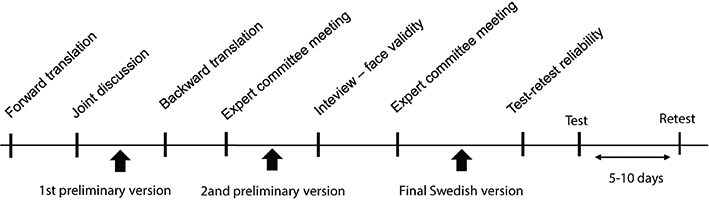
Figure 1. Illustration of the study design.
Participants
Men with PPPS were recruited from urologists and physiotherapists in the regions of Skåne and Stockholm. Participants recruited from physiotherapists had previously to have been assessed by a urologist to rule out other pathologies and confirm the diagnosis. The inclusion criteria were males above 18 years of age, presenting with symptoms relevant of the diagnosis PPPS. The exclusion criteria were infection of the urinary or genital systems, ongoing or previous diagnosis of cancer in the abdominal or pelvic area, known anatomical abnormalities affecting the pelvic area (such as bladder exstrophy and myelomeningocele), transexual men, and disease affecting the nervous system of the lower body. All participants gave their written informed consent for participation.
Forward translation
The initial translation from the English original to Swedish was done by three independent translators (two with medical training and one linguistically knowledgeable person without medical training).
Joint discussion
The translation was discussed at a joint meeting and a consensus version was agreed upon. Besides the translators, a fourth person without medical training was invited to better represent the perspective of the patient group.
Backward translation
The consensus version was thereafter backward translated to English by two new independent translators, who were bilingual with English as native language (one professional translator, one with medical training).
Expert committee meeting
Thereafter, an expert committee gathered to compile an updated preliminary Swedish version of the NIH-CPSI questionnaire. The expert committee consisted of the translators mentioned above and the additional person without medical training. The committee discussed the result of the backward translations in relationship to the original. At this point, the expert committee also considered cultural adaptations of Swedish wordings.
Cognitive interview – face validity
The updated preliminary Swedish version of the questionnaire was tested for face validity by conducting semi-structured interviews by phone with men diagnosed with PPPS, performed by the researcher HHG. The first enrolled men were consecutively asked considering participation. The men reflected over the questions and concepts of the questionnaire in relation to their concerns and symptoms; they were asked about their understanding of the Swedish wording and their response options. Each interview took 30–45 min. After eight interviews, it was considered that saturation had been reached.
Expert committee meeting
The result of the interviews was summarised and presented to the expert committee, who decided upon a final Swedish version of the NIH-CPSI questionnaire.
Convergent validity and test-retest reliability
To test the final questionnaire for convergent validity and test-retest reliability, men with PPPS received a letter including two envelopes, each of them containing the Swedish final version of the NIH-CPSI, the International prostate symptom score (IPSS) [11] and a visual analogue scale (VAS) [12]. They were instructed to open the first envelope marked with number one, answer the questionnaires inside, then put it back and seal it shut. After 5–10 days, they repeated the process with the envelope marked with number two. Both envelopes were thereafter placed in a joint envelope and returned to the investigating centre.
Ethical approval was given by the Swedish Ethical Review Authority (2021-03-24; 2021-00039).
Data analysis
Due to occurrence of missing data (<2.8% of all items), multiple imputation techniques were used. The patterns of missing data were analysed descriptively and were determined to align with the ‘missing at random’ type. A total of five datasets were imputed by chained equations (package ‘MICE’, R version 4.3.1). Comparing the imputed results with those restricted to complete cases revealed only minor changes in the total score of the NIH-CPSI as well as estimates of reliability and validity. Consequently, it was decided to present all statistical analyses related to test-retest reliability using the imputed data based on the considerations to include all observations, retain more data points to increase the sample size, preserve the inherent variability, and better represent the studied population enhancing the generalisability of the findings.
Reliability was calculated for test-retest using a two-way mixed-effects model for Interclass Correlation Coefficient (ICC) with 95% Confidence Intervals (CI). ICC values were categorised as less than 0.5, between 0.5 and 0.75, between 0.75 and 0.9 and greater than 0.9 designating poor, moderate, good, and excellent reliability, according to Koo and Li [13]. Standard Error of Measurement (SEM) was estimated as an expression for absolute reliability. Minimal Detectable Change (MDC) was calculated to evaluate at which change in value represents a valid change and not measurement error. A Bland Altman plot was generated to evaluate the degree of agreement between the two NIH-CPSI questionnaires. Floor and ceiling effects were analysed considering the number of participants scoring the highest or lowest possible score. The internal consistency of the total score and the three subdomains were evaluated by calculating Cronbach’s correlation coefficient. The correlation between the NIH-CPSI total score and the NIH-CPSI subdomains (urology symptoms, pain and QoL) was calculated using Pearson´s product moment correlation. Pearson´s product moment correlation was also used to assess convergent validity between the NIH-CPSI subdomain urology symptoms and IPSS and the subdomain pain and VAS. Statistical analysis was carried out using the statistical software program SPSS (IBM SPSS statistics version 29.0.1.0).
Results
A total of 59 men diagnosed with PPPS volunteered to participate in the study, of whom 50 returned completed questionnaires and were eligible for assessing convergent validity and test-retest reliability. The first eight men also participated in evaluating face validity. All men understood Swedish, spoken and in writing.
Participants
The mean age of the participants was 52.4 years (standard deviation [SD] 17.3) and the mean duration of symptoms was 9.4 years (SD 8.9). For baseline characteristics see Table 1. The group included in the assessment of face validity had varying demographic background, presented in Table 2, which enables a breadth of opinions.
Linguistic translation and cross-cultural adaptation
The expert group found that the two back-translated versions showed a high degree of consistency with the original version. Disagreements were discussed and reflected upon in the expert committee. In the English original, the questions regarding timespan are put either at the beginning or ending of the sentence. The expert committee unanimously agreed to start all questions in a similar way by capturing the essence of the question first, keeping the timespan in mind. The main discrepancy between the back translation and the original version concerned the answer options in question nine. The committee agreed upon translating the word delighted to happy (lycklig) and the word terrible to unhappy (olycklig) which in a better way represents Swedish terminology. Adjustment to better reflect Swedish phraseology was also applied in question 2a where the word ‘burning’ was translated into the Swedish word ‘sveda’ which rather corresponds to ‘stinging’ but is more commonly used than burning to specify this type of sensation.
Validation
The cognitive interviews captured the interviewed men’s reflections and opinions on the items of the questionnaire. They stated that the questions were relevant to their symptoms and included the main aspects of their experience of PPPS. Their opinions were very similar regardless of their background and symptom burden. The expert committee therefore found the questionnaire to have good face validity. All interviewed men stated the questionnaire to be easy to understand and fill in. Two men noted that the questionnaire lacked questions about how stress and cold affected their symptoms. Concerning the answer options in questions three to nine, a few men found these to be too similar to each other and thereby harder to answer; however, other men expressed the many alternatives as an asset so that they could find the alternative that suited them. The result of the interviews was summarised and presented to the expert committee who agreed on a final Swedish version of the NIH-CPSI (see Appendix).
The correlation between the NIH-CPSI total score, the sub-domains, VAS and IPSS is given in Table 3. The highest correlation was found between the total score and the subdomains of pain and QoL. The VAS showed a correlation of 0.78 for the sub-domain pain and IPSS showed a correlation of 0.86 for the sub-domain urinary symptoms, indicating good convergent validity.
The Swedish NIH-CPSI showed a Chronbach’s alfa coefficient of 0.78–0.82 indicating good internal consistency for the total score [10]. For the sub-domains, the Chronbach’s alfa coefficient were between 0.65 and 0.81 (Table 3).
Test-retest reliability
The total NIH-CPSI score, including imputed data as described earlier, showed an intraclass correlation (ICC) of 0.89 (95% CI = 0.82–0.94) for test-retest reliability (Table 3). In accordance with the total score, the separate domains of pain, urology symptoms and QoL, all showed ICC values between 0.85 and 0.89 which indicates good reliability. Taking into consideration a 95% confidence interval, the results imply good to excellent reliability [13] (Table 4). The Bland Altman Plot for the mean of the total score for test 1 and 2 plotted against the difference of the total score of tests 1 and 2 demonstrates no systematic differences (Figure 2).
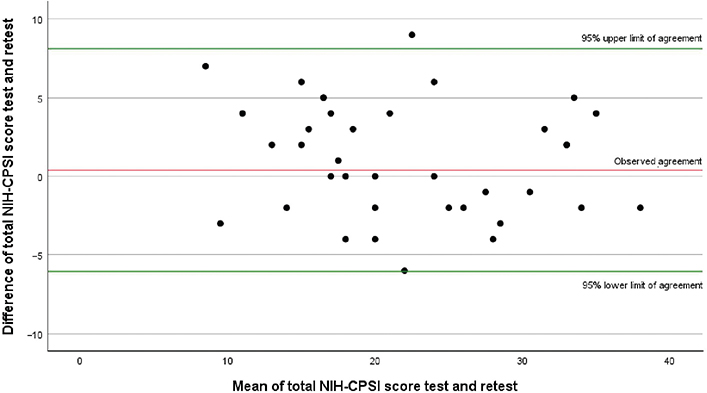
Figure 2. Bland and Altman plot of the reliability of the Swedish version of the National Institute of Health – Chronic Prostatitis Symptom Index (NIH-CPSI). The Mean of total NIH-CPSI score for test and retest plotted on the x-axis. The difference of the total NIH-CPSI score between test and retest plotted on the y-axis. The red horizontal line represents the observed agreement. The green horizontal lines represent the 95% limits of agreement.
Floor and ceiling effects
Floor or ceiling effects are presented in Table 5. The result shows that less than 15 % of the participants score the lowest respectively the highest possible score, neither for the total score nor the subscales.
Discussion
The objective of this study was to develop a Swedish version of the NIH-CPSI by performing a linguistic translation including cross-cultural adaptation and testing it for validity and reliability. This Swedish version of the questionnaire was assessed as valid regarding face validity, having good interpretability and being easy to fill in. The test-retest showed good to excellent reliability.
The result of the forward and backward translation was discussed in the expert committee with an aim to be as true as possible to the English original. A few cultural adaptations were considered necessary to better reflect Swedish phraseology. Similar adaptations are found in the Finnish translation where the word ‘delighted’ was translated to ‘happy’ [14], and in the Danish one where ‘burning’ was translated to ‘stinging’ [15]. Concerning sentence construction as regards the timespan to which the questions refer, the Spanish translation notes that they preferred to initiate the questions with the recall period [16]. We opted to start the sentences uniformly with focus on the question, followed by recalling the timespan. This respects better Swedish phraseology and results in a similar linguistic balance as the German translation [17].
The questionnaire was tested for face validity through cognitive interviews. After interviewing eight men, we discerned a clear pattern, independent of demographic background, with responses showing strong agreement. Therefore, we considered saturation having been reached, despite the small sample size. The Danish translation presents face validity tested through interviewing a group of seven men [15], and Boateng et al. describe that a range of 5–15 interviews in two or three rounds, or until saturation, is considered ideal for pre-testing [9]. The internal consistency for the total score of the Swedish NIH-CPSI was good and in line with the Arabic, Spanish and Italian translations [18–20]. For the subdomains, the result varied slightly showing higher values for the domain QoL than that of the others, which is in line with that of the German translation [8].
Performing test-retest on a patient group with symptoms that could vary from one day to another could influence outcome. The timeframe between test sessions is preferably long enough not to remember the answers given the first time, but short enough to assume the symptoms to be relatively stable. In our study, we used an interval of five to 10 days. The Danish version applied a test-retest interval of 4–10 days [15], while the Arabic and Italian versions both used 7 days [18, 20]. Our result showed an ICC of 0.89 (95% CI = 0.82–0.94) which can be considered similar to the Danish 0.93 (95% CI 0.91–0.96). The Italian and Arabic versions calculated the Pearson product moment correlation presenting correlations of 0.90 and 0.92 [18, 20]. The Danish researchers administered their questionnaires by e-mail, sending out the retest questionnaire on day 4, followed by daily reminders up to 10 days. Our participants received letters by post urging them to answer the second questionnaire 5–10 days after the first. This may have resulted in a longer response time compared to the three comparative translations, and possibly a greater variance of symptoms between test-retest. This time lag might also explain our slightly lower ICC and broader 95% CI. For this patient group, a test-retest interval of 4–7 days may be preferable from this perspective. The Danish researchers used a single-item global response assessment question to verify symptom status between test and re-test, excluding the patients that reported change in symptoms [15]. We recognise the advantages of this strategy, and the limitation of our study not controlling for possible change in symptoms.
In our study, the MDC for the total score of the NIH-CPSI showed an outcome of 7.0, which is higher than the Danish equivalent of 5.0 [15]. In an article by Propert et al. [7], the only study that has assessed the responsiveness of the NIH-CPSI, the MDC was found to be changed by 6.0 points or more. The Danish translation’s exclusion of patients that reported change in symptoms between test and re-test probably contributed to their lower score, and our absence of this strategy could explain this study’s higher result.
Floor and ceiling effects have not earlier been presented regarding the NIH-CPSI [6]. Our results show that less than 15 % of the participants score the lowest respectively the highest possible score neither for the total score nor the sub-domains. This indicates absence of floor and ceiling effects implying that patients scoring the highest respectively the lowest values can be distinguished from each other, strengthening the content validity [21, 22].
Hasty translations of clinical questionnaires may introduce biases and do not guarantee the same measurement characteristics [6]. To avoid this, the process of developing a Swedish version of the NIH-CPSI was thorough and followed existing guidelines [9, 10]. The translation process included both laymen and medical experts in each step, an aspect earlier translations have been criticised for not having fulfilled [6]. The assessment of validity and reliability of the new Swedish questionnaire solely included men with assumed chronic PPPS, for whom the questionnaire is designed. Since participants were recruited from clinics outside our own, the total number of participants who were invited and the manner of invitation are therefore unknown, which might have introduced selection bias. We also lack details on background on a part of our cohort.
The NIH-CPSI’s role as a diagnostic tool has been debated, where its evaluation of symptom severity is considered to be higher than its ability to distinguish between PPPS and other urological conditions [23]. Patients unable to complete the NIH-CPSI as a result of insufficient capacity or linguistic knowledge may need assistance. This could affect outcome and needs to be considered.
In conclusion, the EAU emphasises the importance of a careful evaluation of men complaining of PPPS [1]. The NIH-CPSI can aid in this, and our belief is that this new Swedish version can contribute to enhanced evaluation and care of these men in Sweden.
Acknowledgements
Many thanks are extended to AB Cernelle and Lena Ramnemark for supporting this project during the working process. We are grateful to Sarah Jones Nygren and Magnus Tyrgrim for their contribution throughout the translation processes. We would also like to thank all men who participated in this study, enabling the development of a Swedish version of the NIH-CPSI.
Author contributions
HH Grape: Project development, translation process, data collection, data analysis, manuscript writing.
M Grabe: Project development, translation process, manuscript editing.
P v Rosen: Data analysis and statistical revision, manuscript editing.
L R Koskela: Project development, translation process, data analysis, manuscript writing.
B Nordgren: Project development, data analysis, manuscript writing.
Informed consent to participate
All participants gave their written informed consent to participate and agreed the data to be reported in a scientific publication.
References
- [1] European Association of Urology. Chronic pelvic pain. [Internet]. Arnhem, The Netherlands: EAU Guidelines Office; 2023. [updated mars 2024; cited 2024-09-10]. Available from: http://uroweb.org/guidelines/compilations-of-all-guidelines/.
- [2] Krieger JN, Nyberg JL, Nickel JC. NIH consensus definition and classification of prostatitis. JAMA. 1999;282(3):236–237. https://doi.org/10.1001/jama.282.3.236
- [3] Krieger JN, Lee SWH, Jeon J, et al. Epidemiology of prostatitis. Int J Antimicrob Agents. 2008;31(Supplement 1):85–90. https://doi.org/10.1016/j.ijantimicag.2007.08.028
- [4] Mehik A, Hellström P, Lukkarinen O, et al. Epidemiology of prostatitis in Finnish men: a population-based cross-sectional study. BJU Int. 2000;86(4):443–448. https://doi.org/10.1046/j.1464-410X.2000.00836.x
- [5] Litwin MS, McNaughton-Collins M, Fowler JFJ, et al. The National Institutes of Health Chronic Prostatitis Symptom Index: development and validation of a new outcome measure. J Urol. 1999;162(2):369–375. https://doi.org/10.1016/S0022-5347(05)68562-X
- [6] Dun R-l, Tsai J, Hu X-h, et al. A systematic review of cross-cultural adaptation of the National Institutes of Health Chronic Prostatitis Symptom Index. Health Qual Life Outcomes. 2021;19(1):159. https://doi.org/10.1186/s12955-021-01796-8
- [7] Propert KJ, Litwin MS, Wang Y, et al. Responsiveness of the National Institutes of Health Chronic Prostatitis Symptom Index (NIH-CPSI). Qual Life Res. 2006;15(2):299–305. https://doi.org/10.1007/s11136-005-1317-1
- [8] Schneider H, Brähler E, Ludwig M, et al. Two-year experience with the german-translated version of the NIH-CPSI in patients with CP/CPPS. Urology (Ridgewood, NJ). 2004;63(6):1027–1030. https://doi.org/10.1016/j.urology.2004.02.002
- [9] Boateng GO, Neilands TB, Frongillo EA, et al. Best practices for developing and validating scales for health, social, and behavioral research: a primer. Front Public Health. 2018;6:149. https://doi:10.3389/fpubh.2018.00149
- [10] Tsang S, Royse CF, Terkawi AS. Guidelines for developing, translating, and validating a questionnaire in perioperative and pain medicine. Saudi J Anaesth. 2017;11(Suppl 1):S80–S89. https://doi.org/10.4103/sja.SJA_203_17
- [11] Barry MJ, Fowler FJ, O’Leary MP, et al. The American Urological Association symptom index for benign prostatic hyperplasia. The Measurement Committee of the American Urological Association. J Urology. 1992;148(5):1549–1557; discussion 64. https://doi.org/10.1016/S0022-5347(17)36966-5
- [12] Malhotra A, Mackey S. Outcomes in pain medicine: A brief review. Pain and therapy. 2012. Pain Ther. 2012;1:5. https://doi.org/10.1007/s40122-012-0005-4
- [13] Koo TK, Li MY. A guideline of selecting and reporting intraclass correlation coefficients for reliability research. J Chiropr Med. 2016;15(2):155–163. https://doi.org/10.1016/j.jcm.2016.02.012
- [14] Leskinen MJ, Mehik A, Sarpola A, et al. The Finnish version of The National Institutes of Health Chronic Prostatitis Symptom Index correlates well with the visual pain scale: translation and results of a modified linguistic validation study. BJU Int. 2003;92(3):251–256. https://doi.org/10.1046/j.1464-410X.2003.04313.x
- [15] Kildegaard D, Graugaard-Jensen C, Andersen K, et al. Danish version of the National Institutes of Health-Chronic Prostatitis Symptom Index (NIH-CPSI) questionnaire: a linguistic translation, cross-cultural adaptation and test-re-test reliability study. Scand J Urol. 2019;53(1):62–68. https://doi.org/10.1080/21681805.2019.1591501
- [16] McNaughton Collins M, Pontari MA, O’Leary MP, et al. Quality of life is impaired in men with chronic prostatitis: The chronic prostatitis collaborative research network. J Gen Intern Med. 2001;16(10):656–662. https://doi.org/10.1111/j.1525-1497.2001.01223.x
- [17] Hochreiter W, Ludwig M, Weidner W, et al. National Institutes of Health (NIH) Chronic Prostatitis Symptom Index. The German version. Urologe Ausgabe A. 2001;40(1):16–17. https://doi.org/10.1007/s001200050427
- [18] El-Nashaar A, Fathy A, Zeedan A, et al. Validity and reliability of the Arabic version of the National Institutes of Health Chronic Prostatitis Symptom Index. Urol Int. 2006;77(3):227–231. https://doi.org/10.1159/000094814
- [19] Collins MM, O’Leary MP, Calhoun EA, et al. The Spanish National Institutes of Health-Chronic Prostatitis Symptom Index: translation and linguistic validation. J Urol. 2001;166(5):1800–1803. https://doi.org/10.1016/S0022-5347(05)65678-9
- [20] Giubilei G, Mondaini N, Crisci A, et al. The Italian Version of the National Institutes of Health Chronic Prostatitis Symptom Index. Eur Urol. 2005;47(6):805–811. https://doi.org/10.1016/j.eururo.2004.12.025
- [21] Terwee CB, Bot SDM, de Boer MR, et al. Quality criteria were proposed for measurement properties of health status questionnaires. J Clin Epidemiol. 2007;60(1):34–42. https://doi.org/10.1016/j.jclinepi.2006.03.012
- [22] Horney CAM, Tarlov AR. Individual-patient monitoring in clinical practice: are available health status surveys adequate? Qual Life Res. 1995;4(4):293–307. https://doi.org/10.1007/BF01593882
- [23] Roberts RO, Jacobson DJ, Girman CJ, et al. Low agreement between previous physician diagnosed prostatitis and National Institutes of Health Chronic Prostatitis Symptom Index pain measures. J Urol. 2004;171(1):279–283. https://doi.org/10.1097/01.ju.0000100088.70887.29