ORIGINAL RESEARCH ARTICLE
Association between physical function before radical cystectomy for urinary bladder cancer and recovery after discharge from hospital
Simon Torikka Suuaa  , Andrea Porseruda,b , Malin Nygren-Bonniera,b and Maria Hagströmera,c,d
aDivision of Physiotherapy, Department of Neurobiology, Care Sciences and Society, Karolinska Institutet, Stockholm, Sweden; bWomen’s Health and Allied Health Professionals Theme, Medical Unit Occupational Therapy & Physiotherapy, Karolinska University Hospital, Stockholm, Sweden; cAcademic Primary Health Care Centre, Region Stockholm, Stockholm, Sweden; dDepartment of Health Promoting Science, Sophiahemmet University, Stockholm, Sweden
ABSTRACT
Objective: This study aimed to evaluate the association between physical function before surgery and recovery measured as physical activity in daily life after discharge from the hospital.
Material and methods: In total, 105 patients undergoing robot-assisted radical cystectomy were included, based on preoperative and baseline measurements taken before the intervention from a randomised controlled trial. Physical function was assessed the day before surgery using Six-minute Walk test for functional capacity and 30-s chair stand test for lower body strength. Recovery was evaluated during the week after discharge by measuring daily physical activity, including daily steps, brisk walking, sedentary time, and sit-to-stand transitions, using an accelerometer (activPAL3 micro activity monitor). Multiple regression analysis was performed to evaluate the association, adjusting for age, sex, and American Society of Anaesthesiologists score.
Results: Analysis included 73 participants with valid measurements for both physical function and recovery. A significant positive association was observed between functional capacity and daily steps, with a 100-meter increase in walking distance associated with approximately 600 additional steps per day (95% confidence interval [CI]: 0.53–11.29). The association between functional capacity and sit-to-stand transitions approached significance (β = 0.05; 95% CI: −0.001 to 0.09). No significant associations were observed between physical function and brisk walking or sedentary time, nor between lower body strength and any recovery outcomes.
Conclusions: Higher functional capacity is associated with higher recovery levels, as measured by physical activity after hospital discharge using activity monitors. The findings indicate that interventions aimed at improving physical function before robot-assisted radical cystectomy may enhance recovery.
KEYWORDS: Abdominal surgery; activity monitor; cancer rehabilitation; physiotherapy; recovery
Citation: scandinavian journal of urology 2025, VOL. 60, 135–140. https://doi.org/10.2340/sju.v60.43992.
Copyright: © 2025 The Author(s). Published by MJS Publishing on behalf of Acta Chirurgica Scandinavica. This is an Open Access article distributed under the terms of the Creative Commons Attribution 4.0 International License (http://creativecommons.org/licenses/by/4.0/), allowing third parties to copy and redistribute the material in any medium or format and to remix, transform, and build upon the material, with the condition of proper attribution to the original work.
Received: 7 March 2025; Accepted: 27 May 2025; Published: 27 July 2025
CONTACT: Simon Torikka Suua simon.torikka@ki.se Department of Neurobiology, Care Sciences and Society, Division of Physiotherapy, Karolinska Institutet, Alfred Nobels Allé 23, 23 100, 141 52 Huddinge, Sweden.
Supplemental data for this article can be accessed online at https://doi.org/10.2340/sju.v60.43992
Competing interests and funding: The authors declare that they have no conflict of interest. The study was supported by financial grants from the Swedish Research Council, Region Stockholm ALF-medicine and NSV, The Swedish Cancer Society, Åke Wiberg Foundation, Wallenius Foundation, Magnus Bergvalls Foundation, and Tornspiran Foundation. None of the funders for this project has taken part in the writing of the manuscript or the decision to submit it for publication.
Introduction
Radical cystectomy for muscle-invasive urinary bladder cancer is a recommended but physically demanding treatment [1]. Recovering and regaining independence can take up to 6 months after undergoing radical cystectomy [2], and readmissions are common, varying between 19 and 75% [3]. Several factors, both before and after surgery, are important for enhancing recovery. The Enhanced Recovery After Surgery (ERAS) guidelines recommend a minimally invasive surgical approach and highlight crucial aspects such as information, education, counselling, pain management, nutrition, and physical activity [4, 5].
Recovery after surgery is often measured using length of hospital stay, readmission rates, and complications [6, 7], but new methods have been proposed [8]. The Postoperative Recovery Profile is a patient-reported questionnaire that assesses five different dimensions of recovery after abdominal surgery [9]. However, since the length of stay is a relatively crude measurement and questionnaires rely on subjective reporting, using activity monitors to measure physical activity has been suggested as a more objective approach to assessing recovery after surgery [8]. We found no studies that measure the recovery of patients undergoing radical cystectomy using activity monitors immediately after hospital discharge.
A higher level of physical function before surgery has been associated with an ERAS in different cancer types [10, 11]. However, similar studies have not been conducted for patients undergoing radical cystectomy due to urinary bladder cancer. Investigating the association between physical function before surgery and recovery after surgery is vital for developing effective interventions, ultimately enhancing patient well-being after radical cystectomy. We have access to data from an earlier randomised controlled trial evaluating the effects of a postoperative exercise intervention for the patient group, where the patients were assessed before robot-assisted radical cystectomy (RARC) and immediately following hospital discharge [12]. Therefore, this secondary analysis aimed to assess the relationship between physical function before undergoing RARC for urinary bladder cancer and recovery, measured by daily physical activity after hospital discharge. We hypothesise that higher physical function levels before surgery will be associated with improved recovery after surgery.
Material and methods
Study design
This secondary observational study evaluated data collected from measurements before surgery and directly after hospital discharge, but before the start of a 12-week postoperative, physiotherapist-led exercise intervention as part of a randomised controlled trial [12]. The study acquired ethical approval from the regional ethical review board in Stockholm (Dnr 2012/2214-31/4), registered in Clinical Trials (NCT03998579), and is described in a study protocol [13]. The CONSORT extension for non-pharmacological treatments is used to guide the reporting.
Material
Data were gathered from Karolinska University Hospital in Stockholm, Sweden, between September 1, 2019 and October 31, 2022. Patients with urinary bladder cancer, planned for an RARC, were consecutively invited to participate in the study. The patients were required to live in the Stockholm region and be mobile with or without a walking aid. Patients with a cognitive impairment defined in the medical record, who did not speak or understand Swedish without an interpreter, or who were planned for palliative surgery did not receive an invitation to participate. For this research question, participants were included if they had valid physical function and recovery measurements. Exclusion criteria were if another surgical technique was used instead of RARC.
Outcomes
To assess recovery, we used objectively measured physical activity as a proxy for recovery [8]. After hospital discharge, physical activity was measured continuously for 7 days, 24 h/day, using the validated activity monitor activPAL3® micro [14, 15]. A waterproof dressing attached this small device to the participant’s front thigh. Data were analysed using PALbatch V8.11.1.63. The variables used for the analysis were daily steps (average number of steps per day), brisk walking (average minutes per day spent walking at a cadence of 100 steps per minute or more), sedentary time (average minutes per day spent in sedentary), and sit-to-stands (average number of sit-to-stand transitions per day). Due to skewness, the variable brisk walking was log-transformed.
Exposures
Physical function before surgery was assessed as functional capacity using the Six-minute walk test (6MWT) and lower body strength using the 30-s chair stand test (30s CST). 6MWT is a submaximal test that reproduces daily living activities by measuring walking distance [16]. The test has been extensively validated for different groups, including patients with cancer [17]. The 30s CST has been validated for older, community-dwelling adults [18].
Background variables and covariates
Data on participants’ body mass index (BMI), occupation, whether they received neoadjuvant chemotherapy, and surgery type and time were collected from the medical records to describe the population. Furthermore, self-reported previous leisure-time physical activity during the last year (using the Stanford Brief Activity Survey) was measured. The survey was rated on a 5-point scale but rescaled to 3 points for the reporting. The covariates were age (in years, recorded at the time of surgery), sex (male/female), and the American Society of Anaesthesiologist’s (ASA) score, a scale used to assess the physical status of patients before surgery, ranging from 1 (healthy) to 5 (moribund). All covariates were derived from the medical record.
Statistical analyses
Demographic and clinical data were summarised using percentages for categorical variables and medians with interquartile ranges for continuous variables due to their non-parametric distributions. To address the research question, multiple linear regression analysis was conducted. Variable selection for the minimally adjusted models was guided by clinical relevance. Directed acyclic graphs (using the DAGitty software at www.dagitty.net) were used to identify causal relationships among variables and potential confounders. R2 and adjusted R2 values were evaluated to ensure a good model fit. Multicollinearity was assessed to ensure that the independent variables in the regression model were not highly correlated using the variance inflation factor (< 2 considered acceptable). The assumption of linearity was visually assessed through a scatter plot of the residuals. The assumption of normality of residuals was evaluated visually using Q-Q-plots and histograms. The assumption of equal variance was checked graphically through a scatter plot of residuals against the predicted values. All statistical analyses were performed using R, version 4.1.2. Statistical significance was set at a p-level of 0.05.
Results
The final models included 73 participants (see Figure 1). Table 1 presents baseline demographical and clinical variables, with 74% being male (n = 70) and an age range of 50–88 years. In addition, Table 1 provides the median and interquartile range of the exposure and outcome variables.
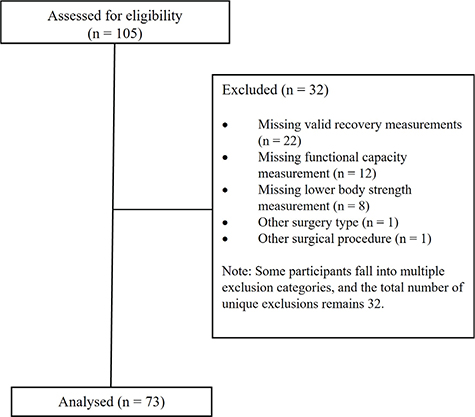
Figure 1. Flow diagram of participant recruitment and enrolment process.
| Variables | N or median | (%) or (IQRa) |
| Sex, n female (%) | 19 | (26) |
| Age, median years (IQR) | 72 | (12) |
| Body Mass Index, median kg/m² (IQR) | 24,7 | (4) |
| Occupation, n (%) | ||
| Full- or part-time | 19 | (26) |
| Long-term sick leave | 2 | (3) |
| Retired | 52 | (71) |
| Leisure-time activity levelb, n (%) | ||
| Low | 32 | (44) |
| Medium | 31 | (43) |
| High | 9 | (12) |
| Missing | 1 | (1) |
| ASA classificationc, n (%) | ||
| 1 | 4 | (6) |
| 2 | 42 | (57) |
| 3 | 27 | (37) |
| Neoadjuvant chemotherapy, n (%) | 25 | (34) |
| Surgery, n (%) | ||
| Cystectomy with Bricker deviation (urostomy) | 57 | (78) |
| Cystectomy with orthotopic bladder substitute | 16 | (22) |
| Surgery time, median minutes (IQR) | 300 | (55) |
| Re-surgery, n (%) | 4 | (5) |
| Hospital stay after surgery, median days (IQR) | 7 | (3) |
| Discharged to inpatient rehabilitation, n (%) | 40 | (55) |
| Physical function before surgery, median (IQR) | ||
| Functional capacityd, meters walked | 490 | (161) |
| Lower body strengthe, n stands | 12 | (5) |
| Physical activityf, median (IQR) | ||
| Daily steps, n/day | 2,707 | (2,350) |
| Brisk walking time, min/day | 0.69 | (3.4) |
| Sedentary time, min/day | 735 | (146) |
| Sit-to-stands, n/day | 40 | (19) |
| aInterquartile range. bStanford Brief Activity Survey. Intensity was re-classified as ‘Low’ for inactive and light, ‘Moderate’ for moderate, and ‘High’ for high and very high. cASA score = Physical Status Classification, ASA 1 – a healthy patient, ASA 2 – a patient with mild systemic disease, ASA 3 – a severe systemic disease. No patients with ASA > 3 participated in the study. dSix-minute walk test, distance walked in meters in 6 min. e30-s chair stand test, number of stands from a seated position in 30 s. fMeasured with activPAL3® micro activity monitor. |
||
Table 2 shows the results of the multiple linear regression analysis. In the crude model, functional capacity was significantly associated with daily steps and brisk walking. In the adjusted model, daily steps remained significant (β = 5.92; 95% confidence interval [CI]: 0.53–11.29), while brisk walking became non-significant. For each additional meter in the 6MWT, daily steps increased by approximately 6 steps. Sit-to-stand transitions, adjusted for confounders, approached significance (β = 0.05; 95% CI: −0.001 to 0.09), meaning that for every 100-meter increase in 6MWT, an additional five sit-to-stand transitions were performed. No significant associations were observed for lower body strength and recovery. None of the models violated the linear regression assumptions of linearity, independence, multicollinearity, and autocorrelation.
| Outcomes | Functional capacitya | |
| β (95% CI) | ||
| Daily steps | 5.92 | (0.53 to 11.29) |
| Brisk walking timec | 1.00 | (0.99 to 1.01) |
| Sedentary time | 0.03 | (−0.31 to 0.36) |
| Sit-to-stands | 0.05 | (−0.001 to 0.09) |
| Lower body strengthb | ||
| β (95% CI) | ||
| Daily steps | 5.03 | (−89 to 98) |
| Brisk walking timec | 1.02 | (0.93 to 1.11) |
| Sedentary time | 2.90 | (−2.75 to 8.55) |
| Sit-to-stands | 0.002 | (−0.81 to 0.81) |
| CI: confidence interval. Note: adjusted for sex, age, and ASA score. aSix-minute walk test, distance walked in meters in 6 minutes b30-s chair stand test, number of stands from a seated position in 30 s. cExponentiated due to prior log-transformation. |
||
Discussion
This study investigated the relationship between physical function before surgery and recovery after hospital discharge in patients who underwent RARC for urinary bladder cancer. Recovery was objectively measured over 7 days using the novel method of activity monitoring. A significant positive association was found between functional capacity before surgery, measured as walking distance, and recovery, measured as daily steps after discharge, although wide confidence intervals indicate uncertainty in the estimates. To our knowledge, the association between physical function before radical cystectomy and post-discharge daily steps, sit-to-stand transitions, brisk walking, and sedentary time measured with activity monitors has not been explored in a comparable way in previous research. However, other studies have evaluated different recovery measures in various patient populations. A systematic review found an association between functional capacity before abdominal surgery and complications, but not with the length of hospital stay [10]. In contrast, a study measuring patients undergoing hepatobiliary surgery found an association between cardiorespiratory fitness before surgery and length of hospital stay [19].
The association between functional capacity before surgery and daily sit-to-stand transitions after hospital discharge, measured with activity monitors, was nearly significant, indicating a possible trend. However, we found no significant association in our models for brisk walking. Few patients engage in brisk walking directly after hospital discharge, likely due to their reduced overall condition following surgery and recommended physical restrictions. Furthermore, despite applying a log transformation, the brisk walking data remained somewhat positively skewed, which may have limited our ability to detect a meaningful association. Similarly, our study found no association between physical function before surgery and sedentary time after surgery. During the early recovery phase after hospital discharge, patients may still prioritise rest regardless of their prior physical activity levels, which could lessen the impact of physical function before surgery on their sedentary time.
Somewhat contrasting with previous research findings, our study does not provide additional evidence for the association between lower body strength before surgery and recovery after hospital discharge [20]. A prospective cohort study found an association between leg strength, measured by 30s CST, and complications after undergoing abdominal cancer surgery [20]. The discrepancy may be due to differences in sample size and outcome measures, as the previous study had a larger sample and assessed recovery based on complications at a 30-day follow-up.
The participants in our study walked a median of 2705 steps per day, a figure comparable with values from other studies [21, 22]. One study investigating physical activity levels in patients undergoing laparoscopic abdominal surgery, using activity monitors over 7 days in the first week after surgery, found that participants walked an average of 2775 daily steps [21]. Our research group previously measured daily steps in patients during the first 3 days in the hospital ward following abdominal surgery, with RARC being the most common procedure [22]. In that study, patients in the intervention group, who received additional mobilisation support, walked an average of 1057 steps per day, while those in the control group walked 360 steps per day.
While this method has been suggested as a measure of recovery due to its association with the perioperative measure of hospital length of stay [8], our study enhances understanding of its relationship with recovery after hospital discharge, a phase where many patients undergoing abdominal surgery still have lower physical activity levels compared to before surgery [23]. Our research group conducted interviews with patients who have undergone RARC [24]. In those interviews, the patients described having ‘a sense of weakness, fatigue, and listlessness’ upon arriving home after the surgery. The patients also described a feeling of exhaustion and barely managing daily activities, while also expressing insecurity about how to be physically active [24].
The study sample is representative of patients undergoing radical cystectomy due to urinary bladder cancer in Sweden when considering sex, age, and ASA classification [25]. However, as the article is a secondary analysis of an earlier RCT evaluating an exercise intervention, the risk of participant bias still needs to be considered. Exercise intervention studies generally attract a healthier population [26], potentially leading to higher physical function and recovery values than the general population. The exclusion of 30 observations due to missing valid measurements (see Figure 1) limited the power to detect associations and introduced selection bias. However, the excluded and included participants were similar at baseline (see supplementary file).
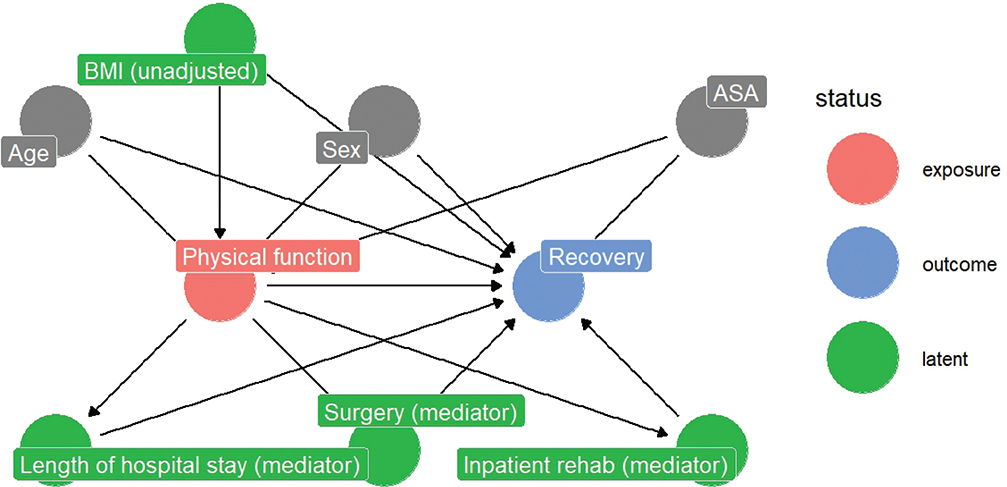
Figure 2. Directed acyclic graph created in R using the dagitty package (version 0.3.4), illustrating the relationship between physical function, recovery, and other relevant variables in the study. The graph shows the pathways through which physical function influences recovery, adjusting for the potential confounders age, sex, ASA score, and BMI (not included in the final models). The variables length of hospital stay, surgery, and inpatient rehabilitation are illustrated due to their mediating, unadjusted effects on recovery.
Because of the relatively small sample size and the risk of overfitting, only a limited number of confounders were included in the models. Most of the participants were admitted to inpatient rehabilitation after hospital discharge, but the effect of inpatient rehabilitation could not be adjusted for due to collider bias. Furthermore, all participants in the RCT received instructions to stay physically active and take walks after surgery. The instructions might have influenced the patients’ physical activity levels, leading to higher outcome values and under- or overestimating the strength of the association.
While the activPAL3 activity monitor has not been specifically validated for the study population, it has been validated for measuring steps, posture, and transitions in older people with impaired function [15]. However, the activPAL3 accelerometer tends to underestimate step count at lower speeds [15], which could affect the interpretation of our results. Previous studies have shown a 22% reduction in habitual gait speed following abdominal cancer surgery [27]. A similar decrease in gait speed can be expected in patients undergoing RARC, which could lead to an underestimation of their step count.
We used the 6MWT and the 30s CST to assess physical function. These tests are commonly used in both clinical and research settings to measure different aspects of physical function. The 6MWT is validated as a measure of functional capacity, assessing an individual’s ability to sustain submaximal exertion [16]. Furthermore, the 6MWT has been recognised as a predictor of surgical outcomes in patients undergoing abdominal cancer surgery [10, 11]. The 30s CST, on the other hand, is validated as a measurement of functional lower body strength and mobility in older adults, which are crucial elements for independence in daily life [18]. While the test has not, to our knowledge, been validated for this specific patient group, it measures important aspects of physical function. The two tests combined cover a large portion of physical function. However, in the early recovery phase, multiple factors may play a role. Future research could explore whether additional physical function measurements provide a more comprehensive understanding of the association between physical function before surgery and recovery after surgery. Furthermore, although only 73 of the original 105 participants had valid physical function and physical activity measurements, most of the missing data were not due to the participants. Of the 12 participants missing the physical function measurements, only one could not perform the measurements due to back pain.
The findings from this study suggest that exercise to enhance physical function before surgery might be beneficial for the patient group. Patients with urinary bladder cancer, like those with other types of cancers, often struggle to reach the recommended levels of physical activity [28]. A systematic review of exercise in patients undergoing radical cystectomy concluded that there is some evidence that exercise before surgery may improve physical fitness [29]. A more recent review explored the current evidence for exercise before major urological surgery and concluded that there is evidence supporting physical prehabilitation for improving early mobilisation, health-related quality of life, and the time to perform activities of daily living [30]. Future studies investigating the effects of exercise interventions in patients with low physical function before undergoing RARC for urinary bladder cancer are needed.
In conclusion, using activity monitoring – a novel method for measuring recovery after surgery – we found indications that greater functional capacity before surgery is associated with higher recovery levels, as measured by daily steps after hospital discharge in patients who have undergone RARC for urinary bladder cancer. The findings suggest that interventions aimed at improving physical function before RARC may enhance recovery, though further research is needed to confirm this association.
References
- [1] Ullén A, Aljabery F, Dahlman P, et al. Swedish national guidelines on urothelial carcinoma: 2024 update on advanced and metastatic disease. Scand J Urol. 2025;60:76–82. https://doi.org/10.2340/sju.v60.43236
- [2] Venkatramani V, Reis IM, Gonzalgo ML, et al. Comparison of robot-assisted and open radical cystectomy in recovery of patient-reported and performance-related measures of independence: a secondary analysis of a randomized clinical trial. JAMA Netw Open. 2022;5(2):e2148329. https://doi.org/10.1001/jamanetworkopen.2021.48329
- [3] Novara G, Catto JW, Wilson T, et al. Systematic review and cumulative analysis of perioperative outcomes and complications after robot-assisted radical cystectomy. Eur Urol. 2015;67(3):376–401. https://doi.org/10.1016/j.eururo.2014.12.007
- [4] Gustafsson UO, Scott MJ, Hubner M, et al. Guidelines for perioperative care in elective colorectal surgery: Enhanced Recovery After Surgery (ERAS(®) Society Recommendations: 2018. World J Surg. 2019;43(3):659–695. https://doi.org/10.1007/s00268-018-4844-y
- [5] Zhou Y, Li R, Liu Z, et al. The effect of the enhanced recovery after surgery program on radical cystectomy: a meta-analysis and systematic review. Front Surg. 2023;10:1101098. https://doi.org/10.3389/fsurg.2023.1101098
- [6] Hendry PO, Hausel J, Nygren J, et al. Determinants of outcome after colorectal resection within an enhanced recovery programme. Br J Surg. 2009;96(2):197–205. https://doi.org/10.1002/bjs.6445
- [7] Neville A, Lee L, Antonescu I, et al. Systematic review of outcomes used to evaluate enhanced recovery after surgery. Br J Surg. 2014;101(3):159–170. https://doi.org/10.1002/bjs.9324
- [8] Abeles A, Kwasnicki RM, Pettengell C, et al. The relationship between physical activity and post-operative length of hospital stay: a systematic review. Int J Surg. 2017;44:295–302.
- [9] Allvin R, Svensson E, Rawal N, et al. The Postoperative Recovery Profile (PRP) – a multidimensional questionnaire for evaluation of recovery profiles. J Eval Clin Pract. 2011;17(2):236–243. https://doi.org/10.1111/j.1365-2753.2010.01428.x
- [10] Makker PGS, Koh CE, Solomon MJ, et al. Preoperative functional capacity and postoperative outcomes following abdominal and pelvic cancer surgery: a systematic review and meta-analysis. ANZ J Surg. 2022;92(7–8):1658–1667. https://doi.org/10.1111/ans.17577
- [11] Argillander TE, Heil TC, Melis RJF, et al. Preoperative physical performance as predictor of postoperative outcomes in patients aged 65 and older scheduled for major abdominal cancer surgery: a systematic review. Eur J Surg Oncol. 2022;48(3):570–581. https://doi.org/10.1016/j.ejso.2021.09.019
- [12] Porserud A, Karlsson P, Aly M, et al. Effects of an exercise intervention in primary care after robot-assisted radical cystectomy for urinary bladder cancer: a randomised controlled trial. BMC Cancer. 2024;24(1):891. https://doi.org/10.1186/s12885-024-12647-2
- [13] Porserud A, Karlsson P, Rydwik E, et al. The CanMoRe trial – evaluating the effects of an exercise intervention after robotic-assisted radical cystectomy for urinary bladder cancer: the study protocol of a randomised controlled trial. BMC Cancer. 2020;20(1):805. https://doi.org/10.1186/s12885-020-07140-5
- [14] Ryan CG, Grant PM, Tigbe WW, et al. The validity and reliability of a novel activity monitor as a measure of walking. Br J Sports Med. 2006;40(9):779–784. https://doi.org/10.1136/bjsm.2006.027276
- [15] Grant PM, Dall PM, Mitchell SL, et al. Activity-monitor accuracy in measuring step number and cadence in community-dwelling older adults. J Aging Phys Act. 2008;16(2):201–214. https://doi.org/10.1123/japa.16.2.201
- [16] American Thoracic Society. ATS statement: guidelines for the six-minute walk test. Am J Respir Crit Care Med. 2002;166(1):111-117. https://doi.org/10.1164/ajrccm.166.1.at1102
- [17] Schmidt K, Vogt L, Thiel C, et al. Validity of the six-minute walk test in cancer patients. Int J Sports Med. 2013;34(7):631–636. https://doi.org/10.1055/s-0032-1323746
- [18] Jones CJ, Rikli RE, Beam WC. A 30-s chair-stand test as a measure of lower body strength in community-residing older adults. Res Q Exerc Sport. 1999;70(2):113–119. https://doi.org/10.1080/02701367.1999.10608028
- [19] Snowden CP, Prentis J, Jacques B, et al. Cardiorespiratory fitness predicts mortality and hospital length of stay after major elective surgery in older people. Ann Surg. 2013;257(6):999–1004. https://doi.org/10.1097/SLA.0b013e31828dbac2
- [20] Karlsson E, Egenvall M, Farahnak P, et al. Better preoperative physical performance reduces the odds of complication severity and discharge to care facility after abdominal cancer resection in people over the age of 70 – a prospective cohort study. Eur J Surg Oncol. 2018;44(11):1760–1767.
- [21] van der Meij E, van der Ploeg HP, van den Heuvel B, et al. Assessing pre- and postoperative activity levels with an accelerometer: a proof of concept study. BMC Surg. 2017;17(1):56. https://doi.org/10.1186/s12893-017-0223-0
- [22] Porserud A, Aly M, Nygren-Bonnier M, et al. Objectively measured mobilisation is enhanced by a new behaviour support tool in patients undergoing abdominal cancer surgery. Eur J Surg Oncol. 2019;45(10):1847–1853. https://doi.org/10.1016/j.ejso.2019.04.013
- [23] Bor P, de Leeuwerk ME, Valkenet K, et al. Physical functioning and physical activity after gastrointestinal or bladder oncological surgery: an observational cohort study. Eur J Cancer Care (Engl). 2022;31(6):e13739. https://doi.org/10.1111/ecc.13739
- [24] Karlsson P, Nygren-Bonnier M, Torikka S, et al. Patients´ experiences of an exercise intervention in primary care following robot-assisted radical cystectomy due to bladder cancer: a qualitative study. BMC Cancer. 2024;24(1):1306. https://doi.org/10.1186/s12885-024-13059-y
- [25] Liedberg F, Hagberg O, Aljabery F, et al. Cystectomy for bladder cancer in Sweden – short-term outcomes after centralization. Scand J Urol. 2024;59:84–89. https://doi.org/10.2340/sju.v59.40120
- [26] Cooke R, Jones A. Recruiting adult participants to physical activity intervention studies using sport: a systematic review. BMJ Open Sport Exerc Med. 2017;3(1):e000231. https://doi.org/10.1136/bmjsem-2017-000231
- [27] Karlsson E, Franzén E, Nygren-Bonnier M, et al. Short-term postoperative physical decline and patient-reported recovery in people aged 70 or older undergoing abdominal cancer resection- A prospective cohort study. J Geriatr Oncol. 2019;10(4):610–617. https://doi.org/10.1016/j.jgo.2019.01.004
- [28] Garcia DO, Thomson CA. Physical activity and cancer survivorship. Nutr Clin Pract. 2014;29(6):768–779. https://doi.org/10.1177/0884533614551969
- [29] Rammant E, Decaestecker K, Bultijnck R, et al. A systematic review of exercise and psychosocial rehabilitation interventions to improve health-related outcomes in patients with bladder cancer undergoing radical cystectomy. Clin Rehabil. 2018;32(5):594–606. https://doi.org/10.1177/0269215517746472
- [30] Jensen BT, Lauridsen SV, Jensen JB. Prehabilitation for major abdominal urologic oncology surgery. Curr Opin Urol. 2018;28(3):243–250. https://doi.org/10.1097/MOU.0000000000000487