ORIGINAL RESEARCH ARTICLE
The Swedish national guidelines on penile cancer
Axel Gerdtssona,b,c  , Eliya Abedid,e, Gediminas Baseckasa, Håkan Brorsonf,g,h, Luiza Doroftei, Sofia Fallj, Emelie Filipssonk, Johan Forsselll, Dominik Glombikm,n, Diane Grelaudo, Fatou Hellmank, Anna-Karin Jakobssona, Kimia Kohestanip,q, Sinja Kristiansenr, Jenny Magnussonp,q, Kajsa Nilssona, Per Nordlunds, Erik Perssont, Theodoros Psariasu, Elisabeth Skeppnerm, Elin Trägårdhv,w, Emma Ulvskogx, Åsa Warnolfa,b, Elisabeth Öfverholmy and Peter Kirranderm,n
aDepartment of Urology, Skåne University Hospital, Malmö, Sweden; bDepartment of Translational Medicine, Lund University, Sweden; cDivision of Urology, Department of Clinical Science, Intervention and Technology, Karolinska Institutet, Stockholm, Sweden; dDepartment of Neurobiology, Care Sciences and Society, Division of Family Medicine and Primary Care, Karolinska Institutet, Stockholm, Sweden; eAcademic Primary Health Care Centre, Region Stockholm, Stockholm, Sweden; fDepartment of Clinical Sciences in Malmö, Lund University, Malmö, Sweden; gDepartment of Plastic and Reconstructive Surgery, Skåne University Hospital, Malmö, Sweden; hLund University Cancer Centre, Lund, Sweden; iDepartment of Laboratory Medicine, Faculty of Medicine and Health, Örebro University, Örebro, Sweden; jDepartment of Dermatology, Örebro University Hospital, Örebro, Sweden; kDepartment of Oncology, Södersjukhuset, Stockholm, Sweden; lDepartment of Oncology, Norrlands University Hospital, Umeå, Sweden; mDepartment of Urology, Faculty of Medicine and Health, Örebro University, Örebro, Sweden; nDepartment of Urology, Örebro University Hospital, Örebro, Sweden; oDepartment of Pathology, Skåne University Hospital and Regional Laboratories, Malmö, Sweden; pDepartment of Urology, Sahlgrenska University Hospital, Region Västra Götaland, Gothenburg, Sweden; qDepartment of Urology, Institute of Clinical Sciences, Sahlgrenska Academy, University of Gothenburg, Gothenburg, Sweden; rDepartment of Dermatology and Venereology, Lund University, Skane University Hospital, Malmö, Sweden; sDepartment of Urology, Södersjukhuset, Stockholm, Sweden; tRegionalt Cancer Center, Uppsala, Sweden; uDepartment of Clinical and Experimental Medicine, Division of Urology, Linköping University, Linköping, Sweden; vDepartment of Translational Medicine, Wallenberg Centre for Molecular Medicine, Lund University, Malmö, Sweden; wDepartment of Clinical Physiology and Nuclear Medicine, Skåne University Hospital, Malmö, Sweden; xDepartment of Oncology, Faculty of Medicine and Health, Örebro University, Örebro, Sweden; yDepartment of Oncology, Sahlgrenska University Hospital, Göteborg, Sweden
ABSTRACT
Objective: The Swedish national guidelines on penile cancer were first published in 2013. The objective of this study is to present the 2023 update of these guidelines and highlight the differences to the European Association of Urology (EAU) / American Association of Clinical Oncology (ASCO) guidelines on penile cancer.
Material and methods: A review of the literature and a comparison to the EAU / ASCO guideline on penile cancer was performed. Differences between the EAU / ASCO guidelines and the Swedish national guidelines are highlighted.
Results: The Swedish national guidelines on penile cancer emphasized the consultation of a national multidisciplinary treatment conference for all patients diagnosed with both primary and recurrent penile cancer or penile intraepithelial neoplasia (PeIN). Clinically lymph node negative patients diagnosed with >pT1G1 are offered dynamic sentinel node biopsy (DSNB). In the EAU / ASCO guidelines the DSNB is optional for T1aG2 patients. Penile cancer surgery is centralized to two hospitals. Perioperative chemotherapy is offered to patients with ≥N2. In the EAU / ASCO guidelines the use of perioperative chemotherapy for N2 patients is optional. A structured follow-up program is advocated to find recurrences at an early stage.
Conclusions: The Swedish national guidelines on penile cancer have been updated and compared to the EAU / ASCO guidelines. The national multidisciplinary treatment conference, centralization of surgery, the use of perioperative chemotherapy and a structured follow-up are the cornerstones of the Swedish national guidelines on penile cancer.
KEYWORDS: Follow-up; guidelines; lymph node dissection; penile cancer; penile intraepithelial neoplasia
Citation: Scandinavian Journal of Urology 2025, VOL. 60, 189–194. https://doi.org/10.2340/sju.v60.44463.
Copyright: © 2025 The Author(s). Published by MJS Publishing on behalf of Acta Chirurgica Scandinavica. This is an Open Access article distributed under the terms of the Creative Commons Attribution 4.0 International License (http://creativecommons.org/licenses/by/4.0/), allowing third parties to copy and redistribute the material in any medium or format and to remix, transform, and build upon the material, with the condition of proper attribution to the original work.
Received: 1 March 2025; Accepted: 18 July 2025; Published: 19 September 2025
CONTACT: Axel Gerdtsson axel.gerdtsson@med.lu.se VO Urologi, Skånes Universitetssjukhus, Jan Waldenströmsgata 5, 20502 Malmö, Sweden
Introduction
The first Swedish national guidelines on penile cancer were published in 2013 and updated in 2016 and 2019. The current guidelines were published in 2023, a few months before the European Association of Urology (EAU) / American Association of Clinical Oncology (ASCO) guidelines on penile cancer were published [1]. The Swedish national guidelines on penile cancer are thought to adopt the EAU / ASCO guidelines to the Swedish settings. A working group consisting of urologists, dermatologists, oncologists, pathologists, specialists in radiology and nuclear medicine and urology nurses from the six Swedish health care regions constitute the guideline group [2].
Since 2000, patients diagnosed with penile cancer or penile intraepithelial neoplasia (PeIN) are registered in the national penile cancer register (NPECR), which currently contains over 3900 patients. The NPECR is used to evaluate the quality of the penile cancer care, the adherence to the Swedish national guidelines on penile cancer and for research [3, 4].
The aim of this research article is to present the current Swedish national guidelines on penile cancer and to highlight the recommendations that deviate from the EAU /ASCO guidelines.
Incidence and mortality
In 2023, 136 patients were diagnosed with penile cancer in Sweden [5]. This corresponds to a age standardized incidence of 2.63/100,000 persons/year and the incidence is increasing [5]. Sweden has one of the highest incidences of penile cancer in Europe [6]. The mean age at diagnosis is 72 years and around 7% of all men diagnosed with penile cancer in Sweden are diagnosed before the age of 40 [5]. Despite the increment in incidence, the mortality rates have not been affected and fluctuate around 0.6/100,000 persons/year (Figure 1). The 5-year overall survival for patients diagnosed with penile cancer without lymph node metastases (N0), with lymph node metastases (N+) and metastatic spread (M+) is shown in Figure 2.
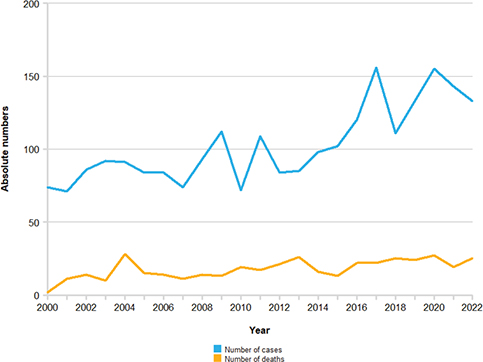
Figure 1. Penile cancer age-standardized incidence and mortality in Sweden from 2000 to 2022.
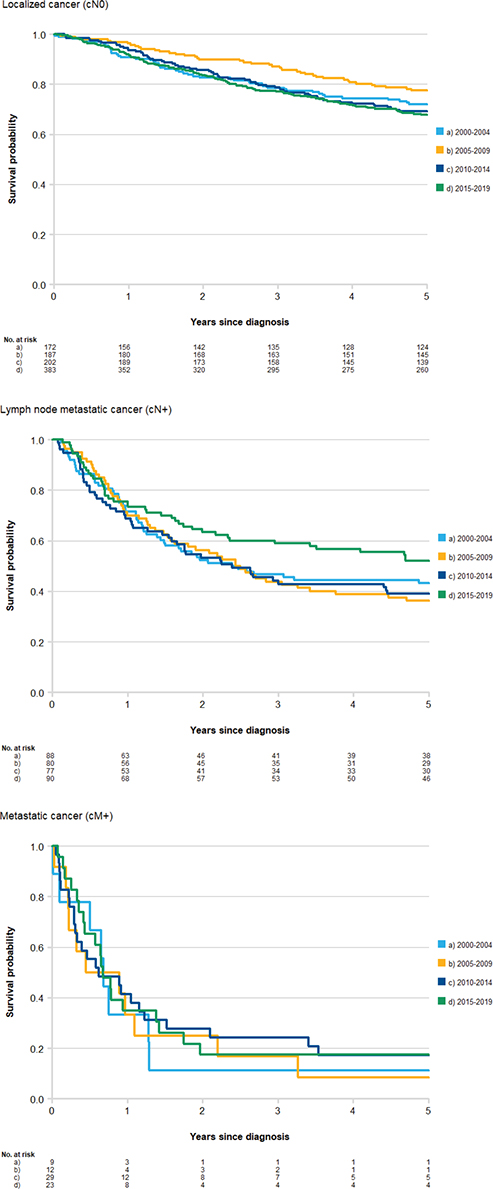
Figure 2. Five-year overall survival for penile cancer patients in Sweden stratified for the years of diagnosis 2000–2004, 2005–2010, 2011–2014 and 2015–2019 and if localized, lymph node metastatic or metastatic penile cancer.
Primary prevention
In around 50% of penile cancer cases, oncogenic human papilloma virus (HPV) is assumed to be the major cause of the disease [7]. The Swedish HPV- vaccination program is free of charge and started in 2010 for girls and in 2020 for boys. A large Swedish nationwide study of HPV vaccinated girls and young women found a significantly reduced risk of invasive cervical cancer [8]. Whether or not the same effect will be seen for penile cancer is yet too early to evaluate.
Penile cancer develops from its precursor form PeIN. If left untreated, PeIN will progress to invasive penile cancer in about 30% of cases [9]. However, with the use of topical agents or surgery, PeIN can be successfully treated and only about 3–7% will progress to invasive penile cancer [10]. In 2023, 126 patients were diagnosed with PeIN in Sweden and the number of patients diagnosed each year is increasing [5, 11]. All patients with PeIN are discussed at the national multidisciplinary treatment conference for penile cancer to increase the awareness of PeIN. At the conference each patient receives an individually tailored treatment recommendation irrespective of the experience of the diagnosing clinician.
In the Swedish national guidelines on penile cancer, the use of laser surgery is no longer recommended due to the high risk of recurrences [12]. Instead, the guidelines recommend circumcision if the PeIN is confined to the prepuce, excision if located on a limited part of the glans and a topical agent or total glans resurfacing if widespread on the glans. Topical agents used are Imiquimod in younger patients and HPV-positive disease and 5-fluorouracil (5-FU) in older patients or HPV-negative disease [13].
Standardized cancer patient pathway
The standardized cancer patient pathway for penile cancer in Sweden was introduced in 2017 with an ambition to improve diagnostics for patients with suspicion of penile cancer, patient satisfaction and increase equity in provision of cancer care [14]. The following symptoms should lead to the suspicion of penile cancer: penile ulcer or lump, penile reddish rash refractory to topical corticosteroid therapy, bleeding or foul-smelling discharge under a phimotic prepuce and penile pain. Patients referred to a urologist or a dermatologist with these symptoms should be included in the standardized cancer patient pathway. The standardized cancer patient pathways include different time targets. For example, the lead time target states that at least 80% of patients with penile cancer in the standardized cancer pathway and with an indication for surgery, should undergo surgery within 38 days from diagnosis (first visit at the urology or dermatology clinic). For patients treated with upfront chemotherapy, the time is set to 34 days. Around 73% of the patients diagnosed with penile cancer in Sweden are included in the standardized cancer patient pathway [15]. The median time from diagnosis to penile cancer surgery or start of neoadjuvant chemotherapy is 41 days in Sweden [16].
Tumor grading
The TNM-stage for patients with penile cancer in Sweden follows the 8th edition of TNM-staging [17]. Furthermore, tumors classified as <T1aG2 are regarded as low-risk, T1aG2 as intermediate risk and >T1aG2 as high risk for lymph node metastases (Table 1).
Staging procedures
Patients diagnosed with intermediate or high risk penile cancer, without clinical evidence of lymph node metastases to the groins, undergo computed tomography (CT) of the abdomen and pelvis, an ultrasound (US) of the groins and fine needle aspiration cytology (FNAC) on indication (sonographic suspicious nodes) [18]. If no evidence of metastatic disease on US, FNAC or CT-scan and >cT1G1, the patient is submitted to Dynamic Sentinel Node Biopsy (DSNB) at the same time as the surgery of the primary tumor.
The Swedish national guidelines recommend DSNB for all patients with ≥pT1aG2 that are fit for surgery. This is in contrast with the EAU / ASCO guidelines where this is optional for patients with pT1aG2 [1]. DSNB includes intradermal injection of 99mTc nano-colloid, Single Photon Emission Computed Tomography/Computed Tomography (SPECT/CT), intradermal injection of patent blue dye [19] and the interoperative use of a gamma probe. In a recent Swedish study of 130 penile cancer patients staged by DSNB, 15% of the patients were found to have lymph node metastases while the false negative rate was 12% [20].
Fluorodeoxyglucose positron emission computed tomography (FDG-PET/CT) is recommended in the Swedish national guidelines for staging patients with c/pN+ disease since it has a high sensitivity (87%) and specificity (88%) for detecting pelvic metastatic lymph nodes in penile cancer patients [21]. FDG-PET/CT is easily accessible in the Swedish health care system and is therefore recommended in N+ patients before the final treatment decision.
Multidisciplinary treatment conference
Since 2013, a weekly national multidisciplinary treatment conference for patients diagnosed with penile cancer or PeIN is held. At the conference, urologists, oncologists, pathologists, radiologists, nuclear medicine specialists, nurses and dermatologists meet on-line to review each case and make treatment recommendations. Members from all six health care regions, responsible for penile cancer care and follow-up, attend. The Swedish national guidelines recommend that all newly diagnosed penile cancer or PeIN patients and patients with relapse are discussed at the conference.
Centralized surgery
Since 2015, penile cancer surgery has been centralized to two university hospitals (Skåne University Hospital in Malmö and Örebro University Hospital). The intent of centralization is to improve adherence to guidelines, reduce complications, increase reconstructive surgery, facilitate research and to offer equal care regardless of the patients place of residence [22]. The centralization of surgery is not mandatory in the EAU /ASCO guidelines. In Sweden, the centralization of surgery is central for the penile cancer care. The two national centers for penile cancer surgery are responsible for the management and development of the multidisciplinary tumor conference, the NPECR and the Swedish national guidelines group. Without the centralization, the multidisciplinary tumor conference, the NPECR and the guidelines group activities would not be moving forward.
Inguinal lymph node dissection
Upfront inguinal lymph node dissection (rILND) is performed in case of one positive lymph node (on US+FNAC or DSNB) or a single lymph node (N1) <3cm and no additional metastases on FDG-PET/CT. In patients with more advanced inguinal lymph node spread (pN1 patients with 2 metastases or one ≥ 3 cm LN metastasis or patients with pN2-3), upfront chemotherapy is advised in eligible patients before rILND. Patients are operated with an open fascia-sparing [23] and vena saphena magna-sparing technique [24].
The use of modified inguinal lymph node dissection (mILND) has lost its role in cases with no uptake of 99mTc on SPECT-CT. Instead of mILND, the guidelines recommend a repeat DSNB within a few weeks. Usually, the repeat DSNB will identify a sentinel node, and the patient is spared the mILND [25].
Chemotherapy
Chemotherapy has been recommended in the Swedish national guidelines since 2013 for penile cancer patients with lymph node or distant metastases. In the first guidelines from 2013, chemotherapy was recommended in an adjuvant setting to patients with pN2-N3 disease, but since the 2015 update neoadjuvant Paclitaxel, Ifosfamide and Cisplatin for pN2-N3 disease, pN1 with >1metastase or ≥3cm single metastasis is recommended. This contrasts with the EAU / ASCO guidelines that recommend neoadjuvant chemotherapy to pN3 patients and to selected patients with pN2 disease [1].
The Swedish national guidelines recommend four cycles of paclitaxel, ifosfamide and cisplatin to all cisplatin eligible patients [26]. If used in the upfront setting, an evaluating FDG-PET/CT is performed after two cycles. In case of progression, operable patients proceed to surgery. Patients staged pN1 but harboring only a single metastatic lymph node after rILND are put on surveillance.
Patients receiving perioperative oncological therapy in Sweden during 2000–2018 have been evaluated. A higher rate of patients with pN2-3 received oncological therapy with curative intent during 2014–2018 (64%) compared to 2000–2004 (30%) and patients receiving oncological therapy had a better survival than those who did not. Furthermore, pN3 based on extranodal extension (ENE) converged with better survival than pN3 based on pelvic lymph node metastases. In patients with c/pN3, oncological treatment was associated with a 42% reduction in mortality risk [27].
Radiotherapy
Adjuvant radiotherapy in penile cancer is recommended in the Swedish national guidelines in selected cases. Patients who have viable cancer in the groin or pelvis following chemotherapy and rILND and/or pelvic lymph node dissection are generally advised adjuvant chemoradiotherapy (concomitant cisplatinum) with 50.4 Gy/28 fractions [28] or radiotherapy alone with 50Gy/25 fractions. Chemotherapy unfit patients may also be eligible for adjuvant radiotherapy if they have more than one lymph node metastasis at rILND. Also, in patients with positive surgical margins after total penectomy, radiotherapy can be given to prevent progression. To offer adjuvant radiotherapy in surgically treated patients with viable disease after chemotherapy is considered a weak recommendation in the EAU/ASCO guidelines [1]. Primary external beam radiotherapy or brachytherapy of the penile cancer is not recommended in the Swedish national guidelines.
Palliative therapy
Patients with metastatic disease (M1) have a median overall survival of 9 months (IQR 4–15 months) according to a Swedish study [27]. Chemotherapy with paclitaxel, ifosfamide and cisplatin for cisplatin eligible patients or with carboplatin-based regimens for the cisplatin unfit is generally used. Immunotherapy with PD-1 inhibitors, chemotherapy including 5-fluorouracil combinations and anti-EGFR therapy are the second line palliative therapy options according to the Swedish national guidelines. Palliative radiotherapy can be used in patients with non-resectable lymph node metastases, non-resectable penile recurrences or cutaneous metastases.
Follow-up
The follow-up schedule for patients treated with curative intent is shown in Table 2. The patients are followed up at the regional centers for 5 years after the penile cancer surgery. However, the follow-up schedule is adjusted to the penile cancer surgery performed (organ sparing vs. non-organ-sparing) and the N-stage. Patients with pN+ disease are followed with CT-scans and outpatient visits every 3 months for the first 2 years and every 6 months thereafter up to 5 years. In pN0 patients, an US of the groin is recommended every 6th month during the first 2 years and every year thereafter in the Swedish national guidelines to detect false negative sentinel nodes (Table 2).
| Treatment and pN-stage | Year 1–2 | Year 3–5 | Recommended examinations |
| Organ sparing penile cancer surgery | Every 3rd–6th month | Every 6th month | Clinical examination Biopsy if needed |
| Non-organ sparing penile cancer surgery | Every 6th month | Annually | Clinical examination Biopsy if needed |
| pN+ | Every 3rd month | Every 6th month | CT-scan (thoracic and abdominal). |
| pN0 | Every 6th month | Annually | Ultrasound of the groins and fine needle aspiration if needed in patients with ≥ pT1G2 |
| Treatment for PeIN | Every 3rd–6th month the first year | Annually after one year | Clinical examination Biopsy if needed |
Conclusions
The Swedish national guidelines on penile cancer have recently been updated. A mandatory national multidisciplinary treatment conference for all patients diagnosed with penile cancer, PeIN or relapse, centralization of surgery, the use of perioperative chemotherapy and a structured follow-up including US for pN0 patients are the cornerstones of the Swedish national guidelines on penile cancer. The Swedish guidelines on penile cancer differ compared to the EAU /ASCO guidelines regarding the indication for DSNB in pT1aG2 patients, the use of perioperative chemotherapy for N1/N2 patients and the use of adjuvant radiotherapy after inguinal and pelvic lymph node dissection.
Acknowledgments
Axel Gerdtsson received grants from the Hillevi Fries foundation, the Gösta Jönsson foundation, the Stiftelsen för urologisk cancer and the USVE (Region Skånes Universitets sjukvårdsenheter).
References
- [1] Brouwer OR, Albersen M, Parnham A, et al. European Association of Urology-American Society of Clinical Oncology Collaborative Guideline on Penile Cancer: 2023 update. Eur Urol. 44463;83(6): 548–560. https://doi.org/10.1016/j.eururo.2023.02.027
- [2] Available from: https://kunskapsbanken.cancercentrum.se/diagnoser/peniscancer/vardprogram/ [cited 2025 jan 15]
- [3] Kirrander P, Sherif A, Friedrich B, et al. Swedish National Penile Cancer Register: incidence, tumour characteristics, management and survival. BJU Int. 2016;117(2):287–292. https://doi.org/10.1111/bju.12993
- [4] Warnolf A, Glombik D, Sandin F, et al. Evaluation of data quality in the Swedish National Penile Cancer Register. Scand J Urol. 2024;59: 162–168. https://doi.org/10.2340/sju.v59.42029
- [5] Årsrapport 2023 Nationellt Register Peniscancer https://cancercentrum.se/diagnosbehandling/cancerdiagnoser/penis/kvalitetsregister.3518.html. [cited 2025 jan 15]
- [6] Fu L, Tian T, Yao K, et al. Global pattern and trends in penile cancer incidence: population-based study. JMIR Public Health Surveill. 2022;8(7):e34874. https://doi.org/10.2196/34874
- [7] Olesen TB, Sand FL, Rasmussen CL, et al. Prevalence of human papillomavirus DNA and p16(INK4a) in penile cancer and penile intraepithelial neoplasia: a systematic review and meta-analysis. Lancet Oncol. 2019;20(1):145–158. https://doi.org/10.1016/S1470-2045(18)30682-X
- [8] Lei J, Ploner A, Elfstrom KM, et al. HPV Vaccination and the risk of invasive cervical cancer. N Engl J Med. 2020;383(14):1340–1348. https://doi.org/10.1056/NEJMoa1917338
- [9] Wieland U, Jurk S, Weissenborn S, et al. Erythroplasia of queyrat: coinfection with cutaneous carcinogenic human papillomavirus type 8 and genital papillomaviruses in a carcinoma in situ. J Invest Dermatol. 2000;115(3):396–401. https://doi.org/10.1046/j.1523-1747.2000.00069.x
- [10] Hoekstra RJ, Trip EJ, Ten Kate FJ, et al. Penile intraepithelial neoplasia: nomenclature, incidence and progression to malignancy in the Netherlands. Int J Urol. 2019;26(3):353–357. https://doi.org/10.1111/iju.13871
- [11] Kristiansen S, Torbrand C, Svensson A, et al. Incidence of penile intraepithelial neoplasia and treatment strategies in Sweden 2000–2019. BJU Int. 2022;129(6):752–759. https://doi.org/10.1111/bju.15688
- [12] Leone A, Inman B, Spiess PE. Need for evidence and consensus on laser treatment for management of select primary penile tumors. Eur Urol. 2017;72(1):4–6. https://doi.org/10.1016/j.eururo.2017.01.024
- [13] Alnajjar HM, Lam W, Bolgeri M, et al. Treatment of carcinoma in situ of the glans penis with topical chemotherapy agents. Eur Urol. 2012;62(5):923–928. https://doi.org/10.1016/j.eururo.2012.02.052
- [14] Available from: https://kunskapsbanken.cancercentrum.se/diagnoser/peniscancer/vardforlopp/ [cited 2025 jan 15]
- [15] Available from: https://cancercentrum.se/samverkan/vara-uppdrag/statistik/svf-statistik/antal-patienter-i-svf/ [cited 2025 jan 15]
- [16] Available from: https://statistik.incanet.se/peniscancer/ [cited 2025 jan 15]
- [17] Brierley JD, Gospodarowicz MK, Wittekind C. TNM classification of malignant tumours. 8th ed. Hoboken: Wiley-Blackwell; 2016.
- [18] Kroon BK, Horenblas S, Deurloo EE, Nieweg OE, Teertstra HJ. Ultrasonography-guided fine-needle aspiration cytology before sentinel node biopsy in patients with penile carcinoma. BJU Int.2005;95(4):517–521.https://doi.org/10.1111/j.1464-410X.2005.05330.x
- [19] Pesek S, Ashikaga T, Krag LE, et al. The false-negative rate of sentinel node biopsy in patients with breast cancer: a meta-analysis. World J Surg. 2012;36(9):2239–2251. https://doi.org/10.1007/s00268-012-1623-z
- [20] Torbrand C, Warnolf A, Glombik D, et al. Sentinel node identification with hybrid tracer-guided and conventional dynamic sentinel node biopsy in penile cancer: a prospective study in 130 patients from the two national referral centres in Sweden. Eur Urol Oncol. 2022;5(6):704–711. https://doi.org/10.1016/j.euo.2022.09.004
- [21] Lee SW, Kim SJ. Diagnostic performance of 18F-FDG PET/CT for lymph node staging in penile cancer. Clin Nucl Med. 2022;47(5): 402–408. https://doi.org/10.1097/RLU.0000000000004081
- [22] Vreeburg MTA, de Vries HM, van der Noort V, et al. Penile cancer care in the Netherlands: increased incidence, centralisation, and improved survival. BJU Int. 2024;133(5):596–603. https://doi.org/10.1111/bju.16306
- [23] Yao K, Zou ZJ, Li ZS, et al. Fascia lata preservation during inguinal lymphadenectomy for penile cancer: rationale and outcome. Urology. 2013;82(3):642–647. https://doi.org/10.1016/j.urology.2013.05.021
- [24] Abbas S, Seitz M. Systematic review and meta-analysis of the used surgical techniques to reduce leg lymphedema following radical inguinal nodes dissection. Surg Oncol. 2011;20(2):88–96. https://doi.org/10.1016/j.suronc.2009.11.003
- [25] Sahdev V, Albersen M, Christodoulidou M, et al. Management of non-visualization following dynamic sentinel lymph node biopsy for squamous cell carcinoma of the penis. BJU Int. 2017;119(4):573–578. https://doi.org/10.1111/bju.13680
- [26] Pagliaro LC, Williams DL, Daliani D, et al. Neoadjuvant paclitaxel, ifosfamide, and cisplatin chemotherapy for metastatic penile cancer: a phase II study. J Clin Oncol. 2010;28(24):3851–3857. https://doi.org/10.1200/JCO.2010.29.5477
- [27] Ulvskog E, Persson EK, Kirrander P, et al. Nationwide data support centralised decision-making in penile cancer care: a before-and-after study on guideline adherence and disease-specific survival for patients with an indication for perioperative oncological treatment. Eur Urol Open Sci. 44463;51:70–77. https://doi.org/10.1016/j.euros.2023.03.005
- [28] Tang DH, Djajadiningrat R, Diorio G, et al. Adjuvant pelvic radiation is associated with improved survival and decreased disease recurrence in pelvic node-positive penile cancer after lymph node dissection: a multi-institutional study. Urol Oncol. 2017;35(10):605.e17–605.e23. https://doi.org/10.1016/j.urolonc.2017.06.001