ORIGINAL RESEARCH ARTICLE
Oncological outcomes and complications after salvage robotic-assisted laparoscopic radical prostatectomy (sRALP)
Andreas Habberstad, Siril Stokke, Lars Magne Eri, Lien My Diep, Bjørn Brennhovd and Viktor Berge
Department of Urology, Oslo University Hospital, Oslo, Norway
ABSTRACT
Objective: To evaluate oncological and functional outcomes after salvage robotic-assisted laparoscopic radical prostatectomy (sRALP).
Material and methods: We included 60 patients, consecutively treated with sRALP for radiorecurrent prostate cancer (PCa) at Oslo University Hospital (OUS). Data were collected from our PCa registry and electronic patient journal (EPJ). PSA persistence was defined as PSA ≥ 0.1 ng/mL 6 weeks postoperatively, and these patients were not included in the survival analysis. Logistic regression was used to find variables associated with PSA persistence. Biochemical recurrence (BCR) was defined as PSA ≥ 0.2 ng/mL. Cox regression was used to analyse BCR-free survival. Urinary leakage was graded as minor, moderate or severe. Complications were classified according to the Clavien-Dindo classification.
Results: Twenty-three patients (38%) had persistent PSA. With a median follow-up of 82 months (interquartile range [IQR] 48–101 months), 16 patients (28%) had no BCR or start of androgen deprivation therapy (ADT). Twelve patients (20%) were deceased, 10 (17%) from PCa.
Preoperative PSA was statistically significantly associated with persistent PSA (p = 0.01). International Society of Urological Pathology (ISUP) Grade Group 5 showed a statistically significant association with BCR (p = 0.01). Anastomosis leakage and strictures occurred in 27 (45%) and 15 patients (33%), respectively. Twenty-nine patients (48%) suffered severe urinary leakage, whilst 11 patients (24%) had moderate urinary leakage. Eleven patients (18%) received artificial urinary sphincters, and 10 patients (17%) underwent urinary diversion. Two patients suffered a grade 4 complication (sepsis), whilst 25 patients (41%) had grade 3 complications, most of which were related to intervention in the urinary system.
Conclusion: Salvage RALP for radiorecurrent PCa has limited effect on oncological outcomes. Patients should be thoroughly informed about the high risk of urinary leakage and severe surgical complications.
KEYWORDS: Radiorecurrent prostate cancer; salvage robotic-assisted prostatectomy; PSA persistence; biochemical recurrence
Citation: Scandinavian Journal of Urology 2025, VOL. 60, 158–163. https://doi.org/10.2340/sju.v60.44585.
Copyright: © 2025 The Author(s). Published by MJS Publishing on behalf of Acta Chirurgica Scandinavica. This is an Open Access article distributed under the terms of the Creative Commons Attribution 4.0 International License (http://creativecommons.org/licenses/by/4.0/), allowing third parties to copy and redistribute the material in any medium or format and to remix, transform, and build upon the material, with the condition of proper attribution to the original work.
Received: 20 December 2024; Accepted: 31 July 2025; Published: 2 September 2025
CONTACT: Andreas Habberstad andhab@ous-hf.no Department of Urology, Oslo University Hospital, PO box 4959 Nydalen, 0424 Oslo, Norway
Competing interests and funding: This work is in part supported by a grant from the Thure och Brita Grafströms foundation. Non-financial interests: LR Koskela is the chairman of the Swedish Urological Society.
Introduction
Recurrence of prostate cancer (PCa) after radiation treatment (RT) occurs in one-third of patients [1]. This makes radiorecurrent PCa the fourth most common urological oncological diagnosis. 50%–70% of patients with biochemical recurrence (BCR) after RT will have localised disease, making them suitable for curative treatment [2, 3]. The majority of these patients are treated with androgen deprivation therapy (ADT), exposing them to bothersome side effects and morbidity [4]. Historically, salvage radical prostatectomy (sRP) has had a bad reputation due to poor functional outcomes and safety. The use of clinical guidelines and quality registries is essential for optimising cancer care [5]. Improved patient outcomes with salvage robotic-assisted prostatectomy (sRALP) have been highlighted in recent literature [1, 6]. According to the European Association of Urology (EAU) guidelines, sRP should be considered only in patients with low co-morbidity, a life expectancy of at least 10 years, a pre-sRP PSA < 10 ng/mL and initial biopsy International Society of Urological Pathology (ISUP) grade group ≤ 2/3, no lymph node involvement or evidence of distant metastatic disease pre-sRP and those whose initial clinical staging was T1 or T2 [7].
In our institution, sRALP has been done regularly over the last 10 years. The aim of this study is to present oncological results and surgical complications in this patient cohort.
Material and methods
We consecutively included patients who underwent sRALP between 2013 and 2021 at Oslo University Hospital (OUS), due to local recurrence after radical RT. The recurrence was diagnosed by PSA, prostate biopsy or based on MRI and/or PET/CT. Preoperative local staging was performed using digital rectal examination (DRE) and MRI, whilst metastatic assessment was conducted using MRI and PET/CT. Initially, FACBC (fluorocyclobutane carboxylic acid) was used as the PET/CT tracer, but it was later replaced by PSMA (prostate-specific membrane antigen) towards the end of the study. The Research Registry for Prostate Cancer, OUS and electronic patient journal (EPJ) were used to review clinical data. The registry is prospective and includes patients undergoing surgical treatment for PCa at OUS, from 1995 and has been previously presented [8]. For patients undergoing sRALP before 2017, however, the data were retrospectively collected. The registry includes work-up, treatment and lifelong follow-up as well as patient-reported outcomes, such as the expanded prostate cancer index composite (EPIC) 26 questionnaire [9] at 0, 3, 12 and 36 months after operation. From EPIC-26, the number of pads used per day was used to quantify urinary leakage. Urinary leakage was classified as minor (0–1 pad/day), moderate (2 pads/day) or severe (≥ 3 pads/day), based on EPIC-26 1 year postoperatively. For patients without EPIC-26 data, pad usage documented in the EPJ was used to determine the corresponding leakage grade.
Our two primary outcome measures were persistent PSA, defined as PSA nadir ≥ 0.1 ng/mL at 6 weeks postoperatively, and BCR defined as postoperative PSA nadir < 0.1 and later PSA ≥ 0.2 ng/mL, with a subsequent confirmatory PSA ≥ 0.2 ng/mL. Patients with persistent PSA were not included in the survival analyses. Postoperatively, PSA levels were measured at 6 and 12 weeks. If the PSA value became undetectable, specialist care was finished. Follow-up was continued by their general practitioner, who measured PSA every 3 months during the first year and every 6 months during the second and third years. In case of BCR or complications, patients were referred to the operating clinic for further evaluation. For patients referred from other regions in Norway, postoperative follow-up was conducted at their local hospital or general practitioner.
Follow-up time was the time from surgery to the date of death or last clinical visit with PSA analysis. Clinical variables from the time of diagnosis to the last follow-up, including patient characteristics, PSA, tumour characteristics, treatment and complications were evaluated. Patients were also stratified based on compliance with EAU guidelines.
Our registry does not include exact information about diagnosis of local failure and metastasis, only PSA recurrence and start of permanent ADT. Postoperative complications were graded according to the Clavien-Dindo (CD) classification [10]. Due to the extended time frame over which complications could arise, we included all postoperative complications observed during the full follow-up period.
Statistics
Patient characteristics are described as median with interquartile range (IQR) for continuous data and frequencies with percentages for categorical data. Logistic regression was applied to assess predictors for persistent PSA at 6 weeks post-RALP. Predictors for BCR post-sRALP were assessed using Cox regression. Association between persistent PSA and compliance with EAU guidelines was examined by Chi-squared tests. Kaplan-Meier curves were used to estimate mean BCR-free survival time, and the Kaplan-Meier curves with and without compliance of EAU guidelines were checked with a log-rank test. P-values less than 0.05 were statistically significant. The analyses were performed with IBM SPSS version 30.0 (IBM Co., Armonk, NY, USA).
Results
Baseline characteristics
We consecutively included 60 patients who underwent sRALP between 2013 and 2021. Patient characteristics are summarised in Table 1. The median age at the time of RT was 60 years (IQR 56–63). At diagnosis, 36 patients (60%) had an ISUP grade group ≤ 3, whilst 23 patients (38%) had ISUP grade group ≥ 4. The prescribed dose of primary radiation therapy changed over the course of the study, ranging from 70 to 78 Gy. Specifically, 29 patients (48%) received 74 Gy, 16 patients (27%) received 70 Gy, 6 patients (10%) received 78 Gy and 3 patients (5%) were treated with high-dose-rate brachytherapy in combination with external beam radiation therapy. Median time interval between primary radiation and sRALP was 87 months (IQR 61–119).
Forty-five of 60 patients (75%) had biopsy confirmed local recurrence after radiation therapy. 19 (32%) of these patients had ISUP grade group ≤ 3, whilst 22 (37%) had ISUP grade group ≥ 4. In four patients (7%), the ISUP grade group was not described due to previous RT. In the remaining 15 patients (25%), localised recurrence was diagnosed by a rise in PSA and radiological findings on MRI and/or PET/CT.
All patients underwent preoperative imaging, either with MRI (97%) and/or PET/CT (77%). Four patients (7%) were classified as N1 from the preoperative radiological metastatic assessment. Median follow-up (FU) time after sRALP was 82 months (IQR 48–101 months).
Oncological outcomes
Twenty-three patients (38%) had persistent PSA. Of the remaining 37 patients, 21 (57%) had BCR (Table 2). Preoperative PSA was statistically significantly associated with PSA persistence (p = 0.01; Table 3). When stratifying PSA persistence patients based on whether they met the EAU-recommended sRALP criteria, 40% of those who fulfilled the criteria had persistent PSA, compared to 38% amongst those who did not (p = 0.86, data not shown).
ISUP Grade Group 5 showed a statistically significant association with BCR in a univariate cox regression analysis (p = 0.01; Figure 1). Comparing patients who met the EAU-recommended sRALP criteria (n = 12; 32%) with those who did not (n = 25; 68%), the eligible group demonstrated a longer mean BCR-free survival of 84 months (95% confidence interval 51–116 months) compared to 60 months (95% confidence interval 41–79 months) in the non-eligible group. This difference was not statistically significant (p = 0.2; Figure 1).
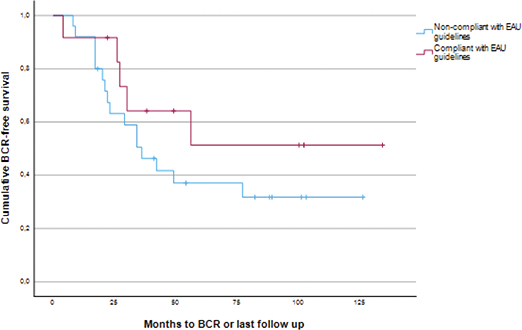
Figure 1. Biochemical recurrence-free survival in 37 patients, stratified by whether they met the European Association of Urology criteria concerning recommendation of sRALP.
Mean BCR-free survival was 84 months (95% confidence interval 51–116 months) for patients who met the criteria and 60 months (95% confidence interval 41–79 months) for those who did not. p = 0.2.
At last follow-up, 39 patients (65%) were treated with permanent ADT (Table 2). A total of 12 patients (20%) had died by the end of follow-up, with 10 deaths (17%) attributable to PCa.
Complications and functional outcomes
Postoperative functional outcomes and complications are summarised in Table 5. Twenty-seven patients (45%) in the study cohort responded to the patient-reported outcome measures (PROMs) questionnaire, with 22 (37%) respondents at 12 months postoperatively. In total, 28 patients (47%) experienced severe urinary incontinence, 13 patients (22%) had moderate and 19 patients (32%) minor urinary leakage. Twenty-seven patients (45%) experienced anastomotic leakage, and 21 patients (35%) developed a urinary stricture. Seventeen patients (28%) had both complications.
Fifteen of the 21 patients with urinary stricture required surgical intervention, corresponding to CD grade 3b. During the follow-up period, 11 patients (18%) received an artificial urinary sphincter, and 10 patients (17%) underwent urinary diversion. In total, 19 patients (32%) were treated with either an artificial urinary sphincter and/or urinary diversion. No rectal injuries were observed; however, two patients developed pelvic osteomyelitis, requiring multiple surgical and medical interventions, ultimately leading to urinary diversion. Two patients suffered urinary sepsis (CD 4a), one of them due to iatrogenic small bowel perforation, one had a lung embolus (CD 2), one got a stroke (CD 2), and nine patients needed antibiotics due to infections (CD 2).
Discussion
This study is a combined retrospective and prospective analysis of patients who underwent sRALP for radiorecurrent PCa over an 8-year period. Persistent postoperative PSA was observed in 23 patients (38%). Amongst the remaining 37 patients, 21 experienced BCR, whilst 16 remained recurrence-free after a median follow-up of 82 months (IQR 48–101 months). These findings indicate that 44 patients (73%) did not achieve sustained oncological control following sRALP. A significant correlation was found between preoperative PSA levels and persistent postoperative PSA. Additionally, ISUP grade group 5 was significantly associated with BCR. Anastomotic leakage and urethral strictures were observed in 35% and 45% of patients, respectively. Nearly one-third required an artificial urinary sphincter and/or urinary diversion, and 47% experienced severe urinary incontinence.
In a systematic review (SR) by Marra et al. [6], they found BCR, including PSA persistence, in 41% (999/2454) of patients, whilst the corresponding number in our study was 72%. With a median follow-up of 82 months, our study provides longer-term data compared to the SR by Marra et al., in which only three series had follow-up beyond 60 months, and nine had less than 36 months. This extended follow-up in our cohort may partly explain the higher BCR rate. A study by Perera et al. [11], which included 293 patients, demonstrated limited impact of the minimally invasive approach. BCR was observed in 153 patients (52%). The comparison with our study is constrained by the lack of clarity regarding the inclusion of patients with persistent postoperative PSA in their BCR analysis. Similarly, in a report by Heidenreich et al. [2], which included 55 patients with a median follow-up of 23 months (range 2–56 months), BCR was reported in 13% of patients. However, no information was provided on the presence or exclusion of persistent postoperative PSA.
A possible explanation for the high rates of PSA persistence and BCR observed in our study is that only a third of the patients met the EAU recommendations for sRP. In a study by Mandel et al. [12], which included 55 patients treated with open sRP and a median follow-up of 36 months, the reported BCR rate was 56% following primary treatment with external beam radiotherapy (EBRT), high-dose brachytherapy (HDB) or high-intensity focused ultrasound (HIFU). Importantly, patients who fulfilled the EAU guideline criteria had significantly improved BCR-free survival, with a 5-year BCR-free survival rate of 74% compared to 12% in those who did not meet the criteria. These findings are comparable to our results and support the clinical utility of the EAU selection criteria.
Although not statistically significant, the high rate of positive surgical margins at 56%, corresponding with the high prevalence of pT3 disease (72%), likely contributed to the high rates of persistent PSA and BCR.
Urinary incontinence remains a major concern following sRALP, primarily due to the compounded side effects of both the radical radiation therapy [13] and the surgical procedure itself. In the study by Perera et al. [11], they found limited impact of the minimally invasive approach. Only 13% of their patients reported urinary continence, defined as no pad use. In contrast, in our study, using a less stringent definition of continence, 32% of patients reported minor or no leakage.
In their SR, Marra et al. [6] reported an anastomotic stricture rate of 35.5%, which is comparable to the rate observed in our study (35%). In their SR, Marra et al. included patients who initially were treated with primary focal therapy, which is less associated with postoperative salvage RALP complications compared to radiation therapy [14].
In our study, 18% of patients had artificial urinary sphincter and 17% urinary diversion. Ogaya-Pinies et al. [15] reported clinically significant anastomotic leakage in 36% of their patients, whilst in the Vanderbilt University cohort of 34 patients, the corresponding figure was 31% [16]. In the same Vanderbilt cohort with only 16 months median FU, 31% of patients had urinary artificial sphincter due to severe urinary incontinence. Vesicourethral anastomosis after radical prostatectomy in patients previously treated with RT is often accompanied with additional surgical procedures due to complications. In a paper by Anderson et al. [17] focusing on refractory incontinence and stenosis after failed vesicourethral anastomosis, they concluded that urine diversion is an option that must be discussed with the patient at an early stage. Our 10 patients who finally ended up with urinary diversion had been through a long and cumbersome period with attempts of alleviating the leakage and stricture problem. Maybe an early decision of urinary diversion would have been a better option for these patients.
One strength of the study is the long-term follow-up. An important limitation is that approximately 50% of our patients were not enrolled in the prospective research registry. As a result, data for these patients had to be collected retrospectively. Moreover, these patients did not complete PROMs. Of those who completed PROMs, 22 patients responded at 12 months postoperatively. Therefore, information about urinary incontinence is a mixture of physician provided information and from EPIC-26. As demonstrated in the Swedish LAPPRO study [18], patients tend to underreport the severity of their symptoms when assessed in a clinical consultation setting.
Another limitation is the difficulty in following-up with patients referred from other regions in Norway. Collecting data from these patients often required contacting their local hospitals and general practitioners, which proved to be a cumbersome process. This may have resulted in shorter follow-up periods and missing follow-up information. Finally, it is a limitation that there are too few patients in the survival analysis. In the Cox regression analysis, although there was a trend towards association, no statistically significant relationship was found between BCR and any covariates except for ISUP Grade Group 5 in the pre-RT biopsy. This is likely due to small sample size.
Metastatic assessment pre-sRALP with PSMA PET/CT is now routine in these patients, and it may well be that PSMA PET/CT in many of the study patients would have detected more metastatic disease and subsequently resulted in a better selection of patients preoperatively. It is plausible that a significant proportion of our patients had microscopic metastatic disease at the time of surgery, thereby limiting the therapeutic benefit of sRALP.
It is concerning that our study did not identify reliable predictors for BCR or postoperative complications. Intraoperatively, the majority of RALP was uneventful. There were no cases of rectal injury, and the vesicourethral anastomosis was consistently watertight and appeared intact. Postoperative cystography was typically performed around 14 days after surgery, at which point the urinary catheter was removed. After this, many patients began to exhibit voiding difficulties and were subsequently diagnosed with anastomotic leakage and/or urethral stricture. This delayed onset of complications highlights the challenge in anticipating adverse outcomes despite an initially uncomplicated surgical course.
Conclusion
Salvage RALP for radiorecurrent PCa has limited effect on oncological outcomes. Patients should be thoroughly informed about the high risk of urinary leakage and severe surgical complications.
References
- [1] Pompe RS, Tilki D. Complications after salvage radical prostatectomy: vesicourethral anastomosis leaks and possible prevention. Transl Androl Urol. 2017;6(5):994–996. https://doi.org/10.21037/tau.2017.03.66
- [2] Heidenreich A, Richter S, Thuer D, et al. Prognostic parameters, complications, and oncologic and functional outcome of salvage radical prostatectomy for locally recurrent prostate cancer after 21st-century radiotherapy. Eur Urol. 2010;57(3):437–443. https://doi.org/10.1016/j.eururo.2009.02.041
- [3] Perera M, Papa N, Roberts M, et al. Gallium-68 prostate-specific membrane antigen positron emission tomography in advanced prostate cancer-updated diagnostic utility, sensitivity, specificity, and distribution of prostate-specific membrane antigen-avid lesions: a systematic review and meta-analysis. Eur Urol. 2020;77(4):403–417. https://doi.org/10.1016/j.eururo.2019.01.049
- [4] Jones JS. Radiorecurrent prostate cancer: an emerging and largely mismanaged epidemic. Eur Urol. 2011;60(3):411–412. https://doi.org/10.1016/j.eururo.2011.01.007
- [5] Stattin P. How to improve cancer care by use of guidelines and quality registers. Scand J Urol. 2024;59:190–192. https://doi.org/10.2340/sju.v59.42272
- [6] Marra G, Marquis A, Yanagisawa T, et al. Salvage radical prostatectomy for recurrent prostate cancer after primary nonsurgical treatment: an updated systematic review. Eur Urol Focus. 2023;9(2):251–257. https://doi.org/10.1016/j.euf.2023.01.013
- [7] Heidenreich A, Bastian PJ, Bellmunt J, et al. EAU guidelines on prostate cancer. Part II: treatment of advanced, relapsing, and castration-resistant prostate cancer. Eur Urol. 2014;65(2):467–479. https://doi.org/10.1016/j.eururo.2013.11.002
- [8] Qvigstad LF, Eri LM, Lien MD, et al. Reduction of lower urinary tract symptoms in prostate cancer patients treated with robot assisted laparoscopic prostatectomy. Scand J Urol. 2024;59:121–125. https://doi.org/10.2340/sju.v59.40070
- [9] Chen RC, Chang P, Vetter RJ, et al. Recommended patient-reported core set of symptoms to measure in prostate cancer treatment trials. J Natl Cancer Inst. 2014;106(7):dju132. https://doi.org/10.1093/jnci/dju132
- [10] Dindo D, Demartines N, Clavien PA. Classification of surgical complications: a new proposal with evaluation in a cohort of 6336 patients and results of a survey. Ann Surg. 2004;240(2):205–213. https://doi.org/10.1097/01.sla.0000133083.54934.ae
- [11] Perera M, Vilaseca A, Tin AL, et al. Morbidity of salvage radical prostatectomy: limited impact of the minimally invasive approach. World J Urol. 2022;40(7):1637–1644. https://doi.org/10.1007/s00345-022-04031-1
- [12] Mandel P, Steuber T, Ahyai S, et al. Salvage radical prostatectomy for recurrent prostate cancer: verification of European Association of Urology guideline criteria. BJU Int. 2016;117(1):55–61. https://doi.org/10.1111/bju.13103
- [13] Wedde TB, Smaastuen MC, Vatne K, et al. External beam radiotherapy of prostate cancer with or without high dose-rate brachytherapy: the Norwegian experience with long-term urinary and bowel adverse effects. Scand J Urol. 2023;58:68–75. https://doi.org/10.2340/sju.v58.9571
- [14] Ribeiro L, Stonier T, Stroman L, et al. Is the toxicity of salvage prostatectomy related to the primary prostate cancer therapy received? J Urol. 2021;205(3):791–799. https://doi.org/10.1097/JU.0000000000001382
- [15] Ogaya-Pinies G, Kadakia Y, Palayapalayam-Ganapathi H, et al. Use of scaffolding tissue biografts to bolster vesicourethral anastomosis during salvage robot-assisted prostatectomy reduces leak rates and catheter times. Eur Urol. 2018;74(1):92–98. https://doi.org/10.1016/j.eururo.2016.10.004
- [16] Kaffenberger SD, Keegan KA, Bansal NK, et al. Salvage robotic assisted laparoscopic radical prostatectomy: a single institution, 5-year experience. J Urol. 2013;189(2):507–513. https://doi.org/10.1016/j.juro.2012.09.057
- [17] Anderson KM, Higuchi TT, Flynn BJ. Management of the devastated posterior urethra and bladder neck: refractory incontinence and stenosis. Transl Androl Urol. 2015;4(1):60–65.
- [18] Carlsson S, Bock D, Lantz A, et al. Salvage radiotherapy after radical prostatectomy: functional outcomes in the LAPPRO trial after 8-year follow-up. Scand J Urol. 2023;58:11–19. https://doi.org/10.2340/sju.v58.7318