ORIGINAL ARTICLE RESEARCH
Survival patterns after perioperative treatment escalation and cystectomy for synchronous oligometastatic bladder cancer (M1a/M1b) – a population-based series
Fredrik Liedberga,b, Gediminas Baseckasa, Mats Bläckbergc, Ragna Fridriksdottird, Axel Gerdtssona,b, Oskar Hagbergb, Sofia Kjellströme, Petter Kollberga,b, Ioannis Patrasa,b, Elin Ståhla,b, Olof Ståhle, Anne Sörenbya,b, Elin Trägårdhd, Åsa Warnolfa,b and Johannes Bobjera,b
aDepartment of Urology, Skåne University Hospital, Malmö, Sweden; bInstitution of Translational Medicine, Lund University, Malmö, Sweden; cDepartment of Urology, Helsingborg County Hospital, Helsingborg, Sweden; dClinical Physiology and Nuclear Medicine, Skåne University Hospital, Department of Translational Medicine, Lund University, Malmö, Sweden; eDepartment of Oncology, Skåne University Hospital, Malmö, Sweden
ABSTRACT
Background: The role of cystectomy in synchronous oligometastatic bladder cancer is unclear.
Objective: To describe a population-based consecutive cohort with primary oligometastatic bladder cancer (M1a or M1b) treated with curative intent.
Methods: Twenty consecutive patients with primary stage M1a or M1b bladder cancer subjected to induction chemotherapy and radical cystectomy 2013–2024 in the Southern healthcare region were identified in the Swedish National Register for Urinary Bladder Cancer. Primary staging and the evaluation of response to systemic induction chemotherapy were performed using [18F]fluorodeoxyglucose positron emission tomography with computed tomography (FDG PET-CT). After additional chemotherapy, consolidating radical cystectomy, lymphadenectomy and in selected patients, postoperative stereotactic radiotherapy or adjuvant nivolumab were applied. Disease-free survival (DFS) and overall survival (OS) from chemotherapy start were visualised by Kaplan-Meier curves.
Results: Ten patients with retroperitoneal lymph node metastases, seven with single bone metastasis and three with inguinal metastases responding on three chemotherapy courses according to FDG PET-CT-evaluations were subjected to additional chemotherapy and subsequent radical cystectomy and lymphadenectomy with templates including lymph node metastases. Five patients with bone-oligometastatic disease received consolidating stereotactic radiotherapy, and three patients received adjuvant nivolumab. Postoperatively, one patient progressed in preoperatively known bone metastasis, and one patient displayed lack of chemotherapy response in the cystectomy specimen and was consequently subjected to second-line pembrolizumab treatment with palliative intent. At a median follow-up of 23 months, 10 patients (50%) were disease-free.
Conclusions: Long-term survival was observed in some individuals after multimodal treatment for selected patients with synchronous oligometastatic bladder cancer.
Patient summary: Amongst patients diagnosed with limited number of distant bladder cancer metastases, those responding on initial systemic chemotherapy can be selected for further treatment. After additional chemotherapy, radical cystectomy with lymphadenectomy and individually intensified treatment with consolidating radiation towards distant metastases and/or adjuvant systemic treatment with checkpoint inhibitors for 12 months, long-term survival was observed in some individuals despite a disease-entity with bad prognostic features.
KEYWORDS: Bladder cancer; oligometastatic; curative intent; survival
Citation: Scandinavian Journal of Urology 2025, VOL. 60, 173–179. https://doi.org/10.2340/sju.v60.44649.
Copyright: © 2025 The Author(s). Published by MJS Publishing on behalf of Acta Chirurgica Scandinavica. This is an Open Access article distributed under the terms of the Creative Commons Attribution 4.0 International License (http://creativecommons.org/licenses/by/4.0/), allowing third parties to copy and redistribute the material in any medium or format and to remix, transform, and build upon the material, with the condition of proper attribution to the original work.
Received: 04 April 2025; Accepted: 18 August 2025; Published: 3 September 2025
CONTACT: Fredrik Liedberg fredrik.liedberg@med.lu.se Department of Urology, Skåne University Hospital, Jan Waldenströms gata 5, SE-205 02 Malmö, Sweden
Competing interests and funding: None of the authors has any disclosures to report.
This work was supported by the Swedish Cancer Society (CAN 2023/2807), Swedish Research Council (2021-00859), Lund Medical Faculty (ALF), Skåne University Hospital Research Funds, Maud and Birger Gustavsson Foundation, Hjelm Foundation, The Cancer Research Fund at Malmö General Hospital, Skåne County Council’s Research and Development Foundation (REGSKANE-622351), Gösta Jönsson Research Foundation, the Foundation of Urological Research (Ove and Carin Carlsson bladder cancer donation and Astrid and Roland Bengtsson upper tract urothelial carcinoma donation), Sjöberg Foundation, Hillevi Fries Research Foundation, Maggie Stephen Research Foundation and Gunnar Nilsson Cancer Research Foundation. The funding sources had no role in the study design, data analyses, interpretation of the results or writing of the manuscript.
Introduction
According to a recent consensus definition, oligometastatic bladder cancer is characterised by the presence of three or fewer metastatic sites, regardless of the number of organs involved. De novo synchronous oligometastatic disease refers to the occurrence of such oligometastases within 6 months, following a diagnosis of non-metastatic bladder cancer [1]. A recent systematic review investigated treatment outcomes for oligometastatic bladder cancer with one to five distant metastases, concluding that the existing literature does not provide substantial evidence to clearly define this disease state. Nevertheless, the authors anticipate that favourable outcomes may be achieved through multimodal treatment in this patient cohort [2]. The studies included in the systematic review employed strategies combining systemic chemotherapy, surgery and/or radiotherapy, with [[18F]fluorodeoxyglucose positron emission tomography with computed tomography (FDG PET-CT) being utilised for disease spread detection in most cases [2]. Systematic application of FDG PET-CT prior to curative treatment for muscle-invasive bladder cancer (MIBC) identified distant metastases in 65 out of 711 patients (9%), thereby altering the treatment plans for these individuals [3, 4]. Conversely, for MIBC with regional lymph node metastases, a multimodal treatment approach involving induction chemotherapy followed by radical cystectomy and pelvic lymph node dissection in chemotherapy responders has become the standard of care [5]. In this induction setting for patients with regional lymph node metastases, chemotherapy response assessed by FDG PET-CT after three chemotherapy courses has been reported to predict survival [6]. However, optimal treatment recommendations for patients with distant synchronous oligometastatic disease remain uncertain.
Given the uncertainties surrounding the definition and treatment outcomes of oligometastatic bladder cancer, we present descriptive data and survival outcomes following FDG PET-CT-guided perioperative treatment escalation and cystectomy for synchronous oligometastatic bladder cancer (i.e. M1a or M1b disease) in a population-based consecutive series treated at a tertiary referral cystectomy unit.
Patients and methods
Patients with primary and synchronous oligometastatic M1a or M1b disease selected for radical cystectomy with curative intent in the Southern healthcare region were identified in the Swedish National Register for Urinary Bladder Cancer (SNRUBC). This clinical setting is population-based, corresponding to a primary catchment area of 1.7 million inhabitants due to the Swedish centralised cystectomy care system [7]. The number of patients who commenced induction chemotherapy for oligometastatic disease but were instead offered maintenance avelumab or progressed to second-line systemic regimens with palliative intent during the same period is unknown, as these data are not registered in the SNRUBC.
All patients were discussed at the regional multidisciplinary tumour board (MDT) (with integrated assessment of radiology and FDG PET-CT investigations) and underwent surgery at a tertiary referral cystectomy centre at the Departments of Urology, Helsingborg County Hospital and Skåne University Hospital, Malmö, between 2013 and 2024. Information on smoking status, BMI, comorbidity (according to the American Society of Anesthesiologists score [ASA]), renal function (glomerular filtration rate estimated based on Cystatin C [eGFR]), type and number of chemotherapy courses, Tumour Node Metastasis (TNM) stage, as well as the number and locations of metastases was retrieved from patient charts.
Cisplatin-eligible patients received induction chemotherapy with dose-dense methotrexate, vinblastine, doxorubicin and cisplatin (ddMVAC) for up to six courses. Cisplatin-ineligible individuals were treated with carboplatin-gemcitabine.
The outcomes of the response evaluation of the second FDG PET-CT performed after three chemotherapy courses were stratified as complete response (CR), partial response (PR) or stable disease (SD) according to predefined response criteria [8] and were retrieved from the chart report from a second mandatory MDT discussion. In addition to an extended pelvic lymph node dissection to the aortic bifurcation, consolidating fractionated retroperitoneal or inguinal lymph node dissection was performed in all patients with M1a disease [9], including all metastatic nodes identified by FDG PET-CT prior to systemic chemotherapy. Information on operating time, perioperative blood loss (ml), perioperative transfusions, 90-day unplanned readmissions, complications according to the Clavien-Dindo classification (stratified as 0–2, 3, 4 or 5) and the ypTNM stage was also obtained during the chart review. Information on whether adjuvant consolidating radiotherapy (XRT) or checkpoint inhibition (eligible only after national approval in 2023) was administered was also retrieved through chart review.
The primary outcome was disease-free survival (DFS) and overall survival (OS) calculated from the day of chemotherapy initiation to last clinical or radiological follow-up and visualised by Kaplan-Meier curves. Continuous variables were presented as medians with interquartile ranges (IQRs).
This study was approved by the Research Ethics Board of Lund University, Sweden (Dnr 2024-04728-01).
Results
Twenty patients diagnosed with M1a or M1b bladder cancer, with a median age of 68 years (IQR: 65–71), were identified, of whom four (20%) were female. A minority of patients were never smokers (40%), and comorbidities corresponding to ASA scores of 2 and 3 were prevalent (50% and 35%, respectively) (Table 1). The median eGFR was 64 ml/min (IQR: 54–71), and all but three patients initiated systemic induction chemotherapy with ddMVAC (Table 2). The clinical stage distribution and number of distant metastases are provided in Table 1. Ten patients had retroperitoneal lymph node metastases that were inaccessible for percutaneous biopsies for histology or cytology. Amongst the remaining patients, six out of 10 had distant metastases verified by biopsies. Of the seven patients with bone metastases detected by FDG PET-CT, one was verified by Magnetic Resonance Imaging (MRI), and another patient with a pacemaker, for whom MRI was contraindicated, underwent an unsuccessful (non-diagnostic) attempt to obtain a biopsy for verification. Transurethral resection specimens revealed urothelial carcinoma in all patients.
| Patient and treatment characteristics | Numbers (%) | |
| Female gender | 4 (20) | |
| Median age at cystectomy (IQR) years | 68 (65–71) | |
| Smoking status | Never | 8 (40) |
| Previous | 11 (55) | |
| Ongoing | 1 (5) | |
| Median BMI (IQR) | 26 (24–27) | |
| ASA score | 1 | 3 (15) |
| 2 | 10 (50) | |
| 3 | 7 (35) | |
| Median eGFR (IQR) ml/min | 64 (54–71) | |
| Clinical stage distribution | T1 | 2 (10) |
| T2 | 4 (20) | |
| T3 | 12 (60) | |
| T4a | 2 (10) | |
| N0 | 7 (35) | |
| N1 | 3 (15) | |
| N2 | 3 (15) | |
| N3 | 7 (35) | |
| M1a | 12 (60) | |
| M1b | 8 (40) | |
| Concomitant CIS | No | 12 (60) |
| Yes | 8 (40) | |
| Lymphovascular invasion | No | 12 (60) |
| Yes | 8 (40) | |
| Histologic subtype and/or divergent differentiation | No | 15 (75) |
| Yes | 5 (25) | |
| Number of distant metastases | 1 | 15 (75) |
| 2 | 2 (10) | |
| 3 | 1 (5) | |
| 4 or more | 2 (10) | |
| Radical cystectomy | Open | 19 (95) |
| Robot assisted | 1 (5) | |
| Median operating time (IQR) minutes* | 542 (450–596) | |
| Median perioperative bloodloss (IQR) ml^ | 400 (275–700) | |
| Perioperative blood transfusions | No | 10 (50) |
| Yes | 10 (50) | |
| Median hospital stay (IQR) days | 15 (12–19) | |
| High-grade complications <90 days according to Clavien-Dindo | 3 | 2 (10) |
| 4 | 0 | |
| 5 | 0 | |
| Unscheduled readmission <90 days of surgery | No | 18 (90) |
| Yes | 2 (10) | |
| IQR: interquartile range; ASA: American Society of Anesthesiologists score; CIS: Carcinoma in situ; *: missing data for 3 patients; ^: missing data for 1 patient. | ||
After three chemotherapy courses, a second FDG PET-CT was performed, revealing a complete metabolic response in five patients, a PR in 12 patients and SD in the remaining three patients [8]. Five patients tolerated a total of six induction courses with ddMVAC, five patients additional two and seven patients tolerated only one additional such chemotherapy course following response evaluation (Table 2). No additional FDG PET-CT was conducted between the final chemotherapy course and surgery. Two out of the five patients with complete metabolic response in their metastases after three chemotherapy courses displayed complete pathologic downstaging (ypT0N0) (Table 2).
All patients received an ileal conduit. Within 90 days post-surgery, two individuals experienced high-grade postoperative complications (uretero-intestinal anastomosis insufficiency and chylous ascites), which were managed with temporary nephrostomy and abdominal drainage, respectively. Other peri- and postoperative outcomes are detailed in Table 1.
Postoperatively, two patients with solitary bone metastasis in the acetabulum exhibited no chemotherapy response in the cystectomy specimen and experienced progression in the bone lesion during dose-planning for postoperative adjuvant stereotactic radiation. Consequently, the treatment intent was altered, and both individuals commenced second-line systemic pembrolizumab with palliative intent. Following radical cystectomy, five patients received adjuvant consolidating stereotactic radiation for their solitary bone metastasis, and three additional patients received adjuvant nivolumab for 12 months, with two patients still undergoing treatment (Table 2).
After a median follow-up of 23 months (IQR: 13–75), nine patients remained free from disease recurrence (Figure 1). One patient died from a haemorrhagic stroke 7 years after being salvaged for a urethral recurrence by urethrectomy and subsequently undergoing partial penile amputation for a distal urethral recurrence in the remaining navicular fossa. Thus, a total of 10 patients were disease-free at the end of follow-up (Figure 2). Six patients died from bladder cancer and three of other causes. Three of seven patients with bone metastasis (M1b) survived beyond 10 years without new metastasis. All three patients with inguinal metastases recurred with new metastases. Four of 10 patients with suspicion of retroperitoneal lymph node metastases (M1a) had confirmed metastasis in the lymph node specimen despite chemotherapy. Two of which progressed with distant metastasis (ypM1a) and two with ongoing adjuvant Nivolumab (ypN1) with no visible disease to date. A total of three patients experienced recurrence with distant metastases in the central nervous system (CNS). Follow-up details for all patients are provided in Table 2.
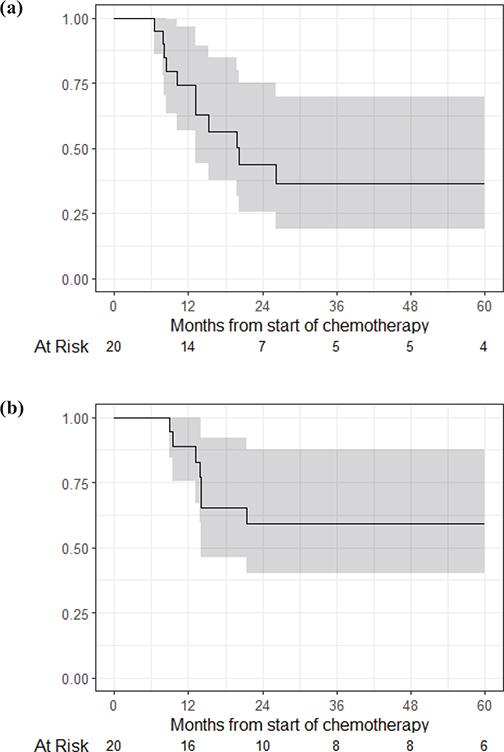
Figure 1. (a, b) Disease-free survival and overall survival with 95% confidence intervals.
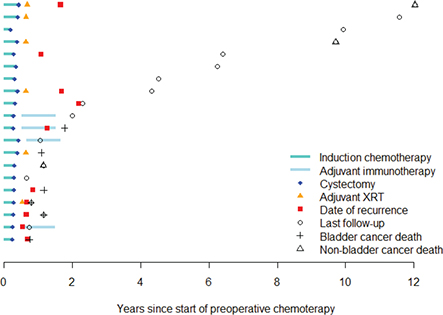
Figure 2. Swimmer plot showing individual treatment course for all patients in the cohort over time.
Discussion
In this population-based series spanning a 10-year period, 20 patients with M1a or M1b bladder cancer were identified based on treatment escalation, including radical surgery with curative intent following a response to platinum-combination chemotherapy as assessed by FDG PET-CT. Approximately half of the patients with this rare disease entity, for which the benefit of multimodal treatment is unknown, exhibited long-term survival for both M1a and M1b stages in our series.
It must be acknowledged that the reported 20 patients were fit and selected based not only on performance status but also on being platinum-fit and responding to the initial three chemotherapy courses. However, with the emerging new first-line systemic treatment combination of enfortumab vedotin and pembrolizumab for metastatic urothelial carcinomas, to which a larger proportion of patients are eligible and a larger proportion display an overall response (68% vs. 44% for cisplatin or carboplatin combinations) [10], it is possible that more patients with oligometastatic bladder cancer will be amenable to consolidating treatments. The 18-month OS in the EV-302 trial [10] and the current study were similar (69.5% and 65%), although the current study focused only on oligometastatic disease. Thus, long-term outcomes after enfortumab vedotin and pembrolizumab adding consolidating therapies are eagerly awaited [11]. Additionally, the introduction of perioperative immunotherapy such as adjuvant nivolumab administered to some of the most recent patients in our series [12] or an implementation of the combination of neoadjuvant systemic chemotherapy with durvalumab and adjuvant durvalumab based on the Niagara-trial [13] limits the generalisability of the survival outcomes to current and future treatment practices.
Currently, there is a lack of evidence defining an optimal treatment algorithm for oligometastatic bladder cancer, although it has been reported that synchronous oligometastatic disease has worse survival compared to metachronous oligometastatic disease [14]. Nonetheless, it has been hypothesised that radical cystectomy might improve disease control and survival in this setting [15], although well-designed prospective evidence is eagerly awaited. Adding complete surgical resection to systemic platinum-based therapies in cases of retroperitoneal lymph node metastases has been suggested as beneficial [16, 17], although the added value of such consolidating resection recently has been questioned [18]. A retrospective multicentre study found that 14 patients with distant metastases and an additional 33 with regional lymph node metastases who underwent radical cystectomy exhibited improved survival compared to 279 individuals treated with systemic therapy alone [19], yet without information regarding extension of lymph node dissection.
Stereotactic body radiotherapy (SBR) as a metastasis-directed therapy for oligometastatic bladder cancer has been shown to both delay progression or the need for systemic therapy and enable long-term survival for some patients [20]. In this context, a recent series from Sweden showed 15% long-term survival without the need for subsequent systemic treatment [21], which is consistent with our reported long-term survival in four of seven patients with single bone metastases treated with adjuvant radiotherapy. Trials that adopted sub-ablative doses of SBR in combination with immunotherapy based on the rational of SBR as an immune response trigger have not demonstrated improved survival benefit thus far [20].
To embark on prospective trials in the setting of synchronous oligometastatic bladder cancer, it is important to integrate recent knowledge about molecular heterogeneity and bladder cancer subtypes. For example, it has recently been suggested that Basal/Squamous-like primary tumours are depleted of bone metastases [22] and are associated with a response to checkpoint inhibition in both adjuvant and metastatic settings [23]. Conversely, primary tumours with Genomically Unstable and Urothelial-like subtypes have shown longer survival after first-line cisplatin-based combination chemotherapy for metastatic bladder cancer [24]. Further complicating molecular subtype-dependent prediction of response to systemic treatments, recent mapping of paired samples from primary tumours and metastases revealed subtype heterogeneity as well as temporal evolution [25], which must be considered when implementing individually based precision medicine.
Given the rarity of CNS metastases in bladder cancer patients in general [26], it is noteworthy that three patients in the current series recurred with meningeal carcinomatosis or brain metastases. One possible explanation could be that the blood-brain barrier prevented ddMVAC from entering the CNS, making the CNS a sanctuary site for occult metastases in patients seemingly responding to systemic chemotherapy despite a response on whole-body FDG PET-CT. Other chemotherapeutic agents, such as gemcitabine, which penetrate the blood-brain barrier, might have been beneficial for these patients [27].
This study has several limitations, including immature data due to short follow-up periods for some patients and its retrospective design. Another significant limitation is the lack of biopsy verification for metastases in many patients. Although all but one patient with bone metastases were verified by biopsy (or MRI in one case), the retroperitoneal M1a manifestations were solely based on FDG PET-CT findings reviewed at MDT meetings with the participation of a nuclear medicine physician. In this context, a specificity of 84% for the FDG PET-CT detection of lymph node metastases has been reported at the same institution [28], which aligns with the 86% to 100% specificity reported for the FDG PET-CT detection of distant metastases in a recent review [29]. Nonetheless, misclassifications amongst M1a patients cannot be ruled out. Conversely, this study is strengthened by its population-based uptake area and the consistent recommendation and application of FDG PET-CT since 2015. Another limitation is the lack of data on the number of patients who commenced induction chemotherapy but progressed after three chemotherapy cycles and were subsequently switched to palliative second-line treatment instead of radical cystectomy. Similarly, the number of patients with SD after chemotherapy who were treated with maintenance avelumab following national approval in 2021 is unknown. This limitation precludes a general evaluation of response to induction therapy in this context and comparisons of survival between these patient groups. Finally, adjuvant immunotherapy has demonstrated potential to improve survival; however, it was introduced as a treatment modality in Sweden in 2021. Consequently, only five patients with ypT2 or ypN+ in the cystectomy specimen received such therapy in the current series.
To escalate treatment in patients with synchronous oligometastatic bladder cancer responding after three chemotherapy-courses is a treatment option where some patients might be cured. However, as evident in the current series, avoiding early disease progression after such treatment escalation with additional chemotherapy, surgery and metastasis-directed therapy remains a challenge. On the other hand, in a centralised cystectomy care with a low proportion of patients suffering from postoperative high-grade complications [7], as demonstrated by 10% in the present cohort, subjecting patients to additional treatments after radical cystectomy might be feasible.
Conclusions
In our series of patients subjected to treatment escalation based on FDG PET-CT response after cisplatin- or carboplatin-based induction chemotherapy, some patients with synchronous oligometastatic bladder cancer exhibited long-term survival.
References
- [1] Bamias A, Stenzl A, Brown SL, et al. Definition and diagnosis of oligometastatic bladder cancer: a Delphi consensus study endorsed by the European Association of Urology, European Society for Radiotherapy and Oncology, and European Society of Medical Oncology Genitourinary Faculty. Eur Urol. 2023;84:381–389. https://doi.org/10.1016/j.eururo.2023.05.005
- [2] Bamias A, Stenzl A, Zagouri F, et al. Defining Oligometastatic bladder cancer: a systematic review. Eur Urol Open Sci. 2023;55:28–37. https://doi.org/10.1016/j.euros.2023.08.003
- [3] Voskuilen CS, van Gennep EJ, Einerhand SMH, et al. Staging 18F-fluorodeoxyglucose positron emission tomography/computed tomography changes treatment recommendation in invasive bladder cancer. Eur Urol Oncol. 2022;5:366–369. https://doi.org/10.1016/j.euo.2021.01.005
- [4] Liedberg F, Trägårdh E. Re: Laura S. Mertens, Richard P. Meijer, J. Alfred Witjes. Positron emission tomography/computed tomography for staging of bladder cancer: a continuing clinical controversy. Eur Urol. 2023;83:e82–e83. https://doi.org/10.1016/j.eururo.2022.11.022
- [5] Grobet-Jeandin E, Lenfant L, Pinar U, et al. Management of patients with muscle-invasive bladder cancer with clinical evidence of pelvic lymph node metastases. Nat Rev Urol. 2024;21:339–356. https://doi.org/10.1038/s41585-023-00842-y
- [6] Abrahamsson J, Kollberg P, Almquist H, et al. Complete metabolic response with [18 F]fluorodeoxyglucose-positron emission tomography/computed tomography predicts survival following induction chemotherapy and radical cystectomy in clinically lymph node positive bladder cancer. BJU Int. 2022;129:174–181. https://doi.org/10.1111/bju.15374
- [7] Liedberg F, Hagberg O, Aljabery F, et al. Cystectomy for bladder cancer in Sweden – short-term outcomes after centralization. Scand J Urol. 2024;59:84–89. https://doi.org/10.2340/sju.v59.40120
- [8] Kollberg P, Almquist H, Bläckberg M, et al. [18F]Fluorodeoxyglucose-positron emission tomography/computed tomography response evaluation can predict histological response at surgery after induction chemotherapy for oligometastatic bladder cancer. Scand J Urol. 2017;51:308–313. https://doi.org/10.1080/21681805.2017.1321579
- [9] Bobjer J, Gerdtsson A, Abrahamsson J, et al. Location of retroperitoneal lymph node metastases in upper tract urothelial carcinoma: results from a prospective lymph node mapping study. Eur Urol Open Sci. 2023;57:37–44. https://doi.org/10.1016/j.euros.2023.09.010
- [10] Powles T, Valderrama BP, Gupta S, et al. Enfortumab vedotin and pembrolizumab in untreated advanced urothelial cancer. N Engl J Med. 2024;390:875–888. https://doi.org/10.1056/NEJMoa2312117
- [11] Roberson DS, Sharma V, Boorjian SA, et al. Consolidative surgery for advanced urothelial carcinoma following induction enfortumab vedotin and/or immune checkpoint inhibitor therapy: a multicenter analysis. Eur Urol. 2025;88(2):212–214. https://doi.org/10.1016/j.eururo.2025.05.015
- [12] Galsky MD, Witjes JA, Gschwend JE, et al. Adjuvant nivolumab in high-risk muscle-invasive urothelial carcinoma: expanded efficacy from CheckMate 274. J Clin Oncol. 2025;43:15–21. https://doi.org/10.1200/JCO.24.00340
- [13] Powles T, Catto JWF, Galsky MD, et al. Perioperative durvalumab with neoadjuvant chemotherapy in operable bladder cancer. N Engl J Med. 2024;391:1773–1786. https://doi.org/10.1056/NEJMoa2408154
- [14] Yoshida S, Maezawa Y, Ishihara K, et al. Outcomes and prognostic factors in patients with synchronous and metachronous oligometastatic urothelial carcinoma with visceral metastases. Int J Urol. 2024;31:1234–1240. https://doi.org/10.1111/iju.15542
- [15] Calleris G, von Deimling M, Kesch C, et al. Definitions, outcomes and perspectives for oligometastatic bladder cancer: towards a standardized terminology. Curr Opin Urol. 2024;34:217–224. https://doi.org/10.1097/MOU.0000000000001170
- [16] Sweeney P, Millikan R, Donat M, et al. Is there a therapeutic role for post-chemotherapy retroperitoneal lymph node dissection in metastatic transitional cell carcinoma of the bladder? J Urol. 2003;169:2113–2117. https://doi.org/10.1097/01.ju.0000067601.29966.4a
- [17] Ho PL, Willis DL, Patil J, et al. Outcome of patients with clinically node-positive bladder cancer undergoing consolidative surgery after preoperative chemotherapy: the M.D. Anderson Cancer Center Experience. Urol Oncol. 2016;34:59.e1–59.e8. https://doi.org/10.1016/j.urolonc.2015.08.012
- [18] Necchi A, Mariani L, Lo Vullo S, et al. Lack of Effectiveness of postchemotherapy lymphadenectomy in bladder cancer patients with clinical evidence of metastatic pelvic or retroperitoneal lymph nodes only: a propensity score-based analysis. Eur Urol Focus. 2019;5:242–249. https://doi.org/10.1016/j.euf.2017.05.006
- [19] Moschini M, Xylinas E, Zamboni S, et al. Efficacy of surgery in the primary tumor site for metastatic urothelial cancer: analysis of an international, multicenter, multidisciplinary database. Eur Urol Oncol. 2020;3:94–101. https://doi.org/10.1016/j.euo.2019.06.014
- [20] Angrisani A, Bosetti DG, Vogl UM, et al. Oligometastatic urothelial cancer and stereotactic body radiotherapy: a systematic review and an updated insight of current evidence and future directions. Cancers (Basel). 2024;16:3201. https://doi.org/10.3390/cancers16183201
- [21] Svedman FC, Holmsten K, Jawdat F, et al. Stereotactic body radiation therapy is beneficial for a subgroup of patients with urothelial cancer and solitary metastatic disease: a single institution real-world experience. Radiat Oncol. 2024;19:74. https://doi.org/10.1186/s13014-024-02465-y
- [22] Sjödahl G, Eriksson P, Holmsten K, et al. Metastasis and recurrence patterns in the molecular subtypes of urothelial bladder cancer. Int J Cancer. 2024;154:180–190. https://doi.org/10.1002/ijc.34715
- [23] Hamidi H, Senbabaoglu Y, Beig N, et al. Molecular heterogeneity in urothelial carcinoma and determinants of clinical benefit to PD-L1 blockade. Cancer Cell. 2024;42:2098–2112. https://doi.org/10.1016/j.ccell.2024.10.016
- [24] Holmsten K, Sjödahl G, Abrahamsson J, et al. Molecular subtypes are associated with clinical benefit in cisplatin-treated metastatic urothelial cancer patients. JCO Precis Oncol. 2024;8:e2400209. https://doi.org/10.1200/PO.24.00209
- [25] Loriot Y, Kamal M, Syx L, et al. The genomic and transcriptomic landscape of metastastic urothelial cancer. Nat Commun. 2024;15:8603. https://doi.org/10.1038/s41467-024-52915-0
- [26] Diamantopoulos LN, Khaki AR, Sonpavde GP, et al. Central nervous system metastasis in patients with urothelial carcinoma: institutional experience and a comprehensive review of the literature. Clin Genitourin Cancer. 2020;18:e266–e276. https://doi.org/10.1016/j.clgc.2019.11.008
- [27] Sarmiento JM, Wi MS, Piao Z, et al. Solitary cerebral metastasis from transitional cell carcinoma after a 14-year remission of urinary bladder cancer treated with gemcitabine: case report and literature review. Surg Neurol Int. 2012;3:82. https://doi.org/10.4103/2152-7806.99172
- [28] Pihl V, Markus M, Abrahamsson J, et al. FDG-PET/CT for lymph node staging prior to radical cystectomy. Eur J Hybrid Imaging. 2023;7:13. https://doi.org/10.1186/s41824-023-00170-9
- [29] Einerhand SMH, van Gennep EJ, Mertens LS, et al. 18F-fluoro-2-deoxy-D-glucose positron emission tomography/computed tomography in muscle-invasive bladder cancer. Curr Opin Urol. 2020;30:654–664. https://doi.org/10.1097/MOU.0000000000000798