ORIGINAL RESEARCH ARTICLE
Real-world implementation and guideline adherence at inclusion of active surveillance for men with prostate cancer: a population-based study from the Cancer Registry of Norway
Ingrid Hannestada,b, Tor Åge Myklebustc,d, Sophie D. Fossåa,e, Stig Müllera,b and Kirsti Aasa,b
aInstitute of Clinical Medicine, Faculty of Medicine, University of Oslo, Oslo, Norway; bDepartment of Urology, Akershus University Hospital (AHUS), Lørenskog, Norway; cCancer Registry of Norway, Norwegian Institute of Public Health, Oslo, Norway; dDepartment of Research and Innovation, Møre and Romsdal Hospital Trust, Norway; eDepartment of Oncology, Oslo University Hospital (OUH), Norway
ABSTRACT
Objectives: This study aimed to evaluate the implementation of and adherence to national guidelines at inclusion amongst men with newly diagnosed prostate cancer (PCa) managed with active surveillance (AS) in Norway.
Materials and methods: We conducted a population-based cohort study using data from the Norwegian Prostate Cancer Registry, encompassing all men diagnosed with PCa and managed with AS from 2009 to 2022. We assessed guideline adherence based on AS inclusion criteria defined in the national guidelines and analysed the factors associated with adherence. Non-adherence was defined as inclusion in AS despite not meeting formal criteria.
Results: Among 69,996 men diagnosed with PCa, 11 449 (16.4%) were managed with AS. Overall adherence to national guidelines for AS inclusion was 64%, rising from 60% in 2009 to 77% in 2022, with a notable increase after the 2020 guideline update. Higher adherence was associated with more recent diagnoses, younger age, lower Eastern Cooperative Oncology Group (ECOG) performance status, and evaluation by a private specialist. Significant regional variations in guidelines adherence were observed.
Conclusions: While the use of AS for localised PCa increased in Norway over time, only two in three men were eligible for AS and regional variations persisted. This study highlights the need for strategies to standardise AS implementation across healthcare settings to ensure uniform and evidence-based management of patients with localised PCa nationwide.
KEYWORDS: Active surveillance; prostate cancer; guideline adherence; Norway; time trends; regional variations
Citation: Scandinavian Journal of Urology 2025, VOL. 60, 218–225. https://doi.org/10.2340/sju.v60.45023.
Copyright: © 2025 The Author(s). Published by MJS Publishing on behalf of Acta Chirurgica Scandinavica. This is an Open Access article distributed under the terms of the Creative Commons Attribution 4.0 International License (http://creativecommons.org/licenses/by/4.0/), allowing third parties to copy and redistribute the material in any medium or format and to remix, transform, and build upon the material, with the condition of proper attribution to the original work.
Received: 11 July 2025; Accepted: 17 October 2025; Published: 10 December 2025
CONTACT: Ingrid Hannestad ingrid.hannestad@uio.no Department of Urology, Akershus University Hospital (AHUS), Sykehusveien 25, 1478 Lørenskog, Norway
Supplemental data for this article can be accessed online at https://doi.org/10.2340/sju.v60.45023
Competing interests and funding: There are no conflicts of interest to declare.
Introduction
Active surveillance (AS), first described in 2002 [1], is a management strategy aimed at delaying or avoiding unnecessary curative treatment in men with localised prostate cancer (PCa), thereby minimising side effects in men unlikely to benefit from immediate intervention. AS is primarily recommended for men with low-risk PCa and selected patients with intermediate-risk disease who have a life expectancy of at least 10 years [2–6]. Successful implementation of AS requires careful patient selection, informed decision-making, diligent follow-up, timely intervention when necessary, and outcome monitoring.
Substantial variability exists among institutions regarding eligibility criteria for AS and adherence to such protocols. As noted by Komisarenko et al. [7], international guidelines vary widely in their selection criteria for AS, particularly regarding the maximum accepted International Society of Urological Pathology (ISUP) grade/Gleason score, T-category, and prostate-specific antigen (PSA) level. The inclusion of intermediate-risk patients in AS protocols is particularly contentious. Some guidelines, including those from the European Association of Urology (EAU) and the American Urological Association (AUA) are more inclusive, allowing selected intermediate-risk patients, such as those with an ISUP grade 2/Gleason score 7a, to enter AS programmes [7, 8]. Conversely, more conservative guidelines, like those adopted by the National Comprehensive Cancer Network (NCCN), typically restrict AS eligibility to low-risk patients, arguing that the potential risk of high-grade disease progression in intermediate-risk patients often outweighs the benefits of AS [7].
A systematic review of six Dutch teaching hospitals indicated that almost half of the men included in AS had disease characteristics exceeding protocol-based criteria, highlighting discrepancies in guideline recommendations and adherence [9, 10]. Ultimately, understanding the diversity of inclusion criteria and the real-world implementation of AS protocols is crucial for optimising management strategies and outcomes for men with localised PCa.
In Norway, national guidelines have been available since 2009, defining criteria for AS inclusion, follow-up, and discontinuation [11]. However, knowledge about real-life implementation of AS, including guideline adherence is limited. Data from the Norwegian Prostate Cancer Registry indicate significant deviations from the national guidelines for AS inclusion, particularly regarding the inclusion of older men and high-risk PCa cases [12].
With this background, the aim of this population-based cohort study is to evaluate implementation and guideline adherence at AS inclusion among Norwegian men with newly diagnosed PCa managed with AS, and to assess factors associated with such adherence, including regional and temporal trends.
Material and methods
Data sources
This study used data from the Norwegian Prostate Cancer Registry (NoPCR), a sub-registry of the Cancer Registry of Norway (CRN). These registries offer demographic and select clinical information of all men diagnosed with PCa in Norway, such as primary treatment (including AS and curative treatments). For each patient, the NoPCR provides data on the date of diagnosis, the county of residence, whether the PCa evaluation took place at a hospital or by a private specialist, the patient’s birthdate, ECOG performance status, PSA, ISUP grade group, and clinical stage at diagnosis. The Norwegian Patient Registry (NPR) provided data on Charlson Comorbidity Index (CCI), using a 5-year look-back window before the PCa diagnosis date. Data from health registries were linked based on personal identification number. The study was approved by the Regional Committee for Medical and Health Research Ethics, application number 323578.
Patients
Patients included in the present study were all men registered with a new diagnosis of PCa and AS as the primary management strategy in the NoPCR from 01 January 2009 to 31 December 2022. Men with newly diagnosed PCa eligible for AS, but managed otherwise, were not assessed.
Data management
Patients were categorised according to the calendar period of PCa diagnosis (2009–2011, 2012–2014, 2015–2016, 2017–2019, 2020–2022). According to the National Guidelines 2009–2019, the criteria for AS were as follows; PSA < 10 ng/mL and clinical stage ≤ T2b and Gleason ≤ 6/ISUP 1 (low-risk PCa). From 2020, these criteria expanded to include men with PSA < 20 ng/mL and/or clinical stage ≤ T2b and/or Gleason ≤ 7a/ISUP 2 (low- and intermediate-risk PCa). In the current study, patients were considered eligible for AS if they met the criteria defined in the national guidelines applicable at the time of AS inclusion (guideline adherence). Those whose clinical characteristics exceeded these criteria, were classified as not eligible for AS (guideline non-adherence).
The Eastern Cooperative Oncology Group (ECOG) performance status was categorised into 0 (fully active), 1 (some symptoms, but still near fully ambulatory), or ≥ 2 (less than 50% ambulatory or worse) [13]. Each patient’s CCI was calculated using discharge diagnosis codes from both inpatient and outpatient registers, sourced from the NPR. This approach enabled assessment of comorbidity severity, categorised as mild [1–2], moderate [3–4], and severe (≥ 5) [14].
Prostate-specific antigen levels were categorised into < 10, 10–20 or > 20 ng/mL. The ISUP grades groups ranged from 1 to 5, reflecting the histopathological PCa grade in prostate biopsies. The clinical T-category was based on digital rectal examination (DRE) in accordance with Union for International Cancer Control Tumour–Node–Metastasis (UICC-TNM) classification system. The T-categories were grouped into T1–2a, T2b, T2c, or T3–4. The N- and M-categories were grouped 0 or 1. Risk categorisation was based on clinical assessment according to the EAU guideline, which were identical to the Norwegian guidelines [2, 11]: low-, intermediate-, high-, and high-risk locally advanced groups.
Statistical analyses
Categorical variables were described using absolute numbers and proportions, and continuous variables were presented using medians and interquartile ranges (IQRs). To examine if regional differences in guidelines adherence could be explained by differences in patient case mix, we estimated odds ratios (ORs) for AS guidelines adherence (dependent variable yes/no) using multivariable logistic regression models including all covariates simultaneously (year of diagnosis, age, ECOG, CCI, and site of evaluation). Men with missing values in any covariate were excluded. Each region was contrasted with the weighted national average. To illustrate temporal changes, we derived adjusted annual proportions of adherence from a logistic regression model, including age and county as covariates. Both adjusted and crude estimates were calculated on the same study population and plotted alongside each other to explore variation over time. Odds ratios were presented with corresponding 95% confidence intervals (CIs). P-values < 0.05 were considered statistically significant. All analyses were performed using IBM SPSS version 30 and Stata version 18.
Results
Among the 69,996 men registered with a new diagnosis of PCa in the NoPCR in 2009–2022, 11,449 (16.4%) had AS as the primary management strategy. The number of men included in AS increased three-fold during the observation period, from 960 (8.0% of all newly diagnosed) men in 2009–2011 to 3,617 (32.0%) men in 2020–2022. Specifically, the number of men in the low-risk category who underwent AS rose from 544 in 2009–2011 (56.7% of AS patients) to 1,786 in 2020–2022 (49.3% of AS patients), reflecting an increase of 228%. In contrast, the intermediate-risk group increased from 254 men in 2009–2011 (26.5% of AS patients) to 1,164 in 2020–2022 (32.2% of AS patients), representing a 359% rise across the time periods. The increase in number of AS patients also included men with high-risk PCa (Figure 1). In total, 1,388 men with high-risk PCa were included in AS from 2009 to 2022, constituting 15% of all AS patients in 2020–2022.
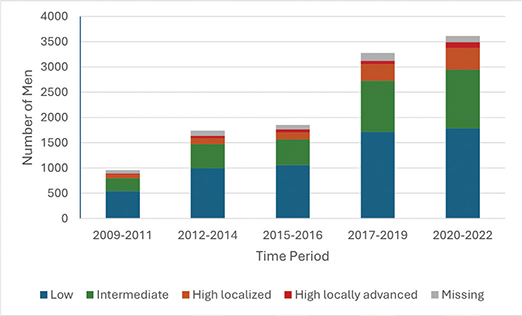
Figure 1. Number of men included in active surveillance according to time of diagnosis and risk group.
Overall adherence to national guidelines for AS inclusion was 64% in Norway in 2009–2022, increasing from 60% in 2009 to 77% in 2022. There was a sharp increase in guideline adherence at the time of guidelines update in 2020, from 53% in 2019 to 83% in 2020. Standardised annual adherence proportions, adjusted for age and county, closely mirrored crude estimates, with both showing stable adherence around 55–65% until 2019 and a marked increase after the 2020 guideline-update (Figure 2). Adjustment for age and county had minimal influence on the trend, indicating that the observed rise in adherence primarily reflects genuine changes in clinical practice rather than shifts in patient age distribution or regional composition.

Figure 2. Crude and adjusted (*) proportions of men included in active surveillance who met Norwegian guidelines for AS inclusion according to the year of diagnosis, 2009–2022. *Adjusted for age and county.
Clinical characteristics of men included in AS varied modestly across calendar periods (Table 1). The median age at PCa diagnosis and AS inclusion increased from 66 years in 2009–2011 to 68 years in 2020–2022. Most patients were in the 60–69 age group (45%), with 33% in the 70–79 range. There was a shift towards more men in the 70–79 age group (from 27 to 38% of AS patients). Most patients had ECOG scores 0 or 1 (90%), while only 3% had ECOG scores of 2 or higher, which remained stable over time. The CCI revealed that 63% had no comorbidities (decreased from 73 to 60%) and 28% had mild comorbidities (increased from 22 to 30%). Only 8% had moderate to severe comorbidities. The morphology of 11,261 cases (98%) was adenocarcinoma. Clinical staging revealed that most patients were classified T1–2b (91%), with small proportions categorised as T2c (7%) and T3–4 (3%). All patients were free of metastasis (N0M0). Risk group distribution changed some, with intermediate-risk men rising from 28% in 2009–2011 to 33% in 2020–2022. The portion of patients assessed by private specialists rose from 11% in 2009–2011 to 18% in 2020–2022.
The clinical T-category exhibited the highest adherence rate, averaging about 90%, but demonstrating a slight decrease from 92% in 2009 to 84% in 2022. Comparably, the PSA and ISUP adherence was averaging approximately 80%. The PSA adherence for AS inclusion increased with time (Figure 3), from 72% in 2009 to 81% in 2019, while the ISUP adherence fell slightly from 85% in 2009 to 73% in 2019. Marked increases in adherence for both PSA and ISUP criteria were observed in 2020 as guidelines changed.
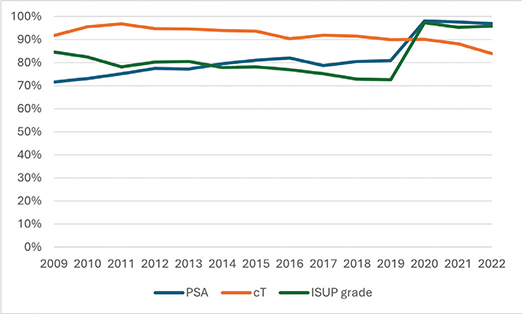
Figure 3. Proportion of men included in active surveillance who met Norwegian guidelines for AS inclusion according to individual clinical parameters and year of diagnosis.
In the logistic regression model (Table 2), adherence to AS inclusion guidelines was three times more likely in 2020–2022 compared to 2009–2011. The time period 2017–2019, before guidelines update in 2020, showed the lowest odds of adherence. Increasing age at diagnosis was significantly associated with lower adherence to guidelines, with men aged ≥80 years presenting the lowest odds for adherence (OR 0.07, 95% CI 0.04–0.12). Similarly, ECOG scores greater than 0 were associated with lower adherence, with a score of 1 having an OR of 0.71 (95% CI 0.62–0.82) and scores ≥2 showing an OR of 0.59 (95% CI 0.45–0.77). The CCI did not show a consistent association with guideline adherence. Comparing adherence rates by county to the national mean revealed notable differences: Rogaland (OR 1.64, 95% CI 1.41–1.90) and Nordland (OR 1.52, 95% CI 1.23–1.88) exhibited significantly higher adherence, while counties like Vestfold and Telemark (OR 0.65, 95% CI 0.57–0.74) and Trøndelag (OR 0.67, 95% CI 0.58–0.78) showed lower adherence rates. County-level time trends showed wide variation across regions in the early years, whereas the spread narrowed after 2020, suggesting more uniform adherence patterns in recent years (Supplementary Figure S1). The setting of evaluation also influenced adherence, with private specialists achieving higher rates of adherence (OR 1.33, 95% CI 1.15–1.54) compared to hospitals.
Discussion
Our population-based study demonstrates 64% adherence to national guidelines for AS inclusion in Norway during 2009–2022. Being diagnosed in the most recent time period, younger age at diagnosis, lower ECOG status and evaluation by a private specialist, increased the likelihood of guideline adherence. Our analysis only evaluated men who entered AS and assessed whether their inclusion was adherent to guidelines.
We observed a three-fold increase in the absolute number of patients managed with AS during the study period. This was particularly true for the low-risk group. Data from Sweden reflect a similar upward trend [15], where the proportion of men with low-risk PCa managed with AS rose from 44% in 2010 to 88% in 2023 [16]. In our study, the largest relative increase for AS inclusion was observed in the intermediate-risk group. This trend may be attributed to more precise risk stratification, supported by improved diagnostic methods and more detailed assessment of clinical parameters available at the time of diagnosis. In addition, there has been an increased awareness of PCa tumour heterogeneity and a recognition of the necessity to consider tumour grade and stage migration to avoid overtreatment. An expanding body of evidence demonstrates favourable long-term outcomes in patients managed with AS. For example, the ProtecT study showed no difference in 15-year PCa-specific survival in men with screening-detected localised PCa managed with PSA surveillance compared to immediate local cancer treatments, even in men who today would be categorised as intermediate or high-risk [17]. Hence, guidelines have broadened the eligibility criteria for AS accordingly. The overall share of 16% of men managed with AS in our study appears plausible considering international comparisons. While uptake has been higher in Sweden and other countries in recent years, earlier figures were similar, suggesting that Norwegian estimates reflect real-world adoption during this period.
In our study, 36% of patients did not meet the eligibility criteria for AS inclusion. Comparably, Soeterik et al. noted adherence rates at inclusion as low as 49% across six teaching hospitals in the Netherlands [9, 10]. These findings from real-world cohorts’ contrast with clinical studies, where strict inclusion criteria are typically enforced to ensure consistency. In comparison, only 3% did not comply to the recommended inclusion criteria in the Prostate Cancer Research International Active Surveillance (PRIAS) study [18]. The Movember Foundation’s Global Action Plan Prostate Cancer Active Surveillance (GAP3) initiative also indicated high levels of adherence to inclusion criteria for AS among the 15,101 patients studied, with compliance rates of 92% for PSA criteria, 97% for Gleason score criteria, and 94% for positive biopsy cores [19]. The eligibility for PSA and ISUP scores were overall lower in our cohort, but comparable to results of GAP3 in the recent period after guidelines had been updated.
The rate of non-adherence in our cohort raises important questions regarding the AS selection processes, guideline interpretation, and adherence. Although clinicians in Norway, similar to those in Sweden [15], had the options of recording active monitoring or observation in the cancer registry reporting forms from 2008, watchful waiting (WW) may have been incorrectly registered as AS in the early time periods. This could explain the significant number of older men with comorbidities and high-risk features registered with AS. More importantly, the rising trend of high-risk patients included in AS is of concern, particularly as AS is a well-established management strategy with clearly defined inclusion criteria, and contemporary guidelines advocate for more aggressive treatment approaches for men with high-risk disease. One explanation may be that clinicians wish to observe disease progression in older men with high-risk PCa before making a final decision regarding active treatment or WW, inadvertently categorising this approach as AS, knowing that these patients do not meet formal AS criteria. Also, some high-risk patients may opt for AS after thorough counselling of treatment options, with clinicians supporting the choice and offering surveillance as part of the shared decision-making process.
Because 10-year life expectancy was not available in our data, ECOG and CCI, served as indirect indicators of life expectancy. Our analysis demonstrated that patients exhibiting ECOG scores of 2 or higher displayed lower adherence to AS criteria, supporting the notion that men with poor functional status, strongly associated with reduced life expectancy [20], and worse tumour characteristics were likely to have been managed with WW rather than AS. The CCI analysis revealed that severe comorbidities did not substantially alter adherence odds, suggesting that clinicians may weigh functional status of patients higher than comorbidity when making treatment recommendations. The CCI does not account for the degree of disease control and may not necessarily correlate with functional status or life expectancy. Furthermore, the CCI is based only on selected diagnoses and does not incorporate other relevant health dimensions such as frailty, medication burden or disease severity, which may lead to underestimation of comorbidity in PCa populations. Newer multidimensional comorbidity measures, such as those recently developed by Westerberg et al., may provide better estimates of life expectancy in this context [21]. Recent Swedish work has compared comorbidity indices and found that newer multidimensional tools may provide more accurate life expectancy estimates than the CCI, supporting the need for improved measures when assessing AS eligibility [22]. The findings from Timilshina et al., however, showed that comorbidity levels were associated with higher discontinuation rates from AS [23].
Overall, guideline adherence in Norway increased over time. Data from Sweden show a similar trend [16]. The marked increase in guideline adherence from 2019 to 2020 is considered due to the guideline updates in Norway (5 years after the previous update in 2015), allowing intermediate-risk patients with PSA up to 20 ng/ml and ISUP 2 to be included in AS. Part of the increase may reflect shifts in case mix, but our adjusted analyses indicate that adherence still rose independently and would have been even greater with a constant case mix. While the guidelines for T-category remained unchanged, the gradual decrease in adherence may suggest that clinicians’ decisions may have been influenced by the availability of MRI, leading to a greater reliance on MRI results over traditional digital rectal assessment [24]. The EAU guideline permitted the inclusion of selected intermediate-risk patients in AS in 2018 [25], 2 years before the expansion of the Norwegian guidelines. In response to the EAU guideline update, clinicians in Norway may have extended their inclusion criteria for AS before the official Norwegian guidelines were revised. This shift underscores a rapid adaptation to evolving clinical practices, highlighting the influence of clinical studies and international standards on local implementation. The adherence patterns observed in our cohort demonstrate the need for timely revisions of clinical guidelines to align with the latest evidence-based practices and enhance guideline adherence across diverse risk categories. Notably, the EAU [2] has demonstrated a commitment to frequent updates. This is crucial for the timely optimisation of healthcare delivery, which improves patient outcomes, reinforcing the principles of equally accessible and evidence-based, contemporary PCa management.
The disparities noted across counties in Norway underscore significant regional variations in adherence to clinical guidelines. Instances such as higher eligibility rates in counties like Rogaland and Nordland compared to lower rates in Vestfold & Telemark and Trøndelag suggest that local healthcare structures and resources play a pivotal role in guideline implementation. Similarly, a recent study from Sweden found regional inconsistencies in patient management and selection for AS [16]. Interestingly, the differences in adherence between healthcare regions in Sweden decreased during the study period, indicating a trend towards more uniform PCa management. Our supplementary county-level analyses support this observation, demonstrating that regional variations in Norway also decreased over time.
Moreover, our findings indicate that private specialists demonstrate higher adherence to AS guidelines compared to their counterparts in public hospitals. This disparity may reflect differences in resource allocation and workflow complexity. Hospital-based providers often operate within larger multidisciplinary teams, manage participation in clinical trials and ensure structured outcome reporting, all of which may dilute compliance with standard protocols. Legal considerations may also play a role. These findings highlight the need for targeted strategies to harmonise guideline implementation across healthcare settings, addressing both practice-related and regional variations [26]. Our observations are consistent with recent Swedish perspectives emphasising that quality registers, when combined with evidence-based guidelines and public reporting, can be powerful tools to improve guideline adherence and standardise cancer care across regions [27]. In addition, there should be regular reporting on guideline adherence rates, reinforced by more robust monitoring, to ensure quality and equality in PCa management in Norway.
Strength and limitations
This study is based on a large, nationwide, population-based cohort with complete coverage of PCa diagnosis in Norway. The use of high-quality health registries ensured standardised collection of clinical data and allowed assessment of regional and temporal variations in guideline adherence.
Some limitations should be acknowledged. Firstly, the definition of adherence was based only on PSA, ISUP grade group and clinical T-category recorded at diagnosis, since MRI findings, biopsy core details and reliable estimates of 10-year life expectancy were not available in the registry. Secondly, misclassification of WW and AS is possible, particularly among older men with poorer function status. Thirdly, comorbidity was assessed with the CCI, which does not fully capture frailty or life expectancy. Finally, unmeasured factors such as patient preferences and local practices may have influenced inclusion decisions.
Conclusion
Our study found increased use of AS in men with newly diagnosed PCa and moderate adherence to clinical guidelines for men included in AS in Norway. While guideline adherence for AS inclusion improved over time, substantial regional variations were demonstrated. Further efforts are needed to standardise practices and monitor guideline adherence to ensure equal PCa care nationwide.
References
- [1] Choo R, Klotz L, Danjoux C, et al. Feasibility study: watchful waiting for localized low to intermediate grade prostate carcinoma with selective delayed intervention based on prostate specific antigen, histological and/or clinical progression. J Urol. 2002;167(4):1664–1669. https://doi.org/10.1016/S0022-5347(05)65174-9
- [2] Uroweb. Guidelines on prostate cancer: treatment [Internet]. Available from: https://uroweb.org/guidelines/prostate-cancer/chapter/treatment. [Accessed 8 June 2025]
- [3] Bruinsma SM, Roobol MJ, Carroll PR, et al. Semantics in active surveillance for men with localized prostate cancer—results of a modified Delphi consensus procedure. Nat Rev Urol. 2017;14(5):312–322. https://doi.org/10.1038/nrurol.2017.26
- [4] Klotz L. Active surveillance in intermediate-risk prostate cancer. BJU Int. 2020;125(3):346–354. https://doi.org/10.1111/bju.14935
- [5] Lam TBL, MacLennan S, Willemse P-PM, et al. EAU-EANM-ESTRO-ESUR-SIOG prostate cancer guideline panel consensus statements for Deferred Treatment with Curative Intent for Localised Prostate Cancer from an International Collaborative Study (DETECTIVE Study). Eur Urol. 2019;76(6):790–813.
- [6] Klotz L. Active surveillance for low-risk prostate cancer. Curr Opin Urol. 2017;27(3):225–230. https://doi.org/10.1097/MOU.0000000000000393
- [7] Komisarenko M, Martin LJ, Finelli A. Active surveillance review: contemporary selection criteria, follow-up, compliance and outcomes. Transl Androl Urol. 2018;7(2):243–55. https://doi.org/10.21037/tau.2018.03.02
- [8] Ahmad AE, Richard PO, Leão R, et al. Does time spent on active surveillance adversely affect the pathological and oncologic outcomes in patients undergoing delayed radical prostatectomy? J Urol. 2020;204(3):476–482. https://doi.org/10.1097/JU.0000000000001070
- [9] Soeterik TFW, van Melick HHE, Dijksman LM, et al. Follow-up in active surveillance for prostate cancer: strict protocol adherence remains important for PRIAS-ineligible patients. Eur Urol Oncol. 2019;2(5):483–489. https://doi.org/10.1016/j.euo.2019.01.010
- [10] Soeterik TFW, van Melick HHE, Dijksman LM, et al. Active surveillance for prostate cancer in a real-life cohort: comparing outcomes for PRIAS-eligible and PRIAS-ineligible patients. Eur Urol Oncol. 2018;1(3):231–237. https://doi.org/10.1016/j.euo.2018.03.015
- [11] Helsedirektoratet. Behandling med kurativ intensjon (Utsatt behandling) 2023 [Internet]. [updated 2024 Oct 2]. Available from: https://www.helsedirektoratet.no/retningslinjer/prostatakreft-handlingsprogram/behandling-med-kurativ-intensjon/utsatt-behandling.
- [12] Folkehelseinstituttet (FHI). Årsrapport 2022: Nasjonalt kvalitetsregister for prostatakreft. Folkehelseinstituttet (FHI); 2023: Oslo, Norway. Contract No.: 05 April.
- [13] Sørensen JB, Klee M, Palshof T, et al. Performance status assessment in cancer patients. An inter-observer variability study. Br J Cancer. 1993;67(4):773–775. https://doi.org/10.1038/bjc.1993.140
- [14] Nilssen Y, Strand TE, Wiik R, et al. Utilizing national patient-register data to control for comorbidity in prognostic studies. Clin Epidemiol. 2014;6:395–404. https://doi.org/10.2147/CLEP.S70742
- [15] Maljkovic J, Bill-Axelson A, Hållberg H, et al. Time trends for the use of active surveillance and deferred treatment for localised prostate cancer in Sweden: a nationwide study. Scand J Urol. 2024;59:200–206. https://doi.org/10.2340/sju.v59.40123
- [16] Orrason AW, Scilipoti P, Garmo H, et al. Improved adherence to prostate cancer guidelines concomitant with public reporting. Nationwide population-based study. Scand J Urol. 2025;60:50–58. https://doi.org/10.2340/sju.v60.43107
- [17] Hamdy FC, Donovan JL, Lane JA, et al. Fifteen-year outcomes after monitoring, surgery, or radiotherapy for prostate cancer. N Engl J Med. 2023;388(17):1547–1558. https://doi.org/10.1056/NEJMoa2214122
- [18] Drost F-JH, Rannikko A, Valdagni R, et al. Can active surveillance really reduce the harms of overdiagnosing prostate cancer? A reflection of real life clinical practice in the PRIAS study. Transl Androl Urol. 2018;7(1):98–105. https://doi.org/10.21037/tau.2017.12.28
- [19] Kalapara AA, Verbeek JFM, Nieboer D, et al. Adherence to active surveillance protocols for low-risk prostate cancer: results of the movember foundation’s global action plan prostate cancer active surveillance initiative. Eur Urol Oncol. 2020;3(1):80–91.
- [20] Blagden SP, Charman SC, Sharples LD, et al. Performance status score: do patients and their oncologists agree? Br J Cancer. 2003;89(6):1022–1027. https://doi.org/10.1038/sj.bjc.6601231
- [21] Westerberg M, Irenaeus S, Garmo H, et al. Development and validation of a multi-dimensional diagnosis-based comorbidity index that improves prediction of death in men with prostate cancer: nationwide, population-based register study. PLoS One. 2024;19(1):e0296804. https://doi.org/10.1371/journal.pone.0296804
- [22] Ventimiglia E, Gedeborg R, Orrason AW, et al. A comparison of comorbidity indices and estimates of life expectancy for men with prostate cancer. Scand J Urol. 2025;60:105–107. https://doi.org/10.2340/sju.v60.43810
- [23] Timilshina N, Komisarenko M, Martin LJ, et al. Factors associated with discontinuation of active surveillance among men with low-risk prostate cancer: a population-based study. J Urol. 2021;206(4):903–913. https://doi.org/10.1097/JU.0000000000001903
- [24] Haug ES, Myklebust T, Juliebø-Jones P, et al. Impact of prebiopsy MRI on prostate cancer staging: results from the Norwegian Prostate Cancer Registry. BJUI Compass. 2023;4(3):331–338. https://doi.org/10.1002/bco2.214
- [25] European Association of Urology. EAU guidelines on prostate cancer. European Association of Urology; 2018: Arnhem, The Netherlands.
- [26] Cooperberg MR, Meeks W, Fang R, et al. Time trends and variation in the use of active surveillance for management of low-risk prostate cancer in the US. JAMA Network Open. 2023;6(3):e231439-e. https://doi.org/10.1001/jamanetworkopen.2023.1439
- [27] Stattin P. How to improve cancer care by use of guidelines and quality registers. Scand J Urol. 2024;59:190–192. https://doi.org/10.2340/sju.v59.42272