REVIEW ARTICLE
The Swedish national guidelines on prostate cancer: recurrent, metastatic and castration resistant disease
Johan Strannea,b, Elin Axenb, Ola Bratta,b, Stefan Carlssonc, Jon Kindblomd, Kimia Kohestania,b, Anna Kristiansene, Ingela Franck Lissbrantf, Gabriel Moiseg, Elinor Nemlanderh,i, David Robinssonj, Christian Torbrandk,l, Elin Trägårdhm, Jonas Wallströmn,o, Camilla Wennerbergp,q and Camilla Thellenberg Karlssonr, on behalf of the Swedish National Prostate Cancer Guidelines Group*
aDepartment of Urology, Institute of Clinical Sciences, Sahlgrenska Academy, University of Göteborg, Sweden; bDepartment of Urology, Sahlgrenska University Hospital, Göteborg, Sweden; cSection of Urology, Department of Molecular Medicine and Surgery, Karolinska Institute, Stockholm, Sweden; dDepartment of Oncology, Sahlgrenska University Hospital, Göteborg, Sweden; eDepartment of Pelvic Cancer, Karolinska University Hospital, Stockholm, Sweden; fDepartment of Oncology, Institute of Clinical Sciences, Sahlgrenska Academy, University of Gothenburg, Gothenburg, Sweden; gDepartment of Radiotherapy, Ryhov County Hospital, Jönköping, Sweden; hDepartment of Neurobiology, Care Sciences and Society; iLiljeholmens Universitetsvårdcentral, Region Stockholm, Sweden; jDepartment of Urology, Helsingborg Hospital, Helsingborg, Sweden; kDepartment of Urology, Skåne University Hospital, Lund University, Malmö, Sweden; lDepartment of Translational Medicine, Lund University, Malmö, Sweden; mDepartment of Clinical Physiology and Nuclear Medicine, Skåne University Hospital and Lund University, Malmö, Sweden; nDepartment of Radiology, Institute of Clinical Sciences, Sahlgrenska Academy, University of Gothenburg, Sweden; oDepartment of Radiology, Sahlgrenska University Hospital, Gothenburg, Sweden; pDepartment of Health and Caring Sciences, Faculty of Health and Life Sciences. Linnaeus university, Kalmar Sweden; qDepartment of Surgery, Region Kalmar County, Kalmar Sweden; rDepartment of Diagnostics and Intervention, Oncology, Umeå University, Umeå, Sweden
ABSTRACT
Objective: This article presents a summary of the 2025 Swedish prostate cancer guidelines, focusing on recurrence after local treatment, metastatic disease, and castration-resistant prostate cancer.
Results: The 2025 Swedish guidelines introduce several important updates. Prostate specific membrane antigen (PSMA)-PET/CT is recommended only when PSA exceeds 0.2 µg/L, and reporting should follow the defined PSMA-RADS-scale. PSMA-PET/CT is preferred over lymph-node dissection for staging. A strong recommendation is issued for radiotherapy to the primary tumour in all oligometastatic men with a life expectancy > 5 years, whereas metastasis-directed therapy is restricted to clinical trials. Systemic treatment pathways now prioritise androgen receptor pathway inhibitors (ARPI) plus androgen deprivation therapy (ADT), with triple therapy (including docetaxel) used more selectively. Pathway-specific staging algorithms have been revised. The oly (ADP-ribose) polymerase inhibitor (PARPi) section has expanded, with broader genomic-based selection and integration into treatment sequencing. Two new chapters and an appendix address cardiovascular risk assessment before ARPI or chemotherapy. Supportive care is substantially strengthened.
Compared with the EAU-EANM-ESTRO-ESUR-ISUP-SIOG Guidelines on Prostate Cancer 2025, the Swedish guidelines 2025 applies PSMA-PET/CT more conservatively, restricts PSMA-guided nodal salvage therapy, and issues a more universal recommendation for local radiotherapy in oligometastatic disease. The Swedish guidelines 2025 prioritise ARPI + ADT and limit triple therapy and PARPi combinations due to regulatory and reimbursement constraints. PARPi are largely reserved for BRCA1/2-mutated disease. The Swedish guidelines 2025 provide a more comprehensive framework for rehabilitation and survivorship.
Conclusions: The 2025 Swedish prostate cancer guidelines introduce multiple new recommendations and differ in several aspects from the European guidelines.
KEYWORDS: Prostate cancer; guideline; recurrence; treatment; metastatic; castration resistant
Citation: Scandinavian Journal of Urology 2026, VOL. 61, 138–147. https://doi.org/10.2340/sju.v61.45715.
Copyright: © 2026 The Author(s). Published by MJS Publishing on behalf of Acta Chirurgica Scandinavica. This is an Open Access article distributed under the terms of the Creative Commons Attribution 4.0 International License (http://creativecommons.org/licenses/by/4.0/), allowing third parties to copy and redistribute the material in any medium or format and to remix, transform, and build upon the material, with the condition of proper attribution to the original work.
Received: 11 December 2025; Accepted: 7 February 2026; Published: 21 April 2026
CONTACT: Johan Stranne johan.stranne@gu.se Chairman of the Swedish National Prostate Cancer Guidelines Group, Department of Urology, Institute of Clinical Sciences, Sahlgrenska Academy, University of Göteborg, SE-413 45 Göteborg, Sweden
*In addition to the named authors, the permanent guidelines group members were in 2025.
Competing interests and funding: None of the authors have any ongoing financial and/or business interests in any company that may be affected by the research reported in this article.
Introduction
Many influential randomised clinical trials in prostate cancer (PCa) have been reported in recent years. Consequently, guideline development groups now have access to a broader and more mature evidence base than at any previous time. Although the same body of trial evidence and supporting studies is available to all national and international committees, the recommendations derived from these data may differ. Such variation reflects not only differences in healthcare infrastructure, resource availability, and population characteristics but also the inherently interpretative nature of translating primary scientific findings into clinical guidance. In this context, making national guideline summaries accessible in English is valuable, as it enables comparison across countries and invites constructive international dialogue.
This review summarises changes concerning recurrence after local treatment, metastatic disease, and castration-resistant prostate cancer in the updated version of the Swedish national prostate cancer guidelines, published in September 2025 (Swedish Guidelines 2025) [1]. Particular emphasis is placed on newly introduced recommendations informed by important recent clinical trials, as well as on areas where Swedish guidance diverges from current EAU-EANM-ESTRO-ESUR-ISUP-SIOG Guidelines on Prostate Cancer (EAU Guidelines) [2, 3].
Independent of treatment modality, patients’ support needs should be systematically assessed at regular intervals, and tailored interventions should be delivered in accordance with the basic, specific, advanced, or highly advanced level of requirement.
The National Prostate Cancer Guidelines Group
The first Swedish national prostate cancer guidelines were published in 2014, and they have been annually revised since then. The work and the constitution of the guidelines group was described in the previous publications in 2022 [4, 5], including the close collaboration with the National Prostate Cancer Register of Sweden (NPCR) [6, 7].
Recurrent disease
Biochemical recurrence after radical prostatectomy
The Swedish Guidelines 2025 introduce substantially more detailed and conservative guidance for biochemical recurrence (BCR), refined prognostic modelling, clearer management of persistent prostate specific antigen (PSA), and updated recommendations for endocrine therapy combined with salvage radiotherapy (RT) than the Swedish Guidelines 2022 (Table 1).
BCR, as well as a persisting measurable PSA, after radical prostatectomy is evaluated using postoperative PSA kinetics, pathological risk factors, life expectancy, and the likelihood of metastatic disease. PSA values ≤ 0.09 µg/L usually reflect benign residual tissue and should be reported as < 0.1 µg/L [8]. A first postoperative PSA ≥ 0.1 µg/L after 4–8 weeks should be re-tested after 3–4 weeks; persistent elevation warrants multidisciplinary assessment, as it may indicate metastatic disease.
Salvage RT is the only potentially curative option and should be initiated early in patients with BCR and ≥ 10 years’ life expectancy. Men with low-risk recurrence (Gleason grade group [GG] ≤ 3 and PSA doubling time [PSA-DT] > 12 months) have minimal metastatic potential and can often be managed with surveillance, particularly when life expectancy is short [9]. Nomograms incorporating pathological grade, PSA-DT, and time to recurrence may refine risk stratification.
PSMA-PET/CT is recommended for patients with high-risk features – such as failure of PSA to decline below 0.1 µg/L, a PSA doubling time < 6 months, PSA > 0.5 µg/L, seminal vesicle invasion, or Gleason pattern 5. In addition, given the low sensitivity at PSA ≤ 0.2 µg/L, the modality is recommended only once PSA exceeds 0.2 µg/L. The EAU guidelines recommend a broader use of Prostate Specific Membrane Antigen Positrone Emission Tomography/Computed Tomography (PSMA-PET/CT) even at low PSA levels and support multimodal salvage treatment strategies while the Swedish Guidelines 2025 are more conservative (Table 2). A national standardised PSMA-RADS-based reporting template is recommended [10]. Conventional imaging adds little diagnostic value at PSA levels relevant to salvage therapy.
Recommended salvage RT doses are 64 Gy for GG 1-3 disease with PSA ≤ 0.5 µg/L and 70 Gy for higher-risk disease [11]. Adjuvant endocrine therapy may improve outcomes in selected high-risk patients, with 2 years of bicalutamide preferred when PSA ≥ 0.7 µg/L, or 4–6 months’ androgen deprivation therapy (ADT) when pelvic nodal fields are treated [12, 13].
The combination of short-term ADT and elective pelvic nodal irradiation to prostate-bed salvage RT further improves progression-free survival and reduces PCa–specific mortality, though with increased acute toxicity [14]. For patients with limited pelvic nodal recurrences, elective nodal irradiation showed better metastasis-free survival than metastasis-directed therapy but increases urinary toxicity [15].
PSA-DT based risk stratification and the concept of ‘EAU low-risk BCR’ are newly integrated, promoting surveillance in favourable cases. Patients with slowly rising PSA and Gleason ≤ 7 typically have excellent long-term outcomes. Observation is appropriate when PSA rises slowly (> 12 months), or life expectancy is < 10 years; hormonal therapy is reserved for PSA-DT < 6 months, PSA > 5–10 µg/L or symptomatic progression [9]. Enzalutamide as monotherapy or in combination with ADT is EMA-approved for non-metastatic high-risk PSA relapse, though not yet reimbursed in Sweden [16, 17]. Hormonal therapy is recommended for palpable recurrence in patients not eligible for salvage radiotherapy, with bicalutamide 150 mg daily as the preferred option. This differs from international guidelines due to the lack of overall survival data for alternative agents and the reimbursement status of enzalutamide in Sweden [18]. For metastatic disease after prior local therapy – see Section 4.
The use of bicalutamide as first choice in patients with localised recurrence, not suitable for salvage treatment, is also a difference in recommendation based on the lack of overall survival data, and subsequent reimbursement in Sweden for this indication for enzalutamide.
Recurrence after primary radiotherapy
Because of the infrequent use of local salvage treatment and its associated risks of complications [19], the management should be discussed at a multidisciplinary team meeting. BCR after RT, defined as nadir + 2 µg/L, is more complex to interpret than after prostatectomy. Symptoms suggestive of local recurrence warrant digital rectal examination even at low PSA levels. A transient ‘PSA bounce’, occurring in roughly one quarter of patients within 1–2 years, that is, a temporary PSA rise followed by spontaneous decline, is not associated with higher recurrence risk; patients should be counselled accordingly [20]. BCR after RT seldom represents isolated local recurrence [21]. In men with > 10 years’ life expectancy and reasonable likelihood of local recurrence only, evaluation with PSMA-PET/CT, prostate Magnetic Resonance Imaging (MRI), and biopsy is recommended. If no metastases are detected, salvage local therapy (e.g. surgery or cryotherapy) may be considered. Long-term cancer control appears similar across modalities, though High Dose Rate (HDR) brachytherapy may have fewer urinary and bowel complications [19]. When local salvage treatment is unsuitable, observation is appropriate for slowly rising PSA < 10 µg/L, whereas bicalutamide or ADT is recommended for rapid PSA doubling, high-grade disease, and symptomatic recurrence [22].
The Swedish Guidelines 2025 introduces a more structured diagnostic and therapeutic pathway for PSA recurrence following primary RT. Unlike the 2022 version, the 2025 guidelines recommend a stepwise work-up beginning with PSMA-PET/CT, followed by MRI and targeted biopsies when local salvage treatment is under consideration. Due to the limited national experience of salvage treatment after RT, such salvage interventions are only recommended to be performed within prospective protocols, reflecting a more rigorous, centralised approach. Criteria for surveillance versus hormonal therapy are more explicit and conservative in Swedish Guidelines 2025 compared with the broader recommendations in the 2022 version (Table 1).
The Swedish recommendations on the management of patients with BCR after primary RT agree well with the European guidelines, except perhaps for the recommendation that all salvage procedures should occur within prospective protocols, reflecting stricter national centralisation on the management of patients with BCR after primary RT.
Metastatic PCa (N1/M1): Primary management
Primary low-volume/oligometastatic disease
There is no consensus for the upper limit of the number of metastases defining oligometastatic disease, but most definitions allow up to 3–5 metastases [23]. In the Swedish guidelines 2025 the definition of low-volume metastatic PCa is ≤ 4 skeletal metastases without visceral involvement. Management should be individualised and discussed in a multidisciplinary tumour board. Patients who may benefit from systemic therapy or local treatment should undergo bone scintigraphy and chest–abdominal CT and be assessed by a uro-oncologist.
For men with low-volume metastatic disease and an expected survival > 5 years, RT to the primary tumour is recommended [24–27] in addition to systemic treatment, as this has been shown to prolong survival. For fit men (ECOG 0–1), combination therapy with castration plus abiraterone, apalutamide, or enzalutamide (androgen receptor pathway inhibitors – ARPI) is recommended [28–31]. A GnRH antagonist, particularly relugolix, rather than a GnRH agonist, should be considered in patients with significant cardiovascular disease and then without the combinations above [32]. Follow-up includes CT and bone scintigraphy 6 months after start of systemic therapy.
Local treatment of metastases should only be performed within prospective trials. The exception being patients with low-volume cN1M0 disease with only a few enlarged lymph-nodes. For them, intensified treatment with a GnRH agonist plus abiraterone and prednisolone together with RT to the prostate and the pelvic nodes is recommended [28, 33]. Radical prostatectomy with lymph-node dissection may be considered when RT is unsuitable and nodal spread is limited [34, 35]. Hormonal therapy is advised for nearly all patients, except the small subgroup of surgically treated cN1M0 patients achieving an undetectable postoperative PSA.
The Swedish Guidelines 2025 strengthen recommendations for RT to the primary tumour even in patients with cN1M0 or synchronous oligometastases, based on newer survival data [27]. Systemic intensification with ARPI + ADT is now recommended across disease volumes, whereas the 2022 version adopted a more limited use of intensified systemic therapy. Swedish Guidelines 2025 also introduce cardiovascular-based selection of GnRH antagonists and formally restricts metastasis directed therapy (MDT) to clinical trials (Table 1). The EAU guidelines accept MDT, including stereotactic RT, as an option. The Swedish Guidelines 2025 strongly recommend RT to the primary tumour in most oligometastatic cases, including cN1M0, which is more assertive than the EAU Guidelines (Table 2).
Oligometastatic recurrence
The recommendations for hormonal and additional systemic treatment for men with oligometastatic recurrence are like those described just above and below. The guidelines stress the importance of including patients with oligometastatic recurrence in prospective trials but open up for RT to the lymph-nodes or a pelvic lymph-node dissection for selected patients with regional lymph-nodes only recurrence on PSMA-PET/CT who wish to postpone hormonal treatment [36]. For oligometastatic distant recurrence (M1), MDT has been shown to delay disease progression and postpone systemic therapy initiation. Trials in patients with 1–3 metastases demonstrate reduced early progression and longer freedom from hormonal therapy after stereotactic RT. Broader studies including mixed tumour types also suggest improved survival, though PCa-specific effects remain less certain [37].
The updated guideline incorporates new evidence, particularly from PEACE-V/STORM, supporting consideration of elective pelvic nodal irradiation in addition to MDT for nodal recurrence [15]. This option does not appear in the Swedish Guidelines 2022. The 2025 version also mandates multidisciplinary team review and provides clearer criteria for imaging, treatment selection, and follow-up (Table 1).
The EAU guidelines allow MDT broadly; Swedish Guidelines 2025 again restrict MDT to research settings and – based on newer data – supports elective pelvic nodal RT in selected nodal recurrences, which is not explicitly endorsed by EAU guidelines (Table 2).
High-volume metastatic disease
The Swedish guidelines group acknowledge that any cut-off between low- and high-volume metastatic disease is arbitrary and non-biological. Moreover, if metastatic disease is categorised as low-volume based on conventional imaging rather than PSMA-PET/CT, smaller lesions are likely missed. Nonetheless, the Swedish Guidelines 2025 recommendations follow the definition of high-volume metastatic disease used in the CHAARTED trial: either ≥ 4 bone metastases of which at least 1 outside vertebral column or pelvis, or visceral metastasis [38].
The initial management of de novo metastatic (M1) PCa requires staging with bone scintigraphy and CT of the chest and abdomen to define metastatic extent. Symptomatic metastatic disease warrants immediate treatment to prevent complications such as spinal cord compression and ureteric obstruction. All patients should be evaluated by a uro-oncologist. ADT, delivered as surgical castration or a GnRH agonist/antagonist, constitutes the therapeutic foundation; a GnRH antagonist is preferred in men with recent major cardiovascular events [32, 35]. Flare prophylaxis with bicalutamide is recommended when initiating GnRH agonists. Bone-health assessment and structured exercise are recommended to mitigate osteoporosis and fracture risks.
Combination systemic therapy improves survival. The Swedish Guidelines 2025 represent a major escalation in systemic therapy. It introduces triplet therapy (ADT + docetaxel + abiraterone or darolutamide) for fit patients with high-volume metastases, replacing the docetaxel-only paradigms of from the 2022 version (Table 1). When triplet therapy is unsuitable, doublet therapy with ADT plus an ARPI (abiraterone, apalutamide, or enzalutamide) is recommended and beneficial across disease volumes [39, 40]. This recommendation is generally followed in Sweden (Figure 1). RT to the primary tumour may be considered even in high-volume disease to prolong time to castration resistance and reduce future urinary morbidity. Metastasis-directed local therapy should only be performed in research settings. Follow-up is strengthened with routine imaging due to the risk of radiologic progression without PSA increase.
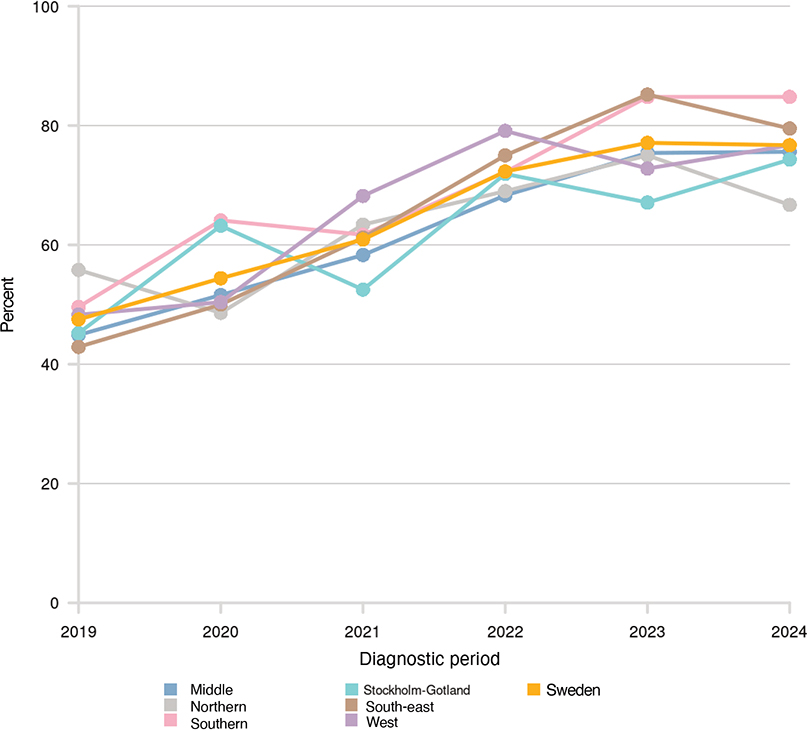
Figure 1. Utilisation of doublet and triplet systemic therapy in patients with metastatic hormone-sensitive prostate cancer (mHSPC) aged ≤ 80 years (M1 at diagnosis) in Sweden over the past 5 years.
Both the Swedish Guidelines 2025 and the EAU guidelines endorse treatment intensification, but the Swedish Guidelines 2055 prioritises ARPI-based doublet therapy and reserves triplet therapy (ADT+docetaxel+ARPI) for selected high-volume patients based on national reimbursement and safety considerations. EAU guidelines are more liberal in triplet recommendations (Table 2).
Follow-up imaging (CT and bone scan) is recommended 6 months after initiating treatment, with additional imaging after completion of docetaxel. Some patients have progressive disease without PSA rise, supporting annual surveillance imaging. Overall, intensified systemic therapy combined with appropriate use of local measures constitutes the evidence-based standard for M1 PCa.
Castration resistant PCa
General considerations
The Swedish Guidelines 2025 define castration-resistant PCa (CRPC) as two consecutive PSA rises (≥ 1 week apart) with PSA > 2 ng/mL, or radiologic progression, despite castrate testosterone (< 1.7 nmol/L) while the EAU Guidelines require three consecutive rises in PSA. Management should be discussed in a multidisciplinary team and clinical trial participation offered whenever possible. Treatment must be individualised, considering patient preferences, comorbidities, prior therapies and response, as well as emerging factors such as neuroendocrine differentiation and genomic alterations. Although new therapies are rapidly emerging, delays in approval and reimbursement create practical and ethical challenges. The nationwide Patient Overview PCa tool increasingly supports shared decision-making by visualising disease course, treatments, symptoms, and quality-of-life metrics (Figure 2) [41].
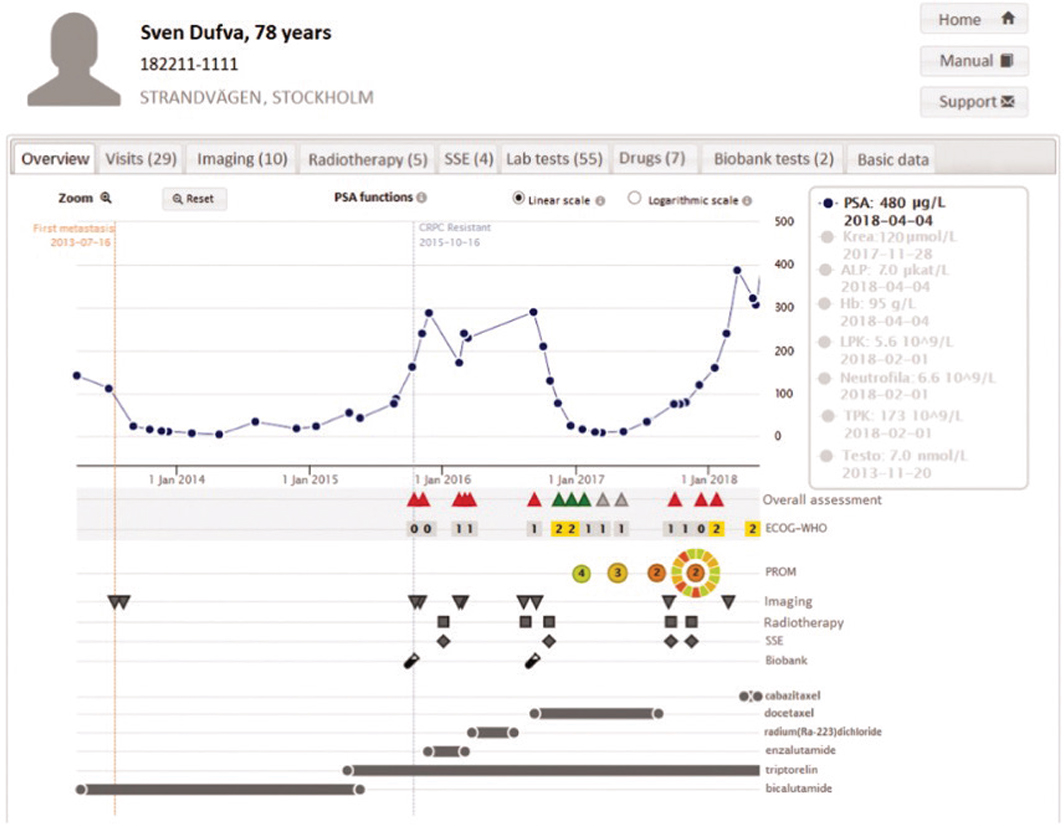
Figure 2. Graph within the nationwide Patient Overview framework providing a longitudinal overview of treatment effects, incorporating both clinical assessments and Patient-Reported Outcome Measures (PROMs). Reprinted by permission of Taylor & Francis Ltd, http://www.tandfonline.com, on behalf of Acta Chirurgica Scandinavica Society. ‘Set-up and preliminary results from the Patient-overview Prostate Cancer. Longitudinal registration of treatment of advanced prostate cancer in the National Prostate Cancer Register of Sweden’, Franck Lissbrant et al. [8], Scandinavian Journal of Urology, copyright © Acta Chirurgica Scandinavica Society.
Non-metastatic castration-resistant PCa
Non-metastatic castration-resistant PCa (CRPC M0) is increasingly common, even though many patients may harbour microscopic metastases not detectable by conventional imaging. The PSA level and PSA-DT are the strongest predictors of time to radiographic metastasis. Patients on continuous ADT should be monitored with blood tests every 3–4 months and clinically assessed at least twice yearly. In men with PSA ≥ 2 µg/L and PSA-DT < 10 months, treatment with apalutamide, darolutamide or enzalutamide is recommended for those with ECOG 0–1 performance status, with therapy discontinued upon detection of distant metastases. Rising PSA despite negative imaging warrants repeated CT and bone scintigraphy at 3–6-month intervals, with urgent imaging performed if symptoms suggest progression.
If ARPI therapy is unsuitable, secondary androgen blockade with bicalutamide may be attempted, although responses are usually transient, and withdrawal should be considered upon progression. Selected patients without prior local therapy may benefit from prostate RT to reduce local symptoms. The disease course should be documented in the national Patient Overview.
The Swedish Guidelines 2025 provide a formalised algorithm for ARPI therapy (apalutamide, darolutamide, enzalutamide) in patients with PSA ≥ 2 µg/L and PSA doubling time < 10 months – substantially clearer than in the 2022 version (Table 1). Imaging frequency and clinical surveillance are more explicitly defined. Bicalutamide use is more narrowly specified, and the Swedish Guidelines 2025 integrate mandatory documentation in the patient overview.
Both the EAU guidelines and the Swedish Guidelines 2025 recommend ARPIs for PSA-DT < 10 months, but the Swedish Guidelines provides stricter imaging algorithms and clearer stopping rules (Table 2).
Metastatic castration resistant PCa
Management of newly diagnosed metastatic castration-resistant PCa (mCRPC) should be discussed in a multidisciplinary team, and patients eligible for disease-directed therapies – including ARPI, taxanes, PARPi, or radionuclides – should be evaluated by an oncologist. Treatment choice depends on prior therapy and BRCA status. First-line treatment for men with good performance status (ECOG 0–1) includes either docetaxel or an ARPI. Men with BRCA1/2 mutations may benefit from first-line combinations of ARPI plus a PARPi [37, 42], whereas ARPI-naïve, BRCA-negative patients are typically offered abiraterone (or enzalutamid if abiraterone is not suitable). Docetaxel is preferred as initial therapy in BRCA-negative men previously exposed to ARPIs. Men with ECOG 2 may be treated if functional decline is attributed to PCa.
Second- and third-line treatments include docetaxel, abiraterone, enzalutamid, cabazitaxel, and radium-223, with sequencing determined by prior exposure. Switching between abiraterone and enzalutamid after progression is discouraged due to limited efficacy. The PARPi Olaparib is an option for BRCA1/2-mutated disease following progression on ARPI and, when appropriate, taxanes and radium-223. Emerging evidence suggests superior survival with ARPI over taxanes in certain settings, and ongoing biomarker-guided trials (e.g. ProBio) aim to refine treatment sequencing.
Although approved by the EMA, the radioligand therapy with Lutetium-PSMA [43] is not recommended in the guidelines due to the non-imbursement policy. Consequently, there is no recommendation on the use of PSMA-PET-CT in the castration resistant setting.
Monitoring should include clinical assessment and laboratory evaluation every 3 months, with monthly follow-up after treatment initiation or during symptomatic progression. CT and bone scintigraphy are recommended for symptomatic deterioration or rising PSA in the absence of clinical progression. Disease trajectory should be documented using the national Patient Overview.
Neuroendocrine differentiation should be considered in patients progressing despite low PSA, particularly with high-grade or visceral disease, and may warrant platinum-based chemotherapy. Treatment should be discontinued at objective progression, with flare phenomena recognised to avoid premature cessation. In end-of-life situations, disease-specific therapy should be withdrawn in favour of palliative care.
The Swedish Guidelines 2025 advances a more sophisticated treatment sequence. BRCA-directed therapy is now incorporated into first-line management, with ARPI + PARPi combinations newly recommended for BRCA-mutated disease. It also strongly discourages sequential ARPI-ARPI switching and provides clearer definitions for second- and third-line therapy. Biomarker-guided therapeutic strategies and new survival data (e.g. favouring ARPI over taxanes in certain settings) are integrated (Table 2).
The EAU guidelines provide multiple sequencing pathways; the Swedish guidelines 2025 follow a stricter, more regulated, Swedish sequencing strategy and discourages ARPI to ARPI switches more strongly.
PARP-inhibitors and treatment predictive genetic testing
PARPi targets homologous recombination repair defects, making BRCA‑mutant tumours particularly sensitive. Although other DNA‑repair alterations exist, Swedish reimbursement currently limits use to confirmed BRCA1/2 mutations (≈10% of tested mCRPC cases). Trials show that adding the PARPi olaparib or talazoparib to ARPI therapy improves radiographic progression‑free survival and, in patients with BRCA‑mutated cancer, overall survival; these combinations are approved in Sweden. PARPi monotherapy is effective mainly for BRCA‑mutated disease [44, 45]. ctDNA testing offers a fast alternative but may be less sensitive with low tumour burden. Anaemia is the most common severe toxicity.
PARPi is therefore an important option for selected men with mCRPC but require predictive genetic testing. BRCA1/2 mutation analysis – germline or somatic – is mandatory before treatment and should be done when PARPi is considered, either as first‑line combination therapy with an ARPI (enzalutamide+talazoparib or abiraterone+olaparib) or as olaparib monotherapy after ARPI and chemotherapy. Mutations can be detected in blood, tumour tissue, or ctDNA; fresh soft‑tissue biopsies are preferred, as bone and archival samples often are insufficient for adequate analysis. Patients must be informed about potential hereditary findings, with germline‑positive cases referred for genetic counselling. This new recommendation about BRCA‑guided PARPi therapy after germline and somatic testing, and the introduction of ARPI+PARPi combinations as first‑line options for BRCA‑mutated mCRPC, is a major expansion of precision oncology.
The EAU guidelines allow PARPi for a broader range of homologous recombination repair defects. The Swedish Guidelines 2025 restrict use to BRCA1/2 mutations only due to national reimbursement policy, despite acknowledging wider molecular indications. Another difference is that analysis of mutation is recommended only when a PARPi is indicated, not as a standard analysis at diagnosis (Table 2).
Integrating frailty, cardiovascular risk and physical activity into treatment decision-making for older men with PCa
In the light of an increasing number of treatment options, often with risk of severe side effects the assessment of fragile older patients with PCa is essential. The elderly population is heterogeneous, often affected by comorbidities, cognitive impairment and functional limitations, and is frequently underrepresented in clinical trials. Chronological age alone is an insufficient determinant of treatment tolerance; frailty, characterised by reduced physiological reserve and increased vulnerability to treatment toxicity, must be evaluated. Traditional performance scales such as ECOG provide limited prognostic information in the elderly. Structured geriatric screening tools, particularly the Geriatric-8 (G8), can identify frail patients at risk of poorer survival, increased toxicity and treatment discontinuation [46]. A G8 score ≤ 14 indicates abnormality and may warrant comprehensive geriatric assessment. Because G8 does not evaluate cognition, the Mini-Cog test is recommended for rapid screening of cognitive impairment, which may influence treatment decisions and adherence.
Cardio-oncological evaluation is increasingly important [47]. ADT, ARPIs and chemotherapy are associated with elevated risks of cardiovascular morbidity, including hypertension, ischaemic heart disease, heart failure and thromboembolism. Baseline cardiovascular risk assessment – through history, examination, laboratory testing and, when indicated, ECG or echocardiography – is therefore recommended and a proposition on how this can be done is incorporated in the guideline. Identifying high-risk individuals enables proactive optimisation, tailored follow-up and safer delivery of systemic therapy.
The increasing use of cardiotoxic medication, in combination with an increasingly older population, motivated new chapters in the Swedish Guidelines 2025. Compared with the EAU guidelines, the Swedish Guidelines 2025 may place a more structured and pre-treatment orientated emphasis on both frailty and cardiovascular risk in older men (Table 2).
Since ADT accelerates bone loss, men receiving ADT should be routinely be offered osteoporosis prophylaxis. Regular physical activity, particularly weight bearing and resistance training, is strongly recommended to mitigate ADT-related bone loss, preserve muscle strength and functional capacity, and improve overall treatment tolerance [48, 49]. The Swedish Guidelines 2025 therefore recommend that patients receiving hormonal treatment are referred to a physiotherapist for an individualised exercise programme.
Conclusions
The evidence-base for diagnosing and managing men with PCa is rapidly progressing. The 2025 Swedish PCa guidelines include several new recommendations and some that differ from the European guidelines.
References
[1] Nationellt vårdprogram prostatacancer 10.0. Regionala Cancercentrum i Samverkan; 2025. [Cited date: 30 November 2025] Available from: https://kunskapsbanken.cancercentrum.se/diagnoser/prostatacancer/vardprogram/
[2] Cornford P, van den Bergh RCN, Briers E, et al. EAU-EANM-ESTRO-ESUR-ISUP-SIOG guidelines on prostate cancer-2024 update. Part I: screening, diagnosis, and local treatment with curative intent. Eur Urol. 2024. https://doi.org/10.1016/j.eururo.2024.03.027
[3] Tilki D, van den Bergh RCN, Briers E, et al. EAU-EANM-ESTRO-ESUR-ISUP-SIOG guidelines on prostate cancer. Part II-2024 update: treatment of relapsing and metastatic prostate cancer. Eur Urol. 2024;86(2):164–182. https://doi.org/10.1016/j.eururo.2024.04.010
[4] Bratt O, Carlsson S, Fransson P, et al. The Swedish national guidelines on prostate cancer, part 1: early detection, diagnostics, staging, patient support and primary management of non-metastatic disease. Scand J Urol. 2022;56(4):265–273. https://doi.org/10.1080/21681805.2022.2094462
[5] Bratt O, Carlsson S, Fransson P, et al. The Swedish national guidelines on prostate cancer, part 2: recurrent, metastatic and castration resistant disease. Scand J Urol. 2022;56(4):278–284. https://doi.org/10.1080/21681805.2022.2093396
[6] Cazzaniga W, Ventimiglia E, Alfano M, et al. Mini review on the use of clinical cancer registers for prostate cancer: the National Prostate Cancer Register (NPCR) of Sweden. Front Med (Lausanne). 2019;6:51. https://doi.org/10.3389/fmed.2019.00051
[7] Nugin H, Folkvaljon Y, Damber JE, et al. Work-up and treatment of prostate cancer before and after publication of the first national guidelines on prostate cancer care in Sweden. Scand J Urol. 2018;52(4):277–284. https://doi.org/10.1080/21681805.2018.1512650
[8] Taylor JA, 3rd, Koff SG, Dauser DA, et al. The relationship of ultrasensitive measurements of prostate-specific antigen levels to prostate cancer recurrence after radical prostatectomy. BJU Int. 2006;98(3):540–543. https://doi.org/10.1111/j.1464-410X.2006.06294.x
[9] Tilki D, Preisser F, Graefen M, et al. External validation of the european association of urology biochemical recurrence risk groups to predict metastasis and mortality after radical prostatectomy in a European Cohort. Eur Urol. 2019;75(6):896–900. https://doi.org/10.1016/j.eururo.2019.03.016
[10] Rafiei Alavi N, Rahmani M, Gupta A, et al. PSMA-RADS to improve evaluation and management of prostate cancer. Abdom Radiol (NY). 2025;50(7):3272–3283. https://doi.org/10.1007/s00261-024-04738-2
[11] Ghadjar P, Hayoz S, Bernhard J, et al. Dose-intensified versus conventional-dose salvage radiotherapy for biochemically recurrent prostate cancer after prostatectomy: the SAKK 09/10 randomized phase 3 trial. Eur Urol. 2021;80(3):306–315. https://doi.org/10.1016/j.eururo.2021.05.033
[12] Shipley WU, Seiferheld W, Lukka HR, et al. Radiation with or without antiandrogen therapy in recurrent prostate cancer. N Engl J Med. 2017;376(5):417–428. https://doi.org/10.1056/NEJMoa1607529
[13] Sargos P, Chabaud S, Latorzeff I, et al. Adjuvant radiotherapy versus early salvage radiotherapy plus short-term androgen deprivation therapy in men with localised prostate cancer after radical prostatectomy (GETUG-AFU 17): a randomised, phase 3 trial. Lancet Oncol. 2020;21(10):1341–1352. https://doi.org/10.1016/S1470-2045(20)30454-X
[14] Pollack A, Karrison TG, Balogh AG, et al. The addition of androgen deprivation therapy and pelvic lymph node treatment to prostate bed salvage radiotherapy (NRG Oncology/RTOG 0534 SPPORT): an international, multicentre, randomised phase 3 trial. Lancet. 2022;399(10338):1886–1901. https://doi.org/10.1016/S0140-6736(21)01790-6
[15] Ost P, Siva S, Brabrand S, et al. Salvage metastasis-directed therapy versus elective nodal radiotherapy for oligorecurrent nodal prostate cancer metastases (PEACE V-STORM): a phase 2, open-label, randomised controlled trial. Lancet Oncol. 2025;26(6):695–706.
[16] Freedland SJ, de Almeida Luz M, De Giorgi U, et al. Improved outcomes with enzalutamide in biochemically recurrent prostate cancer. N Engl J Med. 2023;389(16):1453–1465. https://doi.org/10.1056/NEJMoa2303974
[17] Shore ND, Luz MA, De Giorgi U, et al. Improved survival with enzalutamide in biochemically recurrent prostate cancer. N Engl J Med. 2026 Feb 5;394(6):563–575. https://doi.org/10.1056/NEJMoa2510310
[18] Moul JW, Wu H, Sun L, et al. Early versus delayed hormonal therapy for prostate specific antigen only recurrence of prostate cancer after radical prostatectomy. J Urol. 2004;171(3):1141–1147. https://doi.org/10.1097/01.ju.0000113794.34810.d0
[19] Valle LF, Lehrer EJ, Markovic D, et al. A systematic review and meta-analysis of local salvage therapies after radiotherapy for prostate cancer (MASTER). Eur Urol. 2021;80(3):280–292.
[20] Urabe F, Kimura S, Tashiro K, et al. Prognostic value of PSA bounce in prostate cancer following definitive radiation therapy: a systematic review and meta-analysis. Prostate Cancer Prostatic Dis. 2021;24(4):976–985. https://doi.org/10.1038/s41391-021-00372-x
[21] Morgan TM, Boorjian SA, Buyyounouski MK, et al. Salvage therapy for prostate cancer: AUA/ASTRO/SUO guideline Part I: introduction and treatment decision-making at the time of suspected biochemical recurrence after radical prostatectomy. J Urol. 2024;211(4):509–517. https://doi.org/10.1097/JU.0000000000003892
[22] Zelefsky MJ, Ben-Porat L, Scher HI, et al. Outcome predictors for the increasing PSA state after definitive external-beam radiotherapy for prostate cancer. J Clin Oncol. 2005;23(4):826–831.
[23] Lievens Y, Guckenberger M, Gomez D, et al. Defining oligometastatic disease from a radiation oncology perspective: An ESTRO-ASTRO consensus document. Radiother Oncol. 2020;148:157–166. https://doi.org/10.1016/j.radonc.2020.04.003
[24] Parker CC, James ND, Brawley CD, et al. Radiotherapy to the primary tumour for newly diagnosed, metastatic prostate cancer (STAMPEDE): a randomised controlled phase 3 trial. Lancet. 2018;392(10162):2353–2366.
[25] Parker CC, James ND, Brawley CD, et al. Radiotherapy to the prostate for men with metastatic prostate cancer in the UK and Switzerland: long-term results from the STAMPEDE randomised controlled trial. PLoS Med. 2022;19(6):e1003998.
[26] Bossi A, Foulon S, Maldonado X, et al. Efficacy and safety of prostate radiotherapy in de novo metastatic castration-sensitive prostate cancer (PEACE-1): a multicentre, open-label, randomised, phase 3 study with a 2 x 2 factorial design. Lancet. 2024;404(10467):2065–2076.
[27] Burdett S, Boeve LM, Ingleby FC, et al. Prostate radiotherapy for metastatic hormone-sensitive prostate cancer: a STOPCAP systematic review and meta-analysis. Eur Urol. 2019;76(1):115–124. https://doi.org/10.1016/j.eururo.2019.02.003
[28] Attard G, Murphy L, Clarke NW, et al. Abiraterone acetate plus prednisolone with or without enzalutamide for patients with metastatic prostate cancer starting androgen deprivation therapy: final results from two randomised phase 3 trials of the STAMPEDE platform protocol. Lancet Oncol. 2023;24(5):443–456.
[29] Chi KN, Chowdhury S, Bjartell A, et al. Apalutamide in patients with metastatic castration-sensitive prostate cancer: final survival analysis of the randomized, double-blind, phase III TITAN study. J Clin Oncol. 2021;39(20):2294–2303. https://doi.org/10.1200/JCO.20.03488
[30] Sweeney CJ, Martin AJ, Stockler MR, et al. Testosterone suppression plus enzalutamide versus testosterone suppression plus standard antiandrogen therapy for metastatic hormone-sensitive prostate cancer (ENZAMET): an international, open-label, randomised, phase 3 trial. Lancet Oncol. 2023;24(4):323–334.
[31] Armstrong AJ, Szmulewitz RZ, Petrylak DP, et al. ARCHES: a randomized, phase III study of androgen deprivation therapy with enzalutamide or placebo in men with metastatic hormone-sensitive prostate cancer. J Clin Oncol. 2019;37(32):2974–2986.
[32] Shore ND, Saad F, Cookson MS, et al. Oral relugolix for androgen-deprivation therapy in advanced prostate cancer. N Engl J Med. 2020;382(23):2187–2196. https://doi.org/10.1056/NEJMoa2004325
[33] Murthy V, Maitre P, Kannan S, et al. Prostate-only versus whole-pelvic radiation therapy in high-risk and very high-risk prostate cancer (POP-RT): outcomes from phase III randomized controlled trial. J Clin Oncol. 2021;39(11):1234–1242.
[34] Graefen M, Falkenbach F, Maurer T, et al. Best systemic therapy with or without radical prostatectomy in the management of men with oligometastatic prostate cancer: the RAMPP randomised controlled trial. Eur Urol. 2025 Oct 3:S0302-2838(25)04687-1. https://doi.org/10.1016/j.eururo.2025.09.4144
[35] Odat RM, Jain H, Jain J, et al. Risk of cardiovascular disease following degarelix versus gonadotropin-releasing hormone agonists in patients with prostate cancer: a systematic review and meta-analysis. Urol Oncol. 2025;43(6):359–369.
[36] Yan M, Moideen N, Bratti VF, et al. Stereotactic body radiotherapy (SBRT) in metachronous oligometastatic prostate cancer: a systematic review and meta-analysis on the current prospective evidence. Br J Radiol. 2020;93(1116):20200496. https://doi.org/10.1259/bjr.20200496
[37] Fizazi K, Azad AA, Matsubara N, et al. Talazoparib plus enzalutamide in men with HRR-deficient metastatic castration-resistant prostate cancer: final overall survival results from the randomised, placebo-controlled, phase 3 TALAPRO-2 trial. Lancet. 2025;406(10502):461–474.
[38] Sweeney CJ, Chen YH, Carducci M, et al. Chemohormonal therapy in metastatic hormone-sensitive prostate cancer. N Engl J Med. 2015;373(8):737–746.
[39] Fizazi K, Foulon S, Carles J, et al. Abiraterone plus prednisone added to androgen deprivation therapy and docetaxel in de novo metastatic castration-sensitive prostate cancer (PEACE-1): a multicentre, open-label, randomised, phase 3 study with a 2 x 2 factorial design. Lancet. 2022;399(10336):1695–1707. https://doi.org/10.1016/S0140-6736(22)00367-1
[40] Smith MR, Hussain M, Saad F, et al. Darolutamide and survival in metastatic, hormone-sensitive prostate cancer. N Engl J Med. 2022;386(12):1132–1142.
[41] Alverbratt C, Vikman H, Hjalm Eriksson M, et al. Time difference in retrieving clinical information in Patient-overview Prostate Cancer compared to electronic health records. Scand J Urol. 2022;56(2):95–101. https://doi.org/10.1080/21681805.2021.2014561
[42] Saad F, Clarke NW, Oya M, et al. Olaparib plus abiraterone versus placebo plus abiraterone in metastatic castration-resistant prostate cancer (PROpel): final prespecified overall survival results of a randomised, double-blind, phase 3 trial. Lancet Oncol. 2023;24(10):1094–1108.
[43] Sartor O, de Bono J, Chi KN, et al. Lutetium-177-PSMA-617 for metastatic castration-resistant prostate cancer. N Engl J Med. 2021;385(12):1091–1103. https://doi.org/10.1056/NEJMoa2107322
[44] Fizazi K, Piulats JM, Reaume MN, et al. Rucaparib or physician’s choice in metastatic prostate cancer. N Engl J Med. 2023;388(8):719–732.
[45] Hussain M, Mateo J, Fizazi K, et al. Survival with olaparib in metastatic castration-resistant prostate cancer. N Engl J Med. 2020;383(24):2345–2357. https://doi.org/10.1056/NEJMoa2022485
[46] Chen R, Yang D, Tian M, et al. The prognostic role of Geriatric 8 in patients with cancer: a meta-analysis and systematic review. Oncologist. 2025;30(6):oyaf118. https://doi.org/10.1093/oncolo/oyaf118
[47] Lyon AR, Lopez-Fernandez T, Couch LS, et al. 2022 ESC Guidelines on cardio-oncology developed in collaboration with the European Hematology Association (EHA), the European Society for Therapeutic Radiology and Oncology (ESTRO) and the International Cardio-Oncology Society (IC-OS). Eur Heart J. 2022;43(41):4229–4361. https://doi.org/10.1093/eurheartj/ehac244
[48] Ostergren PB, Kistorp C, Bennedbaek FN, et al. The use of exercise interventions to overcome adverse effects of androgen deprivation therapy. Nature reviews Urology. 2016;13(6):353–364. https://doi.org/10.1038/nrurol.2016.67
[49] Gardner JR, Livingston PM, Fraser SF. Effects of exercise on treatment-related adverse effects for patients with prostate cancer receiving androgen-deprivation therapy: a systematic review. J Clin Oncol. 2014;32(4):335–346. https://doi.org/10.1200/JCO.2013.49.5523