ORIGINAL RESEARCH ARTICLE
Lifestyle, anthropometric factors and clinically significant prostate cancer diagnosis in men with suspected prostate cancer
Elja Heiskanena  , Sofia Kalinenb, Rui Jian Chua, Mikael Högermana, Tarja Lamminena, Pekka Taimenc,d, Ivan Jambore, Hannu Aronene, Harri Merisaarie, Teija Sainioe, Antti Hakanenb, Otto Ettalaa, Kirsi Laitinenf,g, Tommi Vasankarih,i, Teemu Kallonenb, Peter J. Boströma and the Promic study group*
aDepartment of Urology, University of Turku and Turku University Hospital, Turku, Finland; bDepartment of Clinical Microbiology, Turku University Hospital, Microbe Centre, Institute of Biomedicine, University of Turku, Turku, Finland; cInstitute of Biomedicine, University of Turku, Turku, Finland; dDepartment of Pathology & FICAN West Cancer Centre, Turku University Hospital, Turku, Finland; eDepartment of Diagnostic Radiology, Turku University Hospital, University of Turku, Turku, Finland; fIntegrative Physiology and Pharmacology Unit, Institute of Biomedicine, University of Turku, Finland; gNutrition and Food Research Center, University of Turku, Turku, Finland; hUKK Institute for Health Promotion Research, Tampere, Finland; iFaculty of Medicine and Health Technology, Tampere University, Tampere, Finland
*Promic study group: In addition to the named authors, the study group includes the following investigators:
Prince Dadson, Turku PET Centre, University of Turku and Turku University Hospital, Turku, Finland; Alex Dickens, Turku Bioscience Centre, University of Turku and Åbo Akademi University, Turku, Finland; Ilia Evstafev, Turku Bioscience Centre, University of Turku and Åbo Akademi University, Turku, Finland; Marianne Gunell, Department of Clinical Microbiology, Turku University Hospital, University of Turku, Turku, Finland; Ilkka Heinonen, Turku PET Centre, University of Turku and Turku University Hospital, Turku, Finland; Petteri Hirva, Department of Urology, Turku University Hospital and University of Turku, Turku, Finland; Matilda Kråkström, Turku Bioscience Centre, University of Turku and Åbo Akademi University, Turku, Finland; Joel Kullberg, Department of Surgical Sciences, University of Uppsala, Uppsala, Sweden; Rebekka Laitinen, Department of Urology, Turku University Hospital and University of Turku, Turku, Finland; Tytti Massinen, Department of Urology, Turku University Hospital, University of Turku, Turku, Finland; Pietari Mäkelä, Department of Diagnostic Radiology, University of Turku and Turku University Hospital, Turku, Finland; Claes Ohlsson, Department of Internal Medicine and Clinical Nutrition, Institute of Medicine; Sahlgrenska Academy, University of Gothenburg, Gothenburg, Sweden; Matti Poutanen, Institute of Biomedicine, Integrative Physiology and Pharmacology unit, University of Turku, Turku, Finland; Ekaterina Saukko, Department of Radiology, Turku University Hospital and University of Turku, Turku, Finland; Johanna Schleutker, Institute of Biomedicine, Cancer Research Unit, University of Turku, FICAN West Cancer Centre, University of Turku and Turku University Hospital, Department of Genomics, Laboratory Division, Turku University Hospital, Turku, Finland; Matti Suutari, Department of Urology, Turku University Hospital, University of Turku, Turku, Finland; Henri Vähä-Ypyä, UKK Institute for Health Promotion Research, Tampere, Finland; Gudrun Wahlström, Institute of Biomedicine, Cancer Research Unit, University of Turku and FICAN West Cancer Centre, University of Turku and; Turku University Hospital, Turku, Finland
ABSTRACT
Objective: Lifestyle and anthropometric factors may influence prostate cancer (PCa) risk, yet evidence remains inconclusive. This study reports the associations between lifestyle and anthropometric factors and clinically significant PCa (csPCa; ISUP grade > 1) among men with clinical suspicion of PCa.
Materials and methods: In this registered (NCT06116851), single-institution, prospective cohort trial, men referred for PCa diagnostics due to elevated prostate-specific antigen or abnormal digital rectal examination were included. Subjects underwent prostate diagnostics and completed detailed surveys of lifestyle, medical and family history. Physical activity was measured using a triaxial accelerometer. Anthropometric assessments included body mass index, waist circumference and magnetic resonance imaging-based body composition analyses.
Results: Among 298 included men, 143 (48%) were diagnosed with csPCa. In multivariate logistic regression, higher physical activity, measured by step count (odds ratio [OR]: 0.91, 95% confidence interval [CI]: 0.82–0.99) and active smoking compared to never-smokers (OR: 0.38, 95% CI: 0.14–0.96) were inversely associated with detection of csPCa. Higher prostate-specific antigen density was associated with increased risk (OR: 1.78, 95% CI: 1.39–2.35). Body composition was not associated with csPCa. Study strengths include comprehensive data collection. Primary limitation is partial reliance on self-reported data.
Conclusions: Higher measured physical activity was inversely associated with detection of csPCa in men with suspicion of PCa. Active smoking also showed an inverse association. Both findings merit further investigation.
KEYWORDS: Prostate cancer; risk factors; lifestyle; physical activity; body composition; smoking
Citation: ACTA ONCOLOGICA 2026, VOL. 65, 223–229. https://doi.org/10.2340/1651-226X.2026.46749 .
Copyright: © 2026 The Author(s). Published by MJS Publishing on behalf of Acta Chirurgica Scandinavica. This is an Open Access article distributed under the terms of the Creative Commons Attribution 4.0 International License (http://creativecommons.org/licenses/by/4.0/), allowing third parties to copy and redistribute the material in any medium or format and to remix, transform, and build upon the material, with the condition of proper attribution to the original work.
Received: 11 February 2026; Accepted: 11 August 2026; Published: 8 September 2026
CONTACT: Elja Heiskanen elja.heiskanen@varha.fi Department of Urology, Turku University Hospital and University of Turku, Kiinamyllynkatu 4-8, 20520 Turku, Finland
Supplemental data for this article can be accessed online at https://doi.org/10.2340/sju.v61.46749
Competing interests and funding: The authors report no conflicts of interest. This work was supported by academic grants from the Finnish Cancer Foundation and the Sigrid Juselius Foundation.
This work was supported by the Finnish Cancer Foundation and the Juselius Foundation.
Introduction
Prostate cancer (PCa) is the second most common cancer in men worldwide, with an estimated 1.47 million new cases and 397,000 deaths in 2020 [1, 2]. Understanding risk factors is crucial to improve PCa prevention and optimize screening. To date, there is no conclusive data supporting specific preventive measures. Reliable assessment of comorbidities and life expectancy is essential for PCa screening and management, while organized population-based screening programs are being developed to optimize screening outcomes [3, 4].
Despite its high incidence, PCa has undiscovered details of etiology and pathogenesis [1, 5]. Established risk factors include age, race, family history and germline mutations. Lifestyle, socioeconomic and environmental factors may also influence PCa risk, but their roles and underlying mechanisms remain unclear [6].
Diet is one of the most widely studied lifestyle factors. Various nutrients and food items have been linked to PCa risk, though findings remain inconsistent [6, 7]. Diet also has a profound effect on gut microbiota (GM). Physical activity (PA) is reported to be associated with PCa risk, with higher activity levels linked to lower mortality [8–10]. Obesity might be associated with higher-grade PCa [11]. The association between body composition and PCa risk is unclear, although some evidence suggests lower risk in men with higher whole-body fat mass [12]. There appears to be no clear association between sleep duration and PCa [13]. Most epidemiological studies have found no association or contradictory results concerning tobacco smoking and PCa risk [14]. Some studies link smoking to increased mortality and recurrence risk but also decreased incidence of PCa [15].
Alterations in GM have been associated with the risk of various cancers [16]. Our previous findings, along with those of others, indicate that GM composition differs between PCa population and non-PCa population, as well as between low-risk and high-risk PCa groups [17, 18]. There is evidence of GM contributing to the rate of PCa tumor growth and progression to castration resistance, with microbial androgen biosynthesis being a potential carcinogenic pathway [18, 19].
Promic (Prostate Metabolism, Cancer Risk and Gut Microbiota, NCT06116851) is a single-institution, prospective translational observational cohort trial investigating the interaction between GM and PCa carcinogenesis, as well as the influence of lifestyle, anthropometric factors and germline genetics on GM and PCa. The objective of the present exploratory report, in addition to a detailed description of the Promic study, is to report the effect of lifestyle factors and anthropometrics on the risk of clinically significant PCa (csPCa, ISUP grade > 1) among men with clinical suspicion of PCa.
Materials and methods
The trial was carried out at Turku University Hospital, Turku, Finland. The study protocol was approved by the ethics committee of the Hospital District of Southwest Finland (Approval number: 15/1801/2022). The study was conducted in compliance with the current revision of the Declaration of Helsinki (75th WMA General Assembly, Helsinki, Finland, October 2024).
Specific details of the entire Promic study design and procedures are described in the Supplementary appendix. Here we report the associations between lifestyle and anthropometric factors and csPCa in the cohort of men with clinical suspicion of PCa based on elevated prostate-specific antigen (PSA) or digital rectal examination (DRE).
Inclusion criteria included: age > 18 years, ability to comply with study procedures, signed informed consent and clinical suspicion of PCa (elevated PSA [> 2.5 ng/mL], abnormal DRE or image findings suggestive of PCa).
Study subjects were identified after referral to the Turku University Hospital Department of Urology based on clinical suspicion of PCa. All consecutive patients were assessed for eligibility during the study period without any specific selection criteria. At the screening visit, participants who provided written informed consent underwent study procedures, beginning with detailed questionnaires covering medical history, medications, family cancer history, socioeconomic status and lifestyle factors – including diet assessed by the validated Index of Diet Quality (IDQ) questionnaire [20], score ≥10/15 indicating a good dietary quality (i.e. health-promoting diet), PA, sleep, bowel function, smoking, alcohol use, and endocrinological markers (e.g. baldness, ring-to-middle finger length ratio and acne history) (Supplementary Appendix 2.2). Anthropometric measurements (height, weight, body mass index [BMI] and waist circumference) were recorded by the investigator.
For PA recording, subjects were instructed and equipped with a triaxial UKK RM42 accelerometer (UKK Terveyspalvelut Oy, Tampere, Finland). The recording was carried out for 7 days. During waking hours, the device was worn on a hip-mounted belt, and at bedtime it was transferred to a wristband. From the comprehensive PA data, for this study we used steps and duration of moderate and vigorous PA (MVPA) as measures of PA [21]. Subjects completed a detailed PA questionnaire and maintained a sleep diary for the time they wore the accelerometer (Supplementary appendices 2.5, 2.2.3, 2.2.4).
Subjects underwent magnetic resonance imaging (MRI), including both biparametric prostate and body MRI examinations in the same session. We have reported the details of the prostate scan previously [22–24]. Classification of MRI lesions was performed using Prostate Imaging Reporting and Data System version 2.1 (PI-RADS v2.1) criteria [25]. For body composition analyses, Dixon MRI of the abdomen (from cranial dome of liver to cranial end of caput femoris) and the scans were utilized to analyze visceral adipose tissue volume (VAT), subcutaneous adipose tissue volume (SAT) and muscle volume (MUS) normalized by the length of the abdominal cavity, as well as liver fat content (LFC) (Supplementary appendix 2.4).
After prostate MRI, subjects underwent standard clinical PCa diagnostics, including DRE, laboratory tests (PSA, testosterone) and transrectal ultrasound (TRUS). After shared decision-making, men who underwent prostate biopsies comprised the final study population. Biopsies consisted of systematic TRUS-guided 12-core biopsies with additional cognitive targeted biopsies of suspicious MRI lesions (PI-RADS v2.1 score 3–5). Biopsy samples were assessed by an experienced uro-pathologist using the 2014 International Society of Urological Pathology Modified Gleason Grading System [26]. PCa patients were stratified using modified European Association of Urology (EAU) risk groups, with MRI-detected extraprostatic extension (EPE) classified as high-risk regardless of clinical tumor staging by DRE [27].
Associations between the csPCa and variables (age, BMI, PSA, free PSA percentage [fPSA], prostate volume, PSA density, testosterone, 5-alpha-reductase inhibitor [5-ARI] medication, MVPA, steps, sleep, SAT, VAT, MUS, LFC, diet, smoking, family history of PCa and acne) were summarized with descriptive statistics and studied one by one with Wilcoxon rank sum test for continuous variables and for categorical variables Pearson’s Chi-squared test or Fisher’s exact test were used depending on the cell counts. Associations between csPCa and explanatory variables were assessed using binomial logistic regression. The model included clinically relevant variables and those significant in univariate analysis, with variable selection guided by the Akaike Information Criterion (AIC) and Bayesian Information Criterion (BIC) to identify the most contributory predictors and minimize overfitting. Multicollinearity was observed among prostate-related variables, from which PSA density, the most clinically relevant, was retained. Lifestyle factors, anthropometric measures, and 5-ARI medication use were also included in the final model. Odds ratios (OR) with 95% confidence intervals (95% CI) were reported.
The normality of variables was evaluated visually and tested with the Shapiro-Wilk test. Due to the non-normality of the continuous variables, nonparametric methods were used. The statistical significance level was set at 0.05 in all tests (two-tailed), and 95% CI was calculated. The analyses were performed using RStudio, version 2024.04.2 based on R, version 4.4.1.
Results
Between May 2022 and December 2023, a total of 384 patients were screened for eligibility, and 336 were enrolled in the study at Turku University Hospital, Turku, Finland. The study flowchart is presented in Figure 1. Initially, 336 subjects consented. After one consent withdrawal, two subjects declining biopsies, and 35 patients who decided, after shared decision-making, not to undergo prostate biopsies, a total of 298 subjects were included in the analysis. Eight patients were deemed not eligible prior to consent due to language barriers, inability to establish contact, geographical distance, advanced comorbidities or contraindications to MRI. The 35 participants did not undergo biopsy following shared decision-making due to low estimated risk of clinically significant PCa based on MRI, PSA and PSA density, or due to significant comorbidities or reduced performance status.
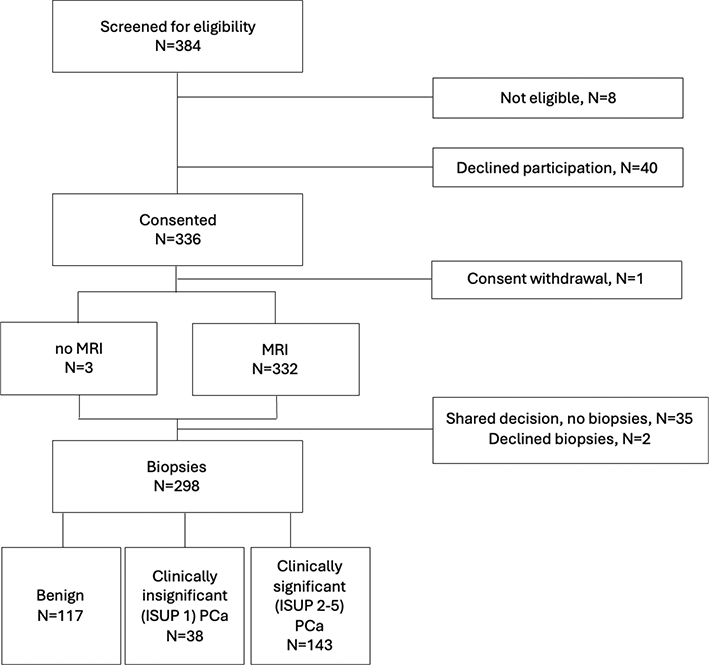
Figure 1. Flowchart of the study population. MRI: magnetic resonance imaging; ISUP: International Society of Urological Pathology (ISUP) 2014 grade system; PCa: prostate cancer.
Table 1 describes basic characteristics of the study population. The cohort represents a demographically traditional group of Caucasian men with PCa suspicion. Table 2 describes prostate biopsy findings and tumor staging. 181 (61%) men were diagnosed with any PCa and 143 (48%) with csPCa.
| Characteristic | N = 298 | ||||
| Clinical variables | |||||
| Age (year) | 67 (62, 73) | ||||
| BMI (kg/m²) | 27.4 (24.8, 30.8) | ||||
| PSA (ug/L) | 8.0 (5.8, 11.0) | ||||
| Free PSA (%) | 14.3 (10.6, 19.0) | ||||
| Prostate volume (mL) | 41 (30, 55) | ||||
| PSA density (ug/L/cm3) | 0.15 (0.10, 0.21) | ||||
| Testosterone (ug/L) | 14 (10.0, 18.0) | ||||
| 5-ARI | 41 (14%) | ||||
| Physical activity and anthropometrics | |||||
| Moderate and vigorous physical activity (MVPA) (h/week) | 1.99 (0.55, 4.23) | ||||
| Steps (/day) | 4,627 (2,720, 6,961) | ||||
| Sleep (h/night) | 6.40 (5.40, 7.30) | ||||
| Subcutaneous adipose tissue volume (SAT) (cm3/cm)* | 1,603 (1,265, 2,037) | ||||
| Visceral adipose tissue volume (VAT) (cm3/cm)* | 1,487 (954, 1,910) | ||||
| Muscle volume (cm3/cm)* | 1,460 (1,297, 1,627) | ||||
| Liver fat content (%)* | 6.4 (4.4, 9.8) | ||||
| Lifestyle factors | |||||
| Diet | Health-promoting | 153 (51%) | |||
| Non-health-promoting | 145 (49%) | ||||
| Smoking | Never | 130 (44%) | |||
| Former | 124 (42%) | ||||
| Active | 43 (14%) | ||||
| Family history of prostate cancer | 60 (20%) | ||||
| Acne | Never | 198 (67%) | |||
| Teenage | 90 (31%) | ||||
| Adulthood | 6 (2%) | ||||
| BMI: body mass index; PSA: prostate-specific antigen; 5-ARI: 5-alpha-reductase inhibitor. *MRI-based anthropometric measurements of the abdominal region. |
|||||
Univariate and multivariate analyses of the association between variables and csPCa are presented in Table 3. Of the clinical variables, increased age (p ≤ 0.001), higher PSA density (p ≤ 0.001), lower free PSA percentage (p ≤ 0.001), lower prostate volume (p < 0.001) and 5-ARI medication (p = 0.033) were significantly associated with increased risk of csPCa diagnosis in univariate analysis. For lifestyle factors, higher daily step count (p ≤ 0.001), smoking (p = 0.039), shorter nightly sleep duration (p = 0.044) and non-health-promoting diet (p = 0.047) were significantly associated with decreased risk of csPCa diagnosis in univariate analysis. Body composition measurements were not associated with csPCa.
| Characteristic | Univariate | Multivariate | |||||
| No csPCa (N = 155) | csPCa (N = 143) | p1 | OR2 | 95% CI2 | p2 | ||
| Clinical variables | |||||||
| Age (year) | 65 (60, 70) | 69 (63, 75) | < 0.001 | 1.04 | 1.00, 1.09 | 0.075 | |
| BMI (kg/m²) | 27.4 (25.0, 30.7) | 27.1 (24.7, 31.1) | 0.893 | 1.01 | 0.95, 1.08 | 0.706 | |
| PSA (ug/L) | 7.6 (5.7, 10.0) | 8.3 (6.0, 11.0) | 0.072 | ||||
| Free PSA (%) | 16.0 (12.0, 20.0) | 12.2 (8.8, 16.7) | < 0.001 | ||||
| Prostate volume (cm3) | 48 (35, 61) | 33 (26, 45) | < 0.001 | ||||
| PSA density (ug/L/cm3)* | 0.13 (0.09, 0.17) | 0.19 (0.13, 0.28) | < 0.001 | 1.78 | 1.39, 2.35 | < 0.001 | |
| Testosterone (ug/L) | 13.5 (10.0, 18.0) | 14.0 (10.0, 18.0) | 0.613 | ||||
| 5-ARI | 15 (9.7%) | 26 (18%) | 0.033 | 1.44 | 0.66, 3.19 | 0.368 | |
| Physical activity and anthropometrics | |||||||
| MVPA (h/week) | 2.44 (0.78, 4.72) | 1.59 (0.38, 3.81) | 0.052 | ||||
| Steps (/day)** | 5,105 (3,242, 7,566) | 3,993 (2,117, 6,022) | < 0.001 | 0.91 | 0.82, 0.99 | 0.041 | |
| Sleep (h/night) | 6.25 (5.30, 7.10) | 6.70 (5.50, 7.60) | 0.044 | 1.16 | 0.99, 1.37 | 0.072 | |
| SAT (cm3/cm) | 1,646 (1,322, 2,022) | 1,506 (1,206, 2,068) | 0.486 | ||||
| VAT (cm3/cm) | 1,525 (1,013, 1,888) | 14,49 (835, 1,949) | 0.517 | ||||
| Muscle volume (cm3/cm) | 1,489 (1,349, 1,625) | 1,430 (1,255, 1,629) | 0.087 | ||||
| Liver fat content (%) | 6.6 (4.7, 9.5) | 6.3 (4.2, 10.3) | 0.542 | ||||
| Lifestyle factors | |||||||
| Diet | 0.047 | ||||||
| Health-promoting | 71 (46%) | 82 (57%) | ref | ref | - | ||
| Non-health-promoting | 84 (54%) | 61 (43%) | 0.59 | 0.34, 1.02 | 0.058 | ||
| Smoking | 0.039 | ||||||
| Never | 66 (43%) | 64 (45%) | ref | ref | - | ||
| Former | 59 (38%) | 65 (46%) | 1.03 | 0.59, 1.81 | 0.920 | ||
| Active | 30 (19%) | 13 (9.2%) | 0.38 | 0.14, 0.96 | 0.046 | ||
| Family history of PCa | 29 (19%) | 31 (22%) | 0.5 | 1.94 | 0.99, 3.88 | 0.056 | |
| Acne | 0.12 | ||||||
| Never | 95 (62%) | 103 (73%) | |||||
| Teenage | 54 (35%) | 36 (26%) | |||||
| Adulthood | 4 (2.6%) | 2 (1.4%) | |||||
| OR: odds ratio; CI: confidence interval; csPCa: clinically significant prostate cancer; BMI: body mass index; PSA: prostate-specific antigen; 5-ARI: 5-alpha-reductase inhibitor; MVPA: Moderate and vigorous physical activity; SAT: subcutaneous adipose tissue volume of the abdominal region; VAT: visceral adipose tissue volume of the abdominal region; PCa: Prostate cancer. Data presented as median (interquartile range) or frequency (percentage). 1 Wilcoxon rank sum test; Pearson’s Chi-squared test; Fisher’s exact test, 2Binomial logistic regression model. *In multivariate analysis, PSA density is scaled per 0.1 units (tenths) to enhance interpretability of OR and 95% CI. **In multivariate analysis, steps are scaled per 1,000 steps (steps/1,000) to improve interpretability of OR and 95% CI. |
|||||||
In multivariate analysis, higher PA, measured by daily step count (OR: 0.91, 95% CI: 0.82–0.99), and active smoking compared to never-smokers (OR: 0.38, 95% CI: 0.14–0.96) were associated with lower risk of csPCa diagnosis. Higher PSA density was associated with higher risk (OR: 1.78, 95% CI: 1.39–2.35). In multivariate analysis, steps were scaled per 1,000 steps (steps/1,000), and PSA density was scaled per 0.1 units (tenths) to improve interpretability of OR and 95% CI.
We conducted an exploratory sensitivity analysis comparing subjects with any PCa to subjects with benign histopathology. Univariate and multivariate analyses of the association between variables and PCa are presented in Supplementary Table 1 (Supplementary Appendix 2.6).
Discussion
The objective of the present study was to examine the associations between lifestyle and anthropometric factors and csPCa in men with clinical suspicion of PCa. Consistent with common practice, we defined csPCa as ISUP Grade Group ≥ 2. Consequently, the non-csPCa group consisted of patients with benign histology or ISUP Grade Group 1 disease. The main finding was that a higher level of objectively measured PA, in the form of daily steps, was independently and inversely associated with detection of csPCa. To our knowledge, this is the first study to evaluate the association between objectively measured PA and PCa risk, and the largest to date to evaluate the association between MRI-based body composition and PCa risk.
In our study, objectively measured PA, in the form of higher daily step count, significantly decreased risk of csPCa diagnosis with OR of 0.91 (95% CI: 0.82–0.99) per 1,000 steps. Median daily step count was 3,993 in the csPCa group and 5,105 in no csPCa group. While the association was statistically significant, the observed association was modest. However, the 28% difference (1,112 step difference in median daily steps) between groups suggests a potentially meaningful difference in habitual PA. This notion is supported by a recent umbrella review of systematic reviews and meta-analyses, which reported that an increase of 500–1,000 daily steps was associated with lower all-cause mortality and lower risk of cardiovascular events [28]. Higher PA has been associated with lower risk of PCa-specific mortality and longer cancer-free survival [8–10]. The methodology for measuring PA varies, with many studies relying on reported recreational and leisure time activity. We used an exact and objective accelerometer for measuring PA. Subjects were advised to maintain their normal level of PA during the measurement period. Thus, we can assume that the results represent study subjects’ general level of activity. Continuous 24-h monitoring of PA over a 7-day period is a widely accepted standard in both population-based and clinical research.
According to our results, active smoking compared to never-smokers was associated with decreased risk of csPCa diagnosis with OR of 0.38 (95% CI: 0.14–0.96) in multivariate analysis. This finding requires cautious interpretation. Although PCa is not traditionally considered a smoking-associated cancer, this finding was surprising and may represent selection bias rather than a true inverse association, potentially caused by differences in PSA testing between smokers and non-smokers. Results from previous studies range in both magnitude and direction, with many finding no association between smoking and PCa risk [29, 31]. Previous observational prospective cohort studies suggest that smoking has an inverse association with PCa incidence but is also associated with higher PCa-specific mortality [30, 32]. When analyzed in cohorts of men with PCa without healthy controls, current smoking at the time of diagnosis has been associated with increased PCa-specific mortality and recurrence, whereas mortality was not increased among former smokers [33]. We did not find an association between former smoking and csPCa risk.
When survey-based diet information was analyzed, a trend toward an association between poorer dietary quality and reduced risk of csPCa diagnosis was observed. However, this finding was not statistically significant in multivariable analysis and should therefore be interpreted cautiously. The association may reflect residual confounding or reverse causality. The literature suggests that diet has an impact on PCa risk, but the results are not well established. A plant-based or vegetarian diet might decrease PCa risk, and a meta-analysis suggests that a diet rich in anti-inflammatory food components (i.e. whole grains, fish, green vegetables, and fruits) reduces PCa risk [11]. Nutritional science has challenges in capturing details of the diet, as complete food diaries are challenging to conduct and objective measurement of diet details is not always captured, due to, for example, under/overreporting, except in studies with a specific provided diet. The survey used in our study, IDQ, describes the overall nutritional quality of the diet and is informative when studying general dietary associations on a large scale but does not provide information about single foods or nutrients. Additionally, nutrition is considered health-beneficial; for example, fish may have high concentrations of environmental pollutants. Even if a validated instrument is used, reverse causality cannot be excluded.
We used MRI analyses to capture body composition data, and the approach is one of the most accurate. Our results did not show an association between body composition measurements and csPCa. A systematic review of 13 observational studies reported inconsistent results, with modest evidence suggesting that higher body fat mass is associated with lower PCa risk but higher risk of advanced PCa [12]. Modest evidence also suggested that a larger amount of abdominal adipose tissue may increase PCa risk. Only one study used MRI for measuring body composition and only analyzed visceral adipose tissue. To our knowledge, our study is the largest to date prospectively investigating the association between MRI-based body composition and PCa.
A sensitivity analysis comparing subjects with any PCa to subjects with benign histopathology was conducted to help the interpretation of the results. The effect estimates were comparable to the primary analysis, but the associations between step count, active smoking and PCa did not reach statistical significance. This suggests that the factors may be more closely associated with csPCa. This observation is consistent with the customary use of csPCa as the primary outcome in contemporary research and clinical practice.
A key limitation of our study is that the cohort consists of men with clinical suspicion of PCa, drawn from a single Finnish institution with predominantly Caucasian men, potentially limiting the generalizability of the findings to populations of men with no clinical suspicion of PCa or diverse ethnic backgrounds and differences in PCa screening and diagnostic practices. On the other hand, our control patients are biopsy-confirmed to be free of PCa and therefore constitute a reliable benign cohort. The relatively small sample size for an association study evaluating multiple lifestyle factors is also a limitation, as it may have limited statistical power for the analyses and increased the uncertainty of the associations. A limitation of our study is also that, although some lifestyle variables were objectively collected, some were survey-based. On the other hand, qualitative measurement of those factors, such as diet, is extremely challenging. When investigating lifestyle factors, there is a possibility of selection bias, as men with health-promoting behavior may be more likely to seek healthcare services and enter the PCa diagnostic pathway. Most importantly, as we surveyed and collected measurable data at the time of suspicion of PCa, it is likely that important factors affecting the initiation of carcinogenesis are not captured. The most challenging issue when factors related to prostate carcinogenesis are studied is that many lifestyle factors and, for example, body composition change over time. We do not know when individual tumors arise and when lifestyle factors affect carcinogenesis. Likely, some factors are associated with promotion of initial tumorigenesis and others with later tumor progression. We feel that this is an important topic to study, as it is known that in cohorts with different lifestyles and environments, most men are found with indolent PCa, but there is great variation in the incidence of csPCa. In Promic study, we hypothesize that alteration in GM composition and its metabolic products is one of the main mechanisms mediating lifestyle and environmental factors to PCa risk, and this will be investigated in our future reports. The strengths of the study included meticulous data collection with carefully selected validated surveys and, whenever possible, objective measures using novel technologies, providing detailed high-quality data.
We report associations between lifestyle factors, anthropometrics, and csPCa in men with clinical suspicion of PCa. In our cohort of men with clinical suspicion of PCa, increased PA measured by daily step count was inversely associated with detection of csPCa.
References
[1] Sung H, Ferlay J, Siegel RL, et al. Global cancer statistics 2020: GLOBOCAN estimates of incidence and mortality worldwide for 36 cancers in 185 countries. CA Cancer J Clin. 2021;71:209-249. https://doi.org/10.3322/caac.21660
[2] Ferlay J, Colombet M, Soerjomataram I, et al. Cancer statistics for the year 2020: an overview. Int J Cancer. 2021;149:778-789. https://doi.org/10.1002/ijc.33588
[3] Ventimiglia E, Gedeborg R, Orrason AW, et al. A comparison of comorbidity indices and estimates of life expectancy for men with prostate cancer. Scand J Urol. 2025;60:105–107. https://doi.org/10.2340/sju.v60.43810
[4] Bratt O, Butt ST, Carlsson C, et al. Swedish regional population-based organised prostate cancer testing: why, what and how? Scand J Urol. 2025;60:97–104. https://doi.org/10.2340/sju.v60.43809
[5] Bostwick DG, Burke HB, Djakiew D, et al. Human prostate cancer risk factors. Cancer. 2004;101(10 Suppl):2371–2490. https://doi.org/10.1002/cncr.20408
[6] Pernar CH, Ebot EM, Wilson KM, et al. The epidemiology of prostate cancer. Cold Spring Harb Perspect Med. 2018;8(12):a030361. https://doi.org/10.1101/cshperspect.a030361
[7] Oczkowski M, Dziendzikowska K, Pasternak-Winiarska A, et al. Dietary factors and prostate cancer development, progression, and reduction. Nutrients. 2021;13(2):496. https://doi.org/10.3390/nu13020496
[8] McTiernan A, Friedenreich CM, Katzmarzyk PT, et al. Physical activity in cancer prevention and survival: a systematic review. Med Sci Sports Exerc. 2019;51(6):1252–1261. https://doi.org/10.1249/MSS.0000000000001937
[9] Benke IN, Leitzmann MF, Behrens G, et al. Physical activity in relation to risk of prostate cancer: a systematic review and meta-analysis. Ann Oncol. 2018;29(5):1154–1179. https://doi.org/10.1093/annonc/mdy073
[10] Moore SC, Lee IM, Weiderpass E, et al. Association of leisure-time physical activity with risk of 26 types of cancer in 1.44 million adults. JAMA Intern Med. 2016;176(6):816–825. https://doi.org/10.1001/jamainternmed.2016.1548
[11] Bergengren O, Pekala KR, Matsoukas K, et al. 2022 Update on prostate cancer epidemiology and risk factors – a systematic review. Eur Urol. 2023;84(2):191–206. https://doi.org/10.1016/j.eururo.2023.04.021
[12] Purcell SA, Oliveira CLP, Mackenzie M, et al. Body composition and prostate cancer risk: a systematic review of observational studies. Adv Nutr. 2022;13(4):1118–1130. https://doi.org/10.1093/advances/nmab153
[13] Liu R, Wu S, Zhang B, et al. The association between sleep duration and prostate cancer: a systematic review and meta-analysis. Medicine (Baltimore). 2020;99(28):e21180. https://doi.org/10.1097/MD.0000000000021180
[14] Cirne F, Kappel C, Zhou S, et al. Modifiable risk factors for prostate cancer in low- and lower-middle-income countries: a systematic review and meta-analysis. Prostate Cancer Prostatic Dis. 2022;25(3):453–462. https://doi.org/10.1038/s41391-022-00570-1
[15] Rohrmann S, Linseisen J, Allen N, et al. Smoking and the risk of prostate cancer in the European Prospective Investigation into Cancer and Nutrition. Br J Cancer. 2013;108(3):708–714. https://doi.org/10.1038/bjc.2012.520
[16] Garrett WS. Cancer and the microbiota. Science. 2015;348(6230):80–86. https://doi.org/10.1126/science.aaa4972
[17] Liss MA, White JR, Goros M, et al. Metabolic biosynthesis pathways identified from fecal microbiome associated with prostate cancer. Eur Urol. 2018;74(5):575–582. https://doi.org/10.1016/j.eururo.2018.06.033
[18] Kalinen S, Kallonen T, Gunell M, et al. Differences in gut microbiota profiles and microbiota steroid hormone biosynthesis in men with and without prostate cancer. Eur Urol Open Sci. 2024;62:140–150. https://doi.org/10.1016/j.euros.2024.02.004
[19] Pernigoni N, Zagato E, Calcinotto A, et al. Commensal bacteria promote endocrine resistance in prostate cancer through androgen biosynthesis. Science. 2021;374(6564):216–224. https://doi.org/10.1126/science.abf8403
[20] Leppala J, Lagstrom H, Kaljonen A, et al. Construction and evaluation of a self-contained index for assessment of diet quality. Scand J Public Health. 2010;38(8):794–802. https://doi.org/10.1177/1403494810382476
[21] Vasankari V, Husu P, Vaha-Ypya H, et al. Association of objectively measured sedentary behaviour and physical activity with cardiovascular disease risk. Eur J Prev Cardiol. 2017;24(12):1311–1318. https://doi.org/10.1177/2047487317711048
[22] Merisaari H, Toivonen J, Pesola M, et al. Diffusion-weighted imaging of prostate cancer: effect of b-value distribution on repeatability and cancer characterization. Magn Reson Imaging. 2015;33(10):1212–1218. https://doi.org/10.1016/j.mri.2015.07.004
[23] Jambor I, Boström PJ, Taimen P, et al. Novel biparametric MRI and targeted biopsy improves risk stratification in men with a clinical suspicion of prostate cancer (IMPROD Trial). J Magn Reson Imaging. 2017;46(4):1089–1095. https://doi.org/10.1002/jmri.25641
[24] Jambor I, Verho J, Ettala O, et al. Validation of IMPROD biparametric MRI in men with clinically suspected prostate cancer: a prospective multi-institutional trial. PLoS Med. 2019;16(6):e1002813. https://doi.org/10.1371/journal.pmed.1002813
[25] Turkbey B, Rosenkrantz AB, Haider MA, et al. Prostate imaging reporting and data system version 2.1: 2019 update of prostate imaging reporting and data system version 2. Eur Urol. 2019;76(3):340–351. https://doi.org/10.1016/j.eururo.2019.02.033
[26] Epstein JI, Egevad L, Amin MB, et al. The 2014 International Society of Urological Pathology (ISUP) consensus conference on gleason grading of prostatic carcinoma: definition of grading patterns and proposal for a new grading system. Am J Surg Pathol. 2016;40(2):244–252. https://doi.org/10.1097/pas.0000000000000530
[27] Cornford P, van den Bergh RCN, Briers E, et al. EAU-EANM-ESTRO-ESUR-ISUP-SIOG guidelines on prostate cancer – 2024 update. Part I: screening, diagnosis, and local treatment with curative intent. Eur Urol. 2024;86(2):148–163. https://doi.org/https://doi.org/10.1016/j.eururo.2024.03.027
[28] Xu C, Jia J, Zhao B, et al. Objectively measured daily steps and health outcomes: an umbrella review of the systematic review and meta-analysis of observational studies. BMJ Open. 2024;14(10):e088524. https://doi.org/10.1136/bmjopen-2024-088524
[29] Darcey E, Boyle T. Tobacco smoking and survival after a prostate cancer diagnosis: a systematic review and meta-analysis. Cancer Treat Rev. 2018;70:30–40. https://doi.org/10.1016/j.ctrv.2018.07.001
[30] Al-Fayez S, El-Metwally A. Cigarette smoking and prostate cancer: a systematic review and meta-analysis of prospective cohort studies. Tob Induc Dis. 2023;21:19. https://doi.org/10.18332/tid/157231
[31] Hickey K, Do KA, Green A. Smoking and prostate cancer. Epidemiol Rev. 2001;23(1):115–125. https://doi.org/10.1093/oxfordjournals.epirev.a000776
[32] Islami F, Moreira DM, Boffetta P, et al. A systematic review and meta-analysis of tobacco use and prostate cancer mortality and incidence in prospective cohort studies. Eur Urol. 2014;66(6):1054–1064. https://doi.org/10.1016/j.eururo.2014.08.059
[33] Kenfield SA, Stampfer MJ, Chan JM, et al. Smoking and prostate cancer survival and recurrence. JAMA. 2011;305(24):2548–2555. https://doi.org/10.1001/jama.2011.879