ORIGINAL RESEARCH ARTICLE
Comparative analysis of surgical outcomes: open versus robot-assisted radical prostatectomy
Rikke Groth Olsena,b,c  , Klaus Brassoa,d , Andreas Rødera,b,d , Lars Kongeb,c , Flemming Bjerrumb,c,e and Hein Vincent Stroomberga,f
aCopenhagen Prostate Cancer Center, Department of Urology, Copenhagen University Hospital – Rigshospitalet, Copenhagen, Denmark; bFaculty of Health and Medical Sciences, University of Copenhagen, Copenhagen, Denmark; cCopenhagen Academy for Medical Education and Simulation (CAMES), Copenhagen University Hospital, Rigshospitalet, Denmark; dDepartment of Urology, Copenhagen University Hospital, Rigshospitalet, Denmark; eGastrounit, Surgical Section, Copenhagen University Hospital – Amager and Hvidovre, Hvidovre, Denmark; fBiotech Research & Innovation Center (BRIC), University of Copenhagen, Copenhagen, Denmark
ABSTRACT
Objective: To compare surgical complications, biochemical failure, and mortality rates between open radical prostatectomy (ORP) and robot-assisted radical prostatectomy (RARP).
Material and methods: All men undergoing radical prostatectomy (1995–2023) at a single academic hospital were included, and preoperative factors, surgical parameters, complications, biochemical failures, and mortality were collected. Generalized linear models and cause-specific Cox regressions stratified by surgical procedure were used. Cumulative incidences of biochemical failure were estimated with the Aalen-Johansen estimator, accounting for death as a competing risk. Analyses of surgical complications were adjusted for age and lymphadenectomy, while positive surgical margins, biochemical failure, and mortality were adjusted for preoperative PSA, pathological lymph node stage, pT category, tumor percentage, ISUP score, age, and year of surgery.
Results: A total of 3,477 men were included (ORP: 1,759; RARP: 1,718). RARP was associated with reduced odds of in-hospital complications (adjusted odds ratio [aOR]: 0.28, 95% confidence interval [CI]: 0.11–0.74). RARP was associated with a reduced risk of biochemical failure compared to ORP (unadjusted hazard ratio [HR]: 0.52, 95% CI: 0.29–0.93). No other outcomes or mortality rates differed significantly.
Conclusion: RARP was superior in terms of complications and non-inferior for oncological outcomes compared to ORP at our center. Although the only randomized trial yet, has not proven any significant improvement in long-term cancer control comparing the open versus robotic approach, RARP seems to have replaced ORP as the gold standard for surgical treatment of localized prostate cancer. However, the overall benefit of RARP in the surgical evolution remains elusive.
KEYWORDS: Prostate cancer; radical prostatectomy; patient outcomes; open surgery; robotic surgery; long-term follow-up
Citation: Scandinavian Journal of Urology 2026, VOL. 61, 202–209. https://doi.org/10.2340/sju.v61.46750.
Copyright: © 2026 The Author(s). Published by MJS Publishing on behalf of Acta Chirurgica Scandinavica. This is an Open Access article distributed under the terms of the Creative Commons Attribution 4.0 International License (http://creativecommons.org/licenses/by/4.0/), allowing third parties to copy and redistribute the material in any medium or format and to remix, transform, and build upon the material, with the condition of proper attribution to the original work.
Received: 2 April 2026; Accepted: 11 August 2026; Published: 31 August 2026
CONTACT: Rikke Groth Olsen rikke.groth.olsen.01@regionh.dk Copenhagen Prostate Cancer Center, Ole Malløes Vej 24, 2200 Copenhagen N, Denmark
Supplemental data for this article can be accessed online at https://doi.org/10.2340/sju.v61.46750
Competing interests and funding: The authors have no conflicts of interest to report on the presented manuscript.
Hein V. Stroomberg is supported by the BRIDGE – Translational Excellence Programme at the Faculty of Health and Medical Sciences, University of Copenhagen, funded by the Novo Nordisk Foundation. Grant agreement no. NNF23SA00878669.
Introduction
Robot-assisted radical prostatectomy (RARP) was implemented at the beginning of the 21st century without evidence supporting its superiority to open surgery for complications or cancer outcomes [1–3]. Some observational and retrospective studies have compared oncological outcomes and mortality rates of open radical prostatectomy (ORP) to RARP, slightly favoring RARP [2–10]. However, many of these studies are limited by factors such as short follow-up, inclusion of cases only from highly experienced surgeons, or exclusion of patient groups. Robot-assisted surgery has appealing advantages such as 3D visualization, improved field of view, and higher dexterity while using a minimally invasive approach. Still, it comes with the price of prolonged surgical times, and the expensive equipment has raised concerns about its cost-effectiveness. We aimed to describe postoperative surgical complications, readmissions within 90 days, biochemical failure, and mortality rates after ORP compared to RARP at our institution. In addition, we analyze the surgeon’s impact on surgical complications and biochemical failure for the different techniques.
Materials and methods
We collected data on preoperative factors, surgical parameters, pathological reports, length of hospital stay, in-hospital complications, 90 days alive and out-of-hospital (90DAOH), oncological outcomes, and mortality from all men who had a prostatectomy performed between 1995 and 2023 at our institution. Preoperative factors included age at surgery, clinical tumor stage, prostate volume, prostate-specific antigen (PSA), non-uniform biopsy grade group (International Society of Urological Pathology [ISUP] category), and the D’Amico Risk groups [11, 12]. The ISUP category was evaluated according to contemporary grading criteria, acknowledging that the distinction between Gleason patterns has evolved, potentially influencing prognostication and predictive accuracy [13]. Surgical parameters included the date of surgery, performing surgeon, type of procedure, and caseload per year for each surgeon for each procedure. Pathological reports included tumor percentage, pathological tumor stage, ISUP category, and lymph node status (lymph nodes not assessed [pNx], no disease found in the lymph nodes [pN0], or disease spread to the lymph nodes [pN1]), and positive surgical margins (PSM). In-hospital surgical complications and 90DAOH were assessed only for patients having surgery from 2009 until 2023 due to updates in the patient record system. To ensure a comprehensive assessment of readmissions, all hospital readmissions were recorded, regardless of whether the patient was admitted to the original surgical ward or another department, for example, the emergency department. All complications were graded according to the Clavien-Dindo (CD) Classification, with major surgical complications being CD grade ≥2 [14]. Biochemical failure was defined as two consecutive PSA ≥ 0.2 ng/mL a minimum of 3 months after surgery. Cause of death was defined as either prostate cancer (PC)-specific death or other. If the cause of death was not available in the patient record system, the cause of death was retrieved from the National Causes of Death registry (C619 as the primary cause of death) [15]. Follow-up time for each patient was from the time of surgery until the day of death, the last recorded visit before lost-to-follow-up, or the day of data retrieval.
Patients were excluded if they had received neo-adjuvant treatment before surgery, had a non-standard prostatectomy (e.g. due to urothelial cancer or rectal cancer with invasion to the prostate), migrated, or were lost to follow-up.
Statistical analysis
Patient demographics were analyzed descriptively for ORP and RARP for preoperative factors, surgical parameters, and pathological reports. Surgical outcomes were analyzed descriptively over time and by using generalized linear models. Long-term oncological outcomes and mortality were analyzed using cause-specific Cox regressions stratified by the procedure. The Aalen-Johansen estimator defined the cumulative incidence of biochemical failure with death as a competing risk. Data were presented as odds ratio (OR) or hazard ratio (HR) for ORP versus RARP with a 95% confidence interval (95% CI). The models were adjusted for the institution’s possible covariates and caseload per year across all surgeons. A sub-group analysis of the D’Amico Risk group and surgeon learning curve was performed for all outcomes, and a sub-group analysis stratified by lymphadenectomy was performed on 90DAOH and biochemical failure. The subgroup analysis addressing the surgeon learning curve was conducted by excluding the first 50 cases of each surgeon for both surgical procedures to account for the impact of the learning curve.
The 5-year risk of biochemical failure was performed per year (2009–2018) stratified for surgical procedures but strictly performed for surgeons with >50 cases per year in total across both surgical procedures. The period was selected as the first robotic procedure was performed in 2009.
Statistical analysis was performed using R version 4.4.1 (R Development Core Team, Vienna, Austria) running on RStudio version 2024.074.02 (© 2009–2024 by Rstudio, Inc).
Ethics
The study was approved by the National Research Ethics Committees (R-23065983) prior to data collection.
Results
A total of 3,477 men underwent radical prostatectomy from 1995 to 2023 and were included in this study. Of these, 1759 underwent ORP and 1718 underwent RARP (Table 1). The characteristics were similar between the patients undergoing the two procedures; however, a higher proportion of patients undergoing ORP had lymph node dissection (ORP: 1075 patients [61%] vs. RARP: 667 patients [39%]), although a lower proportion of the patients had positive lymph nodes for the ORP compared to RARP (ORP: 35 patients [2%] vs. RARP: 231 patients [31%]). Fewer patients received either unilateral or bilateral nerve-sparing surgery for the ORP compared to the RARP (ORP: 371 patients [21%] vs. RARP: 1106 patients [65%]). An increase in the use of RARP from 2009 is observed, followed by a decrease in ORP (Figure 1). The median follow-up time was 13 years (interquartile range [IQR]: 11–16) for ORP and 7 years (IQR: 3–9) for RARP.
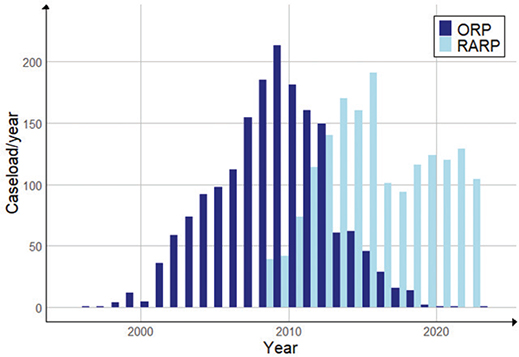
Figure 1. Number of radical prostatectomies performed from 1995 to 2023.
ORP had an extended hospital stay (ORP: median 2 days [IQR: 2–3 days] vs. RARP: median 1 day [IQR: 1 day]) with a slightly higher proportion of Clavien-Dindo ≥ 2 (ORP: 29 patients [4.0%] vs. RARP: 43 patients [2.6%]) (Table 1, Supplementary Table 1). This trend did not change over time (Figure 2). The ORP had a higher risk of in-hospital surgical complications than RARP, but only for men with intermediate-risk PC (adjusted OR for intermediate-risk PC [aOR]: 0.44; 95% CI: 0.26–0.75) (Figure 3, Supplementary Tables 2 and 3).
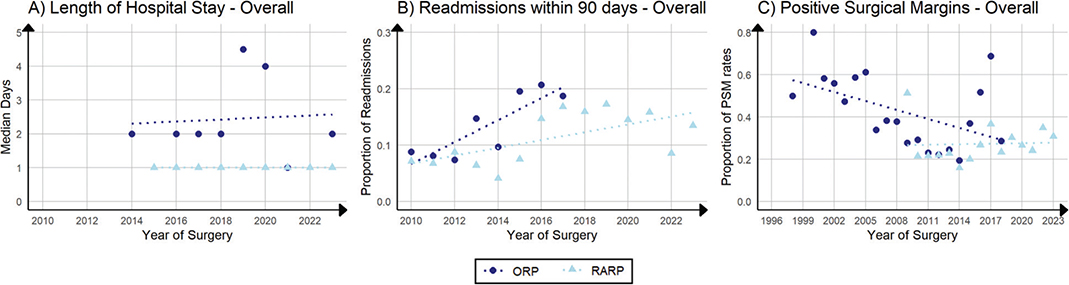
Figure 2. Changes in short-term patient outcomes over time for ORP and RARP.
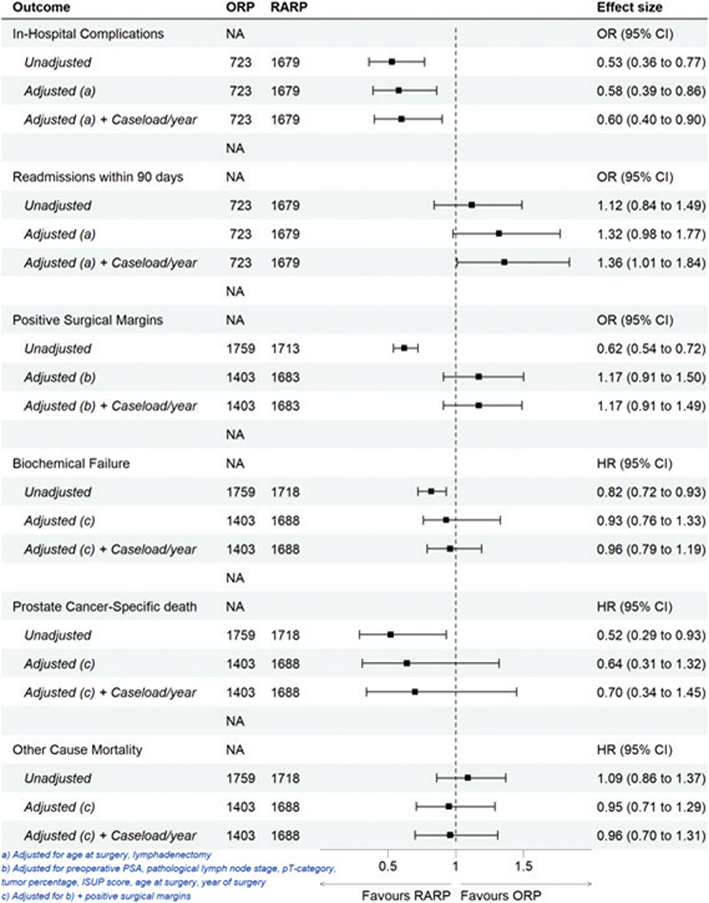
Figure 3. Forest plots comparing outcomes between ORP and RARP.
The two procedures had a similar median number of days alive and out of hospital (ORP: median 87 days [IQR: 87–88 days] vs. RARP: 89 days [IQR: 88–89 days]) and readmissions (ORP: 73 patients [10%] vs. RARP: 188 patients [11%]) within 90DAOH (Supplementary Table 2). Of those being readmitted, fewer with Clavien-Dindo ≥ 2 were found for the ORP (ORP: 51 patients [70%] vs. RARP: 154 patients [82%]). We observed an increase in these numbers over the years, as the proportion of people being readmitted was trending upward. (ORP: increase from 8% in 2010 to 21% in 2016 vs. RARP: increase from 7% in 2010 to 16% 2021) (Figure 2). If the procedures were stratified for performed lymphadenectomy, we found a slight advantage to ORP if lymphadenectomy was performed (% lymphadenectomy OR: 0.92 [95% CI: 0.55–1.54] vs. + lymphadenectomy OR: 1.54 [1.08–2.19]).
More patients had PSM in ORP (ORP: 636 patients [36%] vs. RARP: 445 patients [26%]), but there was no increased odds of having PSM between the two procedures (aOR: 1.17, 95% CI: 0.91–1.50) (Table 1, Figure 2). The proportion of patients having PSM decreased over time for ORP and increased slightly for RARP (ORP decreased from 58% in 2001 to 29% in 2018 vs. RARP increased from 21% in 2010 to 35% in 2022) (Figure 2).
The 5-year cumulative incidence of biochemical failure was higher for ORP (ORP: cumulative incidence 0.25, 95% CI: 0.23–0.28 vs. RARP: cumulative incidence 0.18, 95% CI: 0.11–0.20) (Supplementary Tables 2, 3). In a subgroup analysis stratified for lymphadenectomy, we found no difference between the two procedures (% lymphadenectomy HR: 1.15 [95% CI: 0.79–1.69] vs. + lymphadenectomy HR: 1.12 [0.92–1.38]).
Overall mortality was 22% (ORP: 39% vs. RARP: 8%). There was no difference in the risk of PC-specific death between the two procedures (adjusted hazard ratio [aHR]:0.64; 95% CI: 0.31–1.32) (Figure 3, Supplementary Table 2).
In-hospital surgical complications for intermediate-risk PC were the only outcome affected by the number of ORP and RARP performed at the institution per year (Supplementary Table 2). Looking at the patient outcomes based on each surgeon, there was an inter-surgeon difference for in-hospital complications (1.4% to 7.7%), patients readmitted within 90 days (4.8% to 15%), PSM (21% to 54%), and biochemical failure (20% to 46%) (Supplementary Table 4). We also saw an intra-surgeon difference benefiting RARP in all categories except patients readmitted and the number of severe complications (CD ≥ 2) within the readmissions within 90 days for the three surgeons, who have all performed both procedures (Supplementary Table 4).
We adjusted for the surgeons’ learning curves by excluding each surgeon’s first 50 cases performed on either procedure. This resulted in a slight advantage for ORP in 90DAOH (aOR: 1.37; 95% CI: 1.01–1.87) but no differences in the odds of in-hospital complications, PSM, or biochemical failure, were found (Supplementary Table 2).
Discussion
In this comparative study, we found RARP was superior in terms of reducing in-hospital complications and reduced 5-year cumulative incidence of biochemical failure; however, no other outcomes or mortality rates differed significantly between the two procedures. We demonstrated that patients undergoing RARP had lower in-hospital complications, confirming previous studies on the same topic [5, 7, 9]. Whether these outcomes are solely attributable to the robotic approach should be interpreted with caution, as numerous subtle modifications to pre-, peri-, and postoperative care have been introduced over the years, making it challenging to isolate the impact of the robot alone. The introduction of RARP also sparked a broader interest in optimizing patient care, with many considering the feasibility of making RARP an outpatient procedure [16, 17]. However, many of these advancements might not have been possible without the minimally invasive nature of laparoscopic surgery, which facilitates an accelerated recovery program.
There seems to be an advantage for ORP in 90DAOH if a lymphadenectomy was performed. This result aligns with previous literature, confirming that performing a lymphadenectomy increases the risk of post-operative complications [18–20]. Historically, surgeons limited lymph node dissection to the obturator fossa, but later studies showed that an extended lymphadenectomy would find more positive lymph nodes. However, this extended approach also brings a higher risk of complications than a limited lymph node dissection or no lymph node dissection at all, tapping into the ongoing discussion about the actual patient benefit of the lymphadenectomy [18, 19, 21, 22]. We found no difference between ORP and RARP in terms of PSM, although the PSM rate varied over time [3, 5–10, 23, 24]. This likely reflects changes in patient selection, with increasing use of active surveillance resulting in surgery being reserved for patients with more advanced disease. At the same time, greater use of nerve-sparing techniques may have contributed to the slight increase in PSM observed during the RARP era. These findings are consistent with national and international trends in PC management [25]. Although PSM rates remain relatively high at our institution, they have remained stable throughout the study period, and our use of a strict pathological definition should be considered when interpreting these results [26, 27].
The overall biochemical failure rate was consistent with previous reports. Although RARP was associated with a lower cumulative incidence of biochemical failure, the absolute difference was small and did not translate into reduced PC mortality. We believe this finding primarily reflects changes in patient selection and evolving treatment strategies, including broader use of extended lymphadenectomy and more effective salvage therapies, rather than an intrinsic advantage of the robotic technique. Over the years, a gradual shift towards extended lymphadenectomy and integration of nomograms predicting the risk of lymph node invasion prior to surgery have changed the group of patients undergoing lymphadenectomy [18–20]. This shift could explain why we found a higher proportion of positive nodes in the RARP group, as extended lymphadenectomy could find more patients with positive nodes. However, it is still up for debate whether extended lymphadenectomy benefits the oncological outcomes for patients [18, 21, 22, 28]. As expected, we did not find that this observation translated into a difference in PC mortality.
We expected an increased risk of complications at the beginning of the RARP implementation and anticipated it would stabilize or decline as surgeons gained proficiency with the robotic system. However, we found that in-hospital complications, 90DAOH, and PSM rates increased over the years for RARP. Most likely, it is the technological advancements that have made it possible to treat patients initially deemed ineligible for any prostatectomy or specifically for robotic surgery. This could be due to the cancer stage, patient comorbidities, or body mass index (BMI). However, due to changes in the patient health record system in Denmark, the influence of these factors on patient outcomes was not possible to investigate further. At the same time, ongoing inclusion in clinical trials creates new non-surgical opportunities for patients. This could have skewed the results as the surgical interventions offered to the patients have evolved over the years [29]. With the introduction of the new robotic system, we hypothesized that accounting for surgeon experience would reveal differences between the two procedures. We had three surgeons performing both ORP and RARP, three surgeons only performing ORP, and one surgeon only performing RARP. Still, our analysis showed no significant differences in short-term, oncological, or long-term outcomes after adjusting for the learning curve. These results could be influenced by the residents’ training. Trainees often begin by performing smaller steps in the procedures before advancing to full surgeries, but these cases were attributed to senior surgeons in our records. This may have masked the impact of the trainees’ learning curve in our data, possibly explaining the little variation between the beginning and the plateau of the surgeons’ learning curves. However, this will reflect the reality in teaching hospitals when new surgeons gain experience.
One limitation of this study was the single-institution retrospective design. We could not control for potential selection bias regarding patient candidacy for each procedure or for patients involved in concurrent clinical trials that might have affected outcomes. As clinical practice evolved throughout the study period, patients treated later may not be directly comparable with those treated earlier.
The cost of robotic surgery is higher compared to open surgery, as robotic surgery has an increased expense in surgical equipment (e.g. purchase and service of the robotic systems) and a longer operating time [30, 31]. However, one study found a slight effect of RARP being cost-effective if adjusted for quality of life and biochemical failure [32]. A Danish study found that RARP generates a factor 1.3 additional cost compared to ORP, including follow-up in primary care and hospitals [33]. This study evaluates patients who underwent surgery more than a decade ago. Since then, clinical practice has evolved significantly with the introduction of advanced equipment, revised follow-up protocols, and updates to preoperative, perioperative, and postoperative parameters in both surgical and anesthesiologic management. Updated analyses on today’s clinical practice would be beneficial to determine whether this additional cost persists. Surgical techniques are constantly evolving, often with the assumption that each new approach improves upon earlier methods. Demographic shifts and a rising cancer incidence will presumably increase the pressure on healthcare resources, making it more important than ever to critically evaluate these innovations to ensure they provide meaningful benefits, evaluate their feasibility and morbidity, and thoroughly assess their long-term outcomes [34, 35]. Our long-term comparative data remain relevant as next-generation robotic platforms enter the market; understanding surgical outcomes provides a benchmark against which future improvements can be measured.
Conclusion
In a large series with long-term follow-up, RARP had a lower risk of complications but was non-inferior for oncological outcomes compared to ORP. Although the only randomized trial yet has not proven any significant improvement in long-term cancer control comparing open versus robotic approach, RARP seems to have replaced ORP as the gold standard for surgical treatment of localized PC. On the other hand, nothing suggests that RARP is non-inferior, and with future technological advancements within the robotic field, we may see further improvements in patient outcomes following surgery. Our findings support the continued need for careful evaluation of surgical innovation, even when a technique has become dominant in practice.
Acknowledgments
None.
Ethics
The study was approved by the Danish Research Ethics Committees (R-23065983) prior to data collection.
Data sharing statement
The authors’ data supporting these findings can be requested. However, access to the data may be subject to ethical and legal restrictions.
References
[1] Chandrasekar T, Tilki D. Robotic-assisted vs. open radical prostatectomy: an update to the never-ending debate. Transl Androl Urol. 2018;7(Suppl 1):S120–S123. https://doi.org/10.21037/tau.2017.12.20
[2] Howard JM. Robotic, laparoscopic, and open radical prostatectomy – is the jury still out? JAMA Netwo Open. 2021;4:9. https://doi.org/10.1001/jamanetworkopen.2021.20693
[3] Yaxley JW, Coughlin GD, Chambers SK, et al. Robot-assisted laparoscopic prostatectomy versus open radical retropubic prostatectomy: early outcomes from a randomised controlled phase 3 study. Lancet. 2016;388(10049):1057–1066. https://doi.org/10.1016/S0140-6736(16)30592-X
[4] Çolakoğlu Y, Ekşi M, Özlü DN, et al. Comparison of oncological and functional results of robotic and open perineal radical prostatectomy. Int J Urol. 2024;31(9):994–1000. https://doi.org/10.1111/IJU.15500
[5] Carlsson S, Nilsson AE, Schumacher MC, et al. Surgery-related Complications in 1253 Robot-assisted and 485 Open Retropubic Radical Prostatectomies at the Karolinska University Hospital, Sweden. Urology. 2010;75(5):1092–1097. https://doi.org/10.1016/j.urology.2009.09.075
[6] Nahas WC, Rodrigues GJ, Rodrigues Gonçalves FA, et al. Perioperative, oncological, and functional outcomes between robot-assisted laparoscopic prostatectomy and open radical retropubic prostatectomy: a randomized clinical trial. J Urol. 2024;212(1):32–40. https://doi.org/10.1097/JU.0000000000003967
[7] Baboudjian M, Grabia A, Barret E, et al. Real-life perioperative outcomes of radical prostatectomy using the french national registry: a plea for promotion of centralized care and access to minimally invasive approaches. Eur Urol Oncol. 2024;7(3):316–318. https://doi.org/10.1016/J.EUO.2023.10.006
[8] Ambrosini F, Knipper S, Tilki D, et al. Robot-assisted vs open retropubic radical prostatectomy: a propensity score-matched comparative analysis based on 15 years and 18,805 patients. World J Urol. 2024;42(1):1–7. https://doi.org/10.1007/S00345-024-04824-6/METRICS
[9] Simsir A, Kizilay F, Aliyev B, et al. Comparison of robotic and open radical prostatectomy: initial experience of a single surgeon. Pak J Med Sci. 2021;37(1):167. https://doi.org/10.12669/PJMS.37.1.2719
[10] Haese A, Knipper S, Isbarn H, et al. A comparative study of robot-assisted and open radical prostatectomy in 10 790 men treated by highly trained surgeons for both procedures. BJU Int. 2019;123(6):1031–1040. https://doi.org/10.1111/BJU.14760
[11] D’Amico AV, Whittington R, Bruce Malkowicz S, et al. Biochemical outcome after radical prostatectomy, external beam radiation therapy, or interstitial radiation therapy for clinically localized prostate cancer. J Am Med Assoc. 1998;280(11):969–974. https://doi.org/10.1001/jama.280.11.969
[12] Van Leenders GJLH, Van Der Kwast TH, Grignon DJ, et al. The 2019 International Society of Urological Pathology (ISUP) consensus conference on grading of prostatic carcinoma. Am J Surg Pathol. 2020;44(8):e87. https://doi.org/10.1097/PAS.0000000000001497
[13] Epstein JI, Allsbrook WC, Amin MB, et al. The 2005 International Society of Urological Pathology (ISUP) consensus conference on Gleason grading of prostatic carcinoma. Am J Surg Pathol. 2005;29(9):1228–1242. https://doi.org/10.1097/01.PAS.0000173646.99337.B1
[14] Dindo D, Demartines N, Clavien PA. Classification of surgical complications: a new proposal with evaluation in a cohort of 6336 patients and results of a survey. Ann Surg. 2004;240(2):205–213. https://doi.org/10.1097/01.sla.0000133083.54934.ae
[15] Stroomberg HV, Larsen SB, Lanthén GS, et al. Danish Prostate Registry (DanProst) – an updated version of the Danish Prostate Cancer Registry, methodology, and early results. J Med Syst. 2023;47(1):98. https://doi.org/10.1007/S10916-023-01991-8
[16] Martin AD, Nunez RN, Andrews JR, et al. Outpatient prostatectomy: too much too soon or just what the patient ordered. Urology. 2010;75(2):421–424. https://doi.org/10.1016/J.UROLOGY.2009.08.085
[17] Banapour P, Elliott P, Jabaji R, et al. Safety and feasibility of outpatient robot-assisted radical prostatectomy. J Robot Surg. 2019;13(2):261–265. https://doi.org/10.1007/S11701-018-0848-8/TABLES/3
[18] Fossati N, Willemse PPM, Van den Broeck T, et al. The benefits and harms of different extents of lymph node dissection during radical prostatectomy for prostate cancer: a systematic review. Eur Urol. 2017; 72(1):84–109. https://doi.org/10.1016/j.eururo.2016.12.003
[19] Briganti A, Chun FKH, Salonia A, et al. Complications and other surgical outcomes associated with extended pelvic lymphadenectomy in men with localized prostate cancer. Eur Urol. 2006;50(5):1006–1013. https://doi.org/10.1016/J.EURURO.2006.08.015
[20] Bader P, Burkhard FC, Markwalder R, et al. Is a limited lymph node dissection an adequate staging procedure for prostate cancer? J Urol. 2002;168(2):514–518. https://doi.org/10.1016/S0022-5347(05)64670-8
[21] Lestingi JFP, Guglielmetti GB, Trinh QD, et al. Extended versus limited pelvic lymph node dissection during radical prostatectomy for intermediate- and high-risk prostate cancer: early oncological outcomes from a randomized phase 3 trial. Eur Urol. 2021;79(5):595–604. https://doi.org/10.1016/j.eururo.2020.11.040
[22] Olsen RG, Rich WB, Brasso K, et al. Long-term oncological outcomes of pelvic lymph node dissection during radical prostatectomy. Scand J Urol. 2026;61:1–6. https://doi.org/10.2340/SJU.V61.45236
[23] Lantz A, Bock D, Akre O, et al. Functional and oncological outcomes after open versus robot-assisted laparoscopic radical prostatectomy for localised prostate cancer: 8-year follow-up. Eur Urol. 2021;80(5):650–660. https://doi.org/10.1016/j.eururo.2021.07.025
[24] Du Y, Long Q, Guan B, et al. Robot-assisted radical prostatectomy is more beneficial for prostate cancer patients: a system review and meta-analysis. Med Sci Monit. 2018;24:272–287. https://doi.org/10.12659/MSM.907092
[25] Orrason AW, Scilipoti P, Garmo H, et al. Improved adherence to prostate cancer guidelines concomitant with public reporting. Nationwide population-based study. Scand J Urol. 2025;60:50–58. https://doi.org/10.2340/SJU.V60.43107
[26] Stroomberg HV, Friberg AS, Helgstrand JT, et al. The impact of positive surgical margins on salvage radiation or androgen deprivation therapy following radical prostatectomy – a nationwide study. Acta Oncol (Madr). 2021;60(5):620–626. https://doi.org/10.1080/0284186X.2021.1898047
[27] Compérat E, Camparo P, Srigley J, et al. International Society of Urological Pathology (ISUP) Consensus Conference on handling and staging of radical prostatectomy specimens. Ann Pathol. 2013;33(3):155–161. https://doi.org/10.1016/J.ANNPAT.2013.04.017
[28] Swindle PW, Kattan MW, Scardino PT. Markers and meaning of primary treatment failure. Urol Clin North Am. 2003;30(2):377–401. https://doi.org/10.1016/S0094-0143(02)00176-3
[29] Gongora M, Stranne J, Johansson E, et al. Characteristics of patients in SPCG-15 – a randomized trial comparing radical prostatectomy with primary radiotherapy plus androgen deprivation therapy in men with locally advanced prostate cancer. Eur Urol Open Sci. 2022;41:63–73. https://doi.org/10.1016/J.EUROS.2022.04.013
[30] Childers CP, Maggard-Gibbons M. Estimation of the acquisition and operating costs for robotic surgery. JAMA. 2018;320(8):835. https://doi.org/10.1001/JAMA.2018.9219
[31] Bolenz C, Gupta A, Hotze T, et al. Cost comparison of robotic, laparoscopic, and open radical prostatectomy for prostate cancer. Eur Urol. 2010;57(3):453–458. https://doi.org/10.1016/J.EURURO.2009.11.008
[32] Labban M, Dasgupta P, Song C, et al. Cost-effectiveness of robotic-assisted radical prostatectomy for localized prostate cancer in the UK Key Points + Invited Commentary + Supplemental content. JAMA Netw Open. 2022;5(4):225740. https://doi.org/10.1001/jamanetworkopen.2022.5740
[33] Hyldgard VB, Laursen KR, Poulsen J, et al. Robot-assisted surgery in a broader healthcare perspective: a difference-in-difference-based cost analysis of a national prostatectomy cohort. BMJ Open. 2017;7(7):e015580. https://doi.org/10.1136/BMJOPEN-2016-015580
[34] Marcus HJ, Ramirez PT, Khan DZ, et al. The IDEAL framework for surgical robotics: development, comparative evaluation and long-term monitoring. Nat Med. 2024;30:61-75. https://doi.org/10.1038/s41591-023-02732-7
[35] Wedde TB, Hagen MS, Vatne KM, et al. Patient-reported long-term sexual morbidity in prostate cancer survivors treated with external beam radiation therapy alone or combined with high-dose-rate brachytherapy. Scand J Urol. 2025;60:14–22. https://doi.org/10.2340/sju.v60.42165