ORIGINAL RESEARCH ARTICLE
All cause 90-day mortality associated with TUR-P procedure: a Swedish quality register-based study (2013–2022)
Vachik Petrosyana, Maria Cronhjorta, Johanna Alberta, Truls Gårdemarkb and Jan Jakobssona
aDepartment of Anaesthesia & Intensive Care, Karolinska Institutet at Danderyds University Hospital, Stockholm, Sweden; bDepartment of Urology, Karolinska Institutet at Danderyds University Hospital, Stockholm, Sweden
ABSTRACT
Prostatic hyperplasia is among the most common urological conditions in ageing men, and transurethral resection of the prostate (TUR-P) has long been the standard surgical treatment. The perioperative mortality rate (POMR) is an important quality indicator for surgical care, yet contemporary national Swedish POMR data associated with TUR-P is lacking.
Aims: The primary aim was to assess all-cause mortality up to 90-days following TUR-P in Sweden 2013–2022 and whether there was any temporal trend in POMR. The secondary aim was to assess the impact of patients’ characteristics (age, ASA class and indication).
Material and Methods: This was an observational, register-based cohort study using data from the Swedish-Perioperative-Register (SPOR). A total of 14,052 TUR-P procedures (KED22) for benign prostatic hyperplasia or prostate cancer were included. Descriptive statistics, ANOVA, chi-square test, and multivariable-logistic regression were applied.
Results: A total of 10 patients died within 30-days (0.07%) and 56 within 90-days (0.4%). No difference in annual POMR was seen over the study-period. Increasing age, higher ASA-class and cancer indication were the only independent predictors of 90-day mortality. Patients aged above 80-years had an OR of 7.9 (95% confidence interval [CI]: 2.2–42.3), ASA 4 had an OR of 12.6 (95% CI: 1.7–94.3), and cancer diagnosis had an OR of 4.4 (95% CI: 2.5–7.9) in the multivariable logistic regression.
Conclusions: POMR following TUR-P in Sweden is low and numerically similar to age-adjusted background mortality in the Swedish population up to the age of 70-years. High age, ASA-class and cancer diagnosis are the strongest predictors of postoperative mortality.
KEYWORDS: Prostate hyperplasia; transurethral resection of prostate (TUR-P); perioperative mortality rate (POMR); age; ASA
Citation: Scandinavian Journal of Urology 2026, VOL. 61, 216–222. https://doi.org/10.2340/sju.v61.46751.
Copyright: © 2026 The Author(s). Published by MJS Publishing on behalf of Acta Chirurgica Scandinavica. This is an Open Access article distributed under the terms of the Creative Commons Attribution 4.0 International License (http://creativecommons.org/licenses/by/4.0/), allowing third parties to copy and redistribute the material in any medium or format and to remix, transform, and build upon the material, with the condition of proper attribution to the original work.
Received: 29 April 2026; Accepted: 11 August 2026; Published: 1 September 2026
CONTACT: Jan Jakobsson Jan.jakobsson@ki.se Department of Anaesthesia & Intensive Care, Danderyds University Hospital, 182 88 Stockholm, Sweden
Ethical approval was granted by the Swedish Ethical Review Authority review number 2022-02521-02, Uppsala, Department 2 of Medicine.
Lower urinary tract symptoms (LUTS) associated with prostatic enlargement is one of the most common urological conditions among ageing men and represents a substantial and growing global health burden [1]. Trans-urethral resection of the prostate (TUR-P) remains widely performed and continues to be regarded as ‘the Golden standard’ surgical treatment option to reduce bladder outlet obstruction [2–4]. Surgical treatment with TUR-P of prostate enlargement and voiding compromise caused by benign prostatic hyperplasia (BPH) and cancer is considered effective and safe [5, 6]. However, many patients are older and often have multiple comorbidities. One key safety outcome is the perioperative mortality rate (POMR), annual deaths up to day-90 postoperative divided by the total number of procedures during the year [7, 8]. For TUR-P, reported 90-day mortality rate is generally low and range between approximately 0.5% and 1.16% although somewhat higher rates may be seen in older patient or in those with significant comorbidities [9, 10]. There is however no recent data about the perioperative mortality following TUR-P in Sweden.
Aim
The primary aim of this observational was to assess all-cause 30- and 90-day POMRs following TUR-P over the period 2013–2022 and whether there was any temporal trend in POMR. The secondary aim was assessing the impact of patients’ characteristics (age, ASA class and indication).
Data source and study population
All data have been retrieved from the Swedish Perioperative Registry (SPOR1). SPOR is a validated national quality register that collect perioperative data from majority of hospitals in Sweden [11, 12]. The register has collected data on the perioperative course since 2012. The register is linked with the Swedish Causes of Death Register and thus provide data about mortality after surgery.
The dataset included TUR-P procedure code KED22 mono- and bi-polar techniques and with a diagnose codes prostatic hyperplasia (N409) or prostate cancer (C619) registered in SPOR from January 1, 2013 to June 30, 2022. Procedures without year of surgery, key variables and other diagnosis were excluded, see Figure 1.
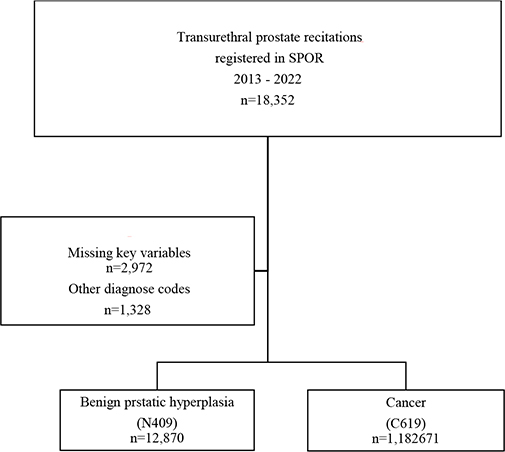
Figure 1. Flowchart describing inclusion and exclusion of patients. SPOR: Swedish Perioperative register; n: number of patients.
Variables
Variables were categorised as exposures, outcomes and covariates
The primary outcome was perioperative mortality rate (POMR) within 30 and 90 days. Number of patients deceased divided by number of procedures in accordance with the Utstein definition [8]. Exposure was change in annual mortality rate over the period studied. Covariates included patient characteristics such as age, ASA-class, and diagnosis, BPH or prostate cancer. Additional perioperative variables as duration of surgery, duration of anaesthesia and recovery room stay, were also collected for descriptive analysis.
Age was categorised into three groups; 18–65, 66–80 and above 80 years of age and further into 5-years groups for comparison with national background mortality. The ASA was categorised into ASA-class 1 to ASA-class 4.
Statistics
Descriptive statistics were used to summarise patients’ characteristics and perioperative variables. Age is presented as mean and standard deviation (SD), time events as median with interquartile range (IQR), (25th–75th percentile). Categorical variables are presented as counts (n) and percentages (%). Differences in categorical variables, including mortality rate, were analysed using the Chi-square test of Fisher’s test when appropriate. Age was compared using ANOVA and time events and blood loss with Mann–Whitney U-test. Multivariable logistic regression analyses were performed to examine the odds ratio for 90-day postoperative mortality over the study period adjusting for age, ASA-classification and indication.
Additionally, age adjusted mortality is presented for the study cohort and the official Swedish standardised mortality for male.2 Missingness, for example, missing ASA class, was assessed as random and no imputation was conducted. A p-value less than 0.05 (p < 0.05) will be assessed as statistically significant. All data have been initially handled with Excel version 16.106.1 and statistical analysis has been performed with SPSS version 31.0.0.0.
Results
A total of 18,352 TUR-P procedures (KED22) were performed and registered in SPOR between 2013 and June 2022 (Figure 1). In all 14,052 TUR-P procedures were included in the study cohort (see Figure 1), 12,870 with primary indication BPH (N409, 91.6%) and 1,182 with primary indication prostate cancer (C619, 8.4%) with an overall mean age 71.7 (SD: 8.0) years. The proportion of cancer indication varied between 6% and 11% over the study period. The cancer patients were 3.7 years older than BPH patients (p < 0.001).
Patients’ characteristics for the entire cohort is presented in Table 1. The majority of patients were ASA-class 2 (57.2%) followed by ASA-class 3 (27.2%), ASA-class 1 (14%) and ASA-class 4 (0.6%).
Overall, 10 patients deceased within 30 days (0.07%) and 56 within 90 days (0.4%), Cancer indication was associated with higher both 30- and 90-day mortality. Six BPH patients (0.05%) and 4 prostate cancer patients (0.34%) deceased within 30-days (p < 0.007). Among BPH patients 34 (0.26%) and 22 among prostate cancer TUR-P patients (1.86%) deceased within 90-days (p < 0.001).
There was no difference in duration of surgery, anaesthesia and recovery room stay between deceased and alive patients (see Table 2). There was a difference in duration of surgery between hyperplasia and cancer indication, median 61 (IQR: 43–84) min for hyperplasia and median 50 (IQR: 34–73) min for cancer procedures. Safe surgery check list was completed in 86% of procedures with no difference between alive and deceased.
The multivariable logistic regression assessing temporal trend in 90-day mortality rate for the entire study cohort over the study period adjusted for age, ASA-class and indication is shown in Table 3. No difference in 90-day mortality rate was found over the study period. Age above 80-years, ASA-class 4 and cancer indication were all associated with statistically significant increased odds ratio (Table 3).
Age had a profound effect on mortality among both the BPH and the cancer patients, see Figure 2.
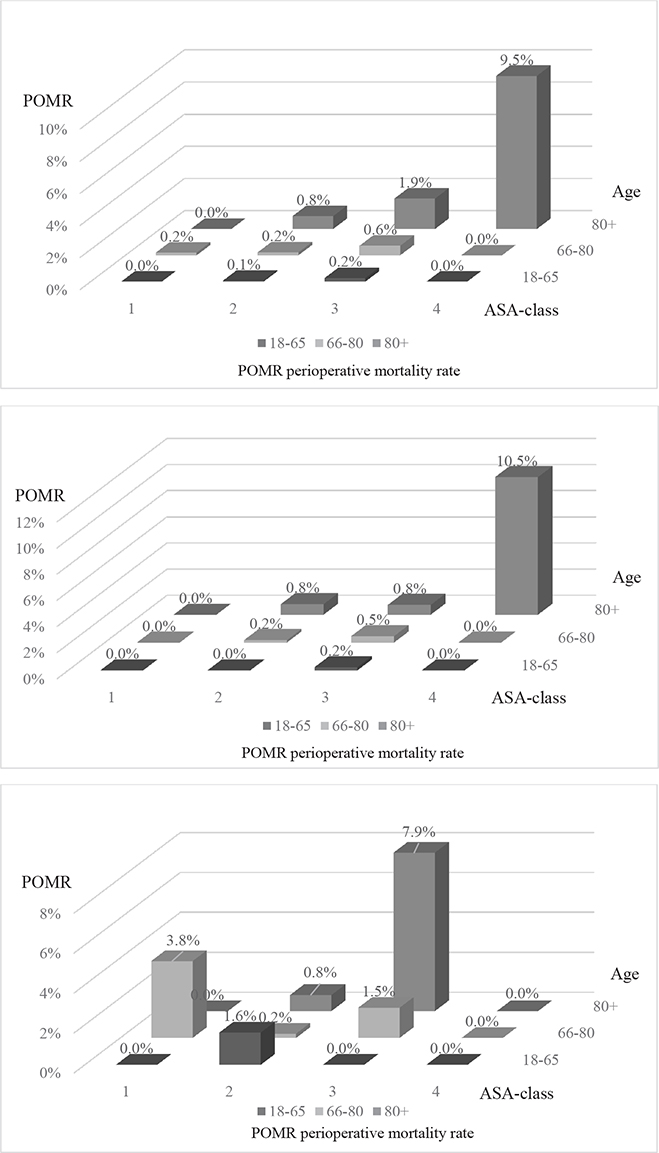
Figure 2. Proportion of deceased within 90 days after TUR-P divided by age and ASA-class. a. for the entire cohort studied. b. for patients with benign prostate hyperplasia and c. with diagnosis cancer. ASA-class on the X-axis. Age category on the Z-axis and POMR (%) in the Y-axis. ASA-class: American Association of Anesthesiology physical status.
Age adjusted POMRs were similar to the age adjusted national background mortality rates for patients aged below 70 years, but there was an excess age adjusted 90-day perioperative mortality for the 5-year steps above 70, most pronounced for the cancer TUR-P procedures, see Figure 3a–c.
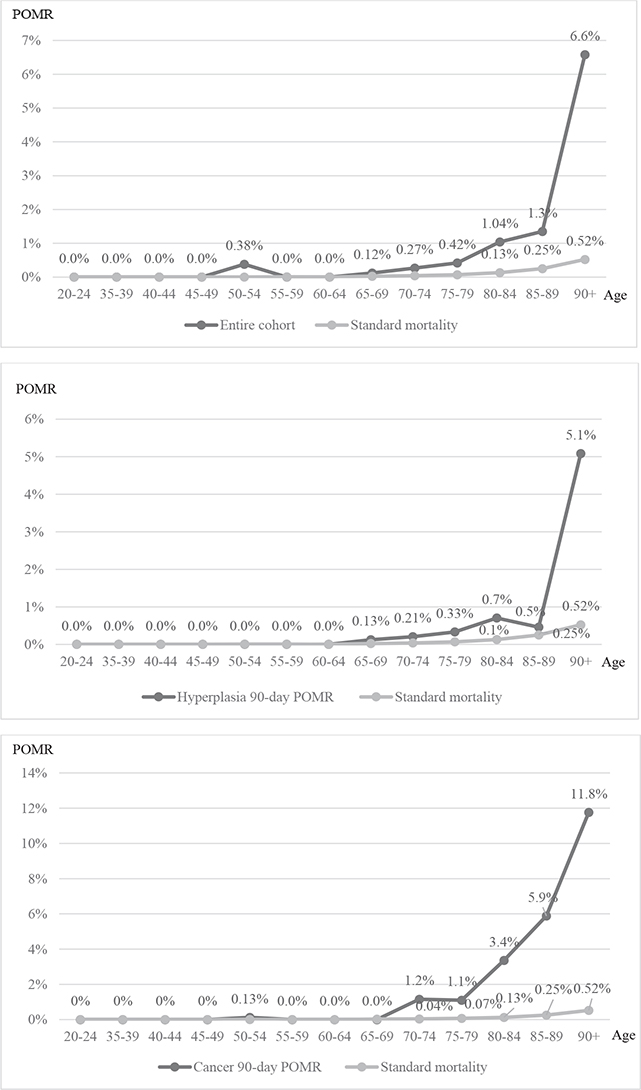
Figure 3. Age adjusted mortality rates for the TUR-P cohort and age adjusted background mortality rate for males in Sweden; a. mortality rate for the entire cohort studied compared to national background age adjusted mortality rate. b. Benign prostatic hyperplasia compared to national background age adjusted mortality rate. c. prostate cancer compared to national background age adjusted mortality rate. X-axis describes age in 5 year intervals. Y-axis describes all-cause 30-day mortality rate. TUR-P: transurethral prostate resection.
Discussion
The primary aim of this study was to assess the all-cause 90-day POMR following TUR-P based on the SPOR between 2013 and 2022 and whether there has been any temporal change in the POMR over the period studied. A secondary aim was to explore how patients’ characteristics, age, ASA class, and diagnosis (BPH or cancer) affected perioperative mortality. Overall, 10 patients died within 30-days (0.07%) and 56 patients died within 90-days (0.4%), with no significant change over the study period. Increasing age, ASA class, and cancer diagnosis were all associated with increased odds ratio for mortality within 90 days after surgery. These findings are reassuring and in line with that TUR-P is to be seen as a safe procedure in general. However, it shows that the perioperative mortality risk increases expectedly associated with high age, high ASA class, and cancer patients. The overall mortality rate is similar to national statistics for age-adjusted background mortality up to an age of 70 years, but shows a clear excess mortality rate at higher ages, most pronounced for cancer diagnosis.
Perioperative mortality rate
The observed POMRs were comparable to those reported in previous registry studies [9, 10]. The 30-day mortality rate in this study was lower than that reported in the Austrian register-based study by Eredics et al., covering 2002–2006 [9]. Our 90-day mortality rate of 0.4% was also notably lower than the 1.16% reported after TUR-P in the Finnish nationwide cohort study covering the period 2004 to 2014 by Salmivalli et al. [10]. These differences may be explained by different inclusion criteria and patients’ characteristics. It should be observed that our cohort included only TUR-P procedures.
Patients’ characteristics
The mean age of the study population was 72 years, consistent with the known epidemiology of BPH requiring surgical intervention [9]. Most patients were classified as having ASA-class 2. Age and ASA-class were independent predictors of 90-day mortality in the adjusted regression analysis. These findings align with the broader perioperative literature. A nationwide Swedish cohort study by Kilhamn et al. analysing over 460,000 procedures found that ASA class 3 was associated with 14-fold increased odds of 30-day mortality compared with ASA class 1 in elective surgery and that ASA class 4 carried an OR of 62.2 [13].3 This impact of age and ASA-class is further supported by several other SPOR-based studies examining high-volume surgical procedures in Sweden, including hysterectomy, hip arthroplasty, and knee arthroplasty, all of which report consistently low overall perioperative mortality, with age and ASA-class emerging as dominant independent predictors of increased risk for early postoperative death across surgical specialties [14–16].
Our findings are not in line with the US register-based study by Marchioni et al. [17] assessing morbidity and 30-day mortality after TUR-P for prostate hyperplasia and cancer between 2011 and 2016. They did not find any higher mortality among the 5.8% of patients who underwent TUR-P with a prostate cancer diagnosis [17]. The 30-day mortality was 0.2 for patients with hyperplasia and 0.1 for those with cancer TUR-P. Thus, higher mortality for hyperplasia TUR-P but lower for the cancer diagnosis TUR-P as compared to the POMRs 30-day mortality rates in this study. We did not observe any significant differences in perioperative observations, duration of surgery, recovery room stay, or perioperative bleeding between deceased and living patients. It should be acknowledged that other perioperative complications were not analysed. Interestingly, Marchioni et al. [18] found a 30-day mortality rate of 14% among patients with perioperative cardiovascular events associated with TUR-P and 0.3 for patients without cardiovascular complications in a similar US quality register-based study.
Strengths and limitations
A major strength of this study is the use of SPOR, a national quality register with broad coverage across Swedish surgical departments. With over 14,000 TUR-P procedures included over a 10-year period this is one of the largest contemporary analyses of perioperative mortality following TUR-P in Sweden. The registry-based design allows for the study of outcomes in routine clinical practice as opposed to selected trial populations and allows temporal trends to be examined over a long study period. Mortality data were linked at the Swedish Causes of Death Register, ensuring that deaths occurring both in hospital and in the community were captured.
There are also limitations worth noting. Firstly, this is an observational register-based study; causal inferences cannot be drawn. Secondly, SPOR does not include detailed information on individual comorbidities beyond ASA class. It was not possible to adjust for specific conditions such as cardiovascular disease, diabetes, or renal failure, which are known predictors of postoperative mortality [19, 20]. The use of ASA-class as a proxy for comorbidity, while clinically established and validated, is a less granular measure than composite indices such as the Charlson Comorbidity Index and frailty score. Missing information about ASA-class and BMI should be acknowledged. It must also be acknowledged that this study did not address new and less invasive techniques. Salmivalli et al. studied trends in surgery for LUTS between 2004 and 2018 in Finland and found that TUR-P was still the dominating technique [21]. Both thermo-expandable intraprostatic nitinol stents and prostate artery embolisation have however been suggested as a safe alternative in high-risk patients [22, 23].
Conclusions
In this nationwide register-based cohort study of 14,053 patients who underwent TUR-P in Sweden between 2013 and 2022 both 30-day (0.07%) and 90-day (0.4%) postoperative mortality rate was low and remained stable over time, with no significant temporal trend. These rates are comparably low and in concordance with the existing international literature. High age, high ASA-class and cancer diagnosis increased odds ratio for perioperative mortality. The age-adjusted mortality rate was similar to the age-adjusted standardised mortality in Sweden up to age 70 years but increased thereafter.
Acknowledgement
The authors would like to thank Fredrik K. Johanson for support with statistical review and quality control.
References
[1] GBD 2019 Benign Prostatic Hyperplasia Collaborators. The global, regional, and national burden of benign prostatic hyperplasia in 204 countries and territories from 2000 to 2019: a systematic analysis for the Global Burden of Disease Study 2019. Lancet Healthy Longev. 2022;3(11):e754–e776. https://doi.org/10.1016/S2666-7568(22)00213-6
[2] Sandhu JS, Bixler BR, Dahm P, et al. Management of lower urinary tract symptoms attributed to benign prostatic hyperplasia (BPH): AUA guideline amendment 2023. J Urol. 2024;211(1):11–19. https://doi.org/10.1097/JU.0000000000003698
[3] Cornu JN, Ahyai S, Bachmann A, et al. A systematic review and meta-analysis of functional outcomes and complications following transurethral procedures for lower urinary tract symptoms resulting from benign prostatic obstruction: an update. Eur Urol. 2015;67(6):1066–1096. https://doi.org/10.1016/j.eururo.2014.06.017
[4] Mayer EK, Kroeze SGC, Chopra S, et al. Examining the ‘gold standard’: a comparative critical analysis of three consecutive decades of monopolar transurethral resection of the prostate (TURP) outcomes. J BJU Int. 2012;110(11):1595–1601. https://doi.org/10.1111/j.1464-410X.2012.11119.x
[5] Cornu JN, Zantek P, Burtt G, et al. Minimally invasive treatments for benign prostatic obstruction: a systematic review and network meta-analysis. Eur Urol. 2023;83(6):534–547. https://doi.org/10.1016/j.eururo.2023.02.028
[6] Rassweiler J, Teber D, Kuntz R, et al. Complications of transurethral resection of the prostate (TURP) – incidence, management, and prevention. Eur Urol. 2006;50(5):969–979; discussion 980. https://doi.org/10.1016/j.eururo.2005.12.042
[7] Watters DA, Hollands MJ, Gruen RL, et al. Perioperative mortality rate (POMR): a global indicator of access to safe surgery and anaesthesia. World J Surg. 2015;39(4):856–864. https://doi.org/10.1007/s00268-014-2638-4
[8] Davies JI, Gelb AW, Gore-Booth J, et al. Global surgery, obstetric, and anaesthesia indicator definitions and reporting: an Utstein consensus report. PLoS Med. 2021;18(8):e1003749. https://doi.org/10.1371/journal.pmed.1003749
[9] Eredics K, Wachabauer D, Röthlin F, et al. Reoperation rates and mortality after transurethral and open prostatectomy in a long-term nationwide analysis: have we improved over a decade? Urology. 2018;118:152–157. https://doi.org/10.1016/j.urology.2018.04.032
[10] Salmivalli A, Ettala O, Boström PJ, et al. Mortality after surgery for benign prostate hyperplasia: a nationwide cohort study. World J Urol. 2022;40(7):1785–1791. https://doi.org/10.1007/s00345-022-03999-0
[11] Holmström B, Enlund G, Spetz P, et al. The Swedish Perioperative Register: description, validation of data mapping and utility. Acta Anaesthesiol Scand. 2023;67(2):233–239. https://doi.org/10.1111/aas.14174
[12] Holmström B, Enlund G, Frostell C, et al. SPOR covers 100 percent of publicly run surgical care. Lakartidningen. 2024;121:23197.
[13] Kilhamn N, Eriksson J, von Oelreich E, et al. Age, ASA physical status and surgical outcomes: insights from a nationwide cohort study. Anaesthesia. 2026;81(2):188–200. https://doi.org/10.1111/anae.16723
[14] Issmail L, Albert J, Frostell C, et al. All-cause 30-day mortality associated with hysterectomy in Sweden from 2015 to 2021 using data from the Swedish perioperative register. Clin Epidemiol Glob Health. 2024;29:101727. https://doi.org/10.1016/j.cegh.2024.101727
[15] Magnusson J, Karlsson J, Sköldenberg O, et al. Difference in early all-cause mortality among patients having hip arthroplasty a Swedish perioperative registry study 2013–2022. J Orthop Surg Res. 2024;19(1):295. https://doi.org/10.1186/s13018-024-04752-6
[16] Gavria S, Karlsson J, Albert J, et al. Low all-cause 90-day mortality after revision knee arthroplasty: a study based on the Swedish Perioperative Register (SPOR), 2017–2022. J Exp Orthop. 2026;13(1):e70682. https://doi.org/10.1002/jeo2.70682
[17] Marchioni M, Primiceri G, Veccia A, et al. Transurethral prostate surgery in prostate cancer patients: a population-based comparative analysis of complication and mortality rates. Asian J Urol. 2024;11(1):48–54. https://doi.org/10.1016/j.ajur.2022.05.008
[18] Marchioni M, Cindolo L, Di Nicola M, et al. Major acute cardiovascular events after transurethral prostate surgery: a population-based analysis. Urology. 2019;131:196–203. https://doi.org/10.1016/j.urology.2019.05.014
[19] Patel HD, Ball MW, Cohen JE, et al. Morbidity of urologic surgical procedures: an analysis of rates, risk factors, and outcomes. Urology. 2015;85(3):552–559. https://doi.org/10.1016/j.urology.2014.11.034
[20] Sankar A, Johnson SR, Beattie WS, et al. Reliability of the American Society of Anesthesiologists physical status scale in clinical practice. Br J Anaesth. 2014;113(3):424–432. https://doi.org/10.1093/bja/aeu100
[21] Salmivalli A, Boström P, Nurminen P, et al. National trends of surgery for benign prostatic hyperplasia in Finland. Scand J Urol. 2024;59:70–75. https://doi.org/10.2340/sju.v59.32425
[22] Arch A, Thamsborg A, Winck-Flyvholm L, et al. Thermo-expandable intraprostatic nitinol stents in the treatment of bladder outlet obstruction: a consecutive case series. Scand J Urol. 2024;59: 169–172. https://doi.org/10.2340/sju.v59.41991
[23] Bjarnason J, Ingimarsson JP, Thorisson H, et al. Prostate artery embolization for benign prostatic hyperplasia: a retrospective single-center study of clinical outcome. Scand J Urol. 2025;60:130–134. https://doi.org/10.2340/sju.v60.44137
Footnotes
1 https://spor.se/om-spor-landingpage/
2 https://www.scb.se/hitta-statistik/statistik-efter-amne/halso--och-sjukvard/dodsorsaker/dodsorsaker/
3 https://www.statistikdatabasen.scb.se/pxweb/sv/ssd/START__BE__BE0101__BE0101I/Dodstal/table/tableViewLayout1/