ORIGINAL REPORT
Risk of Head and Neck Cancer in Patients with Psoriasis: A Nationwide Population-based Study
Gene HUH1, Dongjun KIM1, Kyu-na LEE2, Kyungdo HAN3 and Jung-Hae CHO1
1Department of Otolaryngology Head and Neck Surgery, St Vincent’s Hospital, College of Medicine, The Catholic University of Korea, Seoul, 2Department of Biomedicine & Health Science, The Catholic University of Korea, Seoul, and 3Department of Statistics and Actuarial Science, Soongsil University, Seoul, Republic of Korea
An association between psoriasis and cancer risk has been suggested in prior studies, but few have focused on head and neck cancers. Using the Korean National Health Insurance Service database, the relevance between psoriasis and head and neck cancer risks was investigated in a cross-sectional study of 3,869,264 individuals over 20 years of age, who received general health examination in 2009 and were followed until 2020. Head and neck cancer incidence rates were compared between individuals with and without psoriasis, and contributing factors were analysed. The head and neck cancer risk was significantly increased in the psoriasis group compared with the non-psoriasis group (hazard ratio [HR] 1.36; 95% confidence interval [CI] 1.07–1.74; p = 0.01) after adjusting for age, sex, body mass index, income, smoking, alcohol, exercise, diabetes mellitus, hypertension and dyslipidaemia. The risk was especially elevated for nasopharyngeal (HR 2.04; 95% CI 1.12–3.70; p = 0.02) and salivary gland cancer (HR 1.96; 95% CI 1.08–3.56; p = 0.03). Alcohol consumption significantly influenced the risk, particularly for oropharyngeal and oral cavity cancer. Our study provides insights into the potential risks of head and neck cancer in patients with psoriasis, which could aid in refining patient management strategies.
Key words: psoriasis; head and neck cancer; nasopharyngeal cancer; salivary gland cancer.
SIGNIFICANCE
Psoriasis is a chronic immune-mediated inflammatory skin disease associated with various medical conditions. Utilizing a dataset from the Korean National Health Insurance Service, our research revealed an increased risk of developing head and neck cancer in patients with psoriasis compared to those without psoriasis, while the risk was especially elevated for nasopharyngeal and salivary gland cancers. These findings provide insight into the potential risks of head and neck cancer in patients with psoriasis, which could be beneficial for refining patient management strategies.
Citation: Acta Derm Venereol 2024; 104: adv18487. DOI https://doi.org/10.2340/actadv.v104.18487.
Copyright: © 2024 The Author(s). Published by MJS Publishing, on behalf of the Society for Publication of Acta Dermato-Venereologica. This is an Open Access article distributed under the terms of the Creative Commons Attribution-NonCommercial 4.0 International License (https://creativecommons.org/licenses/by-nc/4.0/).
Submitted: Aug 26, 2023; Accepted: Feb 8, 2024; Published: May 17, 2024
Corr: Kyungdo Han, PhD, Department of Statistics and Actuarial Science, Soongsil University, 369, Sangdo-ro, Dongjak-gu, Seoul 06978, Republic of Korea and Jung-Hae Cho, MD, PhD, Department of Otolaryngology-Head Neck Surgery, St Vincent’s Hospital, College of Medicine, The Catholic University of Korea, Suwon, 93, Jungbu-daero, Paldal-gu, Suwon, Gyeonggi-do 16247, Republic of Korea. E-mail: hkd917@naver.com; jhchomd@catholic.ac.kr
Competing interests and funding: The authors have no conflicts of interest to declare.
INTRODUCTION
Psoriasis is a chronic immune-mediated skin disorder that affects 60 million people around the world (1). It is a persistent inflammatory disease associated with psychiatric, cardiovascular and hepatic diseases, and is also known to be related to systemic medical conditions such as obesity, diabetes mellitus and metabolic syndrome (2). Morbidities associated with psoriasis may be attributed to diverse factors, including genetic predispositions, inflammatory pathogenesis and common risk factors (3, 4).
Recent research has also suggested a potential association between psoriasis and an elevated risk of developing certain types of cancers, with chronic inflammation often cited as a potential contributing factor (5). Furthermore, the utilization of immunomodulatory therapy and a higher prevalence of known cancer risk factors such as smoking and excessive alcohol consumption may increase the risk of cancer in patients with psoriasis. However, the specific pathogenic connection between psoriasis and different types of cancers remains unclear. While some studies indicated a limited association confined to lymphoma (6), others suggested an increased risk of various cancers associated with psoriasis (7), necessitating further investigation.
The head and neck regions, which are exposed to various environmental factors, may be more susceptible to the effects of chronic inflammation. Given that psoriasis is associated with chronic inflammation, there is a possibility that it may influence cancer development in these regions. Previous research has often been limited in scope and has addressed head and neck cancers as part of a broader category of malignancies. Therefore, there is a significant gap in understanding of the association between psoriasis and various subsites of head and neck cancer. It is necessary to address this gap by focusing on the risk of head and neck cancer in individuals with psoriasis.
This study aimed to investigate the association between psoriasis and the risk of head and neck cancer in a South Korean population using the National Health Insurance Service (NHIS) database.
MATERIALS AND METHODS
Data source
This cross-sectional study used the NHIS database, which represents the entire South Korean population. The computerized NHIS database provides individual information on diagnosis classified according to the International Classification of Diseases, 10th revision (ICD-10) codes, demographics, outpatient history, prescriptions and procedures. Individual data were collected based on the Korean Resident Registration Number, reducing the risk of duplication or omission. The computerized database also provides all types of claims data and registries for rare incurable diseases such as cancer (8). Access to the NHIS data was achieved after the study protocols were approved by the official review committee. This study was approved by the Institutional Review Board of the Catholic University of Korea (IRB No. VC23ZISI0185). The requirement for individual informed consent was waived as the study utilized de-identified data.
Study population
Data were retrieved from individuals aged > 20 years who underwent a general health examination in 2009 and were analysed from the date of examination to December 2020. Among 4,234,415 subjects initially indicated, subjects were excluded if they had a previous cancer diagnosis determined either by a general health examination or by an earlier assignment of the ICD-10 code C (n = 65,146). We excluded participants lacking information on potential confounding factors such as household income, smoking, alcohol consumption, regular exercise, diabetes mellitus, hypertension and dyslipidaemia (n = 264,607). Additionally, individuals diagnosed with head and neck cancers within one year of enrolment were excluded to account for a one-year lag period (n = 35,398). Overall, 3,869,264 patients were included in this study (Fig. 1). The study population was followed up until December 2020 (end of the follow-up period) and censored at death or at the development of head and neck cancer.
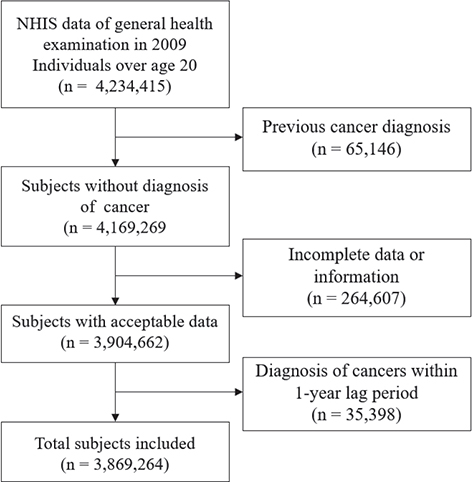
Fig. 1. Flowchart of the study population.
The initial data for each participant were gathered from a general health examination conducted in 2009. Psoriasis was identified using the ICD-10 code L40 (psoriasis), which was associated with 25,476 cases. Information regarding head and neck cancers was obtained from the NHIS database according to specific cancer diagnostic codes (ICD-10), which are also registered in the rare, incurable disease system. The cancer types and their corresponding codes were as follows: laryngeal cancer (C32); sinonasal cancer (C31); hypopharyngeal cancer (C12, C13); oropharyngeal cancer (C01, C02.4, C09, C10, and C14); oral cavity cancer (C02, C03); nasopharyngeal cancer (C11); and salivary gland cancer (C07, C08).
Clinical and laboratory measurements
The analysis incorporated various factors, including anthropometric data, socioeconomic factors, health-related variables and biochemical measurements. Body mass index (BMI) was calculated by dividing weight in kilograms by the square of height in metres. The BMI was then classified into five categories according to the World Health Organization (WHO) guidelines for the Asia-Pacific region: underweight (< 18.5 kg/m2), normal weight (≥ 18.5, < 23 kg/m2), overweight (≥ 23, < 25 kg/m2), obese (≥ 25, < 30 kg/m2) and severely obese (≥ 30 kg/m2) (9). The Korean Society for the Study of Obesity’s definitions were used to identify abdominal obesity, defined as a waist circumference of 90 cm or more for men and 85 cm or more for women (10).
Information on age, sex and household income was obtained from insurance eligibility records. Household income data were collected via a questionnaire and categorized into five groups, each representing a quintile. To calculate equivalent income, the monthly income was divided by the square root of family size.
Health-related factors, such as smoking habits, alcohol consumption and physical activity, were included in the analysis. Data on alcohol consumption, smoking and physical activity were collected using a self-administered questionnaire, as part of the national health examination (11). The smoking status was categorized into three groups: non-smokers, ex-smokers and active smokers. Alcohol consumption was divided into three categories: non-drinkers, moderate drinkers and heavy drinkers. Non-drinkers were defined as those consuming alcohol less than once per month, whereas moderate drinkers were defined as those consuming less than 30 g of alcohol per day. Individuals consuming more than 30 g of alcohol daily were classified as heavy drinkers (12). Regular exercise was defined as engaging in moderate-intensity physical activity for a minimum of 30 min/day for at least 5 days per week or participating in high-intensity physical activity for at least 20 min/day for at least 3 days per week (13).
Biochemical parameters including fasting plasma glucose levels, renal function and lipid profiles were also evaluated. Fasting plasma glucose and lipid profiles were determined after overnight fasting using a Hitachi Autonomic Analyzer 7600-210 (Hitachi, Tokyo, Japan). The estimated glomerular filtration rate (eGFR), which is indicative of renal function, was computed using the Modification of Renal Diet equation based on initial serum creatinine levels (14).
Statistical analysis
General characteristics were displayed as percentages (standard errors [SE]) for categorical variables and as means and SE for continuous variables. The incidence rates of head and neck cancer were calculated by dividing the total number of new cases by the duration of follow-up per 1,000 person-years. The Rao Scott χ2 test and ANOVA were used to compare categorical and continuous data, respectively. The risk of head and neck cancer, both overall and site-specific, was compared between participants with and without psoriasis (reference group) and presented as hazard ratios (HR) with 95% confidence intervals (CI). In addition to the unadjusted model, confounding factors considered in the multivariate regression model included age and sex for Model 2, and age, sex, BMI, household income, smoking habits, alcohol consumption, regular exercise, diabetes mellitus, hypertension and dyslipidaemia for Model 3. Univariate and multivariate Cox regression analyses were conducted to evaluate factors associated with head and neck cancer. Considering the exploratory nature of our study, we did not apply multiple comparison adjustments to our subgroup analyses. All statistical analyses were performed using SAS version 9.4 (SAS Institute Inc, Cary, NC, USA). p-values were two-tailed with a statistical significance level set at 0.05.
RESULTS
Of the 4,234,415 subjects registered with the NHIS in 2009, 3,869,264 (25,476 with psoriasis and 3,843,788 without) were deemed eligible for this study. Table I presents the clinical characteristics of the subjects categorized by the presence or absence of psoriasis. In the entire cohort, 25,476 (0.7%) patients were diagnosed with psoriasis. Notably, the psoriasis group exhibited a significantly higher proportion of males, higher BMI, increased smoking rate, heavy alcohol consumption and regular exercise compared with the non-psoriasis group. Additionally, individuals with psoriasis presented with greater waist circumference, and higher blood pressure, fasting plasma glucose, total cholesterol and low-density lipoprotein cholesterol levels. Conversely, high-density lipoprotein cholesterol levels and eGFR were lower in the psoriasis group than in the control group. Furthermore, the prevalence of comorbidities such as diabetes mellitus, hypertension, dyslipidaemia and chronic kidney disease was significantly higher in the psoriasis group than in the control group.
| Non-psoriasis group 3,843,788 | Psoriasis group 25,476 | p-value | |
| Age groups, n (%) | < 0.001 | ||
| < 40 years | 1,210,691 (31.50) | 6,477 (25.42) | |
| 40–64 years | 2,144,117 (55.78) | 14,744 (57.87) | |
| ≥ 65 years | 488,980 (12.72) | 4,255 (16.70) | |
| Sex, n (%) | < 0.001 | ||
| Male | 2,102,189 (54.69) | 15,688 (61.58) | |
| Female | 1,741,599 (45.31) | 9,788 (38.42) | |
| Income, lowest Q1, n (%) | 750,601 (19.53) | 4,727 (18.55) | < 0.001 |
| Body mass index level, n (%) | < 0.001 | ||
| < 18.5, kg/m2 | 142,749 (3.71) | 792 (3.11) | |
| < 23, kg/m2 | 1,500,695 (39.04) | 9,215 (36.17) | |
| < 25, kg/m2 | 945,658 (24.60) | 6,446 (25.30) | |
| < 30, kg/m2 | 1,117,950 (29.08) | 8,004 (31.42) | |
| ≥ 30, kg/m2 | 136,736 (3.56) | 1,019 (4.00) | |
| Smoking, n (%) | < 0.001 | ||
| Non | 2,287,136 (59.50) | 13,209 (51.85) | |
| Ex | 545,753 (14.20) | 4,609 (18.09) | |
| Current | 1,010,899 (26.30) | 7,658 (30.06) | |
| Alcohol, n (%) | < 0.001 | ||
| Non | 1,970,568 (51.27) | 13,258 (52.04) | |
| Mild | 1,564,562 (40.70) | 10,003 (39.26) | |
| Heavy | 308,658 (8.03) | 2,215 (8.69) | |
| Regular exercise, n (%) | 685,458 (17.83) | 4,930 (19.35) | < 0.001 |
| Diabetes mellitus, n (%) | 333,162 (8.67) | 2,982 (11.71) | < 0.001 |
| Hypertension, n (%), n (%) | 980,592 (25.51) | 8,019 (31.48) | < 0.001 |
| Dyslipidaemia | 692,975 (18.03) | 5,914 (23.21) | < 0.001 |
| CKD, n (%) | 264,107 (6.87) | 2,048 (8.04) | < 0.001 |
| Age, years, mean ± SD | 47.0 ± 13.99 | 49.6 ± 14.14 | < 0.001 |
| Height, cm, mean ± SD | 163.9 ± 9.24 | 164.4 ± 8.95 | < 0.001 |
| Weight, kg, mean ± SD | 63.9 ± 11.64 | 65.0 ± 11.41 | < 0.001 |
| Body mass index, kg/m2, mean ± SD | 23.7 ± 3.23 | 24.0 ± 3.20 | < 0.001 |
| Waist circumference, cm, mean ± SD | 80.2 ± 9.11 | 81.8 ± 9.14 | < 0.001 |
| Systolic blood pressure, mmHg, mean ± SD | 122.4 ± 15.06 | 123.5 ± 15.07 | < 0.001 |
| Diastolic blood pressure, mmHg, mean ± SD | 76.3 ± 10.07 | 76.9 ± 10.02 | < 0.001 |
| Fasting glucose, mg/dL, mean ± SD | 97.3 ± 23.84 | 98.8 ± 26.13 | < 0.001 |
| Total cholesterol, mg/dL, mean ± SD | 195.1 ± 36.90 | 197.6 ± 37.89 | < 0.001 |
| High-density lipoprotein cholesterol, mg/dL, mean ± SD | 56.1 ± 27.77 | 55.5 ± 27.45 | 0.001 |
| Low-density lipoprotein cholesterol, mg/dL, mean ± SD | 113.5 ± 38.72 | 114.6 ± 36.87 | < 0.001 |
| Estimated glomerular filtration rate, mL/min/1.73m2, mean ± SD | 87.7 ± 45.48 | 86.4 ± 42.62 | < 0.001 |
| Triglyceride, mg/dLa, mean ± SD | 112.7 (112.66–112.79) | 120.7 (119.90–121.60) | <0.001 |
| aGeometric mean (95% CI). CKD: chronic kidney disease; SD: standard deviation. | |||
During the follow-up period with duration of 10.14 ± 1.22 years, a total of 5,766 head and neck cancer incidence was reported. Among these, 67 incidents occurred in subjects diagnosed with psoriasis, corresponding to a cancer incidence rate of 0.262 per 1,000 person-years. Conversely, 3,138 incidents occurred in patients who did not develop psoriasis, representing a cancer incidence rate of 0.146 per 1,000 person-years. After adjusting for multiple demographic and comorbidity confounders (Model 3), the HR for head and neck cancers combined in the psoriasis group versus the non-psoriasis groups was 1.36 (95% CI 1.07–1.74; p = 0.01). Table II further presents the risk associated with different types of head and neck cancers following a diagnosis of psoriasis. Psoriasis was associated with a significantly increased risk of nasopharyngeal cancer (HR 2.04; 95% CI 1.12–3.70; p = 0.02) and salivary gland cancer (HR 1.96; 95% CI 1.08–3.56; p = 0.03) (Fig. 2). Although there was a tendency towards increased risks of oral cavity, oropharyngeal, sinonasal, hypopharyngeal and laryngeal cancers among those with psoriasis, the association was not statistically significant.
| Cancer type | Group | N | Event | Duration | IR | Model 1a HR (95% CI) | p | Model 2b HR (95% CI) | p | Model 3c HR (95% CI) | p |
| Head and neck | Non-psoriasis | 3,843,788 | 5,699 | 38,965,296 | 0.146 | 1 (Ref.) | < 0.001* | 1 (Ref.) | 0.008* | 1 (Ref.) | 0.01* |
| Psoriasis | 25,476 | 67 | 255,460 | 0.262 | 1.80 (1.41, 2.28) | 1.39 (1.09, 1.76) | 1.36 (1.07, 1.73) | ||||
| Oral cavity | Non-psoriasis | 3,843,788 | 1,393 | 38,981,217 | 0.036 | 1 (Ref.) | 0.20 | 1 (Ref.) | 0.55 | 1 (Ref.) | 0.60 |
| Psoriasis | 25,476 | 13 | 255,662 | 0.051 | 1.43 (0.83, 2.47) | 1.18 (0.68, 2.03) | 1.16 (0.67, 2.00) | ||||
| Oropharyngeal | Non-psoriasis | 3,843,788 | 1,277 | 38,981,377 | 0.033 | 1 (Ref.) | 0.06 | 1 (Ref.) | 0.35 | 1 (Ref.) | 0.38 |
| Psoriasis | 25,476 | 14 | 255,662 | 0.055 | 1.67 (0.99, 2.83) | 1.28 (0.76, 2.17) | 1.27 (0.75, 2.15) | ||||
| Sinonasal | Non-psoriasis | 3,843,788 | 335 | 38,984,559 | 0.009 | 1 (Ref.) | 0.01* | 1 (Ref.) | 0.06 | 1 (Ref.) | 0.06 |
| Psoriasis | 25,476 | 6 | 255,687 | 0.023 | 2.73 (1.22, 6.13) | 2.23 (0.94, 4.99) | 2.19 (0.98, 4.91) | ||||
| Nasopharyngeal | Non-psoriasis | 3,843,788 | 668 | 38,983,124 | 0.017 | 1 (Ref.) | 0.002* | 1 (Ref.) | 0.02* | 1 (Ref.) | 0.02* |
| Psoriasis | 25,476 | 11 | 255,651 | 0.043 | 2.51 (1.39, 4.56) | 2.07 (1.13, 3.77) | 2.04 (1.12, 3.70) | ||||
| Hypopharyngeal | Non-psoriasis | 3,843,788 | 615 | 38,983,966 | 0.016 | 1 (Ref.) | 0.06 | 1 (Ref.) | 0.41 | 1 (Ref.) | 0.40 |
| Psoriasis | 25,476 | 8 | 255,666 | 0.031 | 1.99 (0.99, 3.99) | 1.34 (0.67, 2.69) | 1.35 (0.67, 2.7) | ||||
| Laryngeal | Non-psoriasis | 3,843,788 | 1,737 | 38,979,063 | 0.045 | 1 (Ref.) | 0.002* | 1 (Ref.) | 0.20 | 1 (Ref.) | 0.24 |
| Psoriasis | 25,476 | 22 | 255,614 | 0.086 | 1.93 (1.27, 2.94) | 1.32 (0.87, 2.01) | 1.29 (0.84, 1.96) | ||||
| Salivary gland | Non-psoriasis | 3,843,788 | 746 | 38,982,608 | 0.019 | 1 (Ref.) | 0.007* | 1 (Ref.) | 0.02* | 1 (Ref.) | 0.03* |
| Psoriasis | 25,476 | 11 | 255,654 | 0.043 | 2.26 (1.25, 4.09) | 1.99 (1.09, 3.60) | 1.96 (1.08, 3.56) | ||||
| aModel 1: Non-adjusted. bModel 2: Adjusted for age, sex. cModel 3: Adjusted for age, sex, body mass index, income, smoking, alcohol consumption, regular exercise, diabetes mellitus, hypertension and dyslipidaemia. IR: incidence rate (per 1,000 person-years); HR: hazard ratio; CI: confidence interval. *Statistically significant results of p-value less than 0.05. |
|||||||||||
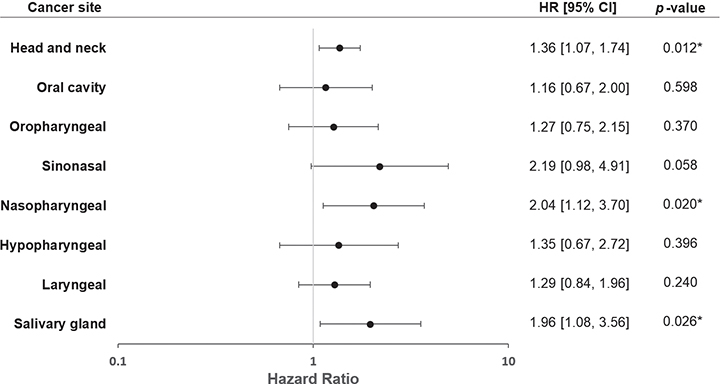
Fig. 2. Hazard ratio (HR) event plot of head and neck cancers, both overall and specific to each site, among psoriasis group compared with non-psoriasis group adjusted for age, sex, body mass index, income, smoking, alcohol consumption, regular exercise, diabetes mellitus, hypertension and dyslipidaemia. CI: confidence interval. *Statistically significant results of p-value less than 0.05.
In Table SI, we analysed the HR for head and neck cancers in both the psoriasis and non-psoriasis groups according to demographic and confounding factors such as age, sex, BMI, abdominal obesity, smoking status, alcohol consumption, regular exercise, diabetes mellitus, hypertension and dyslipidaemia. Our analysis did not reveal a significant association between psoriasis and these confounding factors in respect of the risk of head and neck cancers (Fig. 3). This suggests that the presence of psoriasis does not significantly alter the risk of developing head and neck cancer when considered alongside these variables. However, heavy alcohol consumption significantly increased the risk of oral cavity cancer (HR 3.33; 95% CI 1.37–8.08; p = 0.049) and oropharyngeal cancer (HR 3.00; 95% CI 1.11–8.08; p = 0.03) (Table SII). Aside from this specific finding, our results indicated no significant association between psoriasis and an increased risk of various head and neck cancers when accounting for the demographic and confounding factors specified above.
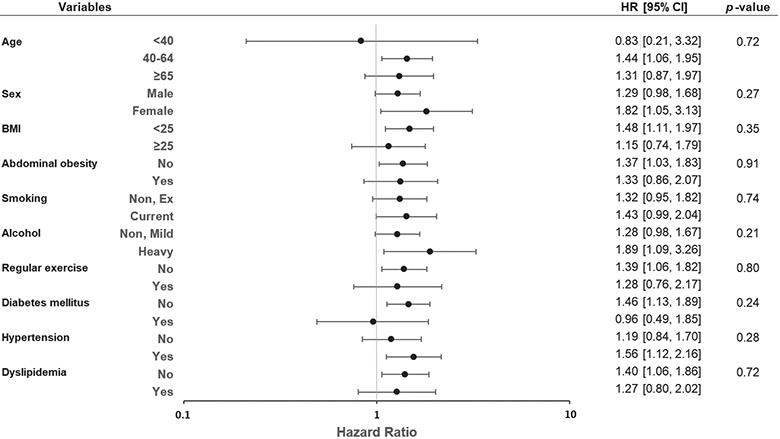
Fig. 3. Hazard ratio (HR) event plot for head and neck cancers in psoriasis group, stratified by demographic and confounding factors including age, sex, body mass index (BMI), abdominal obesity, smoking status, alcohol consumption, regular exercise and comorbidities such as diabetes mellitus, hypertension and dyslipidaemia. CI: confidence interval.
DISCUSSION
Our study aimed to investigate the risk of developing head and neck cancer in South Korean individuals with psoriasis using comprehensive population data retrieved from the Korean NHIS database. This nationwide cohort study revealed a significantly elevated risk of head and neck cancers among patients diagnosed with psoriasis and a pronounced risk associated with nasopharyngeal and salivary gland cancers. Our results suggest a potential association between the pathogenesis of psoriasis and the development of head and neck cancer, which may warrant consideration in the clinical surveillance and management of patients with psoriasis.
Previous studies have proposed a potential association between psoriasis and the onset of various cancers, including those in the head and neck region. For instance, a recent study reported an increased relative risk of cancer in patients with psoriasis, including 2.80 (95% CI 1.99–3.93) for the oral cavity and 1.79 (95% CI 1.06–3.01) for the larynx (7). Yet another recent study has noted a less significant association between psoriasis and the occurrence of oral (HR 1.09; 95% CI 0.97–1.22) and laryngeal (HR 1.18; 95% CI 1.01–1.38) cancer (15). While extensive research has explored the connection between psoriasis and various types of cancers, the specific association between psoriasis and head and neck cancers has not been examined in depth. Our study builds on existing research and expands the investigation to include a broader range of head and neck cancers, providing more comprehensive insight into the relationship between psoriasis and the development of head and neck cancer. Based on a large population cohort data, our results indicate a significantly increased risk (HR 1.36; 95% CI 1.07–1.74; p = 0.01) of developing head and neck cancers in subjects diagnosed with psoriasis, compared with those without psoriasis.
In our study, we found a notable association between psoriasis and the development of head and neck cancers, particularly nasopharyngeal and salivary gland cancers. These specific cancers demonstrate an approximately 2-fold increase in risk among individuals with psoriasis. This association can be understood through various approaches, considering the common pathogenic elements shared between psoriasis and these types of cancer.
Psoriasis is a chronic immune-mediated inflammatory disorder triggered by several systemic inflammatory mediators such as tumour necrosis factor, interleukin (IL)-8 and IL-17 (16). These angiogenic agents play crucial roles in psoriasis progression, leading to an escalated state of chronic inflammation (17). Notably, elevated levels of IL-8 and IL-17 stimulate the invasive behaviour of cancer cells in the nasopharynx by influencing angiogenesis (18). Additionally, recent research has presented an association between psoriasis and salivary gland cancer through the involvement of IL-17 producing mucosal associated invariant T (MAIT) cells (19). Based on these previous studies, a common pathogenic inflammatory mediator may potentially act as an association factor between psoriasis and the development of head and neck cancer.
Another common link is the potential role of Epstein–Barr virus (EBV) infection in activating the autoimmune process in both psoriasis and nasopharyngeal cancer. EBV infection is a major etiological factor in nasopharyngeal cancer, causing dysregulation of CD8+ T cells (20). Similarly, psoriasis is characterized as a T cell-mediated autoimmune disease with alterations in CD8+ T cells potentially triggered by EBV infection (21). EBV infection has also been implicated in the pathogenesis of malignant salivary gland tumours, suggesting a possible link between psoriasis and salivary gland cancer (22).
Furthermore, certain genetic factors such as the expression of the epidermal differentiation complex and polymorphisms in the nucleotide excision repair gene have been hypothesized to increase the risk of head and neck cancers (23). Human leukocyte antigen class (HLA)-DRB1 is a major histocompatibility complex (MHC) protein that determines the efficacy of antigen presentation to T cells (24). Several studies have indicated a role for HLA-DRB1 in the pathogenesis of psoriasis, with gene polymorphisms and hypomethylation of HLA-DRB1 being closely associated with the risk of psoriasis (25,26). Interestingly, nasopharyngeal and salivary gland cancers have also been reported to be associated with the HLA-DRB1 gene in various studies (27, 28). Moreover, the interaction between EBV infection and HLA may contribute to the development of cancer in patients with psoriasis (29). The shared genetic predisposition related to HRB-DRB1 may be a key factor in establishing a link between head and neck cancer and psoriasis.
Patient health-related factors, such as smoking and alcohol consumption, may also be considered in the relationship between psoriasis and cancer development. Although the exact pathogenesis remains unclear, alcohol consumption and smoking are recognized as risk factors for head and neck cancers (30) and are known to compromise the immune system. Nonetheless, recent studies suggest that a causal relationship between these behaviours and psoriasis has not yet been established (31, 32). In our study, the tendency to develop head and neck cancer associated with these factors was not significant, except for a notable risk of oropharyngeal and oral cavity cancer associated with alcohol consumption. This may indicate a synergistic interaction between alcohol consumption and psoriasis in elevating the risk of cancer in the oral cavity and oropharynx. However, these findings should be considered in the context of previous studies and further validated by well-structured studies.
Our study has several limitations that should be considered when interpreting the results. First, given the relatively low prevalence of head and neck cancers (30), our study included a limited number of patients diagnosed with these cancers. Consequently, while there was a higher tendency for patients with psoriasis to develop head and neck cancers other than those in the nasopharynx and salivary gland, this did not reach clinical significance due to the small sample size. This limited sample size may have negatively affected the level of significance and obscured the true relationship between psoriasis and cancer risk (33). Furthermore, the use of self-reported questionnaires to collect data on health-related factors such as smoking, alcohol consumption and physical activity may have introduced potential biases, including recall and social desirability biases. While standardized questionnaires were employed to overcome these issues, the accuracy of the self-reported data may have influenced our findings. Another limitation of our study was the insufficient consideration of the treatment modality, severity and exposure time from the onset of psoriasis, which influence the risk of cancer in patients with psoriasis (7, 34). Our data lacked specific information on the treatments and medications administered to the patients, which should be emphasized in future studies. Additionally, potential selection bias due to the NHIS in Korea must be acknowledged. Despite widespread health examinations and high participation rates, differences in health behaviours between participants and non-participants may affect the generalizability of our results.
Regardless of these limitations, our study has the strength of being based on a large dataset involving over 3.8 million participants followed for more than a decade. These long-term data allowed us to observe the effect of psoriasis on the development of head and neck cancer over time. Moreover, our study provides data for specific cancers, such as sinonasal, nasopharyngeal and salivary gland cancers, which have been overlooked in previous studies. These cancers may provide valuable insights into the pathogenesis of psoriasis and malignancies. Considering the preliminary nature of this study, additional research is warranted to determine whether specific groups of patients with psoriasis may benefit from preventive surveillance. Nonetheless, our study provides insights into the potential risks of head and neck cancer in patients with psoriasis, which could be beneficial for refining patient management strategies.
ACKNOWLEDGEMENTS
The authors acknowledge the financial support of the St Vincent’s Hospital, The Catholic University of Korea, Research Institute of Medical Science Foundation (SVHR-BD-2023-10).
The study was approved from the Institutional Review Board of the Catholic University of Korea (IRB No. VC23ZISI0185).
REFERENCES
- Raharja A, Mahil SK, Barker JN. Psoriasis: a brief overview. Clin Med (Lond) 2021; 21: 170–173.
- Michalek IM, Loring B, John SM. A systematic review of worldwide epidemiology of psoriasis. J Eur Acad Dermatol Venereol 2017; 31: 205–212.
- Purzycka-Bohdan D, Kisielnicka A, Bohdan M, Szczerkowska-Dobosz A, Sobalska-Kwapis M, Nedoszytko B, et al. Analysis of the potential genetic links between psoriasis and cardiovascular risk factors. Int J Mol Sci 2021; 22: 9063.
- Lonnberg AS, Skov L, Skytthe A, Kyvik KO, Pedersen OB, Thomsen SF. Association of psoriasis with the risk for type 2 diabetes mellitus and obesity. JAMA Dermatol 2016; 152: 761–767.
- Multhoff G, Molls M, Radons J. Chronic inflammation in cancer development. Front Immunol 2011; 2: 98.
- Gelfand JM, Berlin J, Van Voorhees A, Margolis DJ. Lymphoma rates are low but increased in patients with psoriasis: results from a population-based cohort study in the United Kingdom. Arch Dermatol 2003; 139: 1425–1429.
- Trafford AM, Parisi R, Kontopantelis E, Griffiths CEM, Ashcroft DM. Association of psoriasis with the risk of developing or dying of cancer: a systematic review and meta-analysis. JAMA Dermatol 2019; 155: 1390–1403.
- Lim SS, Lee W, Kim YK, Kim J, Park JH, Park BR, et al. The cumulative incidence and trends of rare diseases in South Korea: a nationwide study of the administrative data from the National Health Insurance Service database from 2011–2015. Orphanet J Rare Dis 2019; 14: 49.
- Organization WH. The Asia-Pacific perspective: redefining obesity and its treatment. WHO, 2000.
- Seo MH, Lee W-Y, Kim SS, Kang J-H, Kang J-H, Kim KK, et al. 2018 Korean Society for the Study of Obesity guideline for the management of obesity in Korea. J Obes Metab Syndr 2019; 28: 40.
- Luu NM, Bui TT, Tran TPT, Nguyen THT, Oh J-K. Combinations of lifestyle behaviors and cancer risk among Korean adults. Sci Rep 2023; 13: 13765.
- Park S, Ahn J, Lee B-K. Very-low-fat diets may be associated with increased risk of metabolic syndrome in the adult population. Clin Nutr 2016; 35: 1159–1167.
- Rosenberg DE, Bull FC, Marshall AL, Sallis JF, Bauman AE. Assessment of sedentary behavior with the International Physical Activity Questionnaire. J Phys Act Health 2008; 5: S30–44.
- Lamb EJ, Tomson CR, Roderick PJ, Clinical Sciences Reviews Committee of the Association for Clinical B. Estimating kidney function in adults using formulae. Ann Clin Biochem 2005; 42: 321–345.
- Lee JH, Kim HJ, Han KD, Kim HN, Park YM, Lee JY, et al. Cancer risk in 892 089 patients with psoriasis in Korea: a nationwide population-based cohort study. J Dermatol 2019; 46: 95–102.
- Beyaert R, Beaugerie L, Van Assche G, Brochez L, Renauld JC, Viguier M, et al. Cancer risk in immune-mediated inflammatory diseases (IMID). Mol Cancer 2013; 12: 98.
- Heidenreich R, Rocken M, Ghoreschi K. Angiogenesis drives psoriasis pathogenesis. Int J Exp Pathol 2009; 90: 232–248.
- Zarogoulidis P, Katsikogianni F, Tsiouda T, Sakkas A, Katsikogiannis N, Zarogoulidis K. Interleukin-8 and interleukin-17 for cancer. Cancer Invest 2014; 32: 197–205.
- Pisarska MM, Dunne MR, O’Shea D, Hogan AE. Interleukin-17 producing mucosal associated invariant T cells: emerging players in chronic inflammatory diseases? Eur J Immunol 2020; 50: 1098–1108.
- Tsao SW, Yip YL, Tsang CM, Pang PS, Lau VM, Zhang G, et al. Etiological factors of nasopharyngeal carcinoma. Oral Oncol 2014; 50: 330–338.
- Pender MP. CD8+ T-cell deficiency, Epstein-Barr virus infection, vitamin D deficiency, and steps to autoimmunity: a unifying hypothesis. Autoimmune Dis 2012; 2012: 189096.
- Mozaffari HR, Ramezani M, Janbakhsh A, Sadeghi M. Malignant salivary gland tumors and Epstein–Barr virus (EBV) infection: a systematic review and meta-analysis. Asian Pac J Cancer Prev 2017; 18: 1201–1206.
- Tyszkiewicz T, Jarzab M, Szymczyk C, Kowal M, Krajewska J, Jaworska M, et al. Epidermal differentiation complex (locus 1q21) gene expression in head and neck cancer and normal mucosa. Folia Histochem Cytobiol 2014; 52: 79–89.
- Hartman IZ, Kim A, Cotter RJ, Walter K, Dalai SK, Boronina T, et al. A reductionist cell-free major histocompatibility complex class II antigen processing system identifies immunodominant epitopes. Nat Med 2010; 16: 1333–1340.
- Ho PY, Barton A, Worthington J, Plant D, Griffiths CE, Young HS, et al. Investigating the role of the HLA-Cw*06 and HLA-DRB1 genes in susceptibility to psoriatic arthritis: comparison with psoriasis and undifferentiated inflammatory arthritis. Ann Rheum Dis 2008; 67: 677–682.
- Zong W, Ge Y, Han Y, Yang X, Li Q, Chen M. Hypomethylation of HLA-DRB1 and its clinical significance in psoriasis. Oncotarget 2017; 8: 12323–12332.
- Yao K, Yang S, Shen J, Zhang R, Li L. HLA-DRB1 allele polymorphism and nasopharyngeal carcinoma risk: a meta-analysis. Eur Arch Otorhinolaryngol 2017; 274: 297–303.
- Genetzakis M, Gomatos IP, Georgiou AN, Giotakis J, Manolopoulos L, Papadimitriou K, et al. BCL-2, p53 and HLA-DR antigen expression in surgically treated parotid cancer patients. Eur Arch Otorhinolaryngol 2009; 266: 417–424.
- Anagnostouli M, Anagnostoulis G, Katsavos S, Panagiotou M, Kararizou E, Davaki P. HLA-DRB1 15:01 and Epstein–Barr virus in a multiple sclerosis patient with psoriasis, nasopharyngeal and breast cancers: lessons for possible hidden links for autoimmunity and cancer. J Neurol Sci 2014; 339: 26–31.
- Auperin A. Epidemiology of head and neck cancers: an update. Curr Opin Oncol 2020; 32: 178–186.
- Wei J, Zhu J, Xu H, Zhou D, Elder JT, Tsoi LC, et al. Alcohol consumption and smoking in relation to psoriasis: a Mendelian randomization study. Br J Dermatol 2022; 187: 684–691.
- Näslund-Koch C, Vedel-Krogh S, Bojesen SE, Skov L. Smoking is an independent but not a causal risk factor for moderate to severe psoriasis: a Mendelian randomization study of 105,912 individuals. Front Immunol 2023; 14: 1119144.
- Thiese MS, Ronna B, Ott U. P value interpretations and considerations. J Thorac Dis 2016; 8: E928–E931.
- Brauchli YB, Jick SS, Miret M, Meier CR. Psoriasis and risk of incident cancer: an inception cohort study with a nested case-control analysis. J Invest Dermatol 2009; 129: 2604–2612.