Psoriasis alters patients’ quality of life. Among the disorders associated with psoriasis, sleep disorders are common, although they are not directly assessed by most quality-of-life scores. Thus, the specific evaluation of sleep disorders using dedicated scores is necessary, especially because such disorders alter patients;’ physical and psychological health. The relationship between psoriasis and sleep disorders has been shown in numerous studies, but has not yet been fully elucidated. The aim of this study was to update knowledge of sleep disorders in patients with psoriasis, through a review of the scientific literature since 1980. This work covers several topics of interest, such as sleep assessment methods, the prevalence of sleep disorders in patients with psoriasis, factors predictive of sleep disorders in patients with psoriasis, the impact of sleep disorders on comorbidities and quality of life, pathogenic mechanisms, obstructive sleep apnoea and restless leg syndromes, and the impact of biotherapy treatments on sleep disorders in patients with psoriasis.
Key words: psoriasis; sleep quality; sleep disorders.
Accepted Feb 22, 2022; Epub ahead of print Feb 22, 2022
Acta Derm Venereol 2022; 102: adv00699.
DOI: 10.2340/actadv.v102.1991
Corr: Bruno Halioua, 56 Boulevard Saint-Marcel, FR-75005 Paris, France. E-mail: haliouab@yahoo.fr
SIGNIFICANCE
The aim of this study was to review the literature covering the last 40 years regarding sleep disorders in patients with psoriasis. Sleep disorders should be considered as a crucial comorbidity of psoriasis, acting as both a mediator and an effect. The early detection and management of sleep disorders could significantly improve the quality of life of such patients, hence it is important to assess sleep quality and the existence of sleep disturbances in patients with psoriasis. Therefore, it is essential to include questions about sleep disorders in examinations of patients with psoriasis.
INTRODUCTION
Psoriasis is a common chronic inflammatory dermatological condition, affecting 0.6–4.8% of the world’s population (1), the aetiopathogenesis of psoriasis involves genetic, immunological and environmental factors (2, 3). The study of sleep disorders (SDs) in patients with psoriasis began in the early 1990s (4). This area of study in psoriatic patients is of particular interest, because good-quality sleep has been shown to play a fundamental role in health and well-being, including restoration of physiological and mental function at all stages of life (5). Conversely, SDs have negative consequences on physical and mental health, including an increased risk of fatigue and daytime sleepiness, loss of productivity, absenteeism, accidents at work and on the roads, and an increased risk of behavioural disorders and depression (6–9). Sleep deprivation also has an impact on the immune system (10–16). SDs are considered an independent risk factor in the pathogenesis of several chronic diseases considered to be comorbidities of psoriasis, such as type 2 diabetes, hypertension (17), metabolic syndrome (18) and cardiovascular disease (8, 19–24). The associations between psoriasis and SDs are wide and multidirectional. The aim of this study is to review the literature regarding SDs in patients with psoriasis.
METHODS
A systematic literature search was conducted in PubMed and EMBASE databases, using the search terms “psoriasis” and “sleep” to identify peer-reviewed journal articles published between 1980 and 2020. The literature search was limited to work carried out in adults.
RESULTS
Means of assessing sleep disorders in patients with psoriasis
Studies evaluating SDs in patients with psoriasis were carried out on the basis of specific sleep interviews or questionnaires, such as the Pittsburgh Sleep Quality Index (PSQI). The PSQI is a validated self-assessment questionnaire that measures sleep quality and sleep patterns in adults, using a score ranging from 0 (undisturbed) to 21 (highly disturbed). The PSQI explores 7 components of sleep: “Subjective quality of sleep”, “Sleep latency”, “Sleep duration”, “Usual sleep efficiency”, “Sleep disorders”, “Use of sleep medication” and “Poor daytime sleepiness”. Other studies have been carried out using other SD assessment tools, such as the Functional Outcomes of Sleep Questionnaire (FOSQ) (25), the Insomnia Severity Index (ISI) (26), the General Sleep Disturbance Scale (27), and the Medical Outcomes Study Sleep Scale (MOS-SS) (28–30).
Prevalence of sleep disorders in patients with psoriasis
According to a study carried out in 2005 by the National Psoriasis Foundation (US) among 420 psoriatic patients, SDs with episodes occurring at least once a month were reported in 49.5% of the patients, while 11.3% experienced episodes on more than 15 days a month (31, 32). The prevalence of SDs in patients with psoriasis varies from 0.05% to 77.1% in different studies (33–45) (Table I).
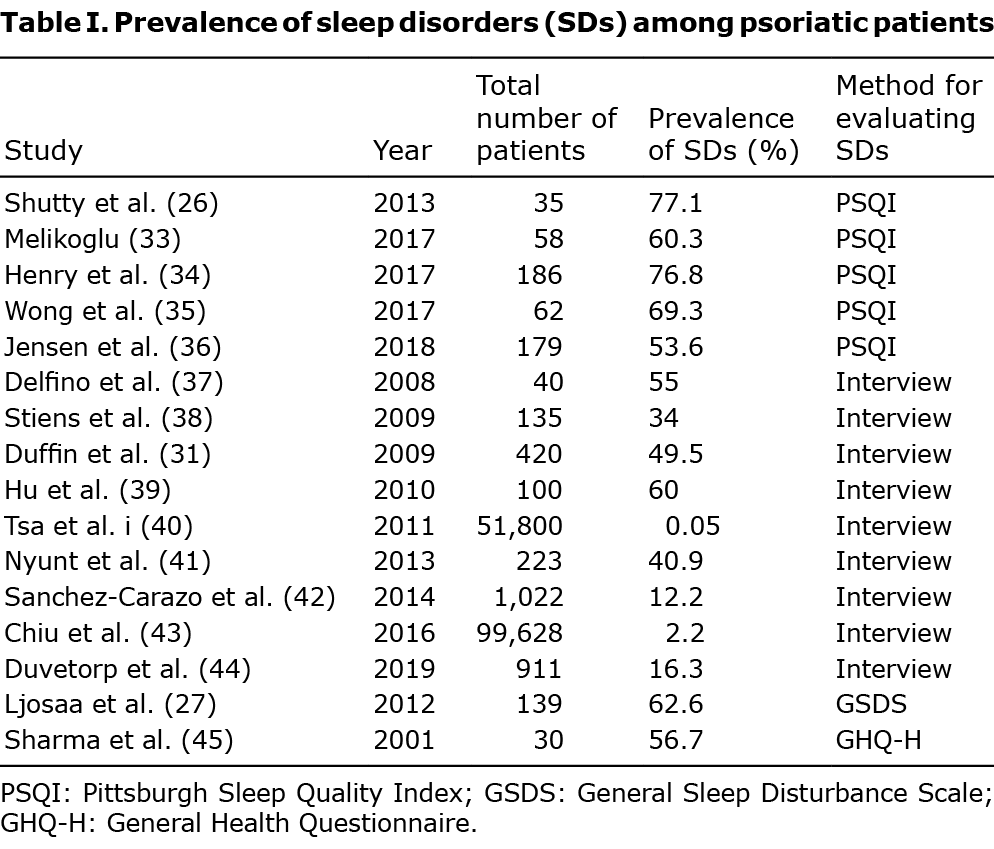
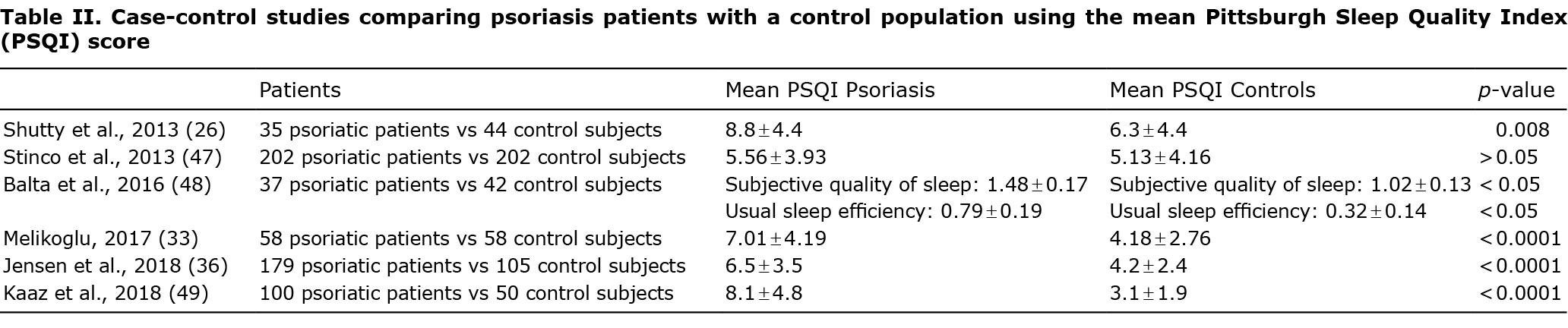
Five case-control studies found that the mean PSQI score of patients with psoriasis was significantly higher than that of control subjects (Table II, 46–48). One case-control study using the ISI reported a 4.3-fold increased risk of insomnia in patients with psoriasis (26). A polysomnographic study of psoriatic patients showed a decrease in durations of stage 1 and deep sleep and an increased frequency of snoring.
Predictors of sleep disturbance in patients with psoriasis
Severity of psoriasis. Several studies have found that the clinical severity of psoriasis is associated with an increased risk of developing SDs (26, 33, 49–52). A study by Melikoglu et al. of 48 psoriatic patients showed that PSQI scores were significantly correlated with psoriasis severity assessed by the Psoriasis Area and Severity Index (PASI) (p = 0.03) (33). A study of psoriatic patients with jet lag found a relationship between clinical severity assessed by the PASI and the importance of SDs (53), which is probably explained by pain and pruritus. On the other hand, studies by Gezer et al. (54), Callis Duffin et al. (31), Nowowiejska (55) et al. and Stinco et al. (47) did not find such a relationship.
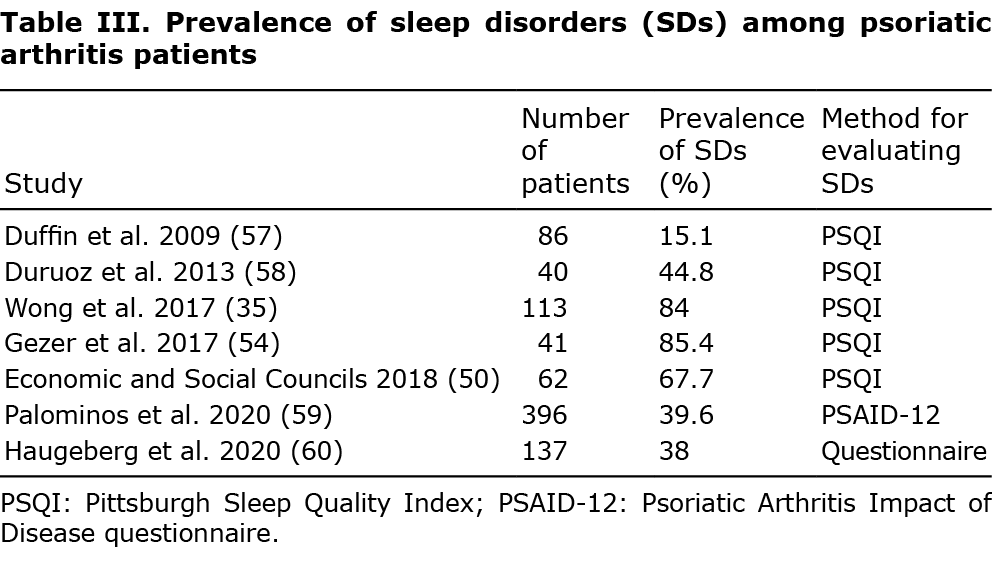
Psoriatic arthritis. The prevalence of SDs in psoriatic arthritis varies from 15.1% to 85.4% depending on the study (Table III). A Danish study reported more SDs in patients with psoriatic arthritis (45.1%) than in patients with psoriasis (16%) (44). The severity of SDs, as assessed by the PSQI s,core, is greater in patients with psoriatic arthritis than in patients with psoriasis (31, 35). Two studies found that sleep quality in patients with psoriatic arthritis decreased with increasing C-reactive protein (CRP) and erythrocyte sedimentation rate (ESR) (56, 57).
Pain. Pain is a major cause of sleep disturbance in psoriatic arthritis (31, 56, 61, 62). Pain is associated with an increased risk of SDs in patients with psoriasis (27). The impaired quality of life in patients with psoriatic arthritis has been shown to be partly due to SDs caused by pain (27). The intensity of pain measured with an analogue scale correlates with the severity of SDs measured with the PSQI (50).
Impact of pruritus. Pruritus in patients with psoriasis is associated with an increased risk of difficulty falling asleep and frequent nocturnal awakenings causing sleep fragmentation (31, 63, 64), which can result in daytime fatigue (65). However, sleep helps limit the intensity of itching associated with psoriasis (57% or 65% according to different studies) (64, 66). Several studies have established a relationship between pruritus intensity and the severity of SDs (29, 49, 67), but such a relationship was not found with pain.
Impact of sleep disorders on co-morbidities and quality of life
Many comorbidities associated with psoriasis, such as cardiovascular disease (68–72), diabetes (73–76) and hypertension (77–79), are associated with an increased risk of SDs. Insomnia is a major symptom of depression, which occurs in patients with psoriasis in 10–58% of cases (80–85). In addition, persistent SDs are a risk factor for the development of diabetes (86), cardiovascular disease (87, 88), high blood pressure (89, 90), depression and anxiety (91–94). In addition, a Taiwanese epidemiological study of patients with psoriasis found that the occurrence of SDs was associated with an increased risk of cardiovascular disease and ischaemic stroke (43). Although the exact mechanisms of this association are not known, SDs are postulated to alter endocrine and metabolic profiles and sympathetic nervous activity, thereby leading to increased cardiovascular mortality.
In addition, many studies have established that SDs are an independent factor altering quality of life (27, 95–100). In a study of 152 patients with psoriasis, SDs assessed by the Medical Outcomes Study Sleep Scale (MOS-SS) were significantly associated with an altered quality of life, as determined by the Dermatology Life Quality Index (DLQI) (27). Another study found that jet lag was likely to worsen the quality of life of patients with psoriasis (53). Nowowiejska et al. considered that a “vicious circle” occurs between SDs and the severity of skin lesions. Subjective symptoms caused by psoriasis decrease daily quality of life and induce SDs. Decreased sleep quality exacerbates stress and further worsens quality of life (55).
The importance of considering sleep disorders in patients with psoriasis
Patients with psoriasis should be questioned about SDs. If SDs are reported, patients should be questioned precisely to assess the type of SD (sleep disturbance, difficulty maintaining sleep, early awakening), the presence or absence of a triggering event or factor, the duration of insomnia (acute or chronic), the length of time that the disturbance has been present, daytime consequences (professional, social, or family repercussions), and previous or current hypnotic treatments. Meticulous questioning must be coupled with the use of questionnaires specialized for the evaluation of SDs and a diary (or calendar), which allows objective sleep disorder assessment over several weeks. In cases of severe SDs, and especially cases of suspected obstructive sleep apnoea (OSA) and restless leg syndromes (RLS), the patient should be referred to a sleep specialist who will use certain paraclinical examinations (polysomnography or actimetry).
Pathogenesis
The reciprocal relationship between SDs and psoriasis is also explained by the aetiopathogenic role of proinflammatory cytokines and neurotransmitters in the immune system (101). An animal study in a laboratory-bred strain of albino mice (BALB/c mice) with and without psoriasis found that 48 h of sleep deprivation resulted in an exacerbation of psoriasis, which is explained by an increase in plasma proinflammatory cytokines, such as interleukin-1β and tumour necrosis factor-α (TNF-α) (101). Other studies in animal models have shown an increase in psoriasis-related inflammation during acute sleep deprivation, as well as an increase in inflammatory mediators following restriction from 25% to 50% of the normal sleep time (set at 8 h) (102).
Psoriatic patients are known to have lower melatonin levels and lack a night-time peak (35), while melatonin receptors have been found in the skin, suggesting that melatonin plays a role in skin physiology.
SDs aggravate skin inflammation (103) through central and peripheral circadian mechanisms that modulate cytokine secretion (104, 105) and act on the skin structure by altering the pH, insensible water loss and permeability (106–108). Thus, disturbances in skin thermoregulation and disturbances in the permeability of the stratum corneum may partly explain the pathogenesis of SDs in psoriasis (103, 109). However, increased levels of proinflammatory cytokines, such as TNF-α and interleukin 6, play a fundamental role in the occurrence of SDs in psoriasis (110–112). Serum and skin levels of TNF-α and interleukin 6 are increased in psoriasis and in cases of sleep restriction (109, 113, 114). TNF-α and interleukin 6 have also been shown to cause keratinocyte hyperproliferation in patients with psoriasis (110–112). In addition, these 2 substances play a role in the regulation of sleep, and appear to be responsible for increases in drowsiness and fatigue in humans (115, 116).
The role of several neurotransmitters has also been considered, such as substance P, which is present in high concentrations in the lesional skin of patients with psoriasis (117, 118) and promotes keratinocyte multiplication, skin inflammation and lymphocyte activation (119).
The role of substance P has been established in various biological processes, such as pain transmission and sleep physiology (120, 121). It plays a role in the pathogenesis of SDs and in a number of chronic inflammatory diseases (4, 45, 122). The role of inflammatory cytokines in the development of metabolic syndrome has also been reported due to activation of the autonomic nervous system secondary to sleep deprivation (101), which may explain the increased frequency of metabolic syndromes in certain dermatological conditions (123).
Sleep apnoea syndrome
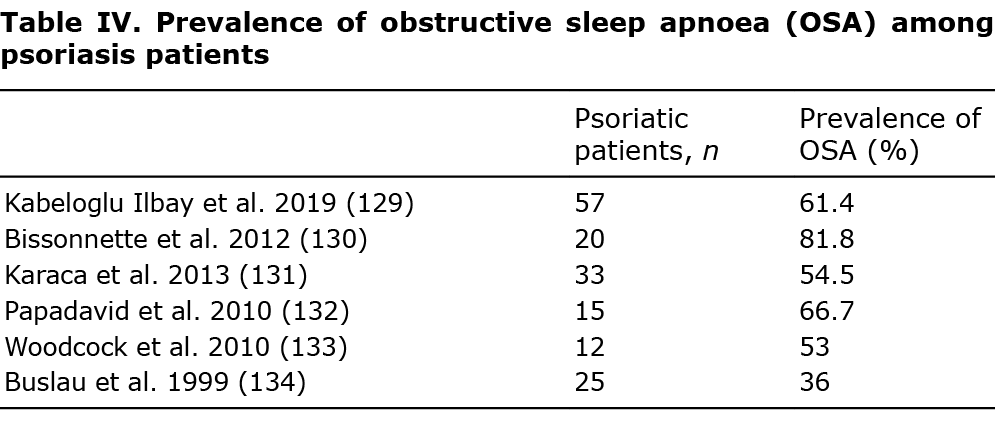
OSA syndrome is characterized by repeated episodes of complete or partial collapse of the upper airways, which occur during rapid eye movement sleep (REM sleep or REMS) and are responsible for interruptions or decreases in respiratory flow. Intermittent hypoxia, hypercapnia and sleep fragmentation caused by OSA are associated with an increased risk of accidents caused by daytime sleepiness. Patients with OSA have an increased risk of cardiovascular disease (particularly hypertension), metabolic syndrome and diabetes, which are all comorbidities of psoriasis (124). Psoriasis is known to increase the risk of obesity, one of the major risk factors for OSA (125). The reported prevalence of OSA among patients with psoriasis varies across studies from 36% to 81.8% compared with 3–7% in the general population (63, 126–128) (Table IV).
The rate of OSA increases with the duration of psoriasis (125) and is higher in cases of severe psoriasis (135, 136) and psoriatic arthritis. A recent study found no significant relationship between PSQI score, risk of OSA, and severity of psoriasis assessed by the PASI (55).
A study based on nocturnal polysomnography showed a similar sleep pattern and similar total sleep time and sleepiness scores in patients with psoriasis with and without OSA (135).
Studies have shown that treatment of OSA with continuous positive airway pressure (CPAP) can improve psoriatic lesions and result in a decrease in TNF-α and interleukin-6 (134, 136), which has led to the possibility of a link between improved sleep, reduced inflammatory syndrome and improved psoriasis (134). The link between OSA and psoriasis is not clearly established, but may be explained by activation of the sympathetic nervous system and inflammatory signalling pathways (63, 103, 126, 127, 136, 137). Recurrent nocturnal arousal caused by OSA may lead to activation of the sympathetic nervous system and inflammatory reactions, followed by secretion of proinflammatory cytokines (136–138), resulting in the recrudescence of psoriasis lesions and exacerbation of symptoms, such as pruritus and pain (127, 139).
Restless legs syndrome
RLS, which manifests as abnormal leg movements during sleep, is reported in patients with psoriasis at rates of 15.1% to 18% depending on the study (57, 140, 141) and 5–10% in control populations (127, 142). RLS disturbances interfere with sleep patterns, causing difficulties in falling asleep or waking up and leading to deterioration of sleep quality in patients with psoriasis (55).
The aetiopathogeny of RLS in patients with psoriasis is thought to be related to an inflammatory disorder (143, 144). One study showed that the occurrence of moderate or severe RLS was significantly more common in patients with psoriatic arthritis (68.7%) than in patients with psoriasis (30%, p < 0.001) (145). Similar results were obtained by Nowowiejska et al. (55).
Impact of biotherapy treatments on sleep disorders in patients with psoriasis
Several studies have examined the impact of biotherapies on sleep. Two of these studies have investigated the effects of adalimumab (ADA) on sleep in psoriasis (25, 28):
In a study of 152 patients, Strober et al. found a 15% improvement in PSQI scores after 16 weeks of ADA treatment, which was partly explained by an improvement in the PASI score. ADA also improved quality of life, pain and productivity at work (28).
A second study in 20 patients with chronic plaque psoriasis and OSA treated with ADA did not show an improvement in OSA after 8 weeks of treatment (25).
Three studies have shown an improvement in sleep quality after treatment of psoriasis with etanercept (30, 146). The impact of the treatment on pruritus, skin discomfort and pain may explain this beneficial action on the quality of sleep.
The discomfort of topical treatments, particularly sticky, greasy sensations, has also been suggested to contribute to sleep disturbance in patients with psoriasis.
Conclusion
SDs are particularly frequent during psoriasis, with a consequent significant alteration in patients’ quality of life. A close relationship exists between psoriasis and SDs, the pathophysiological mechanisms of which are not fully understood. SDs in patients with psoriasis are still underdiagnosed and often remain a common complaint that is not systematically reported to dermatologists. SDs should be considered a crucial comorbidity in psoriasis, acting as both a mediator and an effect. Assessing the quality of sleep and the existence of SDs in patients with psoriasis is important. Patients with psoriasis sometimes do not consider it necessary to discuss the issue of SDs with their dermatologist. Early detection, using one of the available validated screening questionnaires, and the management of SDs, can significantly improve the quality of life of psoriatic patients. Therefore, including questions about SDs in examinations of patients with psoriasis is essential.
The authors have no conflicts of interest to declare.
REFERENCES
- Neimann AL, Porter SB, Gelfand JM. The epidemiology of psoriasis. Exp Rev Dermatol 2006; 1: 63–75.
- Marrakchi S, Guigue P, Renshaw BR, Puel A, Pei XY, Fraitag S, et al. Interleukin-36-receptor antagonist deficiency and generalized pustular psoriasis. N Engl J Med 2011; 365: 620–628.
- Stern RS, Nijsten T, Feldman SR, Margolis DJ, Rolstad T. Psoriasis is common, carries a substantial burden even when not extensive, and is associated with widespread treatment dissatisfaction. J Investig Dermatol Symp Proc 2004; 9: 136–139.
- Gupta MA, Gupta AK, Ellis CN, Voorhees JJ. Some psychosomatic aspects of psoriasis. Adv Dermatol 1990; 5: 21–30.
- Hyyppä MT, Kronholm E, Mattlar CE. Mental well-being of good sleepers in a random population sample. Br J Med Psychol 1991; 64: 25–34.
- Watson NF, Badr MS, Belenky G, Bliwise DL, Buxton OM, Buysse D, et al. Recommended amount of sleep for a healthy adult: a joint consensus statement of the american academy of sleep medicine and sleep research society. Sleep 2015; 38: 843–844.
- Itani O, Jike M, Watanabe N, Kaneita Y. Short sleep duration and health outcomes: a systematic review, meta-analysis, and meta-regression. Sleep Med 2017; 32: 246–256.
- Malik SW, Kaplan J. Sleep deprivation. Prim Care 2005; 32: 475–490.
- Godet-Cayré V, Pelletier-Fleury N, Le Vaillant M, Dinet J, Massuel MA, Léger D. Insomnia and absenteeism at work. Who pays the cost? Sleep 2006; 29: 179–184.
- Everson CA. Clinical assessment of blood leukocytes, serum cytokines, and serum immunoglobulins as responses to sleep deprivation in laboratory rats. Am J Physiol Regul Integr Comp Physiol 2005; 289: R1054–R1063.
- Palma BD, Gabriel A Jr, Colugnati FA, Tufik S. Effects of sleep deprivation on the development of autoimmune disease in an experimental model of systemic lupus erythematosus. Am J Physiol Regul Integr Comp Physiol 2006; 291: R1527–R1532.
- Zager A, Andersen ML, Ruiz FS, Antunes IB, Tufik S. Effects of acute and chronic sleep loss on immune modulation of rats. Am J Physiol Regul Integr Comp Physiol 2007; 293: R504–R509.
- Ruiz FS, Andersen ML, Zager A, Martins RC, Tufik S. Sleep deprivation reduces the lymphocyte count in a non-obese mouse model of type 1 diabetes mellitus. Braz J Med Biol Res 2007; 40: 633–637.
- Mullington JM, Haack M, Toth M, Serrador JM, Meier-Ewert HK. Cardiovascular, inflammatory, and metabolic consequences of sleep deprivation. Prog Cardiovasc Dis 2009; 51: 294–302.
- Lange T, Perras B, Fehm HL, Born J. Sleep enhances the human antibody response to hepatitis A vaccination. Psychosom Med 2003; 65: 831–835.
- Opp MR, Krueger JM. Interleukin-1 is involved in responses to sleep deprivation in the rabbit. Brain Res 1994; 639: 57–65.
- Thomas SJ, Calhoun D. Sleep, insomnia, and hypertension: current findings and future directions. J Am Soc Hypertens 2017; 11: 122–129.
- Van Cauter E, Spiegel K, Tasali E, Leproult R. Metabolic consequences of sleep and sleep loss. Sleep Med 2008; 9: S23–S28.
- van Leeuwen WM, Lehto M, Karisola P, Lindholm H, Luukkonen R, Sallinen M, et al. Sleep restriction increases the risk of developing cardiovascular diseases by augmenting proinflammatory responses through IL-17 and CRP. PLoS One 2009; 4: e4589.
- Buscemi D, Kumar A, Nugent R, Nugent K. Short sleep times predict obesity in internal medicine clinic patients. J Clin Sleep Med 2007; 3: 681–688.
- Lopez-Jimenez F, Sert Kuniyoshi FH, Gami A, Somers VK. Obstructive sleep apnea: implications for cardiac and vascular disease. Chest 2008; 133: 793–804.
- Gangwisch JE, Heymsfield SB, Boden-Albala B, Buijs RM, Kreier F, Pickering TG, et al. Sleep duration as a risk factor for diabetes incidence in a large U.S. sample. Sleep 2007; 30: 1667–1673.
- Kono M, Tatsumi K, Saibara T, Nakamura A, Tanabe N, Takiguchi Y, et al. Obstructive sleep apnea syndrome is associated with some components of metabolic syndrome. Chest 2007; 131: 1387–1392.
- Gangwisch JE, Malaspina D, Boden-Albala B, Heymsfield SB. Inadequate sleep as a risk factor for obesity: analyses of the NHANES I. Sleep 2005; 28: 1289–1296.
- Maari C, Bolduc C, Nigen S, Marchessault P, Bissonnette R. Effect of adalimumab on sleep parameters in patients with psoriasis and obstructive sleep apnea: a randomized controlled trial. J Dermatolog Treat 2014; 25: 57–60.
- Shutty BG, West C, Huang KE, Landis E, Dabade T, Browder B, et al. Sleep disturbances in psoriasis. Dermatol Online J 2013; 19: 1.
- Ljosaa TM, Mork C, Stubhaug A, Moum T, Wahl AK. Skin pain and skin discomfort is associated with quality of life in patients with psoriasis. J Eur Acad Dermatol Venereol 2012; 26: 29–35.
- Strober BE, Sobell JM, Duffin KC, Bao Y, Guérin A, Yang H, et al. Sleep quality and other patient-reported outcomes improve after patients with psoriasis with suboptimal response to other systemic therapies are switched to adalimumab: results from PROGRESS, an open-label Phase IIIB trial. Br J Dermatol 2012; 167: 1374–1381.
- Mrowietz U, Chouela EN, Mallbris L, Stefanidis D, Marino V, Pedersen R, et al. Pruritus sleep quality and other patient-reported outcomes improve after patients with psoriasis with suboptimal response to other systemic therapies are switched to adalimumab: results from PROGRESS, an open-label Phase IIIB trialand quality of life in moderate-to-severe plaque psoriasis: post hoc explorative analysis from the PRISTINE study. J Eur Acad Dermatol Venereol 2015; 29: 1114–1120.
- Thaçi D, Galimberti R, Amaya-Guerra M, Rosenbach T, Robertson D, Pedersen R, et al. Improvement in aspects of sleep with etanercept and optional adjunctive topical therapy in patients with moderate-to-severe psoriasis: results from the PRISTINE trial. J Eur Acad Dermatol Venereol 2014; 28: 900–906.
- Callis Duffin K, Wong B, Horn EJ, Krueger GG. Psoriatic arthritis is a strong predictor of sleep interference in patients with psoriasis. J Am Acad Dermatol 2009; 60: 604–608.
- Horn EJ. Psoriasis impacts daily life and carries a substantial burden. Invited oral presentation at Irvin H. Blank Forum, 68th Annual Meeting of the Society of Investigative Dermatology; Los Angeles, CA; May 7–12, 2007.
- Melikoglu M. Sleep Quality and its association with disease severity in psoriasis. Eurasian J Med 2017; 49: 124–127.
- Henry AL, Kyle SD, Chisholm A, Griffiths CEM, Bundy C. A cross-sectional survey of the nature and correlates of sleep disturbance in people with psoriasis. Br J Dermatol 2017; 177: 1052–1059.
- Wong ITY, Chandran V, Li S, Gladman DD. Sleep disturbance in psoriatic disease: prevalence and associated factors. J Rheumatol 2017; 44: 1369–1374.
- Jensen P, Zachariae C, Skov L, Zachariae R. Sleep disturbance in psoriasis: a case-controlled study. Br J Dermatol 2018; 179: 1376–1384.
- Delfino M Jr, Holt EW, Taylor CR, Wittenberg E, Qureshi AA. Willingness-to-pay stated preferences for 8 health-related quality-of-life domains in psoriasis: a pilot study. J Am Acad Dermatol 2008; 59: 439–447.
- Stiens, G, Platzer A, König I, Krüger U, Reich K, Mossner R. Psychosocial distress in psoriatic outpatients: P50. Br J Dermatol 2008; 159: 1419–1420.
- Hu SW, Holt EW, Husni ME, Qureshi AA. Willingness-to-pay stated preferences for 8 health-related quality-of-life domains in psoriatic arthritis: a pilot study. Semin Arthritis Rheum 2010; 39: 384–397.
- Tsai TF, Wang TS, Hung ST, et al. Epidemiology and comorbidities of psoriasis patients in a national database in Taiwan. J Dermatol Sci 2011; 63: 40–46.
- Nyunt WW, Low WY, Ismail R, Sockalingam S, Min AK. Determinants of health-related quality of life in psoriasis patients in Malaysia. Asia Pac J Public Health 2015; 27: NP662–NP673.
- Sanchez-Carazo JL, López-Estebaranz JL, Guisado C. Comorbidities and health-related quality of life in Spanish patients with moderate to severe psoriasis: a cross-sectional study (Arizona study). J Dermatol 2014; 41: 673–678.
- Chiu HY, Hsieh CF, Chiang YT, Tsai YW, Huang WF, Li CY, et al. Concomitant sleep disorders significantly increase the risk of cardiovascular disease in patients with psoriasis. PLoS One 2016 Jan 8; 11: e0146462.
- Duvetorp A, Østergaard M, Skov L, Seifert O, Tveit KS, Danielsen K, et al. Quality of life and contact with healthcare systems among patients with psoriasis and psoriatic arthritis: results from the NORdic PAtient survey of Psoriasis and Psoriatic arthritis (NORPAPP). Arch Dermatol Res 2019; 311: 351–360.
- Sharma N, Koranne RV, Singh RK. Psychiatric morbidity in psoriasis and vitiligo: a comparative study. J Dermatol 2001; 28: 419–423.
- Stinco G, Trevisan G, Piccirillo F, Di Meo N, Nan K, Deroma L, et al. Psoriasis vulgaris does not adversely influence the quality of sleep. G Ital Dermatol Venereol 2013; 148: 655–659.
- Balta I, Karadag AS, Selek S, Onder S, Kanbay A, Burakgazi-Yilmaz H. General psychiatric symptoms, quality of sleep, and coping strategies in patients with psoriasis vulgaris. Int J Dermatol 2016; 55: 60–64.
- Kaaz K, Szepietowski JC, Matusiak Ł. Influence of itch and pain on sleep quality in atopic dermatitis and psoriasis. Acta Derm Venereol 2019; 99: 175–180.
- Kaaz K, Szepietowski JC, Matusiak Ł. Sleep quality among adult patients with chronic dermatoses. Postepy Dermatol Alergol 2019; 36: 659–666.
- Krajewska-Włodarczyk M, Owczarczyk-Saczonek A, Placek W. Sleep disorders in patients with psoriatic arthritis and psoriasis. Reumatologia 2018; 56: 301–306.
- Smith MP, Ly K, Thibodeaux Q, Weerasinghe T, Beck K, Shankle L, et al. Factors influencing sleep difficulty and sleep quantity in the citizen pscientist psoriatic cohort. Dermatol Ther (Heidelb) 2019; 9: 511–523.
- Tas B, Kabeloglu V, Soysal A, Atakli D. Sleep quality in psoriasis patients and its relations with possible affecting factors. Sisli Etfal Hastan Tip Bul 2020; 54: 181–187.
- Damiani G, Bragazzi NL, Garbarino S, Chattu VK, Shapiro CM, Pacifico A, et al. Psoriatic and psoriatic arthritis patients with and without jet-lag: does it matter for disease severity scores? Insights and implications from a pilot, prospective study. Chronobiol Int 2019; 36: 1733–1740.
- Gezer O, Batmaz I, Sariyildiz MA, Sula B, Ucmak D, Bozkurt M, et al. Sleep quality in patients with psoriatic arthritis. Int J Rheum Dis 2017; 20: 1212–1218.
- Nowowiejska J, Baran A, Lewoc M, Grabowska P, Kaminski TW, Flisiak I. The assessment of risk and predictors of sleep disorders in patients with psoriasis – a questionnaire-based cross-sectional analysis. J Clin Med 2021; 10: 664.
- Li Y, Zhang S, Zhu J, Du X, Huang F. Sleep disturbances are associated with increased pain, disease activity, depression, and anxiety in ankylosing spondylitis: a case-control study. Arthritis Res Ther 2012; 14: R215.
- Duffin KC, Wong B, Krueger G. Sleep disturbance and medical comorbidities in patients with psoriasis, psoriatic arthritis, and controls. J Am Acad Dermatol 2009; 1: AB9.
- Duruöz MT, Sari Sürmeli Z, Uçar Ü, Topçu E, Duruöz E, et al. SAT0291 evaluation of sleep quality in psoriatic arthritis patients. Ann Rheum Dis 2013; 72: A682.
- Palominos PE, Coates L, Kohem CL, Orbai AM, Smolen J, de Wit M, et al. Determinants of sleep impairment in psoriatic arthritis: an observational study with 396 patients from 14 countries. Joint Bone Spine 2020; 87: 449–454.
- Haugeberg G, Hoff M, Kavanaugh A, Michelsen B. Psoriatic arthritis: exploring the occurrence of sleep disturbances, fatigue, and depression and their correlates. Arthritis Res Ther 2020; 22: 198.
- Silva A, Andersen ML, Tufik S. Sleep pattern in an experimental model of osteoarthritis. Pain 2008; 140: 446–455.
- Finan PH, Goodin BR, Smith MT. The association of sleep and pain: an update and a path forward. J Pain 2013; 14: 1539–1552.
- Gowda S, Goldblum OM, McCall WV, Feldman SR. Factors affecting sleep quality in patients with psoriasis. J Am Acad Dermatol 2010; 63: 114–123.
- Yosipovitch G, Goon A, Wee J, Chan YH, Goh CL. The prevalence and clinical characteristics of pruritus among patients with extensive psoriasis. Br J Dermatol 2000; 143: 969–973.
- Evers AW, Lu Y, Duller P, van der Valk PG, Kraaimaat FW, van de Kerkhof PC. Common burden of chronic skin diseases? Contributors to psychological distress in adults with psoriasis and atopic dermatitis. Br J Dermatol 2005; 152: 1275–1281.
- Amatya B, Wennersten G, Nordlind K. Patients’ perspective of pruritus in chronic plaque psoriasis: a questionnaire-based study. J Eur Acad Dermatol Venereol 2008; 22: 822–826.
- Zachariae R, Zachariae CO, Lei U, Pedersen AF. Affective and sensory dimensions of pruritus severity: associations with psychological symptoms and quality of life in psoriasis patients. Acta Derm Venereol 2008; 88: 121–127.
- Schwartz SW, Cornoni-Huntley J, Cole SR, Hays JC, Blazer DG, Schocken DD. Are sleep complaints an independent risk factor for myocardial infarction? Ann Epidemiol 1998; 8: 384–392.
- Cappuccio FP, Stranges S, Kandala NB, Miller MA, Taggart FM, Kumari M, et al. Gender-specific associations of short sleep duration with prevalent and incident hypertension: the Whitehall II Study [published correction appears in Hypertension 2007 Nov; 50(5): e170]. Hypertension 2007; 50: 693–700.
- Ayas NT, White DP, Manson JE, Stampfer MJ, Speizer FE, Malhotra A, et al. A prospective study of sleep duration and coronary heart disease in women. Arch Intern Med 2003; 163: 205–209.
- Heslop P, Smith GD, Metcalfe C, Macleod J, Hart C. Sleep duration and mortality: The effect of short or long sleep duration on cardiovascular and all-cause mortality in working men and women. Sleep Med 2002; 3: 305–314.
- King CR, Knutson KL, Rathouz PJ, Sidney S, Liu K, Lauderdale DS. Short sleep duration and incident coronary artery calcification. JAMA 2008; 300: 2859–2866.
- Mallon L, Broman JE, Hetta J. High incidence of diabetes in men with sleep complaints or short sleep duration: a 12-year follow-up study of a middle-aged population. Diabetes Care 2005; 28: 2762–2767.
- Vgontzas AN, Liao D, Pejovic S, Calhoun S, Karataraki M, Bixler EO. Insomnia with objective short sleep duration is associated with type 2 diabetes: a population-based study. Diabetes Care 2009; 32: 1980–1985.
- Meisinger C, Heier M, Loewel H; MONICA/KORA Augsburg Cohort Study. Sleep disturbance as a predictor of type 2 diabetes mellitus in men and women from the general population. Diabetologia 2005; 48: 235–241.
- Kawakami N, Takatsuka N, Shimizu H. Sleep disturbance and onset of type 2 diabetes. Diabetes Care 2004; 27: 282–283.
- Gangwisch JE, Heymsfield SB, Boden-Albala B, Buijs RM, Kreier F, Pickering TG, et al. Short sleep duration as a risk factor for hypertension: analyses of the first National Health and Nutrition Examination Survey. Hypertension 2006; 47: 833–839.
- Gottlieb DJ, Redline S, Nieto FJ, Baldwin CM, Newman AB, Resnick HE, et al. Association of usual sleep duration with hypertension: the Sleep Heart Health Study. Sleep 2006; 29: 1009–1014.
- Vgontzas AN, Liao D, Bixler EO, Chrousos GP, Vela-Bueno A. Insomnia with objective short sleep duration is associated with a high risk for hypertension. Sleep 2009; 32: 491–497.
- Fortune DG, Richards HL, Griffiths CE. Psychologic factors in psoriasis: consequences, mechanisms, and interventions. Dermatol Clin 2005; 23: 681–694.
- Leger D, Guilleminault C, Dreyfus JP, Delahaye C, Paillard M. Prevalence of insomnia in a survey of 12,778 adults in France. J Sleep Res 2000; 9: 35–42.
- Edinger JD, Bonnet MH, Bootzin RR, et al. Derivation of research diagnostic criteria for insomnia: report of an American Academy of Sleep Medicine Work Group. Sleep 2004; 27: 1567–1596.
- Ohayon MM, Smirne S. Prevalence and consequences of insomnia disorders in the general population of Italy. Sleep Med 2002; 3: 115–120.
- Roth T, Jaeger S, Jin R, Kalsekar A, Stang PE, Kessler RC. Sleep problems, comorbid mental disorders, and role functioning in the national comorbidity survey replication. Biol Psychiatry 2006; 60: 1364–1371.
- Buysse DJ, Angst J, Gamma A, Ajdacic V, Eich D, Rössler W. Prevalence, course, and comorbidity of insomnia and depression in young adults. Sleep 2008; 31: 473–480.
- Gottlieb DJ, Punjabi NM, Newman AB, Resnick HE, Redline S, Baldwin CM, et al. Association of sleep time with diabetes mellitus and impaired glucose tolerance. Arch Intern Med 2005; 165: 863–867.
- Cappuccio FP, Cooper D, D’Elia L, Strazzullo P, Miller MA. Sleep duration predicts cardiovascular outcomes: a systematic review and meta-analysis of prospective studies. Eur Heart J 2011; 32: 1484–1492.
- Laugsand LE, Vatten LJ, Platou C, Janszky I. Insomnia and the risk of acute myocardial infarction: a population study. Circulation 2011; 124: 2073–2081.
- Fernandez-Mendoza J, Vgontzas AN, Liao D, Shaffer ML, Vela-Bueno A, Basta M, et al. Insomnia with objective short sleep duration and incident hypertension: the Penn State Cohort. Hypertension 2012; 60: 929–935.
- Palagini L, Bruno RM, Gemignani A, Baglioni C, Ghiadoni L, Riemann D. Sleep loss and hypertension: a systematic review. Curr Pharm Des 2013; 19: 2409–2419.
- Manber R, Chambers AS. Insomnia and depression: a multifaceted interplay. Curr Psychiatry Rep 2009; 11: 437–442.
- Baglioni C, Battagliese G, Feige B, Spiegelhalder K, Nissen C, Voderholzer U, et al. Insomnia as a predictor of depression: a meta-analytic evaluation of longitudinal epidemiological studies. J Affect Disord 2011; 135: 10–19.
- Ohayon MM, Roth T. Place of chronic insomnia in the course of depressive and anxiety disorders. J Psychiatr Res 2003; 37: 9–15.
- Gould CE, Spira AP, Liou-Johnson V, Cassidy-Eagle E, Kawai M, Mashal N, et al. Association of anxiety symptom clusters with sleep quality and daytime sleepiness. J Gerontol B Psychol Sci Soc Sci 2018; 73: 413–420.
- Hatoum HT, Kong SX, Kania CM, Wong JM, Mendelson WB. Insomnia, health-related quality of life and healthcare resource consumption. A study of managed-care organisation enrollees. Pharmacoeconomics 1998; 14: 629–637.
- Zammit GK, Weiner J, Damato N, Sillup GP, McMillan CA. Quality of life in people with insomnia. Sleep 1999; 22: S379–S385.
- Léger D, Scheuermaier K, Philip P, Paillard M, Guilleminault C. SF-36: evaluation of quality of life in severe and mild insomniacs compared with good sleepers. Psychosom Med 2001; 63: 49–55.
- Schubert CR, Cruickshanks KJ, Dalton DS, Klein BE, Klein R, Nondahl DM. Prevalence of sleep problems and quality of life in an older population. Sleep 2002; 25: 889–893.
- Idzikowski C. Impact of insomnia on health-related quality of life. Pharmacoeconomics 1996; 10: 15–24.
- Hirotsu C, Rydlewski M, Araújo MS, Tufik S, Andersen ML. Sleep loss and cytokines levels in an experimental model of psoriasis. PLoS One 2012; 7: e51183.
- Mullington JM, Simpson NS, Meier-Ewert HK, Haack M. Sleep loss and inflammation. Best Pract Res Clin Endocrinol Metab 2010; 24: 775–784.
- Gupta MA, Gupta AK. Sleep-wake disorders and dermatology. Clin Dermatol 2013; 31: 118–126.
- Geiger SS, Fagundes CT, Siegel RM. Chrono-immunology: progress and challenges in understanding links between the circadian and immune systems. Immunology 2015; 146: 349–358.
- Born J, Lange T, Hansen K, Mölle M, Fehm HL. Effects of sleep and circadian rhythm on human circulating immune cells. J Immunol 1997; 158: 4454–4464.
- Geyfman M, Andersen B. How the skin can tell time. J Invest Dermatol 2009; 129: 1063–1066.
- Patel T, Ishiuji Y, Yosipovitch G. Nocturnal itch: why do we itch at night? Acta Derm Venereol 2007; 87: 295–298.
- Yosipovitch G, Sackett-Lundeen L, Goon A, Yiong Huak C, Leok Goh C, Haus E. Circadian and ultradian (12 h) variations of skin blood flow and barrier function in non-irritated and irritated skin-effect of topical corticosteroids. J Invest Dermatol 2004; 122: 824–829.
- Altemus M, Rao B, Dhabhar FS, Ding W, Granstein RD. Stress-induced changes in skin barrier function in healthy women. J Invest Dermatol 2001; 117: 309–317.
- Gottlieb AB, Dann F, Menter A. Psoriasis and the metabolic syndrome. J Drugs Dermatol 2008; 7: 563–572.
- Zalewska A, Głowacka E, Wyczółkowska J, Tchórzewski H, Narbutt J, Sysa-Jedrzejowska A. Interleukin 6 and 8 levels in plasma and fibroblast cultures in psoriasis. Mediators Inflamm 2006; 2006: 81767.
- Azfar RS, Gelfand JM. Psoriasis and metabolic disease: epidemiology and pathophysiology. Curr Opin Rheumatol 2008; 20: 416–422.
- Bonifati C, Carducci M, Cordiali Fei P, Trento E, Sacerdoti G, Fazio M, et al. Correlated increases of tumour necrosis factor-alpha, interleukin-6 and granulocyte monocyte-colony stimulating factor levels in suction blister fluids and sera of psoriatic patients – relationships with disease severity. Clin Exp Dermatol 1994; 19: 383–387.
- Arican O, Aral M, Sasmaz S, Ciragil P. Serum levels of TNF-alpha, IFN-gamma, IL-6, IL-8, IL-12, IL-17, and IL-18 in patients with active psoriasis and correlation with disease severity. Mediators Inflamm 2005; 2005: 273–279.
- Vgontzas AN, Papanicolaou DA, Bixler EO, Kales A, Tyson K, Chrousos GP. Elevation of plasma cytokines in disorders of excessive daytime sleepiness: role of sleep disturbance and obesity. J Clin Endocrinol Metab 1997; 82: 1313–1316.
- Roytblat L, Rachinsky M, Fisher A, Greemberg L, Shapira Y, Douvdevani A, et al. Raised interleukin-6 levels in obese patients. Obes Res 2000; 8: 673–675.
- Szepietowski JC, Reich A, Wisnicka B. Pruritus and psoriasis. Br J Dermatol 2004; 151: 1284.
- Reich A, Szepietowski JC. Mediators of pruritus in psoriasis. Mediators Inflamm 2007; 2007: 64727.
- Saraceno R, Kleyn CE, Terenghi G, Griffiths CE. The role of neuropeptides in psoriasis. Br J Dermatol 2006; 155: 876–882.
- Ursavas A. Upregulating substance P levels to treat obstructive sleep apnea. Expert Opin Ther Targets 2008; 12: 583–588.
- Ebner K, Singewald N. The role of substance P in stress and anxiety responses. Amino Acids 2006; 31: 251–272.
- Mostaghimi L. Prevalence of mood and sleep problems in chronic skin diseases: a pilot study. Cutis 2008; 81: 398–402.
- Reiter RJ, Tan DX, Korkmaz A, Ma S. Obesity and metabolic syndrome: association with chronodisruption, sleep deprivation, and melatonin suppression. Ann Med 2012; 44: 564–577.
- Punjabi NM. The epidemiology of adult obstructive sleep apnea. Proc Am Thorac Soc 2008; 5: 136–143.
- Nowowiejska J, Baran A, Flisiak I. Mutual relationship between sleep disorders, quality of life and psychosocial aspects in patients with psoriasis. Front Psychiatry 2021; 12: 674460.
- Henry AL, Kyle SD, Bhandari S, Chisholm A, Griffiths CE, Bundy C. Measurement, classification and evaluation of sleep disturbance in psoriasis: a systematic review. PLoS One 2016; 11: e0157843.
- Gupta MA, Simpson FC, Gupta AK. Psoriasis and sleep disorders: a systematic review. Sleep Med Rev 2016; 29: 63–75.
- Machado-Pinto J, Diniz Mdos S, Bavoso NC. Psoriasis: new comorbidities. An Bras Dermatol 2016; 91: 8–14.
- Kabeloglu Ilbay V, Tas B, Altuntas M, Atakli HD, Soysal A. Risk of obstructive sleep apnea syndrome in psoriasis patients. Arch Iran Med 2019; 22: 137–143.
- Bissonnette R, Maari C, Bolduc C, Nigen S. Prevalence of obstructive sleep apnea in obese patients with psoriasis. J Am Acad Dermatol Venereol 2012; 1,66: AB133.
- Karaca S, Fidan F, Erkan F, Nural S, Pinarcı T, Gunay E, et al. Might psoriasis be a risk factor for obstructive sleep apnea syndrome? Sleep Breath 2013; 17: 275–280.
- Papadavid, Vlami K, Sgouros D, Bamia C, Giatrakou S, Gyftopoulos S, et al. Association of psoriasis and obstructive sleep apnea-hypopnea syndrome: a hospital-based pilot study of 15 psoriatic patients who underwent polysomnography. J Eur Acad Dermatol Venereol 2010; 24: 58–59.
- Woodcock J, Wong B, Walsh J, Simpson R, Rodway G, Downing-Hayes T, et al. Prevalence of cardiovascular risk factors and obstructive sleep apnea in patients with psoriasis and psoriatic arthritis. J Invest Dermatol 2010; 130: S22.
- Buslau M, Benotmane K. Cardiovascular complications of psoriasis: does obstructive sleep apnoea play a role? Acta Derm Venereol 1999; 79: 234.
- Papadavid E, Vlami K, Dalamaga M, Giatrakou S, Theodoropoulos K, Gyftopoulos S, et al. Sleep apnea as a comorbidity in obese psoriasis patients: a cross-sectional study. Do psoriasis characteristics and metabolic parameters play a role? J Eur Acad Dermatol Venereol 2013; 27: 820–826.
- Egeberg A, Khalid U, Gislason GH, Mallbris L, Skov L, Hansen PR. Psoriasis and sleep apnea: a danish nationwide cohort study. J Clin Sleep Med 2016; 12: 663–671.
- Selmi C, Montano N, Furlan R, Keen CL, Gershwin ME. Inflammation and oxidative stress in obstructive sleep apnea syndrome. Exp Biol Med (Maywood) 2007; 232: 1409–1413.
- Hirotsu C, Nogueira H, Albuquerque RG, Tomimori J, Tufik S, Andersen ML. The bidirectional interactions between psoriasis and obstructive sleep apnea. Int J Dermatol 2015; 54: 1352–1358.
- Yang YW, Kang JH, Lin HC. Increased risk of psoriasis following obstructive sleep apnea: a longitudinal population-based study. Sleep Med 2012; 13: 285–289.
- Cicek D, Halisdemir N, Dertioglu SB, Berilgen MS, Ozel S, Colak C. Increased frequency of restless legs syndrome in atopic dermatitis. Clin Exp Dermatol 2012; 37: 469–476.
- Temel AB, Karaman NS, Bozkurt S, Karakas AA. Prevalence of restless legs syndrome among psoriasis patients and association with depression and sleep quality. Turk J Dermatol 2016; 10: 110–105.
- Schell C, Schleich R, Walker F, et al. Restless legs syndrome in psoriasis: an unexpected comorbidity. Eur J Dermatol 2015; 25: 255–260.
- Sweet JJ, Doninger NA, Zee PC, Wagner LI. Factors influencing cognitive function, sleep, and quality of life in individuals with systemic lupus erythematosus: a review of the literature. Clin Neuropsychol 2004; 18: 132–147.
- Hassan N, Pineau CA, Clarke AE, Vinet E, Ng R, Bernatsky S. Systemic lupus and risk of restless legs syndrome. J Rheumatol 2011; 38: 874–876.
- Sandikci SC, Colak S, Aydoğan Baykara R, Öktem A, Cüre E, Omma A, et al. Evaluation of restless legs syndrome and sleep disorders in patients with psoriatic arthritis. Z Rheumatol 2019; 78: 987–995.
- Kemeny L, Amaya M, Cetkovska P, Lee W, Galimberti L, Mahgoub E, et al. Etanercept provides improved quality of life regardless of the presence of psoriatric arthritis in moderate/severe psoriasis subjects from Central and Eastern Europe, Latin America and Asia. Value Health 2013; 16: A509.
- Tyring S, Gottlieb A, Papp K, Gordon K, Leornardi C, Wang A, et al. Etanercept and clinical outcomes, fatigue, and depression in psoriasis: double-blind placebo-controlled randomised phase III trial. Lancet 2006; 367: 29–35.