SHORT COMMUNICATION
Type 2 Diabetes and its Treatment with Linagliptin are both Associated with Elevated Mortality in Bullous Pemphigoid
Päivi LEISTI1#, Anna PANKAKOSKI2#, Jari JOKELAINEN3, Laura HUILAJA1, Jaana PANELIUS2, Kaisa TASANEN1* and Outi VARPULUOMA1
1Department of Dermatology, Research Unit of Clinical Medicine, Medical Research Center Oulu, Oulu University Hospital and University of Oulu, Aapistie 5 A, FIN-90220 Oulu, 2Department of Dermatology and Allergology, University of Helsinki and Helsinki University Hospital, Helsinki, and 3Infrastructure for Population Studies, University of Oulu, Oulu, Finland. *E-mail: kaisa.tasanen@oulu.fi
Citation: Acta Derm Venereol 2024; 104: adv40645. DOI: https://doi.org/10.2340/actadv.v104.40645.
Copyright: © 2024 The Author(s). Published by MJS Publishing, on behalf of the Society for Publication of Acta Dermato-Venereologica. This is an Open Access article distributed under the terms of the Creative Commons Attribution-NonCommercial 4.0 International License (https://creativecommons.org/licenses/by-nc/4.0/).
#These authors contributed equally to this work
Submitted: Apr 23, 2024. Accepted after revision: Aug 14, 2024. Published: Sep 4, 2024
Competing interests and funding: LH has received educational grants from Takeda, Janssen-Cilag, Novartis, AbbVie, and LEO Pharma, honoraria from Lilly, Sanofi, Novartis, Abbvie, LeoPharma, Boehringer Ingelheim, and Orion Pharma for consulting and/or speaking, and is an investigator for Abbvie, Takeda, and Amgen. KT has received educational grants from Novartis and honoraria from Abbvie, Leo Pharma, Novartis, Sanofi Genzyme, Janssen-Cilag, Bristol-Myers Squibb, and UCB Pharma for consulting and/or speaking. PL, AK, JJ, JP, and OV have no conflicts of interest to disclose.
This study was financially supported by the Academy of Finland (grant number 294738), the Sigrid Jusélius Foundation, State Research Funding of the Oulu University Hospital, University of Oulu Graduate School, Inflammation Center of Helsinki University Hospital, Finska Läkaresällskapet, Finnish Society of Dermatopathology and the Finnish Dermatological Society.
INTRODUCTION
The use of dipeptidyl peptidase-4 inhibitors (gliptins) to treat type 2 diabetes (T2DM) is associated with an increased risk of bullous pemphigoid (BP) (1). It is unclear whether prior gliptin use affects the clinical features or prognosis of BP. This retrospective study was designed to analyse the differences in characteristics and mortality between “regular” BP (rBP) and gliptin-associated BP (GABP).
MATERIALS AND METHODS
The methodology of this study has been described in detail elsewhere (2). Briefly, this was a retrospective registry study conducted in Oulu University Hospital in the Northern Ostrobothnia region of Finland and in Helsinki University Hospital in the Uusimaa region. Prevalent cases between 1 January 2009, and 31 December 2019 were included and data were collected starting from the patient’s first electronic health registry data entry of the International Classification of Diseases (ICD)-10 diagnostic code L12.0 for bullous pemphigoid (BP) and lasting until death or the end of the study, i.e., 30 June 2020. Hospital electronic registries were manually evaluated by 2 experienced dermatology residents (AP and PL). We collected all available data concerning clinical features (mucous membrane lesions, bullae, eroded blisters, and excoriations due to scratching), BP diagnostic studies, the use of gliptins, treatment for BP, date of death, and comorbidities including neurological diseases (which are known to be associated with BP [3]) and the most common malignancies. The diagnosis of BP was based on compatible cutaneous findings together with at least 1 of the following criteria: (i) positive direct immunofluorescence study; (ii) positive anti-BP180 NC16A domain immunoglobulin G antibodies); (iii) positive indirect immunofluorescence study.
Statistical analysis
The characteristics of the study population were summarized using descriptive analysis. Categorical variables were presented as counts and proportions, with the χ2 test used for comparison. Kaplan–Meier curves were constructed to illustrate survival probabilities, and the log-rank test was employed to compare survival curves. Cox proportional hazards regression models were utilized, with adjusted hazard ratios and 95% confidence intervals reported. Adjustments were made for the following variables: sex and age at diagnosis. We assessed the proportional hazards assumption of the Cox regression model to ensure its validity.
All statistical analyses were performed using R version 4.3.0 (R Foundation for Statistical Computing, Vienna, Austria, https://www.R-project.org/), with significance set at a p-value < 0.05.
RESULTS
We identified 901 BP patients, 292 (32.4%) with T2DM. At the time of BP diagnosis, 153 (17.0%) patients were receiving gliptins (Table I). Of these, 59 (38.6%) received linagliptin, 54 (35.3%) sitagliptin, and 40 (26.1%) vildagliptin. The proportions of patients with the selected comorbidities did not differ between the rBP and GABP groups (Table I). Negative BP180 NC16A autoantibodies were more frequent in patients with GABP than those with rBP, although there was no significant difference between groups in the mean of all positive anti-BP180 NC16A antibody values (Table I). Neither the duration of itch before diagnosis nor the type of observed skin findings was affected by the presence of T2DM or gliptin use (Table SI). However, GABP patients were more likely than rBP patients without T2DM to have eroded blisters on the trunk (50.3% vs 28.7%) or face (19.0% vs 8.1%) (data not shown).
| No gliptin (n = 748) | Gliptin (n = 153) | p-value | |
| Age in years at the time of diagnosis, mean (SD) | 76.4 (11.8) | 78.2 (8.5) | 0.07 |
| Male sex, n (%) | 334 (44.7) | 89 (58.2) | 0.003 |
| First BP180-NC16A ELISA negativea, n (%) | 101 (14) | 33 (22.1) | 0.017 |
| Follow-up BP180-NC16A ELISA negativeb, n (%) | 93 (12.9) | 31 (20.8) | 0.017 |
| All positive BP180-NC16A ELISA valuesa, IU/mL, mean (SD) | 50.3 (34.7) | 51.9 (31.8) | 0.63 |
| Dementia, n (%) | 183 (24.5) | 31 (20.3) | 0.313 |
| Parkinson’s disease, n (%) | 23 (3.1) | 3 (2.0) | 0.628 |
| Multiple sclerosis, n (%) | 6 (0.8) | 0 (0.0) | 0.571 |
| Any malignancy, n (%) | 142 (19.0) | 37 (24.2) | 0.175 |
| Prostate cancer, n (%) | 32 (4.3) | 10 (6.5) | 0.319 |
| Breast cancer, n (%) | 27 (3.6) | 5 (3.3) | 1.000 |
| Lung cancer, n (%) | 4 (0.5) | 0 (0.0) | 0.811 |
| Bowel cancer, n (%) | 14 (1.9) | 5 (3.3) | 0.432 |
| Non-melanoma skin cancer, n (%) | 35 (4.7) | 8 (5.2) | 0.934 |
| aCirculating BP180-NC16A antibodies in ELISA. Positive value ≥ 9 U/mL. First BP180-NC16A ELISA measured. bCirculating BP180-NC16A antibodies in ELISA. Positive value ≥ 9 U/mL. At least 1 negative BP180-NC16A ELISA value at any point during the follow-up period starting from the patient’s first electronic health record data entry until death or 30 June 2020. | |||
| SD: standard deviation; ELISA: enzyme-linked immunosorbent assay. | |||
The presence of T2DM not treated with gliptin was associated with elevated 5-year mortality (hazard ratio [HR] 1.5, 95% confidence interval [CI] 1.1-2.1). Patients who were receiving linagliptin for T2DM at the time of BP diagnosis had a significantly higher 5-year mortality than those without T2DM (HR 2.1, 95% CI 1.3–3.3). The corresponding HRs for vildagliptin and sitagliptin were 1.3, 95% CI 0.7–2.3 and 1.3, 95% CI 0.8–2.2, respectively. Kaplan–Meier survival curves are presented in Fig. 1. The age at diagnosis was comparable between GABP patients using different gliptins.
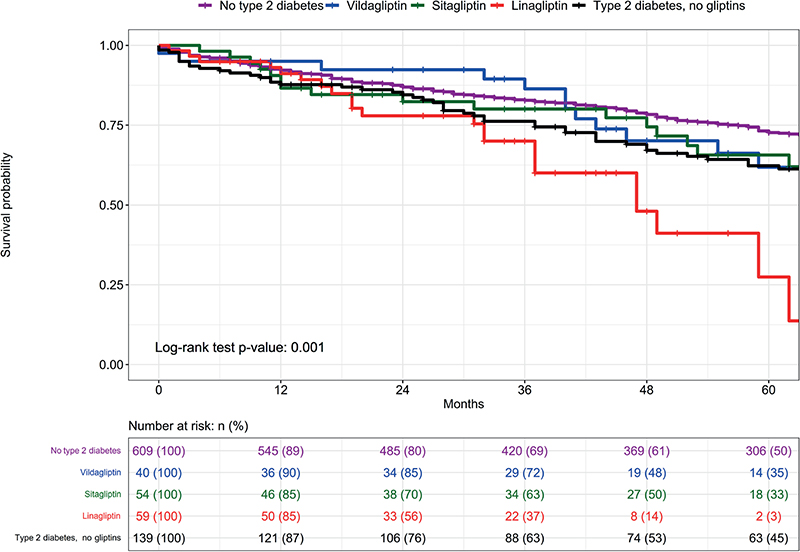
Fig. 1. Kaplan–Meier curve of the survival of patients with bullous pemphigoid.
DISCUSSION
Previous studies have reported lower anti-BP180 NC16A antibody values and greater proportions of seronegative patients in GABP vs rBP (1, 4, 5). In the current study, the anti-BP180 NC16A antibody values were comparable within these 2 groups but patients with GABP were significantly more often seronegative. Differences in phenotype have also been reported, mostly in Japanese patients where the non-inflammatory phenotype with lesser erythema/urticaria has been found to be associated with GABP (1, 6). In the current study, there were no differences in the type of observed skin lesions.
Our finding that the mortality rate was higher among BP patients with comorbid T2DM compared with those without T2DM aligned with previous studies (7).
To the best of our knowledge, ours is the first work to examine the effect of T2DM medication on mortality in BP patients. In general, gliptins are considered safe and in T2DM patients gliptins seem not to increase the mortality (8). A Cochrane meta-analysis found that gliptin use also had no effect on the rate of all-cause mortality in patients with cardiovascular disease, although it did increase the risk of pancreatitis (9). The risk of developing GABP is not same for all gliptins; vildagliptin and linagliptin are the gliptins that cause the highest risk for GABP (1), but here we found that only linagliptin increases the mortality in BP. The target of gliptins, dipeptidyl peptidase-4 protein, is ubiquitously expressed in various cells, including various inflammatory cells such as T-lymphocytes (1), which has led to a hypothesis that use of gliptins may disturb the balance of the immune system in elderly BP patients. Further investigation is required to clarify whether it is immunological changes or other factors that cause the elevated mortality rate seen in BP patients treated with linagliptin.
This study’s main strength is its large cohort of BP patients with confirmed diagnoses; its limitations are mostly due to data insufficiencies in electronic patient records. For example, we did not have the possibility to define the exact duration of T2DM at the time of BP diagnosis and were also unable to study the effect of continuation or discontinuation of gliptins on the mortality rate because of the absence of exact data on treatment duration. In addition, the data on severity of BP were not available as this is not routinely documented in Finland in clinical setting.
ACKNOWLEDGEMENTS
IRB approval status: The Ethics Committee of Northern Ostrobothnia Hospital District approved the study (§20/2015) which was performed according to the principles of the Declaration of Helsinkin 1983.
REFERENCES
- Tasanen K, Varpuluoma O, Nishie W. Dipeptidyl peptidase-4 inhibitor-associated bullous pemphigoid. Front Immunol 2019; 10: 1238. https://doi.org/10.3389/fimmu.2019.01238
- Leisti P, Pankakoski A, Jokelainen J, Varpuluoma O, Huilaja L, Panelius J, et al. Accurate diagnosis of bullous pemphigoid requires multiple health care visits. Front Immunol 2023: 27: 14: 1281302. https://doi.org/10.3389/fimmu.2023.1281302
- Försti A, Huilaja L, Schmidt E, Tasanen K. Neurological and psychiatric associations in bullous pemphigoid – more than skin deep? Exp Dermatol 2017; 26: 1228–1234. https://doi.org/10.1111/exd.13401
- Nieto-Benito LM, Bergón-Sendín M, Pulido-Pérez A, Rosell-Díaz ÁM, Parra-Blanco V, Suárez-Fernández R. Defining dipeptidyl peptidase-4 inhibitors-related bullous pemphigoid: a single-centre retrospective study. Exp Dermatol 2021; 30: 1345–1351. https://doi.org/10.1111/exd.14387
- Kinyó Á, Hanyecz A, Lengyel Z, Várszegi D, Oláh P, Gyömörei C, et al. Clinical, laboratory and histological features of dipeptidyl peptidase-4 inhibitor related noninflammatory bullous pemphigoid. J Clin Med 2021; 10: 1916. https://doi.org/10.3390/jcm10091916
- Horikawa H, Kurihara Y, Funakoshi T, Umegaki-Arao N, Takahashi H, Kubo A, et al. Unique clinical and serological features of bullous pemphigoid associated with dipeptidyl peptidase-4 inhibitors. Br J Dermatol 2018; 6: 1462–1463. https://doi.org/10.1111/bjd.16479
- Chen X, Zhang Y, Luo Z, Wu Y, Niu T, Zheng J, et al. Prognostic factors for mortality in bullous pemphigoid: a systematic review and meta-analysis. PLoS One 2022. 15; 17: e0264705. https://doi.org/10.1371/journal.pone.0264705
- Mannucci E, Nreu B, Montereggi C, Ragghianti B, Gallo M, Giaccari A, et al. Cardiovascular events and all-cause mortality in patients with type 2 diabetes treated with dipeptidyl peptidase-4 inhibitors: an extensive meta-analysis of randomized controlled trials. Nutr Metab Cardiovasc Dis 2021; 22; 31: 2745–2755. https://doi.org/10.1016/j.numecd.2021.06.002
- Kanie T, Mizuno A, Takaoka Y, Suzuki T, Yoneoka D, Nishikawa Y, et al. Dipeptidyl peptidase-4 inhibitors, glucagon-like peptide 1 receptor agonists and sodium-glucose co-transporter-2 inhibitors for people with cardiovascular disease: a network meta-analysis. Cochrane Database Syst Rev 2021; 10: CD013650. https://doi.org/10.1002/14651858.CD013650.pub2