ORIGINAL REPORT
Safety, Pharmacokinetics, and Efficiency of JS005, a Novel Anti-interleukin-17A Monoclonal Antibody, in Healthy Chinese Adults and Patients with Moderate to Severe Psoriasis
Lin CAI1#, Huichen LIU2#, Zhanglei MU1, Xiaohua TAO3, Litao ZHANG4, Chunlei ZHANG5, Yumei LI6, Guoqiang ZHANG7, Furen ZHANG8, Xiuqin DONG9, Chengxin LI10, Aijun CHEN11, Zhuning WU12, Yuxian ZHU12, Mengqi ZHANG12, Aimin LI13 and Jianzhong ZHANG1
1Peking University People’s Hospital, Beijing, 2Phase I Clinical Trial Ward, Fuwai Hospital, Chinese Academy of Medical Sciences and Peking Union Medical College, Beijing, 3Zhejiang Provincial People’s Hospital, Hangzhou, 4Tianjin Academy of Traditional Chinese Medicine Affiliated Hospital, Tianjin, 5Peking University Third Hospital, Beijing, 6Affiliated Hospital of Jiangsu University, Zhenjiang, 7The First Hospital of Hebei Medical University, Shijiazhuang, 8Shandong Dermatology Hospital, Jinan, 9Guangdong Provincial People’s Hospital, Guangzhou, 10Chinese PLA General Hospital, Beijing, 11The First Affiliated Hospital of Chongqing Medical University, Chongqing, 12Shanghai Junshi Biosciences, Shanghai, and 13Department of Clinical Pharmacology, Beijing Luhe Hospital, Capital Medical University, Beijing, China
#These authors contributed equally.
JS005 is a novel anti-IL-17A monoclonal antibody. A Phase Ia study (Study 1) in healthy adults, followed by a Phase Ib/II study (Study 2) in patients with moderate to severe plaque psoriasis (PsO), were designed to evaluate the safety, efficacy, and pharmacokinetic characteristics of JS005. Study 1 was a double-blind, randomized, placebo-controlled, single dose-escalation (15, 60, 150, 300, and 600 mg) study. Forty healthy participants were enrolled. Study 2 consisted of a dose-escalation (60, 150, 300, or 600 mg) phase Ib, and a multicentre, double-blind, placebo-controlled phase II administering JS005 150, 300 mg, or placebo once weekly from week 0 to 4 and once every 4 weeks from week 5 to 12. Forty and 143 patients were enrolled in phases Ib and II, respectively. The exposure of JS005 increased linearly with dosage, while the treatment-emergent adverse events did not show this trend. JS005 was well tolerated in both populations. In phase II of Study 2, the proportion of patients with at least a 75% improvement in the Psoriasis Area and Severity Index at week 12 was significantly higher in each JS005 group than in the placebo group (p < 0.001 for all comparisons). JS005 was highly effective in PsO patients.
SIGNIFICANCE
Plaque psoriasis often requires lifelong disease control and decreases patients’ quality of life. In our studies, JS005 was well tolerated in both healthy adults and plaque psoriasis patients. In plaque psoriasis patients treated with JS005, significant improvements were seen in psoriasis area and severity, as well as in patients’ quality of life, confirming the potential clinical value of JS005 for the treatment of psoriasis.
Key words: JS005; anti-IL-17A monoclonal antibody; psoriasis.
Citation: Acta Derm Venereol 2025; 105: adv41105. DOI: https://doi.org/10.2340/actadv.v105.41105.
Copyright: © 2025 The Author(s). Published by MJS Publishing, on behalf of the Society for Publication of Acta Dermato-Venereologica. This is an Open Access article distributed under the terms of the Creative Commons Attribution-NonCommercial 4.0 International License (https://creativecommons.org/licenses/by-nc/4.0/).
Submitted: Jul 1, 2024. Accepted after revision: Mar 3, 2025. Published: Mar 26, 2025
Corr: Aimin Li, Department of Clinical Pharmacology, Beijing Luhe Hospital, Capital Medical University, 82 Xinhua South Road, Tongzhou District, 101149, Beijing, China, and Jianzhong Zhang, Department of Dermatology, Peking University People’s Hospital, No.11 South Street, Xizhimen, Beijing 100044, China. E-mails: liaimin53@163.com; rmzjz@126.com
Competing interests and funding: ZW, YZ, MZ are employees of Shanghai Junshi Biosciences. All other authors have no conflicts of interest to declare.
The 2 studies were sponsored by Shanghai Junshi Biosciences, Shanghai, China.
INTRODUCTION
Psoriasis is a chronic immune-mediated inflammatory disease with a global prevalence of 1% to 8%, of which plaque psoriasis (PsO) is the most common type (1). Severe psoriasis is associated with increased all-cause mortality and an average decreased life expectancy of approximately 4–5 years (2, 3). PsO requires lifelong disease control, and some patients with moderate to severe disease do not respond well to existing treatments, such as systemic therapy and phototherapy, thus leading to a continuous clinical demand for novel therapeutic strategies with improved efficacy and reduced costs (4).
The pro-inflammatory IL-17A generated from T-helper cells or other innate and adaptive immune cells plays an important role in driving psoriasis pathophysiology (5, 6). In addition to traditional systematic immunomodulatory therapies, several monoclonal antibodies against IL-17A have already been approved for the treatment of psoriasis, such as brodalumab, ixekizumab, secukinumab, bimekizumab, and netakimab (5). Of these, only brodalumab, ixekizumab, and secukinumab are approved in mainland China. Therefore, we developed JS005 with the expectation of providing more options for PsO patients.
JS005 is a novel anti-IL-17A monoclonal antibody with unique patented complementarity-determining region (CDR) sequences differs from secukinumab and ixekizumab. JS005 presented high bioavailability and low immunogenicity in preclinical studies. To evaluate the safety and pharmacokinetics of JS005 in healthy Chinese adults, as well as the safety, tolerability, efficacy, and pharmacokinetic characteristics of JS005 in patients with moderate to severe plaque psoriasis, a phase Ia study (Study 1, NCT04220073) and a phase Ib/II study (Study 2, NCT05344248) were conducted.
MATERIALS AND METHODS
The studies were conducted in accordance with the Declaration of Helsinki and Good Clinical Practice and were approved by the ethics committee at each site. All participants and patients gave written informed consent before participation.
Study 1
Study 1 was a randomized, placebo-controlled, double-blind, single dose-escalation phase I study to investigate the safety and pharmacokinetics of JS005 in healthy Chinese participants. Five single-dose levels including 15 mg, 60 mg, 150 mg, 300 mg, and 600 mg of JS005 were selected. It was planned to enrol a total of 40 participants, and in each dose group, 8 participants were randomly given a single dose of JS005 (n = 6) or placebo (n = 2) via abdominal subcutaneous injection. The sentinel dosing strategy was used in each group, whereby the first 2 participants were randomly dosed (1 receiving JS005 and 1 receiving the placebo) and if no dose-limiting event (DLE) occurred during the 3-day follow-up period, the remaining 6 participants could be randomly dosed (5 receiving JS005 and 1 receiving the placebo). The next dose level could be initiated after all participants completed at least 14 days of follow-up and no DLE occurred. Otherwise, the follow-up period would be extended to 84 days. If DLE occurred in ≤ 2/6 participants in the JS005 group during the follow-up, the next dose level could be initiated; otherwise, the dose escalation would be terminated, and the previous dose level would be considered as the maximum tolerated dose (MTD).
Blood samples for pharmacokinetic analyses were to be collected within 30 min before administration (Day 1), 1 h, 2 h, 8 h (Day 1), 24 h (Day 2), 48 h (Day 3), and 72 h (Day 4) after administration, and on Day 6, Day 8, Day 15, Day 29, Day 36, Day 43, Day 50, Day 57, Day 71, and Day 85. Plasma concentration-time plot, and the pharmacokinetic parameters including maximum serum concentration (Cmax), the time to reach the maximum serum concentration (Tmax), the area under the concentration-time curve from zero to the last measurable concentration (AUC0-t), the area under the concentration-time curve calculated from zero to infinity (AUC0-∞), apparent clearance (CL/F), apparent distribution volume (Vd/F), elimination half-life (T1/2), and elimination rate constant (λz) were analysed by non-compartmental analysis using Phoenix® WinNonlin® version 8.2 (Certara USA, Inc, Radnor, PA, USA).
Study 2
Patients aged 18–75 years with moderate to severe plaque psoriasis, Psoriasis Area and Severity Index (PASI) score ≥ 12, Physician’s Global Assessment (PGA) score ≥ 3, and Body Surface Area (BSA) ≥ 10% were eligible for enrolment. Key exclusion criteria included prior therapies targeting IL-17A, history or plan of live vaccine (less than 12 weeks before screening or after last dose), infections needing hospitalization or anti-virus or antibacterial therapy, prior systemic therapy for psoriasis, nonchronic or drug-induced psoriasis, history of inflammatory bowel disease or other active autoimmune diseases, and history of tubercle bacillus infection.
Study design
Study 2 was a phase Ib/II study consisting of a dose-escalation part and a multicentre, double-blind, placebo-controlled part. A diagram of the study design is presented in Fig. 1. In phase Ib, 4 dose levels for abdominal subcutaneous injection including JS005 60 mg, 150 mg, 300 mg, and 600 mg were planned. It was planned to enrol a total of 40 patients and randomize them in a 3:1 ratio to the JS005 and placebo groups at each dose level (8 patients for 60 and 600 mg groups each and 12 for the other 2 dose groups each). All patients were to receive JS005 or a matching placebo once a week (QW) from Week 0 to Week 4 and once every 4 weeks (Q4W) from Week 5 to Week 12. The decision to escalate to the next dose level would be based on the incidence of DLE.
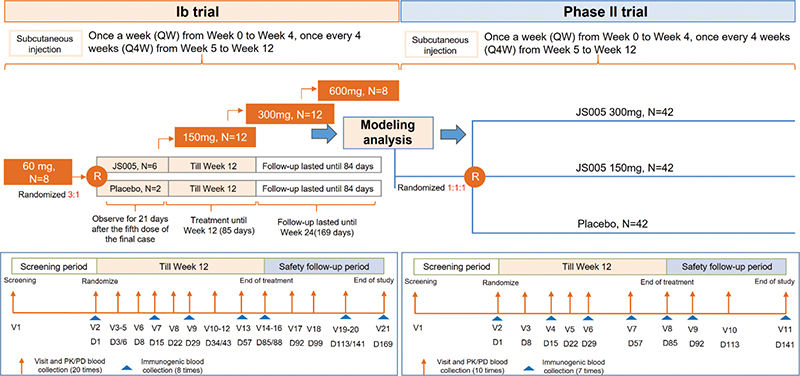
Fig. 1. Study design of Study 2. Study 2 consisted of a dose-escalation phase Ib and a double-blind, placebo-controlled phase II. In phase Ib, dose-limiting events were observed until 21 days after the fifth dose. The next dose level could be initiated if dose-limiting events occurred in ≤ 2/6, ≤ 3/9, ≤ 3/9 patients in the 60 mg, 150 mg, and 300 mg dose groups, respectively. In phase II, the doses of the study drug were selected based on the safety and efficacy seen in phase Ib.
In phase II, 2 dose levels of 150 mg and 300 mg were selected based on the safety data and exposure–response (ER) analysis from phase Ib. It was planned to enrol a total of 126 patients and randomize them in a 1:1:1 ratio into the 150 mg and 300 mg JS005 groups, and the placebo group. All patients were to receive JS005 or placebo QW from Week 0 to Week 4 and Q4W from Week 5 to Week 12. Follow-up was planned to continue for 8 weeks after the last dose.
Endpoints
For phase Ib, the primary endpoint was safety. Secondary endpoints included pharmacokinetic (PK), pharmacodynamic, and efficacy categories. For phase II, the primary endpoint was the proportion of patients with at least 75% improvement on the Psoriasis Area and Severity Index from baseline (PASI 75) at week 12. Secondary endpoints included the proportion of patients achieving PASI 75 at Weeks 16 and 20, the proportion of patients achieving PASI 90, PGA score 0 or 1, Dermatology Life Quality Index (DLQI) score 0 or 1, changes from baseline in PASI score and BSA at week 12, 16, and 20, as well as safety and pharmacodynamic categories.
Statistical analysis
For part Ib, sample size determination was not based on statistical considerations; for part II, sample size calculation was based on the assumption that the PASI 75 of the JS005 150 mg group was 50% and the placebo group was 15%, taking into account a dropout rate of 20%. The sample size could provide 80% power to detect PASI 75 at 12 weeks in the JS005 groups superior to the placebo group at the significance level of one-sided 0.025. The sample size was calculated using PASS 15.0.
Safety analysis was based on the safety set (SS), defined as all patients receiving the study drug or placebo. The full analysis set (FAS) was used for efficacy analysis and the per protocol set (PPS) was used for sensitivity analysis of primary efficacy in phase II. For binary variables, Fisher’s exact test was used to compare each group’s response rate. Non-responder imputation (NI) and last observation carried forward (LOCF) were applied to deal with missing data. For continuous variables, a mixed-effect model repeated measure (MMRM) or ANCOVA was used to estimate p-value, standard deviation, and 95% confidence interval (CI). For phase Ib, the proportion of patients achieving PASI 75/90/100 and DLQI score 0 or 1 (at weeks 12, 16, and 24), the proportion of patients achieving PGA 0 or 1 (at week 12), the change in PASI score from baseline (at weeks 12, 16, and 24), and the change in BSA from baseline (at weeks 12, 16, and 24) were to be analysed. For phase II, the proportion of patients achieving PASI 75 (at weeks 12 [primary endpoint], 16 and 20 [secondary endpoints]), the proportion of patients achieving PASI 90, PGA 0 or 1, DLQI score 0 or 1 (at weeks 12, 16, and 20 [secondary endpoints]), change in PASI score from baseline (at weeks 12, 16 and 20 [secondary endpoints]), and change in BSA from baseline (at weeks 12, 16, and 20 [secondary endpoints]) were analysed. The proportion of patients achieving PASI 75/90/100 and/or PGA score 0 or 1 was also analysed as secondary endpoints.
Pharmacodynamic analysis was based on PDPS. SAS® Version 9.4 was used for statistical analysis (SAS Institute, Cary, NC, USA).
RESULTS
Study 1
Of 157 healthy participants screened, 40 were enrolled and randomized to receive the assigned treatment as per protocol at 1 site in China. All participants completed the study.
There was no significant difference in the overall treatment-emergent adverse event (TEAE) incidence between the JS005 group and the placebo group (83.3% vs 80.0%). There was no dose-dependent relationship between treatment-related TEAEs and dose levels. No DLE occurred in any group, MTD was not reached, and 600 mg was the highest dose level. No severe TEAEs, treatment-related severe TEAEs, TEAEs of special interest, TEAEs leading to suspension or discontinuation of JS005, TEAEs leading to study withdrawal, TEAEs with a CTCAE grade ≥ 3, or deaths were reported.
The PK curve of JS005 after a single abdominal subcutaneous injection is presented in Fig. 2. After a single dose of 15 mg, 60 mg, 150 mg, 300 mg, and 600 mg of JS005, the median Tmax was 144–169 h (6–7 days), the mean CL/F was 6.23–9.13 mL/h, the mean Vd/F was 5.45–6.24 L, the mean T1/2 was 477–611 h (20–26 days), the mean Cmax was 1.88–78.9 μg/mL, the mean AUC0-t was 1940–77300 μg*h/mL, and the mean AUC0-∞ was 2170–87600 μg*h/mL. The CV% of Cmax, AUC0-t, and AUC0-∞ was 23%–39%, 15%–31%, and 15%–30%, respectively. The dose proportionality analysis of JS005 showed that 90% confidence intervals (CIs) for the slope β of Cmax, AUC0-t, and AUC0-∞ were 0.97–1.13, 0.97–1.08, and 0.97–1.09, respectively. All 90% CIs met the dose-proportionality criterion of 0.81–1.19. Therefore, the in vivo exposure of JS005 (Cmax, AUC0-t, and AUC0-∞) increased linearly with dose over the range of 15 mg–600 mg.
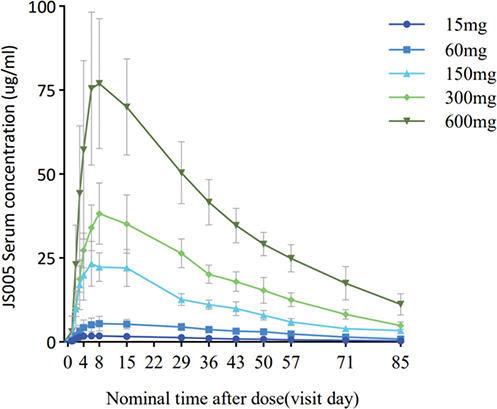
Fig. 2. Serum concentration-time curve for JS005 after a single abdominal subcutaneous injection.
Study 2 (Phase Ib part)
A total of 40 patients were enrolled in phase Ib. Baseline demographic characteristics and disease characteristics were comparable among all groups. The incidences of TEAEs were 83.3% (5/6), 100% (9/9), 77.8% (7/9), 66.7% (4/6), and 60.0% (6/10) in the JS005 60 mg, 150 mg, 300 mg, 600 mg, and placebo group, respectively. The severity of TEAEs in each group was predominantly CTCAE grade 1 and 2, with a small proportion of CTCAE grade 3 (of which only 1 was JS005-related hyperbilirubinemia in the 60 mg group) and grade 4 (none was related to JS005). The most common (incidence ≥ 10%) TEAEs in JS005 groups were hyperlipidaemia (26.7%), hyperuricemia (23.3%), elevated serum creatine phosphokinase levels (13.3%), upper respiratory tract infection (13.3%), and urticaria (10%).
At Week 12, the PASI 75 response rates were significantly higher in the JS005 groups than in the placebo group. There were 50% (3/6), 100% (9/9), 100% (9/9), 100% (6/6), and 0% (0/10) of patients achieving PASI 75 at week 12 in the JS005 60 mg, 150 mg, 300 mg, 600 mg, and placebo groups, respectively (Fig. 3A).
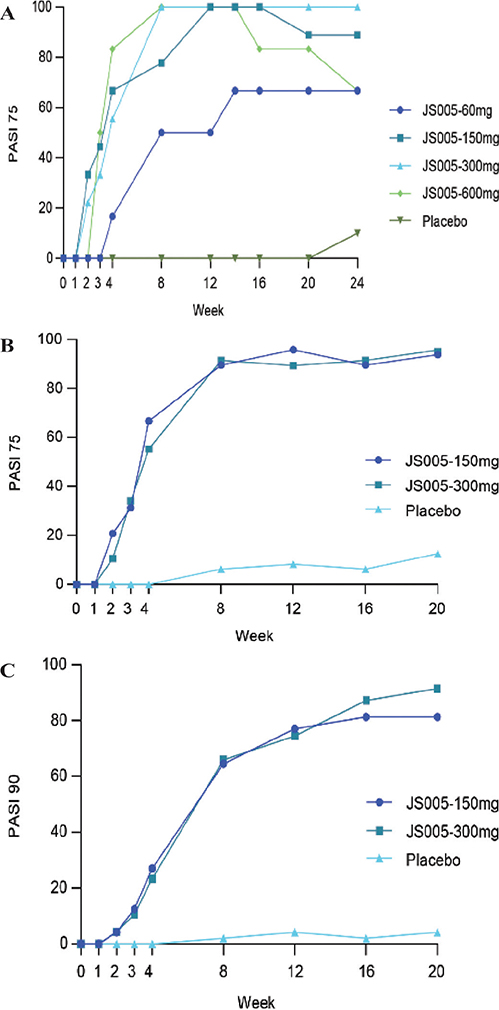
Fig. 3. Proportion of patients (A) achieving PASI 75 over 24 weeks in phase Ib and proportion of patients achieving (B) PASI 75 and (C) PASI 90 over 20 weeks in phase II of Study 2.
Study 2 (Phase II part)
Demographic and baseline characteristics. A total of 210 patients were screened and 143 patients were enrolled in phase II (48 in the JS005 150 mg group, 47 in the JS005 300 mg group, 48 in the placebo group). Demographic characteristics (gender, age, bodyweight, and body mass index) and baseline disease characteristics (PASI, BSA, DLQI, and PGA) were comparable among all the groups (Table I).
Safety. The median exposure duration was 85.0 days in the JS005 150 mg, 300mg, and placebo groups. The incidence of TEAEs was similar in the 3 groups: 62.5% (30/48) in the JS005 150 mg group, 63.8% (30/47) in the JS005 300 mg group, and 64.6% (31/48) in the placebo group. All the TEAEs were CTCAE grades 1 or grade 2. The most common TEAEs (≥ 5% in the JS005 groups) were hyperuricemia, hyperlipidaemia, hypertriglyceridaemia, and blood uric acid increase (Table II). No TEAEs leading to study withdrawal or permanent treatment discontinuation occurred. No serious adverse events (SAEs) or deaths were reported.
| Events, n (%) | 150 mg (n = 48) | 300 mg (n = 47) | JS005 groups (n = 95) | Placebo (n = 48) |
| TEAEs | 30 (62.5) | 30 (63.8) | 60 (63.2) | 31 (64.6) |
| Grade 1 | 19 (39.6) | 19 (40.4) | 38 (40.0) | 22 (45.8) |
| Grade 2 | 11 (22.9) | 11 (23.4) | 22 (23.2) | 9 (18.8) |
| Grade ≥ 3 | 0 | 0 | 0 | 0 |
| Treatment-emergent adverse events related to study drug | 24 (50.0) | 21 (44.7) | 45 (47.4) | 18 (37.5) |
| Serious adverse events | 0 | 0 | 0 | 0 |
| Treatment-emergent adverse events leading to discontinuation | 0 | 0 | 0 | 0 |
| Common TEAEs* | ||||
| Hyperuricemia | 4 (8.3) | 8 (17.0) | 12 (12.6) | 1 (2.1) |
| Hyperlipidaemia | 5 (10.4) | 3 (6.4) | 8 (8.4) | 2 (4.2) |
| Hypertriglyceridemia | 4 (8.3) | 2 (4.3) | 6 (6.3) | 0 |
| Blood uric acid increase | 3 (6.3) | 2 (4.3) | 5 (5.3) | 3 (6.3) |
| Urinary tract infection | 1 (2.1) | 3 (6.4) | 4 (4.2) | 3 (6.3) |
| Elevated serum creatine phosphokinase levels | 3 (6.3) | 0 | 3 (3.2) | 3 (6.3) |
| Upper respiratory tract infection | 3 (6.3) | 0 | 3 (3.2) | 4 (8.3) |
| *Treatment-emergent adverse events occurring in ≥ 5% of patients who received at least 1 dose of study drug. | ||||
Efficacy. The proportion of patients achieving PASI 75 at week 12 was significantly higher in the JS005 150 mg (95.8%, p < 0.0001) and 300 mg (89.4%, p < 0.0001) groups than in the placebo group (8.3%) (Fig. 3B). The proportion of patients achieving PASI 90 at week 12 was also significantly higher in the JS005 150 mg (77.1%, p < 0.0001) and 300 mg (74.5%, p < 0.0001) groups than in the placebo group (4.2%) (Fig. 3C). The proportion of patients achieving PASI 100 at week 12 was consistently higher in the JS005 groups (47.9% in the JS005 150 mg group, p < 0.0001, 34.0% in the 300 mg group, p < 0.0001, 0% in the placebo group). More than 50% of patients achieved PASI 75 at 4 weeks, demonstrating the rapid response to JS005. In addition, the proportion of patients achieving PGA 0/1 at week 12 was significantly higher in the JS005 150 mg (89.6%, p < 0.0001) and 300 mg (83%, p < 0.0001) groups than in the placebo group (10.4%).
DISCUSSION
These phase Ia and phase Ib/II studies revealed the safety, pharmacokinetics, and efficacy of JS005 in healthy participants and PsO patients. JS005 was well tolerated in the 2 populations. In addition, the exposure of JS005 (Cmax, AUC0-t, and AUC0–∞) increased linearly with dosage, while the TEAEs did not show this trend, with similar incidence in all JS005 dose groups and in the placebo group.
Preliminary efficacy was evaluated in Study 2. In phase Ib, the JS005 groups showed significantly higher rates of achieving PASI 75 at week 12 compared with the placebo group. In phase II, the proportions of patients achieving PASI 75 at week 12 were 95.8% and 89.4% in the JS005 150 mg and 300 mg groups, which were numerically superior to secukinumab (67.0–71.6%, 77.1–81.6% in the 150 mg and 300 mg dose groups, respectively) (7). The proportions of patients achieving PASI 90 and PASI 100 at week 12 were 77.1%, 74.5%, and 47.9%, 34.0% in the JS005 150 mg and 300 mg groups, which were consistent numerically superior to secukinumab (PASI 90: 39.1–41.9%, 54.2–59.2%, PASI 100: 12.8–14.4%, 24.1–28.6% in the 150 mg and 300 mg dose groups, respectively) (7). The response rates for JS005 were comparable to ixekizumab, bimekizumab, and brodalumab. The proportions of patients receiving ixekizumab 80 mg Q2W who achieved PASI 75, PASI 90, and PASI 100 at week 12 were 87.3–98.7%, 68.1–83.3%, and 32.1–40.5% (8–11), respectively, and 77.5–87.4%, 59.7–75.9%, and 29.3–35.0% for patients receiving ixekizumab 80 mg Q4W (9–11). The proportions of patients receiving bimekizumab 160 mg Q4W who achieved PASI 75, PASI 90, and PASI 100 at week 12 were 64.0–85.0%, 46.0–75.0%, and 27.9–60.0%, respectively, and 73.0–93.0%, 54.0–79.1%, and 38.0–55.8% for patients receiving bimekizumab 320 mg Q4W (12,13). The proportions of patients receiving brodalumab 210 mg Q2W who achieved PASI 75 and PASI 100 at week 12 were 83–86% and 37–44%, respectively (14, 15). In addition, more than 50% of patients achieved PASI 75 within 4 weeks with JS005 treatment, demonstrating a rapid onset of response of JS005, which was similar to other IL-17 inhibitor products, e.g., about 50% of patients treated with ixekizumab achieved PASI 75 by week 4 in clinical trials (11), the median time to PASI 75 response with brodalumab was 4 weeks (14), the median time to 50% reduction in mean PASI score with secukinumab was within 4 weeks (7), and clinically meaningful improvements were seen in bimekizumab-treated patients as early as week 4 (13).
The safety profile of JS005 was consistent in Study 1 and Study 2. The incidence of TEAEs in Study 2 was 62.5%, 63.8% in the JS005 150 mg and 300 mg groups, respectively, which was similar to secukinumab (55.1% in the 300 mg group and 60.4% in the 150 mg group) (7) and ixekizumab (58.4% in the 80 mg Q2W group and 58.8% in the 80 mg Q4W group) (10). However, blood test alteration (e.g., hyperuricemia, hyperlipidaemia, and hypertriglyceridaemia) seemed to be more common with JS005 compared with secukinumab and ixekizumab, which might be attributed to regional epidemiological characteristics of hyperuricemia. In the phase II study, 13 cases of hyperuricemia were reported as adverse events (AEs). Among these, 6 cases came from Guangdong Province. According to an epidemiological survey conducted by the Chinese Center for Disease Control and Prevention in 2019, there is a regional difference in the prevalence of hyperuricemia in China, while Guangdong Province was classified as a high-incidence area with a prevalence rate of about 30%, which is much higher than the national average (14%) (16). This may be related to the local high-purine dietary habits. Similar results were observed in the phase III study (CAIN457A2318) of secukinumab primarily involving Chinese patients (441/543), where the most commonly reported adverse events were hyperuricemia, hyperlipidaemia, and upper respiratory infections (17). In addition, the sample size of our study was relatively small, and we are continuously monitoring the safety signals of JS005 in our ongoing clinical trials.
Biologic treatments such as IL-17 inhibitors have been shown to cause paradoxical eczematous eruptions (18, 19). In Study 2, 2 AEs of paradoxical eczematous eruption were reported. In addition, IL-17 is known to be involved in neutrophil recruitment, antimicrobial peptide release, and mucocutaneous barrier protection (20). Therefore, patients receiving anti-IL-17 antibodies may be at increased risk of candida infection (21). It is worth mentioning that no AEs of candida infection were reported in our studies.
Our studies first provide comprehensive and preliminary clinical trial data of a novel IL-17A antibody, JS005, and confirm the potential clinical application value of JS005 for psoriasis treatment. On the other hand, some limitations also exist that need to be acknowledged in the 2 studies, such as the relatively small sample size, and relatively short duration of treatment and follow-up. To further evaluate the efficacy and safety of JS005 in patients with moderate to severe chronic plaque psoriasis, a multicentre, randomized, double-blind, parallel, placebo-controlled phase III study is underway (Register number: NCT05975268).
ACKNOWLEDGEMENTS
The authors would like to thank the patients, their families, and all investigators involved in this study. The manuscript was partly drafted by the medical writer (Huaizhou Wang, Shanghai Junshi Biosciences) with the consent of all authors.
Data availability: The anonymized data underlying the results presented in this manuscript may be made available to researchers upon submission of a reasonable request to the corresponding author. The decision to disclose the data will be made by the corresponding author and the sponsor, Shanghai Junshi Biosciences. No expiration date of data requests is currently set once data are made available.
IRB approval status: All relevant study documents were provided by the investigator to the Independent Ethics Committee (IEC). Studies were initiated after approval by the IEC.
REFERENCES
- Badri T, Kumar P, Oakley AM. Plaque psoriasis. In: StatPearls. Treasure Island, FL: StatPearls Publishing; August 8, 2023.
- Kaul M, Jarvis P, Rozenberg I, Kolbinger F, Di Padova F, Calonder C, et al. First-in-human study demonstrating the safety and clinical efficacy of novel anti-IL-17A monoclonal antibody CJM112 in moderate to severe plaque psoriasis. J Eur Acad Dermatol Venereol 2021; 35: 1143–1151. https://doi.org/10.1111/jdv.17071
- Campanati A, Marani A, Martina E, Diotallevi F, Radi G, Offidani A. Psoriasis as an immune-mediated and inflammatory systemic disease: from pathophysiology to novel therapeutic approaches. Biomedicines 2021; 9: 1511. https://doi.org/10.3390/biomedicines9111511
- Griffiths CEM, van der Walt JM, Ashcroft DM, Flohr C, Naldi L, Nijsten T, et al. The global state of psoriasis disease epidemiology: a workshop report. Br J Dermatol 2017; 177: e4–7. https://doi.org/10.1111/bjd.15610
- Ogawa E, Sato Y, Minagawa A, Okuyama R. Pathogenesis of psoriasis and development of treatment. J Dermatol 2018; 45: 264–272. https://doi.org/10.1111/1346-8138.14139
- Malakouti M, Brown G, Wang E, Koo J, Levin E. The role of IL-17 in psoriasis. J Dermatolog Treat 2015; 26: 41–44. https://doi.org/10.3109/09546634.2013.879093
- Langley RG, Elewski BE, Lebwohl M, Reich K, Griffiths CE, Papp K, et al. Secukinumab in plaque psoriasis: results of two phase 3 trials. N Engl J Med 2014; 371: 326–338. https://doi.org/10.1056/NEJMoa1314258
- Saeki H, Nakagawa H, Ishii T, Morisaki Y, Aoki T, Berclaz PY, et al. Efficacy and safety of open-label ixekizumab treatment in Japanese patients with moderate-to-severe plaque psoriasis, erythrodermic psoriasis and generalized pustular psoriasis. J Eur Acad Dermatol Venereol 2015; 29: 1148–1155. https://doi.org/10.1111/jdv.12773
- Li X, Zheng J, Pan W, Zheng M, Lu Y, Li F, et al. Efficacy and safety of ixekizumab in Chinese patients with moderate-to-severe plaque psoriasis: 60-week results from a phase 3 study. Int J Dermatol Venerol 2022; 5: 181–190. https://doi.org/10.1097/JD9.0000000000000244
- Gordon KB, Blauvelt A, Papp KA, Langley RG, Luger T, Ohtsuki M, et al. Phase 3 trials of ixekizumab in moderate-to-severe plaque psoriasis. N Engl J Med 2016; 375: 345–356. https://doi.org/10.1056/NEJMoa1512711
- Griffiths CE, Reich K, Lebwohl M, van de Kerkhof P, Paul C, Menter A, et al. Comparison of ixekizumab with etanercept or placebo in moderate-to-severe psoriasis (UNCOVER-2 and UNCOVER-3): results from two phase 3 randomised trials. Lancet 2015; 386: 541–551. https://doi.org/10.1016/S0140-6736(15)60125-8
- Ritchlin CT, Kavanaugh A, Merola JF, Schett G, Scher JU, Warren RB, et al. Bimekizumab in patients with active psoriatic arthritis: results from a 48-week, randomised, double-blind, placebo-controlled, dose-ranging phase 2b trial. Lancet 2020; 395: 427–440. https://doi.org/10.1016/S0140-6736(19)33161-7
- Papp KA, Merola JF, Gottlieb AB, Griffiths CEM, Cross N, Peterson L, et al. Dual neutralization of both interleukin 17A and interleukin 17F with bimekizumab in patients with psoriasis: results from BE ABLE 1, a 12-week randomized, double-blinded, placebo-controlled phase 2B trial. J Am Acad Dermatol 2018; 79: 277–286.e10. https://doi.org/10.1016/j.jaad.2018.03.037
- Lebwohl M, Strober B, Menter A, Gordon K, Weglowska J, Puig L, et al. Phase 3 studies comparing brodalumab with ustekinumab in psoriasis. N Engl J Med 2015; 373: 1318–1328. https://doi.org/10.1056/NEJMoa1503824
- Bausch Health. Highlights of prescribing information. Available from: https://www.accessdata.fda.gov/drugsatfda_docs/label/2024/761032s014lbl.pdf
- Zhang M, Zhu X, Wu J, Huang Z, Zhao Z, Zhang X, et al. Hyperuricemia among Chinese adults: findings from two nationally representative cross-sectional surveys in 2015–16 and 2018–19. Front Immunol 2022; 12: 791983. https://doi.org/10.3389/fimmu.2021.791983
- Cai L, Zhang JZ, Yao X, Gu J, Liu QZ, Zheng M, et al. Secukinumab demonstrates high efficacy and a favorable safety profile over 52 weeks in Chinese patients with moderate to severe plaque psoriasis. Chin Med J (Engl) 2020; 133: 2665–2673. https://doi.org/10.1097/CM9.0000000000001163
- Mendes Roncada EV, Brambilla VR, Freitas Filitto B, Genta MP, Morgado de Abreu MAM. Atopic dermatitis as a paradoxical effect of secukinumab for the treatment of psoriasis. Case Rep Dermatol 2021; 13: 336–339. https://doi.org/10.1159/000513467
- Al-Janabi A, Foulkes AC, Griffiths CEM, Warren RB. Paradoxical eczema in patients with psoriasis receiving biologics: a case series. Clin Exp Dermatol 2022; 47: 1174–1178. https://doi.org/10.1111/ced.15130
- Mengesha BG, Conti HR. The role of IL-17 in protection against mucosal candida infections. J Fungi (Basel) 2017; 3: 52. https://doi.org/10.3390/jof3040052
- Saunte DM, Mrowietz U, Puig L, Zachariae C. Candida infections in patients with psoriasis and psoriatic arthritis treated with interleukin-17 inhibitors and their practical management. Br J Dermatol 2017; 177: 47–62. https://doi.org/10.1111/bjd.15015