ORIGINAL REPORT
Characterizing Patients and Treatment Patterns in Moderate-to-severe Atopic Dermatitis in Finland: A Population-based Study Using National Health Data
Anita REMITZ1, Essi J. PELTONEN2, Laura KORHONEN3, Pekka NORTAMO4#, Ilona ISO-MUSTAJÄRVI2, Tuire PRAMI2, Lasse OINONEN4, Beatrice GITTENS5, Lill-Brith VON ARX6 and Vibeke PORSDAL6
1Department of Dermatology and Allergology at University of Helsinki, Helsinki, Finland, 2Oriola, Espoo, Finland, 3Allergy Centre, Tampere University Hospital, Tampere, Finland, 4Oy Eli Lilly Finland Ab, Helsinki, Finland, 5Eli Lilly and Company, Basingstoke, UK, and 6Eli Lilly Danmark A/S, Herlev, Denmark, #Retired; affiliation at time study was conducted.
This observational study evaluated demographics, disease characteristics, and treatment patterns in children, adolescents, and adults with moderate-to-severe atopic dermatitis (AD) and compared comorbidities (adults only) and healthcare resource use with those of matched reference subjects without moderate-to-severe AD in Finland between 2016 and 2020. A total of 68,216 patients with moderate-to-severe AD and a reference population of 338,325 people without moderate-to-severe AD were identified and included in the study. Among children aged 0–11 years in the moderate-to-severe AD cohort, most were diagnosed with AD and were identified to have moderate-to-severe AD before they reached 4 years of age (92.4% and 79.3%, respectively). Atopic disorders and psychiatric, gastrointestinal, and other diseases were more common in adults with moderate-to-severe AD than in the reference population. Regardless of age, patients with moderate-to-severe AD had a higher number of primary and secondary healthcare visits annually compared with the reference population. Across all 3 age groups, topical corticosteroids and emollients were the 2 categories of AD medications most frequently used throughout the study period. In adults, the use of methotrexate and dupilumab increased over the course of the study. Moderate-to-severe AD affects people of all ages in Finland.
SIGNIFICANCE
Analysis of real-world data provides insights into characteristics of patients with moderate-to-severe atopic dermatitis and the medical treatment they receive. This nationwide study identified and analysed 68,216 patients with moderate-to-severe atopic dermatitis in Finland during the years 2016–2020. Their healthcare resource use was compared with that in a reference sample of 338,325 people without moderate-to-severe atopic dermatitis. Findings demonstrate that moderate-to-severe atopic dermatitis is associated with increased disease burden and healthcare resource use in all age groups. It is therefore imperative to aim for improved control of atopic dermatitis.
Key words: atopic dermatitis; observational study; patient characteristics; clinical practice patterns.
Citation: Acta Derm Venereol 2025; 105: adv41244. DOI: https://doi.org/10.2340/actadv.v105.41244.
Copyright: © 2025 The Author(s). Published by MJS Publishing, on behalf of the Society for Publication of Acta Dermato-Venereologica. This is an Open Access article distributed under the terms of the Creative Commons Attribution-NonCommercial 4.0 International License (https://creativecommons.org/licenses/by-nc/4.0/).
Submitted: Jul 26, 2025. Accepted after revision: Mar 20, 2025. Published: Apr 24, 2025
Corr: Lill-Brith Von Arx, Eli Lilly Danmark A/S, Lyskaer 3E, 2. tv., DK-2730 Herlev, Denmark. E-mail: von_arx_lill_brith_wium@lilly.com
Competing interests and funding: AR reports consultation fees from Eli Lilly and Company. LK reports consultation fees and /or payment or honoraria for lectures, presentations, speakers bureaus, manuscript writing, or educational events and/or participation on a Data Safety Monitoring Board or Advisory Board from AbbVie, Eli Lilly and Company, Novartis, Orion, Pfizer, Sanofi Genzyme, and Allergia- iho- ja astmaliitto. LK is the President of the Finnish Association of Allergology and Immunology. LO, BG, L-BVA, and VP are employees and minor shareholders of Eli Lilly and Company. EJP, PN II-M, and TP have no conflicts of interest to declare.
This paper was funded by Eli Lilly and Company.
Atopic dermatitis (AD) is a complex heterogeneous inflammatory skin disease characterized by eczema, intense itch, and skin dryness (1). The symptoms can cause psychosocial stress, low self-esteem, and insomnia, and often lead to absences from school and work, resulting in overall reduction in quality of life (1, 2). AD is part of the atopic disease spectrum and related to increased risk of asthma, allergic rhinitis, and food allergy; well-recognized comorbidities also include psychiatric disorders (1, 3, 4).
AD has been estimated to affect 10–17% of children and 2–9% of adults (5, 6), with a prevalence of active AD in the UK population of 2.4% each year during 2015–2019 (7). AD can occur at any age, but most patients with AD are diagnosed before they reach 2 years of age (1, 8). A minority of paediatric patients may go on to exhibit persistent disease lasting beyond 20 years from initial diagnosis (9). Across Europe, the epidemiology of paediatric and adult AD follows a latitudinal pattern with higher prevalence rates in northern countries including Finland (10). Indeed, a number of researchers have noted that AD is markedly prominent in Finland compared with other countries (11, 12).
The primary therapeutic objectives for patients with AD are to alleviate dermatitis, relieve pruritus, reduce inflammation, and improve quality of life (13, 14). In Finland, a broad range of therapeutic modalities is available for patients with AD dependent on age, disease severity, and presence of comorbidities (15). These include, for severe AD, a number of newer treatments including biologics and Janus kinase (JAK) inhibitors. However, although newer therapies are expected to provide more options for patients living with moderate-to-severe AD, their optimal use is unclear.
Objectives of the present study were to characterize patients in Finland with moderate-to-severe AD, as well as AD treatment patterns. More closely, aims were to investigate demographics, disease characteristics, comorbidities, treatment practices, and use of healthcare resources in this cohort. Comorbidity data, as well as the use of healthcare resources, were compared with those of a matched reference population without moderate-to-severe AD.
MATERIALS AND METHODS
Data sources
This was a retrospective observational database study using data from Finnish national healthcare registers: Care Registers for Health Care (primary and secondary care) of the Finnish Institute for Health and Welfare, prescription registers of the Social Insurance Institution of Finland, and the Population Information System Register of the Digital and Population Data Services Agency. Personal-level data were linked across data sources by unique personal identity numbers. At the time of the study, the International Classification of Diseases, 10th Revision (ICD-10) and the International Classification of Primary Care, 2nd edition (ICPC-2) were in use.
Study cohort and reference population
The study cohort included Finnish people of any age with moderate-to-severe AD between 1 January 2016 and 31 December 2020. Patients with AD were identified using criteria based on an algorithm validated for a UK healthcare setting (16) and amended to the Finnish clinical management of AD (Fig. 1). Patients with active AD were identified as having at least 1 AD-specific visit (diagnosis code ICD-10 L20 and/or ICPC-2 S87) recorded in the Care Registers for Health Care between 1 January 2016 and 31 December 2020 as well as at least 2 purchases of AD-specific medication on separate dates in prescription registers between 1 January 1987 and 31 December 2020, of which at least 1 occurred after 1 January 2016. The moderate-to-severe AD cohort was identified based on criteria concerning the number of AD-specific visits, and the purchase frequency and amount of AD-specific treatments found on base lists developed individually for children (0–11 years), adolescents (12–17 years) and adults (18 years or above) (Table SI). These base lists were created in collaboration with a Finnish clinical expert, and the overall criteria were developed in the absence of a validated severity score such as Eczema Area and Severity Index (EASI) (17), which is not available in Finnish medical records.
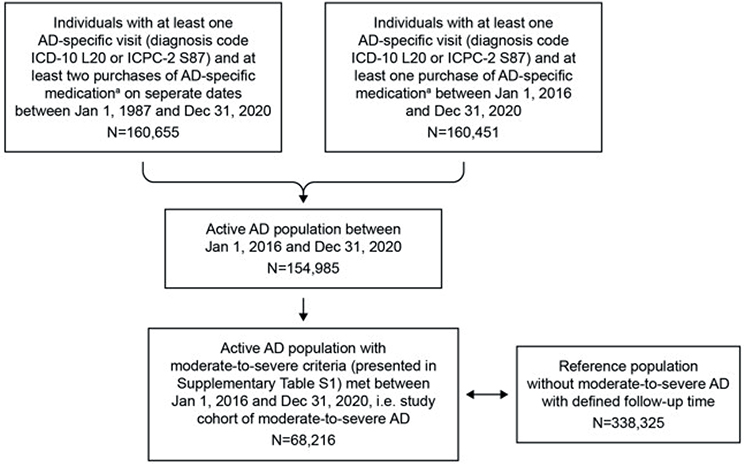
Fig. 1. Flowchart showing identification of patients with moderate-to-severe atopic dermatitis (AD). aMedication reported in Table II (phototherapy was excluded).
Index date (date of cohort entry) was either 1 January 2016 or the date when moderate-to-severe AD was identified if that occurred subsequently. Patients with moderate-to-severe AD were followed from index date to 31 December 2020 or time of death, whichever occurred first. For each patient identified with moderate-to-severe AD, 5 reference subjects without moderate-to-severe AD matched for sex, age, and residential area (postal code) were randomly selected by the Finnish Digital and Population Services Agency. For these individuals, follow-up times were matched to those of their counterparts with moderate-to-severe AD (maximum 5 years, unless death occurred).
Ethical considerations
This study was conducted in accordance with Good Pharmacoepidemiology Practices (18) and all applicable laws and regulations, including the Finnish Act on the Secondary Use of Health and Social Data (552/2019) (19). Data permits and data access were provided by the Finnish Social and Health Data Permit Authority Findata and Statistics Finland (permit nos. THL/7005/14.02.00/2020 and TK/2412/07.03.00/2021, respectively). Only aggregated statistical results were transferred out of the secure environment where data were stored and analysed, and anonymity of the study population was ensured by Findata review. Data were collected retrospectively; no study visits, additional monitoring, or tests were mandated. Thus, no individual participant consent or separate approval of an ethical review board were required.
Statistical analysis
Demographics, disease characteristics, patient journey between primary and secondary care, and treatment patterns in individuals with moderate-to-severe AD during 2016–2020 were investigated. In addition, comorbidities of special interest (see Table SII; only for adults), and use of healthcare resources in primary and secondary care were investigated in the moderate-to-severe AD cohort and compared with those in the matched reference population during their follow-up period. Comorbidities were additionally classified as atopic, psychiatric, gastrointestinal, other, and cancer (Table SII). For healthcare visits, only one visit per day was considered. When calculating the annual number of visits, zeros were added for those who had no visits.
Individuals with moderate-to-severe AD were stratified according to age group (children [0–11 years], adolescents [12–17 years], and adults [≥ 18 years]) on the basis of their age at the end of the study period (31 December 2020; for cohort algorithm), at the end of the observational year (for annual analyses), or at the beginning of the individual follow-up period (for analyses in individuals with moderate-to-severe AD vs the reference population).
For studying patients’ journeys between primary and secondary care, only people whose first AD diagnosis was given at primary care during the study period (2016–2020) were included to ensure reliable results, as availability of the primary care data was limited prior to the study period. Yearly treatment patterns were studied among people with active moderate-to-severe AD during each study year. Activity was determined by applying criteria for moderate-to-severe AD (Table SI) on an annual basis.
All data were managed and analysed in a secure environment provided by the Finnish Institute for Health and Welfare. Data management and statistical analyses were performed with R (version 4.2.1) and R Studio (version 2022.02.1) (R Foundation for Statistical Computing, Vienna, Austria) and results were reported descriptively.
RESULTS
Participants
From 154,985 patients with active atopic dermatitis, we identified 68,216 with moderate-to-severe AD (44.0%). The study cohort comprised the 68,216 patients with moderate-to-severe AD whereas the reference population consisted of 338,325 subjects with defined follow-up time. The annual number of patients with moderate-to-severe AD was relatively stable over the study period; the number of new cases in each calendar year ranged from 8,476 to 10,002 between 2016 and 2020.
Characteristics of patients with moderate-to-severe AD at the end of 2020 are displayed in Table I. During the study period (2016–2020), approximately one-third of patients were identified to have moderate-to-severe AD before the age of 5 years (Fig. 2).
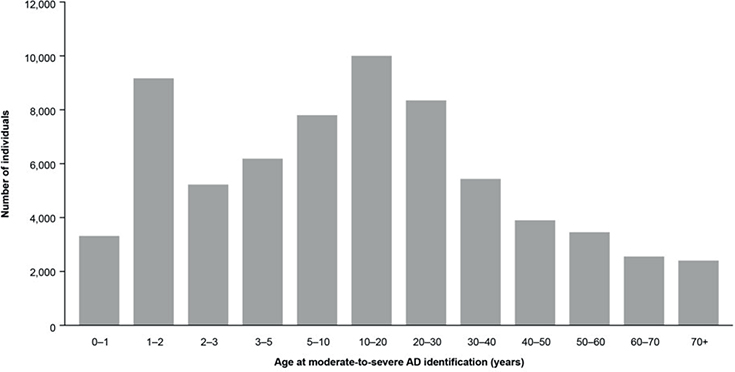
Fig. 2. Distribution of age at identified moderate-to-severe atopic dermatitis (AD) diagnosis in Finland (n=68,216).
Patient journey between primary and secondary care
Among 19,796 patients with moderate-to-severe AD whose first AD diagnosis was given in primary care during 2016–2020, a total of 6,360 (32.1%) were seen in secondary care at a median (interquartile range; IQR) 3.0 (1.0, 10.0) months post-diagnosis and 1,292 (20.3% of these 6,360) were subsequently seen back in primary care after a median (IQR) of 8.0 (2.0, 17.0) months.
Treatment patterns in patients with moderate-to-severe AD
Across all 3 age groups topical corticosteroids (TCS) as well as emollients were the 2 categories of AD medications most frequently used year-by-year throughout the study (by more than half the patients in each group; Table II). Between 2016 and 2020, use of oral antibiotics for skin infections declined in all age groups. Systemic glucocorticoids were infrequently used by children and adolescents whereas approximately 25% of adults were prescribed these drugs. Ciclosporin and azathioprine were rarely used across all age groups. Methotrexate was little used across all age groups although there was a tendency for increasing uptake in adults from 3.3% in 2016 to 5.7% in 2020. There were no records of use of dupilumab therapy in children throughout the study whereas adult use of this medication commenced in 2018 and adolescent use in 2020; reported uptake was 2.3% for adults and 0.8% for adolescents in 2020.
| Factor | 2016 | 2017 | 2018 | 2019 | 2020 |
| Children aged 0–11 years, n (%) | n=7,351 | n=7,942 | n=7,873 | n=7,700 | n=6,967 |
| Emollients | 5,422 (73.8) | 6,304 (79.4) | 6,267 (79.6) | 6,110 (79.4) | 5,722 (82.1) |
| Topical corticosteroids | 4,270 (58.1) | 4,602 (57.9) | 4,562 (57.9) | 4,447 (57.8) | 4,519 (64.9) |
| Oral antibiotics for skin infections | 4,067 (55.3) | 4,269 (53.8) | 4,188 (53.2) | 3,989 (51.8) | 2,524 (36.2) |
| Topical calcineurin inhibitors | 1,065 (14.5) | 1,170 (14.7) | 1,179 (15.0) | 1,101 (14.3) | 1,341 (19.2) |
| Topical antibiotics for skin infections | 646 (8.8) | 668 (8.4) | 711 (9.0) | 701 (9.1) | 602 (8.6) |
| Hydroxyzine | 1,027 (14.0) | 860 (10.8) | 800 (10.2) | 671 (8.7) | 590 (8.5) |
| Glucocorticoids for systemic use | 268 (3.6) | 230 (2.9) | 239 (3.0) | 237 (3.1) | 137 (2.0) |
| Phototherapyb | 40 (0.5) | 47 (0.6) | 36 (0.5) | 37 (0.5) | 47 (0.7) |
| Methotrexate | 23 (0.3) | 25 (0.3) | 26 (0.3) | 20 (0.3) | 26 (0.4) |
| Azathioprine | 7 (0.1) | 6 (0.1) | 7 (0.1) | 10 (0.1) | 14 (0.2) |
| Ciclosporin | <5 (<0.1) | <5 (<0.1) | 5 (0.1) | 9 (0.1) | 7 (0.1) |
| Mycophenolic acid | <5 (<0.1) | <5 (<0.1) | <5 (<0.1) | <5 (<0.1) | <5 (<0.1) |
| Dupilumab | 0 (0.0) | 0 (0.0) | 0 (0.0) | 0 (0.0) | 0 (0.0) |
| Adolescents aged 12–17 years, n (%) | n=1,291 | n=1,445 | n=1,465 | n=1,456 | n=1,569 |
| Emollients | 961 (74.4) | 1,139 (78.8) | 1,157 (79.0) | 1,134 (77.9) | 1,213 (77.3) |
| Topical corticosteroids | 965 (74.7) | 1,070 (74.0) | 1,098 (74.9) | 1,066 (73.2) | 1,200 (76.5) |
| Topical calcineurin inhibitors | 391 (30.3) | 425 (29.4) | 450 (30.7) | 364 (25.0) | 514 (32.8) |
| Oral antibiotics for skin infections | 486 (37.6) | 529 (36.6) | 540 (36.9) | 507 (34.8) | 444 (28.3) |
| Topical antibiotics for skin infections | 82 (6.4) | 114 (7.9) | 122 (8.3) | 133 (9.1) | 140 (8.9) |
| Glucocorticoids for systemic use | 166 (12.9) | 160 (11.1) | 154 (10.5) | 146 (10.0) | 137 (8.7) |
| Hydroxyzine | 159 (12.3) | 139 (9.6) | 148 (10.1) | 132 (9.1) | 134 (8.5) |
| Phototherapyb | 44 (3.4) | 65 (4.5) | 44 (3.0) | 50 (3.4) | 54 (3.4) |
| Methotrexate | 18 (1.4) | 22 (1.5) | 19 (1.3) | 27 (1.9) | 28 (1.8) |
| Azathioprine | 14 (1.1) | 13 (0.9) | 14 (1.0) | 10 (0.7) | 14 (0.9) |
| Dupilumab | 0 (0.0) | 0 (0.0) | 0 (0.0) | 0 (0.0) | 12 (0.8) |
| Ciclosporin | <5 (<0.4) | 7 (0.5) | 7 (0.5) | <5 (<0.4) | 7 (0.4) |
| Mycophenolic acid | <5 (<0.4) | <5 (<0.4) | 0 (0.0) | <5 (<0.4) | <5 (<0.4) |
| Adults aged ≥18 years, n (%) | n=6,973 | n=7,113 | n=7,053 | n=6,970 | n=8,171 |
| Topical corticosteroids | 5,800 (83.2) | 5,981 (84.1) | 5,830 (82.7) | 5,845 (83.9) | 6,853 (83.9) |
| Emollients | 5,062 (72.6) | 5,547 (78.0) | 5,429 (77.0) | 5,451 (78.2) | 6,043 (74.0) |
| Oral antibiotics for skin infections | 3,587 (51.4) | 3,638 (51.1) | 3,486 (49.4) | 3,345 (48.0) | 3,478 (42.6) |
| Topical calcineurin inhibitors | 2,106 (30.2) | 2,320 (32.6) | 2,184 (31.0) | 2,089 (30.0) | 2,949 (36.1) |
| Glucocorticoids for systemic use | 1,900 (27.2) | 1,809 (25.4) | 1,860 (26.4) | 1,740 (25.0) | 1,921 (23.5) |
| Hydroxyzine | 1,349 (19.3) | 1,305 (18.3) | 1,134 (16.1) | 1,123 (16.1) | 1,225 (15.0) |
| Topical antibiotics for skin infections | 456 (6.5) | 450 (6.3) | 454 (6.4) | 504 (7.2) | 538 (6.6) |
| Phototherapyb | 481 (6.9) | 464 (6.5) | 449 (6.4) | 478 (6.9) | 506 (6.2) |
| Methotrexate | 232 (3.3) | 284 (4.0) | 319 (4.5) | 387 (5.6) | 467 (5.7) |
| Dupilumab | 0 (0.0) | 0 (0.0) | 9 (0.1) | 98 (1.4) | 187 (2.3) |
| Ciclosporin | 103 (1.5) | 107 (1.5) | 106 (1.5) | 114 (1.6) | 127 (1.6) |
| Azathioprine | 101 (1.4) | 110 (1.5) | 126 (1.8) | 133 (1.9) | 111 (1.4) |
| Mycophenolic acid | 18 (0.3) | 22 (0.3) | 19 (0.3) | 22 (0.3) | 25 (0.3) |
| aActive determined annually by applying criteria for moderate-to-severe AD (see Table SI) on an annual basis. bProcedure code WXQ*. | |||||
Further analysis of patterns of medication use by the entire cohort with moderate-to-severe AD in a single year (2020; n=67,614) revealed that among 1,619 patients (2.4%) who took systemic drugs (methotrexate, azathioprine, ciclosporin, mycophenolic acid, and/or dupilumab), most used them in combination with topical agents (emollients, TCS, and/or topical calcineurin inhibitors [TCI]; 75.6%) or temporary add-on medications (oral/topical antibiotics for skin infections, oral glucocorticoids, and/or hydroxyzine; 60.0%). Users of topical treatment accounted for 60.8% of the entire cohort; of these, 40.2% concomitantly took temporary add-on medications, whereas, overall, 34.9% of the entire cohort used temporary medications.
Comorbidities in adults with moderate-to-severe AD vs reference population
Compared with the reference population, adults with moderate-to-severe AD were markedly more likely to have other atopic conditions and somewhat more likely to have comorbid psychiatric, gastrointestinal, and other conditions over the course of their follow-up (Fig. 3).

Fig. 3. Percentage distribution of diagnosed comorbidities of special interest in adults (≥18 years) with moderate-to-severe atopic dermatitis (AD) (n=31,297) and reference subjects (n=15,5024) during their follow-up period. ADHD: attention-deficit hyperactivity disorders.
Use of healthcare resources in patients with moderate-to-severe AD vs reference population
Nearly all patients with moderate-to-severe AD and reference subjects had at least 1 primary healthcare visit during their follow-up period (98.0% vs 93.4%). Patients with moderate-to-severe AD (n=68,216) had a median (IQR) of 7.5 (4.5, 12.2) primary healthcare visits annually, compared with 5.0 (2.7, 8.4) visits annually for the reference population. A greater proportion of all 3 age groups with moderate-to-severe AD had visits to primary healthcare and secondary healthcare during their follow-up compared with reference subjects (Fig. 4). The number of patients with moderate-to-severe AD undergoing secondary healthcare visits to any specialty, dermatologic, or psychiatric care was 60,169 (88.2%), 30,181 (44.2%), and 7,523 (11.0%), respectively, during their follow-up, whereas among reference subjects the number was 197,292 (58.3%), 9,686 (2.9%), and 23,099 (6.8%), respectively. Overall, 15,586 (22.8%) of the 68,216 patients with moderate-to-severe AD and 49,940 (14.8%) of the 338,325 reference subjects had overnight hospital visits during their follow-up.
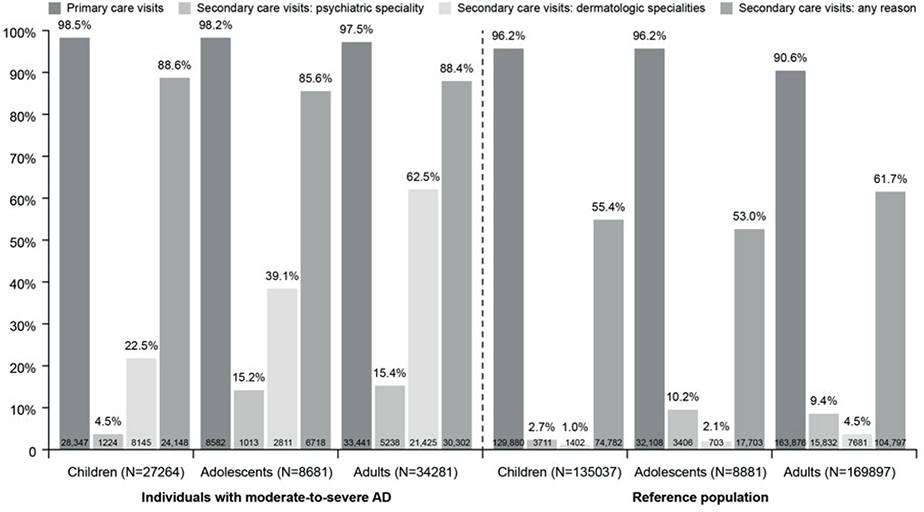
Fig. 4. Proportion of individuals with moderate-to-severe atopic dermatitis (AD) and in the reference population with primary and secondary care visits during their follow-up period.
DISCUSSION
This study investigated characteristics, treatment patterns, and healthcare resources consumption among a large cohort of patients with moderate-to-severe AD using coded medical records data extracted from national healthcare databases covering the entire population of Finland. As has been reported previously for AD (irrespective of severity), both in studies from across Europe and in those specific to Finland (10, 12, 20), we found that patients with moderate-to-severe AD frequently received the diagnosis in early childhood and that children and adolescents made up a large proportion of the study population (49.7%). However, approximately half the patients in our study cohort were adults aged ≥18 years at study entry. Other researchers have noted an increasing prevalence of active AD among Finnish adults (12, 20). Therefore moderate-to-severe AD seems to markedly affect adults, whether arising in childhood or in adulthood. In the present study, moderate-to-severe AD affected Finnish people of both sexes fairly evenly in childhood and adolescence, with a tendency for increasing female preponderance in adults. A tendency for Finnish adults with severe AD to more often be women has been reported previously (21).
The algorithm developed for moderate-to-severe AD in early childhood used in this study was based on several combinations of criteria. Some of these were expected to positively predict moderate-to-severe AD, while others (e.g., the combination of an AD diagnosis, 2 or more primary care visits, and 1 or more prescription(s) of antibiotics within the same year) had more uncertainty due to the use of antibiotics for reasons other than skin infection. Sensitivity analyses for cohort formation algorithms associated with uncertainty were performed with marginal contribution to the child cohort.
A previous Finnish study showed a higher risk of concomitant conditions with increasing AD severity (22). In the present study, patients of all ages with moderate-to-severe AD were both diagnosed and treated in primary and secondary care settings, and, overall, made more primary and secondary healthcare visits annually for any reason, as well as more dermatologic specialty visits, than the reference population. It is likely that our algorithm for identifying moderate-to-severe AD, which included AD-specific healthcare visits, contributed to this difference; however, patients with moderate-to-severe AD experienced a higher frequency than the reference population of all disease categories analysed, including comorbid atopic conditions, psychiatric disorders, and gastrointestinal complaints. The connection between AD and atopic disorders such as asthma, allergic rhinitis, and immunoglobulin-E-mediated food allergy has been well established (1, 23). In our setting, the higher burden of psychiatric comorbidities in patients with moderate-to-severe AD vs the reference population was supported by the higher proportion of patients with psychiatric specialty visits. This is corroborated by a previous nationwide study conducted in Finland, and those investigators concluded assessment of mental health should be considered as part of the standard of care in AD (4).
Regarding the identified association between AD and gastrointestinal conditions, there is evidence of bidirectional interactions between commensal microbes located in the gastrointestinal system and the skin, known as the gut–skin axis. Members of the gut microbiome can influence skin conditions through their metabolic activity and impact on the host immune system (3, 24). It has been hypothesized that disrupted gut integrity can allow dysbiotic gut microbes, toxic products, and altered immune cells to pass via the circulatory system to the skin and exacerbate cutaneous disorders including AD (25).
In many countries, increasing severity of AD confers a strong negative impact on work productivity (26). Moreover, AD incurs a substantial economic burden to the Finnish healthcare system and affected patients, who also have negatively affected quality of life (27). Clearly, more effective treatments that control symptoms and sequelae of this common, chronic condition are needed.
For most individuals in the study cohort, moderate-to-severe AD was managed by polypharmacy. In addition to emollients, TCS and, to a lesser extent, TCI were mainstays of treatment in individuals with moderate-to-severe AD across all age groups, as might be expected: European guidelines specifically recommend TCS for the treatment of moderate-to-severe AD whereas TCI may be reserved for dermal areas where TCS could cause side effects (14). Up to 55% of patients in the yearly active cohorts used oral antibiotics for skin infections, likely reflecting poor AD disease control in these individuals. Phototherapy visits were infrequently recorded across all age groups during the study period, although data for phototherapy seem not to be comprehensively available from Finnish registers, drawing caution on our finding on phototherapy usage.
The number of patients with active moderate-to-severe AD using systemic treatment was relatively low. Up-to-date treatment guidelines suggest that systemic drugs are increasingly important for individuals with moderate-to-severe AD whose signs and symptoms are not adequately controlled by topical treatments and phototherapy, as well as reduction in the usage of potent TCS over long time-periods (14). A general approach to the treatment of AD in adults involves a stepped-care plan whereby all people receive baseline therapy such as emollients and, where appropriate, TCS/TCI are added for mild-to-moderate disease, with conventional systemic drugs, biological medicines, or JAK inhibitors for more severe AD. In children and adolescents, a similar treatment plan is recommended, although fewer novel systemics are currently available for paediatric use (14). Our data show a decreasing trend in the use of systemic glucocorticoids, as well as oral antibiotics for skin infections and hydroxyzine, in parallel with increasing use of methotrexate and dupilumab during the observation period (2016–2020). These findings could reflect changes to treatment guidelines over the study period and the achievement of better treatment outcomes in individuals with moderate-to-severe AD. In addition, dupilumab was only approved in the setting of adult AD in the European Union (EU) in September 2017, reimbursed in Finland from October 2018, and was yet to be approved for paediatric use during the study period (approved for children aged 6–11 years in 2020). Increasing use of newer therapies such as monoclonal antibodies and JAK inhibitors seems more likely in future as approval, acceptance, and familiarity with these agents grow over time. A recent registry-based study conducted in Finland identified that most people treated with dupilumab received this agent as second- or third-line therapy (21), probably due to reimbursement criteria rather than individual physician preference – a practice that might slow its uptake. Baricitinib, the first EU-approved JAK inhibitor for the treatment of AD in adults (licensed September 2020), was not available during the time-period covered by this study.
Limitations
This study has several potential limitations. Although cohort identification was based on an algorithm validated for a UK healthcare setting (16) and amended to the Finnish clinical management of AD, it has not been validated for the Finnish population, which may lead to under- or over-estimation of moderate-to-severe AD. The data used for this analysis were recorded for administrative purposes, with some risk of misclassification and other known sources of error related to the use of secondary data. Also, non-reimbursed drug purchases were not recorded in the registers before the study period, so the history of medication use cannot be considered complete.
Conclusions
AD and its moderate-to-severe forms affect not only children and adolescents but people of all ages in Finland, presenting in clinic with either persistent, recurrent, or de novo AD. Individuals with moderate-to-severe AD display more comorbidities and undergo a higher rate of visits to primary and secondary care settings than reference subjects without moderate-to-severe AD. In line with changes to treatment guidelines and the availability of more effective treatments for patients with moderate-to-severe AD, the use of systemic glucocorticoids, oral antibiotics for skin infections, and hydroxyzine appear to be decreasing in Finland.
ACKNOWLEDGEMENTS
The sponsors acknowledge the participation of all volunteers and the study site personnel involved in the original research. Medical writing support was provided by Caroline Spencer and Alexander Kahney (Rx Communications, Mold, UK), funded by Eli Lilly and Company.
IRB approval status: This study conformed to market research codes of conduct.
REFERENCES
- Langan SM, Irvine AD, Weidinger S. Atopic dermatitis. Lancet 2020; 396: 345–360. https://doi.org/10.1016/S0140-6736(20)31286-1
- Theodosiou G, Montgomery S, Metsini A, Dalgard FJ, Svennson A, Kobyletzki LB. Burden of atopic dermatitis in Swedish adults: a population-based study. Acta Derm Venereol 2019; 99: 964–970. https://doi.org/10.2340/00015555-3257
- Paller A, Jaworski JC, Simpson EL, Boguniewicz M, Russell JJ, Block JK, et al. Major comorbidities of atopic dermatitis: beyond allergic disorders. Am J Clin Dermatol 2018; 19: 821–838. https://doi.org/10.1007/s40257-018-0383-4
- Kauppi S, Jokelainen J, Timonen M, Tasanen K, Huilaja L. Adult patients with atopic eczema have a high burden of psychiatric disease: a Finnish nationwide registry study. Acta Derm Venereol 2019; 99: 647–651. https://doi.org/10.2340/00015555-3165
- Barbarot S, Auziere S, Gadkari A, Girolomoni G, Puig L, Simpson EL, et al. Epidemiology of atopic dermatitis in adults: results from an international survey. Allergy 2018; 73: 1284–1293. https://doi.org/10.1111/all.13401
- Bylund S, Kobyletzki LB, Svalstedt M, Svensson Å. Prevalence and incidence of atopic dermatitis: a systematic review. Acta Derm Venereol 2020; 100: 320–329. https://doi.org/10.2340/00015555-3510
- Kleyn CE, McKenzie R, Meeks A, Gittens B, von Arx L-B. Prevalence and treatment patterns of atopic dermatitis in the UK Clinical Practice Research Datalink. Skin Health Dis 2023; 3: e232. https://doi.org/10.1002/ski2.232
- Vakharia PP, Silverberg JI. Adult-onset atopic dermatitis: characteristics and management. Am J Clin Dermatol 2019; 20: 771–779. https://doi.org/10.1007/s40257-019-00453-7
- Kim JP, Chao LX, Simpson EL, Silverberg JI. Persistence of atopic dermatitis (AD): a systematic review and meta-analysis. J Am Acad Dermatol 2016; 75: 681–687. https://doi.org/10.1016/j.jaad.2016.05.028
- Kowalska-Olędzka E, Czarnecka M, Baran A. Epidemiology of atopic dermatitis in Europe. J Drug Assess 2019; 8: 126–128. https://doi.org/10.1080/21556660.2019.1619570
- Raimondo A, Lembo S. Atopic dermatitis: epidemiology and clinical phenotypes. Dermatol Pract Concept 2021: 11; e2021146. https://doi.org/10.5826/dpc.1104a146
- Kiiski V, Salava A, Susitaival P, Barnhill S, Remitz A, Heliovaara M. Atopic dermatitis in adults: a population-based study in Finland. Int J Dermatol 2022; 61: 324–330. https://doi.org/10.1111/ijd.15912
- Thyssen JP, Berents T, Bradley M, Deleuran M, Grimstad O, Korhonen L, et al. Clinical management of atopic dermatitis in adults: mapping of expert opinion in 4 Nordic countries using a modified Delphi process. Acta Derm Venereol 2020; 100: 1–11. https://doi.org/10.2340/00015555-3369
- Wollenberg A, Kinberger M, Arents B, Aszodi N, Avila-Valli G, Barbarot S, et al. European guideline (EuroGuiDerm) on atopic eczema – part II: Non-systemic treatments and treatment recommendations for special AE populations. J Eur Acad Dermatol Venereol 2022; 36: 1904–1926. https://doi.org/10.1111/jdv.18429
- Finnish Medical Society Duodecim. Atopic eczema. Current Care Guideline. Working group set up by the Finnish Medical Society Duodecim, the Finnish Association of General Practice, and the Finnish Dermatological Society [in Finnish]. Helsinki: Finnish Medical Society Duodecim, 2023. Available from: www.kaypahoito.fi
- Abuabara K, Magyari AM, Hoffstad O, Jabbar-Lopez ZK, Smeeth L, Williams HC, et al. Development and validation of an algorithm to accurately identify atopic eczema patients in primary care electronic health records from the UK. J Invest Dermatol 2017; 137: 1655–1662. https://doi.org/10.1016/j.jid.2017.03.029
- Hanifin JM, Baghoomian W, Grinich E, Leshem YA, Jacobson M, Simpson EL. The Eczema Area Severity Index: a practical guide. Dermatitis 2022; 33: 187–192. https://doi.org/10.1097/DER.0000000000000895
- International Society for Pharmacoepidemiology (ISPE). Guidelines for Good Pharmacoepidemiology Practices (GPP). Third revision, 2015 [accessed December 2023]. Available from: www.pharmacoepi.org/resources/policies/guidelines-08027/
- Finlex. Finlex Data Bank 2019 [in Finnish] [accessed December 2023]. Available from: www.finlex.fi/fi/laki/alkup/2019/20190552
- Salava A, Rieppo R, Lauerma A, Salo V. Age-dependent distribution of atopic dermatitis in primary care: a nationwide population-based study from Finland. Acta Derm Venereol 2022; 102: adv00738. https://doi.org/10.2340/actadv.v102.2287
- Kiiski V, Vikkula J, Ukkola-Vuoti L, Lassenius MI, Kopra J. Real-world treatment patterns of Finnish adult patients with atopic dermatitis: from topicals to systemic therapy. J Eur Acad Dermatol Venereol Clin Pract 2023; 2: 819–829. https://doi.org/10.1002/jvc2.247
- Kiiski V, Ukkola-Vuoti L, Vikkula J, Ranta M, Lassenius MI, Kopra J. Effect of disease severity on comorbid conditions in atopic dermatitis: nationwide registry-based investigation in Finnish adults. Acta Derm Venereol 2023; 103: adv00882. https://doi.org/10.2340/actadv.v103.4447
- Davis DMR, Drucker AM, Alikhan A, Bercovitch L, Cohen DE, Darr JM, et al. American Academy of Dermatology Guidelines: awareness of comorbidities associated with atopic dermatitis in adults. J Am Acad Dermatol 2020; 86: 1335–1336. https://doi.org/10.1016/j.jaad.2022.01.009
- Sinha S, Lin G, Ferenczi K. The skin microbiome and the gut–skin axis. Clin Dermatol 2021; 39: 829–839. https://doi.org/10.1016/j.clindermatol.2021.08.021
- Mahmud MR, Akter S, Tamanna SK, Mazumder L, Esti IZ, Banerjee S, et al. Impact of gut microbiome on skin health: gut–skin axis observed through the lenses of therapeutics and skin diseases. Gut Microbes 2022; 14: 2096995. https://doi.org/10.1080/19490976.2022.2096995
- Andersen L, Nyeland ME, Nyberg F. Increasing severity of atopic dermatitis is associated with a negative impact on work productivity among adults with atopic dermatitis in France, Germany, the U.K. and the U.S.A. Br J Dermatol 2020; 182: 1007–1016. https://doi.org/10.1111/bjd.18296
- Mäkelä K, Salava A, Remitz A. Economic burden and quality of life of patients with moderate to severe atopic dermatitis in a tertiary care hospital in Helsinki, Finland: a survey-based study. Cutis 2023; 112: E44–E51. https://doi.org/10.12788/cutis.0831