SHORT COMMUNICATION
Crusted Scabies in a Patient being Treated with Spesolimab for Generalized Pustular Psoriasis
Hanna SCHRATTER, Thomas GRAIER, Franz LEGAT, Rainer HOFMANN-WELLENHOF and Peter WOLF*
Department of Dermatology and Venereology, Medical University of Graz, Auenbruggerplatz 8, AT-8036 Graz, Austria. *E-mail: peter.wolf@medunigraz.at
Citation: Acta Derm Venereol 2025; 105: adv42177. DOI: https://doi.org/10.2340/actadv.v105.42177.
Copyright: © 2025 The Author(s). Published by MJS Publishing, on behalf of the Society for Publication of Acta Dermato-Venereologica. This is an Open Access article distributed under the terms of the Creative Commons Attribution-NonCommercial 4.0 International License (https://creativecommons.org/licenses/by-nc/4.0/).
Submitted: Oct 5, 2024. Accepted after revision: Jan 9, 2025. Published: Feb 5, 2025.
INTRODUCTION
Generalized pustular psoriasis (GPP) is characterized by sterile pustules on non-acral skin and is primarily caused by a deregulated innate immune system. It has either persisted for more than three months or the patient has relapsed at least once. It can occur with or without plaque psoriasis and systemic inflammation, and flares may lead to life-threatening systemic effects (1–4). Episodes of GPP may appear spontaneously or may be triggered by various factors. Pregnancy, electrolyte imbalances, the use of or withdrawal from certain medications, and infections are discussed as possible triggers (5). A key driver of the autoinflammatory responses involved in the development of GPP is the interleukin (IL)-36 signaling pathway. In some patients, loss-of-function mutations have been identified in IL36RN, which encodes an IL-36–receptor antagonist (2, 6). Spesolimab, a monoclonal IL-36-receptor antibody, was approved for use in the treatment of GPP flares (7, 8). Recently, a case report was published showing the successful treatment of acute generalized exanthematous pustulosis (AGEP) with spesolimab (9). Scabies is a contagious skin disease caused by the ectoparasite Sarcoptes scabiei var. hominis. While the parasite burden in classic scabies is low (i.e., 10–15 mites), scabies crustosa can be associated with an infestation of millions of mites (10). Crusted scabies mainly affects patients with severe immunodeficiency due to disease (e.g., AIDS, HTLV1 infection, malignancy) or undergoing immunosuppressive treatment (11).
CASE REPORT
A 64-year-old man presented in a poor general condition, afebrile, with generalized pustular dermatosis. Clinical examination revealed the presence of partially confluent, erythematous papules and pustules distributed over the entire integument except for the acral skin (Fig. 1). The patient’s medical history included psoriatic disease, previously treated with topical calcipotriol and betamethasone in a private practice, obesity, chronic obstructive pulmonary disease (COPD), chronic renal failure due to hypertensive glomerulopathy and atrial fibrillation. Six months earlier, he presented with a similar skin condition, a generalized pustular dermatosis was suspected and a differential diagnosis of AGEP as a drug reaction to naproxen or metamizole versus GPP was considered. At the time, treatment with topical steroids rapidly resolved the symptoms. Due to the previous suspicion of AGEP, a detailed medication history was taken to ensure that no suspicious medications had been taken. The laboratory parameters showed elevated leukocyte levels (16.72 109/L), neutrophilia (15.7 109/L), and an increased CRP (43.4 mg/L). A swab of a pustule showed no evidence of bacterial growth. A chest X-ray showed evidence of pulmonary congestion without definite signs of infiltrates. A skin biopsy taken for further assessment revealed subcorneal, intraepidermal pustules containing mainly neutrophils (Fig. 2). The diagnosis of GPP was now established according to the ERASPEN definition (1), that is (i) primary sterile, macroscopically visible pustules on non-acral skin; (ii) recurrent course (first flare six months ago, currently second flare); moreover, (iii) history of plaque type psoriasis; and (iv) signs of systemic inflammation. In the course of the disease, the leukocyte levels increased to 24.13 109/L and CRP to 153.9 mg/L, and the patient developed hyperkalemia due to renal dysfunction. Due to suspicion of infectious exacerbation of COPD with respiratory decompensation, antibiotic treatment was initiated with oral clarithromycin followed by intravenous piperacillin/tazobactam. The patient was afebrile throughout the hospital stay. As initial treatment of the rash with topical betamethasone dipropionate twice daily for 12 days was ineffective, spesolimab 900 mg was administered intravenously, which resulted in rapid improvement and reduction of erythema and resolution of pustules. Within two weeks after the administration, however, the clinical manifestation had completely changed. Generalized eczematous lesions appeared on the skin. Red patches with thick, scaly plaques occurred especially on the elbows. Numerous burrows with brownish triangular structures were evident upon dermoscopic examination (Fig. 3). Crusted scabies was diagnosed and confirmed by the detection of mites upon parasitological sampling. The skin lesions completely resolved after two courses of topical permethrin 5% and oral ivermectin. The post-hoc careful re-evaluation of the archived clinical photographs of the patient taken on admission (two weeks prior to the start of spesolimab treatment) revealed that inconspicuous, slightly crusted lesions consistent with a diagnosis of scabies, i.e. scabies incognito, had been present on the flexural body sites (popliteal and axillary areas) of the patient (Fig. 1C). At the time of admission, the partially crusted skin lesions were interpreted as clearing of pustules of GPP. In retrospect, this may have been a discreet indication of scabies.
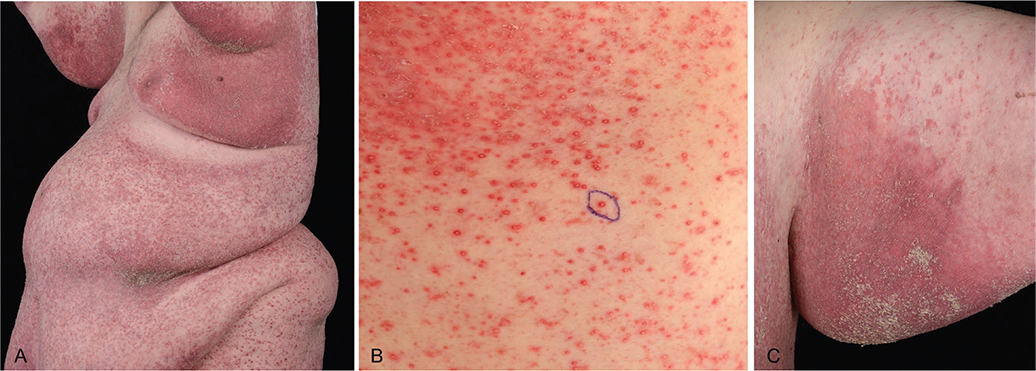
Fig. 1. Clinical presentation of the 64-year old man in February 2023.

Fig. 2. H/E staining of skin biopsy taken in February 2023.

Fig. 3. Clinical and dermoscopic presentation of crusted scabies of the patient in March 2023.
DISCUSSION
We report the transformation of scabies incognito into its crusted variant after administration of spesolimab to a patient with GPP. Moreover, the case illustrates that scabies may represent an infectious trigger of GPP. Indeed, episodes of GPP can occur either spontaneously or by being triggered. A combination of genetic predisposition and environmental risk factors, including infections, medications, and corticosteroid withdrawal, may increase the risk of GPP. An increased incidence of GPP has been described in patients with upper respiratory tract infections, varicella zoster or Epstein-Barr virus infections or cutaneous mycosis (5). Dermatologic conditions associated with scabies that have been described include scabies-associated leukocytoclastic vasculitis (12), and an increased risk of bullous pemphigoid following scabies has been discussed (13). We postulate that a mite infestation may have triggered GPP flares in our patient. Furthermore, the case indicates, that a prolonged immunomodulatory effect of spesolimab has driven the progression of common scabies to crusted scabies. Indeed, crusted scabies mainly affects patients with severe immunodeficiency and is more common in patients receiving biologicals due to their immunomodulating and immunosuppressive effects. Cases of crusted scabies have been described in patients receiving adalimumab (10), infliximab (14), and etanercept (15) for rheumatic diseases. The IL-36 signaling cascade plays a key role in the regulation of the innate immune system. Spesolimab works by blocking this pathway, thereby modulating the immune response. Infections, particularly urinary tract infections, have been reported as a possible side effect of spesolimab treatment (7). Taken together, this evidence suggests that the scabies infection triggered GPP in the patient presented and suggests even more strongly that the suppression of the innate immune response by spesolimab drove the progression of scabies to its crusted variant.
ACKNOWLEDGEMENT
Conflict of interests: Peter Wolf has received research grants, speaker and consulting honoraria from Boehringer-Ingelheim. Thomas Graier has received honoraria and/or travel grants from Novartis, Sanofi, AbbVie, Eli Lilly and Amgen, and participated on the advisory board of Almirall. The other authors have no conflicts of interest to declare.
REFERENCES
- Navarini AA, Burden AD, Capon F, Mrowietz U, Puig L, Köks S, et al. European consensus statement on phenotypes of pustular psoriasis. J Eur Acad Dermatol Venereol 2017; 31: 1792–1799. https://doi.org/10.1111/jdv.14386
- Marrakchi S, Puig L. Pathophysiology of generalized pustular psoriasis. Am J Clin Dermatol 2022; 23: 13–19. https://doi.org/10.1007/s40257-021-00655-y
- Bachelez H, Barker J, Burden AD, Navarini AA, Krueger JG. Generalized pustular psoriasis is a disease distinct from psoriasis vulgaris: evidence and expert opinion. Expert Rev Clin Immunol 2022; 18: 1033–1047. https://doi.org/10.1080/1744666X.2022.2116003
- Wolf P, Ceovic R, Conrad C, Falkensteiner K, Graier T, Kołt-Kamińska M, et al. Characteristics and management of generalized pustular psoriasis (GPP): Experience from the Central and Eastern Europe (CEE) GPP Expert Network. J Eur Acad Dermatol Venereol 2024; 38: 1531–1542. https://doi.org/10.1111/jdv.19808
- Boehner A, Navarini AA, Eyerich K. Generalized pustular psoriasis – a model disease for specific targeted immunotherapy, systematic review. Exp Dermatol 2018; 27: 1067–1077. https://doi.org/10.1111/exd.13699
- Bachelez H, Choon SE, Marrakchi S, Burden AD, Tsai TF, Morita A, et al. Inhibition of the interleukin-36 pathway for the treatment of generalized pustular psoriasis. N Engl J Med 2019; 380: 981–983. https://doi.org/10.1056/NEJMc1811317
- Bachelez H, Choon SE, Marrakchi S, Burden AD, Tsai TF, Morita A, et al. Trial of spesolimab for generalized pustular psoriasis. N Engl J Med 2021; 385: 2431–2440. https://doi.org/10.1056/NEJMoa2111563
- Blair HA. Spesolimab: First Approval. Drugs 2022; 82: 1681–1686. https://doi.org/10.1007/s40265-022-01801-4
- Russo G, Dumont S, Menzinger S, Pastor D, Toutous Trellu L, Kaya G, et al. Severe acute generalized exanthematous pustulosis successfully treated by spesolimab. Acta Derm Venereol 2024; 104: adv41311. https://doi.org/10.2340/actadv.v104.41311
- Belvisi V, Orsi GB, Del Borgo C, Fabietti P, Ianari A, Albertoni F, et al. Large nosocomial outbreak associated with a norwegian scabies index case undergoing TNF-α inhibitor treatment: management and control. Infect Control Hosp Epidemiol 2015; 36: 1358–1360. https://doi.org/10.1017/ice.2015.188
- Salavastru CM, Chosidow O, Boffa MJ, Janier M, Tiplica GS. European guideline for the management of scabies. J Eur Acad Dermatol Venereol 2017; 31: 1248–1253. https://doi.org/10.1111/jdv.14351
- Alabbadi A, Alalwi S, Alkhalifah R, Alfaraj D, Albreiki S, Bin Rubaian N, et al. Scabies-associated leukocytoclastic vasculitis: a case report and review of literature. Cureus 2021; 13: e20725. https://doi.org/10.7759/cureus.20725
- Chung SD, Lin HC, Wang KH. Increased risk of pemphigoid following scabies: a population-based matched-cohort study. J Eur Acad Dermatol Venereol 2014; 28: 558–564. https://doi.org/10.1111/jdv.12132
- Pipitone MA, Adams B, Sheth A, Graham TB. Crusted scabies in a patient being treated with infliximab for juvenile rheumatoid arthritis. J Am Acad Dermatol 2005; 52: 719–720. https://doi.org/10.1016/j.jaad.2004.12.039
- Saillard C, Darrieux L, Safa G. Crusted scabies complicates etanercept therapy in a patient with severe psoriasis. J Am Acad Dermatol 2013; 68: e138–e139. https://doi.org/10.1016/j.jaad.2012.09.049