ORIGINAL REPORT
Hidradenitis Suppurativa and Ocular Diseases: Real-world Evidence of 57,972 Patients
Jennifer VON STEBUT-MARX1,2, Robert PREISSNER3, Sylke SCHNEIDER-BURRUS2 and Saskia PREISSNER1
1Department of Oral and Maxillofacial Surgery, Charité-Universitätsmedizin Berlin, Corporate Member of Freie Universität Berlin, Humboldt-Universität zu Berlin, and Berlin Institute of Health, Berlin, Germany, 2Centre for Dermatosurgery, Havelklinik, Berlin, and 3Structural Bioinformatics Group, Science-IT and Institute for Physiology, Charité-Universitätsmedizin Berlin, Corporate Member of Freie Universität Berlin, Humboldt-Universität zu Berlin, and Berlin Institute of Health, Berlin, Germany
Hidradenitis suppurativa (HS) is a chronic inflammatory skin disease characterized by recurring dermal abscesses and cutaneous fistulas of intertriginous skin regions, significantly impacting patients’ quality of life. While HS has been associated with various comorbidities such as metabolic and chronic inflammatory diseases, many systemic effects of this systemic disease remain to be investigated. In this study, 2 cohorts of patients with and without HS were created – matched for sex, age, and nicotine dependence – each comprising 28,986 patients, using the real-world database TriNetX, to investigate the association of ocular diseases and HS. Not only an increased risk of disorders of refraction and accommodation in HS patients (OR 3.466; 95% CI 3.100, 3.876), but also a higher risk of ocular diseases, including disorders of the lacrimal system, was demonstrated when compared with the control cohort (OR 3.523; 95%CI 2.912, 4.263). Although previous studies have suggested an increased risk of ocular comorbidities in HS patients, ocular history is not routinely queried during visits. Here, the need for further exploration of the association of ocular diseases and HS and for incorporating this into clinical practice is emphasized.
SIGNIFICANCE
Hidradenitis suppurativa is a chronic inflammatory dermatological disease that significantly impacts patients’ quality of life. Recurring abscesses and draining tunnels in the skin lead to pain and strong body odour, and can result in permanent scarring. In addition to affecting the skin, hidradenitis suppurativa has been associated with a plethora of other diseases such as chronic inflammatory bowel diseases, rheumatological diseases, and metabolic disorders. Using global electronic medical records data, we determined an increased risk of ocular diseases in this patient cohort, underscoring the need for further research and interdisciplinary cooperation.
Key words: hidradenitis suppurativa; real-world data; comorbidities; ocular disease.
Citation: Acta Derm Venereol 2025; 105: adv42716. DOI: https://doi.org/10.2340/actadv.v105.42716.
Copyright: © 2025 The Author(s). Published by MJS Publishing, on behalf of the Society for Publication of Acta Dermato-Venereologica. This is an Open Access article distributed under the terms of the Creative Commons Attribution-NonCommercial 4.0 International License (https://creativecommons.org/licenses/by-nc/4.0/).
Submitted: Dec 12, 2024. Accepted after revision: Apr 16, 2025. Published: May 19, 2025.
Corr: Dr. med. Jennifer von Stebut-Marx, Department of Oral and Maxillofacial Surgery, Charité-Universitätsmedizin Berlin, Corporate Member of Freie Universität Berlin, Humboldt-Universität zu Berlin, and Berlin Institute of Health, Charitéplatz 1, DE-10117 Berlin, Germany. Email: jennifer.von-stebut@charite.de
Competing interests and funding: The authors have no conflicts of interest to declare.
This project was partly funded by the German Research Foundation (RE-4803/1-1).
INTRODUCTION
Hidradenitis suppurativa (HS, also known as acne inversa), is a chronic inflammatory skin disease primarily affecting the intertriginous areas such as the axillary and inguinal folds and the perianal/gluteal regions (1). Hyperkeratosis of the hair follicle infundibulum leads to the formation of cutaneous inflamed nodules, abscesses, and pus-draining fistulas (2). Due to pain, purulent secretion, and disfigurement, HS often severely impacts patients’ quality of life and professional activity (3, 4). Genetic predisposition, smoking, obesity, and hormonal changes are all known to influence the development of HS. Additionally, HS has been associated with numerous metabolic and chronic inflammatory diseases such as the metabolic syndrome, type 2 diabetes, atherosclerosis, spondylarthritis, and inflammatory bowel disease (5–8). Like HS, psoriasis is a chronic inflammatory skin condition linked to numerous systemic comorbidities. Studies have shown that 10–80% of psoriasis patients report ocular manifestations such as blepharitis, conjunctivitis, and uveitis in varying populations (9). This link between psoriasis and ocular diseases suggests the need to investigate the relationship between ocular diseases in other inflammatory dermatological diseases, such as HS. Although multiple ocular comorbidities have been identified in HS, data remain limited (10).
Due to the availability of large-scale patient data, real-world databases have become increasingly valuable for the unbiased study of diseases and comparison of pharmacological treatment (11). Using data from IBM’s real-world database Explorys, Italian researchers identified an increased burden of inflammatory ocular comorbidities in patients with HS. HS patients showed the highest odds ratio (OR) for episcleritis (OR 2.06; 95% CI 1.78–2.34). Other ocular inflammatory diseases, such as keratitis and conjunctivitis, were also found to be more common in HS patients (10). TriNetX is a global “real-world” database that provides access to de-identified electronic medical records from large healthcare organizations (12). The aim of our study was to examine the potential association of ocular diseases and HS using the TriNetX database in sex-, age-, and nicotine dependence-matched cohorts.
MATERIALS AND METHODS
Ethics approval
This study was reviewed and approved by Ethikkommission der Charité – Universitätsmedizin Berlin (EA4_064_18). This retrospective study is exempt from informed consent. The data reviewed are a secondary analysis of existing data, do not involve intervention or interaction with human subjects, and are de-identified per the de-identification standard defined in Section §164.514(a) of the HIPAA Privacy Rule. The process by which the data are de-identified is attested to through a formal determination by a qualified expert as defined in Section §164.514(b)(1) of the HIPAA Privacy Rule. This formal determination by a qualified expert refreshed in December 2020.
Cohort definition
The data used in this study were collected on 11 February 2025 from the TriNetX COVID-19 Research Network comprising 95 healthcare organizations (HCOs). These organizations provided access to electronic medical records (diagnoses, procedures, medications, laboratory values, genomic information) from 13,099,490 patients (80 HCOs for cohort 1, 85 HCOs for cohort 2) (see Appendix S1). Cohorts were defined by an inpatient encounter within the last 20 years, with or without an HS diagnosis (ICD-10 L73.2) for cohort 1 and cohort 2 (control cohort) respectively. Patients with comorbidities commonly associated with ocular disease were excluded from the analysis (see Appendix S2) (13).
Statistical analysis
TriNetX analytics tools were used for propensity score matching and Compare Outcomes analysis. After filtering for patients with and without HS (L73.2), we used propensity score matching for 1:1 age-, sex-, and nicotine dependence-based matching to estimate the impact of HS on the occurrence of ocular disease. Risk difference, risk ratio, and odds ratio were calculated for each cohort. The comorbidities were included independent of whether they had been diagnosed prior to or after HS diagnosis.
RESULTS
In this study, we received medical health records of 28,986 patients with HS and 13,070,504 patients without HS. Data inquiry, allocation, and propensity score matching are summarized below in a consolidated standard of reporting trial (CONSORT) flow diagram (see Appendix S1).
After allocating patients to the respective cohorts, we performed age-, sex-, and nicotine dependence-based propensity score matching. Thereafter, both cohorts consisted of 28,986 patients, with a mean age of 31.4 years (SD: 11.8 years) at the index event (HS diagnosis). After matching, both cohorts included 23,042 women (79.5%) and 5,944 men (20.5%), while 6,394 patients (22.1%) had co-diagnosed nicotine dependence in each cohort.
Hidradenitis suppurative is associated with an increased risk of ocular disease
After propensity score matching, we evaluated the risk of ocular diseases in both cohorts (Cohort I: HS patients, Cohort II: controls) (see Table I). The risk of visual disturbances was higher in Cohort I (1,141 patients) compared with Cohort II (540 patients), resulting in a risk difference of 0.021 (95%CI 0.018, 0.023). Disorders of refraction and accommodation were also significantly more common in Cohort I (1,370 patients) compared with Cohort II (409 patients) with an OR of 3.466 (95%CI 3.100, 3.876). Similarly, the risk of disorders of the lacrimal system, such as dacryoadenitis and epiphora, was higher in HS patients (OR 3.523; 95% CI 2.912, 4.263). Additionally, glaucoma was more common in HS patients, with 219 of the 28,986 HS patients diagnosed with glaucoma, compared with only 74 cases of glaucoma in the control group (OR 2.974; 95% CI 2.284, 3.873). Blepharitis was also more prevalent in HS patients (OR 3.266; 95% CI 2.281, 4.678). Overall, HS patients exhibited a significantly higher risk of ocular comorbidities (see Fig. 1).
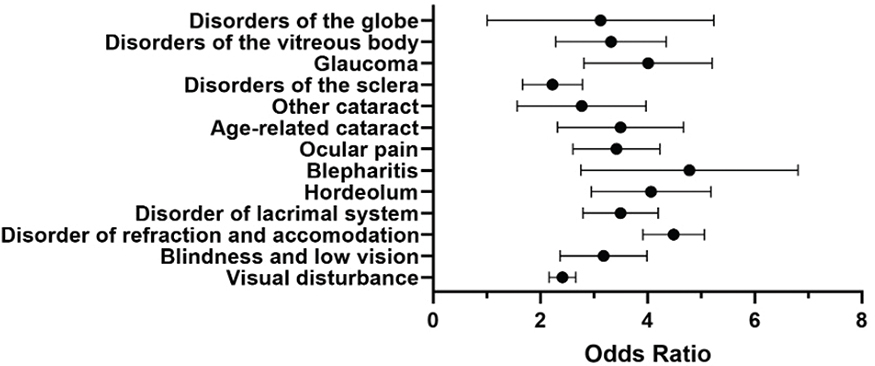
Fig. 1. Overview of odds ratio of ocular comorbidities in patients with and without hidradenitis suppurativa.
DISCUSSION
In this study, we aimed to provide an unbiased insight into the burden of ocular diseases in patients with HS. Although prevalence of ocular diseases was low in both cohorts, our findings reveal a significant increase in the risk of various ocular disorders in HS patients, such as glaucoma, ocular pain, hordeolum, and disorders of refraction and accommodation. These findings are in accordance with previous studies that were able to identify a link from HS to a multitude of ocular diseases such as inflammatory eye diseases, glaucoma, keratitis, and keratoconjunctivitis sicca. Nevertheless, disorders of the lacrimal system and hordeolum have not previously been linked to HS (10, 14–17).
Our study revealed an increased risk of non-inflammatory ocular diseases, including blindness and low vision (OR 1.928; 95% CI 1.537, 2.419), disorders of refraction and accommodation (OR 3.466; 95% CI 3.100, 3.876), cataract (age-related cataract OR 3.278; 95% CI 2.379, 4.516), other cataract (OR 1.545; 95% CI 1.066, 2.239), and glaucoma (2.974; 95% CI 2.284, 3.873) in HS patients. Although cataract development has not been widely recognized as a comorbidity of HS, similar associations have been observed in psoriasis patients (18), particularly those receiving narrowband ultraviolet B therapy, a treatment not commonly used for HS. Though studies have also proposed a link between keratoconus and psoriasis in patients with high PASI scores (19), the role of non-inflammatory ocular changes in inflammatory skin diseases, including HS, remains underexplored. Our findings suggest that more attention should be paid to these potential non-inflammatory ocular conditions in patients with HS.
The association between chronic inflammatory diseases like HS and ocular manifestations is not entirely surprising, given that ocular inflammation is often linked to systemic inflammation. Due to the inflammatory nature of HS, Manfredini et. al. analysed the retinal microvasculature of non-smoking HS patients using optical coherence tomography angiography in a prospective case-control study of age- and sex-matched cohorts. In this study of 10 HS patients with no ophthalmoscopic alterations and 15 healthy controls, they were able to identify changes in HS patients’ retinal microvasculature commonly found in diabetic patients (20). As we excluded patients suffering from diabetes from our cohorts, the high risk of visual disturbances in HS patients found in our study could, in part, be influenced by changes in the retinal vessel density and perfusion secondary to metabolic or systemic inflammatory changes in the context of HS. In our study, we additionally found an increased risk of inflammatory ocular comorbidities such as blepharitis and disorders of the lacrimal system (e.g., dry eye, dacryocystitis). In psoriasis, studies have shown tear film dysfunction, higher plugging rates, and abnormal thickness of secretions in meibomian glands when compared with healthy controls (21, 22). Meibomian gland dysfunction is not only a cause of symptoms of dry eye, blepharitis, and hordeolum, but is associated with chronic dacryocystitis as well (23, 24). Similar mechanisms could underlie the increased risk of these conditions in HS patients.
While observation does not lead to causation in retrospective analyses of real-world databases, these can shed light on questions not feasible to study in clinical trials. In their 2021 study, Conic et al. were able to observe increased rates of ocular comorbidities in patients with HS. In their case-control study using the real-world, cloud-based aggregate database Explorys (IBM), 13.89% of the 31,300 patients with HS suffered from ocular comorbidities, while only 3.2% of 51,517,730 control patients did (10). While their study focused on inflammatory ocular comorbidities such as uveitis, conjunctivitis, keratitis, scleritis, and episcleritis, comorbidities associated with increased rates of inflammatory ocular diseases were not excluded in the study. To lower bias, we excluded a multitude of comorbidities associated with ocular diseases, namely psoriasis, ankylosing spondylitis, Behçet’s disease, Crohn’s disease, ulcerative colitis, systemic lupus erythematosus, Marfan syndrome, Down syndrome, rheumatoid arthritis, Ehlers-Danlos syndromes, diabetes, HIV infection, hypertension, and hyperthyroidism. Previous studies have found a strong association between smoking and HS. As nicotine consumption is known to have a negative impact on ocular health, leading to an increased risk of ocular inflammation, cataract, and age-related macular degeneration, we additionally matched for nicotine dependence (25, 26).
While retrospective studies based on real-world databases such as TriNetX provide valuable insights into disease associations, they also have inherent limitations. Our study does not establish causation but highlights correlations between HS and ocular comorbidities. The influence of confounders, such as other undiagnosed systemic conditions, cannot be ruled out. We made efforts to control for known confounders by excluding comorbidities frequently associated with ocular diseases, such as psoriasis, rheumatoid arthritis, and diabetes, and by matching cohorts based on nicotine dependence. However, we were unable to match patients based on race or socioeconomic status, which may have impacted the generalizability of our findings. Furthermore, the TriNetX database primarily comprises data from US-based healthcare organizations, which limits the applicability of these results to non-US populations. Another limitation is the potential for detection bias and surveillance bias. Patients with HS are more likely to engage in frequent medical visits, which could result in a higher detection rate of ocular conditions, whereas healthy controls may have underreported ocular symptoms due to a lack of regular ophthalmologic evaluations. Despite these limitations, our study provides valuable evidence supporting the increased risk of ocular diseases in HS patients. It highlights the need for further research into the relationship between HS and ocular health, particularly focusing on the underlying mechanisms of ocular involvement. Furthermore, these findings emphasize the importance of incorporating ocular history into routine clinical practice for patients with HS. By increasing awareness of ocular comorbidities in HS patients, healthcare providers may be able to identify and address ocular symptoms earlier, ultimately improving patient outcomes.
In conclusion, in this study, we were able to demonstrate an increased risk of ocular disease in HS patients. As the link between HS and ocular diseases is not yet fully understood, our findings highlight the need for further investigation into this association. Furthermore, there is a need for a greater clinical awareness of ocular comorbidities in HS patients, possibly including inquiries regarding ophthalmologic symptoms during routine clinical visits.
ACKNOWLEDGEMENTS
IRB approval status: This study was reviewed and approved by Ethikkommission der Charité – Universitätsmedizin Berlin, EA4_064_18.
REFERENCES
- Saunte DML, Jemec GBE. Hidradenitis suppurativa: advances in diagnosis and treatment. JAMA 2017; 318: 2019–2032. https://doi.org/10.1001/jama.2017.16691
- Sabat R, Jemec GBE, Matusiak L, Kimball AB, Prens E, Wolk K. Hidradenitis suppurativa. Nat Rev Dis Primers 2020; 6: 18. https://doi.org/10.1038/s41572-020-0149-1
- Matusiak L, Bieniek A, Szepietowski JC. Hidradenitis suppurativa markedly decreases quality of life and professional activity. J Am Acad Dermatol 2010; 62: 706–708, 708 e701. https://doi.org/10.1016/j.jaad.2009.09.021
- Schneider-Burrus S, Tsaousi A, Barbus S, Huss-Marp J, Witte K, Wolk K, et al. Features associated with quality of life impairment in hidradenitis suppurativa patients. Front Med (Lausanne) 2021; 8: 676241. https://doi.org/10.3389/fmed.2021.676241
- Hanna N, Silverberg OM, Reaume M, Gladman D, Davis MDP, Piguet V, et al. Incidence, prevalence, and predictors of inflammatory arthritis in patients with hidradenitis suppurativa: a systematic review and meta-analysis. Int J Dermatol 2022; 61: 1069–1079. https://doi.org/10.1111/ijd.15860
- Sabat R, Chanwangpong A, Schneider-Burrus S, Metternich D, Kokolakis G, Kurek A, et al. Increased prevalence of metabolic syndrome in patients with acne inversa. PLoS One 2012; 7: e31810. https://doi.org/10.1371/journal.pone.0031810
- Egeberg A, Jemec GBE, Kimball AB, Bachelez H, Gislason GH, Thyssen JP, et al. Prevalence and risk of inflammatory bowel disease in patients with hidradenitis suppurativa. J Invest Dermatol 2017; 137: 1060–1064. https://doi.org/10.1016/j.jid.2016.11.040
- Shlyankevich J, Chen AJ, Kim GE, Kimball AB. Hidradenitis suppurativa is a systemic disease with substantial comorbidity burden: a chart-verified case-control analysis. J Am Acad Dermatol 2014; 71: 1144–1150. https://doi.org/10.1016/j.jaad.2014.09.012
- Motlagh M, Fortenbach C, Maibach HI, Modjtahedi BS. Identifying and treating ocular manifestations in psoriasis. Am J Clin Dermatol 2022; 23: 51–60. https://doi.org/10.1007/s40257-021-00648-x
- Conic RRZ, Fabbrocini G, Marasca C, Bragazzi NL, Watad A, Adawi M, et al. Burden of ocular comorbidities in patients with hidradenitis suppurativa. JAMA Dermatol 2021; 157: 226–227. https://doi.org/10.1001/jamadermatol.2020.5087
- Liu F, Panagiotakos D. Real-world data: a brief review of the methods, applications, challenges and opportunities. BMC Med Res Methodol 2022; 22: 287. https://doi.org/10.1186/s12874-022-01768-6
- Palchuk MB, London JW, Perez-Rey D, Drebert ZJ, Winer-Jones JP, Thompson CN, et al. A global federated real-world data and analytics platform for research. JAMIA Open 2023; 6: ooad035. https://doi.org/10.1093/jamiaopen/ooad035
- Pinazo-Duran MD, Zanon-Moreno V, Garcia-Medina JJ, Arevalo JF, Gallego-Pinazo R, Nucci C. Eclectic ocular comorbidities and systemic diseases with eye involvement: a review. Biomed Res Int 2016; 2016: 6215745. https://doi.org/10.1155/2016/6215745
- Gau SY, Liu PY, Chen SN, Chiu TM, Tsai RY, Chang HC, et al. Risk of keratitis and keratopathy in hidradenitis suppurativa patients: a global federated health network analysis. In Vivo 2024; 38: 1375–1383. https://doi.org/10.21873/invivo.13578
- Schargus M, Langhorst CA, Joachim S, Frings A, Krause K, Reifenberger J, et al. Hidradenitis suppurativa is associated with symptoms of keratoconjunctivitis sicca. Curr Eye Res 2021; 46: 23–30. https://doi.org/10.1080/02713683.2020.1775259
- Saygin D, Syed AU, Lowder CY, Srivastava S, Maya JJ, Hajj-Ali RA. Characteristics of inflammatory eye disease associated with hidradenitis suppurativa. Eur J Rheumatol 2018; 5: 165–168. https://doi.org/10.5152/eurjrheum.2018.17163
- Li CP, Lin CY, Lu HY, Chen SN, Tsai RY, Chang HC, et al. Patients with hidradenitis suppurativa are associated with risk of new-onset glaucoma: a propensity-score-matched cohort study. Int J Med Sci 2024; 21: 2208–2214. https://doi.org/10.7150/ijms.95395
- Cheng CY. Risk of incident cataract in patients with psoriasis: a population-based cohort study. J Dermatol 2022; 49: 359–367. https://doi.org/10.1111/1346-8138.16261
- Akcam HT, Karagun E, Iritas I, Eyup Y. Keratoconus could be associated with psoriasis: novel findings from a comparative study. Cornea 2019; 38: 1524–1530. https://doi.org/10.1097/ICO.0000000000002161
- Manfredini M, Ragusa E, Gibertini M, Bigi L, Ferrari B, Lasagni C, et al. Retinal microvascular alterations in hidradenitis suppurativa patients: a pilot study using optical coherence tomography angiography. J Clin Med 2024; 13: 1464. https://doi.org/10.3390/jcm13051464
- Demirci G, Erdur SK, Aydin R, Balevi A, Eliacik M, Ozsutcu M, et al. Tear osmolarity and ocular surface parameters in patients with psoriasis. Arq Bras Oftalmol 2017; 80: 1–3. https://doi.org/10.5935/0004-2749.20170002
- Zengin N, Tol H, Balevi S, Gunduz K, Okudan S, Endogru H. Tear film and meibomian gland functions in psoriasis. Acta Ophthalmol Scand 1996; 74: 358–360. https://doi.org/10.1111/j.1600-0420.1996.tb00708.x
- Kudasiewicz-Kardaszewska A, Grant-Kels JM, Grzybowski A. Meibomian gland dysfunction and blepharitis: a common and still unsolved ophthalmic problem. Clin Dermatol 2023; 41: 491–502. https://doi.org/10.1016/j.clindermatol.2023.08.005
- Goel R, Saini S, Golhait P, Shah S. Association of primary chronic dacryocystitis and meibomian gland dysfunction. Indian J Ophthalmol 2024; 72: 185–189. https://doi.org/10.4103/IJO.IJO_1449_23
- Galor A, Lee DJ. Effects of smoking on ocular health. Curr Opin Ophthalmol 2011; 22: 477–482. https://doi.org/10.1097/ICU.0b013e32834bbe7a
- Konig A, Lehmann C, Rompel R, Happle R. Cigarette smoking as a triggering factor of hidradenitis suppurativa. Dermatology 1999; 198: 261–264. https://doi.org/10.1159/000018126