ORIGINAL REPORT
Patient-centred Preferences for Biologic Therapies in Moderate to Severe Psoriasis in Vietnam: A Discrete Choice Experiment
Chuyen Thi Hong NGUYEN, Xuan Thi Mai NGUYEN and Trung The VAN
Department of Dermatology, University of Medicine and Pharmacy at Ho Chi Minh City, Vietnam
Psoriasis is a chronic autoimmune disease that significantly impairs patients’ quality of life. With the growing availability of biologic drugs – each varying in efficacy, safety, dosing, and cost – treatment decisions have become increasingly complex. A study conducted from March to July 2024 surveyed 302 Vietnamese patients with moderate to severe psoriasis to assess preferences for biologic therapies. Using a discrete choice experiment (DCE), participants evaluated 6 treatment attributes: short-term efficacy, long-term efficacy, sustained efficacy after drug withdrawal, frequency of administration, copayment, and risk of serious infection. Preference data were analysed using conditional logit models. Analysis revealed that treatment cost (relative importance [RI]: 31.4%) and long-term efficacy (RI: 25.3%) were the most critical factors influencing patient decisions, while sustained efficacy after withdrawal and early onset of efficacy were less impactful. Long-term efficacy and cost consistently ranked highest across all patient subgroups, with variations depending on demographic and clinical characteristics. These findings provide practical guidance for clinicians to incorporate patient preferences into the selection of biologic therapies, with particular emphasis on treatment cost and long-term efficacy. The significant influence of treatment cost also highlights the need for healthcare policymakers in Vietnam to enhance reimbursement policies and financial support programmes, improving access and equity in psoriasis care.
SIGNIFICANCE
These findings provide valuable insights into the perspectives of Vietnamese patients regarding the selection of biologic therapies. Incorporating these preferences into shared decision-making between physicians and patients may enhance patient satisfaction and improve treatment outcomes.
Key words: biologics; psoriasis; patient preferences; decision-making.
Citation: Acta Derm Venereol 2025; 105: adv42840. DOI: https://doi.org/10.2340/actadv.v105.42840.
Copyright: © 2025 The Author(s). Published by MJS Publishing, on behalf of the Society for Publication of Acta Dermato-Venereologica. This is an Open Access article distributed under the terms of the Creative Commons Attribution-NonCommercial 4.0 International License (https://creativecommons.org/licenses/by-nc/4.0/).
Submitted: Jan 9, 2025. Accepted after revision: Apr 8, 2025. Published: May 7, 2025.
Corr: Chuyen Thi Hong Nguyen, Department of Dermatology, University of Medicine and Pharmacy at Ho Chi Minh City, 70000, Vietnam. E-mail: chuyennguyen@ump.edu.vn
Competing interests and funding: The authors have no conflicts of interest to declare.
No funding to declare.
INTRODUCTION
Psoriasis is an immune-mediated inflammatory disease that affects more than 125 million people worldwide (1, 2). The prevalence of psoriasis ranges from 0.91% (United States) to 8.5% (Norway) (2). Statistics on the global prevalence of psoriasis published in 2020 estimated 288,580 adult cases of psoriasis in Vietnam (3). The disease is characterized by skin lesions in many clinical forms, of which plaque psoriasis is the most common, accounting for more than 80% of all psoriasis cases (4). Psoriasis significantly affects patients’ quality of life and often leads to social stigma (5). Current treatment strategies for psoriasis are tailored to disease severity and individual patient factors. Biologics are novel, effective drugs that aid patients in obtaining “almost complete” skin clearance, reducing systemic inflammation, and positively impacting comorbid conditions (6, 7). Current treatment guidelines emphasize the importance of considering patient preferences when selecting biologic medications (8). Inappropriate treatment can lead to high patient dissatisfaction and low patient compliance (9, 10). Reports indicate that almost 50% of patients diagnosed with moderate to severe plaque psoriasis express high dissatisfaction with their current treatment methods (11). Evidence suggests that aligning physician recommendations with patient preferences enhances satisfaction, adherence, and outcomes (12).
Similar challenges are evident in Vietnam, where biologic therapies have been available for over a decade. As of 2024, four classes of biologic agents are approved for use, including TNF-alpha inhibitors, IL-12/23 p40 inhibitors, IL-17A inhibitors, and IL-23 p19 inhibitors. Despite their advantages in efficacy, safety, and adherence compared with systemic therapies, biologic use remains limited. These drugs offer diverse characteristics, such as efficacy, cost, and administration frequency, catering to different patient needs. However, Vietnam lacks standardized guidelines for selecting biologics, and patient preferences are often overlooked due to time constraints during consultations. Research on biologic therapies for psoriasis in Vietnam remains scarce. Recently, a real-world study evaluating the use of secukinumab in Vietnamese patients demonstrated high efficacy and a favourable safety profile. The study also highlighted that patients receiving financial support through health insurance exhibited better treatment adherence compared with those who had to pay out-of-pocket (13). However, to date, no prior research in Vietnam has systematically investigated the key factors that influence the decision-making process regarding biologic therapy selection from both patient and physician perspectives. To address this gap, a study conducted at Ho Chi Minh City Hospital of Dermato-Venereology, a leading centre for biologic treatment, explores patient preferences and examines how clinical and socioeconomic factors influence biologic drug selection. These findings aim to support a more personalized approach to treatment by aligning biologic selection with individual patient needs in Vietnam.
Materials and methods
Development of DCE
Discrete choice experiments (DCE), a quantitative method for stated preference analysis, are used to quantify the preferences for treatment attributes (14). This experiment helps identify the key attributes of treatment methods that influence patient decision-making and ranks the significance of these attributes based on their priority in the choices made. The choice task requires respondents to make trade-offs (similar to real-life decision-making) among various treatment modalities described by attributes and levels to ascertain their treatment priorities (15). Participants with moderate to severe psoriasis were asked to imagine starting biologic therapy and to choose between 2 hypothetical treatment options, each defined by specific attributes (choice profiles). Statistical modelling of their choices determined the relative importance of each attribute.
Attributes and levels
As highlighted in the DCE literature and good-practice guidelines, selecting attributes and their levels is critical in designing a DCE study (15). According to DCE guidelines, to ensure that participants can consider attributes without confusion, there should be fewer than 10 attributes, with a general expectation of including 5–7 attributes (15). A systematic approach was used to identify attributes and levels for the study. Six attributes were selected to reduce respondent burden, with levels reflecting current biologic treatments in Vietnam, as detailed in Tables I and II.
Experimental design and survey
A fractional factorial design was employed to reduce the extensive number of questions derived from 6 attributes and their respective levels (4² * 34), resulting in 15 choice sets. The D-efficient design methodology, implemented using the Dcreate tool in the Stata 14 software (StataCorp LLC, College Station, TX, USA), ensures orthogonality, level balance, utility balance and minimal overlap. Thirty hypothetical treatment profile pairs were generated by combining the various attributes and levels. A full-profile task was used to display all 6 attributes of both alternatives within each choice set. Each choice scenario presented 2 hypothetical treatment options, biologic A and biologic B, ensuring that neither option was superior across all attributes. Visual representations of attribute levels were provided alongside numerical or textual descriptions to reduce cognitive burden and enhance participant engagement as presented in Fig. 1.
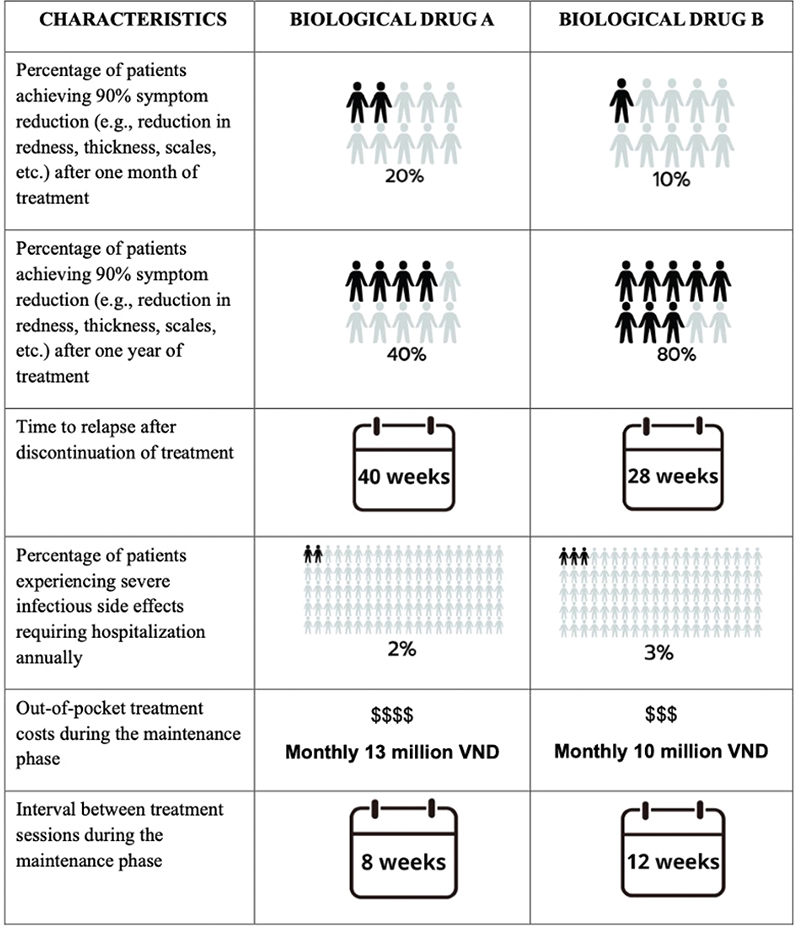
Fig. 1. Example of presented discrete choice experiment question.
The questionnaire was pretested with a sample of 20 patients with moderate to severe psoriasis to evaluate whether trade-offs were made during treatment selection and to confirm participants’ comprehension of the presented options. Data from this pilot study were used to refine the parameters and finalize the DCE questionnaire.
Face-to-face interviews were conducted to address the complexity of the questionnaires. This method allowed researchers to clarify challenging concepts, ensuring the participants fully understood the questions and provided more accurate data. Additionally, this approach enabled direct observation and assessment of the participants’ clinical characteristics and psoriasis severity, thereby enhancing the study’s reliability.
The survey began with questions on demographics and disease-related topics before participants proceeded to the DCE. After completing the 15 choice sets, the participants were asked to perform a stability validity test by answering an additional question (the 16th question, identical to question 1) to assess the internal validity of the DCE. The study was designed to ensure that the survey was completed within approximately 30 min.
Participants
Participants visiting the Ho Chi Minh City Hospital of Dermatology and Venereology between March 2024 and July 2024 were eligible for the study if they met the following criteria: (i) had a confirmed diagnosis of moderate to severe psoriasis (BSA > 10% or PASI > 10, and DLQI > 10, based on the EuroGuiDerm Guideline) (16); (ii) were aged 18 years or older; (iii) provided informed consent; (iv) were currently receiving either non-biologic or biologic treatment; and (v) were able to understand and respond to the survey questions fully. During the recruitment period, a total of 30 patients were excluded due to either refusal to participate or failure to complete the questionnaire, primarily citing the length and time-consuming nature of the survey as reasons.
Sample size and sampling
The sample size for the DCE was calculated using the rule of thumb proposed by Johnson et al. (17). The minimum sample size required for the main effects (n) was determined using the following equation:
n × t × a/c ≥ 500
where t is the number of choice tasks, a is the number of alternatives per scenario, and c is the maximum number of levels for an individual attribute. Based on this formula, the minimum sample size was calculated to be 67, rounded to 70. However, to enhance the statistical power and generalizability of the findings, a larger sample size was targeted. According to the International Society for Pharmacoeconomics and Outcomes Research (ISPOR) guidelines, the accuracy of DCE estimates increases rapidly with smaller sample sizes, up to 150, and then stabilizes at approximately 300 observations (18). A sample size of 300 enhances the robustness and reliability of the estimated preferences while enabling meaningful subgroup analyses by demographic and clinical characteristics. This allows for a more comprehensive understanding of preference heterogeneity. Moreover, given the limited research on biologic treatment preferences in Vietnam, a larger sample strengthens the external validity and applicability of the findings to clinical practice and policy decisions.
Statistical analysis
After data cleaning, the respondents’ socioeconomic factors and choice data were imported into STATA v.14 for analysis. DCE analysis was conducted using a conditional logit model in which all characteristics were treated as categorical variables. The model is estimated using the following utility specifications:
Ui = V (β, Xi) + ε
Here, Ui represents the utility of option i, V is a function of the levels of attributes for option i, X is a vector of the levels of attributes that define option i, and β is a vector of estimated coefficients. The error term (ε) is assumed to follow a Gumbel distribution. Each estimated coefficient (β) serves as a preference weight, representing the relative contribution of an attribute to the overall utility (19).
Patient preferences were assessed using preference weights and relative importance (%). Relative importance (RI) was calculated based on the difference between the highest and lowest preference weights for each attribute divided by the total of all differences across attributes. The clinical and epidemiological characteristics of the patients were analysed using descriptive statistics. Subgroup analyses were also performed to investigate how these characteristics influenced patient decisions when selecting biologic drugs.
Ethical considerations
The participants provided written informed consent, and their anonymity was preserved through methods approved by the Ethics Committee. The study was conducted in accordance with the principles of the Declaration of Helsinki and approved by the Ethics Council of the University of Medicine and Pharmacy at Ho Chi Minh City (approval number: 23631 – DHYD).
Results
Demographics
A total of 302 patients with moderate to severe psoriasis completed the survey. The mean age was 39.8 years, with the majority being male (70.5%). Most participants had a university or postgraduate education and resided in Ho Chi Minh City. Over half had lived with psoriasis for more than 10 years, and 42.4% had psoriatic arthritis as a comorbidity. More than half had prior experience with biologic therapies. Detailed demographic and clinical characteristics are presented in Table III.
Patients’ preferences
The preference weights for long-term efficacy and treatment costs were statistically significant, with patients preferring lower costs and greater long-term efficacy. Additionally, patients prioritized medications with infrequent administration because biweekly injection schedules pose adherence challenges.
Among all the participants, the financial burden of therapy emerged as the most significant factor influencing the selection of biologic medications (RI: 31.4%), followed by maintenance efficacy (RI: 25.3%), treatment frequency (RI: 17.8%), and risk of serious infection (RI: 15%). In contrast, maintenance efficacy after drug discontinuation (RI: 8.1%) and early onset effectiveness (RI: 2.5%) were less critical to patient decision-making, as presented in Fig. 2.
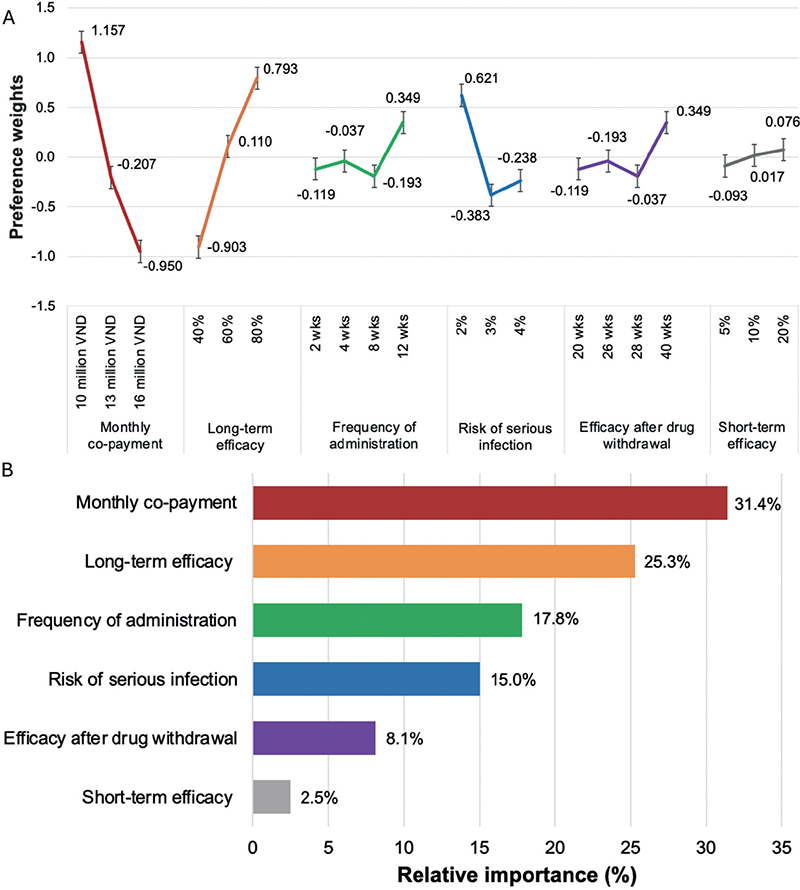
Fig. 2. (A) Preference weights for attribute levels (overall results, n = 302); (B) relative importance (RI) of attributes influencing patient selection of biologics (n = 302). Preference weights are represented on a vertical scale, describing the impact of each selected level within an attribute. Non-overlapping error bars indicate statistically significant differences between levels within an attribute. RI is calculated as the proportion of the total variation in preference weights, measured by the distance between the maximum and minimum levels of each attribute.
A total of 89.7% of the patients successfully passed the stability validity test, which was based on the consistency of their responses to repeated questions. This high pass rate suggests that most respondents provided reliable and stable answers, supporting the internal validity of the study. Furthermore, the subgroup analysis of patients who did not pass the test revealed no significant changes in the priority levels of the attributes, indicating that their exclusion would not substantially alter the overall conclusions.
Results from subgroup analyses
Cost and long-term efficacy consistently emerged as the most important attributes across the subgroups. Patients placed less emphasis on short-term and maintenance efficacy after discontinuing medication when choosing biologic treatments (Fig. 3)
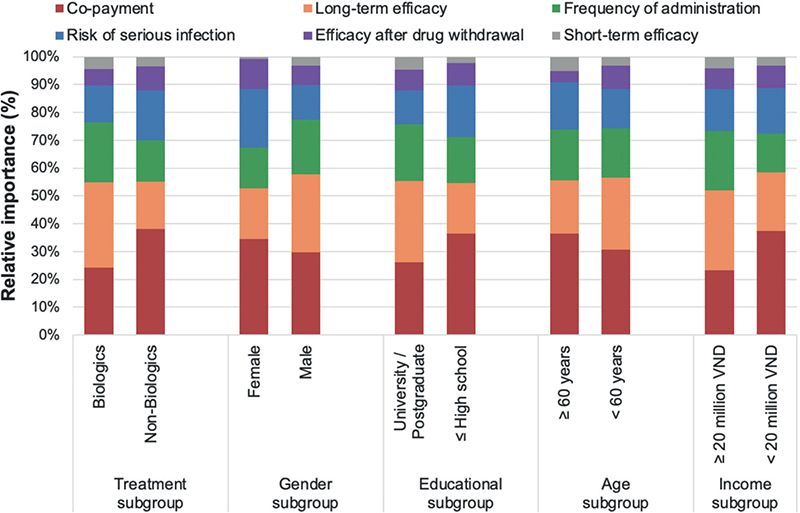
Fig. 3. Relative importance (RI) of attributes influencing patient selection of biologics by treatment subgroup (n = 302). The detailed numerical values of each attribute level, expressed in RI, are presented in more detail in the Supplementary Figs.
Treatment modality
Patients favoured biologics with higher long-term efficacy, lower costs, and less frequent injections (≥ 4 weeks). Biologic-experienced patients placed emphasis on long-term efficacy, lower cost, and reduced injection frequency, while biologic-naive patients prioritized lower cost and infection risk (Fig. S1).
Gender
Both genders prioritized lower costs, better long-term efficacy, and biologics with stable post-treatment efficacy (up to 40 weeks), serious adverse effects ≤ 2%, and injection intervals ≥ 4 weeks. Males valued the long-term efficacy and less frequent dosing, whereas females prioritized lower cost and infection risk (Fig. S2).
Educational attainment
Across all education levels, patients preferred biologics with sustained post-treatment efficacy (≥ 40 weeks) and serious infection rates ≤ 2%. Higher-educated participants emphasized long-term efficacy and convenience; less-educated participants prioritized cost and safety (Fig. S3).
Age
Patients ≥ 60 years focused on cost and safety, while younger patients valued long-term and post-treatment efficacy (Fig. S4).
Monthly household income
All income groups preferred biologics with lower costs, high long-term efficacy, infection rates ≤ 2%, and sustained efficacy (≥ 40 weeks). Higher-income patients emphasized long-term stability and convenience; lower-income patients prioritized cost and infection risk (Fig. S5).
DISCUSSION
Research findings
Treatment cost (RI: 31.4%) was identified as the most significant factor influencing patients’ selection of biologics. This finding aligns with a study by Lang et al. (RI: 59.3%) (20), highlighting the economic burden of biologics in countries with lower per capita income and limited insurance coverage, such as Vietnam and China. However, this contrasts with research in Japan (21) and in Germany (22), where health systems provide broader reimbursement, and which reported that treatment cost was less impactful. In Vietnam, biologics remain expensive compared with alternative options, even with health insurance support. This highlights the substantial financial burden imposed on patients by biologic treatments, which significantly affects their decisions. Strategies such as dose reduction or extended dosing intervals may offer cost-effective options without compromising efficacy.
Long-term effectiveness
Long-term effectiveness was another highly prioritized attribute (RI: 25.3%). This has consistently been reported as an important factor in previous studies in Japan and the USA (21, 23, 24). Sustaining long-term efficacy remains a challenge, as some therapeutic agents may lead to the development of drug-resistant antibodies. Patients with psoriasis frequently experience disease recurrence, making sustained symptom management a key concern. Patients often prioritized consistent maintenance efficacy over short-term benefits, which is consistent with the results of previous studies.
Treatment frequency
Treatment frequency also significantly influenced patient preferences for biologics (RI: 17.8%), aligning with findings by Tada et al. (21). Patients in this study preferred treatment with injection intervals of 4 weeks or longer, with no significant differences observed between the 4-, 8-, or 12-week intervals. However, due to the unavailability of self-injectable biologics in Vietnam, this study did not assess the impact of treatment location as an attribute.
Risk of serious infections
After treatment cost, long-term efficacy, and injection frequency, the rate of serious infection was the fourth most important attribute. The patients in this study preferred biologics with a severe infection rate of 2% to those with higher rates, especially female patients, individuals over 60 years of age, and those currently receiving non-biologic therapies. This mirrors findings from previous studies (25, 26), though some studies have reported that patients were willing to accept higher risks for greater efficacy (21–23). These differences may reflect varying perceptions of safety and risk tolerance across populations.
Attributes with minimal influence
Two attributes had little influence on patients’ decisions: time to relapse after treatment cessation (RI: 8.1%) and short-term efficacy (RI: 2.5%). While Tada et al. (21) reported sustained efficacy as the most important factor (RI: 25.4%), our findings align with prior studies by Tada et al. (21) and Komine et al. (23), which showed short-term efficacy had minimal influence (RI: 13% and 7%, respectively). These results suggest that patients prioritize long-term disease control over rapid symptom relief, likely reflecting an understanding of psoriasis as a chronic condition requiring sustained management.
Clinical implications
The findings of this study have important clinical implications for physician–patient communication and treatment selection in moderate to severe psoriasis. By explicitly incorporating patient preferences – particularly with regard to treatment cost and long-term efficacy – into the decision-making process, clinicians can foster more meaningful and transparent discussions with patients. This shared decision-making approach encourages patients to express their treatment priorities, thereby increasing their engagement, satisfaction, and adherence to the chosen therapy.
Subgroup analyses further underscore the need for physicians to consider individual patient factors, including socioeconomic status, prior experience with biologics, and demographic characteristics, when discussing biologic treatment options. Notably, biologic therapies that are covered by national health insurance or offer sustained long-term efficacy should be prioritized during consultations, as they align more closely with patient preferences and are likely to enhance adherence.
These insights support the integration of structured patient preference assessments into routine clinical practice, facilitating more personalized, patient-centred care. Additionally, the development of national guidelines that emphasize preference-based treatment selection could standardize and improve the quality of care across healthcare settings. Expanding insurance coverage and financial support mechanisms will be essential in reducing cost barriers and ensuring equitable access to biologic therapies, ultimately optimizing clinical outcomes for patients with psoriasis in Vietnam.
Strengths and limitations
This study has several notable strengths. First, data were collected through face-to-face interviews, allowing for clarification of complex concepts and ensuring that all participants fully understood the survey tasks. This approach likely enhanced the accuracy and reliability of the self-reported data compared with self-administered or online surveys. Additionally, all participants had moderate to severe psoriasis confirmed by clinical examination and medical records, further improving data validity. Notably, over 50% of participants had experience with biologics, allowing a comparison of perspectives between patients with and without prior exposure to these treatments – an area rarely explored in past research. Furthermore, a key strength was the validation of attributes through a pilot study, ensuring their real-world relevance. Subgroup analyses further examined the impact of clinical and sociodemographic factors on preferences.
Despite the valuable insights gained through the DCE methodology, the study is not without its constraints. While self-reported data may introduce recall or response bias, the face-to-face methodology helped mitigate these risks by providing opportunities for clarification and immediate feedback. Additionally, the DCE used hypothetical scenarios, which may not fully reflect real-world decision-making. The forced-choice format excluded open-ended responses, potentially limiting insights. Efforts to address these gaps included qualitative interviews and pilot studies to refine attributes and levels, ensuring relevance to patient experiences. Finally, the study limited the number of attributes analysed to reduce respondent burden, which may not fully capture individual patient characteristics.
Conclusion
The cost of treatment and long-term effectiveness are the most important attributes for patients with moderate to severe psoriasis in Vietnam. These findings provide valuable insights into the perspectives of Vietnamese patients regarding the selection of biologic therapies. Incorporating these preferences into shared decision-making between physicians and patients may enhance patient satisfaction and improve treatment outcomes.
ACKNOWLEDGEMENTS
The authors are grateful to their colleagues at the Clinical Departments of Ho Chi Minh City Hospital of Dermatology-Venereology for their assistance.
Data availability statement: The datasets used and analysed during the current study are available from the corresponding author upon reasonable request.
IRB approval status: The study was conducted in accordance with the principles of the Declaration of Helsinki and approved by the Ethics Council of the University of Medicine and Pharmacy at Ho Chi Minh City (approval number: 23631 – DHYD).
REFERENCES
- Bu J, Ding R, Zhou L, Chen X, Shen E. Epidemiology of psoriasis and comorbid diseases: a narrative review. Front Immunol 2022; 13: 880201. https://doi.org/10.3389/fimmu.2022.880201
- Damiani G, Bragazzi NL, Karimkhani Aksut C, Wu D, Alicandro G, McGonagle D, et al. The global, regional, and national burden of psoriasis: results and insights from the Global Burden of Disease 2019 Study. Front Med (Lausanne) 2021; 8: 743180. https://doi.org/10.3389/fmed.2021.743180
- Parisi R, Iskandar IYK, Kontopantelis E, Augustin M, Griffiths CEM, Ashcroft DM. National, regional, and worldwide epidemiology of psoriasis: systematic analysis and modelling study. BMJ 2020; 369: m1590. https://doi.org/10.1136/bmj.m1590
- Boehncke WH, Schön MP. Psoriasis. Lancet 2015; 386: 983–994. https://doi.org/10.1016/s0140-6736(14)61909-7
- Langley RG, Krueger GG, Griffiths CE. Psoriasis: epidemiology, clinical features, and quality of life. Ann Rheum Dis 2005; 64 Suppl 2: ii18–23; discussion ii24–25. https://doi.org/10.1136/ard.2004.033217
- Nast A, Smith C, Spuls PI, Avila Valle G, Bata-Csörgö Z, Boonen H, et al. EuroGuiDerm Guideline on the systemic treatment of Psoriasis vulgaris – Part 2: specific clinical and comorbid situations. J Eur Acad Dermatol Venereol 2021; 35: 281–317. https://doi.org/10.1111/jdv.16926
- Smith CH, Yiu ZZN, Bale T, Burden AD, Coates Laura C, Eckert E, et al. British Association of Dermatologists guidelines for biologic therapy for psoriasis 2023: a pragmatic update. Br Jo Dermatol 2023; 190: 270–272. https://doi.org/10.1093/bjd/ljad347
- Gossec L, Kerschbaumer A, Ferreira RJO, Aletaha D, Baraliakos X, Bertheussen H, et al. EULAR recommendations for the management of psoriatic arthritis with pharmacological therapies: 2023 update. Ann Rheum Dis 2024; 83: 706–719. https://doi.org/10.1136/ard-2024-225531
- Lecluse LL, Tutein Nolthenius JL, Bos JD, Spuls PI. Patient preferences and satisfaction with systemic therapies for psoriasis: an area to be explored. Br J Dermatol 2009; 160: 1340–1343. https://doi.org/10.1111/j.1365-2133.2009.09115.x
- Umar N, Schaarschmidt M, Schmieder A, Peitsch WK, Schöllgen I, Terris DD. Matching physicians’ treatment recommendations to patients’ treatment preferences is associated with improvement in treatment satisfaction. J Eur Acad Dermatol Venereol 2013; 27: 763–770. https://doi.org/10.1111/j.1468-3083.2012.04569.x
- Tsai T-F, Ho J-C, Chen Y-J, Hsiao P-F, Lee W-R, Chi C-C, et al. Health-related quality of life among patients with moderate-to-severe plaque psoriasis in Taiwan. Dermatologica Sinica 2018; 36: 190–195. https://doi.org/10.1016/j.dsi.2018.06.006
- Umar N, Litaker D, Schaarschmidt ML, Peitsch WK, Schmieder A, Terris DD. Outcomes associated with matching patients’ treatment preferences to physicians’ recommendations: study methodology. BMC Health Serv Res 2012; 12: 1. https://doi.org/10.1186/1472-6963-12-1
- Nguyen HT, Pham NTU, Tran TNA, Pham NN, Bui YT, Vu TTP. Long-term effectiveness and drug survival of secukinumab in Vietnamese patients with psoriasis: results from a retrospective ENHANCE Study. Dermatol Ther (Heidelb) 2023; 13: 465–476. https://doi.org/10.1007/s13555-022-00867-y
- Clark MD, Determann D, Petrou S, Moro D, de Bekker-Grob EW. Discrete choice experiments in health economics: a review of the literature. Pharmacoeconomics 2014; 32: 883–902. https://doi.org/10.1007/s40273-014-0170-x
- Bridges JF, Hauber AB, Marshall D, Lloyd A, Prosser LA, Regier DA, et al. Conjoint analysis applications in health – a checklist: a report of the ISPOR Good Research Practices for Conjoint Analysis Task Force. Value Health 2011; 14: 403–413. https://doi.org/10.1016/j.jval.2010.11.013
- Nast A, Smith C, Spuls PI, Avila Valle G, Bata-Csörgö Z, Boonen H, et al. EuroGuiDerm Guideline on the systemic treatment of psoriasis vulgaris – Part 1: treatment and monitoring recommendations. J Eur Acad Dermatol Venereol 2020; 34: 2461–2498. https://doi.org/10.1111/jdv.16915
- Johnson FR, Ozdemir S, Phillips KA. Effects of simplifying choice tasks on estimates of taste heterogeneity in stated-choice surveys. Soc Sci Med 2010; 70: 183–190. https://doi.org/10.1016/j.socscimed.2009.10.021
- Reed Johnson F, Lancsar E, Marshall D, Kilambi V, Mühlbacher A, Regier DA, et al. Constructing experimental designs for discrete-choice experiments: report of the ISPOR Conjoint Analysis Experimental Design Good Research Practices Task Force. Value Health 2013; 16: 3–13. https://doi.org/10.1016/j.jval.2012.08.2223
- Hauber AB, González JM, Groothuis-Oudshoorn CG, Prior T, Marshall DA, Cunningham C, et al. Statistical methods for the analysis of discrete choice experiments: a report of the ISPOR Conjoint Analysis Good Research Practices Task Force. Value Health 2016; 19: 300–315. https://doi.org/10.1016/j.jval.2016.04.004
- Lang Y, Wu B, Sun Z, Ye E, Dou G, Guan X. Patient preference for biologic treatments of psoriasis in the Chinese setting. Patient Prefer Adherence 2022; 16: 1071–1084. https://doi.org/10.2147/ppa.S357795
- Tada Y, Ishii K, Kimura J, Hanada K, Kawaguchi I. Patient preference for biologic treatments of psoriasis in Japan. J Dermatol 2019; 46: 466–477. https://doi.org/10.1111/1346-8138.14870
- Schaarschmidt ML, Schmieder A, Umar N, Terris D, Goebeler M, Goerdt S, et al. Patient preferences for psoriasis treatments: process characteristics can outweigh outcome attributes. Arch Dermatol 2011; 147: 1285–1294. https://doi.org/10.1001/archdermatol.2011.309
- Komine M, Kim H, Yi J, Zhong Y, Sakai Y, Crawford B, et al. A discrete choice experiment on oral and injection treatment preferences among moderate-to-severe psoriasis patients in Japan. J Dermatol 2023; 50: 766–777. https://doi.org/10.1111/1346-8138.16746
- Gorelick J, Shrom D, Sikand K, Renda L, Burge R, Dworkin C, et al. Understanding treatment preferences in patients with moderate to severe plaque psoriasis in the USA: results from a cross-sectional patient survey. Dermatol Ther (Heidelb) 2019; 9: 785–797. https://doi.org/10.1007/s13555-019-00334-1
- Seston EM, Ashcroft DM, Griffiths CE. Balancing the benefits and risks of drug treatment: a stated-preference, discrete choice experiment with patients with psoriasis. Arch Dermatol 2007; 143: 1175–1179. https://doi.org/10.1001/archderm.143.9.1175
- Bolt T, Kobayashi H, Mahlich J. Patient and physician preferences for therapy characteristics for psoriasis: a discrete choice experiment in Japan. Pharmacoecon Open 2019; 3: 255–264. https://doi.org/10.1007/s41669-018-0104-1