QUIZ SECTION
Recurrent Erythema after Eating in a 1-year-old Boy: A Quiz
Xiao LIN
Department of Dermatology, Shanghai Children’s Hospital, School of Medicine, Shanghai Jiao Tong University, Shanghai, China
Citation: Acta Derm Venereol 2025; 105: adv42864. DOI: https://doi.org/10.2340/actadv.v105.42864.
Copyright: 2025 © The Author(s). Published by MJS Publishing, on behalf of the Society for Publication of Acta Dermato-Venereologica. This is an Open Access article distributed under the terms of the Creative Commons Attribution-NonCommercial 4.0 International License (https://creativecommons.org/licenses/by-nc/4.0/).
Published: Jan 26, 2025.
A 1-year-old boy presented to the dermatology clinic for recurrent erythema on his right cheek after eating solid food. It was first observed 6 months earlier when he was given pureed apple. It could easily be triggered with a variety of acidic and sweet fruits and foods that need more mastication. The erythema appeared within a few seconds after eating and resolved spontaneously in about 30 min, with the same distribution on each occurrence (Fig. 1). There was no pruritus, pain, sweating, or associated systemic symptoms such as vomiting and diarrhoea. The boy was born at full term and had a history of right facial forceps injury at birth (Fig. 2). He had no prior history of urticaria or eczema, and was in good health.
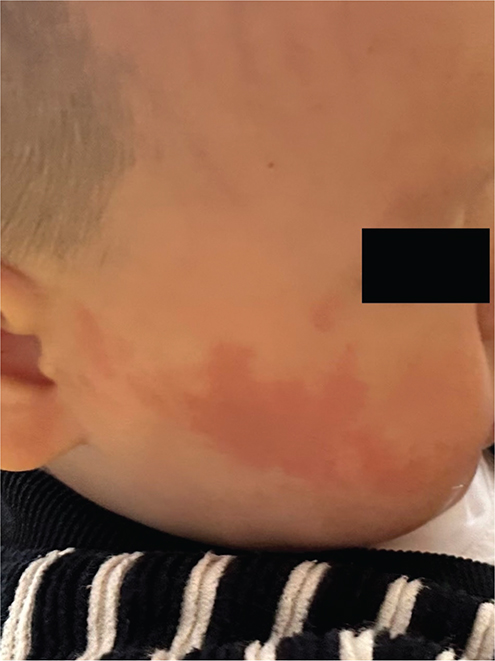
Fig. 1. Erythema appeared on the right cheek after eating.
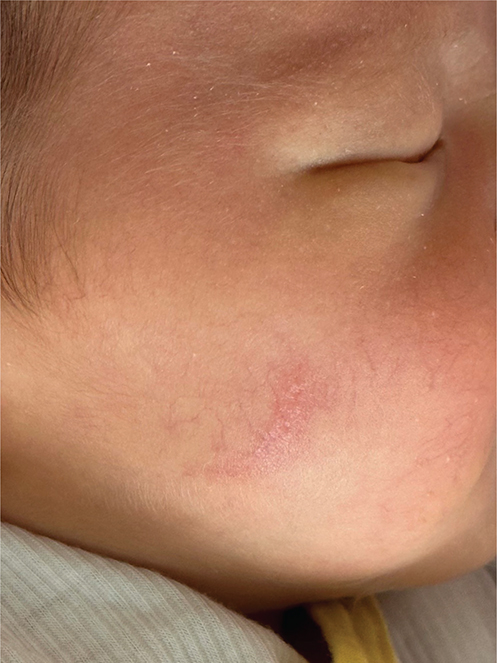
Fig. 2. Patient had a history of right facial forceps injury at birth.
What is your diagnosis?
Differential diagnosis 1: Frey syndrome
Differential diagnosis 2: Food allergy
Differential diagnosis 3: Mastocytosis
Differential diagnosis 4: Port wine stains
See next page for answer.
ANSWERS TO QUIZ
Recurrent Erythema after Eating in a 1-year-old Boy: A Commentary
Diagnosis: Frey syndrome
Frey syndrome (FS), or gustatory sweating, usually occurs in adults who undergo salivary gland, neck, or facelift surgery, or those suffering from diabetes mellitus. However, it is rare in the paediatric population. The case we reported had a history of forceps injury on the right cheek at birth, which may be the most common cause of FS in infancy. A national retrospective study found that 68% of patients with infantile FS had visible marks at birth following a traumatic instrumental delivery (1). Another systematic review indicated that 52% of 121 individual cases of FS, not associated with surgery or diabetes, had histories of forceps birth (2).
The most widely accepted mechanism for development of FS is that it results from aberrant reinnervation of cholinergic sympathetic sweat glands and blood vessels in the skin with parasympathetic fibres from the auriculotemporal nerve that have been exposed or injured (3). Unlike FS in adults, sweating is uncommon in children. The exact cause is not well understood but may be related to the less intense regeneration after forceps injury, rather than nerve section.
It was reported that 20% of infantile FS cases were completely relieved spontaneously within 11 to 81 months after the appearance of symptoms (1). In addition, 57% of cases showed regression during the same period (1). Treatment is considered ineffective and unnecessary. In our case, the symptom persisted at the 1-year follow-up, with hyperpigmentation on the same area of the right cheek (Fig. 3).
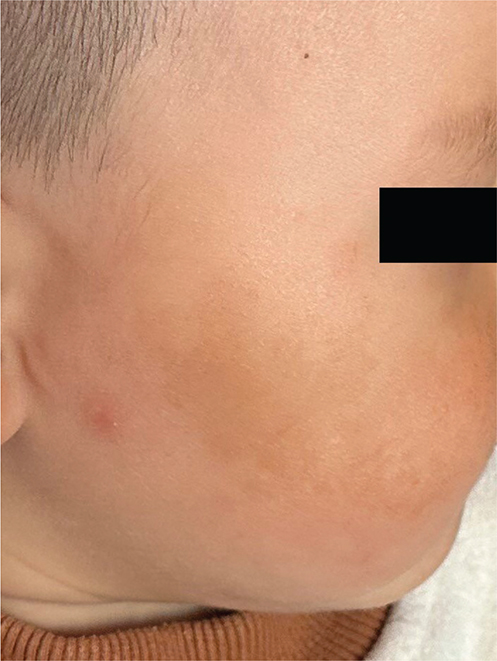
Fig. 3. Hyperpigmentation seen at 1-year follow-up.
Infantile FS is often misdiagnosed as food allergy because it usually occurs when infants start consuming a wider variety of foods. The characteristics of infantile FS include being triggered by various foods, involving the same skin area on each occurrence, the absence of pruritus, and without multisystem involvement. Thus it can be distinguished from food allergy. Dermatologists should be familiar with infantile FS to avoid unnecessary diagnostic procedures and restricted diets.
REFERENCES
- Blanc S, Bourrier T, Boralevi F, Sabouraud-Leclerc D, Pham-Thi N, Couderc L, et al. Frey syndrome. J Pediatr 2016; 174: 211–217. https://doi.org/10.1016/j.jpeds.2016.03.070
- Betti C, Milani GP, Lava SAG, Bianchetti MG, Bronz G, Ramelli GP, et al. Auriculotemporal Frey syndrome not associated with surgery or diabetes: systematic review. Eur J Pediatr 2022; 181: 2127–2134. https://doi.org/10.1007/s00431-022-04415-w
- Tillman BN, Lesperance MM, Brinkmeier JV. Infantile Frey’s syndrome. Int J Pediatr Otorhinolaryngol 2015; 79: 929–931. https://doi.org/10.1016/j.ijporl.2015.03.023