SHORT COMMUNICATION
Penile Ulceration After Local Injection of Metaphedrone During Chemsex
Dorian BETTIN1, Merryl LAMOTTE1, François AUBIN1,2* and Irène GALLAIS SEREZAL1,2
1Service de Dermatologie, Centre Hospitalier Universitaire, 3 Boulevard Alexandre Fleming, FR-25030 Besançon, France, and 2Université Marie et Louis Pasteur, Inserm 1098 RIGHT, Besançon. *E-mail: francois.aubin@univ-fcomte.fr
Citation: Acta Derm Venereol 2025; 105: adv43298. DOI: https://doi.org/10.2340/actadv.v105.43298.
Copyright: © 2025 The Author(s). Published by MJS Publishing, on behalf of the Society for Publication of Acta Dermato-Venereologica. This is an Open Access article distributed under the terms of the Creative Commons Attribution-NonCommercial 4.0 International License (https://creativecommons.org/licenses/by-nc/4.0/).
Submitted: Mar 4, 2025; Accepted after revision: May 22, 2025; Published: Jun 16, 2025.
Competing interests and funding: The authors have no conflicts of interest to declare.
INTRODUCTION
The chemsex or slamsex phenomenon has attracted attention worldwide, with concerns also expressed by health professionals for the spread of sexually transmitted diseases. Synthetic cathinones are a group of novel psychoactive substances used as an alternative to classical recreational drugs (1). We report here a case of a severe penile ulceration induced by metaphedrone.
CASE REPORT
A 23-year-old man presented to the Emergency Department with penile pain occurring 2 days after a local injection of metaphedrone used in a chemsex context. Physical examination showed painful and filiform ulceration (Fig. 1) associated with dysuria. No urethritis or bleeding was reported. An enlarged inguinal lymph node was found. The rest of the physical examination was normal. Laboratory analysis revealed a biological inflammatory syndrome (CRP 36 mg/L). There was no renal or hepatic failure. The differential diagnosis was atypical syphilis, but treponemal antibody tests were negative. One week later, the ulceration had spread to the glans, with the apparition of a dry necrosis (Fig. 2). The dysuria worsened. Acute urine retention was excluded. Aspirin was introduced in the event of an arterial thrombosis, and urologists performed a surgical cleansing of the necrotic tissues that relieved the symptoms. Histological examination showed superficial necrosis without intravascular thrombosis. Healing of the ulceration was obtained after 4 weeks with significant scarring.
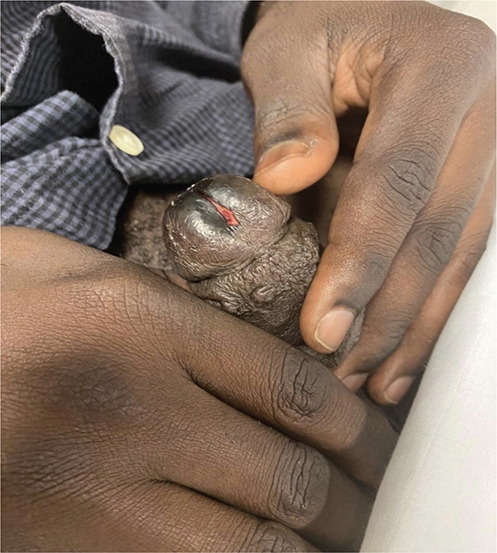
Fig. 1. Filiform ulceration of the glans.
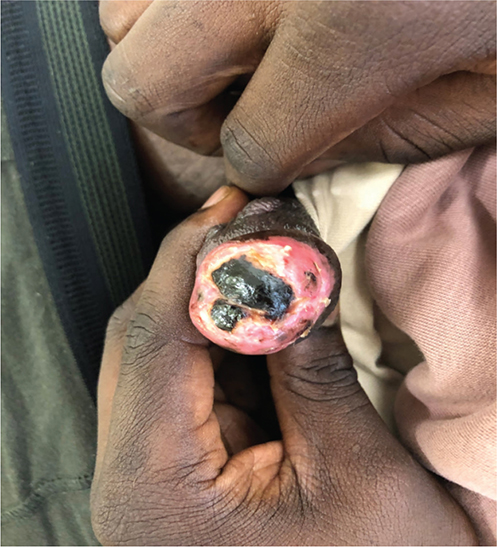
Fig. 2. Ulceration and necrosis of the glans at day 7.
DISCUSSION
Metaphedrone, also called 3-Methylmethcathinone (3-MMC), is a synthetic stimulant drug derived from the amphetamines, first identified in 2012 in Northern Europe. The most common methods of administration of 3-MMC are snorting (insufflation) and oral ingestion, while intravenous application was found to be not as common as the first 2 methods. Inhalation (smoking) and rectal administration are rarely reported (1). The effects of 3-MMC are euphoria, excitement, high energy levels, stimulation (rushing), happiness, and awareness of senses. Biologically, the effects are mainly adrenergic, dopaminergic, and serotoninergic (1). The most frequent clinical features reported are tachycardia, agitation, reduced level of consciousness, dilated pupils, hallucinations, diaphoresis, seizures, and hyperthermia, associated with the sympathomimetic effects (2). Its use is increasing: it represents 9.3% of drugs seized among the new psychoactive substances in 2022, and was responsible for 27 deaths in 2021 in Europe, reported by the European Union Drug Agency (3).
Secondary ulceration and necrosis can be induced by its adrenergic effect, intravascular thrombus, or vasculitis (favoured by cutting agents such as levamisole) and embolism (induced by the lack of local sterilization) (4–7). An activation of the caspase pathway, leading to acute apoptosis and necrosis, has been described in an in vitro study examining metaphedrone’s effects on rat livers (8).
Reported effects on mucous membranes are mainly meth-mouth, periodontitis and gingivitis disease, nasal ulcer, or septum perforation (4, 5).
Two cases of cutaneous lesions after extravasation of mephedrone, a similar substance, have been published (9). One case experienced a painful reticular purpura at the injection site on the arm, the second presented with multiple ulcerations of the forearms. Histological examination showed intravascular thrombosis in both patients, and the lesions healed after treatment with aspirin (9). To our knowledge, this is the first report of a penile ulceration induced by local injection of metaphedrone. A thorough medical history examining drug use and chemsex habits is warranted in patients developing cutaneous or mucosal ulcerations, in the search for injections of amphetamines.
ACKNOWLEDGEMENTS
Ethics statement: The patient in this manuscript has given written informed consent to publication of his case details in Acta Dermato Venereologica.
Data availability statement: The data that support the findings of this study are available on request from the corresponding author. The data are not publicly available due to privacy or ethical restrictions.
REFERENCES
- Kelečević I, Vejnović AM, Javorac J, Gvozdenović N, Janjić N, Mijatović Jovin V. Metaphedrone (3-methylmethcathinone): pharmacological, clinical, and toxicological profile. Medicina (Kaunas) 2024; 60: 466. https://doi.org/10.3390/medicina60030466
- Bäckberg M, Lindeman E, Beck O, Helander A. Characteristics of analytically confirmed 3-MMC-related intoxications from the Swedish STRIDA project. Clin Toxicol (Phila) 2015; 53: 46–53. https://doi.org/10.3109/15563650.2014.981823
- European Union Drug Agency. European Commission adopts measures to control two harmful new drugs amidst health concerns and surge in supply. Available from: https://www.euda.europa.eu/news/2022/3/european-commission-adopts-measures-control-two-harmful-new-drugs_en
- Alexander-Savino CV, Mirowski GW, Culton DA. Mucocutaneous manifestations of recreational drug use. Am J Clin Dermatol 2024; 25: 281–297. https://doi.org/10.1007/s40257-023-00835-y
- Balali-Mood M, Sinclair RD, Darchini-Maragheh E, Etemad L. Mucocutaneous alterations and complications in amphetamine abusers: a narrative review. Cutan Ocul Toxicol 2023; 42: 219–231. https://doi.org/10.1080/15569527.2023.2235425
- Macfarlane DG, Bacon PA. Levamisole-induced vasculitis due to circulating immune complexes. Br Med J 1978; 1: 407–408. https://doi.org/10.1136/bmj.1.6110.407
- Scheinberg MA, Bezerra JB, Almeida FA, Silveira LA. Cutaneous necrotising vasculitis induced by levamisole. Br Med J 1978; 1: 408. https://doi.org/10.1136/bmj.1.6110.408
- Dias da Silva D, Ferreira B, Roque Bravo R, Rebelo R, Duarte de Almeida T, Valente MJ, et al. The new psychoactive substance 3-methylmethcathinone (3-MMC or metaphedrone) induces oxidative stress, apoptosis, and autophagy in primary rat hepatocytes at human-relevant concentrations. Arch Toxicol 2019; 93: 2617–2634. https://doi.org/10.1007/s00204-019-02539-x
- de Dios MA, Arroyo-Andres J, Rubio-Muniz C, Garrido MC, Tarin-Vicente E. Cutaneous features at injection sites of intravenous mephedrone. Br J Dermatol 2023; 189: e1. https://doi.org/10.1093/bjd/ljad064