ORIGINAL REPORT
Safety and Effectiveness Profile of Dupilumab in the Treatment of Atopic Dermatitis in Special Populations
Niccolò GORI1,2#, Alvise SERNICOLA3#, Elena IPPOLITI1,2, Rosa COPPOLA4, Martina MAURELLI5, Michela ORTONCELLI6, Claudia PAGANINI7,8, Ersilia TOLINO9, Maria MARIANO10, Ester DEL DUCA11, Gaia MORETTA12, Vincenzo PANASITI4, Giampiero GIROLOMONI5, Simone RIBERO6, Luisa BOETI1,2, Luca BIANCHI7,8, Maria Concetta FARGNOLI10, Giovanni PELLACANI11, Sabatino PALLOTTA12, Ketty PERIS1,2 and Marco GALLUZZO7,8
1Dermatologia, Dipartimento Universitario di Medicina e Chirurgia Traslazionale, Università Cattolica del Sacro Cuore, Rome, 2Dermatologia, Dipartimento di Scienze Mediche e Chirurgiche, Fondazione Policlinico Universitario A. Gemelli IRCCS, Rome, 3Dermatology Unit, Department of Medicine (DIMED), University of Padua, Padua, 4Dermatologia, Fondazione Policlinico, Universitario Campus Bio-Medico, Rome, 5Section of Dermatology and Venereology, Department of Medicine, University of Verona, Verona, 6Department of Medical Sciences, Section of Dermatology, University of Turin, Turin, 7Department of Systems Medicine, University of Rome “Tor Vergata”, Rome, 8Dermatology Unit, Fondazione Policlinico “Tor Vergata”, Rome, 9Department of Medico-Surgical Sciences and Biotechnologies, Sapienza University of Rome, Polo Pontino, 10San Gallicano Dermatological Institute, IRCCS, Rome, 11Dermatology Clinic, Department of Clinical Internal, Anesthesiological and Cardiovascular Sciences, Sapienza University of Rome, Rome, and 12Department of Dermatology, Istituto Dermopatico dell’Immacolata – IRCCS, Dermatological Research Hospital, Rome, Italy.
#These authors contributed equally.
Dupilumab, the first biologic treatment approved for moderate to severe atopic dermatitis, has completely revolutionized the management of such disease allowing long-term control of its clinical signs and symptoms. Nevertheless, data regarding the safety and effectiveness profile of dupilumab in patients belonging to special populations are scarce. This observational, multicentric study analysed the effectiveness and safety profile of dupilumab over 3 years in the treatment of 70 patients with moderate to severe atopic dermatitis and associated comorbidities such as cancers, renal and liver failure, viral chronic infections, and degenerative and autoimmune neurological disorders. Patients achieved a significant improvement in both physician-assessed and patient-reported outcomes after 16 weeks of treatment, with a continuous therapeutic response maintained throughout the 156-week period. The safety profile was comparable to clinical trials and real-world data involving patients without significant comorbidities. In conclusion, the findings support the safety of dupilumab in managing severe atopic dermatitis in fragile patients.
SIGNIFICANCE
This study provides real-world evidence on the long-term use of dupilumab in patients with moderate to severe atopic dermatitis and serious comorbidities, such as cancer, chronic infections, organ failure, and neurological diseases. Patients with atopic dermatitis and other chronic debilitating comorbidities are often excluded from clinical trials, resulting in limited safety and effectiveness data for this population. In this study, which included 70 atopic dermatitis patients with serious comorbidities, dupilumab allowed significant and sustained clinical benefit over 3 years of observation in the majority of them, with a safety profile similar to that observ-ed in the general atopic dermatitis population.
Key words: dupilumab; atopic dermatitis; special populations.
Citation: Acta Derm Venereol 2025; 105: adv43523. DOI: https://doi.org/10.2340/actadv.v105.43523.
Copyright: © 2025 The Author(s). Published by MJS Publishing, on behalf of the Society for Publication of Acta Dermato-Venereologica. This is an Open Access article distributed under the terms of the Creative Commons Attribution-NonCommercial 4.0 International License (https://creativecommons.org/licenses/by-nc/4.0/).
Submitted: Apr 22, 2025. Accepted after revision: Sep 15, 2025. Published: Oct 2, 2025.
Corr: Niccolò Gori, MD, Università Cattolica del Sacro Cuore, Dermatologia, Rome, Italy and Fondazione Policlinico Universitario Agostino Gemelli-IRCCS, Largo Agostino Gemelli 8, 00168 Rome, Italy. E-mail: niccologori89@gmail.com
Competing interests and funding: NG has served as advisory board member and received honoraria for lectures for AbbVie, Sanofi, Leo-Pharma, Almirall, Lilly, Pfizer, Novartis, and Galderma. GM has served as advisory board member and received honoraria for lectures for AbbVie and Janssen. GG has received personal fees from AbbVie, Almirall, Amgen, Boehringer-Ingelheim, Bristol-Myers Squibb, Eli-Lilly, Leo Pharma, Merck Serono, Novartis, Pfizer, Pierre Fabre, Samsung Bioepis, and Sanofi. MCF has served on advisory boards, received honoraria for lectures and/or research grants from AMGEN, Almirall, AbbVie, Boehringer-Ingelheim, BMS, Galderma, Kyowa Kyrin, Incyte, LEO Pharma, Pierre Fabre, UCB, Lilly, Pfizer, Janssen, MSD, Novartis, Sanofi, Regeneron, and Sun Pharma. LB declares to have acted as a speaker and/or consultant for AbbVie, Almirall, Eli-Lilly, Johnson & Johnson, LeoPharma, Novartis, Pfizer, Sanofi, and UCB outside the submitted work. KP has served on an advisory board and received honoraria for lectures from AbbVie, Almirall, Beiersdorf, BMS, Lilly, Galderma, Leo Pharma, Perre Fabre, Philogen, Novartis, Sanofi, Sun Pharma, and Janssen outside of the submitted work. MG declares to have acted as speaker and/or consultant for AbbVie, Almirall, Eli-Lilly, Johnson & Johnson, LeoPharma, Novartis, and Sanofi, outside the submitted work. The other authors have no competing interests to declare.
INTRODUCTION
Atopic dermatitis (AD) is a common chronic inflammatory skin disorder, characterized by intense itching, dry skin, and eczematous lesions (1, 2). Notably, over one-third of adult AD patients suffer from a moderate to severe form of AD, characterized by a marked impairment of patients’ quality of life and often requiring systemic treatment to attain adequate clinical control (1–3). Dupilumab, a monoclonal antibody targeting the IL-4/IL-13 signalling, has been the first biologic treatment approved for the management of moderate to severe AD. The precise mechanism of action of dupilumab towards the pivotal pathogenetic AD cytokines IL-4 and IL-13 provides an excellent long-term effectiveness and safety profile observed in clinical trials (4–9). However, patients suffering from comorbidities such as cancer, chronic infections, severe kidney and liver dysfunction, and neurological degenerative disorders are excluded from randomized clinical trials or included in a very small percentage of the study population in real-life studies (10, 11). This leads to a paucity of data regarding the safety and effectiveness profile of dupilumab in fragile patients with chronic debilitating comorbidities. The aim of this multicentric observational study was to evaluate the safety and effectiveness profile of dupilumab in the treatment of special populations of AD patients over a 3-year observation period.
MATERIAL AND METHODS
We conducted a multicentre observational study involv-ing adult patients suffering from AD under treatment with dupilumab for at least 16 weeks. Patients were recruited from 7 Italian University hospitals from January 2022 to January 2023. The design of this study was both retrospective and prospective. We selectively analysed data from patients belonging to special populations. These included patients with severe renal disease (Stage 3 or higher on the Kidney Disease: Improving Global Outcomes scale), severe liver disease (Child–Pugh Score ≥ 10), cancer, chronic infectious diseases (active hepatitis B virus [HBV], hepatitis C virus [HCV], or human immunodeficiency virus [HIV] infection), and degenerative and demyelinating neurological diseases (amyotrophic lateral sclerosis, multiple sclerosis). Dupilumab was prescribed according to the Agenzia Italiana del Farmaco (AIFA) requirements (Eczema Area and Severity Index [EASI] score ≥ 24 and ineffectiveness, intolerance, or contraindications to cyclosporin), at the dosage of 600 mg at baseline followed by 300 mg every 2 weeks. Data from patients who were treated continuously with dupilumab for at least 16 weeks were considered. All patients were encouraged to apply moisturizer twice a day while topical corticosteroid/calcineurin inhibitors were used on an as-needed basis. In order to ensure comparability across patients, clinical data were analysed at reference time points corresponding to weeks 16, 32, 52, 104, and 156 from treatment initiation, using the following tools: the EASI score, ranging from 0 to 72 points; the Itch and Sleep Numeric Rating Scale (NRS), ranging from 0 to 10 points; and the Dermatology Life Quality Index (DLQI), ranging from 0 to 30. Safety was assessed based on the incidence of treatment-related adverse events (TRAEs), physical examinations, and laboratory tests, including complete blood count (CBC), transaminases, creatinine, blood glucose, and total serum IgE.
Adverse events were considered treatment-related if deemed possibly, probably, or definitely related to dupilumab by the treating physician. Severity was classified as mild (minimal impact, no treatment needed), moderate (some impact, possible symptomatic treatment), or severe (significant impact, requiring medical intervention and/or treatment discontinuation).
Patients were asked to bring to each visit the latest reports from specialists managing their comorbidities, including metastatic disease, chronic viral infections, and neurological conditions, thus allowing assessment of disease status and progression during dupilumab treatment.
This study was approved by the Local Ethics Committee – Comitato Etico Territoriale (CET) Lazio Area 3, Prot. ID: protocol no. 0054579/2022. All patients enrolled in this study provided written informed consent prior to participation.
Statistical analysis
Descriptive statistics were used to summarize the clinical and demographic characteristics of the patients analysed. Categorical variables were expressed as absolute and relative frequencies (percentages), while continuous variables were described using the mean and standard deviation (SD). The EASI scores, a severity assessment scale for the disease, at different time points (weeks 16, 32, 52, 104, 156) were compared with the baseline (week 0) values to assess the clinical response to treatment, using the paired Student’s t-test. The same approach was applied to the DLQI, and Itch NRS. Data were analysed as observed, and a p-value of 0.001 was considered statistically significant in all cases.
RESULTS
Overall, 70 patients (24 females/46 males, mean age: 61.8 [18.8], BMI: 24.7 [4.6] kg/m2) suffering from moderate to severe AD and belonging to special populations were enrolled in this study. Table I presents patients’ demographic and clinical characteristics. An early AD onset (≤ 18 years old) was observed in 28/70 (40%) patients, while a late onset was observed in 42/70 (60%) subjects. The majority of patients (53/70, 75.7%) presented a classic clinical phenotype, characterized by the symmetrical involvement of the flexural areas, with frequent involvement of the head/neck and hands; 3/70 (4.3%) exhibited nummular eczema, 1/70 (1.4%) showed an erythrodermic phenotype, and 13/70 (18.6%) had nodular prurigo-like AD. A current or previous history of at least 1 atopic comorbidity was reported by 37/70 (52.9%) patients: 33/70 (47.1%) reported allergic rhinitis, 19/70 (27.1%) reported allergic asthma, and 15/70 (21.4%) allergic conjunctivitis.
All patients included in this study were affected by other chronic debilitating comorbidities; in detail, 39 of 70 patients (55.7%) were diagnosed with an active neoplasm or had received a diagnosis of neoplasm within the last 5 years. The type of malignancy and related treatment are listed in Table II. Additionally, 6 patients (8.6%) were affected by severe chronic kidney disease (Stage 3 or higher), while severe liver failure (Child–Pugh Score ≥ 10) was reported in 2 patients (2.9%). In total, 9 patients (7.8%) were affected by chronic viral infection, including 3 patients with HIV, 3 patients with HCV, 3 with HBV, and 1 patient with concomitant HIV and HCV infection. Seven patients (10%) suffered from diseases of the central nervous system, including 1 case of amyotrophic lateral sclerosis and 6 cases of multiple sclerosis. Furthermore, 3 patients (4.3%) were affected by ulcerative colitis.
Clinical response
Prior to initiating dupilumab treatment, 17 patients (24.3%) had previously received cyclosporine, while 49 patients (70%) had been treated with systemic corticosteroids (see Table I). At baseline, the mean EASI score was 27.9 (5.5), which progressively decreased to 6.7 (7.1) at week 16, 2.2 (2.8) at week 32, and 0.8 (2.1) at week 52, with clinical results maintained throughout the 156-week observation period (Table III and Fig. 1). The proportion of patients achieving EASI 75 and 90 was 56.7% and 41.7% at week 16, increasing to 84% and 82% at week 52, respectively (Table III).
| Response endpoints | Week 0 (n = 70)b | Week 16 (n = 70)b | Week 32 (n = 57)b | Week 52 (n = 50)b | Week 104 (n = 34)b | Week 156 (n = 27)b |
| EASI, mean ± (SD)a | 27.9 ± (5.5) | 6.7 ± (7.1) | 2.2 ± (2.8) | 0.8 ± (2.1) | 1.1 ± (2.3) | 0.8 ± (2.3) |
| NRS-itch, mean±(SD)a | 8.1 ± (1.4) | 2.5 ± (2.1) | 0.9 ± (1.5) | 0.5 ± (1.2) | 0.9 ± (1.8) | 0.6 ± (1.8) |
| DLQI, mean ± (SD)a | 15.7 ± (6) | 3.9 ± (4) | 0.9 ± (2.2) | 0.6 ± (2.0) | 0.8 ± (2.2) | 0.4 ± (1.0) |
| EASI75 n (%) | 34 (48.6) | 43 (75.4) | 42 (84) | 24 (70.6) | 23 (85.2) | |
| EASI90 n (%) | 25 (35.7) | 27 (47.4) | 41 (82) | 23 (67.6) | 23 (85.2) | |
| Clinical response was assessed at 16, 32, 52, 104, and 156 weeks during treatment using the following tools: Eczema Area and Severity Index (EASI), ranging from 0 to 72 points; itch Numeric Rating Scale (NRS), ranging from 0 to 10 points; Dermatology Life Quality Index (DLQI), ranging from 0 to 30 points. ap < 0.001 vs baseline (paired t-test; see Methods). bReduction in the number of patients at each follow-up visit was due to the fact that patients started treatment at different times and that not all patients had completed 156 weeks of treatment by the time of the present study. SD: standard deviation. |
||||||
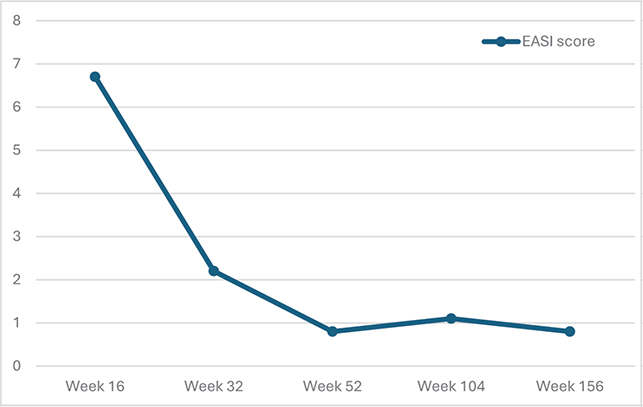
Fig. 1. Mean improvement in Eczema Area and Severity Index (EASI) score observed up to week 156.
Patients reported a high baseline pruritus burden (Itch NRS: 8.1 ± 1.4), which significantly improved to 2.5 (2.1) at week 16, 0.9 (1.5) at week 32, and 0.5 (1.2) at week 52, with sustained clinical remission through to week 156. Quality of life, assessed via DLQI, also showed marked improvement: the baseline score of 15.7 (6) decreased to 3.9 (4) at week 16, 0.9 (2.2) at week 32, 0.6 (2) at week 52, 0.8 (2.2) at week 104, and 0.4 (1.0) at week 156, highlighting a substantial and sustained enhancement in patient well-being (Table III and Fig. 2).

Fig. 2. Mean improvement in Dermatology Life Quality Index (DLQI) and Numeric Rating Scale (NRS)-itch up to 156 weeks.
Three patients suspended treatment due to sustained remission of clinical signs and symptoms, at their own request and in agreement with their healthcare providers. One patient was lost to follow-up.
Safety
During the study period, a total of 13 treatment-related adverse events (TRAE) were reported, distributed across different time intervals. Between weeks 0 and 26, there were 4 episodes of conjunctivitis, 1 herpes simplex virus (HSV) infection, 2 injection-site reactions, 1 psoriasiform eruption, and 1 upper respiratory tract infection. From weeks 26 to 52, the reported events included 2 episodes of conjunctivitis, 1 HSV infection, and 1 psoriasiform eruption. Finally, between weeks 52 and 104, there was 1 episode of conjunctivitis and 2 upper respiratory tract infections. All the reported adverse events were classified as mild and did not require dupilumab suspension.
During the follow-up period, none of the 39 patients with cancer, including those with metastatic disease (n = 9) (see Table II), experienced a recurrence or progression of their malignancy. Similarly, no viral reactivation was observed among the 9 patients with chronic viral infections, including HIV (n = 4), HCV (n = 4), and HBV (n = 2). Regarding neurological comorbidities, 6 patients with MS, treated with disease-modifying therapies such as cladribine, glatiramer acetate, and ocrelizumab, receiv-ed dupilumab without any signs of MS clinical or radiological worsening. No safety signals emerged during the follow-up period in patients with severe hepatic (n = 2) or renal (n = 6) impairment.
DISCUSSION
Data on the efficacy and safety of dupilumab in multimorbid patients are scarce in the literature. In this regard, Patruno et al. published one of the first studies analysing dupilumab safety and effectiveness in a special population, enrolling 263 patients with moderate to severe AD, 25 of whom had a history of neoplasia, severe renal failure, viral hepatitis, neurological disorders, acquired immunodeficiency syndrome, and being a transplant recipient (11). A statistically significant reduction in EASI, DLQI, and NRS-Pruritus scores was observed in both special and not-special population groups at each follow-up visit (p < 0.001) throughout 1 year of dupilumab treatment, with no significant differences between the groups in terms of the safety profile (11).
In our multicentre real-life study, dupilumab demonstrated an excellent effectiveness and safety profile in the treatment of 70 patients with moderate-to-severe AD belonging to special populations, over an observation period of at least 52 weeks and up to 156 weeks. In particular, a significant improvement in disease signs and symptoms was observed as early as 16 weeks of treatment (a 75.9% reduction in EASI from baseline), with progressive increase of clinical results up to 52 weeks, and their maintenance up to 156 weeks. Improvement of AD manifestation was associated with a marked reduction of itch, with 69% improvement from baseline to week 16, and restoration of the patients’ quality of life, as evidenced by the progressive reduction in DLQI scores (94.3% reduction from baseline to week 16). This study highlighted the favourable safety profile of dupilumab in the treatment of patients with AD and comorbid conditions, with no need for suspension or interruption of treatment even in cases of cancer, chronic infections, severe kidney and liver dysfunction, and neurological degenerative disorders. Indeed, dupilumab was well tolerated in these cohorts of patients, with a low number of side effects occurring during the observation period, which were successfully managed in all cases without biologic suspension. As previously reported, non-infective conjunctivitis was observed in 10% of patients (7/70), who were successfully treated with ocular lubricants and corticosteroid eye drops.
Interestingly, although most of the studies report early disease onset in the majority of adult AD patients, in this study late onset was reported by over 60% of patients. These unexpected data could be influenced by the elevated mean age of the study population, which reflects the inclusion of patients with chronic comorbidities. Indeed, a potential recall bias may have reduced the number of patients reporting a history of AD during childhood. Our study analysed the effectiveness and safety of dupilumab in a population of 39 patients with a recent diagnosis of neoplasia, comprising 9 patients with metastatic disease. Notably, none of the patients experienced disease recurrence or progression during the study period. In preclinical studies on cancer, selective blockade of IL-13 and IL-4 has yielded heterogeneous and complex results, with varying effects depending on tumour type or even tumour stage, as seen in colorectal cancer (18). These heterogeneous findings might be related to the diversity of cell lines used, tumour heterogeneity, or variations in the tumour microenvironment (18). Interestingly, the safety profile of dupilumab in patients with a history of cancer has been explored in a few real-world studies (19–21). Metko et al. (19) reported data from a cohort of 12 patients, 11 of whom had a history of previous cancer and 1 had active cancer. The results of their study indicated that dupilumab was both safe and well tolerated in this patient population (19). Similarly, Tanczosova et al. (20) observed that dupilumab could be safely administered to patients with advanced cancer, including 1 patient with colorectal cancer, and 2 patients with double cancer (colorectal and kidney cancer, and penile squamous cell carcinoma with prostate cancer). No evidence of disease progression or recurrence was observed during an average treatment period of 17 months (20). In addition, a few reports in the literature described patients who developed cancer during dupilumab therapy. In patients who developed cancer while being treated with dupilumab, the treatment was either maintained without interruption or temporarily suspended during specific cancer therapies, supporting the drug’s potential safety in this context (21). This growing body of evidence reflects increasing interest in the use of dupilumab in oncological settings. In fact, 2 clinical trials are currently underway to investigate the combined use of dupilumab and the anti-PD-1 antibody cemiplimab in patients with early-stage or with metastatic non-small cell lung carcinoma (NSCLC), respectively (NCT06088771; NCT05013450). Dupilumab is also being used to treat pruritus associated with malignant neoplasms or their treatments (22). Notably, traditional systemic immunosuppressants, such as cyclosporine, and Janus kinase inhibitors (JAKi) may carry an increased risk of developing cancer (10, 23, 24). In contrast, biologics targeting IL4/IL13, such as dupilumab, are not considered immunosuppressive and are generally viewed as safer alternatives compared with systemic traditional immunosuppressants and JAKi, with a lower associated risk of promoting cancer development (10). However, it is worth noting that a potential increased risk for the development and worsening of cutaneous T-cell lymphoma (CTCL) has been observed in patients treated with dupilumab. In this regard, several authors suppose that an initial misdiagnosis of CTCL as AD may be the primary reason for the increase in prevalence of CTCL observed under dupilumab therapy, highlighting the need for continued vigilance and monitoring in patients with atypical or recalcitrant eczematous lesions (25–27). In our study population, although 5 patients had a history of primary extracutaneous lymphoma prior to initiating dupilumab, no cases of CTCL or benign lymphoid reactions were observed during the study period. It is important to emphasize that the use of dupilumab results in selective inhibition of the Th2 axis, without altering the Th1 immune response that is essential for controlling viral and bacterial infections. In this regard, our study enrolled 9 patients with chronic viral diseases, including 4 cases of HIV, 4 cases of HCV, and 2 cases of HBV. No clinical or serological reactivation of the infectious disease was observed in any of these 9 patients. Our findings are in line with previous studies that reported the effectiveness of dupilumab in HIV-positive patients (12–14). In a recent systematic review, including 27 HIV patients, dupilumab was found to provide clinical benefit for AD skin manifestations and asthma in 25 patients (92.5%), with no change in viral load in 100% of cases and with CD4+ lymphocyte count stability in 80% of patients (12). Interestingly, a few reports have indicated that dupilumab is safe even in patients with active HBV and HCV infection undergoing antiviral therapy (15–17).
Evidence supporting the safety of dupilumab in chronic kidney disease, a condition frequently associated with ageing (28), is currently limited. In our study, all 6 patients with severe chronic kidney disease (Stage 3 or higher) experienced a significant improvement in skin symptoms, with no side effects. In this regard, 1 study, including elderly patients with moderate to severe AD treated with dupilumab for 52 weeks, reported no adverse events in a sub-cohort of 10 patients with kidney disease (28). Another case series reporting 3 patients with renal disease and moderate to severe AD supported the safety and tolerability of dupilumab over 52 weeks of observation, even in those undergoing dialysis or with underlying conditions such as Alport syndrome and IgA nephropathy (29).
Multiple sclerosis (MS) is a demyelinating disorder that is characterized by immune responses skewed towards the Th1 and Th17 axes and mediated by TNF, IFN-gamma, IL-2, and IL-17. A temporal association between the development of MS and dupilumab treatment has been suggested in isolated cases of patients with AD, raising the question of whether the drug-mediated Th2 suppression could trigger a secondary Th1/Th17 imbalance in genetically predisposed individuals (30, 31). In our study, we reported 6 patients affected by MS under treatment with several drugs, including cladribine, glatiramer, and ocrelizumab, who were also treated with dupilumab. All these patients exhibited a marked amelioration of AD manifestations, while maintaining the clinical stability of MS, as assessed throughout the study period by periodic MRI scans. A recent report assessed the disease status of MS in 3 patients treated with dupilumab for AD, documenting stability after 9 months of follow-up in 2 cases and improved spinal lesions after 6 months in the third case, while the management of MS with teriflunomide remained unchanged in all 3 subjects (32). This seemingly contradictory evidence suggests a complex interaction between the Th2 imbalance due to AD and the immune modulation related to dupilumab treatment.
The strength of our study lies in the analysis of the safety profile of dupilumab in a relatively large population of AD patients with different comorbidities, including metastatic cancer, with an observation period of up to 3 years. As such patients are often excluded from clinical trials, our findings are particularly relevant to real-world practice. The main limitations are the retrospective design, and the absence of a control group, which is especially relevant when assessing whether a drug prescribed for a specific condition may interfere with the progression of a patient’s comorbidities. However, comparisons with existing literature help contextualize the results and partly compensate for this limitation.
Conclusion
In this study, we confirmed a favourable long-term safety and effectiveness profile of dupilumab in the treatment of AD across various special patient populations. The safety profile was consistent with findings from clinical trials and other real-world experiences involving patients without relevant comorbidities. No clear interactions between dupilumab and comorbid conditions in AD patients were detected during the study period. Nevertheless, given the limitations of the study design, further research, ideally including a control group, is warranted to better clarify the impact of type 2 inflammation inhibition on patients belonging to special population.
ACKNOWLEDGEMENTS
Data availability statement: Data are available from the corresponding author upon reasonable request.
IRB approval status: The study protocol conforms to the ethical guidelines on the 1975 Helsinki Declaration and was approved by the Local Ethics Committee – Comitato Etico Territoriale (CET) Lazio Area 3, Prot. ID: protocol no. 0054579/2022.
REFERENCES
- Gori N, Chiricozzi A, Marsili F, Ferrucci SM, Amerio P, Battarra V, et al. National information campaign revealed disease characteristic and burden in adult patients suffering from atopic dermatitis. J Clin Med 2022; 11: 5204. https://doi.org/10.3390/jcm11175204
- Weidinger S, Beck LA, Bieber T, Kabashima K, Irvine AD. Atopic dermatitis. Nat Rev Dis Primers 2018; 4: 1. https://doi.org/10.1038/s41572-018-0001-z
- Talamonti M, Galluzzo M, Silvaggio D, Lombardo P, Tartaglia C, Bianchi L. Quality of life and psychological impact in patients with atopic dermatitis. J Clin Med 2021; 10: 1298. https://doi.org/10.3390/jcm10061298
- Simpson EL, Bieber T, Guttman-Yassky E, Beck LA, Blauvelt A, Cork MJ, et al. SOLO 1 and SOLO 2 investigators: two phase 3 trials of dupilumab versus placebo in atopic dermatitis. N Engl J Med 2016; 375: 2335–2348. https://doi.org/10.1056/NEJMoa1610020
- Blauvelt A, de Bruin-Weller M, Gooderham M, Cather JC, Weisman J, Pariser D, et al. Long-term management of moderate-to-severe atopic dermatitis with dupilumab and concomitant topical corticosteroids (LIBERTY AD CHRONOS): a 1-year, randomised, double-blinded, placebo- controlled, phase 3 trial. Lancet 2017; 389: 2287–2303. https://doi.org/10.1016/S0140-6736(17)31191-1
- Deleuran M, Thaçi D, Beck LA, de Bruin-Weller M, Blauvelt A, Forman S, et al. Dupilumab shows long-term safety and efficacy in patients with moderate to severe atopic dermatitis enrolled in a phase 3 open-label extension study. J Am Acad Dermatol 2020; 82: 377–388. https://doi.org/10.1016/j.jaad.2019.07.074
- Blauvelt A, Wollenberg A, Eichenfield LF, Zhang H, Sierka D, Khokhar FA, et al. No increased risk of overall infection in adults with moderate-to-severe atopic dermatitis treated for up to 4 years with dupilumab. Adv Ther 2023; 40: 367–380. https://doi.org/10.1007/s12325-022-02322-y
- Fargnoli MC, Esposito M, Ferrucci S, Girolomoni G, Offidani A, Patrizi A, et al. A 48-week update of a multicentre real-life experience of dupilumab in adult patients with moderate-to-severe atopic dermatitis. J Dermatolog Treat 2022; 33: 1146–1149. https://doi.org/10.1080/09546634.2020.1773379
- Gori N, Sernicola A, Tolino E, Mariano M, Galluzzo M, Moretta G, et al. Analysis of predictive factors influencing dupilumab continuation rate in adult patients with atopic dermatitis: results from an Italian multicenter study. J Dermatolog Treat 2023; 34: 2230685. https://doi.org/10.1080/09546634.2023.2230685
- Adam DN, Gooderham MJ, Beecker JR, Hong CH, Jack CS, Jain V, et al. Expert consensus on the systemic treatment of atopic dermatitis in special populations. J Eur Acad Dermatol Venereol 2023; 37: 1135–1148. https://doi.org/10.1111/jdv.18922
- Patruno C, Potestio L, Scalvenzi M, Battista T, Raia F, Picone V, et al. Dupilumab for the treatment of adult atopic dermatitis in special populations. J Dermatolog Treat 2022; 33: 3028–3033. https://doi.org/10.1080/09546634.2022.2102121
- Edmonds N, Zhao P, Flowers RH. The use of dupilumab in patients with HIV. Int J STD AIDS 2022; 33: 1165–1173. https://doi.org/10.1177/09564624221129406
- Alawadhi A, Karibayeva D, Gottlieb AB. Dupilumab in HIV-positive patients: a case series report of 4 patients. JAAD Case Rep 2020; 6: 1356–1359. https://doi.org/10.1016/j.jdcr.2020.09.023
- Avallone G, Trunfio M, Giura MT, Siliquini N, Viola R, Orofino G, et al. Dupilumab in HIV-positive patients with atopic dermatitis: a long-term follow-up patient and a literature review. Dermatol Online J 2021; 27. https://doi.org/10.5070/D327854709
- Adam DN, Gooderham MJ, Beecker JR, Hong CH, Jack CS, Jain V, et al. Expert consensus on the systemic treatment of atopic dermatitis in special populations. J Eur Acad Dermatol Venereol 2023; 37: 1135–1148. https://doi.org/10.1111/jdv.18922
- Ly K, Smith MP, Thibodeaux Q, Beck K, Bhutani T, Liao W. Dupilumab in patients with chronic hepatitis B on concomitant entecavir. JAAD Case Rep 2019 2; 5: 624–626. https://doi.org/10.1016/j.jdcr.2019.05.007
- Mota F. Atopic dermatitis patient with hepatitis C treated with dupilumab: a case report. Actas Dermosifiliogr 2024; 115: 420–421. https://doi.org/10.1016/j.ad.2022.07.038
- Braddock M, Hanania NA, Sharafkhaneh A, Colice G, Carlsson M. Potential risks related to modulating interleukin-13 and interleukin-4 signalling: a systematic review. Drug Saf 2018; 41: 489–509. https://doi.org/10.1007/s40264-017-0636-9
- Metko D, Alkofide M, Abu-Hilal M. A real-world study of dupilumab in patients with atopic dermatitis including patients with malignancy and other medical comorbidities. JAAD Int 2024; 15: 5–11. https://doi.org/10.1016/j.jdin.2024.01.002
- Tanczosova M, Hugo J, Gkalpakiotis S. Treatment of severe atopic dermatitis with dupilumab in patients with advanced cancer. J Clin Med 2023; 12: 1191. https://doi.org/10.3390/jcm12031191
- Siliquini N, Giura MT, Viola R, Ribero S, Panzone M, Dapavo P, et al. Atopic dermatitis, dupilumab and cancers: a case series. J Eur Acad Dermatol Venereol 2021; 35: e651–652. https://doi.org/10.1111/jdv.17264
- Talmon A, Elias S, Rubin L, Ribak Y, Ben Dori E, Shamriz O, et al. Dupilumab for cancer-associated refractory pruritus. J Allergy Clin Immunol Glob 2023; 2: 100128. https://doi.org/10.1016/j.jacig.2023.100128
- Thyssen JP, Halling AS, Schmid-Grendelmeier P, Guttman-Yassky E, Silverberg JI. Comorbidities of atopic dermatitis: what does the evidence say? J Allergy Clin Immunol 2023; 151: 1155–1162. https://doi.org/10.1016/j.jaci.2022.12.002
- Jalles C, Lepelley M, Mouret S, Charles J, Leccia MT, Trabelsi S. Skin cancers under Janus kinase inhibitors: a World Health Organization drug safety database analysis. Therapie 2022; 77: 649–656. https://doi.org/10.1016/j.therap.2022.04.005
- Hasan I, Parsons L, Duran S, Zinn Z. Dupilumab therapy for atopic dermatitis is associated with increased risk of cutaneous T cell lymphoma: a retrospective cohort study. J Am Acad Dermatol 2024; 91: 255–258. https://doi.org/10.1016/j.jaad.2024.03.039
- Stuver R, Dusza S, Epstein-Peterson ZD, Ghione P, Horwitz SM, Johnson W, et al. Cutaneous T-cell lymphoma and dupilumab use: a retrospective matched cohort study of clinical characteristics and treatment outcomes. J Eur Acad Dermatol Venereol 2025; 39: e114–e117. https://doi.org/10.1111/jdv.20141
- Mazzetto R, Miceli P, Tartaglia J, Ciolfi C, Sernicola A, Alaibac M. Role of IL-4 and IL-13 in cutaneous T cell lymphoma. Life (Basel) 2024; 14: 245. https://doi.org/10.3390/life14020245
- Patruno C, Fabbrocini G, Longo G, Argenziano G, Ferrucci SM, Stingeni L, et al. Effectiveness and safety of long-term dupilumab treatment in elderly patients with atopic dermatitis: a multicenter real-life observational study. Am J Clin Dermatol 2021; 22: 581–586. https://doi.org/10.1007/s40257-021-00597-5
- Foti C, Romita P, Ambrogio F, Manno C, Filotico R, Cassano N, et al. Treatment of severe atopic dermatitis with dupilumab in three patients with renal diseases. Life (Basel). 2022; 12: 2002. https://doi.org/10.3390/life12122002
- Laageide L, Verhave B, Samkoff L, Looney R, Beck L. Relapsing-remitting multiple sclerosis arising in a patient with atopic dermatitis on dupilumab. JAAD Case Rep 2021; 15: 33–35. https://doi.org/10.1016/j.jdcr.2021.07.003
- Gelato F, Mastorino L, Cavalla P, Quaglino P, Cavaliere G, Vercellino M, et al. Onset of multiple sclerosis in a patient on dupilumab therapy for atopic dermatitis: a case report. Dermatol Ther 2022; 35: e15740. https://doi.org/10.1111/dth.15740
- Esposito M, De Berardinis A, Totaro R, Fargnoli MC. Dupilumab in patients with moderate to severe atopic dermatitis and multiple sclerosis. JAAD Case Rep 2023; 31: 1–5. https://doi.org/10.1016/j.jdcr.2022.10.031