ORIGINAL ARTICLE
Clinical Impact of Systemic Treatment Choices Made in Current Practice in Elderly Patients with Atopic Dermatitis
Clara MATHIEU1, François MACCARI2,3  , Jean-Luc PERROT4 , Ziad REGUIAI5 , Claire BOULARD6, Pierre-André BECHEREL7, Anne-Claire FOUGEROUSSE2, Laure MERY-BOSSARD9, Domitille THOMAS-BEAULIEU9, Diane POURCHOT9, Claire POREAUX10, Charlotte FITE11 , Ines ZARAA2 , Edouard BEGON12 , Anne-Laure LIEGEON13, Caroline JACOBZONE14 , Charline GARCIA15, Charlotte LEPELLEY DUPONT16, Daphné DENIS16, Matthieu LEVAVASSEUR17, Anne-Claire BING17, Anne-Sophie DILLIES18, Alexandra PATCHINSKY19 , Rima MOHTY20, Dalila SIMONIAN21, Josiane PARIER3,8 and Guillaume CHABY1 ; for the OMCCI Groups
Departments of Dermatology, 1University Hospital of Amiens, Amiens, and 2Military Teaching Hospital Bégin, Saint-Mandé, 3Dermatology, Private Practice, La Varenne Saint-Hilaire, Departments of Dermatology, 4University Hospital of Saint-Étienne, Saint-Étienne, 5Polyclinique Courlancy-Bezannes, Reims, 6Jacques Monod Hospital, Le Havre, 7Antony Private Hospital, Antony, 8Centre Sabouraud, Paris, 9Poissy/Saint-Germain-en-Laye Hospital, Saint-Germain-en-Laye, 10Stanislas-Nancy Medical Centre, Nancy, 11Paris Saint Joseph, Hospital Paris, Paris, 12Centre hospitalier de Brive, Brive, 13Metz-Thionville Regional Hospital Centre, Thionville, 14Groupe Hospitalier Bretagne Sud-Hôpital du Scorff, Lorient, and 15Centre Hospitalier Emile Roux, Le Puy-en-Velay, 16Dermatology, Private Practice, Vannes, 17Department of Dermatology, Centre Hospitalier Annecy Genevois, Pringy, 18Department of Dermatology, Private Practice, Estrées-Deniécourt, 19Department of Dermatology, Private Practice, Woippy, 20Department of Dermatology, Private Practice, Beauvais, and 21Department of Dermatology, Reso-dermatologie, La Varenne Saint-Hilaire, France
Increasing life expectancy will lead to more elderly people with atopic dermatitis; however, analyses of the impact of atopic dermatitis therapy on the elderly are lacking. This prospective, multicentre observational study assessed the effect of treatment choice on the efficacy of atopic dermatitis therapies in patients with atopic dermatitis aged ≥ 65 years vs < 65 years in France. Clinical endpoints assessed included changes in Eczema Area and Severity Index scores, atopic dermatitis-related hospitalizations, and quality of life. Between December 2020 and October 2024, 679 patients were included in the study (≥65 years: n = 83; < 65 years: n = 596). At baseline, most patients had moderate/severe atopic dermatitis. Biological therapy was the most common treatment initiated at the enrollment visit (≥ 65 years: 72.3%; < 65 years: 54.0%). At 12 months, the mean Eczema Area and Severity Index score decreased similarly in both groups (p = 0.845), from 17.6 ±9.6 to 3.7 ± 5.2 for patients aged ≥ 65 years and from 18.4 ±12.3 to 4.3 ± 5.5 for those aged < 65 years. The reduction in number of atopic dermatitis-related hospitalizations was significant and similar in both groups, and quality of life improved across all areas. Overall, results suggest that therapeutic choices made by dermatologists have a positive impact on elderly patients with atopic dermatitis.
SIGNIFICANCE
The number of elderly people with atopic dermatitis is expected to increase in the future, but data from clinical trials in the elderly are lacking. This study analysed data from 679 patients with atopic dermatitis aged ≥ 65 (n = 83) and < 65 (n = 596) years from initiation of treatment by a participating dermatologist. Results showed that treatment was as effective in elderly patients as in younger patients. Treatment improved both measures of disease and quality of life, which suggests it is possible to significantly improve the burden of atopic dermatitis in elderly patients using standard treatments with a good risk–benefit profile.
Key words: aged; atopic dermatitis; therapeutics; observational study.
Citation: Acta Derm Venereol 2025; 105: adv44174. DOI: https://doi.org/10.2340/actadv.v105.44174.
Copyright: © 2025 The Author(s). Published by MJS Publishing, on behalf of the Society for Publication of Acta Dermato-Venereologica. This is an Open Access article distributed under the terms of the Creative Commons Attribution-NonCommercial 4.0 International License (https://creativecommons.org/licenses/by-nc/4.0/).
Submitted: Jul 2, 2025; Accepted after revision: Oct 19, 2025; Published: Oct 30, 2025.
Corr: Guillaume Chaby, Department of Dermatology, Centre Hospitalier Universitaire Amiens-Picardie, FR-80054 Amiens Cedex 1, France. E-mail: chaby.guillaume@chu-amiens.fr
Competing interests and funding: FM has received consulting fees from AbbVie, Almirall, LEO Pharma, Lilly, Pfizer, and Sanofi. J-LP has received board member, invitation, and expertise fees from LEO Pharma, Almirall, AbbVie, Lilly, Janssen, and Pfizer. ZR has received speaker, consulting, or investigator fees from AbbVie, Almirall, Alumis, Amgen, Avene, Bayer Pharma, BMS, Boehringer Ingelheim, Celltrion, Eli Lilly, Galderma, GSK, Incyte, Janssen, LEO Pharma, MSD, Novartis, Pfizer, Pierre Fabre Dermatologie, Sanofi, Takeda, and UCB. CB has received speaker fees from AbbVie, LEO Pharma, Pfizer, Lilly, and Sanofi. P-AB has received consultant fees from AbbVie, Almirall, Janssen, Novartis, and UCB. CP has received consultant and/or speaker fees from Lilly, Sanofi, UCB, and Novartis. LM-B has received consultant and/or speaker fees from AbbVie, LEO Pharma, Sanofi, and Lilly. DT-B has received consultant and/or speaker fees from Sanofi, LEO Pharma, Almirall, Lilly, AbbVie, Pfizer, and Pierre Fabre. DP has received consultant and/or speaker fees from AbbVie, Amgen, Janssen, Novartis, Pfizer, Sanofi, and UCB. A-CF has received speaker, consultant, or investigator fees from AbbVie, Almirall, BMS, Boehringer Ingelheim, Janssen, LEO Pharma, Lilly, Novartis, Pfizer, Sanofi, and UCB Pharma. EB has received board member and/or speaker fees from AbbVie, Lilly, Jansen, Sanofi, Boehringer Ingelheim, Pfizer, and UCB. A-LL has received expert board member and invited congress fees from AbbVie, Sanofi, UCB, BMS, Janssen, Novartis, and Lilly. CF has received expert board member and invited congress fees from AbbVie, UCB, Novartis, Fresenius Kabi, BMS, Sanofi, LEO Pharma, Janssen, Almirall, Pierre Fabre, and La Roche-Posay.
IZ has received expert board member and invited congress fees from AbbVie, Almirall, BMS, Lilly, Pfizer, Sanofi, Novartis, UCB, Janssen, Boehringer, and Amgen. CJ has received investigator, expert board member, and invited congress participant fees from AbbVie, Sanofi, Almirall, LEO Pharma, Novartis, Amgen, Lilly, UCB, BMS, MSD, Pfizer, Pierre Fabre, ACM, Johnson & Johnson, and Boehringer Ingelheim. AP, CM, RM, CLD, DD, CG, DS, ML, and A-CB have no conflicts of interest. A-SD has received funding from Sanofi, AbbVie, and Lilly. JP has received funding from Amgen, Novartis, BMS, LEO, UCB, and Almirall. GC has received board member and/or speaker fees from AbbVie, Janssen, LEO Pharma, Novartis, Pfizer, Sanofi, and UCB.
ResoMed.
INTRODUCTION
Atopic dermatitis (AD) is an inflammatory dermatosis and one of the chronic diseases with the greatest physical and psychological impact (1, 2). For a long time, AD was perceived as a disease that mainly occurred in childhood, with good outcomes and permanent remission in over 50% of patients by adolescence (3–7). Since the end of the twentieth century, as the incidence of AD in children in developed countries has risen, so have cases of AD in adults (7, 8). Recent epidemiological data suggest that patients aged ≥ 65 years now account for 9–10% of patients with AD, with an estimated prevalence of between 1% and 4% in developed countries (8–10). Two subgroups can be identified among elderly patients with AD: those with a history of childhood AD followed by a period of remission before relapse and those who developed the disease later in life. The late onset of AD is thought to be the result of a combination of a vulnerable genetic predisposition and destabilizing factors such as decline in skin barrier function, exposure to atmospheric pollutants, and the orientation of adaptive immunity towards a T-helper type 2 response (11).
We can foresee that increasing life expectancies will lead to a constant rise in the number of elderly patients with AD, and this scenario poses therapeutic challenges. Although the phenotype of AD in the elderly presents several particularities, the overall clinical severity and psychological burden imposed by AD in the elderly is identical to that observed in younger adults (12). Given the relatively recent characterization of AD in the elderly, analyses of the consequences of therapeutic choices in terms of efficacy and safety in such patients are rare, and more in-depth analysis is required. Although targeted immunomodulatory therapies have revolutionized the treatment of AD, elderly patients represent a very small proportion of the patients with AD included in randomized trials because they have a higher risk of adverse effects (13). Furthermore, therapeutic guidelines do not specifically address the management of AD in elderly patients, which raises doubt about their applicability in this population (14, 15). As a result, dermatologists may be uncertain regarding treatment choices for AD in elderly patients.
The aim of this study was to assess the consequences, in terms of efficacy and safety, of dermatologists’ therapeutic choices in the treatment of patients aged ≥ 65 years with AD and to compare them with those of younger adults from the viewpoints of both clinicians and patients.
MATERIAL AND METHODS
Study design
This was a prospective real-life observational study conducted as part of the Observatoire des Maladies Cutanées Chroniques Inflammatoires (OMCCI). The OMCCI is a French multicentric national prospective cohort of 32 hospital and private dermatology centres, aiming to assess the impact on quality of life and therapeutic management of the 4 most frequent chronic inflammatory skin diseases in adults (AD, psoriasis, hidradenitis suppurativa, chronic urticaria) (16). Data provided by the investigating dermatologists were collected using a standardized electronic case report form, which was completed at inclusion and then annually. The data provided by the patients were collected using a questionnaire filled in independently by the patients during the scheduled visits. This study was approved by the national ethics committee (Comité de Protection des Personnes) under reference CNRIPH 20.05.27.35855 / ID 8375.
Inclusion criteria
We included all adult patients with AD attending a consultation with one of the 46 investigating dermatologists in chronological order between December 2020 and October 2024. Patients were enrolled following the initiation or modification of systemic conventional, biologic, or Janus kinase (JAK) inhibitor treatment. All patients agreed to take part in the study and provided verbal informed consent to have their data published, in accordance with the French reference methodology MR-003.
Clinical severity or evaluation criteria
The dermatologist systematically assessed the clinical severity of the AD at enrolment using the Eczema Area and Severity Index (EASI, where a score of 0 to ≤ 7 indicates mild clinical involvement, 7 to ≤ 21 indicates moderate, and > 21 indicates severe). The number of hospitalizations related to a severe worsening of AD in the previous 6 months was also recorded.
Related quality of life was assessed using 3 different scores: the Dermatology Life Quality Index (DLQI; score 0–30; ≤ 5 indicates no or little impact, 6–10 indicates a moderate impact, and ≥ 11 indicates a significant impact on quality of life); the 12-Item Short-Form health survey (SF-12), taking into account the mental component and the physical component (both scored from 0 to 100; a score < 50 indicates poor quality of life); and a visual analogue scale (VAS) to assess the impact on daily life and family life, graded from 0 (no discomfort) to 10 (very significant discomfort). In order to take into consideration the absence of professional activities, which characterizes the majority of patients aged ≥ 65 years, we adapted the DLQI to the geriatric population by subtracting the 3 points of the item on professional repercussions (score from 0 to 27). The impact of AD on sleep was assessed using a Likert scale with 3 levels of severity: low for “never” or “rarely”, moderate for “sometimes” or “often”, and severe for “very often” or “constantly”. Itching, pain, and burning sensations were assessed using item 1 of the DLQI and were stratified into 3 levels of severity according to patients’ responses: low for “not at all”, moderate for “a little”, and severe for “a lot” or “very much”.
The dermatologist investigator recorded any treatments the patient had received in the 6 months before the inclusion visit and any changes that had occurred by the time of the inclusion visit. Treatments were stratified as follows: no treatment, topical treatment (glucocorticoid, calcineurin inhibitor), systemic immunomodulator (methotrexate, ciclosporin, azathioprine, mycophenolate mofetil, retinoid), biologics (dupilumab, tralokinumab), or JAK inhibitor. Compliance was assessed using the GIRERD questionnaire from the French health insurance scheme (available from: https://www.ameli.fr/sites/default/files/Documents/5074/document/evaluation-observance-traitement_assurance-maladie.pdf), which includes 6 questions covering the following areas: forgetting to take the medication that morning, lack of medication since the last consultation, memory problems leading to forgetfulness, delay in taking the medication, impression of an unfavourable benefit–risk balance, and impression of too many pills to take. If all the questions are answered “no”, the patient is considered to have “good compliance”; if 1 or 2 are answered “yes”, the patient is considered to have “minor non-compliance”, and if at least 3 are answered “yes”, the patient is considered “non-compliant”.
Statistics
Participants were divided into 2 groups: age < 65 years and age ≥ 65 years. Clinical evaluation data (EASI score) – quality of life, sleep, and itching, pain, or burning sensations scores – were compared between the 2 groups at inclusion and at 12 months. The percentages of patients with “good” or “minor” non-compliance or who were “non-compliant” were compared between the 2 groups at 12 months. Data were analysed using SAS® software (version 9.4; SAS Institute, Cary, NC, USA). Categorical variables were expressed as numbers and percentages. Quantitative variables were expressed as mean ± standard deviation (SD) or median with interquartile range (IQR; 25–75%). Data were compared between subjects aged ≥ 65 and < 65 years using the χ2 test or Fisher’s exact test for qualitative data. The Wilcoxon test was used for quantitative data. Treatment maintenance and discontinuation rates were calculated using the Kaplan–Meier method. The type 1 error (alpha) was set at 5%.
RESULTS
From December 2020 to October 2024, a total of 679 patients with AD were included in the OMCCI. The mean ± SD age of the population was 39.9 ± 17.3 years, with a median age of 35 (IQR 26–51) years. Among these patients, 83 (12.2%) were aged ≥ 65 years and 596 (87.8%) were aged < 65 years, and the sex ratio slightly favoured women in both groups (Table I). The mean age of disease onset was 42.3 ± 30.8 (median 55; IQR 5–70) years in patients aged ≥ 65 years and 10.3 ± 14.4 (median 3; IQR 1–15) years in patients aged < 65 years. The mean initial EASI score was 18.3 ± 11.9, with no significant difference between the 2 groups (p = 0.876); 51.1% had moderate and 32.2% had severe AD. In the 6 months before the enrolment visit, 6% of patients aged ≥ 65 years had been hospitalized at least once because of worsening AD. In both groups, 73.6% of patients were treated with topical treatments alone (Table I).
| Factors | Age category | p-value | |
| < 65 (n = 596) | ≥ 65 (n = 83) | ||
| Age, years, median (IQR) | 33 (25–45) | 72 (68–77) | |
| Male sex, n (%) | 281 (47.1) | 39 (47.0) | 0.978 |
| Age at diagnosis, years, median (IQR) | 3 (1–15) | 55 (5–70) | < 0.001 |
| EASI score (0–72), mean ± SD | 18.4 ± 12.3 | 17.6 ± 9.6 | 0.684 |
| Mild, n (%) | 101 (17.1) | 12 (14.5) | |
| Moderate, n (%) | 301 (50.5) | 46 (55.4) | |
| Severe, n (%) | 194 (32.5) | 25 (30.1) | |
| Hospitalized for AD in the previous 6 months, n (%) | 21 (3.5) | 5 (6.0) | 0.266 |
| Treatments received in the previous 6 months, n (%) | |||
| Topical only | 438 (73.5) | 62 (74.7) | |
| Systemic immunomodulator | 32 (5.4)b | 5 (6.0)a | |
| Biologics | 40 (6.7)d | 7 (8.4)c | 0.945 |
| JAK inhibitor | 9 (1.5) | 1 (1.2) | |
| No treatment | 74 (12.4) | 8 (9.6) | |
| Others (phototherapy) | 3 (0.5) | 0 (0) | |
| Initiated or ongoing treatment received after inclusion visit, n (%) | |||
| Systemic | 73 (12.3)f | 8 (9.6)e | |
| Biologics | 355 (59.6)h | 67 (80.7)g | 0.001 |
| JAK inhibitor | 168 (28.2)j | 8 (9.6)i | |
| aTwo ciclosporin and 3 methotrexate. b19 ciclosporin, 7 methotrexate, 5 alitretinoin, 1 prednisone. cFive dupilumab, 2 tralokinumab. d35 dupilumab, 5 tralokinumab. eSix methotrexate, 2 alitretinoin. f53 ciclosporin, 16 methotrexate, 2 alitretinoin, 1 acitretin, 1 phototherapy. g43 dupilumab, 24 tralokinumab. h281 dupilumab, 74 tralokinumab. iSix baricitinib, 1 abrocitinib, 1 upadacitinib. j89 baricitinib, 41 abrocitinib, 38 upadacitinib. IQR: interquartile range; SD: standard deviation; AD: atopic dermatitis; EASI: Eczema Area and Severity Index; JAK: Janus kinase. |
|||
The choice of treatment initiated by dermatologists after the enrolment visit was most often a biological therapy, accounting for 72.3% of prescriptions in patients aged ≥ 65 years and 54.0% in patients aged < 65 years (p < 0.001). Prescription of JAK inhibitors was lower in patients aged ≥ 65 years (8.4%) than in those aged < 65 years (26.4%) (p < 0.001).
AD had a major impact on patients’ quality of life at enrolment in the 2 age groups: 54.7% of patients expressed a significant impact (DLQI score ≥ 11), 76.7% of patients reported experiencing “severe” itching, pain, or burning sensations and 83.7% experienced a moderate to severe impact on their sleep due to their AD (Table II). The physical impact of AD, as assessed by the SF-12 score, was higher in the older than in the younger subjects at enrolment (p = 0.012), in contrast to the mental impact of the disease, which was lower in the older than in the younger subjects (p = 0.014).
| Outcome | Enrolment visit | After 12 months of treatment | ||||
| <65 years (n = 596) | ≥65 years (n = 83) | p-value | <65 years (n = 551) | ≥65 years (n = 76) | p-value | |
| DLQI, mean ± SD | 12.5 ± 6.3 | 8.2 ± 5.0 | <0.001 | 4.3 ± 5.2 | 2.6 ± 4.2 | <0.001 |
| Adjusted DLQIa, mean ± SD | 11.6 ± 5.8 | 8.1 ± 5.0 | <0.001 | 4.0 ± 4.7 | 2.5 ± 4.1 | <0.001 |
| SF-12 physical, mean ± SD | 49.37 ± 8.31 | 46.61 ± 9.45 | 0.012 | 54.65 ± 5.03 | 49.01 ± 9.70 | <0.001 |
| SF-12 mental, mean ± SD | 37.03 ± 11.15 | 40.25 ± 12.2 | 0.014 | 44.35 ± 10.6 | 45.5 ± 10.02 | 0.366 |
| VAS impact on daily life, mean ± SD | 7.14 ± 2.01 | 6.24 ± 2.11 | <0.001 | 2.82 ± 2.42 | 2.37 ± 2.34 | 0.077 |
| VAS impact on family life, mean ± SD | 5.78 ± 2.72 | 4.66 ± 2.91 | 0.001 | 1.98 ± 2.33 | 1.54 ± 2.19 | 0.039 |
| Itching, pain, burning sensations,n (%) | ||||||
| Low | 14 (2.3) | 4 (4.8) | 227 (41.3) | 43 (56.6) | ||
| Moderate | 119 (19.9) | 21 (25.3) | 0.160 | 244 (44.2) | 25 (32.9) | 0.041 |
| Severe | 463 (77.8) | 58 (69.9) | 80 (14.5) | 8 (10.5) | ||
| Impact on sleep, n (%) | ||||||
| Low | 90 (15.1) | 21 (25.3) | 403 (73.1) | 64 (84.2) | ||
| Moderate | 234 (39.3) | 38 (45.8) | 0.006 | 111 (20.1) | 12 (15.8) | 0.016 |
| Severe | 272 (45.6) | 24 (38.9) | 37 (6.7) | 0 (0.0) | ||
| aDermatology Life Quality Index (DLQI) out of 27 points, after removing the 3 points for the work-related item. SD: standard deviation; SF-12: 12-Item Short Form Health Survey; VAS: visual analogue scale. |
||||||
At 12 months, 627 patients were still being followed up in the study, and 52 patients (7.6% of the initial enrolment) were lost to follow-up, with proportions similar between the 2 groups. After 1 year of follow-up, the mean EASI score decreased similarly in both groups (p = 0.845), from 17.6 ± 9.6 to 3.7 ± 5.2 for patients aged ≥ 65 years and from 18.4 ± 12.3 to 4.3 ± 5.5 for those aged < 65 years. The percentage of patients with moderate or severe AD decreased from 85.5% to 13.1% for patients aged ≥ 65 years and from 82.9% to 19.4% for those aged < 65 years (Fig. 1).
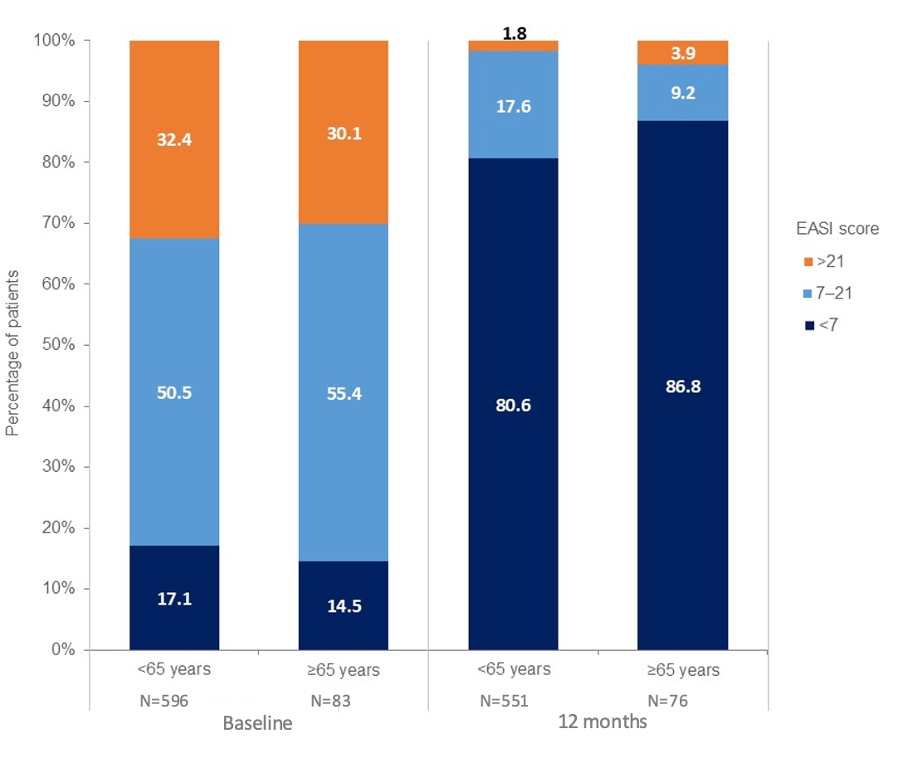
Fig. 1. Evolution of the Eczema Area and Severity Index (EASI) score at inclusion and after 12 months of treatment with any therapy, by age group. Numbers may not add to 100% due to rounding.
The number of AD-related hospitalizations in the previous 6 months fell from 6.0% (5/83) to 2.6% (2/76) in patients aged ≥ 65 years and from 3.5% (21/596) to 0.7% (4/551) in patients aged < 65 years, with no significant difference between the 2 groups at 12 months (p = 0.158).
For patients receiving biologics (n = 324 with dupilumab, n = 98 with tralokinumab), the 12-month treatment maintenance rate was very satisfactory in both groups: 89.6% (60/67) for patients aged ≥ 65 years and 93.0% (330/355) for those aged < 65 years. The improvement in mean EASI score for patients receiving biologics was similar in the 2 groups (p = 0.701), with a reduction in the mean score for patients aged ≥ 65 years of 17.9 ± 9.4 to 3.4 ± 4.6 at 12 months. Of the patients who were still treated with biologics after 1 year of follow-up, the percentage with severe AD (EASI > 21) decreased from 29.9% to 3.3% in patients aged ≥ 65 years and from 33.4% to 0.3% in patients aged < 65 years (Fig. 2). A total of 10 patients aged ≥ 65 years stopped their biologics during the first year, 6 because of lack of efficacy, 3 at the patient’s request, and 1 because of conjunctivitis. The 12-month maintenance rate for JAK inhibitors (n = 95 baricitinib, n = 42 abrocitinib, n = 39 upadacitinib) was 75% (6/8) in patients aged ≥ 65 years and 74.4% (125/168) in patients aged < 65 years. Two patients aged ≥ 65 years stopped their JAK inhibitor treatment during the 12 months: 1 because of lack of efficacy and 1 at the patient’s request.
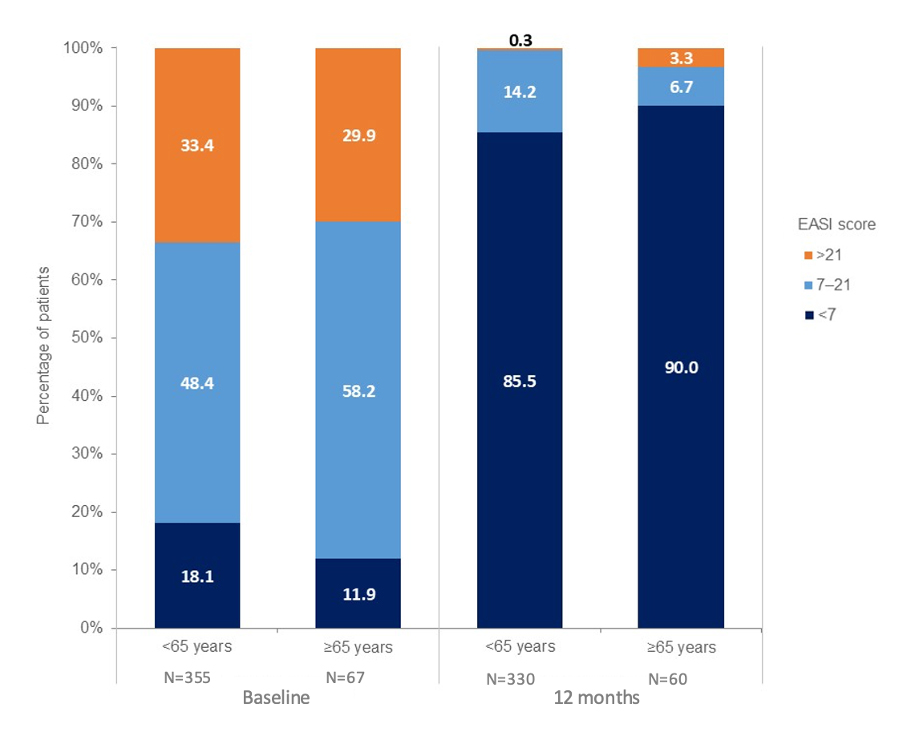
Fig. 2. Evolution of the Eczema Area and Severity Index (EASI) score at inclusion and after 12 months of treatment with biologics, by age group. Numbers may not add to 100% due to rounding.
For patients receiving systemic immunomodulators, the 12-month discontinuation rate was 50% (4/8) in patients aged ≥ 65 years and 71.2% (52/73) in patients aged < 65 years. Among patients aged ≥ 65 years, the discontinuation rate for methotrexate was 50% (3/6) (2 because of lack of efficacy, 1 because of an adverse event) and was similar to that observed in those aged < 65 years (62.5%; 10/16). Overall, compliance with all treatments was significantly better in those aged ≥ 65 years at 12-month follow-up (p < 0.001), with none of these patients not complying compared with 6.4% (35/550) in those aged < 65 years.
At 12-month follow-up, patients’ perception of the impact of AD on their quality of life improved across all areas (see Table II). The mean DLQI scores and the mean DLQI scores adapted to the geriatric population were both higher in patients aged < 65 years at baseline and after 12 months of follow-up (p < 0.001). The percentage of patients with “severe” itching, pain, or burning sensations was higher in the < 65 years group than the ≥ 65 years group at both baseline and 12 months; however, the between-group difference was significant only at 12 months (p = 0.041) (Table II). A significantly greater percentage of the < 65 years group reported a severe impact on sleep at both baseline and 12 months (Table II). At 12 months, the mean SF-12 physical dimension score was significantly lower in patients aged ≥ 65 than in patients aged < 65 years (p < 0.001), whereas the SF-12 mental dimension mean score was comparable between the 2 groups (p = 0.366).
DISCUSSION
Our study shows that dermatologists’ use of systemic treatments in elderly patients, when the severity of AD requires them, results in both a comparable clinical improvement (EASI score) to that in younger adults and a major improvement in pruritus and sleep quality. The higher mean DLQI scores and the physical dimension of the SF-12 in patients aged ≥ 65 years compared with younger adults should be interpreted in light of the specific characteristics of the elderly population. In particular, the items relating to professional activity are less relevant, and the basic physical capacity of patients aged ≥ 65 years is lower than that of younger adults. Our results also provide reassuring information concerning the safety profile of treatments, particularly biologics, in elderly patients. This positive safety profile is enhanced by a very satisfactory rate of treatment persistence and a very good level of compliance, which are comparable to or even better than those of younger adults.
These positive results are particularly important in relation to the considerable remaining therapeutic inertia in prescribers for moderate to severe AD (17). In our study, 84.3% of patients aged ≥ 65 years were receiving no treatment or only topical treatments at the time of inclusion, which is totally inadequate for the severity of their AD. Nevertheless, we emphasize that the evaluation of therapies in the elderly remains a subject little addressed in the medical literature, which may represent a source of therapeutic restraint. Indeed, the median age of adult patients in the pivotal phase III trials for dupilumab, tralokinumab, and JAK inhibitors was between 34 and 40 years (18–30). Subjects aged > 65 years represent between only 4% and 4.9% of adult patients when details of age distribution are available (31–33). More recently, a pooled analysis of 4 randomized controlled trials evaluated the efficacy and safety of dupilumab in 183 patients aged > 60 years (i.e., 8% of the total population), and both showed efficacy in terms of EASI score, quality of life, and pruritus and reported reassuring data on the safety of dupilumab in this population over a median follow-up of 16 weeks (34).
None of the dermatologists in our study used ciclosporin to treat AD in elderly patients, even though European recommendations include ciclosporin as a first-line systemic treatment for severe AD (15). However, these recommendations do not account for the patient’s age in the therapeutic strategy. To be consistent with clinical practice, dermatologists’ reluctance to use ciclosporin in elderly patients, probably due to fears of a higher risk of adverse reactions, should be considered in future evaluations of its place in the therapeutic strategy for AD.
The prescription of JAK inhibitors in patients aged ≥ 65 years was marginal in our study compared with that of biologics. However, part of the recruitment period coincided with the publication of a warning concerning the prescription of JAK inhibitors, particularly in patients aged ≥ 65 years (33). Nevertheless, although the number of patients treated was small, with a short duration of exposure, in our study we noted a positive risk–benefit profile of JAK inhibitors in older patients, comparable to that in younger patients. The good risk–benefit profile of JAK inhibitors in AD, even in the presence of 1 or more risk factors defined by the Pharmacovigilance Risk Assessment Committee of the European Medicines Agency, has been highlighted in several retrospective and prospective studies (35–37).
Strengths and limitations
The strength of our study lies in its prospective nature, with real-life data, including evaluation from the patients’ viewpoints (self-completed questionnaires), from hospital and private healthcare centres throughout France. Furthermore, the diagnosis of AD was made by dermatologists with expertise in chronic inflammatory dermatoses, which is very important given that, in elderly subjects, several differential diagnoses likely to mimic AD must be excluded, such as allergic contact dermatitis and cutaneous T-cell lymphoma. The proportion of patients aged ≥ 65 years (12%) among the adults with AD included in our study is comparable to figures from international epidemiological studies, indicating that our sample is representative. However, our study has some limitations. The first limitation concerns generalizability, as our results do not apply to patients with a mild form of the disease who are treated by general practitioners. The second limitation concerns the fact that the included study population depended on the voluntary participation of patients and physicians, which may introduce a selection bias in favour of patients who were most involved in their medical care.
Conclusion
The clinical impact of the therapeutic choices made by dermatologists in routine practice for elderly subjects with moderate to severe AD has been very positive in terms of efficacy and safety, making it possible to significantly improve the burden of the disease with a good risk–benefit profile. Dermatologists prefer to prescribe biologics, the efficacy and safety profiles of which are identical in elderly patients to those in younger patients and consistent with results from randomized controlled trials. Of course, further data from routine practice cohorts are needed to confirm these results, but we hope that our data will help to remove the existing therapeutic barriers to the effective treatment of elderly patients with AD.
ACKNOWLEDGEMENTS
The authors thank all the members of Reso-dermatologie who contributed to the enrolment of patients in the OMCCI registry. Sheridan Henness, PhD (Rx Communications, Mold, UK), provided medical writing assistance with the abstract and significance sections of the manuscript, and English language, formatting, and consistency checks during the post-submission revisions. This medical writing assistance was funded by ResoMed, a collaborative medicine network created in 2015 (as an extension of ResoPso created in 2009) with the aim of improving public health and the management and quality of care of French people living with a chronic inflammatory skin disease.
Ethics declaration: This study was approved by the Commission Numérique de l’Informatique et des Libertés (CNIL) and the Comité de Protection des Personnes (CPP; ref CNRIPH 20.05.27.35855 / ID 8375).
REFERENCES
- Laughter MR, Maymone MBC, Mashayekhi S, Arents BWM, Karimkhani C, Langan SM, et al. The global burden of atopic dermatitis: lessons from the Global Burden of Disease Study 1990–2017. Br J Dermatol 2021; 184: 304–309. https://doi.org/10.1111/bjd.19580
- de Bruin-Weller M, Gadkari A, Auziere S, Simpson EL, Puig L, Barbarot S, et al. The patient-reported disease burden in adults with atopic dermatitis: a cross-sectional study in Europe and Canada. J Eur Acad Dermatol Venereol 2020; 34: 1026–1036. https://doi.org/10.1111/jdv.16003
- Bylund S, Von Kobyletzki LB, Svalstedt M, Svensson Å. Prevalence and incidence of atopic dermatitis: a systematic review. Acta Derm Venereol 2020; 100: 320–329. https://doi.org/10.2340/00015555-3510
- Kim JP, Chao LX, Simpson EL, Silverberg JI. Persistence of atopic dermatitis (AD): a systematic review and meta-analysis. J Am Acad Dermatol 2016; 75: 681–687.e11. https://doi.org/10.1016/j.jaad.2016.05.028
- von Kobyletzki LB, Bornehag CG, Breeze E, Larsson M, Boman Lindström C, Svensson Å. Factors associated with remission of eczema in children: a population-based follow-up study. Acta Derm Venereol 2014; 94: 179–184. https://doi.org/10.2340/00015555-1681
- Ellis CN, Mancini AJ, Paller AS, Simpson EL, Eichenfield LF. Understanding and managing atopic dermatitis in adult patients. Semin Cutan Med Surg 2012; 31: S18–22. https://doi.org/10.1016/j.sder.2012.07.006
- Nishioka K. Atopic eczema of adult type in Japan. Australas J Dermatol 1996; 37: S7–9. https://doi.org/10.1111/j.1440-0960.1996.tb01088.x
- Tanei R, Hasegawa Y. Atopic dermatitis in older adults: a viewpoint from geriatric dermatology. Geriatr Gerontol Int 2016; 16: 75–86. https://doi.org/10.1111/ggi.12771
- Howell AN, Ghamrawi RI, Strowd LC, Feldman SR. Pharmacological management of atopic dermatitis in the elderly. Expert Opin Pharmacother 2020; 21: 761–771. https://doi.org/10.1080/14656566.2020.1729738
- Salava A, Rieppo R, Lauerma A, Salo V. Age-dependent distribution of atopic dermatitis in primary care: a nationwide population-based study from Finland. Acta Derm Venereol 2022; 102: adv00738. https://doi.org/10.2340/actadv.v102.2287
- Silverberg JI, Hanifin JM. Adult eczema prevalence and associations with asthma and other health and demographic factors: a US population-based study. J Allergy Clin Immunol 2013; 132: 1132–1138. https://doi.org/10.1016/j.jaci.2013.08.031
- Pollyn-Millot C, Maccari F, Perrot JL, Reguiai Z, Boulard C, Bécherel PA, et al. Clinical characteristics and therapeutic management of atopic dermatitis in elderly patients compared with young adult patients: a prospective multicentre study. Acta Derm Venereol 2024; 104: adv40420. https://doi.org/10.2340/actadv.v104.40420
- Lam M, Zhu JW, Maqbool T, Adam G, Tadrous M, Rochon P, et al. Inclusion of older adults in randomized clinical trials for systemic medications for atopic dermatitis: a systematic review. JAMA Dermatol 2020; 156: 1240–1245. https://doi.org/10.1001/jamadermatol.2020.2940
- Ring J, Alomar A, Bieber T, Deleuran M, Fink-Wagner A, Gelmetti C, et al. Guidelines for treatment of atopic eczema (atopic dermatitis) Part II. J Eur Acad Dermatol Venereol 2012; 26: 1176–1193. https://doi.org/10.1111/j.1468-3083.2012.04635.x
- Wollenberg A, Christen-Zäch S, Taieb A, Paul C, Thyssen JP, de Bruin-Weller M, et al. ETFAD/EADV Eczema task force 2020 position paper on diagnosis and treatment of atopic dermatitis in adults and children. J Eur Acad Dermatol Venereol 2020; 34: 2717–2744. https://doi.org/10.1111/jdv.16892
- Becherel PA, Reguiai Z, Fougerousse AC, Perrot JL, Begon E, Thomas-Beaulieu D, et al. Compared burden of psoriasis, atopic dermatitis, hidradenitis suppurativa, and chronic urticaria: baseline characteristics of the patients included in the OMCCI cohort – A French, prospective multicenter study of chronic inflammatory dermatoses. Dermatology 2024; 240: 702–712. https://doi.org/10.1159/000540250
- Halioua B, Corgibet F, Taieb C, Thenie C, Veniard C, Noel M, et al. Therapeutic inertia in the management of patients with inadequately controlled atopic dermatitis. J Eur Acad Dermatol Venereol 2022; 36: e817–e818. https://doi.org/10.1111/jdv.18303
- de Bruin-Weller M, Thaçi D, Smith CH, Reich K, Cork MJ, Radin A, et al. Dupilumab with concomitant topical corticosteroid treatment in adults with atopic dermatitis with an inadequate response or intolerance to ciclosporin A or when this treatment is medically inadvisable: a placebo-controlled, randomized phase III clinical trial (LIBERTY AD CAFÉ). Br J Dermatol 2018; 178: 1083–1101. https://doi.org/10.1111/bjd.16156
- Simpson EL, Bieber T, Guttman-Yassky E, Beck LA, Blauvelt A, Cork MJ, et al. Two phase 3 trials of dupilumab versus placebo in atopic dermatitis. N Engl J Med 2016; 375: 2335–2348. https://doi.org/10.1056/NEJMoa1610020
- Blauvelt A, de Bruin-Weller M, Gooderham M, Cather JC, Weisman J, Pariser D, et al. Long-term management of moderate-to-severe atopic dermatitis with dupilumab and concomitant topical corticosteroids (LIBERTY AD CHRONOS): a 1-year, randomised, double-blinded, placebo-controlled, phase 3 trial. Lancet 2017; 389: 2287–2303. https://doi.org/10.1016/S0140-6736(17)31191-1
- Wollenberg A, Blauvelt A, Guttman-Yassky E, Worm M, Lynde C, Lacour JP, et al. Tralokinumab for moderate-to-severe atopic dermatitis: results from two 52-week, randomized, double-blind, multicentre, placebo-controlled phase III trials (ECZTRA 1 and ECZTRA 2). Br J Dermatol 2021; 184: 437–449. https://doi.org/10.1111/bjd.19574
- Reich K, Teixeira HD, de Bruin-Weller M, Bieber T, Soong W, Kabashima K, et al. Safety and efficacy of upadacitinib in combination with topical corticosteroids in adolescents and adults with moderate-to-severe atopic dermatitis (AD Up): results from a randomised, double-blind, placebo-controlled, phase 3 trial. Lancet 2021; 397: 2169–2181. https://doi.org/10.1016/S0140-6736(21)00589-4
- Reich K, Kabashima K, Peris K, Silverberg JI, Eichenfield LF, Bieber T, et al. Efficacy and safety of baricitinib combined with topical corticosteroids for treatment of moderate to severe atopic dermatitis: a randomized clinical trial. JAMA Dermatol 2020; 156: 1333–1343. https://doi.org/10.1001/jamadermatol.2020.3260
- Thyssen JP, Werfel T, Barbarot S, Hunter HJA, Pierce E, Sun L, et al. Maintained improvement in physician- and patient-reported outcomes with baricitinib in adults with moderate-to-severe atopic dermatitis who were treated for up to 104 weeks in a randomized trial. J Dermatolog Treat 2023; 34: 2190430. https://doi.org/10.1080/09546634.2023.2190430
- Reich K, DeLozier AM, Nunes FP, Thyssen JP, Eichenfield LF, Wollenberg A, et al. Baricitinib improves symptoms in patients with moderate-to-severe atopic dermatitis and inadequate response to topical corticosteroids: patient-reported outcomes from two randomized monotherapy phase III trials. J Dermatolog Treat 2022; 33: 1521–1530. https://doi.org/10.1080/09546634.2020.1839008
- Lio PA, Simpson EL, Han G, Soung J, Ball S, Sun L, et al. Improvement in sleep and itch and enhanced quality of life in adult patients with moderate-to-severe atopic dermatitis: results from a phase 3 trial of baricitinib therapy. J Dermatolog Treat 2022; 33: 2057–2062. https://doi.org/10.1080/09546634.2021.1914308
- Wollenberg A, Nakahara T, Maari C, Peris K, Lio P, Augustin M, et al. Impact of baricitinib in combination with topical steroids on atopic dermatitis symptoms, quality of life and functioning in adult patients with moderate-to-severe atopic dermatitis from the BREEZE-AD7 phase 3 randomized trial. J Eur Acad Dermatol Venereol 2021; 35: 1543–1552. https://doi.org/10.1111/jdv.17278
- Bieber T, Simpson EL, Silverberg JI, Thaçi D, Paul C, Pink AE, et al. Abrocitinib versus placebo or dupilumab for atopic dermatitis. N Engl J Med 2021; 384: 1101–1112. https://doi.org/10.1056/NEJMoa2019380
- Shi VY, Bhutani T, Fonacier L, Deleuran M, Shumack S, Valdez H, et al. Phase 3 efficacy and safety of abrocitinib in adults with moderate-to-severe atopic dermatitis after switching from dupilumab (JADE EXTEND). J Am Acad Dermatol 2022; 87: 351–358. https://doi.org/10.1016/j.jaad.2022.04.009
- Guttman-Yassky E, Teixeira HD, Simpson EL, Papp KA, Pangan AL, Blauvelt A, et al. Once-daily upadacitinib versus placebo in adolescents and adults with moderate-to-severe atopic dermatitis (Measure Up 1 and Measure Up 2): results from two replicate double-blind, randomised controlled phase 3 trials. Lancet 2021; 397: 2151–2168. https://doi.org/10.1016/S0140-6736(21)00588-2
- Thyssen JP, Thaçi D, Bieber T, Gooderham M, de Bruin-Weller M, Soong W, et al. Upadacitinib for moderate-to-severe atopic dermatitis: stratified analysis from three randomized phase 3 trials by key baseline characteristics. J Eur Acad Dermatol Venereol 2023; 37: 1871–1880. https://doi.org/10.1111/jdv.19232
- Simpson EL, Sinclair R, Forman S, Wollenberg A, Aschoff R, Cork M, et al. Efficacy and safety of abrocitinib in adults and adolescents with moderate-to-severe atopic dermatitis (JADE MONO-1): a multicentre, double-blind, randomised, placebo-controlled, phase 3 trial. Lancet 2020; 396: 255–266. https://doi.org/10.1016/S0140-6736(20)30732-7
- Silverberg JI, Simpson EL, Thyssen JP, Gooderham M, Chan G, Feeney C, et al. Efficacy and safety of abrocitinib in patients with moderate-to-severe atopic dermatitis: a randomized clinical trial. JAMA Dermatol 2020; 156: 863–873. https://doi.org/10.1001/jamadermatol.2020.1406
- Silverberg JI, Lynde CW, Abuabara K, Patruno C, de Benedetto A, Zhang H, et al. Efficacy and safety of dupilumab maintained in adults ≥ 60 years of age with moderate-to-severe atopic dermatitis: analysis of pooled data from four randomized clinical trials. Am J Clin Dermatol 2023; 24: 469–483. https://doi.org/10.1007/s40257-022-00754-4
- Hren MG, Khattri S. Use of systemic Janus kinase inhibitors for dermatologic indications in the elderly: a retrospective study of 67 cases. J Am Acad Dermatol 2024; 90: 816–819. https://doi.org/10.1016/j.jaad.2023.11.055
- Piscazzi F, Gargiulo L, Ibba L, Valenti M, Facheris P, Costanzo A, et al. Upadacitinib for the treatment of atopic dermatitis in the elderly: an Italian case series of seven patients. J Dermatolog Treat 2023; 34: 2245510. https://doi.org/10.1080/09546634.2023.2245510
- Reguiai Z, Becherel PA, Fougerousse AC, Chaby G, Perrot JL, Begon E, et al. Janus kinase inhibitors for the treatment of atopic dermatitis: real-life data on efficacy and safety in light of the pharmacovigilance risk assessment committee recommended measures. J Eur Acad Dermatol Venereol 2023; 37: e1307–e1309. https://doi.org/10.1111/jdv.19302