SHORT COMMUNICATION
The Epidemiology of Chronic Prurigo: Lessons Learned
Maurice WAITEK and Elke WEISSHAAR
Division of Occupational Dermatology, Department of Dermatology, Heidelberg University Hospital, Heidelberg, Germany. E-mail: Elke.Weisshaar@med.uni-heidelberg.de
Citation: Acta Derm Venereol 2025; 105: adv44334. DOI: https://doi.org/10.2340/actadv.v105.44334.
Copyright: © 2025 The Author(s). Published by MJS Publishing, on behalf of the Society for Publication of Acta Dermato-Venereologica. This is an Open Access article distributed under the terms of the Creative Commons Attribution-NonCommercial 4.0 International License (https://creativecommons.org/licenses/by-nc/4.0/).
Submitted: Jul 7, 2025. Accepted after revision: Sep 18, 2025. Published: Oct 3, 2025.
INTRODUCTION
Chronic prurigo (CPG) is defined as “a distinct disease defined by the presence of chronic pruritus and multiple localized or generalized pruriginous lesions. CPG occurs due to a neuronal sensitization to itch and the development of an itch–scratch cycle. CPG can be of dermatological, systemic, neurological, psychiatric/psychosomatic, multifactorial or undetermined origin” (1, 2).
Shedding light on its epidemiological aspects is important. Epidemiological studies reporting prevalence and incidence rates of CPG have become more frequent in the last years since new systemic therapies have been approved for use (1). It appears as if this development has led to more interest and support of epidemiological research. This article summarizes information and gaps in research on the epidemiology of CPG and hints for future research.
WHAT WE HAVE LEARNED SO FAR
There were no epidemiological studies on CPG until 2018 and interest in the disease was low. Since then and especially during the last 5 years, several studies have been conducted, providing insight into the prevalence and incidence of CPG and its associated factors.
Prevalence and associated factors
CPG can occur in all age groups, with the elderly being the most affected (3). A German study reported the prevalence of CPG according to different age groups and the overall study population of people insured at 1 health insurance provider (4). In this study, the age group 90 years and older had a prevalence of 0.55% compared with 0.21% in the whole study population. More females suffer from CPG according to most studies, with percentages ranging from 54.8–68% (3, 5–11). Studies from Japan and South Korea reported a male predominance (51.3 and 56.8% respectively) and higher prevalence rates than many European studies (10, 11). African-Americans seem to be disproportionally affected by CPG, with them being 3.4 times more likely to suffer from CPG compared with Caucasians, according to a US register-based study (12). In a Danish study, CPG patients had a comparatively lower educational level than the general population estimates (38% vs 30% with just a primary school education). CPG patients also had lower annual income compared with an age-, sex-, and education-matched control group (8). They earned €37,580 (SD: 30,834) on average while Controls earned €43,235 (SD: 122,366). Prevalence rates in different cohorts and registers range from 2 to 553 per 100,000 patients (Table I). Six studies reported incidence rates (Table I). The worldwide prevalence of CPG in the general population was estimated by meta-analysis to be 0.083% (17).
Comorbidities
CPG patients often suffer from comorbidities such as, e.g., atopic dermatitis (AD), depression, anxiety, chronic obstructive pulmonary disease (COPD), hypertension, chronic kidney disease, and congestive heart failure (Fig. 1). These comorbidities are more likely to occur in CPG patients compared with healthy controls or even patients with other skin diseases, e.g., psoriasis (3, 5, 8, 12).
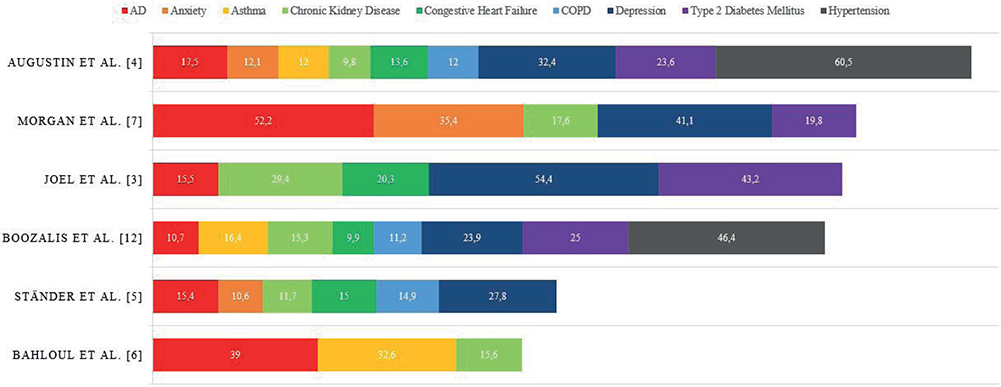
Fig. 1. Comorbidities of chronic prurigo (percentage).
Therapies
CPG therapies have raised more attention during the last years. According to these epidemiological studies most patients reported the use of topical corticosteroids, many moderate to very strong ones (70.9–85.5%), and systemic antihistamines (6, 10, 11, 15, 16). Systemic corticosteroids were used especially in severe CPG, with Swedish patients reporting the use of systemic corticosteroids in 78.7% of those affected, whereas in another study Korean patients used them in only 23.11% of cases (10, 16). Dupilumab and nemolizumab are newly approved biological therapies and are the only licensed medications for treatment of refractory CPG since 2022 and 2025 respectively. These monoclonal antibodies inhibit different interleukins and therefore impede itch and disease progression.
WHAT IS YET TO BE LEARNED
Methodology
There was a lack of clear disease definition until 2018 (2) and no diagnostic and treatment algorithm until 2020 (18). CPG is at present still difficult to assess in all its dimensions and difficult to treat. Many healthcare systems underestimate the burden of CPG. This is reflected in the previous existing epidemiological studies, which often used databases older than 2018, differing in CPG diagnosis and documentation (4–8, 10–16). One study defined moderate to severe CPG simply by whether or not systemic medication was necessary (6).
Furthermore, studies on CPG often report prevalence with no clear definition of it. It is often unclear whether or not these studies investigated point, 1-year, or lifetime prevalence. Most studies seem to investigate 1-year prevalences or cumulative prevalences and are register-based with unclear documentation of, e.g., controlled CPG (4–6, 8–11, 13, 14, 16). Incidence reports are few and far between.
Differing patient populations
To our knowledge there is no study investigating the prevalence of CPG in the general population, with studies mostly using general population estimates based on health insurance data. Western populations were the most investigated populations in the existing epidemiological studies and showed a mainly female predominance. However, sex differences still remain under-researched. Many studies did not report sex distribution. It remains to be investigated as to why Asian studies were the only ones reporting a male predominance. There is also a lack of data regarding ethnic differences. There are no studies from Africa, South America, or Oceania. The true global prevalence of CPG might be underestimated due to this (17).
View on new therapies
It is striking that an increasing number of epidemiological studies were conducted due to the rising awareness and interest of pharmaceutical companies in CPG. Studies are funded by these companies in light of the new therapies. This may shift the view on these new drugs and suggest them as a one-fits-all solution. It is important to follow the guideline (1) to optimize treatment, to search for the underlying aetiology of CPG, and not to use systemic treatments as a first-line therapy to minimize costs (when topical therapies may suffice as well).
Missing outcome measures
There is a lack of a set of comparable outcome measures, either patient- or physician-reported, especially regarding the severity of CPG, the severity of itch in CPG and the psychological burden and Quality of Life (QoL) impairment of CPG. To our knowledge no validated instrument exists for assessing the psychological burden and QoL in CPG.
CONCLUSION
More light has been shed on the epidemiology of CPG in recent times. Nevertheless, there remains a lack of information, especially regarding ethnic and sex differences, but also demographic factors. This should be addressed by future studies.
ACKNOWLEDGEMENT
Conflict of Interest Statement: MW has no conflicts of interest to declare. EW has participated in clinical trials on itch and prurigo for Menlo, Kiniksa, TREVI, Incyte, Celldex and Galderma and has been a consultant (advisory board) for Galderma, Sanofi, and LEO Pharmaceuticals.
REFERENCES
- Ständer S, Pereira MP, Berger T, Zeidler C, Augustin M, Bobko S, et al. IFSI-guideline on chronic prurigo including prurigo nodularis. Itch 2020; 5: e42. Published 2020 (currently in revision). https://doi.org/10.1097/itx.0000000000000042
- Pereira MP, Steinke S, Zeidler C, Forner C, Riepe C, Augustin M, et al. European Academy of Dermatology and Venereology European prurigo project: expert consensus on the definition, classification and terminology of chronic prurigo. J Eur Acad Dermatol Venereol 2018; 32: 1059–1065. https://doi.org/10.1111/jdv.14570
- Joel MZ, Hydol-Smith J, Kambala A, Cornman HL, Kwatra SG. Prevalence and comorbidity burden of prurigo nodularis in United States adults enrolled in the All of Us research program. J Am Acad Dermatol 2023; 89: 1056–1058. https://doi.org/10.1016/j.jaad.2023.06.045
- Augustin M, Garbe C, Hagenström K, Petersen J, Pereira MP, Ständer S. Prevalence, incidence and presence of comorbidities in patients with prurigo and pruritus in Germany: a population-based claims data analysis. J Eur Acad Dermatol Venereol 2021; 35: 2270–2276. https://doi.org/10.1111/jdv.17485
- Ständer S, Ketz M, Kossack N, Akumo D, Pignot M, Gabriel S, et al. Epidemiology of prurigo nodularis compared with psoriasis in Germany: a claims database analysis. Acta Derm Venereol 2020; 100: adv00309. https://doi.org/10.2340/00015555-3655
- Bahloul D, Hudson R, Balogh O, Mathias E, Heywood B, Hubbuck E, et al. Prevalence, incidence and treatment patterns of prurigo nodularis in England: a retrospective database analysis. Br J Dermatol 2024; 191: 548–555. https://doi.org/10.1093/bjd/ljae207
- Morgan CL, Thomas M, Ständer S, Jabbar-Lopez ZK, Piketty, C, Gabriel S, et al. Epidemiology of prurigo nodularis in England: a retrospective database analysis. Br J Dermatol 2022; 187: 188–195. https://doi.org/10.1111/bjd.21032
- Elberling J, Ibler KS, Thomsen SF, Bossman K, Olsen J, Torpet M. Incidence and prevalence of prurigo nodularis and associated comorbidities in Denmark from 1995 to 2021. Clin Exp Dermatol 2025; 50: 818–825. https://doi.org/10.1093/ced/llae514
- Ryczek A, Reich A. Prevalence of prurigo nodularis in Poland. Acta Derm Venereol 2020; 100: adv00155. https://doi.org/10.2340/00015555-3518
- Woo YR, Wang S, Sohn KA, Kim HS. Epidemiology, comorbidities, and prescription patterns of Korean prurigo nodularis patients: a multi-institution study. J Clin Med 2021; 11: 95. https://doi.org/10.3390/jcm11010095
- Igarashi A, Yoshida T, Sunaga Y, Nawata H, Arima K. Current status of prurigo nodularis in Japan: a retrospective study using a health insurance claims Database. J Clin Med 2025; 14: 1872. https://doi.org/10.3390/jcm14061872
- Boozalis E, Tang O, Patel S, Semenov YR, Pereira MP, Ständer S, et al. Ethnic differences and comorbidities of 909 prurigo nodularis patients. J Am Acad Dermatol 2018; 79: 714–719. https://doi.org/10.1016/j.jaad.2018.04.047
- Kwatra SG, Puelles J, Tran O, Brouillette M, Lillehaugen T, Parthasarathy V, et al. Prevalence of prurigo nodularis in the United States. JAAD Int 2024; 18: 134–136. https://doi.org/10.1016/j.jdin.2023.12.013
- Ständer S, Augustin M, Berger T, Elmariah S, Korman NJ, Weisshaar E, et al. Prevalence of prurigo nodularis in the United States of America: a retrospective database analysis. JAAD Int 2020; 2: 28–30. https://doi.org/10.1016/j.jdin.2020.10.009
- Misery L, Brenaut E, Torreton E, Bonte J, Bouée S. Prevalence and management of chronic nodular prurigo (CNPG) in Brittany (France): estimation by matching two databases. J Eur Acad Dermatol Venereol 2021; 35: e602–e604. https://doi.org/10.1111/jdv.17333
- Antelmi A, Metsini A, Regnell SE, Carlberg M, Svensson Å, von Kobyletzki L. Prevalence of prurigo nodularis in Sweden. J Eur Acad Dermatol Venereol 2024; 38: e904–e906. https://doi.org/10.1111/jdv.19986
- Alinaghi F, Jensen MB, Elberling J, Skov L, Loft N. Worldwide prevalence of prurigo nodularis: a systematic review and meta-analysis. J Eur Acad Dermatol Venereol 2025; 39: e767–e771. https://doi.org/10.1111/jdv.20585
- Ständer HF, Elmariah S, Zeidler C, Spellman M, Ständer S. Diagnostic and treatment algorithm for chronic nodular prurigo. J Am Acad Dermatol 2020; 82: 460–468. https://doi.org/10.1016/j.jaad.2019.07.022