QUIZ SECTION
Bilateral Nail Dystrophy of the Fourth Digits: A Quiz
Hanife KARATAŞ  , Elif KAYA, Müzeyyen GÖNÜL and Selda PELIN KARTAL
Department of Dermatology, Ankara Etlik City Hospital, Ankara, Turkey. E-mail: elif_kaya7@hotmail.com
Citation: Acta Derm Venereol 2025; 105: adv44336. DOI: https://doi.org/10.2340/actadv.v105.44336.
Copyright: © 2025 The Author(s). Published by MJS Publishing, on behalf of the Society for Publication of Acta Dermato-Venereologica. This is an Open Access article distributed under the terms of the Creative Commons Attribution-NonCommercial 4.0 International License (https://creativecommons.org/licenses/by-nc/4.0/).
Published: November 25, 2025
Competing interests and funding: The authors have no conflict of interest to declare.
A 70-year-old male presented with a 3-month history of progressive nail changes affecting the fourth digits of both hands. He denied any pain, trauma, numbness, or motor symptoms at the time of presentation. There was no personal or family history of dermatologic or systemic disease.
Physical examination revealed mild crumbling, longitudinal fissuring, and pitting of the left fourth digit (Fig. 1A) and similar and milder symptoms on the right fourth digit (Fig. 1B). No signs of inflammation were noted, and the remaining fingernails and toenails appeared normal.
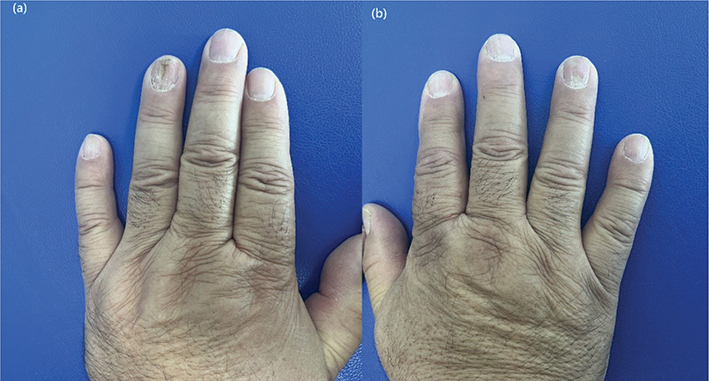
Fig. 1. Initial presentation of nail dystrophy affecting (A) the left and (B) the right fourth digit.
Potassium hydroxide (KOH) examination was negative for fungal infection. Laboratory tests, including inflammatory markers and autoimmune screening, were within normal limits. To exclude a matrix-origin tumour or other local pathology, magnetic resonance imagining (MRI) of the left hand was performed. While there were no abnormalities in the bones, joints, or flexor tendons, marked fluid accumulation around the flexor digitorum tendon was observed, consistent with synovitis. A focal area of T2 hyperintensity was noted in the nail bed, but was too small to characterize definitively.
After imaging, the patient reported recent-onset numbness in both hands over the past 2 weeks. Neurological examination showed a positive Phalen test bilaterally.
What is your diagnosis?
1: Lichen planus of the nails
2: Onychomycosis
3: Carpal tunnel syndrome-related nail changes
4: Ischaemic nail changes due to peripheral vascular disease
See next page for answer.
ANSWERS TO QUIZ
Bilateral Nail Dystrophy of the Fourth Digits: A Commentary
Diagnosis: Carpal tunnel syndrome-related nail changes
Nail changes are common in dermatology practice, but sometimes diagnostic difficulties may occur. Accurate identification of the underlying pathology is essential for appropriate management. Therefore, a thorough medical history and detailed physical examination are crucial. Differential diagnoses for this patient included lichen planus, onychomycosis, and ischaemic nail changes. Lichen planus was excluded due to the absence of skin lesions as well as characteristic dorsal pterygium or involvement of other nails. Onychomycosis was ruled out by a negative KOH preparation and lack of typical thickening, subungual debris, or yellowish discoloration. Ischaemic nail changes related to peripheral vascular disease were considered unlikely given the absence of digital pallor, cyanosis, or any vascular insufficiency findings on examination. Imaging studies excluded underlying tumoral proliferation involving the nail matrix. Other possible causes of localized nail dystrophy include psoriasis, traumatic nail changes, eczema-related alterations, and connective tissue diseases (e.g., lupus ery-thematosus, systemic sclerosis). These were considered but deemed less likely in this patient due to the lack of systemic or cutaneous findings. The bilateral involvement of only the fourth digits, in the absence of systemic disease, as well as a new onset of bilateral numbness of the hands prompted further evaluation for underlying neurological conditions. A positive Phalen’s test supported this clinical impression, prompting further evaluation with electromyography and nerve conduction studies, which confirmed the diagnosis of carpal tunnel syndrome (CTS).
The most prevalent entrapment neuropathy is CTS, which arises from compression of the median nerve as it traverses the carpal tunnel at the wrist. Clinically, CTS is predominantly characterized by neurological symptoms, including pain, paraesthesia, and muscle weakness, which affect the median nerve distribution (1, 2).
In previous studies, CTS-related nail findings have been described variously, including koilonychia, Beau’s lines, onychomadesis, and subungual hyperkeratosis (3). The exact pathophysiology underlying CTS-associated nail abnormalities remains unclear, but dysfunction of autonomic fibres within the median nerve is thought to play a key role (4). These autonomic fibres regulate vascular tone and provide trophic support to the nail matrix. Chronic compression of the median nerve may disrupt these functions, leading to compromised blood flow and structural alterations in the nail plate. Additionally, the sensory deficits associated with CTS may result in unintentional microtrauma to the affected fingers, further exacerbating nail abnormalities (2).
Surgical decompression can improve both neurological and nail-related conditions in CTS (5). In our case, both neurological and nail symptoms improved following physiotherapy and corticosteroid injections (Fig. 2). Therefore, medical treatment may be a viable alternative for the management of mild to moderate CTS, especially in patients who do not prefer surgical therapy. The improvement in nail dystrophy and numbness with treatment of CTS in our case supports the hypothesis that nerve compression directly influences nail health through neurotrophic and microvascular mechanisms (1).
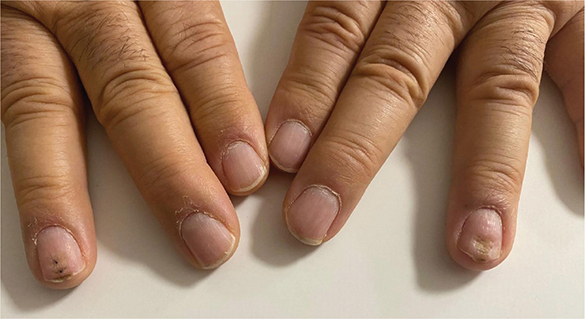
Fig. 2. Nail dystrophy improved following carpal tunnel syndrome treatment.
Nail changes in CTS predominantly affect the first 3 digits and the radial half of the fourth digit (3). Nail changes associated with CTS are rarely reported, and, to our knowledge, involvement limited to the fourth digit has only occasionally been mentioned in the literature The median nerve provides autonomic, sensory, and motor innervation to the first 3 digits and the radial half of the fourth digit, while the ulnar nerve innervates the ulnar portion of the fourth digit and the entire fifth digit (6). Despite this well-defined anatomical distribution, variations in digital nerve supply due to anastomoses between the median and ulnar nerves have been documented. It can be hypothesized that the isolated nail changes observed in this patient are a direct result of variations in the innervation patterns of the median nerve, which is known in rare cases to primarily or completely innervate the fourth digit. The predominant compression of the fibres of the median nerve going to the fourth finger may be responsible for the nail changes observed exclusively in that digit.
The present case highlights an unusual presentation of CTS, in which nail dystrophy was the initial and sole symptom preceding the onset of neurological complaints. The resolution of nail changes following conservative CTS treatment suggests a direct link between median nerve dysfunction and nail pathology. Clinicians, particularly dermatologists and neurologists, should remain vigilant for atypical presentations of CTS, including isolated nail abnormalities, to ensure timely diagnosis and appropriate management. Further research is warranted to elucidate the precise mechanisms linking CTS and nail abnormalities and to determine the optimal therapeutic strategies for such presentations.
REFERENCES
- Dahlin LB, Zimmerman M, Calcagni M, Hundepool CA, van Alfen N, Chung KC. Carpal tunnel syndrome. Nat Rev Dis Primers 2024; 10: 37. https://doi.org/10.1038/s41572-024-00521-1
- Egger AN, Tosti A. Nail findings in patients with systemic diseases. Dermatol Clin 2006; 24: 357–365.
- Gupta AK, Tosti A. Nail changes in hand dermatitis and other common hand conditions. Clin Dermatol 2013; 31: 578–583.
- Hauser RA, Dzul AI. Peripheral neuropathy-induced trophic changes and the role of sympathetic dysfunction. Am J Phys Med Rehabil 2000; 79: 176–180.
- Tosti A, Piraccini BM, Pazzaglia M. Nail involvement in dermatologic and systemic disease. Clin Dermatol 2007; 25: 625–631. https://doi.org/10.1016/j.det.2007.01.005
- Kimura J. Electrodiagnosis in diseases of nerve and muscle: principles and practice. 4th ed. New York: Oxford University Press; 2013. https://doi.org/10.1093/med/9780199738687.001.0001