REVIEW ARTICLE
Effects of Psychological Interventions on Itch, Scratching, and Excoriations: A Systematic Review and Meta-analysis
Christina SCHUT1,5#  , Johanna MUNZ1# , Frederic MAAS GENANNT BERMPOHL2 , Antoinette I. M. VAN LAARHOVEN3 , Jennifer SCHMIDT4, Andrea W. M. EVERS3† and Jörg KUPFER1
1Department of Medicine, Institute of Medical Psychology, Justus-Liebig-University Giessen, Germany, 2Department of Clinical Psychology and Psychotherapy, School of Human and Social Sciences, University of Wuppertal, Germany, 3Health, Medical and Neuropsychology Unit, Faculty of Social and Behavioural Sciences, Leiden University, The Netherlands, 4Muenster Department of Health, FH Muenster University of Applied Sciences, Germany, and 5University of Applied Sciences for Public Management and Security, Faculty of Police, Wiesbaden, Germany
#Authors contributed equally and should both be considered first authors.
†Prof. Dr. Andrea Evers passed away on 4 August 2025.
Psychological interventions reduce itch in patients with skin diseases. However, previous systematic reviews and meta-analyses did not include patients with non-skin-related chronic itch and did not consider excoriations as outcome. This study therefore summarized randomized controlled trials investigating effects of psychological interventions on itch, scratching, and excoriations in patients with chronic itch due to all causes. A systematic literature search was conducted. A random effects model was used to aggregate between-group effect sizes. It was found that 17 of the 20 trials included patients with atopic dermatitis. Small to large post-treatment and follow-up effects were observed on self-rated itch intensity (post-treatment: k = 12, g = –0.37 [–0.60; –0.15]; follow-up: k = 6; g = –0.59 [–0.97; –0.21]), externally rated excoriations (post-treatment: k = 6, g = –0.29 [–0.49; –0.09]; follow-up: k = 6; g = –0.34 [–0.53; –0.15]), and self-rated scratching intensity (post-treatment: k = 2, g = –0.99 [–1.35; –0.63]; follow-up: k = 2; g = –0.85 [–1.22; –0.48]). Small post-treatment effects were observed on self-rated itch frequency (k = 3, g = –0.22 [–0.40; –0.04]). Thus, psychological interventions show promise in reducing not only itch and scratching, but also excoriations, with effects lasting up to 1 year.
SIGNIFICANCE
Psychological interventions like cognitive behavioural therapy or patient education programmes are effective in reducing itch. This meta-analysis summarized results from 20 randomized controlled trials investigating the effects of psychological interventions on itch, scratching, and for the first time also on excoriations in patients with chronic itch due to all causes. Small to large post-treatment and follow-up effects were observed for itch, scratching intensity, and externally rated excoriations. Despite low certainty of evidence, psychological interventions show promise in itch-related parameters, with effects lasting up to 1 year. Future high-quality randomized controlled trials are needed to confirm these findings.
Key words: chronic pruritus; itch; psychological treatment; psychotherapy; meta-analysis; systematic review.
Citation: Acta Derm Venereol 2026; 106: adv44450. DOI: https://doi.org/10.2340/actadv.v106.44450.
Copyright: © 2026 The Author(s). Published by MJS Publishing, on behalf of the Society for Publication of Acta Dermato-Venereologica. This is an Open Access article distributed under the terms of the Creative Commons Attribution-NonCommercial 4.0 International License (https://creativecommons.org/licenses/by-nc/4.0/).
Submitted: Jul 22, 2025. Accepted after revision: Oct 28, 2025. Published: Feb 4, 2026.
Corr: Prof. Dr. Christina Schut, Institute of Medical Psychology, Justus-Liebig-University Giessen, Klinikstrasse 29, DE-35392 Giessen, Germany; University of Applied Sciences for Public Management and Security, Faculty of Police, Schönbergstrasse 100, DE-65199 Wiesbaden, Germany. E-mail: Christina.Schut@hoems.hessen.de
Competing interests and funding: The authors have no conflicts of interest to declare.
INTRODUCTION
Chronic itch is defined by a continuous or intermittent pattern of itch that persists for at least 6 weeks and “typically differs from acute pruritus by long-term structural and functional changes of itch processing” (1; p. 6). It is a common symptom in dermatological conditions (1, 2) and non-dermatological diseases such as chronic kidney disease (4, 5), diabetes (6), and haemato-oncologic diseases (7). Chronic itch can also occur with predominant involvement of psychological factors with no clear dermatological, systemic, or neurological cause, sometimes referred to as psychogenic itch (8, 9). The biopsychosocial model of chronic itch, assumed to be particularly involved in the latter category but may also apply to other types of chronic itch, postulates that psychosocial factors can trigger physiological responses that exacerbate itch (10). In turn, itch may lead to stigma, depression, or sleeping disorders (11), creating a vicious cycle that must be addressed to help patients.
Psychological interventions like cognitive behavioural therapy (CBT), mindfulness-based interventions, habit-reversal training, or patient education programmes have shown benefits in patients with itchy skin conditions, as highlighted by previous systematic reviews and meta-analyses (12–21). Most of these studies focus on psychological variables like quality of life, anxiety and depression (14, 21), or disease severity in specific patient groups (13, 14, 17, 21). A recent meta-analysis in patients with eczema (17) found effects of psychological and educational interventions on the severity of the skin disease in general, but reductions in itch, scratching, and excoriations were not investigated separately. Some studies also directly assessed effects on itch and scratching in patients with skin diseases (13, 14, 20). Lavda et al. (14) reported medium to large effects of psychological interventions on itch and scratching (k = 6 randomized controlled trials; RCTs) in adult patients with various skin conditions, which were greater than the effects on disease severity (k = 11 RCTs) or psychosocial factors (k = 12 RCTs). Chida et al. (13) found large effects of psychological interventions on itch and scratching in adults and children with atopic dermatitis (AD), but only a moderate effect on the severity of the skin disease. A recent meta-analysis (20) found significant effects of psychological interventions in patients with AD on the severity of the skin disease and on scratching intensity, but not itch intensity. However, all these meta-analyses excluded patients with non-dermatological chronic itch (International Forum for the Study of Itch [IFSI] category II [22]) and did not assess excoriations caused by itching as an outcome.
Therefore, this systematic review and meta-analysis, conducted by members of the special interest group (SIG) “psychological factors and itch” of the IFSI, aims to investigate the effects of psychological interventions on itch and scratching in adults and children with all types of chronic itch conditions, incorporating excoriations as an additional outcome measure as well as itch and scratching.
MATERIALS AND METHODS
Protocol and registration
As recommended in the Preferred Reporting Items for Systematic Reviews and Meta-Analyses guideline (PRISMA) (23), the study protocol was registered on the international prospective register for systematic reviews (PROSPERO; CRD42021245916) before the literature search was conducted. All amendments were documented (Appendix S1).
Inclusion and exclusion criteria
Reports on RCTs, including parallel-group and crossover trials examining the effects of a psychological intervention on itch and scratching in humans of all ages reporting chronic itch, were included. Psychological interventions were defined as “any psychological service provided by a trained professional that primarily uses forms of communication and interaction to assess, diagnose, and treat dysfunctional emotional reactions, ways of thinking, and behavior patterns” (American Psychological Association) (24). Studies were included if interventions were carried out by at least 1 trained professional in an individual, couple, or group setting, or via (guided) self-help. Studies without control groups, comparing only the effects of a psychological intervention with another psychological intervention, were excluded. However, studies using a non-psychological active control group (e.g., dermatological education) were included. In addition, studies including healthy individuals with experimentally induced itch or participants reporting no or only acute itch were excluded. Reports had to be published in English, German, or Dutch. There was no restriction to the publication date.
Outcome measures
Outcome measures were self-rated (SR) itch intensity and frequency, SR scratching intensity, and SR and externally rated (ER) scratching frequency, as well as SR and ER excoriations. Outcomes were included for the following time points: immediately after the intervention (post-treatment; PT) and at the last available follow-up (FU) between 1 and 12 months after baseline measurement.
Literature search
A search strategy was developed by JM in close cooperation with CS and JK. Afterwards the search strategy was discussed with AE and finalized in cooperation with all authors. The final search strategy (see Appendix S2) was applied to 4 databases (Cochrane Library, PsycINFO, PubMed, and Web of Science) at 2 time points (19 May 2021; 23 August 2023). The references of eligible studies and reviews on the topic were checked for further eligible reports (citation searching). Moreover, studies were identified via other sources (e.g., conference abstracts/posters and study protocols found via database search).
Study selection
Three authors (CS, JK, and JM) independently screened all found titles and abstracts. Duplicates were excluded. Subsequently, CS performed the full-text assessment, followed by JM checking all decisions independently and documenting the decisions made in SPSS (IBM Corp, Armonk, NY, USA) (25). Dutch studies were checked by AE and AVL. The citation searching was performed by CS and JM. Any disagreements between the 2 raters were resolved by discussion or consultation with JK. If required, further information was requested from the responsible authors. If there were multiple reports to the same study, reported data were compared and, if necessary, aggregated. For each excluded record, the main reason for exclusion was documented. If full texts of papers could not be retrieved via the search databases, authors were contacted by email and/or full texts were ordered via the university library. In 6 cases we did not receive the full texts. See Fig. 1 for PRISMA flow diagram.

Fig. 1. Flow diagram illustrating the results of the literature search and exclusion criteria.
Data extraction
Twenty RCTs with parallel-group design were included in the meta-analysis. As 3 RCTs were summarized in 1 report (26), the 20 RCTs resulted from 18 reports. CS and JM independently extracted data using a standardized Excel form (Microsoft Corp, Redmond, WA, USA). Differences in assessment were resolved by discussion or by consulting a third author (JK). Besides general information, data on the methodology, participants, applied interventions, control conditions, and outcome variables were extracted (Appendix S3).
Risk of bias assessment
Risk of bias (RoB) assessment was done independently by 2 authors for all outcome variables reported in the 20 included RCTs for PT and FU separately using the revised Cochrane Risk of Bias Tool for randomized trials (RoB 2) (27). Two authors conducted the RoB assessment for the English studies (AvL, FMgB) and 2 for the German studies (FMgB, JS). Any disagreement was resolved by discussion between the 2 raters or involvement of a third rater (JS for English studies, JM for German studies).
Assessment of the quality of evidence
Quality of evidence was evaluated by CS and JM and checked by all authors using the Grading of Recommendations Assessment, Development and Evaluation (GRADE) system (28). Following the GRADE approach, each outcome variable was rated across all studies with respect to the following 5 domains: RoB, publication bias, imprecision, inconsistency, and indirectness. The quality of evidence was classified into 1 of 4 levels: high, moderate, low, or very low. In terms of inconsistency, heterogeneity of the included studies was investigated by visual inspection of forest plots and the I²-statistic. According to Higgins et al. (29), an I²-value of 25% was defined as low, 50% as moderate, and 75% as high heterogeneity. Publication bias was assessed using funnel plots (30).
Data synthesis and statistical analyses
Meta-analysis was conducted using R (Version 4.3.3; R Foundation for Statistical Computing, Vienna, Austria) (31). Statistical analyses were only conducted for studies with a parallel-group design, not for studies with a crossover design due to missing data. The effects derived from the primary reports were pooled by means of a random effects model, because the effect sizes from the studies were assumed to be naturally heterogeneous (32). We used the restricted maximum-likelihood estimator for τ². Hedge’s g with 95% confidence intervals (CI) was used as effect size (33). This is a standardized mean difference calculated as the difference between the PT or FU means (M) of the intervention group and the control group divided by the pooled PT or FU standard deviations (SD) of the intervention and control groups. Negative values of Hedge’s g indicate that the intervention group had lower itch/scratching/excoriation levels at PT or FU assessments than the control group. This was reported for all outcomes and time points (PT and/or FU) in the case of sufficient data (at least 2 studies). Where information to compute effect sizes was missing, the study authors were contacted. In this way we obtained data from 8 studies (26, 34–40). For 2 studies, we estimated the missing SD on the basis of other statistical parameters (41, 42) (Appendix S4). If studies tested the effects of more than 1 intervention and 1 comparison condition, the most active one – thus the intervention with the largest amount of psychological content – was chosen as intervention. If studies had more than 1 comparison condition, the most inactive one – thus the condition with the least amount of participant contact – was chosen as comparator. If an outcome was assessed with more than 1 instrument, the measurement that was most frequently used across studies was selected in order to increase the comparability of studies (see also Appendix S4).
For sensitivity analyses, studies identified as outliers (95% CI outside the 95% CI of the pooled effect) were excluded. Participants’ age, type of intervention, mode of delivery (guided vs self-guided), and setting (face-to-face vs internet-based interventions) were considered as potential moderators of effects. Subgroup analyses were conducted in case more than 1 study per subgroup was available.
RESULTS
Characteristics of included studies
A total of k = 20 RCTs were included in the meta-analysis (Table I). Most of the studies used patient education programmes (k = 8) or CBT (k = 5). Hypnotherapy was used in k = 3 studies, habit-reversal training in k = 2 studies, and relaxation and mindfulness and self-compassion training were each used in k = 1 study. The treatment duration ranged from 20 to 1,440 minutes (M = 576.67, SD = 386.26; k = 15). The number of treatment sessions ranged from 1 to 12 sessions (M = 5.88, SD = 3.38; k = 16). Treatment duration and number of treatment sessions were not assessable for self-help interventions (k = 5). A total of k = 17 included patients with AD, k = 1 with psoriasis, k = 1 with burns, and k = 1 with pruritus due to skin diseases not further defined. K = 9 studies included adults, k = 5 children, k = 5 patients of mixed age groups, and k = 1 reported no age-related information. Most of the included studies (k = 16) were conducted in Europe (k = 10 in Germany; k = 3 in Sweden; k = 2 in the United Kingdom; k = 1 in the Netherlands). The remaining studies were conducted in Asia (k = 2 in Japan; k = 1 in Iran; k = 1 in China). Included studies were published between 1986 and 2023 (for more information see Table I). Descriptives of outcomes for all studies are reported in Appendix S5.
| Study | Patient group | Age group | Conditions | n analyseda | Mode of delivery | No. of sessions | Time total(min)b | Measurement time points: PT/FU (weeksc) | Outcome measuresd |
| Bosecker et al., 2011 (GER) (43) | CP | NI | PEpat | 91 | Group | 1 | 60 | PT | Itch Int, SR (VAS 1–10) |
| TAU | 175 | – | – | – | |||||
| Ehlers et al., 1995 (GER) (44) | AD | Adults and adolescents | CBT | 15 | Group | 12 | 1,080–1,440 | FU (52) | Itch Int, SR (scale 0–10);Scratch Int, SR (scale 0–10);Itch Freq, SR (no. incidents); Scratch Freq, SR (no. incidents) |
| DE | 6 | Group | 12 | 1,080–1,440 | |||||
| Farahani et al., 2013 (IR) (45) | BU | Adults, adolescents and children | RELAX | 55 | NI | 1 | 20 | PT | Itch Int, SR (NI) |
| TAU | 55 | – | – | – | |||||
| Futamura et al., 2013 (JP) (34) | AD | Children | PEpar | 28 | Group | 7 | 300 | FU (24) | Exco, ER (SCORAD) |
| TAU + DE | 28 | – | – | – | |||||
| Hedman-Lagerlöf et al., 2021 (SE) (35) | AD | Adults | CBT | 43–51 | Self-help | Varying | Varying | PT | Itch Int, SR (VAS 0–10);Itch Freq, SR (NI) |
| TAU + DE | 48–51 | – | – | – | |||||
| Heratizadeh et al., 2017 (GER) (36) | AD | Adults | PEpat | 125–141 | Group | 6 | 720 | PT / FU (52) | Itch Int, SR (PO–SCORAD);Exco, SR (PO-SCORAD);Exco, ER (SCORAD) |
| WL | 102–113 | – | – | – | |||||
| Kishimoto et al., 2023 (JP) (46) | AD | Adults | MIND | 54 | Group | 8 | 720–840 | PT / FU (13) | Itch Int, SR (scale 0–10); Scratch Int, SR (scale 0–10) |
| WL | 51 | – | – | – | |||||
| Melin et al., 1986 (SE) (41) | AD | Adults | HR | 4–7 | Individual | 2 | NI | PT | Itch Int, SR (scale 0–6);Scratch Freq, SR (no. incidents) |
| TAU | 6–9 | – | – | – | |||||
| Niebel et al., 2000 (GER) (47) | AD | Children | PEpar | 18 | Group | 10 | 1,200 | PT | Exco, ER (scale 0–3) |
| TAU + DE | 14 | – | – | – | |||||
| Norén et al., 2018 (SE) (48) | AD | Children | HR | 15 | Individual | 4 | 120–160 | PT | Scratch Freq, ER (no. incidents);Exco, ER (SCORAD) |
| TAU | 17–18 | – | – | – | |||||
| Rotter et al., 2023 (GER) (49) | AD | Adults | HYP | 4–6 | Group | 5 | 450 | PT / FU (26) | Itch Int, SR (VAS 0–100) |
| TAU | 8–9 | – | – | – | |||||
| Santer et al., 2022 (UK) (37) | AD | Adults and adolescents | PEpat | 130–135 | Self-help | Varying | Varying | PT | Itch Int, SR (scale 0–10); Itch Freq, SR (POEM) |
| TAU + DE | 144–148 | – | – | – | |||||
| Schut et al., 2013 (GER) (38) | AD | Adults | CBT | 13–14 | Group | 4 | 720 | PT | Itch Int, SR (PO-SCORAD);Exco, SR (PO-SCORAD)Exco, ER (SCORAD) |
| WL | 14 | – | – | – | |||||
| Senser et al., 2004 (GER) (42) | AD | Adults | HYP | 15 | Individual | 12 | 720 | PT | Itch Int, SR (VAS 0–10);Scratch Int, SR (VAS 0–10) |
| WL | 18 | – | – | – | |||||
| Sokel et al., 1993 (UK) (50) | AD | Adolescents and children | HYP | 12 | Individual | 4 | 120 | PT / FU (20) | Exco, ER (scale 0–3) |
| GD | 10 | Individual | 4 | 120 | |||||
| Staab et al., 2006_substudy1 (GER) (26) | AD | Children | PEpar | 274 | Group | 6 | 720 | FU (52) | Exco, ER (SCORAD) |
| WL | 244 | – | – | – | |||||
| Staab et al., 2006_substudy2 (GER) (26) | AD | Children | PEpar/PEpat | 102 | Group | 6 | 720 | FU (52) | Exco, ER (SCORAD) |
| WL | 83 | – | – | – | |||||
| Staab et al., 2006_substudy3 (GER) (26) | AD | Adolescents | PEpat | 69–70 | Group | 6 | 720 | FU (52) | Itch Int, SR (SCORAD);Exco, ER (SCORAD) |
| WL | 50 | – | – | – | |||||
| van Beugen et al., 2016 (NL) (39) | PSO | Adults | CBT | 36–45 | Self-help | Varying | Varying | PT / FU (51) | Itch Int, SR (ISDL);Itch Freq, SR (ISDL) |
| TAU | 43–50 | – | – | – | |||||
| Zhai et al., 2023 (CH) (40) | AD | Adults | CBT | 11 | Self-help | Varying | Varying | PT | Itch Int, SR (scale 0–10);Exco, ER (EASI) |
| TAU | 9 | – | – | – | |||||
| aSummarized for PT and FU; btotal time of direct contact in minutes; cduration from baseline to last available follow-up assessment; donly for analysed data (extracted from report or provided by authors). AD: atopic dermatitis; BU: burns; CBT: cognitive behavioural therapy; CH: China; CP: chronic pruritus; DE: dermatological education/information; EASI: Eczema Area and Severity Index; ER: externally rated outcome; Exco: excoriations; f: female; FU: last available follow-up assessment; GD: patient group discussion; GER: Germany; HR: Habit Reversal Training; HYP: hypnotherapy; Itch Freq: itch frequency; Itch Int: itch intensity; IR: Iran; ISDL: Impact of Chronic Skin Disease on Daily Life; JP: Japan; m: male; MIND: Mindfulness and Self-Compassion Training; n: sample size; NI: no information; NL: The Netherlands; No.: number; NRS: Numerical Rating Scale; PEpar: parental education; PEpat: patient education; POEM: Patient-Oriented Eczema Measure; PO-SCORAD: Patient-Oriented Scoring for Atopic Dermatitis; PSO: psoriasis; PT: post-treatment assessment (immediately after intervention); RELAX: relaxation therapy; SCORAD: Scoring for Atopic Dermatitis; Scratch Freq: scratching frequency; Scratch Int: scratching intensity; SE: Sweden; SR: self-reported outcome; TAU: treatment as usual; UK: United Kingdom; VAS: visual analogue scale; WL: wait-list. |
|||||||||
Effects on itch and scratching
Itch intensity. Twelve studies with 1,311 observations were included in the analysis of the PT effects. Nine studies included patients with AD. Results indicated that psychological interventions were significantly more effective in reducing itch intensity than control conditions (g = –0.37 [95% CI –0.60 to –0.15]; p = 0.0013). Six studies with 572 observations were included in the analysis of the FU effects. Five of them included patients with AD. The analysis revealed moderate significant effects (g = –0.59 [95% CI –0.97 to –0.21]; p = 0.0025). The FU periods varied from 13 to 52 weeks after baseline (Fig. 2).
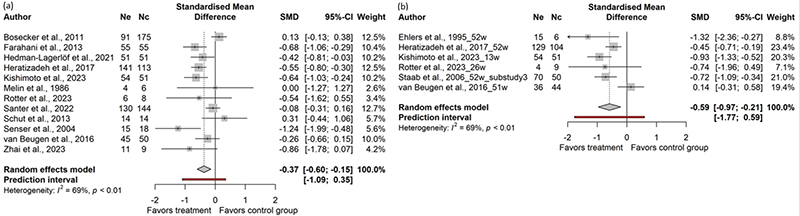
Fig. 2. (A) Post-treatment and (B) Follow-up effects of psychological interventions on itch intensity. Nc: number of persons in the control group; Ne: number of persons in the experimental group; SMD: standardized mean difference (Hedge’s g); CI: confidence interval.
Itch frequency. Three studies with 467 observations were included in the analysis of the PT effects. Two of them included patients with AD. Results were statistically significant (g = –0.22 [95% CI –0.40 to –0.04]; p = 0.0184). Two studies with 101 observations could be included in the meta-analysis regarding the FU effects, with 1 study including patients with AD. FU periods varied between 51 and 52 weeks after baseline. Effects were small and did not reach statistical significance (g = –0.53 (95% CI –2.13 to 1.08); p = 0.521) (for forest plots, see Appendix S6a).
Scratching intensity. Two studies, with 138 (PT) and 126 (FU) observations respectively, were included in the analysis of the PT and FU effects. All of the studies included AD patients. The FU periods ranged from 13 to 52 weeks after baseline. Effects were large and significant (PT: g = –0.99 [95% CI –1.35 to –0.63]; p < 0.001); FU: g = –0.85 [95% CI –1.22 to –0.48]; p < 0.001) (for forest plots, see Appendix S6b).
As the effects of psychological interventions on SR and ER scratching frequency were investigated in k ≤ 1 studies, no statistical analyses were performed for these outcome parameters.
Effects on excoriations
Self-rated excoriations. Two studies with 281 observations were included in the analysis on PT effects, with both of them including patients with AD. Results indicated no statistical significance (g = –0.23 [95% CI –0.47 to 0.01]; p = 0.057). FU effects of psychological interventions on SR excoriations could not be determined as this outcome parameter was investigated in only 1 study (forest plots see Appendix S6c).
Externally rated excoriations. PT and FU effects on ER excoriations were investigated in 6 studies each, of which 2 investigated both PT and FU effects. All of the studies included AD patients. The analysis regarding PT effects included 386 observations in total and the analysis regarding the FU effects 1,127 observations. Results revealed small statistically significant effects in both cases (PT effects: g = –0.29 [95% CI –0.49 to –0.09]; p = 0.005; FU effects: g = –0.34 [95% CI –0.53 to –0.15]; p = 0.0005) (Fig. 3).

Fig. 3. (A) Post-treatment and (B) Follow-up effects of psychological interventions on externally rated excoriations. Abbreviations: Nc: number of persons in the control group; Ne: number of persons in the experimental group; SMD: standardized mean difference; CI: confidence interval (Hedge’s g).
Sensitivity analyses
Due to the fact that the effects of psychological interventions on itch frequency, scratching intensity, and SR excoriations were investigated in a very small number of studies (k ≤ 3), outlier analyses were conducted only for itch intensity and ER excoriations. Here, regarding itch intensity only 1 study (43) was identified as an outlier in the analysis regarding effects on itch intensity PT. Exclusion of this study did not change the results, still retaining small to moderate effects (g = –0.44 [95% CI –0.64 to –0.23]; p < 0.0001). Regarding ER excoriations, no outliers were identified.
Subgroup analyses regarding delivery mode, setting, and age
Regarding most of the outcomes (itch frequency, scratching intensity, SR excoriations) no subgroup analyses could be performed as the number of studies was too small (k ≤ 1 per subgroup). Furthermore, due to the small number of studies (k ≤ 1 per subgroup), it was not possible to conduct subgroup analyses regarding the type of intervention.
Delivery mode. Regarding delivery mode, the subgroup analyses revealed no significant PT effect on itch intensity, meaning that guided and self-guided interventions did not differ significantly (guided [k = 8]: g = –0.41 [95% CI –0.75 to –0.07]; self-guided [k = 4]: g = –0.25 [95% CI –0.48 to –0.02]; p = 0.437).
Setting. Regarding the setting, effects on itch intensity did not differ significantly between face-to-face and internet-based interventions, at either PT or FU (p ≥ 0.698).
Age. Regarding age, subgroup analyses could only be conducted for PT effects on ER excoriations. They revealed no significant effect (adults [k = 3]: g = –0.28 [95% CI –0.51 to –0.05]; children [k = 2]: g = –0.44 [95% CI –0.94 to –0.05]; p = 0.56).
DISCUSSION
This systematic review and meta-analysis revealed small to medium-sized effects of psychological interventions on itch intensity and ER excoriations in patients with chronic itch due to various conditions at PT and FU (13 to 52 weeks after baseline). Regarding scratching intensity, even large significant effects were observed at PT and FU. However, this parameter was investigated in only 2 studies at both time points. Moreover, significant small effects on itch frequency occurred at PT, while effects at FU did not reach statistical significance. SR excoriation effects were not significant at PT. Interestingly, neither the setting nor delivery mode was of particular importance for the effectiveness of the intervention. This means that, for the future, self-guided online interventions seem to be an easily accessible alternative to face-to-face interventions.
The effects on itch intensity in this study were smaller than those reported in a previous meta-analysis (14). However, psychological interventions more often had clinically meaningful effects than control conditions (see Appendix S5). The smaller effects observed in this study might be due to the inclusion of more recently published studies that found no significant effects on itch intensity (38, 39). Additionally, Lavda et al. (14) combined effects on itch and scratching and included both RCTs and non-randomized trials. Nevertheless, the effects were small to medium. The large effects on scratching intensity in our study are promising but based on only 2 studies on AD (42, 46). Thus, more RCTs assessing scratching intensity in different itchy conditions are needed.
Notably, 17 of the 20 included RCTs focused on AD. It is crucial to evaluate psychological interventions in other patient groups who experience a high psychological burden in terms of anxiety, depression, and stress due to chronic itch (e.g. 51–53). CBT including stress management, cognitive restructuring, and habit-reversal training could be helpful in all kinds of patients with chronic itch conditions.
The GRADE assessments (Appendix S7) indicate very low certainty of evidence across all assessed parameters. Thus, while psychological interventions may impact itch intensity, itch frequency, scratching intensity, and ER excoriations, the evidence remains highly uncertain (54). A key factor to this is the overall high RoB rating in most studies (also see Appendix S7c). The main reasons include the inability to blind participants and those delivering the intervention, as psychological interventions inherently prevent blinding (domain 2). Additionally, domain 3 classifies studies with more than 5% of data missing as high risk, which was common due to small sample sizes and increased attrition at longer follow-up. Given that self-report is the most valid measure of itch, we excluded domain 4 (measurement of outcomes) from our RoB rating for self-reported itch and scratching. Overall, the Cochrane RoB 2 tool may be suboptimal for assessing psychological intervention studies. Future studies should consider developing RoB tools tailored to studies on subjective symptoms.
Strengths and limitations
An advantage of this meta-analysis was the assessment of excoriations as outcome parameter and the inclusion of only RCTs. We aimed to assess the effectiveness of all kinds of psychological interventions in patients with chronic itch due to all kinds of conditions. However, this study revealed that in the clear majority of the studies, only AD patients were investigated. Moreover, it would have been interesting to compare the effects of different intervention types in subgroup analyses. However, due to the different contents of the interventions and limited number of studies, this was not possible.
Future recommendations
When planning an RCT on the effects of psychological interventions on itch and scratching, feasibility should be considered, including intervention duration and delivery mode. Short interventions (2 weeks) have shown positive effects on psychological parameters (55, 56) and online interventions offer easily accessible alternatives to face-to-face interventions (35, 39, 46). The effects of these and other innovative treatments (e.g., eye movement desensitization [57, 58]) should be tested in future RCTs with a high methodological quality also including other patient groups with chronic itch, and not only AD patients. Another aim of future research could be to additionally focus on identifying which types of psychological interventions are most beneficial for patients with chronic itch, in case more studies are conducted on this topic. Moreover, as the use of systemic treatment was mentioned explicitly in only 2 of 20 studies (39, 40), the investigation on whether psychological interventions are a beneficial add-on to new medical treatments like biologics should be another target of future studies.
Conclusion
In summary, our findings highlight the benefit of psychological interventions in improving itch and itch-related outcomes. Integrating psychological support into routine care may enhance treatment effects and, as shown previously, overall quality of life. We thus encourage clinicians to consider the recommendations of psychological interventions, especially to patients with high psychological distress.
ACKNOWLEDGEMENTS
The authors would like to thank Victoria Zoch for her help with creating figures and tables for this manuscript.
Data availability statement: The data, code, and other materials of this systematic review and meta-analysis will be made available upon reasonable request to the corresponding author.
PROSPERO number: CRD42021245916.
REFERENCES
- Ständer S, Schmelz M, Lerner E, Murota H, Nattkemper L, Reich A, et al. A multidisciplinary Delphi consensus on the modern definition of pruritus: sensation and disease. J Eur Acad Derm Venereol 2025 Jul 17 [Online ahead of print]. https://doi.org/10.1111/jdv.20851
- Schut C, Dalgard FJ, Halvorsen JA, Gieler U, Lien L, Tomas Aragones L, et al. Occurrence, chronicity and intensity of itch in a clinical consecutive sample of patients with skin diseases: a multi-centre study in 13 European countries. Acta Derm Venereol 2019; 99: 146–151. https://doi.org/10.2340/00015555-3040
- Zeidler C, Kupfer J, Dalgard FJ, Bewley A, Evers AWM, Gieler U, et al. Dermatological patients with itch report more stress, stigmatization experience, anxiety and depression compared to patients without itch: results from a European multi-centre study. J Eur Acad Derm Venereol 2024; 38: 1649–1661. https://doi.org/10.1111/jdv.19913
- Yosipovitch G. Chronic kidney disease-associated pruritus, still a vexing problem. NEJM Evid 2023; 2: EVIDe2300227. https://doi.org/10.1056/EVIDe2300227
- Cetin BM, Guzel FB, Ozturk I, Erken E, Gungor O, Altunoren O. The factors that are associated with itching in chronic kidney patients and evaluation of itching with the 5d itch scale. Int Urol Nephrol 2024; 56: 1973–1981. https://doi.org/10.1007/s11255-023-03937-y
- He GY, Hsu TY, Chen CW, Nien FJ, Chen HY, Chu CY, et al. Serum mediators in patients with both type 2 diabetes mellitus and pruritus. Acta Derm Venereol 2023; 103: adv00875. https://doi.org/10.2340/actadv.v103.4863
- Di Salvo E, Allegra A, Casciaro M, Gangemi S. IL-31, itch and hematological malignancies. Clin Mol Allergy 2021; 19: 8. https://doi.org/10.1186/s12948-021-00148-7
- Buteau A, Reichenberg J. Psychogenic pruritus and its management. Dermatol Clin 2018; 36: 309–314. https://doi.org/10.1016/j.det.2018.02.015
- Schneider G, Grebe A, Bruland P, Heuft G, Ständer S. Criteria suggestive of psychological components of itch and somatoform itch: study of a large sample of patients with chronic pruritus. Acta Derm Venereol 2020; 100: adv00075. https://doi.org/10.2340/00015555-3424
- Verhoeven EW, de Klerk S, Kraaimaat FW, van de Kerkhof PCM, de Jong EMGJ, Evers AWM. Biopsychosocial mechanisms of chronic itch in patients with skin diseases: a review. Acta Derm Venereol 2008; 88: 211–218. https://doi.org/10.2340/00015555-0452
- Schut C, Kupfer J. Juckreiz und Psyche. Hautarzt 2013; 64: 414–419. https://doi.org/10.1007/s00105-012-2495-8
- Andrade LF, Abdi P, Mashoudy KD, Kooner A, Egler A, Urbonas R, et al. Effectiveness of atopic dermatitis patient education programs: a systematic review and meta-analysis. Arch Dermatol Res 2024; 316: 135. https://doi.org/10.1007/s00403-024-02871-y
- Chida Y, Steptoe A, Hirakawa N, Sudo N, Kubo C. The effects of psychological intervention on atopic dermatitis: a systematic review and meta-analysis. Int Arch Allergy Immunol 2007; 144: 1–9. https://doi.org/10.1159/000101940
- Lavda AC, Webb TL, Thompson AR. A meta-analysis of the effectiveness of psychological interventions for adults with skin conditions. Br J Dermatol 2012; 167: 970–979. https://doi.org/10.1111/j.1365-2133.2012.11183.x
- Queshri AA, Awosika O, Baruffi F, Rengifo-Pardo M, Ehrlich A. Psychological therapies in management of psoriatic skin disease: a systematic review. Am J Clin Dermatol 2019; 20: 607–624. https://doi.org/10.1007/s40257-019-00437-7
- Rafidi B, Kondapi K, Beestrum M, Basra S, Lio P. Psychological therapies and mind–body techniques in the management of dermatologic diseases: a systematic review. Am J Clin Dermatol 2022; 23: 755–773. https://doi.org/10.1007/s40257-022-00714-y
- Singleton H, Hodder A, Almilaji O, Ersser SJ, Heaslip V, O’Meara S, et al. Educational and psychological interventions for managing atopic dermatitis (eczema). Cochrane Database Syst Rev 2024; 8: CD014932. https://doi.org/10.1002/14651858.CD014932.pub2
- Wei W, Zhang B, Liu T, Lu T. Effect of psychological intervention on quality of life among patients with psoriasis: a meta‑analysis. Int J Behav Med 2024; 31: 911–922. https://doi.org/10.1007/s12529-024-10315-0
- Xiao Y, Zhang X, Luo D, Kuang Y, Zhu W, Chen X, et al. The efficacy of psychological interventions on psoriasis treatment: a systematic review and meta-analysis of randomized controlled trials. Psychol Res Behav Manag 2019; 12: 97–106. https://doi.org/10.2147/PRBM.S195181
- Zhong W, Li W, Wu G. Are behavioral interventions a better choice for atopic dermatitis patients? A meta-analysis of 6 randomized controlled trials. An Bras Dermatol 2024; 99: 503–512. https://doi.org/10.1016/j.abd.2023.09.004
- Zill JM, Christalle E, Tillenburg N, Mrowietz U, Augustin M, Härter M, et al. Effects of psychosocial interventions on patient-reported outcomes in patients with psoriasis: a systematic review and meta-analysis. Br J Dermatol 2019; 181: 939–945. https://doi.org/10.1111/bjd.17272
- Ständer S, Weisshaar E, Mettang T, Szepietowski JC, Carstens E, Ikoma A, et al. Clinical classification of itch: a position paper of the International Forum for the Study of Itch. Acta Derm Venereol 2007; 87: 291–294. https://doi.org/10.2340/00015555-0305
- Page MJ, McKenzie JE, Bossuyt PM, Boutron I, Hoffmann TC, Mulrow CD, et al. The PRISMA 2020 statement: an updated guideline for reporting systematic reviews. BMJ 2021; 372: n71. https://doi.org/10.1136/bmj.n71
- American Psychological Association. editor. Psychotherapy. APA Dictionary of Psychology 2023. https://dictionary.apa.org/psychotherapy
- IBM Corp. Released. IBM SPSS Statistics for Windows, Version 29.0.2.0; 2023.
- Staab D, Diepgen TL, Fartasch M, Kupfer J, Lob-Corzilius T, Ring J, et al. Age related, structured educational programmes for the management of atopic dermatitis in children and adolescents: multicentre, randomised controlled trial. BMJ 2006; 332: 933–938. https://doi.org/10.1136/bmj.332.7547.933
- Sterne JAC, Savović J, Page MJ, Elbers RG, Blencowe NS, Boutron I, et al. RoB 2: a revised tool for assessing risk of bias in randomised trials. BMJ 2019; 366: l4898. https://doi.org/10.1136/bmj.l4898
- Guyatt GH, Oxman AD, Vist GE, Kunz R, Falck-Ytter Y, Alonso-Coello P, et al. GRADE: an emerging consensus on rating quality of evidence and strength of recommendations. BMJ 2008; 336: 924–926. https://doi.org/10.1136/bmj.39489.470347.AD
- Higgins JPT, Thompson SG, Deeks JJ, Altman DG. Measuring inconsistency in meta-analyses. BMJ 2003; 327: 557–560. https://doi.org/10.1136/bmj.327.7414.557
- Sterne JAC, Sutton AJ, Ioannidis JPA, Terrin N, Jones DR, Lau J, et al. Recommendations for examining and interpreting funnel plot asymmetry in meta-analyses of randomised controlled trials. BMJ 2011; 342: d4002. https://doi.org/10.1136/bmj.d4002
- R Core Team. R: A Language and Environment for Statistical Computing.. R version 4.3.3. Vienna: R Foundation for Statistical Computing, 2024.
- Borenstein M, Hedges LV, Higgins JPT, Rothstein HR. A basic introduction to fixed-effect and random-effects models for meta-analysis. Res Synth Methods 2010; 1: 97–111. https://doi.org/10.1002/jrsm.12
- Hedges LV, Olkin I. Statistical methods for meta-analysis. New York: Academic Press, 1985.
- Futamura M, Masuko I, Hayashi K, Ohya Y, Ito K. Effects of a short-term parental education program on childhood atopic dermatitis: a randomized controlled trial. Pediatr Dermatol 2013; 30: 438–443. https://doi.org/10.1111/pde.12105
- Hedman-Lagerlöf E, Fust J, Axelsson E, Bonnert M, Lalouni M, Molander O, et al. Internet-delivered cognitive therapy for atopic dermatitis: a randomized controlled trial. JAMA Dermatol 2021; 157: 796–804. https://doi.org/10.1001/jamadermatol.2021.1450
- Heratizadeh A, Werfel T, Wollenberg A, Abraham S, Plank-Habibi S, Schnopp C, et al. Effects of structured patient education in adults with atopic dermatitis: multicenter randomized controlled trial. J Allergy Clin Immunol 2017; 140: 845–853. https://doi.org/10.1016/j.jaci.2017.01.029
- Santer M, Muller I, Becque T, Stuart B, Hooper J, Steele M, et al. Eczema Care Online behavioural interventions to support self-care for children and young people: two independent, pragmatic, randomised controlled trials. BMJ 2022; 379: e072007. https://doi.org/10.1136/bmj-2022-072007
- Schut C, Weik U, Tews N, Gieler U, Deinzer R, Kupfer J. Psychophysiological effects of stress management in patients with atopic dermatitis: a randomized controlled trial. Acta Dermato Venereol 2013; 93: 57–61. https://doi.org/10.2340/00015555-1415
- van Beugen S, Ferwerda M, Spillekom-van Koulil S, Smit JV, Zeeuwen-Franssen MEJ, Kroft EBM, et al. Tailored therapist-guided internet-based cognitive behavioral treatment for psoriasis: a randomized controlled trial. Psychother Psychosom 2016; 85: 297–307. https://doi.org/10.1159/000447267
- Zhai W, Tang R, Gao Y, Su H, Mao H, Liu W, et al. Efficacy and associated neurotransmitters of digital cognitive behavior therapy for atopic dermatitis: a comparative effectiveness research. Asian Pac J Allergy Immunol 2025; 43: 439-450.
- Melin L, Frederiksen T, Norén P, Swebilius BG. Behavioural treatment of scratching in patients with atopic dermatitis. Br J Dermatol 1986; 115: 467–474. https://doi.org/10.1111/j.1365-2133.1986.tb06241.x
- Senser C, Habermüller M, Revenstorf D. Hypnotherapie bei atopischer Dermatitis. Aktuel Dermatol 2004; 30: 103–108. https://doi.org/10.1055/s-2004-814483
- Bosecker P, Ständer S, Heuft G, Dieckmann L, Schneider G. Konzept und Evaluation einer einstündigen psychoedukativen Gruppenintervention für Patienten mit chronischem Pruritus. Z Psychosom Med Psychother 2011; 57: 377–386. https://doi.org/10.13109/zptm.2011.57.4.377
- Ehlers A, Stangier U, Gieler U. Treatment of atopic dermatitis: a comparison of psychological and dermatological approaches to relapse prevention. J Consult Clin Psychol 1995; 63: 624–635. https://doi.org/10.1037/0022-006X.63.4.624
- Farahani PV, Hekmatpou D, Shamsi Khani S. Effectiveness of muscle relaxation on pain, pruritus and vital signs of patients with burns. Iran J Crit Care Nurs 2013; 6: 87–94.
- Kishimoto S, Watanabe N, Yamamoto Y, Imai T, Aida R, Germer C, et al. Efficacy of integrated online mindfulness and self-compassion training for adults with atopic dermatitis: a randomized clinical trial. JAMA Dermatol 2023; 159: 628–636. https://doi.org/10.1001/jamadermatol.2023.0975
- Niebel G, Kallweit C, Lange I, Fölster-Holst R. Direkte versus videovermittelte Elternschulung bei atopischem Ekzem im Kindesalter als Erganzung facharztlicher Behandlung. Eine Kontrollierte Pilotstudie. Hautarzt 2000; 51: 401–411. https://doi.org/10.1007/s001050051141
- Norén P, Hagströmer L, Alimohammadi M, Melin L. The positive effects of habit reversal treatment of scratching in children with atopic dermatitis: a randomized controlled study. Br J Dermatol 2018; 178: 665–673. https://doi.org/10.1111/bjd.16009
- Rotter G, Teut M, Schleicher R, Del’Oro M, Ortiz M, Binting S, et al. Hypnotherapy, intermittent fasting, and exercise group programs in atopic dermatitis: a randomized controlled explorative clinical trial during the COVID-19 Pandemic. J Integr Complement Med 2023; 29: 99–110. https://doi.org/10.1089/jicm.2022.0699
- Sokel B, Christie D, Kent A, Lansdown R, Atherton D, Glover M, et al. A comparison of hypnotherapy and biofeedback in the treatment of childhood atopic eczema. Contemp Hypn 1993; 10: 145–154.
- Müller S, Zeidler C, Ständer S. Chronic prurigo including prurigo nodularis: new insights and treatments. Am J Clin Derm 2024; 25: 15–33. https://doi.org/10.1007/s40257-023-00818-z
- Thünemann J, Müller S, Steinbrink K, Ständer S, Zeidler C. Chronic prurigo. J Dtsch Dermatol Ges 2024; 22: 813–823. https://doi.org/10.1111/ddg.15317
- Misery L. Chronic prurigo. Br J Dermatol 2022; 187: 464–471. https://doi.org/10.1111/bjd.21698
- Santesso N, Glenton C, Dahm P, Garner P, Akl EA, Alper B, et al. GRADE guidelines 26: informative statements to communicate the findings of systematic reviews of interventions. J Clin Epidemiol 2020; 119: 126–135. https://doi.org/10.1016/j.jclinepi.2019.10.014
- Vesa N, Liedberg L, Rönnlund M. Two-week web-based mindfulness training reduces stress, anxiety, and depressive symptoms in individuals with self-reported stress: a randomized control trial. Int J Neurorehabilitation 2016; 3: 209. https://doi.org/10.4172/2376-0281.1000209
- Cavanagh K, Churchard A, O’Hanlon P, Mundy T, Votolato P, Jones F, et al. A randomised controlled trial of a brief online mindfulness-based intervention in a non-clinical population: replication and extension. Mindfulness 2018; 9: 1191–1205. https://doi.org/10.1007/s12671-017-0856-1
- De Veer MR, Kranenburg LW, Nijsten TE, Busschbach JJ, Waalboer-Spuij R. Eye movement desensitization protocol for urge to reduce scratching behaviour in patients with prurigo nodularis: a pilot study. Acta Derm Venereol 2024; 104: adv39945. https://doi.org/10.2340/actadv.v104.39945
- De Veer MR, Waalboer-Spuij R, Hijnen DJ, Doeksen D, Busschbach JJ, Kranenburg LW, et al. Reducing scratching behavior in atopic dermatitis patients using the EMDR treatment protocol for urge: a pilot study. Front Med 2023; 10: 1101935. https://doi.org/10.3389/fmed.2023.1101935