ORIGINAL REPORT
“Drug Reaction with Eosinophilia and Systemic Symptoms” (DRESS): Long-term Outcomes Based on Severity – A Cohort Study
Anika LIPINSKI1, Maren PAULMANN1, Sabine MÜLLER2, Dirk WAGNER3,4 and Maja MOCKENHAUPT1,2*
1Dokumentationszentrum schwerer Hautreaktionen (dZh), Freiburg, Germany, 2Department of Dermatology, Medical Centre – University of Freiburg, Freiburg, Germany, 3Division of Infectious Diseases, Department of Internal Medicine II, Medical Centre – University of Freiburg, Freiburg, Germany, and 4Department of Epidemiology, Helmholtz Centre for Infection Research Braunschweig, Braunschweig, Germany
Corr: Maja Mockenhaupt, Dokumentationszentrum schwerer Hautreaktionen, Department of Dermatology, Medical Centre – University of Freiburg, Hauptstrasse 7, 79104 Freiburg, Germany. *Email: dzh@uniklinik-freiburg.de
Key words: drug reaction with eosinophilia and systemic symptoms; DRESS; sequelae; severity; organ involvement.
Citation: Acta Derm Venereol 2026; 106: adv-2025-0310. DOI: https://doi.org/10.2340/actadv.v106.adv-2025-0310.
Copyright: 2026 ©Author(s). Published by MJS Publishing, on behalf of the Society for Publication of Acta Dermato-Venereologica. This is an Open Access article distributed under the terms of the Creative Commons Attribution-NonCommercial 4.0 International License (https://creativecommons.org/licenses/by-nc/4.0/).
Submitted: Dec 30, 2025. Accepted after revision: May 21, 2026.
Published: Jun 22, 2026.
Competing interests and funding: The authors have no conflicts of interest to declare.
This study is self-funded. The German Registry of Severe Skin Reactions (dZh) has recently (past 5 years) been funded by grants of research institutions (BMBF, DFG, DDG, Innovation Committee at the German Federal Joint Committee), private donations and a consortium of pharmaceutical companies (through contracts with the university of Freiburg). We are indebted to all patients whose participation made this study possible and to their treating physicians for the great cooperation. We also thank all the investigators, statisticians, data managers, and secretarial personnel that helped to run the German Registry (dZh) for more than three decades. We are thankful to the expert committee for case validation, and the members of the steering committee of the international RegiSCAR-project, in which all cases of the German Registry since 2003 are included.
The data generated and analysed during the present study are derived from patient questionnaires and laboratory data collected by Dokumentationszentrum schwerer Hautreaktionen (dZh). Due to strict data protection regulations and ethical considerations, these data are not publicly available and cannot be shared with external researchers.
Drug reaction with eosinophilia and systemic symptoms (DRESS) is a severe drug-induced reaction characterized by exanthema, eosinophilia and organ involvement. Patients reported sequelae comprising skin or organ alterations and autoimmune diseases. We investigated long-term complications of patients included in the German Registry of severe skin reactions between 2003 and 2023 with a definite or probable diagnosis of DRESS using a follow-up questionnaire. Cases were classified by severity (mild, moderate-to-severe) employing 2 scores (drug-induced liver injury [DILI] and acute kidney injury [AKI]). In total, 36/61 questionnaires (59%) were analysed revealing an equal distribution: 18 mild and 18 moderate-to-severe cases. All patients experienced long-term complications. Skin disorders occurred in 81%, mucosal problems in 31% and hair/nail complications in 43%. Severity groups were equally affected, whereas laboratory abnormalities appeared more often in moderate-to-severe cases. Haematological abnormalities were most frequently observed (94%), followed by elevated liver enzymes (88%) and impaired renal function parameters (31%). Alterations of HbA1c occurred in 16% and abnormal thyroid function in 19%, including 2 cases of Graves’ disease. Intolerance reactions to other medication were observed in 27% of cases, explaining fear of further medication (51%) and resulting avoidance behaviour (49%).
SIGNIFICANCE
Due to the rarity of Drug reaction with eosinophilia and systemic symptoms (DRESS), limited information is available about the long-term consequences of the disease. It is of crucial importance to analyse the correlation between clinical severity and the development of further diseases in order to ensure adequate treatment of patients in the acute phase of DRESS and afterwards. With a better understanding of DRESS, potentially severe and protracted courses could be managed or may even be prevented.
Drug reaction with eosinophilia and systemic symptoms (DRESS) is one of the rare disease patterns within the group of severe cutaneous adverse reactions (SCAR). In addition to the acronym DRESS, which was introduced in 1996, further designations such as hypersensitivity syndrome (HSS) or drug-induced hypersensitivity syndrome (DIHS) are used (1). Because of the rarity of DRESS and inconsistent terminology, reliable incidence rates are not available.
The average age of affected patients was reported as 48 years, with a predominance of women. The reported mortality rate ranges from 2% to 10% (2, 3).
The clinical presentation of DRESS is characterized by maculopapular exanthema, which may involve more than 50% of the body surface, partly with infiltrated plaques up to erythroderma and frequently accompanied by burning, pain and itching (2). Secondary skin manifestations include pustular, oedematous or purpuric lesions (2, 4).
In the majority of cases, at least 1 internal organ is involved (bone marrow, liver, kidneys, pancreas, myocardium), typically indicated by alterations in laboratory values (2, 5). Haematological abnormalities include leucocytosis with eosinophilia, atypical lymphocytes and thrombocytopenia (6). The liver is frequently affected (53–86%), ranging from mild hepatitis with elevated liver enzyme levels, to hepatic failure requiring transplantation (2, 5). Abdominal sonography reveals hepatomegaly, often accompanied by splenomegaly (7). Renal involvement (11–53%) may manifest as haematuria, interstitial nephritis or acute kidney failure (8). Other organs are rarely involved.
Particularly anti-seizure drugs (e.g. carbamazepine, lamotrigine, phenytoin) and allopurinol are drugs with a high risk of inducing DRESS (4). Antibiotics and antituberculous agents have also been reported as triggers (9).
In 76% of cases viral reactivation occurs, predominantly HHV-6, but other herpesviruses (EBV, CMV, HHV-7) have also been detected (10). A potential association between viral reactivation, a more severe course and the subsequent development of autoimmune diseases has been discussed (11, 12).
The DRESS validation criteria of the RegiSCAR-group (see Table SI) and the DIHS validation criteria applied in Japan are used for making the clinical diagnosis (13, 14). However, no significant difference between patients with DRESS and DIHS was observed with regard to clinical findings (8). There is no validated system for grading severity.
The most common sequelae of DRESS include autoimmune thyroid diseases and diabetes mellitus. The onset of complications is variable, ranging from weeks to months or even years after the acute phase. The impact of glucocorticoid therapy and viral reactivation on the development of long-term complications is still discussed (12, 15). Further autoimmune disorders such as alopecia areata, vitiligo, systemic lupus erythematosus and scleroderma-like graft-versus-host disease (GvHD) have also been reported after DRESS (8).
Being a prospective nation-wide registry, Dokumenta-tionszentrum schwerer Hautreaktionen (dZh) has aimed to identify all hospitalized cases of severe skin reactions in Germany since 1990. In 2003, DRESS was included in the monitored spectrum of reactions as part of the international RegiSCAR-project. This registry was used to analyse long-term outcomes of DRESS based on severity in a large cohort of patients treated for DRESS in Germany.
MATERIALS AND METHODS
Potential DRESS cases are classified according to the RegiSCAR-validation criteria (Table SI). After being validated as definite or probable DRESS, cases are categorized by severity into a mild and moderate-to-severe group using the DILI (drug-induced liver injury, Table SII) and AKI scores (acute kidney injury, Table SIII) (16, 17). The DILI score is used to assess causality and prognosis in drug-induced liver injury. The AKI score classifies acute kidney injury into 3 stages based on an increase in serum creatinine or decreased urine output. Depending on organ involvement, the corresponding scores were applied and points were assigned (Tables SII and SIII). A total score of 2 or more points indicates a moderate-to-severe case.
For the evaluation of long-term complications, patients were provided with a follow-up questionnaire, which systematically captures health impairments, particularly those affecting skin and mucosa, as well as diagnostic evaluations. Comorbidities and drug intolerances are taken into consideration. Furthermore, it addresses everyday challenges such as aesthetic impairments, sleep disturbances, nightmares and anxiety related to medication intake. In addition, both severity groups were compared in terms of treatment and disease progression following the acute phase.
Statistical analysis
From 2003 to 2012, the software MACROTM was used for data management but replaced by another remote data entry system called RDE-light® in 2013. Specific Excel spreadsheets were created to analyse the questionnaires and laboratory values. Data analysis and graphical representation were executed with Microsoft Office.
RESULTS
Follow-up cohort and severity classification in relation to RegiSCAR-score
Of the 95 registered patients between 2003 and 2023, 61 agreed to the follow-up. Among these patients, 36 completed the questionnaire (59%), with the longest response interval of 2 years (n=8).
In addition to validation of the diagnosis and assessment of organ involvement, severity was subsequently classified using the DILI and AKI scores with the following results: Milder cases (8/14, 57%) were predominantly found in the group with a lower RegiSCAR score (≤5), whereas moderate-to-severe cases (12/22, 55%) were more frequent in the group with a higher RegiSCAR score (>5). In the mild group, the distribution of cases according to the RegiSCAR score was nearly even (n=13 and n=10). In contrast, in the moderate-to-severe group, a higher proportion of patients (12/18, 67%) had a RegiSCAR-score>5 (see Fig. 1). Concordance was observed between the point value of the RegiSCAR-validation score and severity level.
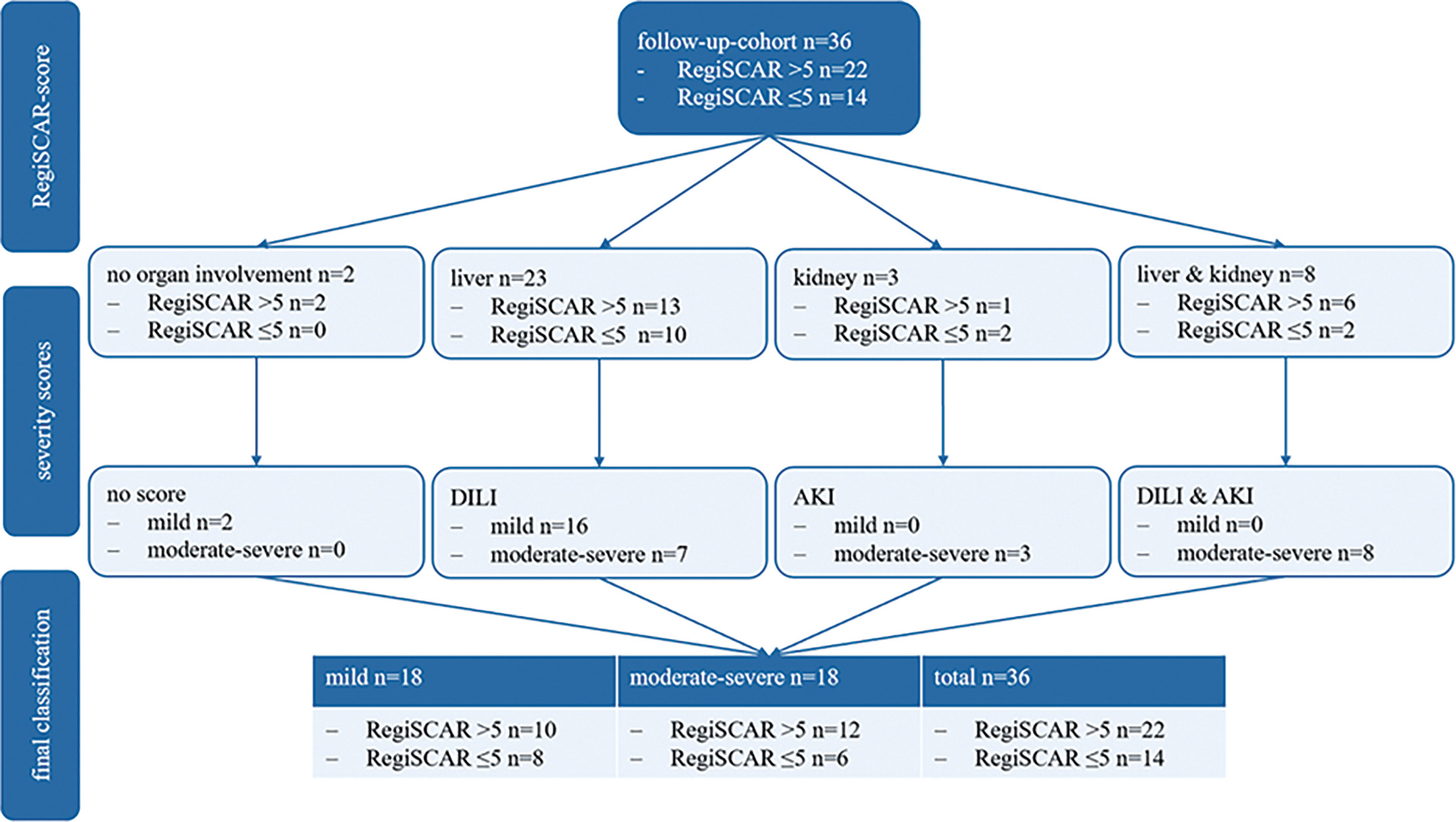
Fig. 1. Flowchart of severity classification. DILI: drug induced liver injury; AKI: acute kidney injury.
Demographics
The mean age of the follow-up cohort (n=36) was 45.7±22.9 years, with a median of 50.5 years (range 3–87 years). In total, 58% of the cases (21/36) were 19–64 years old, 22% (8/36) were over 64 years and 20% (7/36) were below 19 years. The moderate-to-severe cases had a mean age of 44.1±26.3 years, which was 2 years younger than the mild cases (46.6±19.4 years).
Women were more frequently affected than men with 22 of 36 cases (61%). In both severity groups, women predominated, with twice as many females in the moderate-to-severe group.
Skin, mucosa and skin appendages
Skin
In our study, 29/36 patients (81%; 14 mild and 15 moderate-to-severe cases) reported skin issues (see Table I), 6/36 (17%) suffered from hypopigmentation and 9/36 patients (25%) from hyperpigmentation (see Fig. 2). Hypopigmentation appeared in both severity groups, while hyperpigmentation was more frequent in mild cases. Itching was observed mostly in moderate-to-severe cases.
Table I. Frequencies of the sequelae of DRESS
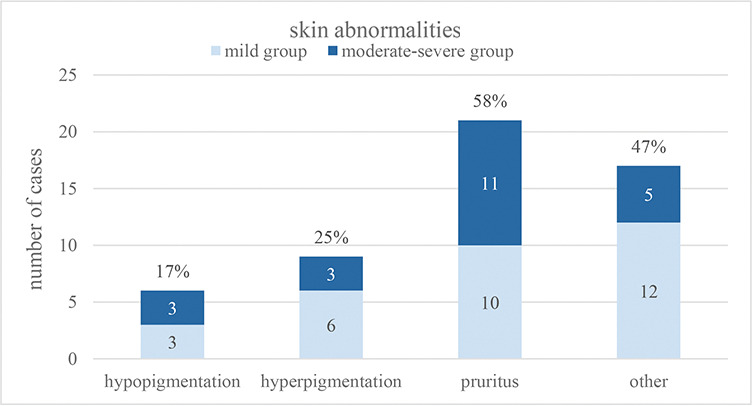
Fig. 2. Skin abnormalities. Reported skin abnormalities in the mild group and the moderate-to-severe group. The percentage refers to the total number of the follow-up-cohort (n=36), of whom 29 patients (14 mild and 15 moderate-to-severe cases) presented with skin problems. Multiple answers were possible.
Mucosa
Ten of thirty-two patients (31%; 5 mild and 5 moderate-to-severe cases) reported mucosal complications concerning eyes or mouth, with 4 of these patients having experienced mucosal involvement during the acute phase. In 4 patients, these manifestations persisted until follow-up. Two patients of the mild group had both eye and oral mucosal problems, including irritated oral mucosa, dry eyes and oral candidosis with conjunctivitis.
Skin appendages
Fifteen of thirty-five patients (43%) reported hair/nail problems, 5 had a mild and 10 a moderate-to-severe reaction. In 3 patients, these issues persisted until follow-up. A total of 31% (11/35) experienced hair loss, 6 patients (17%) had brittle nails, with nail loss occurring in 2 cases. Two patients presented with hair loss and brittle nails. One patient did not provide any information.
Other health issues
About 24% of patients (8/34) perceived a cosmetic impairment, 26% (9/34) suffered from sleep disturbances and 12% (4/34) from nightmares. Two patients did not provide any information on these aspects. Only 3 patients received professional psychological support after the acute phase, whereas 49% (17/35) believed that such support would have been beneficial. One patient did not provide any information.
Intolerance reactions to further medication
Fear of further medication use was confirmed by 51% of patients (18/35) and 49% (17/35) avoided drug intake. One patient did not provide any information. Eleven of thirty patients (37%) reported a reaction to further medication. Eight patients described various reactions to medications taken in the follow-up period, involving the skin in approximately half of the cases (see Table II). Five patients did not provide any information. One patient experienced multiple types of cutaneous reactions to various antibiotics (amoxicillin, ciprofloxacin, clarithromycin, azithromycin) and to dapsone.
Table II. Reactions to other medications after the acute phase (based on patients’ information)
| Trigger of DRESS | Drug/agent | Type of reaction – patient information |
|---|---|---|
| Allopurinol | Contrast agent | Massive exanthema |
| Sulfasalazine | Paracetamol | Itching |
| Tuberculosis medication (rifampicin, isoniazid) | Prostaglandins | Not specified |
| Carbamazepine | Cortisone | Elevated blood glucose levelsa, dizziness, swollen lymph nodes in the neckb |
| Lamotrigine | Metamizole | Exanthema |
| Ampicillin/sulbactam | Exanthema and itching | |
| Cefuroxime | Vomiting | |
| Vancomycin, phenytoin | Voriconazole | Increased liver function parameters, hypotonia |
| Vancomycin | Methylprednisolone | Tiredness |
| Sulfamethoxazole/trimethoprim | Bortezomib & bisphosphonates | Exhaustion, irritated skin on the hands and around the eyes, reduced concentration |
|
aNot confirmed in laboratory values. bAlready occurred during the acute phase of DRESS. |
||
Laboratory
General
In the follow-up cohort, alterations in blood count parameters were most frequently observed (94%; 29/31), followed by elevated liver (88%; 28/32) and renal values (31%; 10/32). Abnormal thyroid (19%; 6/32) and HbA1c values (16%; 5/32) occurred less frequently (see Fig. 3). Four patients did not provide any information.

Fig. 3. Laboratory abnormalities. Significant laboratory abnormalities of the affected organs in the mild (n=17) and moderate-to-severe group (n=15). The percentage refers to n=32, the patients for whom laboratory values were available for analysis. For the blood count, laboratory values from n=31 patients could be evaluated. Organs are shown for which laboratory values outside the reference range were present after discharge. Multiple answers were possible.
Blood count
Moderate-to-severe cases showed abnormal values more frequently across nearly all parameters (erythrocytes, leucocytes, eosinophils, neutrophils, basophils, platelets, haemoglobin) com-pared to mild cases. Only lymphocytes and monocytes were frequently altered in mild cases. Overall, leucocyte changes were most commonly observed (74%). However, haematological abnormalities were not directly related to the RegiSCAR score values.
Liver
The hepatic parameters ALAT, ASAT, γ-GT, AP, LDH and bilirubin as well as the duration of their elevation in weeks were analysed. The duration refers to the total time of values above the reference range including the acute phase and the follow-up period. The elevation factor was calculated as the ratio of the maximum value during the acute phase to the upper reference limit. γ-GT, with a mean duration of 6.1±2.6 weeks, remained above the reference range the longest, followed by ALAT and AP (see Table III). In the mild group, 16 cases showed isolated hepatic involvement, whereas out of 15 cases in the moderate-to-severe group, 7 cases experienced hepatic involvement exclusively and 8 cases combined hepatic and renal involvement.
Table III. Liver enzyme values of the mild (n=16) and the moderate-to-severe group (n=15)
Kidney
In eleven patients (31%), renal involvement was observed as part of DRESS, all within the moderate-to-severe group. No laboratory data were available for 1 case. In 5 cases, creatinine remained elevated after discharge, whereas in the other 5, it returned to normal. The mean duration of elevation was 12.6±16.3 weeks (median: 3 weeks, range: 1–44 weeks). Changes in GFR were observed in 5 cases, whereas it remained normal in 4 (40%). The mean duration of GFR elevation was 14.2±15.4 weeks (median: 9 weeks, range: 2–44 weeks). GFR was not determined in 1 patient.
Thyroid
In 6 cases (5 moderate-to-severe, 1 mild case) TSH changes occurred. Four of these patients had concurrent hepatic involvement, 1 had additional renal involvement and 1 had isolated renal involvement. The mean age of the exclusively female patients was 39.2±21.3 years. In 5 cases, TSH levels were measured during the acute phase. Two had elevated levels, which normalized subsequently. Two patients developed Graves’ disease with hyperthyroidism (3 and 4 months after discharge) and started thiamazole therapy.
HbA1c
Elevated HbA1c was detected in 5 patients (3 moderate-to-severe cases, 2 mild cases). The mean age was 68.4±11.7 years (median: 66 years, range: 51–87 years), and 4 patients were female. Two patients had pre-existing type II diabetes mellitus prior to DRESS. Hyperglycaemia was observed during hospitalization and persisted despite adjustments in therapy.
DISCUSSION
Follow-up cohort and severity classification
It is assumed that organ involvement determines the severity of DRESS and is associated with increased mortality, liver (53–86%) and kidneys (31–53%) being most frequently affected (18). Therefore, severity was classified using the DILI and AKI scores, which are already employed in clinical practice. Although the severity of clinical symptoms provides prognostic guidance, the unpredictable progression of disease over time complicates accurate predictions.
Moreover, concordance between the point value of the RegiSCAR validation score and severity level was observed, suggesting that the score may also hold prognostic relevance. Nevertheless, some mild and probable cases subsequently developed a severe course. Whereas Lee et al. discovered a correlation between the RegiSCAR score values and haematological abnormalities (eosinophilia, atypical lymphocytes and thrombocytopenia) but not with organ involvement, this finding could not be confirmed in the present study (6).
DILI
The DILI score threshold was increased to 5 times the upper limit of normal (ULN) to exclude clinically insignificant events. However, the elevation of enzyme values does not permit precise prediction of the clinical course. Several studies have demonstrated an association between DILI and DRESS. Huang et al. reported a combined incidence of 5.2% (19). Medina-Cáliz et al. discovered more severe hepatic injury in cases with both conditions compared with an isolated occurrence of DILI (20).
AKI
The AKI score was used to assess renal involvement, as it enables rapid classification based on creatinine levels (17). However, this approach may result in misclassification of severity because the assessment relies on a single measurement. Additionally, it is crucial to know the individual baseline creatinine level. Since most patients develop their reaction outside the hospital, this baseline value is frequently unknown.
Demographics
The mean age of the follow-up cohort was 46 years (range: 2–87 years), which is consistent with literature data (2, 3, 6). The higher incidence of DRESS in women has been observed before as well. Females generally have a higher risk of experiencing adverse drug reactions (21) and, subsequently, are more often affected by long-term complications.
Skin, mucosa and skin appendages
More than half of the patients experience skin issues after the acute stage of DRESS, particularly moderate-to-severe cases. Hyper- and hypopigmentation as well as itching are common. Vitiligo is frequently described in connection with hypopigmentation following DRESS (22). An imbalance of Treg and CD8+-T-cells in vitiligo patients supports the assumption that autoimmune diseases and DRESS share similar pathogenesis (23). Mucosal symptoms are less common and milder in DRESS compared to other types of SCAR, which explains the lack of follow-up surveys on this aspect (24).
A multicentre study involving 182 patients describes hair loss following DRESS (25). Alopecia areata was observed in 5% of cases, with affected patients having higher RegiSCAR score values. This trend is confirmed in the present study: 31% of follow-up patients reported hair loss, with higher average RegiSCAR score values (6.72±1.48 vs 5.87±1.33). Moreover, disease severity tends to be higher in our follow-up group (0.6 vs 1.4). Nail problems are not systematically investigated in the literature but are occasionally mentioned (26).
Health problems
Moderate-to-severe cases are more frequently affected by sleep disturbances, nightmares, fear of medication use and medication avoidance, as clinical severity strongly influences subjective perception. In that context, psychological factors play a major role, and post-traumatic stress disorders and depression following SCAR have already been described (27).
Intolerance reactions to further medication
DRESS patients showed an increased risk of intolerance reactions to further medication. In this study, 27% of cases had such a reaction, particularly to antibiotics – consistent with reports indicating that amoxicillin, in particular, triggered adverse reactions (28). Similarly Barbaud et al. discovered that 18% of DRESS patients reacted to drugs from at least 2 different chemical groups (29).
Laboratory
General
The evaluation of laboratory values is complicated by the lack of standardization regarding the number of parameters and the observation period. To ensure comparability, a standardized period of 2 years was adopted. For follow-up care, a complete blood count as well as examinations to assess abnormalities detected during the acute phase should be performed twice weekly for 1 month after normalization (30).
Liver
The duration of liver enzyme elevation varies depending on the specific enzyme and the severity of the acute phase. In this study, γ-GT showed the longest period of elevation, with a mean of 6.99±3.2 weeks, followed by ALAT and AP. The greatest increase was observed for ALAT in the moderate-to-severe group, with a mean factor of 22.56±21.3 (see Table II). Lee et al. reported a range of 3–22 days, whereas our study observed elevations over several weeks (31). Lin et al. found abnormal values in 64% of patients even on day 30 (32). The effect of glucocorticoid therapy could not be assessed due to the absence of a comparison group, although Lee et al. found no significant impact (31).
Kidney
Acute kidney injury (AKI) is the most common renal manifestation, occurring in 96% of cases (33). All affected patients in our cohort reached at least a score of 2 and were classified as part of the moderate-to-severe group. In patients with pre-existing kidney disease, renal function deteriorated. The risk of chronic kidney disease following AKI is increased (17, 34). This highlights the necessity of follow-up assessments to detect late complications.
Thyroid
In a case series by Kano et al., thyroid disorders occurred in 5% of patients (35). In this cohort, 17% showed abnormalities in 2 patients (6%) diagnosed with Graves’ disease. Younger patients are more likely to develop autoimmune diseases (36), as observed here in 2 women who developed autoimmune thyroiditis 3–4 months after DRESS. Women generally have a higher risk of Graves’ disease (35, 37). Thyroid dysfunction is common in DRESS patients and is associated with HHV-6 reactivation (12), which was also observed in the present study.
HbA1c
In addition to deterioration of blood sugar levels in patients with pre-existing diabetes mellitus, fulminant type I diabetes is often reported. In Japan, its incidence with DRESS is higher (0.54%) compared to the general population (0.01%), while autoimmune type I diabetes is rare (38). In this study, no type I diabetes was identified. Repeated instances of uncontrolled diabetes mellitus or disrupted diabetic metabolism were observed. Glucocorticoid therapy, which may exacerbate HbA1c levels, was initiated after the elevated values were detected.
Limitation
Due to variability in follow-up assessments, laboratory values were obtained at different time points. However, efforts were made to ensure a consistent follow-up period, with a maximum duration of 2 years. Severity grading was based on 2 clinical scoring systems, which classify patients according to the available laboratory parameters. This approach may introduce bias in the assessment of disease severity, as the classification relies solely on individual laboratory values.
Conclusion
This evaluation provides an overview of DRESS outcomes, focusing on the impact of patients’ sequelae. It is notable for examining not only comorbidities such as diabetes and autoimmune thyroiditis but also physical and psychological effects following the acute phase. Severity scores (DILI and AKI) facilitate evaluation of the clinical course, but predicting outcomes remains challenging due to variable manifestations of DRESS. Greater severity is associated with a higher risk for complications, but further studies are required for better differentiation of symptoms and risk stratification. Additional education of clinicians and patients is necessary, especially regarding follow-up care. Regular laboratory assessments are crucial, yet a lack of standardized protocols is apparent.
REFERENCES
- Bocquet H, Bagot M, Roujeau JC. Drug-induced pseudolymphoma and drug hypersensitivity syndrome (Drug Rash with Eosinophilia and Systemic Symptoms: DRESS). Semin Cutan Med Surg 1996; 15: 250–257. https://doi.org/10.1016/s1085-5629(96)80038-1
- Kardaun SH, Sekula P, Valeyrie-Allanore L, Liss Y, Chu CY, Creamer D, et al. Drug reaction with eosinophilia and systemic symptoms (DRESS): an original multisystem adverse drug reaction. Results from the prospective RegiSCAR study. Br J Dermatol 2013; 169: 1071–1080. https://doi.org/10.1111/bjd.12501
- Chen YC, Chiu HC, Chu CY. Drug reaction with eosinophilia and systemic symptoms: a retrospective study of 60 cases. Arch Dermatol 2010; 146: 1373–1379. https://doi.org/10.1001/archdermatol.2010.198
- Shiohara T, Kano Y, Takahashi R, Ishida T, Mizukawa Y. Drug-induced hypersensitivity syndrome: recent advances in the diagnosis, pathogenesis and management. Chem Immunol Allergy 2012; 97: 122–138. https://doi.org/10.1159/000335624
- Skowron F, Bensaid B, Balme B, Depaepe L, Kanitakis J, Nosbaum A, et al. Drug reaction with eosinophilia and systemic symptoms (DRESS): clinicopathological study of 45 cases. J Eur Acad Dermatol Venereol 2015; 29: 2199–2205. https://doi.org/10.1111/jdv.13212
- Lee JY, Lee SY, Hahm JE, Ha JW, Kim CW, Kim SS. Clinical features of drug reaction with eosinophilia and systemic symptoms (DRESS) syndrome: a study of 25 patients in Korea. Int J Dermatol 2017; 56: 944–951. https://doi.org/10.1111/ijd.13667
- Saltzstein SL, Ackerman LV. Lymphadenopathy induced by anticonvulsant drugs and mimicking clinically pathologically malignant lymphomas. Cancer 1959; 12: 164–182. https://doi.org/10.1002/1097-0142(195901/02)12:1<164::aid-cncr2820120122>3.0.co;2-y
- Kano Y, Ishida T, Hirahara K, Shiohara T. Visceral involvements and long-term sequelae in drug-induced hypersensitivity syndrome. Med Clin N 2010; 94: 743–759. https://doi.org/10.1016/j.mcna.2010.03.004
- Sharifzadeh S, Mohammadpour AH, Tavanaee A, Elyasi S. Antibacterial antibiotic-induced drug reaction with eosinophilia and systemic symptoms (DRESS) syndrome: a literature review. Eur J Clin Pharmacol 2021; 77: 275–289. https://doi.org/10.1007/s00228-020-03005-9
- Picard D, Janela B, Descamps V, D’Incan M, Courville P, Jacquot S, et al. Drug reaction with eosinophilia and systemic symptoms (DRESS): a multiorgan antiviral T cell response. Sci Transl Med 2010; 2: 46ra62. https://doi.org/10.1126/scitranslmed.3001116
- Tohyama M, Yahata Y, Yasukawa M, Inagi R, Urano Y, Yamanishi K, et al. Severe hypersensitivity syndrome due to sulfasalazine associated with reactivation of human herpesvirus 6. Arch Dermatol 1998; 134: 1113–1117. https://doi.org/10.1001/archderm.134.9.1113
- Descamps V. Drug reaction with eosinophilia and systemic symptoms and thyroiditis: human herpesvirus-6, the possible common link. Br J Dermatol 2013; 169: 952. https://doi.org/10.1111/bjd.12456
- Shiohara T, Iijima M, Ikezawa Z, Hashimoto K. The diagnosis of a DRESS syndrome has been sufficiently established on the basis of typical clinical features and viral reactivations. Br J Dermatol 2007; 156: 1083–1084. https://doi.org/10.1111/j.1365-2133.2007.07807.x
- Kardaun SH, Sidoroff A, Valeyrie-Allanore L, Halevy S, Davidovici BB, Mockenhaupt M, et al. Variability in the clinical pattern of cutaneous side-effects of drugs with systemic symptoms: does a DRESS syndrome really exist? Br J Dermatol 2007; 156: 609–611. https://doi.org/10.1111/j.1365-2133.2006.07704.x
- Ushigome Y, Kano Y, Ishida T, Hirahara K, Shiohara T. Short- and long-term outcomes of 34 patients with drug-induced hypersensitivity syndrome in a single institution. J Am Acad Dermatol 2013; 68: 721–728. https://doi.org/10.1016/j.jaad.2012.10.017
- Aithal GP, Watkins PB, Andrade RJ, Larrey D, Molokhia M, Takikawa H, et al. Case definition and phenotype standardization in drug-induced liver injury. Clin Pharmacol Ther 2011; 89: 806–815. https://doi.org/10.1038/clpt.2011.58
- Khwaja A. KDIGO clinical practice guidelines for acute kidney injury. Nephron Clin Pract 2012; 120: c179–84. https://doi.org/10.1159/000339789
- Cabañas R, Ramírez E, Sendagorta E, Alamar R, Barranco R, Blanca-López N, et al. Spanish guidelines for diagnosis, management, treatment, and prevention of DRESS syndrome. J Investig Allergol Clin Immunol 2020; 30: 229–253. https://doi.org/10.18176/jiaci.0480
- Huang YS, Wu CY, Chang TT, Peng CY, Lo GH, Hsu CW, et al. Drug-induced liver injury associated with severe cutaneous adverse drug reactions: a nationwide study in Taiwan. Liver Int 2021; 41: 2671–2680. https://doi.org/10.1111/liv.14990
- Medina-Cáliz I, Sanabria-Cabrera J, Villanueva-Paz M, Aukštikalnė L, Stephens C, Robles-Díaz M, et al. Characterization of drug-induced liver injury associated with drug reaction with eosinophilia and systemic symptoms in two prospective DILI registries. Arch Toxicol 2024; 98: 303–325. https://doi.org/10.1007/s00204-023-03630-0
- Tharpe N. Adverse drug reactions in women’s health care. J Midwife Womens Health 2011; 56: 205–213. https://doi.org/10.1111/j.1542-2011.2010.00050.x
- Chiang PH, Ng CY, Kuo TT, Hui RCY, Chen CB, Lu CW, et al. Case of vitiligo universalis as a sequela of drug-induced hypersensitivity syndrome. J Dermatol 2021; 48: 92–95. https://doi.org/10.1111/1346-8138.15562
- Lili Y, Yi W, Ji Y, Yue S, Weimin S, Ming L. Global activation of CD8+ cytotoxic T lymphocytes correlates with an impairment in regulatory T cells in patients with generalized vitiligo. PLoS One 2012; 7: e37513. https://doi.org/10.1371/journal.pone.0037513
- Paulmann M, Mockenhaupt M. Schwere Hautreaktionen: klinisches Bild, Epidemiologie, Ätiologie, Pathogenese und Therapie. Allergo J 2019; 28: 16–34. https://doi.org/10.1007/s15007-019-1973-z
- Lee JW, Yu DA, Cho S, Youn SW, Kwon O. Hair loss after drug reaction with eosinophilia and systemic symptoms (DRESS): a multicentric retrospective case series. J Dermatol 2023; 50: 814–819. https://doi.org/10.1111/1346-8138.16715
- Iskandarli M, Ozturk G. Alopecia areata and vitiligo as a long-term sequelae of drug reaction with eosinophilia and systemic symptoms syndrome. Indian J Dermatol 2016; 61: 238. https://doi.org/10.4103/0019-5154.177781
- Allanore L, Roujeau JC. Clinic and pathogenesis of severe bullous skin reactions: Stevens-Johnson syndrome, toxic epidermal necrolysis. In: Pichler WJ, editor. Drug Hypersensitivity. Basel: Karger; 2007: p. 267–277. doi: 10.1159/000104206
- Mardivirin L, Valeyrie-Allanore L, Branlant-Redon E, Beneton N, Jidar K, Barbaud A, et al. Amoxicillin-induced flare in patients with DRESS (Drug Reaction with Eosinophilia and Systemic Symptoms): report of seven cases and demonstration of a direct effect of amoxicillin on Human Herpesvirus 6 replication in vitro. Eur J Dermatol 2010; 20: 68–73. https://doi.org/10.1684/ejd.2010.0821
- Barbaud A, Collet E, Milpied B, Assier H, Staumont D, Avenel-Audran M, et al. A multicentre study to determine the value and safety of drug patch tests for the three main classes of severe cutaneous adverse drug reactions. Br J Dermatol 2013; 168: 555–562. https://doi.org/10.1111/bjd.12125
- Descamps V, Ben Saïd B, Sassolas B, Truchetet F, Avenel-Audran M, Girardin P, et al. Management of drug reaction with eosinophilia and systemic symptoms (DRESS). Ann Dermatol Venereol 2010; 137: 703–708. https://doi.org/10.1016/j.annder.2010.04.024
- Lee T, Lee YS, Yoon SY, Kim S, Bae YJ, Kwon HS, et al. Characteristics of liver injury in drug-induced systemic hypersensitivity reactions. J Am Acad Dermatol 2013; 69: 407–415. https://doi.org/10.1016/j.jaad.2013.03.024
- Lin IC, Yang HC, Strong C, Yang CW, Cho YT, Chen KL, et al. Liver injury in patients with DRESS: a clinical study of 72 cases. J Am Acad Dermatol 2015; 72: 984–991. https://doi.org/10.1016/j.jaad.2015.02.1130
- Dagnon da Silva M, Domingues SM, Oluic S, Radovanovic M, Kodela P, Nordin T, et al. Renal manifestations of drug reaction with eosinophilia and systemic symptoms (DRESS) syndrome: a systematic review of 71 cases. J Clin Med 2023; 12: 4576. https://doi.org/10.3390/jcm12144576
- Torroba Sanz B, Mendez Martínez E, Cacho Asenjo E, Aquerreta Gonzalez I. Permanent renal sequelae secondary to drug reaction with eosinophilia and systemic symptoms (DRESS) syndrome induced by quetiapine. Eur J Hosp Pharm 2021; 28: 285–288. https://doi.org/10.1136/ejhpharm-2019-002149
- Kano Y, Tohyama M, Aihara M, Matsukura S, Watanabe H, Sueki H, et al. Sequelae in 145 patients with drug-induced hypersensitivity syndrome/drug reaction with eosinophilia and systemic symptoms: survey conducted by the Asian Research Committee on Severe Cutaneous Adverse Reactions (ASCAR). J Dermatol 2015; 42: 276–282. https://doi.org/10.1111/1346-8138.12770
- Chen YC, Chang CY, Cho YT, Chiu HC, Chu CY. Long-term sequelae of drug reaction with eosinophilia and systemic symptoms: a retrospective cohort study from Taiwan. J Am Acad Dermatol 2013; 68: 459–465. https://doi.org/10.1016/j.jaad.2012.08.009
- Antonelli A, Ferrari SM, Ragusa F, Elia G, Paparo SR, Ruffilli I, et al. Graves’ disease: epidemiology, genetic and environmental risk factors and viruses. Best Pract Res Clin Endocrinol Metab 2020; 34: 101387. https://doi.org/10.1016/j.beem.2020.101387
- Kano Y, Shiohara T. Long-term outcome of patients with severe cutaneous adverse reactions. Dermatol Sin 2013; 31: 211–216. https://doi.org/10.1016/j.dsi.2013.09.004