ORIGINAL REPORT
Chronic Spontaneous Urticaria in Finland – A Nationwide Registry Study on Epidemiology and Treatment Patterns in Secondary Care
Suvi-Päivikki SINIKUMPU1,2* , Emma HEIKKINEN3, Jari JOKELAINEN4, Stina ROTH3, Maija WOLF3 and Laura HUILAJA1,2
1Department of Dermatology, University Hospital of Oulu, Oulu, Finland, 2Medical Research Center, Research Unit of Clinical Medicine, University of Oulu, Oulu, Finland, 3Novartis Finland Ltd, Espoo, Finland, and 4Northern Finland Birth Cohorts, Arctic Biobank, and Infrastructure for Population Studies, University of Oulu, Oulu, Finland
Corr: Suvi-Päivikki Sinikumpu, Department of Dermatology, Oulu University Hospital, Finland P.B.20, FIN-90029 OYS, Oulu, Finland. *Email: suvi-paivikki.sinikumpu@oulu.fi
Key words: urticaria; epidemiology; Finland; antihistamines; omalizumab; comorbidity.
Citation: Acta Derm Venereol 2026; 106: adv-2026-0509. DOI: https://doi.org/10.2340/actadv.v106.adv-2026-0509.
Copyright: 2026 ©Author(s). Published by MJS Publishing, on behalf of the Society for Publication of Acta Dermato-Venereologica. This is an Open Access article distributed under the terms of the Creative Commons Attribution-NonCommercial 4.0 International License (https://creativecommons.org/licenses/by-nc/4.0/).
Submitted: Mar 18, 2026. Accepted after revision: Aug 20, 2026.
Published: Sept 22, 2026.
Competing interests and funding: Our data are from the Finnish CRHC, maintained by the Finnish Institute of Health and Welfare, and the Drug Reimbursement Register. According to Finnish laws and regulations, the data in the social welfare and health care registers and documents are confidential. As a responsible authority, Findata can, on a case-by-case basis, grant permission to use the registers and documents for the purpose of scientific research. More information on research authorisation applications can be found on www.findata.fi/en.
The study was exempted from institutional review board ethics review because it was retrospective and based only on data from medical record data. Approval for the use of data from national registries was granted by the Finnish Social and Health Data Permit Authority Findata, under approval number THL/309/14.02.00/2023. As this was a retrospective analysis of pseudonymized registry data, informed consent was not required according to national regulations.
EH, SR and MW are employees of Novartis Finland, which provided funding for this study, and SR holds stock in the company. LH has received educational grants from Takeda, Janssen-Cilag, Novartis, AbbVie and LEO Pharma, honoraria from Sanofi Genzyme, Novartis, Abbvie, LeoPharma, BioCryst, UCBPharma and OrionPharma for consulting and/or speaking, and is an investigator for Abbvie and Amgen. SPS has received honoraria from LeoPharma and Sanofi Genzyme for speaking and is an investigator for Abbvie and Amgen. JJ has no conflicts of interest to disclose.
Chronic spontaneous urticaria (CSU) is a burdensome skin disease characterized by recurrent wheals and/or angioedema without identifiable external triggers, with symptoms lasting for 6 weeks or longer, and impairs patients’ quality of life and work productivity. This nationwide registry-based study examined the epidemiology of CSU in Finland and its treatment patterns. Using secondary care data from 2001 to 2023, we identified 8,784 adult patients with CSU; 70% were female and the mean age was 45.3 years. Point prevalence of CSU was 0.21% in 2022 and an age-standardized incidence of 9.34 per 100,000 person-years. A total of 85.8% of patients received antihistamines and 36.1% of all patients required concurrent corticosteroids, suggesting suboptimal disease control. Only 8.5% of patients received omalizumab, and the median time from antihistamine initiation to omalizumab was 9 months. Comorbidities such as asthma, hypertension and depression were common. The low recorded rate of angioedema (5.9%) likely reflects limitations in registry coding. Overall, these findings highlight gaps in CSU management, including delayed initiation of omalizumab and a high proportion of systemic corticosteroid use. These patterns may partly reflect omalizumab reimbursement restrictions and delays in patient pathways and suggest opportunities to improve clinical practice and patient outcomes.
SIGNIFICANCE
Chronic spontaneous urticaria causes daily discomfort and affects work and well-being. This study explores how common chronic spontaneous urticaria is in Finland and how it is treated in a secondary care setting. We found that many patients do not receive timely effective care, despite the availability of treatments. By highlighting gaps in diagnosis and management, the outcomes of this study may increase awareness around chronic spontaneous urticaria treatment and support better care planning. These findings can guide healthcare professionals and decision-makers to improve the lives of people living with chronic spontaneous urticaria.
INTRODUCTION
Urticaria is an inflammatory skin disorder that predominantly manifests as itching wheals and/or angioedema (1). When an episode of urticaria lasts for more than 6 weeks, it is classified as chronic urticaria (CU). Chronic spontaneous urticaria (CSU) is a form of CU in which the disorder’s signs and symptoms appear without a definite trigger, despite the presence of general aggravators such as stress and infections (1). While CSU can occur in individuals of any age, it most commonly affects adults aged between 30 and 50 years (1) and is more common in females than in males (2, 3, 4). Recent estimates of the prevalence of CSU range between 0.02% and 0.79% of the global population, and it appears to affect greater proportions in Asia (2) than in Europe (3) or the USA (5). The estimated incidence rate of CSU is approximately between 0.1 and 2.43/1,000 person-years (2, 3).
Chronic spontaneous urticaria markedly impairs patients’ quality of life, imposes a broader psychosocial and societal burden and is associated with several comorbidities, allergies and autoimmune diseases being prominent among them (1, 6). Second-generation H1-antihistamines (aH) are the mainstay of CU treatment (7), but a substantial proportion of patients remain symptomatic, even when their aH therapy has been increased to up to 4 times the licensed dose (8). In such cases, second-line treatments, including biologic agents such as omalizumab, may be added to the aH, although this approach may still not deliver adequate disease control in some patients (1). In Europe, omalizumab has been approved since 2014 as an add-on therapy for antihistamine-refractory CSU, representing the cornerstone of biologic treatment. More recently, also dupilumab and remibrutinib have been approved for this indication in Europe, although their use is still emerging. Further approaches to the treatment of resistant cases of CSU include the off-label use of cyclosporine, corticosteroids (CS) and other immunosuppressant/immunomodulatory agents (1). However, despite the availability of all these treatment modalities, many patients continue to experience inadequately controlled symptoms, and treatment escalation is often delayed or not implemented (9). This leaves substantial unmet needs in CSU care.
In Finland, CSU is managed in both primary and specialty care. Primary care typically offers second-generation aH and short courses of CS treatment; patients who remain symptomatic despite these treatments are referred to specialty care, where management options are assessed based on patients’ disease features, in line with international guidelines (7). Omalizumab has been reimbursed in Finland since mid-2016, but only for severe CSU or for severe angioedema, with eligibility assessed using Urticaria Activity Score over 7 days (UAS7) and Dermatology Life Quality Index (DLQI) scores. Compared with many European countries, where omalizumab is reimbursed for both moderate and severe CSU, this represents a narrower reimbursement scope in Finland. Dupilumab and remibrutinib are not currently reimbursed for the treatment of CSU in Finland. Despite epidemiological data being available from many countries and regions across the globe, no such studies evaluating the epidemiology and patient characteristics of CSU have been conducted in Finland. The present study was therefore designed to assess the prevalence and incidence of CSU diagnosed in the secondary healthcare setting in Finland between the years 2001 and 2023. Secondary objectives were to describe patient demographics, clinical characteristics and comorbidities, and to examine treatment patterns, focusing on the use of aH, CS, cyclosporin and biologic treatment.
MATERIALS AND METHODS
Study design, data sources and study population
This was a non-interventional, retrospective study of data from 2 nationwide Finnish registries: the Care Register for Health Care (CRHC) and the Drug Reimbursement Register. The CRHC includes data on all individuals living in Finland who have been seen as either an inpatient or an outpatient in the secondary healthcare setting. The Drug Reimbursement Register contains records of reimbursed prescription drug purchases, including details on the purchased medication, purchase date, pack size and quantity. In concordance with Finnish legislation, permission was granted by the relevant authorities for the use of these data according to study protocol.
The study included 2 distinct timeframes to reflect differences in data availability across registries. The inclusion period for identifying CSU patients was 1 January 1995 to 31 December 2023, leveraging the CRHC, which has covered outpatient care since 1996. As medication reimbursement data from the Drug Reimbursement Register were only consistently available from 2001 onwards, the observation period for treatment patterns and incidence calculations began on 1 January 2001 and extended to 31 December 2023. Diagnoses from 1 January 2024 onwards were excluded from treatment analyses to avoid incomplete follow-up. These definitions ensured consistency in case identification while maximizing the accuracy of treatment and epidemiological estimates.
The study cohort was identified by searching the CRHC database to retrieve the records of all adult patients that contained at least 2 diagnoses of CU (L50.1, L50.8 or L50.9) by International Classification of Diseases (ICD-10), no more than 18 months apart, during the study inclusion period. The repetition of CU diagnosis codes was used to exclude any patients with acute urticaria. The information on the medications used to treat CSU was obtained from the Drug Reimbursement Register. A patient was classified as a user of a given medication if at least one reimbursed purchase of that medication (antihistamines, omalizumab, systemic corticosteroids or cyclosporin) was recorded during the observation period. Information on comorbidities was collected from the CRHC. For identification of comorbidities, ICD-10 codes (Table SI) recorded in CRHC before the CSU index date were included. Comorbidities were selected based on previously reported associations with CSU in the literature, including well-established associations with atopic and autoimmune diseases, and psychiatric disorders, systemic autoimmune conditions with less consistent support and clinically relevant comorbidities with exploratory evidence, such as cardiometabolic diseases, inflammatory bowel disease, psoriasis, nutritional anemias and malignancies (4, 10, 11, 12).
Statistical analysis
Categorical variables were summarized as percentages, while continuous variables were expressed as means with standard deviations (SD) or medians with ranges, as appropriate. Age-standardized incidence rates were calculated based on cases with a diagnosis beginning from 2001 using the direct method and using the European Standard Population (2013 revision) as a standard population (13). Point prevalence was calculated for each calendar year based on cases identified and corresponding adult population of Finland in that year. Temporal trends in prevalence were analysed using Poisson regression models with the annual number of cases as the outcome and the logarithm of the population size included as an offset term. Calendar year was modeled as a continuous variable to assess temporal trends. Results were expressed as incidence rate ratios (IRRs) with 95% confidence intervals. Confidence intervals (95% CI) for prevalence and incidence estimates were derived using normal approximation. Comparisons between subgroups were performed using χ2 tests for categorical variables and t tests or nonparametric equivalents for continuous variables. A 2-sided p-value <0.05 was considered statistically significant. Concomitant medication use was defined as any medication purchased within a 7-day window of at least one other. All study outcomes involving omalizumab use were calculated only from 1 June 2016 onwards, when omalizumab first became reimbursable in Finland for the treatment of CSU.
RESULTS
The initial database query returned the records of 8,784 unique individuals who were diagnosed with CSU at some point during the study inclusion period. The mean (standard deviation [SD]) age was 45.3 (16.4) years. Seventy percent of the population were female. The point prevalence of CSU in 2022 was 0.21%. Prevalence increased significantly over time, corresponding to an annual relative increase of 9.0% (IRR per year 1.090, 95% CI 1.089–1.091, p<0.001). The age-standardized incidence of CSU was 9.34/100,000 (9.14–9.54). The yearly incidence showed an overall increasing trend over the study period, except for 2020–2022 where incidence decreased (Fig. 1). Crude yearly prevalence and incidence rates are shown in Table SII.
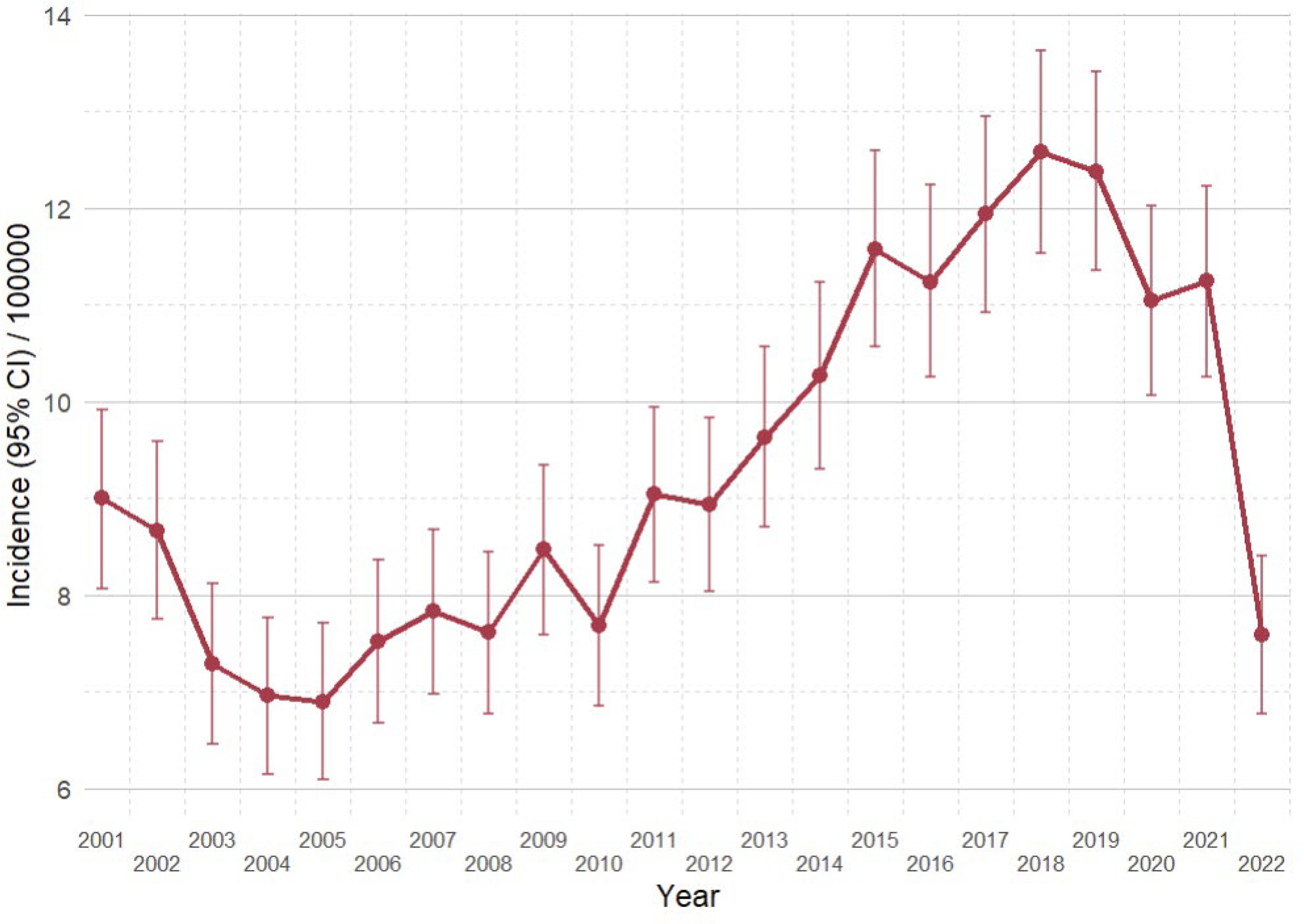
Fig. 1. Yearly incidence of chronic spontaneous urticaria in Finnish secondary care with 95% confidence intervals. The observed decline during 2020–2022 is likely reflecting the impact of COVID pandemic.
Table I shows the proportions of patients receiving CSU treatments as monotherapy and combinations, respectively. Overall, 85.8% of cases were treated with aH, and aH was the only treatment in 73.3% (Table I). Over one-third (36.1%) of patients had received a combination of aH and CS. Once it became reimbursable, omalizumab was used in 365 of all 4309 cases (8.5%). In 272 (74.5%) of these cases, omalizumab was used in combination with aH, and in 28 (7.7%) of cases in combination with CS. For patients receiving omalizumab, the mean duration between first aH treatment and omalizumab initiation was 2.3 years (SD 3.6 years, median 9.0 months, range 0.0–219.0 months). The mean duration of omalizumab treatment was 1.1 years. Cyclosporin was used by 203 patients (2.3%). The annual use of antihistamines and corticosteroids remained stable throughout the observation period, as did cyclosporin use after inclusion into international urticaria guidelines in 2006 (14), while omalizumab use increased following its reimbursement for CSU from mid-2016.
Table I. Treatments received for chronic spontaneous urticaria (CSU) in secondary care
| Used treatments | n (%) |
|---|---|
| Total cohort (N=8,784) | |
| Antihistamines treatment | 7,539 (85.8) |
| As monotherapy | 6,435 (73.3) |
| Corticosteroids treatment | 4,673 (53.2) |
| As monotherapy | 2,927 (33.3) |
| Concomitant antihistamines and corticosteroids treatment | 3,167 (36.1) |
| Subcohort of patients with contact to specialty care after omalizumab reimbursement* (N=4,309) | |
| Omalizumab treatment | 365 (8.5) |
| Subcohort of omalizumab users (N=365) | |
| Concomitant omalizumab and antihistamines | 272 (74.5) |
| Concomitant omalizumab and corticosteroids | 28 (7.7) |
|
*Date that omalizumab first became reimbursable in Finland, where it is reimbursed only for severe CSU (UAS7≥28) or cases that exhibit either severe angioedema (UAS7≥16 and DLQI≥14), or difficult angioedema requiring inpatient treatment or emergency care. |
|
Fig. 2 shows preceding comorbidities in subgroups based on sex and Fig. 3 in subgroups based on omalizumab use. Comorbidities in all patients are shown in Table SIII: the most frequent comorbidities overall were bronchial asthma, hypertension and atopic dermatitis. Diagnoses of depression and angioedema were recorded in 8.6% and 5.9% of cases, respectively (Table SIII). Malignant neoplasms were recorded in 5.2% of cases: the most common were breast cancer (1.3% cases) and other unspecified malignant neoplasms of the skin (0.8% cases) (Table SIII). Thyroid disease, metabolic syndrome, dyslipidaemia, depression, hypertension, asthma, vasculitis and diseases of the respiratory system were more common in patients who were treated with omalizumab than those who were not (Fig. 3).
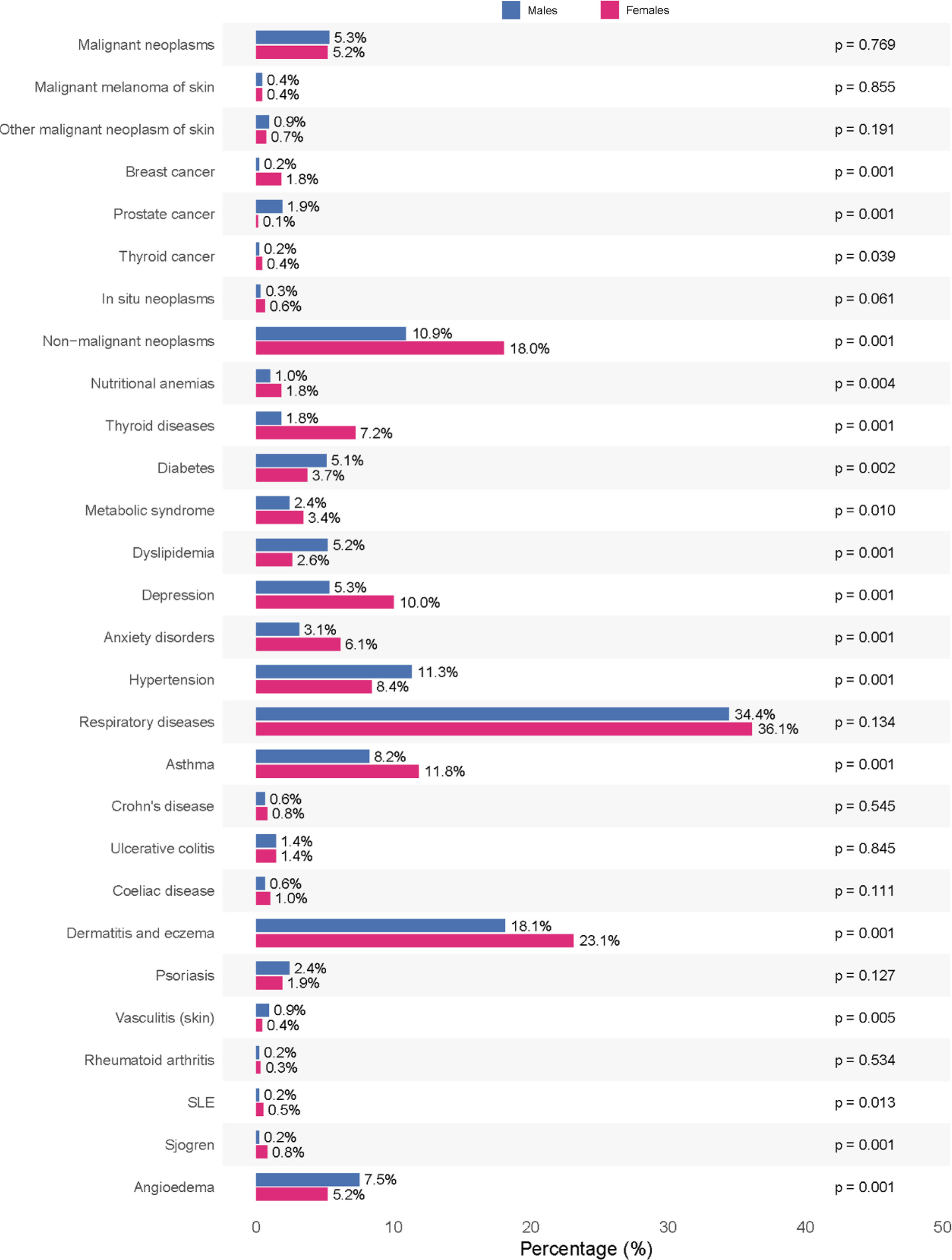
Fig. 2. Comorbidity rates by sex in chronic spontaneous urticaria patients in Finnish specialty care. SLE: systemic lupus erythematosus.
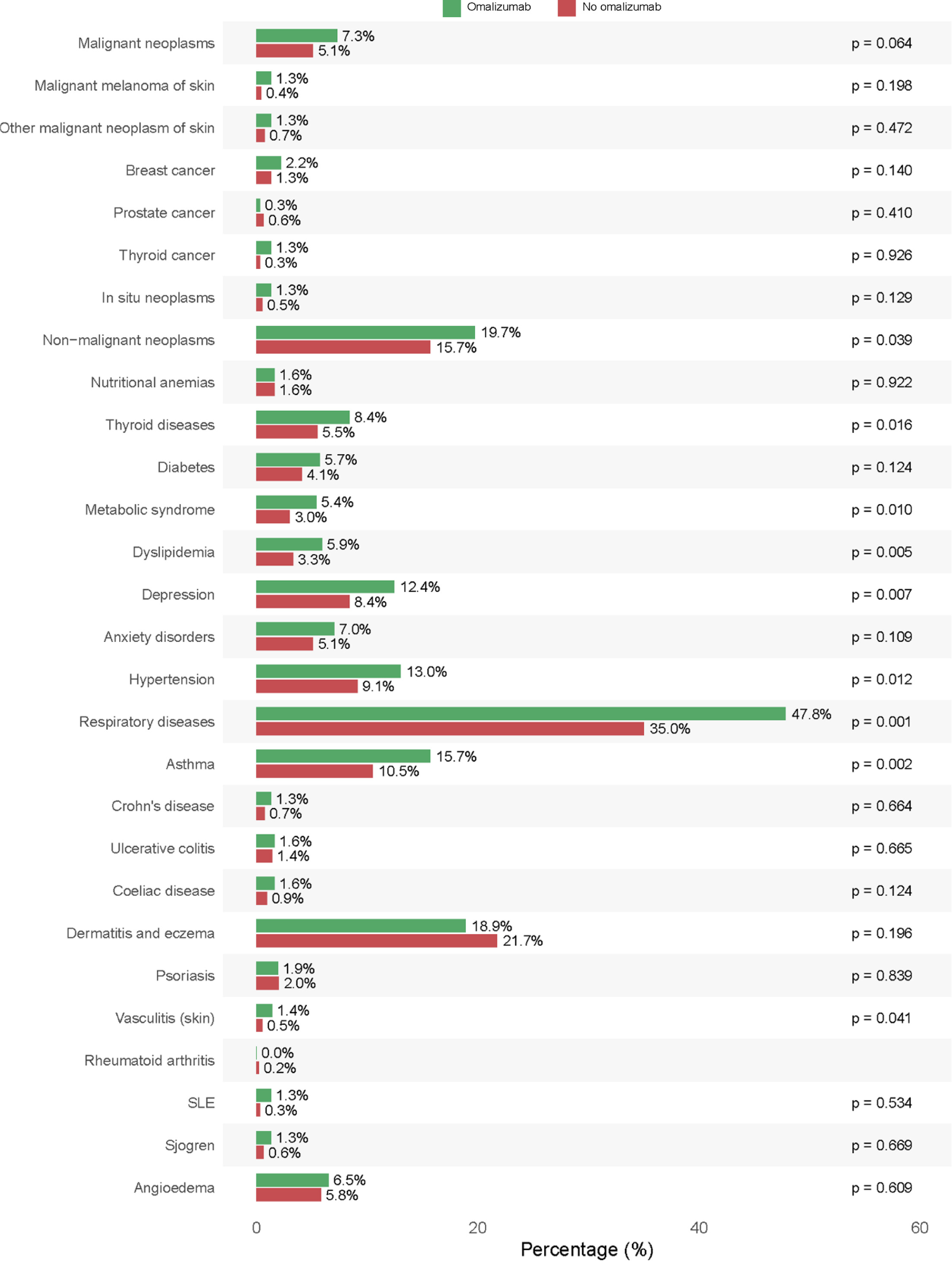
Fig. 3. Comorbidity rates by omalizumab use in chronic spontaneous urticaria patients in Finnish specialty care. SLE: systemic lupus erythematosus.
DISCUSSION
This nationwide registry-based study provides a comprehensive analysis of the epidemiology of CSU in Finland and its treatment patterns. Based on secondary care data, we observed a point prevalence of 0.21% in 2022 and an age-standardized incidence of 9.34 per 100,000 person-years. Prevalence increased over the study period, which may reflect improved case ascertainment due to greater awareness and evolving coding practices. For incidence, a decline was observed in 2020–2022, which may reflect the impact of the COVID-19 pandemic on healthcare utilization, a pattern also reported in other Finnish registry-based studies of chronic diseases (15). The cohort inclusion criterion requiring 2 diagnosis codes within an 18-month period may have further contributed to this decline, as reduced healthcare contacts during the pandemic could have limited opportunities for patients to receive a second recorded diagnosis code within the required timeframe. Observed prevalence falls within the lower range of European estimates, likely reflecting international differences in data sources and our exclusion of patients whose CSU was only treated in the primary care setting. A global meta-analysis reported a pooled CSU prevalence of 0.5%, with estimates for European countries ranging from 0.2% to 1% (16), while a recent study found a pooled prevalence of 0.92% in the EU5 countries (17). Our findings confirm that CSU remains a relatively rare but clinically relevant condition in Finland.
The demographic profile of our cohort – 70% female with a mean age of 45.3 years – is consistent with prior literature indicating that CSU predominantly affects women aged 30–50 (1). This pattern aligns with findings from the EU5 study (58.1% female, mean age 46.7 years) and the European AWARE study conducted across 12 countries (70.9% female, mean age 46.7 years) (17, 18).
Asthma, hypertension, atopic dermatitis and depression were the most common comorbidities. These findings align with those of previous studies that have linked CSU with allergic, autoimmune and psychiatric conditions (4, 17, 19, 20). Patient-reported data suggest that 20–25% of patients with CSU exhibit psychiatric comorbidity (17, 19). However, the rates of depression and anxiety disorder in our cohort matched those seen in the general population of Finland (21, 22). Our CSU cohort’s rates of hypertension and diabetes (9.3% and 4.1%, respectively) are comparable to, or even slightly lower than those of the general population of Finland (12% and 9%, respectively) (23). The frequency of asthma in our cohort was also comparable to that of the general population of Finland (24, 25, 26), but atopic dermatitis/eczema rate was substantially higher (21.6%) than in the general adult population (around 5–10% (27, 28)), consistent with recent data showing substantial type 2 inflammatory comorbidity burden in CSU (29). Interestingly, several comorbidities – including diseases of the respiratory system, thyroid disease, metabolic syndrome and depression – were more common in patients who were treated with omalizumab than those who were not. This likely reflects greater disease severity, cross-over between omalizumab reimbursement in asthma and CSU, and treatment selection, as patients requiring omalizumab represent a more severe, antihistamine-refractory subgroup with a higher overall comorbidity burden compared to milder cases. In addition, shared systemic immune mechanisms, including autoimmune predisposition and low-grade inflammation, may contribute to the clustering of these comorbidities (10).
Angioedema was recorded in 5.9% of cases, which is consistent with the 5% found by a Swedish registry-based study (30), but substantially lower than the rates yielded by studies based on patient-reported data: angioedema was reported by 27.1% of patients in the EU5 survey (17), while the AWARE study and Urticaria Voices survey reported frequencies of 45% (18) and 43% (19), respectively. Patient-reported data collected from the international, multicentre Chronic Urticaria Registry found angioedema in 64% of patients (20). These varied results highlight how estimates of prevalence can be influenced by differences in data sources, coding practices, and methodology. In our study, the low rate of angioedema likely reflects that physicians frequently report it under urticaria codes (L50) rather than using the code for unspecified angioedema (T78.3). This highlights how reliance on registry data alone may lead to underestimation of the prevalence of angioedema and underscores the value of incorporating patient-reported outcomes in future research.
Regarding treatment, 85.8% of patients received second-generation aH, with 73.3% using them as monotherapy. Although international guidelines recommend aH as first-line therapy for CU (7), not all patients had ever received this type of therapy. Possible explanations include the over-the-counter purchase and use of small packs of aH, followed by discontinuation upon the persistence or resolution of symptoms. This gap highlights a shortcoming in overall treatment patterns and suggests the need for improved CSU management: optimal use of high-dose antihistamines in primary care is essential to meet reimbursement criteria for biologics in Finland, ensure timely treatment escalation, and prevent unnecessary referrals to specialty care.
Only 8.5% of all patients were treated with omalizumab after it became reimbursable in 2016. This is substantially lower than rates reported in other European settings: 32.3% in the multinational AWARE study (18); 46.7% in Spain (31); 25.6% in France (32); and 48.5% across Denmark, Sweden and Norway (33). A single-centre study from Denmark even reported an initiation rate of 63.1% (34). These differences likely reflect variations in national reimbursement policies and clinical practice patterns, as further outlined below. This interpretation is supported by recent findings from the CURE Registry, which showed that a substantial proportion of patients with clinically uncontrolled CSU do not undergo guideline-recommended treatment escalation and remain symptomatic, highlighting ongoing unmet needs in real-world CSU care (9).
In our study, the average time between aH initiation and escalation to omalizumab was over 2 years, despite current guidelines recommending escalation within 1 month if symptoms remain uncontrolled (7). In Finland, omalizumab is reimbursed only for severe CSU (UAS7≥28) or cases that exhibit either severe angioedema (UAS7≥16 and DLQI≥14), or difficult angioedema requiring inpatient treatment or emergency care. Patient eligibility is determined by using patient-reported outcome measures. Such restriction to severe disease is relatively strict in the European context, where broader reimbursement is more common, with only a few countries such as Finland, Sweden, Belgium and United Kingdom restricting use primarily to severe CSU. This policy framework, alongside any bottlenecks in the referral and treatment pathway between primary and specialty care may contribute to both the observed delay and the relatively low uptake of omalizumab. As CSU is known to markedly affect the quality of life (6, 17, 35), these findings further highlight the importance of timely access to advanced therapies when clinically indicated and suggest opportunities to further streamline the CSU patient journey.
In our cohort, 53.2% of patients had at some point received systemic CS, and 36.1% of patients had a concomitant purchase of aH and CS. It should be noted that this definition includes any patient with at least one recorded corticosteroid purchase during follow-up, which may overestimate sustained or repeated use. This may nonetheless indicate suboptimal disease control and reliance on short CS courses to manage flares. While some CS purchases were likely related to comorbidities such as asthma, our findings broadly align with international data. However, reported rates of CS use in CU vary widely: European studies have returned rates ranging between 12.5 and 68% (30, 33, 36); the Urticaria Voices survey put the global rate at 50% (19), and 1 US study found 82.1% of CU patients having received CS (37). Limited published data are available regarding the concomitant use of aH and CS, but estimates range from 12% (38) to 55.5% (39). Our finding that only 7.7% of patients treated with omalizumab required concomitant CS suggests improved, but incomplete disease control. Our rate is lower than that reported in a recent real-world study, where 31.3% of omalizumab-treated patients used CS alongside aH (40). Most of the patients in our cohort who received omalizumab continued aH treatment, in line with international guidelines (7).
A key strength of this study is the use of comprehensive national registry data spanning over 2 decades, enabling robust estimates of epidemiological trends and treatment patterns. However, limitations include the absence of primary care data, which probably led to an underestimation of the prevalence of CSU; mild and moderate cases were most prone to be omitted, being less likely to be referred to secondary care. Moreover, the data does not allow for assessing the contributing factors to omalizumab treatment delay, such as referral delays between primary and specialty care. Information on prescribed treatment doses or duration is not available in the registries, thus not allowing differentiation between short-term and prolonged corticosteroid use. Stratifying antihistamines by generation was infeasible without substance level data, since both first- and second-generation antihistamines distribute across multiple ATC subgroups.
Additionally, the lack of patient-reported outcome data limits insights into symptom burden, treatment satisfaction, and quality of life.
Our findings suggest that, as in other European countries, CSU in Finland primarily affects a working-age population and is associated with a comorbidity burden. The high comorbidity burden supports a multidisciplinary treatment approach, with coordinated care between primary and specialty services. Despite omalizumab having been reimbursed in Finland since 2016, its relatively low uptake and delay in treatment escalation point to areas for development in treatment pathways. Given CSU’s impact on quality of life and work productivity (6, 17, 35), optimizing care remains a priority. Continued efforts to align clinical practice with evolving evidence and guidelines – while respecting the realities of healthcare delivery – may help improve outcomes.
REFERENCES
- Kolkhir P, Giménez-Arnau AM, Kulthanan K, Peter J, Metz M, Maurer M. Urticaria. Nat Rev Dis Primers 2022; 8: 61. https://doi.org/10.1038/s41572-022-00389-z
- Kim YS, Park SH, Han K, Bang CH, Lee JH, Park YM. Prevalence and incidence of chronic spontaneous urticaria in the entire Korean adult population. Br J Dermatol 2018; 178: 976–977. https://doi.org/10.1111/bjd.16105
- Lapi F, Cassano N, Pegoraro V, Cataldo N, Heiman F, Cricelli I, et al. Epidemiology of chronic spontaneous urticaria: results from a nationwide, population-based study in Italy. Br J Dermatol 2016; 174: 996–1004. https://doi.org/10.1111/bjd.14470
- Weller K, Maurer M, Bauer A, Wedi B, Wagner N, Schliemann S, et al. Epidemiology, comorbidities, and healthcare utilization of patients with chronic urticaria in Germany. J Eur Acad Dermatol Venereol 2022; 36: 91–99. https://doi.org/10.1111/jdv.17724
- Broder MS, Raimundo K, Antonova E, Chang E. Resource use and costs in an insured population of patients with chronic idiopathic/spontaneous urticaria. Am J Clin Dermatol 2015; 16: 313–321. https://doi.org/10.1007/s40257-015-0134-8
- Kocatürk E, Grattan C, Cherrez I, Cho YT, De A, Demir S, et al. The overall burden of chronic spontaneous urticaria – the current landscape. Br J Dermatol 2026: ljag121. https://doi.org/10.1093/bjd/ljag121
- Zuberbier T, Ansari ZA, Abdul Latiff AH, Abuzakouk MM, Agcaoili-De Jesus MS, Agondi RC, et al. The international guideline for the definition, classification, diagnosis and management of urticaria. Allergy 2026; 81: 2582–2632. https://doi.org/10.1111/all.70210
- Guillén-Aguinaga S, Jáuregui Presa I, Aguinaga-Ontoso E, Guillén-Grima F, Ferrer M. Updosing nonsedating antihistamines in patients with chronic spontaneous urticaria: a systematic review and meta-analysis. Br J Dermatol 2016; 175: 1153–1165. https://doi.org/10.1111/bjd.14768
- Kolkhir P, Salameh P, Zajac M, Kasperska-Zajac A, Giménez-Arnau A, Puertolas M, et al. Unmet needs in treatment escalation for chronic spontaneous urticaria: findings from the CURE Registry. Allergy 2026; 81: 2804–2814. https://doi.org/10.1111/all.70199
- Papapostolou N, Xepapadaki P, Katoulis A, Makris M. Comorbidities of chronic urticaria: a glimpse into a complex relationship. Front Allergy 2022; 3: 1008145. https://doi.org/10.3389/falgy.2022.1008145
- Kolkhir P, Bonnekoh H, Metz M, Maurer M. Chronic spontaneous urticaria: a review. JAMA 2024; 332: 1464–1477. https://doi.org/10.1001/jama.2024.15568
- Patel D, Pathak N, Alani O, Singal A, Lipner SR. Autoimmune associations with chronic spontaneous urticaria: a retrospective cohort analysis. JAAD Int 2025; 21: 44–46. https://doi.org/10.1016/j.jdin.2025.05.002
- Eurostat. Revision of the European Standard Population: report of Eurostat’s Task Force. In: Comission E, editor. Publications Office of the European Union. Luxembourg: Eurostat; 2013.
- Zuberbier T, Bindslev-Jensen C, Canonica W, Grattan CEH, Greaves MW, Henz BM, et al. EAACI/GA2LEN/EDF guideline: management of urticaria. Allergy 2006; 61: 321–331. https://doi.org/10.1111/j.1398-9995.2005.00962.x
- Wikström K, Linna M, Laatikainen T. The impact of the COVID-19 pandemic on incident cases of chronic diseases in Finland. Eur J Public Health 2022; 32: 982–984. https://doi.org/10.1093/eurpub/ckac107
- Fricke J, Ávila G, Keller T, Weller K, Lau S, Maurer M, et al. Prevalence of chronic urticaria in children and adults across the globe: systematic review with meta-analysis. Allergy 2020; 75: 423–432. https://doi.org/10.1111/all.14037
- Balp MM, Krupsky K, Gupta S, Lienhard C, Kohli RK, Patil D, et al. Prevalence, treatment and burden of chronic spontaneous urticaria in five European countries. J Eur Acad Dermatol Venereol 2025; 39: 1806–1817. https://doi.org/10.1111/jdv.20772
- Maurer M, Costa C, Gimenez Arnau A, Guillet G, Labrador-Horrillo M, Lapeere H, et al. Antihistamine-resistant chronic spontaneous urticaria remains undertreated: 2-year data from the AWARE study. Clin Exp Allergy 2020; 50: 1166–1175. https://doi.org/10.1111/cea.13716
- Bernstein JA, Winders TA, McCarthy J, Saraswat P, Chapman-Rothe N, Raftery T, et al. Urticaria Voices: real-world treatment patterns and outcomes in chronic spontaneous urticaria. Dermatol Ther 2025; 15: 2201–2215. https://doi.org/10.1007/s13555-025-01461-8
- Buttgereit T, Vera C, Aulenbacher F, Church MK, Hawro T, Asero R, et al. Patients with chronic spontaneous urticaria who have wheals, angioedema, or both, differ demographically, clinically, and in response to treatment—results from CURE. J Allergy Clin Immunol Pract 2023; 11: 3515–3525. https://doi.org/10.1016/j.jaip.2023.08.020
- Markkula N, Suvisaari J, Saarni SI, Pirkola S, Peña S, Saarni S, et al. Prevalence and correlates of major depressive disorder and dysthymia in an eleven-year follow-up – Results from the Finnish Health 2011 Survey. J Affect Disord 2015; 173: 73–80. https://doi.org/10.1016/j.jad.2014.10.015
- Remitz A, Peltonen EJ, Korhonen L, Nortamo P, Iso-Mustajärvi I, Prami T, et al. Characterizing patients and treatment patterns in moderate-to-severe atopic dermatitis in Finland: a population-based study using national health data. Acta Derm Venereol 2025; 105: adv41244. https://doi.org/10.2340/actadv.v105.41244
- Koponen P, Reinikainen J, Tolonen H, Laatikainen T, Jousilahti P, Koskinen S. Prevalence of hypertension and diabetes in Finland by different data sources. Eur J Public Health 2019; 29. https://doi.org/10.1093/eurpub/ckz185.447
- Hansen S, von Bülow A, Sandin P, Ernstsson O, Janson C, Lehtimäki L, et al. Prevalence and management of severe asthma in the Nordic countries: findings from the NORDSTAR cohort. ERJ Open Res 2023; 9: 00687-2022. https://doi.org/10.1183/23120541.00687-2022
- Viinanen A, Ilmarinen P, Mehtälä J, Ylisaukko-Oja T, Idänpään-Heikkilä JJ, Kankaanranta H, et al. The prevalence of severe asthma and severe eosinophilic asthma in Finland. Presented at: ERS International Congress 2023 abstracts; 2023 Sep 9A662 doi:10.1183/13993003.congress-2023.PA662.
- Hisinger-Mölkänen H, Pallasaho P, Haahtela T, Lindqvist A, Sovijärvi A, Piirilä P. The increase of asthma prevalence has levelled off and symptoms decreased in adults during 20 years from 1996 to 2016 in Helsinki, Finland. Respir Med 2019; 155: 121–126. https://doi.org/10.1016/j.rmed.2019.07.014
- Kiiski V, Salava A, Susitaival P, Barnhill S, Remitz A, Heliovaara M. Atopic dermatitis in adults: a population-based study in Finland. Int J Dermatol 2022; 61: 324–330. https://doi.org/10.1111/ijd.15912
- Sinikumpu SP, Huilaja L, Jokelainen J, Koiranen M, Auvinen J, Hägg PM, et al. High prevalence of skin diseases and need for treatment in a middle-aged population. A Northern Finland Birth Cohort 1966 study. PLoS One 2014; 9: e99533. https://doi.org/10.1371/journal.pone.0099533
- Smiley K, Galli L, Grippen Goddard A, Moore L, Smigiel C, Tambay A, et al. Clinical characteristics, type 2 comorbidities, and treatment responses in pediatric and adult chronic spontaneous urticaria: a multicenter retrospective cohort study. Allergy Asthma Proc 2026; 47: 190–195. https://doi.org/10.2500/aap.2026.47.260012
- Tayefi M, Bradley M, Neijber A, Fastberg A, Ceynowa D, Eriksson M. Chronic urticaria: a Swedish registry-based cohort study on population, comorbidities and treatment characteristics. Acta Derm Venereol 2022; 102: adv00624. https://doi.org/10.2340/actadv.v101.737
- Gimenez-Arnau A, Bartra J, Ferrer M, Jauregui I, Borbujo J, Figueras I, et al. A specialized therapeutic approach to chronic urticaria refractory to H1-antihistamines improves disease burden: the Spanish AWARE experience. J Investig Allergol Clin Immunol 2022; 32: 191–199. https://doi.org/10.18176/jiaci.0661
- Giordano-Labadie F, Becherel PA, Pralong P, Outtas O, Ruer-Mulard M, Berard F, et al. Improvement of patient outcomes following therapeutic optimization of chronic urticaria: two-year data from France as part of the international real-life AWARE study. Eur J Dermatol 2021; 31: 217–224. https://doi.org/10.1684/ejd.2021.4023
- Thomsen SF, Pritzier EC, Anderson CD, Juvik S, Baust NV, Dodge R, et al. Treatment patterns and clinical outcomes of chronic urticaria: two-year follow-up results from the Scandinavian AWARE study. Acta Derm Venereol 2022; 102: adv00689. https://doi.org/10.2340/actadv.v102.1620
- Zhang DG, Nielsen ML, Sørensen JA, Naassan S, Vestergaard C, Kocatürk E, et al. Omalizumab dosing patterns and drug survival in adult patients with chronic spontaneous urticaria. J Eur Acad Dermatol Venereol 2025; 39: 1796–1805. https://doi.org/10.1111/jdv.20737
- Weller K, Winders TA, McCarthy J, Saraswat P, Chapman-Rothe N, Raftery T, et al. The Urticaria Voices Study: physicians’ perspectives on the real-world patient burden, treatments, and outcomes in chronic spontaneous urticaria. Dermatol Ther 2025; 15: 2925–2946. https://doi.org/10.1007/s13555-025-01498-9
- Maurer M, Staubach P, Raap U, Richter-Huhn G, Bauer A, Ruëff F, et al. H1-antihistamine-refractory chronic spontaneous urticaria: it’s worse than we thought - first results of the multicenter real-life AWARE study. Clin Exp Allergy 2017; 47: 684–692. https://doi.org/10.1111/cea.12900
- Riedl MA, Patil D, Rodrigues J, Kuruvilla M, Raftery T, Pivneva I, et al. Clinical burden, treatment, and disease control in patients with chronic spontaneous urticaria: Real-world evidence. Ann Allergy Asthma Immunol 2025; 134: 324–332. https://doi.org/10.1016/j.anai.2024.12.008
- Asero R, Tedeschi A. Usefulness of a short course of oral prednisone in antihistamine-resistant chronic urticaria: a retrospective analysis. J Investig Allergol Clin Immunol 2010; 20: 386–390.
- Ronconi G, Dondi L, Calabria S, Dondi L, Dell’Anno I, Casoli L, et al. Burden of chronic spontaneous urticaria in Italy through healthcare resource utilization and direct costs: a retrospective analysis of real-world using administrative healthcare data. BMC Health Serv Res 2025; 25: 969. https://doi.org/10.1186/s12913-025-13122-9
- Mentesoglu D, Kurmus GI, Kartal SP. Antihistamines and omalizumab combination treatment in patients with chronic spontaneous urticaria: real-world experience from a tertiary care hospital. North Clin Istanb 2025; 12: 483–489. https://doi.org/10.14744/nci.2024.76390