ORIGINAL REPORT
Efficacy and Safety of Delgocitinib and Its Impact on Patient’s Perspective for Moderate-to-severe Chronic Hand Eczema in Adults: A 16-week Real-world Prospective Multicentre Study
Elena PEZZOLO1*, Raul Armando LUYO SABOYA1, Michela ORTONCELLI2, Simone RIBERO2, Federica GELATO2, Marco GALLUZZO3,4, Marina TALAMONTI4, Edoardo MORTATO3, Antonio COSTANZO5,6, Luigi GARGIULO5,6, Alessandra NARCISI5,6, Matteo BIANCO5,6, Carlotta GURIOLI7, Gionathan ORIONI7, Camilla LOI7, Niccolò GORI8,9, Ketty PERIS8,9, Elena IPPOLITI8,9, Giampiero GIROLOMONI10, Martina MAURELLI10, Maria ESPOSITO11, Sara TRIOLO11, Caterina FOTI12, Giorgia SBARRA12, Ersilia TOLINO13, Nevena SKROZA13, Andrea CARUGNO14, Nicola ZERBINATI14, Anna BALATO15, Eugenia Veronica DI BRIZZI15 , Martina BURLANDO16,17, Vito DI LERNIA18, Pietro MORRONE19, Emiliano ANTIGA20, Maria Concetta FARGNOLI21, Filomena RUSSO22, Francesca CAROPPO23,24, Laura FAGOTTO25, Piergiacomo CALZAVARA-PINTON26, Stefano BIGHETTI26 and Mariateresa ROSSI26
1Department of Dermatology, San Bortolo Hospital, Vicenza, Italy, 2Dermatologic Clinic, Department of Medical Science, University of Turin, Turin, Italy, 3Department of Systems Medicine, University of Rome “Tor Vergata”, Rome, Italy, 4Dermatology Unit, Azienda Ospedaliera Universitaria “Policlinico Tor Vergata”, Rome, Italy, 5Dermatology Unit, IRCCS Humanitas Research Hospital, Rozzano, Milan, Italy, 6Department of Biomedical Sciences, Humanitas University, Pieve Emanuele, Milan, Italy, 7Dermatology Unit, IRCCS Azienda Ospedaliero-Universitaria di Bologna, Policlinico S. Orsola-Malpighi, Bologna, Italy, 8Section of Dermatology, University Department of Translational Medicine and Surgery, Catholic University of the Sacred Heart, Rome, Italy, 9Unit of Dermatology, Department of Medical and Surgical Sciences, IRCCS A. Gemelli University Polyclinic Foundation, Rome, Italy, 10Section of Dermatology and Venereology, Department of Medicine, University of Verona, Verona, Italy, 11Unit of Dermatology, Department of Biotechnological and Applied Clinical Sciences, University of L'Aquila, L'Aquila, Italy, 12Unit of Dermatology, Department of Precision and Regenerative Medicine and Ionian Area, University of Bari Aldo Moro, Bari, Italy, 13Dermatology Unit “Daniele Innocenzi”, Department of Medical-Surgical Sciences and Biotechnologies, Sapienza University of Rome, Polo Pontino, Rome, Italy, 14Dermatology Unit, Department of Medicine and Surgery, University of Insubria, Varese, Italy, 15Dermatology Unit, University of Campania L. Vanvitelli, Naples, Italy, 16Section of Dermatology, Department of Health Sciences (DiSSal), University of Genoa, Genoa, Italy, 17Dermatology Unit, IRCCS San Martino University Hospital, Genoa, Italy, 18Dermatology Unit, Arcispedale Santa Maria Nuova, Azienda USL-IRCCS di Reggio Emilia, Reggio Emilia, Italy, 19Provincial Health Authority of Cosenza, Cosenza, Italy, 20Section of Dermatology, Department of Health Sciences, University of Florence, Florence, Italy, 21Scientific Direction, IRCCS San Gallicano, Dermatological Institute, Rome, Italy, 22Department of Dermatology Unit, Istituto Dermopatico dell'Immacolata - Istituto di Ricovero e Cura a Carattere Scientifico (IDI-IRCCS), Rome, Italy, 23Pediatric Dermatology Regional Center, Department of Women and Children’s Health (SDB), University of Padua, Padua, Italy, 24Dermatology Unit, Department of Medicine (DIMED), University of Padua, Padua, Italy, 25Institute of Dermatology, Santa Maria della Misericordia University Hospital, Udine, Italy, and 26Dermatology Department, University of Brescia, ASST Spedali Civili of Brescia, Brescia, Italy
Corr: Elena Pezzolo, Dermatology Unit, San Bortolo Hospital, IT-36100 Vicenza, Italy. *Email: elena.pezzolo@gmail.com
Key words: chronic hand eczema; delgocitinib; physician global assessment; Hand Eczema Severity Index; hand eczema symptom diary; safety and tolerability; efficacy.
Citation: Acta Derm Venereol 2026; 106: adv-2026-0765. DOI: https://doi.org/10.2340/actadv.v106.adv-2026-0765.
Copyright: 2026 ©Author(s). Published by MJS Publishing, on behalf of the Society for Publication of Acta Dermato-Venereologica. This is an Open Access article distributed under the terms of the Creative Commons Attribution-NonCommercial 4.0 International License (https://creativecommons.org/licenses/by-nc/4.0/).
Submitted: Jun 7, 2026. Accepted after revision: Sept 9, 2026.
Published: Oct 7, 2026.
Competing interests and funding: The data that support the findings of this study are available from the corresponding author upon reasonable request.
NS declare to have acted as speakers and/or consultants for AbbVie, Almirall, Eli-Lilly, Johnson & Johnson, LeoPharma, Novartis and UCB, outside the submitted work. AC has been a consultant and/or speaker for AbbVie, Leo Pharma, Eli Lilly, Novartis, Janssen-Cilag, Amgen, Almirall, UCB Pharma, and Boehringer Ingelheim. NZ has received personal fees from MatexLab, scientific consultancy honoraria from Merz Aesthetics Italia Srl, has served as a scientific consultant for DEKA Laser, and has received consultancy fees from AbbVie. AB has served as consultant and/or has received fees from: Abbvie, Almirall, Amgen, BI, BMS, Eli-Lilly, Janssen, Incyte, LeoPharma, Pfizer, Novartis, Sanofi, UCB. EVDB has served as speaker and/or has received fees from AbbVie, Eli Lilly, Janssen, and Sanofi. MB has acted as a speaker and consultant for AbbVie, Janssen, Amgen, Novartis, Eli Lilly, and UCB Pharma. VDL served as consultant and/or member of Data Safety Monitoring Board or advisory boards and/or received speaker honoraria from AbbVie, Amgen, Eli Lilly, Janssen and served as principal investigator for Almirall, Eli Lilly, Janssen, Novartis and Sanofi. PM served as a speaker/consultant for AbbVie, Almirall, Eli Lilly, Janssen, Leo Pharma, Novartis, Pfizer, Sanofi, UCB. EA has been an advisor, speaker and/or consultant for AbbVie, Almirall, Incyte, LEO Pharma, Lilly, Pfizer, and Sanofi. MCF has served on advisory boards and received honoraria for lectures and/or research grants from Amgen, Almirall, AbbVie, Boehringer Ingelheim, BMS, Galderma, Kyowa Kirin, Incyte, LEO Pharma, Pierre Fabre, UCB, Lilly, Pfizer, Janssen, MSD, Novartis, Sanofi, Regeneron, and Sun Pharma. FR has acted as a speaker and consultant for AbbVie, LEO Pharma, Novartis, and Sanofi. FC has been consultant for LEO Pharma, Sanofi Genzyme, AbbVie, Hollister e Amgen. PCP has served as advisory boards, and received honoraria per lectures e/o research grants da Cantabria, La Roche-Posay, AbbVie, Novartis, Sanofi, LEO, Galderma, Sun Pharma e Regeneron. MR has received personal fees for advisory board meetings from Sanofi, AbbVie, Novartis, Galderma, Leo Pharma, Pfizer and Cantabria. RALS, FG, EM, MB, CG, GO, CL, EI, MM, ST, GS, LF and SB have no conflicts of interest to declare.
Delgocitinib is a pan-Janus kinase inhibitor approved for moderate-to-severe chronic hand eczema in adults. However, real-world evidence remains limited. We prospectively evaluated 149 adult patients (mean age: 46.4 years; 60.4% female) treated with delgocitinib for chronic hand eczema across 20 Italian dermatology centres between May and November 2025, with a four-month follow-up. Two-thirds of patients were non-occupationally exposed, and>80% had vesicular or atopic chronic hand eczema. At week 4, Physician Global Assessment-chronic hand eczema 0/1 and Hand Eczema Severity Index (HECSI)-75 were achieved in 42.3% and 43.8% of patients, increasing significantly to 74.3% and 88.0% at week 16. Pruritus and pain Numerical Rating Scale 0/1 were reported in 43.8% and 52.3% of patients at week 4, rising significantly to 74.4% and 86.5% at week 16. Hand Eczema Symptom Diary–Patient Global Impression of Severity 0/1 increased from 45.6% to 76.6%. Nonoccupationally exposed patients showed significantly higher early response rates than occupationally exposed, with attenuation of differences by week 16. HECSI-75 responses were consistent across chronic hand eczema subtypes, particularly vesicular (94.0%) and atopic (90.0%). Treatment was well tolerated, with rare and no severe adverse events reported. These findings support delgocitinib as a rapid, effective and safe treatment option for chronic hand eczema.
SIGNIFICANCE
This multicentre, prospective real-world study investigated the effectiveness and safety of delgocitinib in adults with moderate-to-severe chronic hand eczema. Delgocitinib rapidly improved disease signs, symptoms, quality of life, and patient-perceived disease severity, with 75% of patients achieving clear/almost clear skin and no/minimal pruritus, and >80% reporting no/very mild symptoms and improved disease severity perception by week 16. Non-occupationally exposed patients responded earlier than occupationally exposed; however, these differences attenuated by week 16. Responses were consistent across CHE subtypes, particularly vesicular and atopic chronic hand eczema. Treatment was well tolerated, and results support delgocitinib as an effective and safe option for chronic hand eczema.
INTRODUCTION
Chronic hand eczema (CHE) is a heterogeneous disorder affecting approximately 4–5% of adults globally, with increased prevalence among women and individuals exposed to occupational risk factors (1, 2). CHE encompasses multiple etiological and clinical subtypes, frequently presenting with mixed and overlapping phenotypes (3, 4, 5). Severe disease may significantly affect quality of life, work productivity and psychological well-being (6, 7, 8). Epidermal barrier dysfunction represents a key pathogenic mechanism (9). Growing evidence also supports a role for microbial dysbiosis and immune dysregulation, with Staphylococcus aureus colonization correlating with disease severity (10). Inflammatory pathways involve type 1, 2 and 17 immune responses throughout different CHE subtypes, converging on the Janus kinase-signal transducer and activator of transcription (JAK-STAT) signalling axis (11, 12). This supports a rationale for targeted JAK inhibitors therapies.
According to European guidelines, CHE treatment follows a stepwise approach based on disease subtype and severity (3). Topical corticosteroids are the first-line option; however, their prolonged use is limited by adverse effects such as skin atrophy, barrier disruption and tachyphylaxis (13). In addition, many patients with moderate-to-severe CHE experience insufficient response or intolerance, highlighting the need for alternative therapies (14). Phototherapy and systemic treatments, including alitretinoin – the only systemic treatment currently approved in Europe for severe CHE – are recommended in refractory disease. Alitretinoin has shown efficacy throughout all CHE subtypes, with particularly favourable outcomes in hyperkeratotic eczema (15, 16). In recent years, the therapeutic scenario of CHE has expanded with the advent of targeted biologics and JAK inhibitors. The interleukin (IL)-4/IL-13 antagonist dupilumab has shown efficacy in atopic hand eczema, whereas the IL-13 inhibitor tralokinumab has proven effective in both atopic and non-atopic CHE (17, 18, 19). Furthermore, both topical and systemic JAK inhibitors have shown efficacy in CHE, thereby emphasizing the importance of targeting the JAK–STAT signalling pathway (12). Delgocitinib is a topical pan-JAK inhibitor recently approved for the treatment of moderate-to-severe CHE in adults. Through inhibition of JAK-STAT signalling of pro-inflammatory cytokines, it reduces cutaneous inflammation and supports skin barrier restoration. Its efficacy and safety have been demonstrated in 2 pivotal phase III vehicle-controlled trials (20). A 52-week open-label extension study confirmed its long-term efficacy and safety (21). A head-to-head trial demonstrated its superior efficacy than alitretinoin in achieving skin clearance and improving quality of life (22). Nevertheless, real-world evidence remains scarce.
This prospective study aimed to assess the efficacy and safety of delgocitinib in adults with moderate-to-severe CHE over 16 weeks follow-up.
MATERIALS AND METHODS
Study design
We conducted a prospective cohort study across 20 Italian tertiary referral dermatology centres, with the University of Brescia, ASST Spedali Civili serving as the coordinating centre. Eligible participants were adults (≥18 years), diagnosed with moderate-to-severe CHE by a dermatologist, who initiated delgocitinib cream 20 mg/g twice daily between 1 May 2025 and 1 November 2025. Treatment eligibility was based on the guidelines for CHE, the Summary of Product Characteristics, and the criteria established by the Italian Medicines Agency (AIFA), which define the clinical indications for initiating delgocitinib in appropriate candidates (3, 23, 24). Specifically, patients were eligible if they had moderate-to-severe CHE with Physician’s Global Assessment for Chronic Hand Eczema (PGA-CHE) score ≥3, if they had inadequate response, intolerance or contraindications for prolonged use of topical corticosteroids, and if they had discontinued any systemic or topical immunosuppressive or immunomodulatory therapies for CHE at least 4 weeks prior to baseline, due to unsatisfactory clinical response or adverse events (AEs). Further inclusion criteria comprised the ability to understand and complete patient-reported outcome measures, including the Numerical Rating Scale for peak pruritus (PP-NRS) and pain (pain-NRS), the Hand Eczema Symptom Diary-Patient Global Impression of Severity (HESD PGI-S), the HESD pruritus (PGI-S Pruritus) and Pain (PGI-S Pain) scores, the Dermatology Life Quality Index (DLQI), as well as the provision of written informed consent. Participants were not eligible for inclusion in case of an ongoing or planned pregnancy, if they were breastfeeding, or in the presence of an active, suspected, or untreated infectious dermatitis, a hand dermatitis of noneczematous origin, including palmoplantar psoriasis or lichen planus. Patients applied delgocitinib 20 mg/g cream twice daily to hands until clinical clearance. Thereafter, treatment could be continued at the investigator’s discretion, including reduced-frequency regimens. All patients were encouraged to apply bland emollients free of fragrances or irritants daily, at least 2 h apart from delgocitinib. Concomitant use of other topical treatments on the hands, including corticosteroids, calcineurin inhibitors or other anti-inflammatory agents, was not allowed. Follow-up visits were scheduled according to each centre’s timetable and patient availability. To be included, patients were also required to have at least 1 follow-up visit after treatment initiation. The follow-up duration was up to 16 weeks.
The study was conducted in accordance with the principles of the Declaration of Helsinki and with applicable national and European regulations regarding patient data protection, privacy and confidentiality (23, 24). The study was notified to and reviewed by the local Ethics Committee. All participants provided written informed consent for the collection and use of their anonymized clinical data. The study complied with local ethical standards and followed the Strengthening the Reporting of Observational Studies in Epidemiology (STROBE) guidelines for cohort studies (25).
Data collection
Clinical data were extracted from electronic medical records and standardized score sheets. Collected variables included demographic and general data (age, sex, smoking and type of occupation: exposure to wet work or irritant substances), medical history (body mass index [BMI]), associated comorbidities, particularly atopic (asthma, rhinitis, atopic dermatitis [AD]), autoimmune, or dysmetabolic conditions, dermatological history (clinical subtype of CHE: allergic contact dermatitis [ACD], irritant contact dermatitis [ICD], AD, hyperkeratotic, dyshidrotic, nummular, etc.), year of CHE onset, previous therapies (emollients, topical corticosteroids and calcineurin inhibitors, alitretinoin, cyclosporine, methotrexate, acitretin, phototherapy, systemic JAK inhibitors or biologics), treatment adherence and environmental interference (including unauthorized use of other topical agents, unprotected occupational exposure), treatment outcomes and AEs.
Disease severity and therapeutic response were assessed using the PGA-CHE, the Hand Eczema Severity Index (HECSI), the PP-NRS and pain-NRS, the HESD PGI-S, the PGI-S pruritus, the PGI-S pain and the DLQI. The PGA-CHE is a 5-point physician-rated scale ranging from 0 (clear) to 4 (severe) used to evaluate overall lesion severity (26). The HECSI provides a global severity score ranging from 0 (no disease) to 360 (most severe disease) (27). The PP-NRS and pain-NRS, both ranging from 0 (no symptoms) to 10 (worst imaginable symptoms), were used to assess symptom intensity over the previous 24 h (28). The HESD PGI-S, the PGI-S Pruritus and the PGI-S Pain are a patient-reported daily diary assessing hand eczema symptom severity, ranging from 0 (no symptoms) to 4 (very severe symptoms), whereas the DLQI assesses dermatology-specific quality of life, with scores ranging from 0 (no impact on quality of life) to 30 (extremely large impact) (29) (30).
AEs were collected from standard clinical documentation. Objectives and study endpoints were defined a priori. All outcome measures were selected to be objective, quantifiable and clinically meaningful, enabling a structured assessment of variables in a real-world setting. Data were collected at baseline, corresponding to treatment initiation, and at weeks 2, 4, 8, and 16 post-baseline.
Efficacy assessment
The primary objective for PGA-CHE was to assess the percentage of patients achieving a score of 0 or 1 (“clear” or “almost clear”) or ≥2-step improvement from baseline. Secondary endpoints were defined as the mean change from baseline to Week 16 in HECSI, PP-NRS, pain-NRS, HESD PGI-S, PGI-S Pruritus, PGI-S Pain and DLQI scores, and the exploration of potential associations between clinical characteristics (e.g. disease subtype and occupational exposure) and treatment response. For HECSI, the proportion of patients achieving ≥75%, ≥90% and 100% reduction from baseline (HECSI-75, HECSI-90, HECSI-100, respectively) were evaluated. For PP-NRS, pain-NRS, HESD PGI-S, PGI-S Pruritus, PGI-S Pain and DLQI, we assessed the proportions of patients achieving clinically meaningful improvement thresholds and absolute scores indicating minimal or no residual symptom burden or quality-of-life impairment, where applicable.
Maintenance regimen assessment
Among patients achieving PGA-CHE 0/1 by week 12, subsequent maintenance regimens were recorded. Patients who first reached PGA-CHE 0/1 at week 16 were not evaluable for this analysis.
Safety assessment
Safety endpoints included the incidence and severity of AEs observed during the study period, including those leading to treatment discontinuation.
Statistical analysis
Continuous variables were assessed for distribution and are presented as mean±standard deviation (SD) or median (interquartile range [IQR]), as appropriate. Categorical variables are presented as absolute numbers and percentages. Comparisons between groups were performed using the Student t-test or Mann–Whitney U test for continuous variables, according to data distribution, and the χ2 test or Fisher exact test for categorical variables.
Descriptive response rates were calculated using an observed-case approach, including only patients who were evaluated at each scheduled visit. The decreasing number of evaluable patients over follow-up primarily reflected administrative censoring due to the rolling enrollment design, whereby patients enrolled later had not yet reached the corresponding follow-up visit at the time of database lock. Longitudinal comparisons of clinical outcomes over time were performed using Generalized Estimating Equations (GEE), accounting for within-subject correlation and using all available observations without explicit imputation of missing outcome data; inference was based on the assumption that data were missing at random (MAR).31 A two-sided p-value <0.05 was considered statistically significant. All analyses were performed using IBM SPSS Statistics© software version 23.0 (SPSS Inc., Chicago, IL, USA).
RESULTS
Baseline patients’ characteristics
Overall, 149 patients were included, of whom 90 (60.4%) were female, with a mean±SD age of 46.4±15.5 years. Baseline characteristics are summarized in Table I. Most patients (65.8%) were non-occupationally exposed. Previous treatment history showed extensive use of topical cortico-steroids and calcineurin inhibitors (99.3%), while conventional systemic therapies and alitretinoin had been used in 38.3% and 10.7% of patients, respectively. All patients reported regular emollient use.
Table I. Baseline characteristics of the study population
| Characteristics | No. | Occupationally exposed | Non occupationally exposed | p-value |
|---|---|---|---|---|
| Total (%) | 149 (100) | 51(34.2) | 98 (65.8) | |
| Gender (%) | ||||
| Female | 90 (60.4) | 24 (47.1) | 66 (67.3) | 0.02 |
| Male | 59 (39.6) | 27 (52.9) | 32 (32.7) | 0.02 |
| Age, years, mean (SD) | 46.4 (15.5) | 50.1 (13.9) | 45.5 (16.2) | 0.10 |
| Body mass index, mean (SD) | 24.3 (3.6) | 24.6 (3.0) | 24.2 (3.9) | 0.52 |
| Age at CHE onset, years, mean (SD) | 38.9 (16.9) | 43.2 (15.1) | 36.8 (17.4) | 0.02 |
| Infant/child (%) | 9 (6.0) | 1 (2.0) | 8 (8.2) | 0.20 |
| Adolescent (%) | 16 (10.8) | 4 (7.8) | 12 (12.2) | 0.54 |
| Adult (%) | 124 (83.2) | 46 (90.2) | 78 (79.6) | 0.09 |
| Morphological chronic hand eczema subtype (%) | ||||
| Vesicular hand eczema (pompholyx) | 64 (42.9) | 21 (41.2) | 43 (43.9) | 0.75 |
| Hyperkeratotic hand eczema | 53 (35.6) | 16 (31.4) | 37 (37.8) | 0.48 |
| Mixed | 14 (9.4) | 7 (13.7) | 7 (7.1) | 0.20 |
| Pulpitis | 12 (8.1) | 3 (5.9) | 9 (9.2) | 0.54 |
| Nummular hand eczema | 6 (4.0) | 4 (7.8) | 2 (2.0) | 0.10 |
| Etiological chronic hand eczema subtype (%) | ||||
| Atopic hand eczema | 63 (42.2) | 20 (39.2) | 43 (43.9) | 0.60 |
| Irritant contact dermatitis | 38 (25.5) | 15 (29.4) | 23 (23.5) | 0.46 |
| Allergic contact dermatitis | 29 (19.5) | 9 (17.6) | 20 (20.4) | 0.69 |
| Combined allergic/irritant contact dermatitis | 13 (8.7) | 5 (9.8) | 8 (8.2) | 0.75 |
| Protein contact dermatitis | 6 (4.0) | 2 (3.9) | 4 (4.1) | 1.00 |
| Familial history of atopy (%) | 44 (29.5) | 12 (23.5) | 32 (32.7) | 0.22 |
| Personal history of atopic dermatitis (%) | 17 (11.4) | 5 (9.8) | 12 (12.2) | 0.75 |
| Patch test (%) | ||||
| Positive | 45 (30.2) | 17 (33.3) | 28 (28.6) | 0.56 |
| Negative | 71 (47.6) | 26 (51.0) | 45 (45.9) | 0.56 |
| Prior TCS and/or TCI (%) | 148 (99.3) | 51 (100) | 97 (99.0) | 1.00 |
| Previous systemic therapy (%) | ||||
| Alitretinoin | 16 (10.7) | 8 (15.7) | 8 (8.2) | 0.18 |
| Conventionals (CS, CsA, MTX, acitretin) | 57 (38.3) | 29 (56.9) | 28 (28.6) | 0.001 |
| Narrowband ultraviolet B | 13 (8.7) | 3 (5.9) | 10 (10.2) | 0.52 |
| Biologicals and oral JAKis | 4 (2.6) | 0 (0) | 4 (4.1) | 0.13 |
| Atopic comorbidities (%) | ||||
| Allergic rhinitis | 47 (31.5) | 15 (29.4) | 32 (32.7) | 0.70 |
| Allergic conjunctivitis | 21 (14.1) | 7 (13.7) | 14 (14.3) | 0.93 |
| Allergic asthma | 20 (13.4) | 6 (11.8) | 14 (14.3) | 0.67 |
| Food allergy | 5 (3.3) | 3 (5.9) | 2 (2.0) | 0.34 |
| Cardiometabolic comorbidities (%) | ||||
| Dyslipidaemia | 22 (14.8) | 7 (13.7) | 15 (15.3) | 0.80 |
| Arterial hypertension | 18 (12.1) | 7 (13.7) | 11 (11.2) | 0.66 |
| Cardiovascular disease | 10 (6.7) | 3 (5.9) | 7 (7.1) | 1.00 |
| Type 2 diabetes | 7 (4.7) | 3 (5.9) | 4 (4.1) | 0.70 |
| Obesity | 7 (4.0) | 1 (2.0) | 6 (6.1) | 0.42 |
| Smoke (%) | 39 (26.2) | 18 (35.3) | 21 (21.4) | 0.07 |
| Other comorbidities (%) | ||||
| Nail diseases | 48 (32.2) | 19 (37.3) | 29 (29.2) | 0.35 |
| Autoimmune diseasesa | 14 (9.4) | 3 (5.9) | 11 (11.2) | 0.32 |
| Psychiatric disorders | 9 (6.0) | 2 (3.9) | 7 (7.1) | 0.45 |
| Malignancies | 7 (4.7) | 1 (1.9) | 6 (6.1) | 0.25 |
| PGA-CHE, mean (SD) | 3.3 (0,5) | 3.3 (0.5) | 3.3 (0.6) | 1.00 |
| HECSI, mean (SD) | 91.4 (78.7) | 95.5 (59.3) | 102.3 (78.1) | 0.55 |
| PP-NRS, mean (SD) | 8.04 (5.7) | 8.2 (5.1) | 7.9 (6.0) | 0.75 |
| Pain NRS, mean (SD) | 5.7 (2.7) | 5.8 (2.9) | 5.7 (2.6) | 0.83 |
| DLQI, mean (SD) | 14.6 (7.3) | 15.4 (6.6) | 14.2 (7.7) | 0.32 |
| HESD PGI-S, mean (SD) | 3.2 (0.8) | 3.3 (0.6) | 3.2 (0.9) | 0.42 |
| PGI-S pruritus, mean (SD) | 3.1 (1.0) | 3.3 (1.0) | 3.1 (1.0) | 0.42 |
| PGI - Pain, mean (SD) | 2.8 (1.1) | 2.8 (1.1) | 2.8 (1.1) | 1.00 |
|
aAutoimmune diseases included alopecia areata, celiac disease, and autoimmune thyroid disorders. CS: corticosteroid; CsA: cyclosporine; DLQI: Dermatology Life Quality Index; HECSI: Hand Eczema Severity Index; HESD PGI-S: Hand Eczema Symptom Diary-Patient Global Impression of Severity; MTX: methotrexate; NRS: Numeric Rating Scale; PGA: Physician’s Global Assessment; PGI-S: Patient Global Impression of Severity; PP: peak pruritus; SD: standard deviation; TCI: topical calcineurin inhibitor; TCS: topical corticosteroid. |
||||
At baseline, 35.0% of patients had a PGA score of 4. Mean±SD HECSI, PP-NRS, and Pain-NRS scores were 91.46±78.72, 8.04±5.75 and 5.74±2.75, respectively. Patient-reported outcomes were 14.6±7.3 for DLQI, 3.2±0.8 for HESD PGI-S, 3.1±1.0 for PGI-S Pruritus, and 2.8±1.1 for PGI-S Pain.
The most common morphological and etiological CHE subtypes were vesicular hand eczema (42.9%) and atopic hand eczema (42.2%), respectively, with disease onset occurring predominantly during adulthood (83.2%). Atopic comorbidities were reported in 38.0% of patients, cardiometabolic comorbidities in 27.5%, current smoking in 26.2% and nail involvement in 32.2%.
Occupationally exposed (n=51, 34.2%) and non-occupationally exposed patients (n=98, 65.8%) were generally comparable at baseline. However, women were more frequent in the nonoccupationally exposed group (67.3% vs 47.1%, p=0.02), who also showed earlier CHE onset (36.8±17.4 vs 43.2±15.1 years, p=0.02). Previous use of conventional systemic therapies, including corticosteroids, cyclosporine, methotrexate or acitretin, was significantly higher among occupationally exposed patients (56.9% vs 28.6%, p=0.001).
Efficacy outcomes
Efficacy data were pooled for occupationally and nonoccupationally exposed patients (Table II). Starting at week 4 (n=130), 42.3% of patients (n=55) achieved PGA-CHE 0/1, 43.8% (n=57) HECSI-75 and 16.2% (n=21) HECSI-90, increasing significantly to 74.3% (n=55), 88.0% (n=65), and 65.3% (n=48) by week 16 (n=74), respectively (p<0.001) (Figs 1–2). Achievement of a ≥2-point PGA-CHE improvement increased from 47.6% (n=62) at week 4 to 77.0% (n=57) at week 16 (p<0.001) Table II.
Table II. Efficacy outcomes of delgocitinib by the groups of occupational versus non occupational exposure at different timepoints throughout the study
| Outcomes | Total pts % W4 | Occup. exp. % W4 | Non-occup. exp % W4 | p- value* | Total pts % W8 | Occup. exp. % W8 | Non-occup. exp. % W8 | p- value* | Total pts % W12 | Occup. exp. % W12 | Non-occup. exp. % W12 | p- value* | Total pts % W16 | Occup. exp. % W16 | Non-occup. exp.% W16 | p- value* |
|---|---|---|---|---|---|---|---|---|---|---|---|---|---|---|---|---|
| ΔPGA-CHE≥2 | 50.4 | 45.2 | 58.7 | 0.19 | 61.2 | 67.5 | 71.7 | 0.61 | 74.2 | 74.6 | 73.6 | 0.92 | 77.0 | 75.0 | 80.0 | 0.61 |
| PGA-CHE 0/1 | 42.3 | 52.2 | 36.9 | 0.09 | 61.2 | 60.2 | 63.0 | 0.75 | 69.3 | 68.2 | 71.1 | 0.76 | 74.3 | 72.7 | 76.7 | 0.70 |
| HECSI 75 | 43.8 | 38.4 | 53.2 | 0.10 | 65.9 | 56.6 | 78.9 | 0.02 | 81.3 | 78.8 | 84.6 | 0.49 | 88.0 | 84.4 | 93.3 | 0.24 |
| HECSI 90 | 21.8 | 19.7 | 25.5 | 0.46 | 39.6 | 37.7 | 42.1 | 0.67 | 53.8 | 44.2 | 66.7 | 0.03 | 65.3 | 57.8 | 76.7 | 0.07 |
| HECSI 100 | 6.7 | 5.8 | 8.5 | 0.56 | 20.9 | 17.0 | 26.3 | 0.09 | 31.8 | 21.1 | 30.7 | 0.29 | 34.7 | 26.7 | 46.7 | 0.06 |
| ΔPP-NRS≥4 | 67.7 | 63.3 | 76.2 | 0.14 | 71.9 | 66.7 | 79.5 | 0.14 | 80.7 | 74.5 | 89.2 | 0.05 | 75.5 | 72.0 | 80.0 | 0.38 |
| ΔPain-NRS≥4 | 51.7 | 44.6 | 64.3 | 0.04 | 65.6 | 59.6 | 71.1 | 0.23 | 65.7 | 59.3 | 75.0 | 0.08 | 75.2 | 74.4 | 76.7 | 0.82 |
| PP-NRS 0/1 | 43.8 | 40.5 | 50.0 | 0.32 | 51.0 | 41.9 | 64.3 | 0.02 | 79.5 | 74.5 | 86.5 | 0.13 | 74.4 | 64.7 | 88.6 | 0.009 |
| Pain-NRS 0/1 | 52.3 | 47.4 | 61.9 | 0.11 | 63.7 | 60.4 | 68.4 | 0.41 | 70.6 | 64.5 | 80.0 | 0.09 | 86.5 | 83.7 | 90.0 | 0.39 |
| HESD PGI-S 0/1 | 45.6 | 43.2 | 51.2 | 0.40 | 59.4 | 55.0 | 90.2 | <0.001 | 66.7 | 62.0 | 73.0 | 0.28 | 76.6 | 73.9 | 80.6 | 0.46 |
| PGI S Pruritus 0/1 | 56.0 | 52.1 | 62.7 | 0.24 | 63.9 | 56.9 | 74.4 | 0.06 | 79.1 | 74.0 | 86.1 | 0.08 | 81.2 | 74.4 | 90.0 | 0.05 |
| PGI S Pain 0/1 | 63.5 | 56.8 | 75.5 | 0.01 | 67.4 | 60.4 | 76.9 | 0.08 | 75.0 | 72.7 | 78.4 | 0.51 | 82.4 | 77.3 | 90.0 | 0.14 |
| ΔDLQI≥4 | 71.1 | 64.6 | 82.6 | 0.01 | 80.7 | 74.5 | 89.2 | 0.08 | 76.3 | 73.2 | 81.1 | 0.35 | 82.9 | 80.0 | 87.1 | 0.39 |
| DLQI 0/1 | 27.9 | 21.7 | 39.1 | 0.02 | 41.6 | 34.6 | 51.4 | 0.08 | 53.8 | 50.0 | 59.5 | 0.36 | 59.2 | 57.8 | 61.3 | 0.74 |
|
Occup. exp.:occupational exposure. |
||||||||||||||||
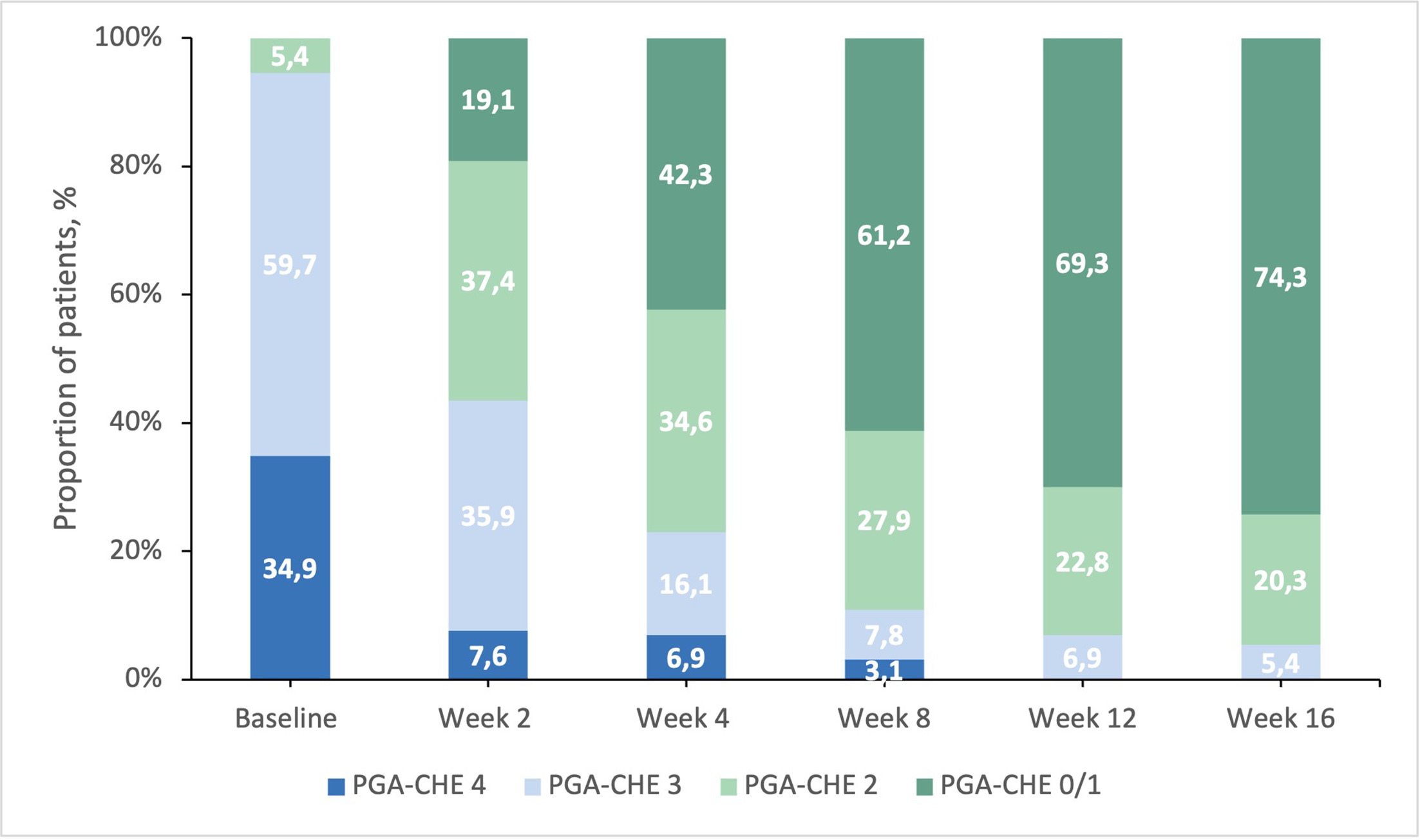
Fig. 1. Efficacy of delgocitinib on achievement of a Physician Global Assessment - Chronic Hand Eczema (PGA-CHE) score of 0 or 1 (“clear” or “almost clear”) from baseline at weeks 2, 4, 8, 12, and 16. Patients number for PGA-CHE was N=149 at week 2, N=130 at week 4, N=130 at week 8, and N=102 at week 12, and N=86 at week 16.
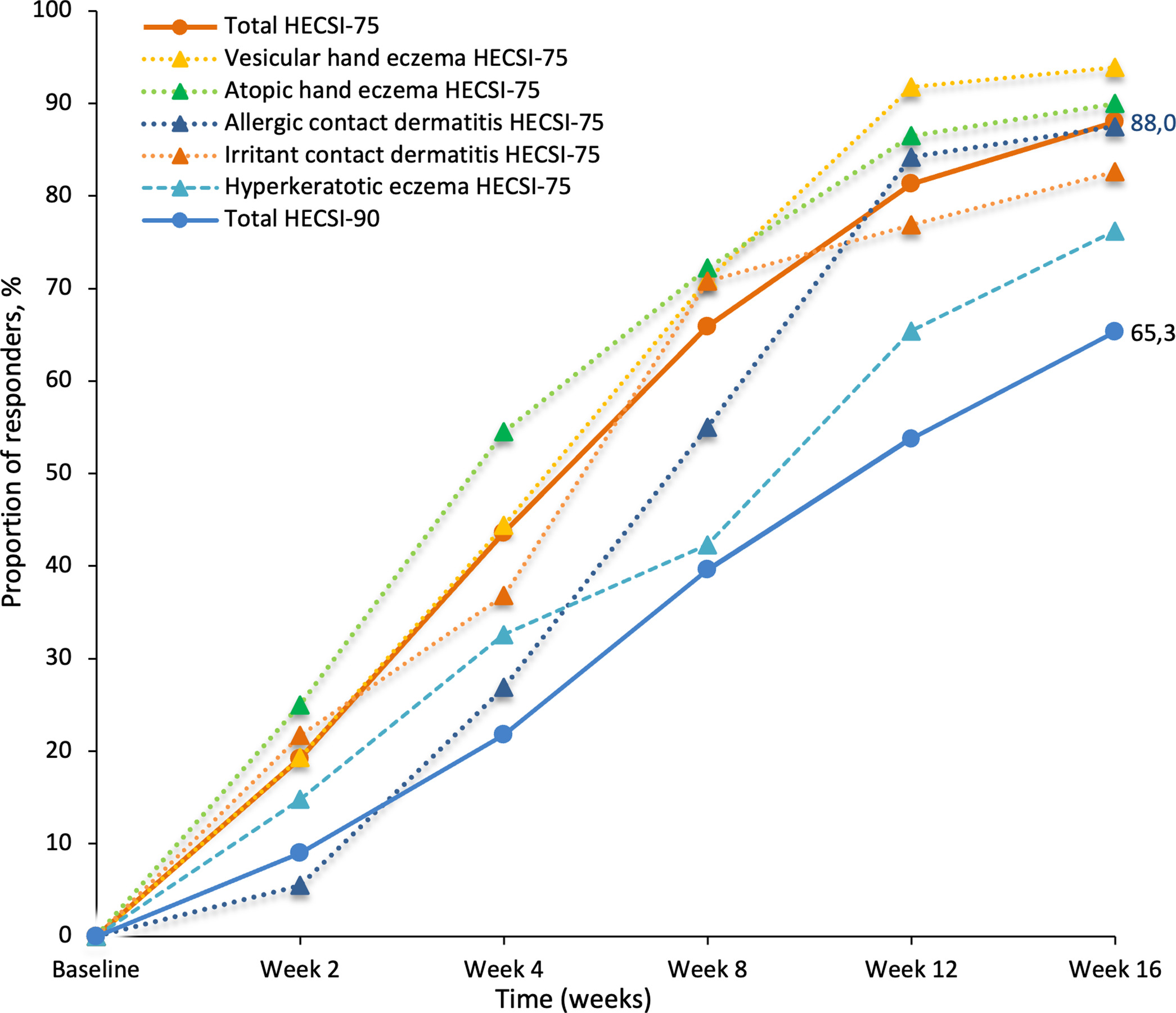
Fig. 2. Achievement of HECSI-75 total and by chronic hand ezcema subtypes and total Hand Eczema Severity Index (HECSI)-90 up to week 16.
HECSI-75 responses were consistently high across CHE subtypes, particularly in vesicular (94.0%) and atopic (90.0%) CHE, followed by ACD (87.5%), ICD (82.6%), and hyperkeratotic CHE (76.2%) (Fig. 2).
At week 4 (n=130), a ≥4-point reduction in PP-NRS and Pain-NRS was reported in 67.7% (n=88) and 51.7% (n=67) of patients, increasing significantly to 75.5% and 75.2% (n=65 for both; p<0.001) at week 16 (n=86). PP-NRS 0/1 and Pain-NRS 0/1 responses were observed in 43.8% (n=57) and 52.3% (n=68) of patients at week 4, rising to 74.4% (n=64) and 86.3% (n=74) at week 16, respectively (p<0.001). Mean improvements in the other patient-reported outcomes were significant from week 4 and increased through week 16 (Fig. 3). A DLQI ≥4-point improvement was achieved by 71.1% of patients at week 4 and 82.9% at week 16 (p=0.002). HESD PGI-S 0/1 increased from 45.6% at week 4 to 76.6% at week 16 (p<0.001). PGI-S pruritus and pain responses improved from 56.0% and 63.5% at week 4 to 81.2% and 82.4% at week 16, respectively (p<0.001).
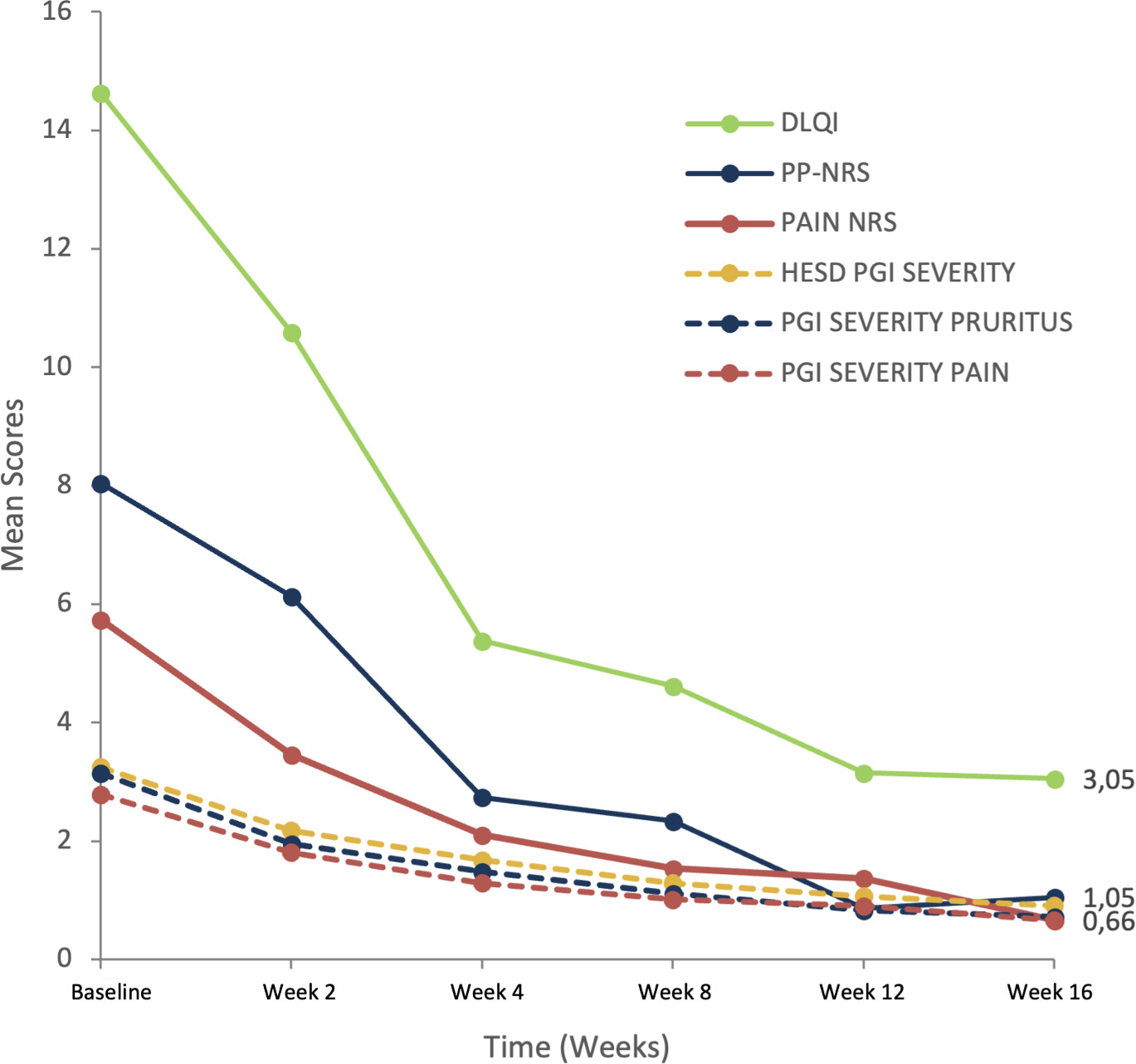
Fig. 3. Changes in mean patient-reported outcomes measures during follow-up. DLQI: Dermatology Life Quality Index; PP-NRS: Peak Pruritus-Numerical Rating Scale (NRS); HESD: Hand Eczema Symptom Diary; PGI: Patient Global Impression.
Treatment effectiveness by occupational exposure status is summarized in Table II. At week 4, non-occupationally exposed patients more frequently achieved a ≥4-point Pain-NRS reduction (64.3% vs 44.6%, p=0.04), PGI-S pain 0/1 (75.5% vs 56.8%, p=0.01), DLQI ≥4-point improvement (82.6% vs 64.6%, p=0.01) and DLQI 0/1 (39.1% vs 21.7%, p=0.02) compared with occupationally exposed patients. At week 8, responses remained higher, with significant differences for HECSI-75 (78.9% vs 56.6%, p=0.02), PP-NRS 0/1 (64.3% vs 41.9%, p=0.02) and HESD PGI-S 0/1 (90.2% vs 55.0%, p<0.001). By week 12, differences attenuated, although HECSI-90 remained higher in non-occupationally exposed patients (66.7% vs 44.2%, p=0.03). At week 16, outcomes were comparable except for PP-NRS 0/1 (88.6% vs 64.7%, p=0.009).
Eighteen patients (12.1%) discontinued delgocitinib, with comparable rates between occupationally and nonoccupationally exposed patients (11.8% vs 12.2%, p=1.000). Discontinuation occurred due to clinical remission (10/149; 6.7%) or primary inefficacy (8/149; 5.4%). Primary inefficacy involved ACD (5/149; 3.4%) and hyperkeratotic CHE (3/149; 2.0%).
Among patients who achieved PGA-CHE 0/1 at any time by Week 12 (n=86/149, 57.7%), 76 (88.4%) initiated a maintenance regimen, with 19 continuing twice-daily treatment, 18 reducing to once daily, 16 to twice-weekly, 12 to once-weekly and 11 adopting an on-demand regimen. While 72/76 patients (94.7%) maintained PGA-CHE 0/1 on the reduced maintenance regimen, 4 patients experienced clinical worsening requiring re-escalation of therapy.
Safety outcomes
Overall, AEs were rare (1/149; 0.7%): a mild local cutaneous reaction occurred in a nonoccupationally exposed patient (1/98; 1.0%), with no cases reported in occupationally exposed patients (0/51, 0.0%; p=1.000). No severe AEs were reported.
One patient (0.7%) of the occupationally exposed group (1/51, 1.9%), discontinued delgocitinib due to intolerance, while no discontinuations were reported among nonoccupationally exposed patients (0/98, 0.0%; p=0.34).
DISCUSSION
In this multicentre, prospective real-world study, delgocitinib rapidly improved CHE, with 75% of patients achieving clear/almost clear skin and no/minimal pruritus, and >80% achieving no/minimal pain, no/very mild patient-perceived disease severity, and improved quality of life by week 16. Responses were consistent across CHE subtypes, particularly vesicular and atopic CHE, supporting the effectiveness of delgocitinib in the heterogeneous CHE population. Although nonoccupationally exposed patients responded earlier than occupationally exposed patients, these differences attenuated by week 16. Treatment was well tolerated, with rare and no severe AEs reported.
Our findings are consistent with the phase III DELTA 1 and DELTA 2 trials, which demonstrated superior efficacy of delgocitinib vs vehicle in moderate-to-severe CHE, with week 16 improvements in IGA-CHE 0/1 (24.3%), HECSI-75 (49.4%), ≥4-point reduction in itch (47.2%), pain (48.9%) and DLQI (74.4% and 72.2% in DELTA 1 and DELTA 2, respectively), alongside improvements across CHE subtypes (20). Consistent with these findings, we observed early and sustained improvements in pruritus (≥4-point PP-NRS reduction: 67.7% at week 4, 75.5% at week 16), pain (51.7% to 75.2%), DLQI (71.1% to 82.9%), PGA-CHE 0/1 (42.3% to 74.3%) and HECSI-75 (43.8% to 88.0%), with high effectiveness maintained across CHE subtypes.
The progressive efficacy observed in our study aligns with the sustained outcomes reported in DELTA 3 (21). Although our follow-up was limited to 16 weeks, the increasing response rates over time suggest that continued treatment may further improve disease control, supporting delgocitinib as a potentially durable therapeutic option for CHE. Unlike DELTA trials, our study reflected real-world practice, with treatment individualized according to therapeutic response, including discontinuation or reduced-frequency regimens after complete skin clearance. However, real-world evidence on optimal long-term treatment strategies remains limited, and whether reduced-frequency maintenance, continuous treatment or on-demand use provides the best sustained disease control warrants further investigation.
Our results complement evidence from the phase III DELTA FORCE trial, in which delgocitinib demonstrated superiority over alitretinoin, the only approved systemic treatment for severe CHE in Europe (22). Delgocitinib achieved a greater least squares mean reduction in HECSI from baseline to week 12 vs alitretinoin (–67.6 [SE 3.4] vs –51.5 [3.4]), alongside a more favourable safety profile. These findings are particularly relevant given that our cohort included patients with longstanding, treatment-refractory disease (60.4%), some previously exposed to systemic alitretinoin (10.7%). Together, our findings further support delgocitinib as an effective steroid-sparing option for moderate-to-severe CHE, including difficult-to-treat populations.
A recent retrospective study by Weidinger et al., comparing delgocitinib with topical psoralen–ultraviolet A (PUVA), reported PGA 0/1 in over 80% of delgocitinib-treated patients and clinically meaningful DLQI reductions in 91% at week 12 (32). Consistent with these findings, approximately 70% of patients in our cohort achieved PGA 0/1 and 76% reached a≥4-point DLQI improvement at week 12. However, our multicentre design and broader patient population may better capture the heterogeneity of CHE encountered in clinical practice.
An additional finding of interest was the comparable treatment effectiveness between occupationally and nonoccupationally exposed patients, despite the higher burden of irritant exposure in occupational CHE. While persistent wet work or irritant contact may attenuate treatment response, delgocitinib remained effective in this subgroup. Nonoccupationally exposed patients showed a more rapid early improvement, particularly in ≥4-point reduction in pain and quality of life (64.3%, p=0.04 and 82.6%, p=0.01, respectively, at week 4), whereas differences between groups attenuated by week 16, suggesting that exposure-related variability diminishes over time.
Overall, efficacy-related discontinuations accounted for 12.1% of patients, due to clinical remission (6.7%) or primary inefficacy (5.4%). Primary inefficacy was observed in ACD (3.4%) and hyperkeratotic CHE (2.0%), suggesting a potential, albeit limited, subgroup with reduced responsiveness.
Safety outcomes were favourable, with rare (0.7%) and mild AEs, consisting of a single local cutaneous reaction and no severe AEs reported. Treatment discontinuation due to intolerance occurred in one patient. These findings are consistent with the safety profile reported in DELTA 1–3, supporting the favourable tolerability of topical delgocitinib compared with systemic therapeutic options (20, 21).
Some limitations include the observational design and absence of a control group, which limit causal inference and direct comparison with alternative therapies. The follow-up period was relatively short, and some subgroup analyses may have been underpowered.
Finally, differences in clinical management across participating centres may have introduced variability in treatment practices and follow-up assessments.
In conclusion, this multicentre, prospective real-world study confirms that delgocitinib is rapid acting, broadly effective and well tolerated in CHE, supporting its role in the management of this challenging disease.
REFERENCES
- Apfelbacher C, Bewley A, Molin S, Fargnoli MC, Giménez-Arnau AM, Brignoli L, et al. Prevalence of chronic hand eczema in adults: a cross-sectional survey of over 60 000 respondents from the general population of Canada, France, Germany, Italy, Spain and the UK. Br J Dermatol 2025; 192: 1047–1054. https://doi.org/10.1093/bjd/ljaf020
- Thyssen JP, Johansen JD, Linneberg A, Menné T. The epidemiology of hand eczema in the general population – prevalence and main findings *. Contact Derm 2010; 62: 75–87. https://doi.org/10.1111/j.1600-0536.2009.01669.x
- Thyssen JP, Schuttelaar MLA, Alfonso JH, Andersen KE, Angelova‐Fischer I, Arents BWM, et al. Guidelines for diagnosis, prevention, and treatment of hand eczema. Contact Derm 2022; 86: 357–378. https://doi.org/10.1111/cod.14035
- Molin S, Guttman-Yassky E, Thyssen JP, Bewley A. Chronic Hand Eczema, Real World, and Patient Centricity: A Narrative Review. Acta Derm Venereol 2025; 105: adv42596. https://doi.org/10.2340/actadv.v105.42596
- Agner T, Aalto-Korte K, Andersen KE, Foti C, Gimenéz-Arnau A, Goncalo M, et al. European Environmental and Contact Dermatitis Research Group. Classification of hand eczema. J Eur Acad Dermatol Venereo 2015; 29: 2417–2422. https://doi.org/10.1111/jdv.13308
- Rönsch H, Schiffers F, Ofenloch R, Weisshaar E, Buse AS, Hansen A, et al. Chronic hand eczema in Europe: Patient experiences and perspectives (CHEPEP) in qualitative interviews. Acad Dermatol Venereol 2023; 37: 1396–1405. https://doi.org/10.1111/jdv.19055
- Kouris A, Armyra K, Christodoulou C, Katoulis A, Potouridou I, Tsatovidou R, et al. Quality of life, anxiety, depression and obsessive‐compulsive tendencies in patients with chronic hand eczema. Contact Derm 2015; 72: 367–370. https://doi.org/10.1111/cod.12366
- Apfelbacher CJ, Ofenloch RF, Weisshaar E, Molin S, Bauer A, Mahler V, et al. Chronic hand eczema in Germany: 5‐year follow‐up data from the CARPE registry. Contact Derm 2019; 80: 45–53. https://doi.org/10.1111/cod.13113
- Elias PM. Epidermal lipids, barrier function, and desquamation. J Invest Dermatol 1983; 80 Suppl: 44s–49s. https://doi.org/10.1038/jid.1983.12
- Vindenes HK, Drengenes C, Amin H, Irgens-Hansen K, Svanes C, Bertelsen RJ. Longitudinal analysis of the skin microbiome in association with hand eczema, hand hygiene practices and moisturizer use. J Eur Acad Dermatol Venereol 2024; 38: 2118–2129. https://doi.org/10.1111/jdv.19906
- Lee GR, Maarouf M, Hendricks AK, Lee DE, Shi VY. Current and emerging therapies for hand eczema. Dermatol Ther 2019; 32: e12840. https://doi.org/10.1111/dth.12840
- Tancredi V, Buononato D, Caccavale S, Di Brizzi EV, Di Caprio R, Argenziano G, et al. New Perspectives in the Management of Chronic Hand Eczema: Lessons from Pathogenesis. Int J Mol Sci 2023; 25: 362. https://doi.org/10.3390/ijms25010362
- Ch’en PY, Lio PA. Nonsteroidal Approaches for Atopic Dermatitis®: A Clinical Update. Dermatitis 2024; 35: 596–604. https://doi.org/10.1089/derm.2023.0373
- Giménez-Arnau A, Bewley A, Apfelbacher C, Fargnoli MC, Rault B, Morillo A, et al. Physician-Reported Treatment Patterns in Moderate to Severe Chronic Hand Eczema: the RWEAL Multinational Medical Chart Review. Dermatol Ther (Heidelb) 2025; 15: 3577–3592. https://doi.org/10.1007/s13555-025-01534-8
- Ruzicka T, Lynde CW, Jemec GBE, Diepgen T, Berth-Jones J, Coenraads PJ, et al. Efficacy and safety of oral alitretinoin (9-cis retinoic acid) in patients with severe chronic hand eczema refractory to topical corticosteroids: results of a randomized, double-blind, placebo-controlled, multicentre trial. Br J Dermatol 2008; 158: 808–817. https://doi.org/10.1111/j.1365-2133.2008.08487.x
- Bissonnette R, Worm M, Gerlach B, Guenther L, Cambazard F, Ruzicka T, et al. Successful retreatment with alitretinoin in patients with relapsed chronic hand eczema. Br J Dermatol 2010; 162: 420–426. https://doi.org/10.1111/j.1365-2133.2009.09572.x
- Simpson EL, Silverberg JI, Worm M, Honari G, Masuda K, Syguła E, et al. Dupilumab treatment improves signs, symptoms, quality of life, and work productivity in patients with atopic hand and foot dermatitis: Results from a phase 3, randomized, double-blind, placebo-controlled trial. J Am Acad Dermatol 2024; 90: 1190–1199. https://doi.org/10.1016/j.jaad.2023.12.066
- Voorberg AN, Kamphuis E, Christoffers WA, Schuttelaar MLA. Efficacy and safety of dupilumab in patients with severe chronic hand eczema with inadequate response or intolerance to alitretinoin: a randomized, double-blind, placebo-controlled phase IIb proof-of-concept study. Br J Dermatol 2023; 189: 400–409. https://doi.org/10.1093/bjd/ljad156
- Blaya Imbernón D, Finello M, Peñuelas Leal R, Labrandero Hoyos C, Grau Echevarría A, Pérez Zafrilla E, et al. Tralokinumab for Chronic Hand Eczema: A 52 Week Observational Case Series. J Cutan Med Surg 2026: 12034754261431747. https://doi.org/10.1177/12034754261431747
- Bissonnette R, Warren RB, Pinter A, Agner T, Gooderham M, Schuttelaar MLA, et al. Efficacy and safety of delgocitinib cream in adults with moderate to severe chronic hand eczema (DELTA 1 and DELTA 2): results from multicentre, randomised, controlled, double-blind, phase 3 trials. Lancet 2024; 404: 461–473. https://doi.org/10.1016/S0140-6736(24)01027-4
- Gooderham M, Molin S, Bissonnette R, Worm M, Crépy MN, Stingeni L, et al. Long-term safety and efficacy of delgocitinib cream for up to 52 weeks in adults with Chronic Hand Eczema: Results of the phase 3 open-label extension DELTA 3 trial following the DELTA 1 and 2 trials. J Am Acad Dermatol 2025; 93: 95–103. https://doi.org/10.1016/j.jaad.2025.03.008
- Giménez-Arnau AM, Pinter A, Sondermann W, Reguiai Z, Woolf R, Lynde C, et al. Efficacy and safety of topical delgocitinib cream versus oral alitretinoin capsules in adults with severe chronic hand eczema (DELTA FORCE): a 24-week, randomised, head-to-head, phase 3 trial. Lancet 2025; 405: 1676–1688. https://doi.org/10.1016/S0140-6736(25)00001-7
- World Medical Association. World Medical Association Declaration of Helsinki: Ethical Principles for Medical Research Involving Human Participants. JAMA 2025; 333: 71–74. https://doi.org/10.1001/jama.2024.21972
- European Medicines Agency. Anzupgo® (delgocitinib): Summary of Product Characteristics. 2025. Available from: https://www.ema.europa.eu/en/medicines/human/EPAR/anzupgo?utm_source=chatgpt.com
- STROBE statement. [cited 2023 March 1]. Available from: https://www.strobe-statement.org/checklists/cohort-studies
- Silverberg JI, Agner T, Baranowski K, Plohberger U, Thoning H, Arbuckle R, et al. Validation of the Investigator Global Assessment of Chronic Hand Eczema (IGA-CHE): a new clinician reported outcome measure of CHE severity. Arch Dermatol Res 2024; 316: 110. https://doi.org/10.1007/s00403-024-02818-3
- Yüksel YT, Agner T, Ofenloch R. New evidence on the minimal important change (MIC) for the Hand Eczema Severity Index (HECSI). Contact Derm 2021; 85: 164–170. https://doi.org/10.1111/cod.13828
- Yosipovitch G, Reaney M, Mastey V, Eckert L, Abbé A, Nelson L, et al. Peak Pruritus Numerical Rating Scale: psychometric validation and responder definition for assessing itch in moderate-to-severe atopic dermatitis. Br J Dermatol 2019; 181: 761–769. https://doi.org/10.1111/bjd.17744
- Molin S, Larsen LS, Joensson P, Oesterdal ML, Arbuckle R, Grant L, et al. Development and Psychometric Validation of a Patient-Reported Outcome Measure to Assess the Signs and Symptoms of Chronic Hand Eczema: The Hand Eczema Symptom Diary (HESD). Dermatol Ther (Heidelb) 2024; 14: 643–669. https://doi.org/10.1007/s13555-024-01114-2
- Basra MKA, Salek MS, Camilleri L, Sturkey R, Finlay AY. Determining the minimal clinically important difference and responsiveness of the Dermatology Life Quality Index (DLQI): further data. Dermatology 2015; 230: 27–33. https://doi.org/10.1159/000365390
- Ito T, Sugasawa S. Grouped generalized estimating equations for longitudinal data analysis. Biometrics 2023; 79: 1868–1879. https://doi.org/10.1111/biom.13718
- Weißinger S, Oppel E, Kurzen N, Ertl C, Tomsitz D, Pumnea T, et al. A Retrospective Real-World Comparison of Topical Delgocitinib and Localized Cream Psoralen-Ultraviolet A in Chronic Hand Eczema. Dermatol Ther (Heidelb) 2026; 16: 2447–2463. https://doi.org/10.1007/s13555-026-01705-1