SHORT COMMUNICATION
OX40/OX40L Inhibitors in Atopic Dermatitis: Current Evidence on Short-term Safety
Kian KARIMIAN1, Daniel ISUFI2,3, Mikkel Bak JENSEN1,4, Raj CHOVATIYA5,6, Christopher G. BUNICK7,8, Tiago TORRES9,10, Jakob Ferløv Baselius SCHWENSEN1,4 and Nikolai LOFT2,3*
1National Allergy Research Centre, Department of Dermatology and Allergy, Herlev and Gentofte Hospital, Herlev, Denmark, 2Department of Dermatology and Allergy, Herlev and Gentofte Hospital, University of Copenhagen, Herlev, Denmark, 3Copenhagen Research Group for Inflammatory Skin, Herlev and Gentofte Hospital, Hellerup, Denmark, 4Institute of Clinical Medicine, Faculty of Health and Medical Sciences, University of Copenhagen, Copenhagen, Denmark, 5Department of Medicine, Chicago Medical School, Rosalind Franklin University of Medicine and Science, North Chicago, IL, United States, 6Center for Medical Dermatology and Immunology Research, Chicago, IL, USA, United States, 7Department of Dermatology, Yale School of Medicine, New Haven, CT, United States, 8Program in Translational Biomedicine, Yale School of Medicine, New Haven, CT, United States, 9Department of Dermatology, Centro Académico Clínico ICBAS/Santo António, Porto, Portugal, and 10Instituto de Ciências Biomédicas Abel Salazar, University of Porto, Porto, Portugal. *Email: nikolai.nguyen.loft@regionh.dk
Citation: Acta Derm Venereol 2026; 106: adv-2026-0665. DOI: https://doi.org/10.2340/actadv.v106.adv-2026-0665.
Copyright: 2026 ©Author(s). Published by MJS Publishing, on behalf of the Society for Publication of Acta Dermato-Venereologica. This is an Open Access article distributed under the terms of the Creative Commons Attribution 4.0 International License (https://creativecommons.org/licenses/by/4.0/).
Submitted: May 6, 2026. Accepted after revision: Sept 9, 2026.
Published: Oct 12, 2026.
Competing interests and funding: The data that support the findings of this study are available from the corresponding author upon reasonable request.
The OX40 pathway has been targeted by multiple investigational advanced therapies for atopic dermatitis (AD), showing promising efficacy with the potential for disease modification over time (1, 2, 3, 4, 5, 6, 7). These treatments target either the OX40 receptor directly on activated T-cells (rocatinlimab and telazorlimab) or the OX40 ligand (OX40L) expressed on antigen-presenting cells (amlitelimab) to reduce T-cell activity and rebalance T-cell-mediated immune dysregulation. As these novel therapies approach clinical application, understanding their short-term safety is important. Thus, this study evaluates the safety of OX40/OX40L inhibitors in published randomized controlled trials (RCTs) in patients with AD.
MATERIALS AND METHODS
PubMed, Embase and Web of Science were systematically searched using search terms (Table SI) for OX40 treatments in AD (PROSPERO; CRD420251171265). Seven studies including 1 conference abstract (n=3,501 patients) were included for final analysis (1, 2, 3, 4, 5, 6, 7) (Fig. 1, Tables SII-SIII).
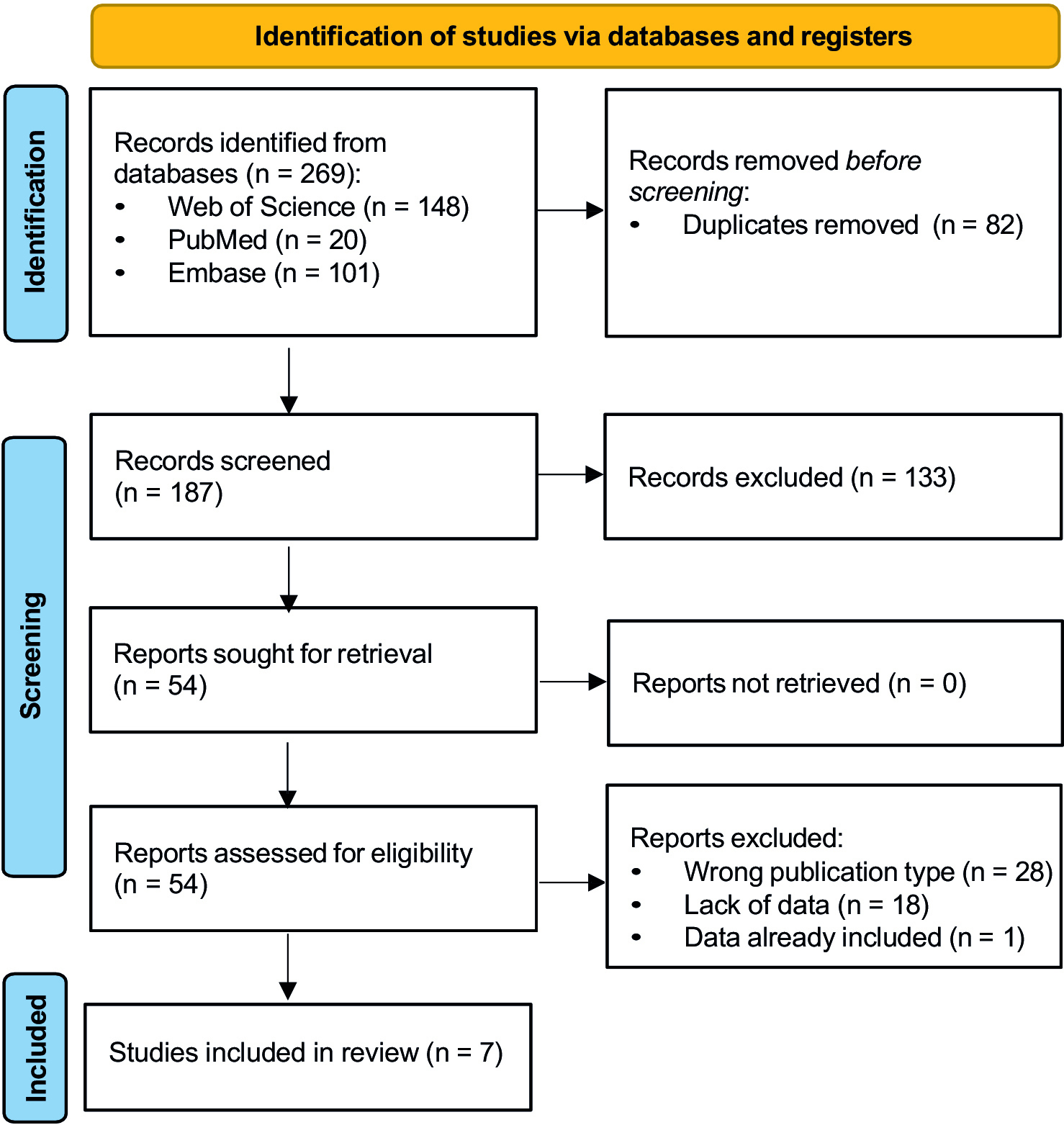
Fig. 1. Flowchart of study selection
Risk of bias was assessed using Cochrane RoB 2 (Table SIV). Due to significant clinical and methodological heterogeneity across the included trials, including variations in drug targets, study phases, treatment durations, baseline clinical characteristics and the use of concomitant therapies, a pooled quantitative meta-analysis was not performed. Since data were not pooled, formal statistical heterogeneity testing (e.g. I2 statistics) was not applicable. Consequently, the findings are presented as a systematic review (Table SV).
RESULTS
Amlitelimab
Data for amlitelimab were reported in 1 phase 2a (2) and 1 phase 2b trial (4) (n=370 patients). The proportions of patients experiencing any AEs were 54.2% (2) (69.0% for placebo) and 66.9% (4) (60.3% for placebo). The most frequently reported AEs were nasopharyngitis (8.5% (2) and 10.9% (4)), headache (5.1% (2) and 6.1% (4)), upper respiratory tract infection (5.1% (2)) and pyrexia (3.4% (2)). The rates of serious adverse events (SAEs) were 1.7% (2) and 2.6% (4). Reported SAEs included an infected dermal cyst (n=1 (2)). The discontinuation rate due to AEs was 4.5% (4). These included bullous dermatitis and elevated liver enzymes (4).
Rocatinlimab
Data for rocatinlimab were reported in 1 phase 2b (1) and 3 phase 3 trials (6, 7) (n=1,816 patients). The proportions of patients experiencing any AEs ranged from 68.2% to 81.0% (1, 6, 7) (63.3% to 71.9% for placebo). The most frequent AEs were pyrexia (10.3% to 16.7% (1, 6)), nasopharyngitis (8.8% to 13.9% (1, 6)), headache (7.2% to 8.8% (1, 6)) and chills (3.7% to 11.1% (1, 6)). Pyrexia events were generally mild to moderate, occurred predominantly after the initial dose and did not result in discontinuation (1, 6). SAEs occurred in 1.8% (6), 3.7% (1), 3.7% (7) and 3.9% (6) of patients. Reported SAEs included musculoskeletal events (n=5 (6)), gastrointestinal ulceration (n=3 (6)), appendicitis (n=2 (6)), cellulitis (n=2 (6)) and anaphylactic reactions (n=2 (6)). Discontinuation due to AEs occurred in 1.4% (7), 2.0% (6), 2.6% (6) and 8.8% (1) of patients. These included exacerbation of atopic dermatitis (6), aphthous ulcers (6), headache (6), ileal ulcer (6) and anal abscess (1).
Telazorlimab
Data for telazorlimab were reported in 1 phase 2a (5) and 1 phase 2b trial (3) (n=352 patients). The overall rates of AEs were 63.0% (5) (62.5% for placebo) and 66.0% (3) (60.4% for placebo). The most common AEs observed were nasopharyngitis (8.2% (3) and 8.7% (5)), upper respiratory tract infection (6.9% (3) and 8.7% (5)), and headache (5.9% (3) and 13.0% (5)). Pyrexia was not registered in any of the studies. SAEs were reported in 2.6% (3) of patients. Reported SAEs included viral infection (n=1 (3)), exacerbations of AD (n=4 (3)), fatal hypertension (n=1 (3)) and coronary artery occlusion (n=1 (5)). The fatal hypertension, coronary artery occlusion and 2 of the AD exacerbations were not considered treatment related. The discontinuation rate due to AEs was 1.3% (3), and these included paresthesia, pernicious anaemia and thrombocytosis (3).
DISCUSSION
Due to the clinical and methodological heterogeneity among trials, direct comparisons of these therapies must be interpreted with caution. AEs were generally higher for active arms compared to placebo, except1 rocatinlimab phase 3 study which reported comparable proportions (69.8% vs 69.3%) (6). Notably, pyrexia patterns differed by drug design. Rocatinlimab, an afucosylated IgG1 antibody enhanced for antibody-dependent cellular cytotoxicity (ADCC) showed a higher reported occurrence of pyrexia. In contrast, telazorlimab (nonafucosylated IgG1) showed no pyrexia, and amlitelimab (nondepleting IgG4) showed lower rates. This suggests that rapid cell depletion driven by enhanced ADCC may be related to this AE rather than OX40 receptor binding or standard IgG1 activity. However, further investigation is required. While most studies reported higher SAE rates in active arms, two rocatinlimab phase 3 trials (6) found lower rates (1.8% and 3.9%) compared to placebo (4.4% and 5.5%).
Despite reassuring early trial data, post-trial monitoring revealed imbalances in infection and Kaposi sarcoma occurrences, prompting Kyowa Kirin to discontinue rocatinlimab development (8). The development of Kaposi sarcoma, driven by human herpesvirus 8 (HHV-8), suggests that prolonged OX40 blockade may impair T-cell-mediated immunosurveillance, which is necessary for controlling latent viral infections. These safety signals necessitate a reevaluation of the balance between targeted immunomodulation and broader immunosuppression with OX40/OX40L blockade. Furthermore, Sanofi recently discontinued the clinical development of amlitelimab for AD, concluding that the totality of efficacy and safety evidence did not represent a meaningful improvement over the current standard of care (9). This highlights the potential need for pretreatment screening and vaccination protocols. Future analyses must prioritize characterizing the specific clinical context of SAEs.
This study has several limitations, primarily the small number of trials and short evaluation periods (12 to 24 weeks), which precluded long-term safety assessment. Additionally, phase 3 data were available only for rocatinlimab, whereas amlitelimab and telazorlimab were restricted to phase 2 trials, limiting comparability across treatments. Furthermore, although a conference abstract provides less comprehensive data that have not undergone full peer review, its inclusion was deemed necessary to capture the most up-to-date Phase 3 safety landscape. Importantly, the data originate from a randomized controlled trial that is governed by strict ICH GCP reporting standards. This ensures that the findings remain relevant for understanding the current safety profile.
Although there were more AEs in the active arms, most were mild. However, severe safety signals must be addressed, particularly Kaposi sarcoma, which halted the development of rocatinlimab.
REFERENCES
- Guttman-Yassky E, Simpson EL, Reich K, Kabashima K, Igawa K, Suzuki T, et al. An anti-OX40 antibody to treat moderate-to-severe atopic dermatitis: a multicentre, double-blind, placebo-controlled phase 2b study. Lancet 2023; 401: 204–214. https://doi.org/10.1016/S0140-6736(22)02037-2
- Weidinger S, Bieber T, Cork MJ, Reich A, Wilson R, Quaratino S, et al. Safety and efficacy of amlitelimab, a fully human nondepleting, noncytotoxic anti-OX40 ligand monoclonal antibody, in atopic dermatitis: results of a phase IIa randomized placebo-controlled trial. Br J Dermatol 2023; 189: 531–539. https://doi.org/10.1093/bjd/ljad240
- Rewerska B, Sher LD, Alpizar S, Pauser S, Pulka G, Mozaffarian N, et al. Phase 2b randomized trial of OX40 inhibitor telazorlimab for moderate-to-severe atopic dermatitis. J Allergy Clin Immunol Glob 2024; 3: 100195. https://doi.org/10.1016/j.jacig.2023.100195
- Weidinger S, Blauvelt A, Papp KA, Reich A, Lee CH, Worm M, et al. Phase 2b randomized clinical trial of amlitelimab, an anti-OX40 ligand antibody, in patients with moderate-to-severe atopic dermatitis. J Allergy Clin Immunol 2025; 155: 1264–1275. https://doi.org/10.1016/j.jaci.2024.10.031
- Guttman-Yassky E, Pavel AB, Zhou L, Estrada YD, Zhang N, Xu H, et al. GBR 830, an anti-OX40, improves skin gene signatures and clinical scores in patients with atopic dermatitis. J Allergy Clin Immunol 2019; 144: 482–493. https://doi.org/10.1016/j.jaci.2018.11.053
- Guttman-Yassky E, Kabashima K, Worm M, Luna PC, Hong HCH, Chovatiya R, et al. Efficacy and safety of rocatinlimab for the treatment of moderate-to-severe atopic dermatitis in ROCKET-IGNITE and ROCKET-HORIZON: two global, double-blind, placebo-controlled, randomised phase 3 clinical trials. Lancet 2026; 407: 53–66. https://doi.org/10.1016/S0140-6736(25)01865-3
- Simpson EL, Gooderham M, de Bruin MS, Armstrong A, Warren RB, Geng B, et al. 223 Rocatinlimab with concomitant topical therapy significantly improved clinical signs and symptoms of atopic dermatitis in adults: results from the phase 3 ROCKET-SHUTTLE Trial. J Invest Dermatol 2025; 145: e66. https://doi.org/10.1016/j.jid.2025.09.227
- Kirin K. Kyowa Kirin announces discontinuation of rocatinlimab clinical trials. 2026. [cited 2026 April 20]. Available from: https://ir.kyowakirin.com/en/news/news-2560625228719159862/main/0/link/e20260303_01.pdf
- Sanofi. Sanofi announces decision not to submit amlitelimab in atopic dermatitis for global regulatory reviews. 2026. [cited 2026 August 31]. Available from: https://www.sanofi.com/assets/dotcom/pressreleases/2026/2026-07-24-05-30-00-3332696-en.pdf