ORIGINAL REPORT
Patient Journey, HS Burden and Unmet Need across Denmark and Norway: Real-World Data from the HISREG Registry
Anne-Marte HENRIKSEN1*†, Øystein GRIMSTAD1,2†, Ana Filipa MACEDO3, Thrasyvoulos TZELLOS2,4,5, Ditte Marie L. SAUNTE5,6,7,8, Inger Marie SKOIE9, Ingrid SNEKVIK10, Tanja TRAN3, Johan L. HANSEN11,12, Aijing SHANG13 and Gregor B. JEMEC5,6,7,8
1University Hospital of North-Norway, Tromsø, Norway, 2Department of Clinical Medicine, Faculty of Health Sciences, UiT - The Arctic University of Norway, Tromsø, Norway, 3UCB, Brussels, Belgium, 4Department of Dermatology, Nordland Hospital Trust, Bodø, Norway, 5European Hidradenitis Suppurativa Foundation (EHSF) e.V., Dessau, Germany, 6Department of Dermatology, Zealand University Hospital, Roskilde, Denmark, 7Department of Allergy and Dermatology, Herlev-Gentofte University Hospital, Gentofte, Denmark, 8Department of Clinical Medicine, Faculty of Health and Medical Sciences, University of Copenhagen, Copenhagen, Denmark, 9Department of Dermatology, Stavanger University Hospital, Stavanger, Norway, 10Department of Dermatology, St. Olavs Hospital, Trondheim, Norway, 11Quantify Research, Stockholm, Sweden, 12Institute of Health and Society, Faculty of Medicine, University of Oslo, Oslo, Norway, and 13UCB, Basel, Switzerland
†These authors contributed equally to this work.
Corr: Anne-Marte Henriksen, Department of Dermatology, University Hospital of North-Norway, Box 100, NO-9038 Tromsø, Norway. *Email: anne-marte.henriksen@unn.no
Key words: disease burden; hidradenitis suppurativa; quality of life; treatment need.
Citation: Acta Derm Venereol 2026; 106: adv-2026-0505. DOI: https://doi.org/10.2340/actadv.v106.adv-2026-0505.
Copyright: 2026 ©Author(s). Published by MJS Publishing, on behalf of the Society for Publication of Acta Dermato-Venereologica. This is an Open Access article distributed under the terms of the Creative Commons Attribution-NonCommercial 4.0 International License (https://creativecommons.org/licenses/by-nc/4.0/).
Submitted: Mar 17, 2026. Accepted after revision: Sept 9, 2026.
Published: Nov 4, 2026.
Competing interests and funding: This study was funded by UCB. Support for third-party writing assistance for this article, provided by Costello Medical, UK, was funded by UCB in accordance with Good Publication Practice (GPP 2022) guidelines (https://www.ismpp.org/gpp-2022).
Data from non-interventional studies is outside of UCB’s data sharing policy and is unavailable for sharing.
The analysis was approved by the HISREG steering committee, to which all authors (excepting JLH, AFM, TTr, AS) belong. Non-HISREG committee authors (AFM, TTr, AS) had access to non-identifiable aggregated results only; JLH had access to identifiable individual-level data for analysis. No identifiable individual-level data are presented or available in the manuscript. The work was performed according to the Declaration of Helsinki. Ethical assessment and approval were provided by the Norwegian ethics board (655118) and the Swedish ethics board (2024-00695-01; ethical approval in Sweden was required for data analysis by the Sweden-based contract research organisation).
AMH: Advisory board fees from Almirall, Novartis and UCB. ØG: No disclosures to declare. AFM: Contractor for UCB. TT: Consultancy/advisory boards/speaker fees from AbbVie, Boehringer Ingelheim, Novartis and UCB; treasurer of the European Hidradenitis Suppurativa Foundation e.V. DMLS: Personal honoraria and travel grants from AbbVie, Galderma, Janssen, LEO Pharma, Novartis, Pfizer, Sanofi and UCB outside the submitted work. IMS: Advisory board honoraria from AbbVie, Almirall and UCB; speaker honoraria from LEO Pharma and UCB. IS: Investigator fees and advisory board honoraria received by department from UCB. TTr, AS: Employees and shareholders of UCB. JLH: Employee of Quantify Research. GBJ: Honoraria from AbbVie, Boehringer Ingelheim, ChemoCentryx, Incyte, Janssen, LEO Pharma, Novartis and UCB for participation on advisory boards; investigator for AbbVie, CSL, InflaRx, Janssen, LEO Pharma, Novartis, Regeneron, Sanofi and UCB; speaker honoraria from AbbVie and Novartis; research grants from LEO Pharma and Novartis.
Patients with hidradenitis suppurativa experience considerable disease burden and reduced health-related quality of life (HRQoL). Diagnostic delays are common and may impede timely treatment initiation, contributing to disease progression. This study utilizes data (2010–2022) from the Scandinavian Registry for hidradenitis suppurativa (HISREG) in adult patients with hidradenitis suppurativa. Here, we report time between first hidradenitis suppurativa-related symptom, general practitioner visit and dermatologist visit; Dermatology Life Quality Index (DLQI) score and most impacted items; and hidradenitis suppurativa treatment patterns in Denmark, Norway and both countries combined. Analysis was stratified by Hurley stage. In both countries combined, considerable gaps (≥10 years) were reported between first hidradenitis suppurativa-related symptom and dermatologist visit, with the greatest delay in Hurley stage III patients (14 years). Mean DLQI scores ranged from 8.6 to 14.6; scores were highest in Hurley stage III patients. The most impacted DLQI items were “Itch/soreness/pain” or “Bothered/embarrassed”. Surgery was more common in Hurley stage III vs I patients (30.1% vs 10.6%); 8.6% of Hurley stage III patients did not receive additional intervention for hidradenitis suppurativa (doctor-determined). In conclusion, HISREG-registered patients experienced substantial delays to dermatologist visits, impaired HRQoL and a paucity of effective treatments. These burdens were particularly pronounced for patients with moderate and severe hidradenitis suppurativa.
SIGNIFICANCE
Patients with the skin condition hidradenitis suppurativa often experience painful lesions that significantly impair their health-related quality of life (HRQoL) and frequently encounter delays in diagnosis. This study assessed the gaps between HS symptom onset and healthcare practitioner visits, HRQoL and treatment patterns in patients with hidradenitis suppurativa in Denmark and Norway to describe the patient journey, burden and unmet need. This builds upon recent research characterizing hidradenitis suppurativa burden and emphasizes the HRQoL impairment experienced by patients with moderate and severe hidradenitis suppurativa. Identifying unmet treatment needs encourages further research to address these challenges and improve patients’ HRQoL.
INTRODUCTION
Hidradenitis suppurativa (HS) is a chronic, inflammatory skin disease which can significantly impact the lives of those affected (1). Symptoms, including painful lesions, can lead to irreversible structural tissue damage as disease progresses (2, 3). Patients with HS experience considerable impairment to their health-related quality of life (HRQoL) and report disruption to work and education due to disabling symptoms (4, 5).
Diagnostic delay is a challenge in HS, with studies reporting a ≥10 year mean delay from symptom onset to diagnosis (5, 6). A previous study reported that engagement with a dermatologist is the strongest predictor of receiving HS treatment (7), though most patients reported that access to a dermatologist – the clinician most likely to diagnose and manage HS (6) – was difficult or very difficult (5). Together, diagnostic delay and difficulty accessing a dermatologist likely contribute to disease progression and worsened HRQoL (6). Earlier dermatologist referral could enable prompt therapeutic intervention which may improve patient outcomes.
The Scandinavian Registry for HS (HISREG) was established in 2012 and data reporting commenced in 2013 (8). The registry aims to collect real-world data to enable improvements in HS treatment and care. This study utilizes HISREG data collected from registry initiation through to 2022 in Denmark and Norway to highlight the challenges faced by patients with HS. Here, time to first HS symptom, general practitioner (GP) visit and dermatologist visit; medication use (including biologics); surgeries; and patient HRQoL are reported to characterize the journey, burden and unmet needs of patients with HS in regions of Scandinavia.
MATERIALS AND METHODS
Patients
All HISREG-enrolled patients based in Denmark and Norway were adults (≥18 years of age), diagnosed by a dermatologist and receiving ongoing medical or surgical treatment for HS in the specialist health service. Official registry entry began in 2012, though 2 patients’ data were retrospectively included from 2010, thus the study period is stated as 2010–2022 throughout this report. All patients consented to registration.
Study design
A noninterventional cross-sectional analysis was conducted based on secondary use of HISREG registry data from adults in Denmark and Norway (2010–2022) (8).
Study procedures and evaluations
Data are reported for patients in the overall study population, comprising combined data from Denmark and Norway (both countries combined), and for Denmark and Norway separately.
At registry entry, patient characteristics (sex, age, Hurley stage, body mass index [BMI], smoking status, education and work status) were assessed.
The time between first HS-related symptom, GP visit and dermatologist visit was reported by the patient upon registration. Median patient age at each of these events is reported and also stratified by Hurley stage in both countries combined.
Prior to treatment initiation, HRQoL over the previous 7 days was assessed using the Dermatology Life Quality Index (DLQI), with patient responses reported by mean DLQI total score (range: 0–30) and DLQI item. The DLQI consists of 10 items which assess patients’ perceived impact of skin symptoms on their daily life (9). The DLQI questionnaire was structured with each item having up to four alternative responses: “Not at all”, “A little”, “A lot”/“Much” or “Very much” with corresponding scores of 0, 1, 2 and 3, respectively (9, 10). The answer “Not applicable”, is scored as “0”. The impact of the DLQI items was assessed by calculating the sum of the proportions of patients answering “Much” and “Very much” for each item, with larger values indicating a greater impact.
HS treatment patterns included reporting on medical and surgical interventions and the absence of additional interventions, as determined by the doctor. Patients who did not receive additional interventions continued any ongoing treatment regimen initiated prior to HISREG enrolment. The proportions of patients receiving specific types of medical (single regimens, analgesics, antibiotics, anti-inflammatory, biologic and topical medicines) and surgical (CO2 laser, deroofing, excision closed with suture, excision with open granulation and secondary healing, excision with subsequent skin grafting, multiple surgeries, other and unknown) interventions are also reported for patients in both countries combined and separately for Denmark and Norway.
Statistical analysis
DLQI outcomes and HS treatment patterns for patients in both countries combined are stratified by Hurley stage.
Data were analysed using descriptive statistics. No imputation of missing values was performed; missing responses were quantified and presented. Data cleaning, management and analysis were performed using RStudio 2024.04.0. HISREG provided data access. Due to its observational nature, data collection from routine clinical practice was subject to missing values and entry errors, which can limit result validity. HISREG registry data quality was closely monitored to ensure accuracy and completeness and minimize the bias risk.
RESULTS
Patient characteristics and baseline demographics
Of the 3,067 patients enrolled in HISREG from 2010 to 2022, 558 were from Denmark (1 site) and 2,509 were from Norway (11 sites).
Patient characteristics and baseline demographics for both countries combined, and for Denmark and Norway separately, are reported in Table I. Baseline characteristics were generally similar between patients in Denmark and Norway, though lower proportions of patients in Denmark had severe disease vs those in Norway.
Table I. Patient characteristics and baseline demographics at HISREG entry
In both countries combined, mean patient age was 40.5 years, and 76.4% of patients were female, 45.4% were current smokers and 41.1% had a BMI≥30 kg/m2. Of note, 6.1% of patients reported being unemployed while 7.9% of patients reported being on sick leave.
Age at first symptom, GP visit and dermatologist visit
Median age of patients at their first HS-related symptom, GP visit and dermatologist visit were assessed. For patients in both countries combined, the median age at first symptom was 20 years (Fig. 1A). A difference in median age of 2 years was observed between first symptom and first GP visit and 11 years between first symptom and first dermatologist visit for patients in both countries combined. Comparable delays were seen in Denmark and Norway separately, with similar median ages at each event observed between the two cohorts.

Fig. 1. Age at first symptom, first GP visit and first dermatologist visit in patients with HS. Both countries: Missing data, n: age at first symptom, 71; age at first GP visit, 891; age at first dermatologist visit, 1,020. Denmark: Missing data, n: age at first symptom, 2; age at first GP visit, 189; age at first dermatologist visit, 214. Norway: Missing data, n: age at first symptom, 69; age at first GP visit, 702; age at first dermatologist visit, 806. Both countries, Hurley stage I: missing data, n: age at first symptom: 13; age at first GP visit: 139; age at first dermatologist visit: 151. Both countries, Hurley stage II: missing data, n: age at first symptom: 36; age at first GP visit: 651; age at first dermatologist visit: 105. Both countries, Hurley stage III: missing data, n: age at first symptom: 12; age at first GP visit: 80; age at first dermatologist visit: 743.
In both countries combined, patients of any Hurley stage (I–III) uniformly reported a median age of 20 years at the onset of first symptom (Fig. 1B). For patients who were Hurley stage I, differences in median ages between first symptom and first GP visit, and first symptom to first dermatologist visit were 4 and 11 years, respectively. For patients who were Hurley stage II, these were 2 and 10 years, and for Hurley stage III patients, these were 2 and 14 years, respectively.
Health-related quality of life
HRQoL of patients with HS was assessed using DLQI. For patients in both countries combined, mean (standard deviation [SD]) DLQI total scores were 11.3 (7.5); scores were similar between Denmark and Norway separately. In both countries combined, mean DLQI score tended to increase with increasing Hurley stage.
In Denmark and Norway, approximately half of patients answered “Much” or “Very much” regarding the impact of HS-related “Itch/soreness/pain” in the last week (Fig. 2A and B). The five most impacted DLQI items (summed across respondents answering “Much” or “Very much”) in both countries combined were “Itch/soreness/pain”, “Bothered/embarrassed”, “Impact on choice of clothing”, “Sexual problems” and “Impact on social life”, with identical rankings in Denmark and Norway separately (Fig. 2). Patients in Denmark reported a greater impact of their HS on daily activities than on problems in the last week, whereas the opposite pattern was observed in Norway (Fig. 2).
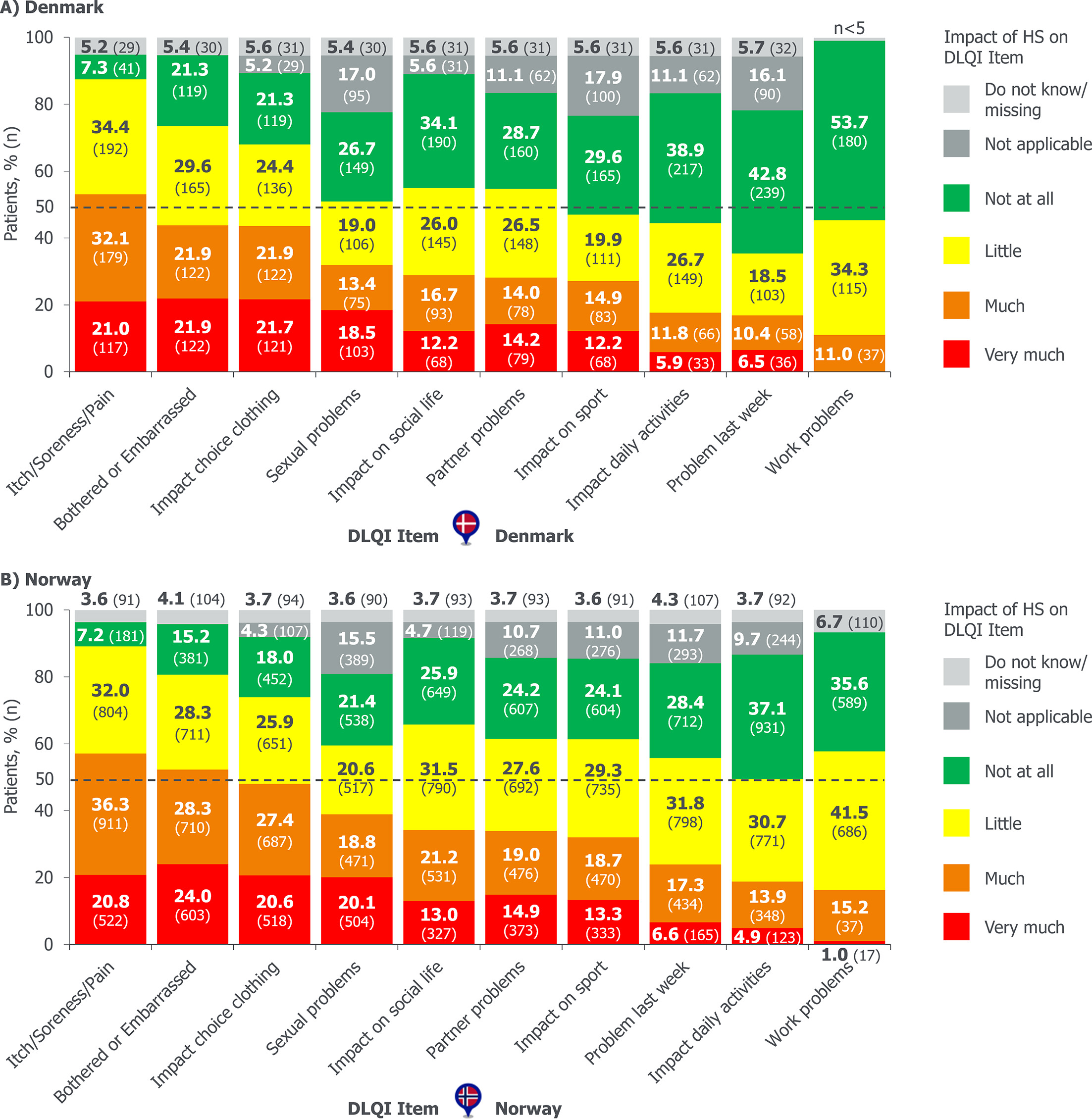
Fig. 2. Proportions of patients reporting the impact of HS on each DLQI item. Due to rounding of proportions across multiple categories, values may not add up to exactly 100%. Dashed line represents 50%. Items presented in decreased order of impact, with impact being measured by the sum of the proportions of patients answering ‘Much’ or ‘Very much’ for each item. Where n<5, exact n numbers have not been reported to protect patient anonymity. ‘Not applicable’ was not included as an option for the ‘Work problems’ DLQI item as only patients who answered ‘No’ to the question ‘Has your skin prevented you from working or studying in the last week?’ (n=1,653) were asked this question; HS prevented work in 10.6% (266) patients, was not applicable to 19.5% (486) patients and 4.0% (101) patients answered ‘Do not know’ or had missing data. ‘Not applicable’ was offered as an option for the items ‘Impact on choice of clothing’ and ‘Impact on daily activities’ despite this being an implausible choice for these items; in these cases it is likely that patients meant ‘Not at all’.
The impact of the DLQI items for patients in both countries combined presented in Fig. 3 are ordered from most impacted to least impacted for patients who were Hurley stage I. In both countries combined, Hurley stage I patients reported the greatest impact of HS on feeling “Bothered/embarrassed”. Contrastingly, patients who were Hurley stage II or III reported HS-related “Itch/soreness/pain” as most impacted. Further, the proportion of patients who were Hurley stage III answering “Much” or “Very much” was higher when assessing HS-related “Impact on social life” than that of “Partner problems” or “Sexual problems”. The opposite trend was reported in patients who were Hurley stage I and II.
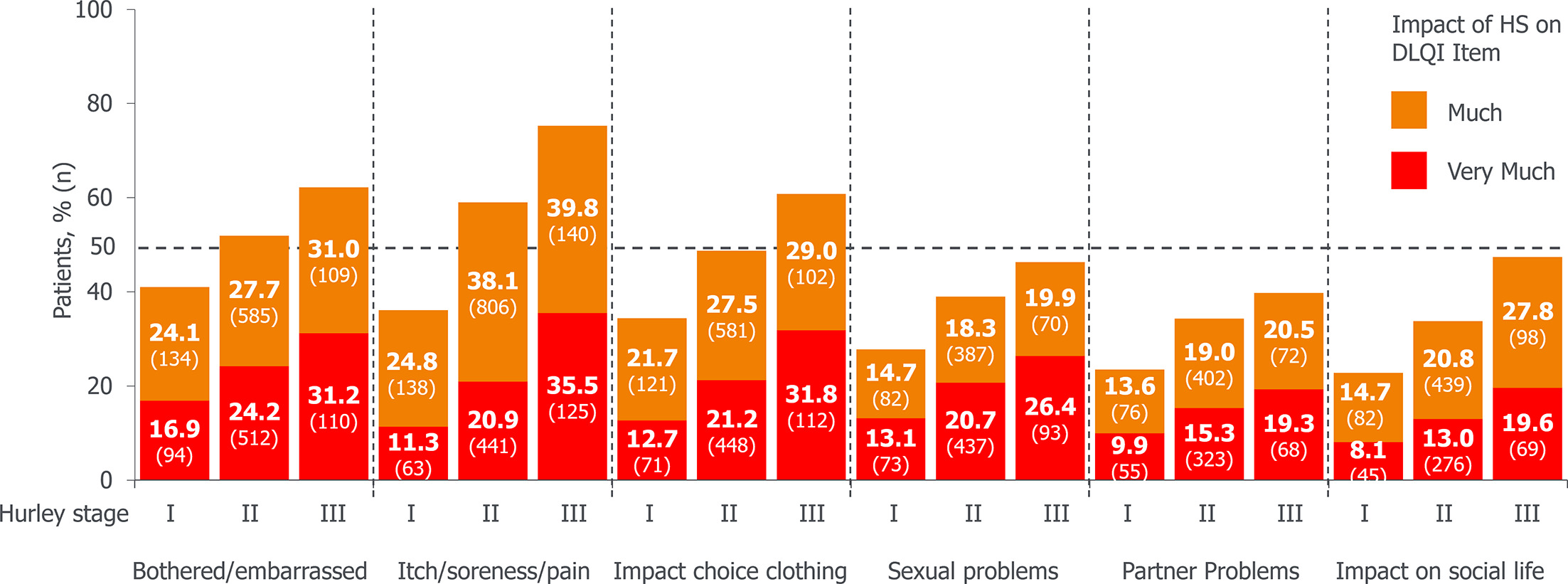
Fig. 3. Proportions of patients reporting the impact of HS on the most impacted DLQI items by Hurley stage in both countries combined. DLQI items are ordered from most impacted (as assessed by the sum of the proportions of patients answering “much” or “Very much”) to least impacted for patients who were Hurley stage I. The top five most impacted items for patients who were Hurley stage I, II and III are shown. For patients who were Hurley stage II, the top five most impacted items (from most to least impacted) were: “itch/soreness/pain”, “Bothered/embarrassed”, “Impact on choice of clothing”, “Sexual problems” and “Partner problems”. For patients who were Hurley stage III, the top 5 most impacted DLQI items were: “itch/soreness/pain”, “Bothered/embarrassed”, “Impact on choice of clothing”, “Impact on social life” and “Sexual problems”. Horizontal dashed line represents 50%.
Consistent with baseline reporting on unemployment and sick leave (Table I), 11.0% of patients in Denmark and 15.2% of patients in Norway answered “Much” to the question regarding the impact of HS-related “Work problems” in the subset of patients who were not prevented from working or studying due to their skin (Denmark: N=335; Norway: N=1,653; Fig. 2A and B). For patients in Norway, 1.0% answered “Very much” to this question (Fig. 2B).
In both countries combined, a greater proportion of patients who were Hurley stage III answered “Much” to the question regarding HS-related “Work problems” (30.4 %; n=58) compared with those who were Hurley stage I (10.1 %; n=39) or II (13.5 %; n=188); the proportion of patients answering “Very much” to this question was generally consistent between Hurley stages.
HS treatment pattern
Of patients in both countries combined, 58.9% and 19.3% received medical or surgical treatment alone for their HS, respectively (Fig. 4A). Notably, a much lower proportion of patients (3.6%) received surgery alone for their HS in Denmark compared with Norway (22.8%). In both countries combined, 4.4% of patients received both surgical and medical interventions for their HS; these proportions were similar in Denmark and Norway separately. In both countries combined, 16.1% of patients did not receive any new interventions for HS in addition to their existing treatment regimen, as determined by the doctor.
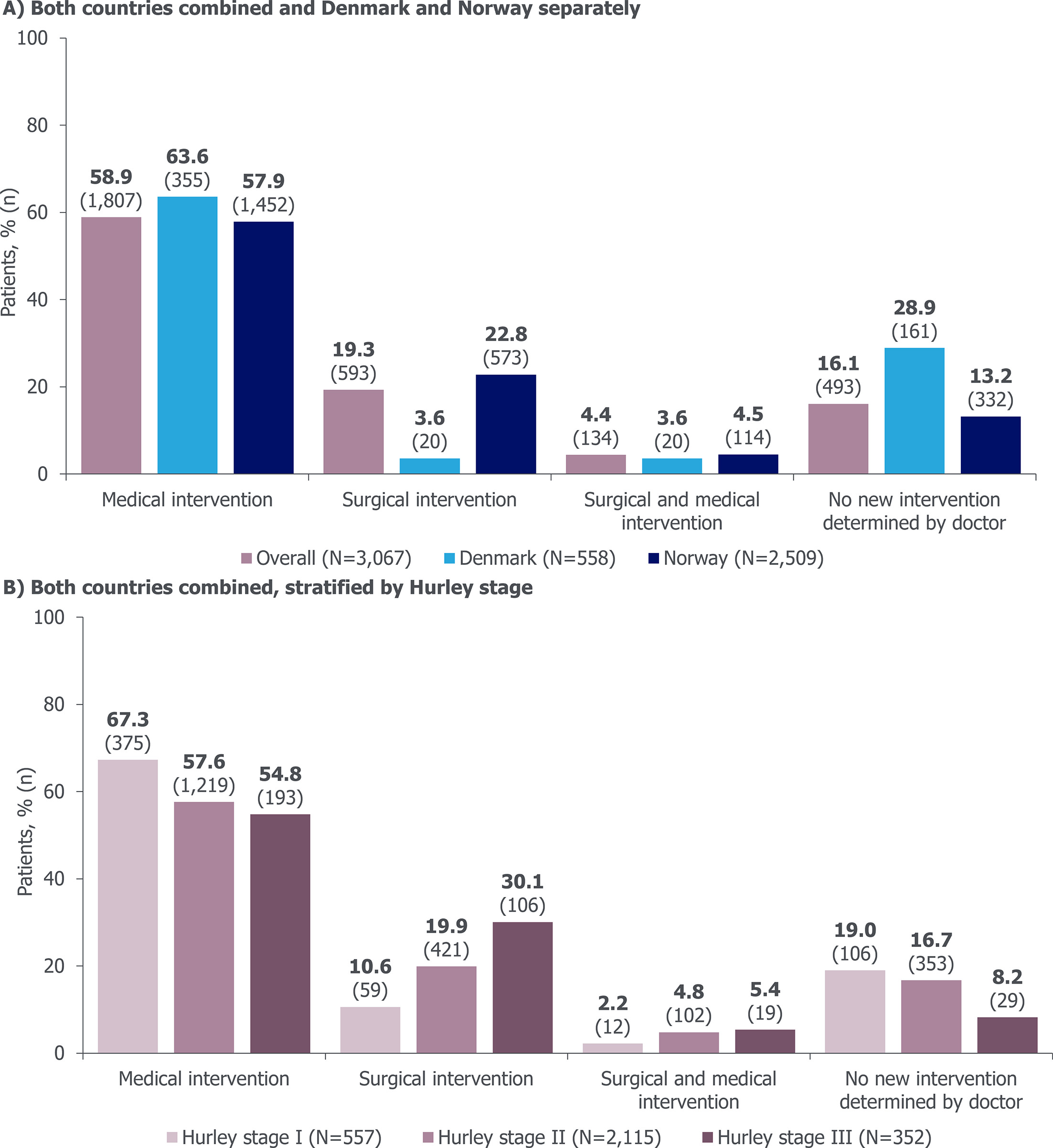
Fig. 4. HS treatment patterns. Where n<5, exact n numbers have not been reported to protect patient anonymity. No new intervention determined by the patient, % (n): Both countries: 0.4% (13); Denmark: n<5; Norway: 0.4% (11); Hurley stage I: n<5; Hurley stage II: 0.5% (10); Hurley stage III: n<5. Do not know/missing data, % (n): Both countries: 0.8% (26); Denmark: 0; Norway: 26 (1.0%); Hurley stage I: n<5; Hurley stage II: 0.4% (9); Hurley stage III: n<5.
In both countries combined, the proportion of patients receiving medical intervention alone numerically decreased with increasing Hurley stage; for surgical interventions alone, the opposite trend was observed (Fig. 4B). Of note, for patients who were Hurley stage III, 8.2% did not receive any new interventions for their HS, as determined by the doctor. In these cases, the patient continued their current intervention and no additional or alternative interventions were prescribed.
For patients in both countries combined with available data on type of medical treatment, 62.5% of patients reported receiving a single medical treatment; these results were similar between patients in Denmark and Norway (Table II). Of medical treatment types received by patients in both countries combined, topical medicines were the most common, followed by antibiotics, biologics, anti-inflammatory and analgesic medicines. This pattern was consistent for patients in Norway, though for patients in Denmark, anti-inflammatory medicines were received by a higher proportion of patients than biologic treatments. Of the biologics reported, adalimumab was the most commonly received in all populations. In both countries combined, the proportions of patients treated with biologics increased with increasing Hurley stage.
Table II. Medical and surgical interventions at HISREG entry
| Characteristics | Both countries N=3,067 |
Denmark N=558 |
Norway N=2,509 |
|---|---|---|---|
| Medical treatment, n (%) | |||
| Yes | 1,941 (63.3%) | 375 (67.2%) | 1,566 (62.4%) |
| Do not know/Missing | 26 (0.8%) | 0 (0.0%) | 26 (1.0%) |
| Did not meet criteria for intervention | NR | - | n<5 |
| Type of medical treatment recorded, n | 1,941 | 375 | 1,566 |
| Type of medical treatment, n (%) | |||
| Single regimens | 1,214 (62.5%) | 204 (54.4%) | 1,010 (64.5%) |
| Analgesics | n<5 | n<5 | n<5 |
| Antibiotics | 235 (12.1%) | 36 (9.6%) | 199 (12.7%) |
| Anti-inflammatory | 62 (3.2%) | n<5 | 58 (3.7%) |
| Biologic Topical |
91 (4.7%) 822 (42.4%) |
n<5 161 (42.9%) |
88 (5.6%) 661 (42.2%) |
| Combined regimens (multiple treatments) | 718 (37.0%) | 170 (45.3%) | 548 (35.0%) |
| Type of medical treatment not recorded, n (%) | 9 (0.5%) | n<5 | 8 (0.5%) |
| Type of biologic, n (%)a | |||
| Adalimumab | 131 (4.3%) | 11 (2.0%) | 120 (4.8%) |
| Brodalumab | n<5 | n<5 | n<5 |
| Infliximab | 11 (0.4%) | n<5 | 10 (0.4%) |
| Vedolizumab | n<5 | n<5 | n<5 |
| Other | n<5 | n<5 | n<5 |
| Biologic treatment combined with, n (%)b | 60 | 10 | 50 |
| Analgesics | 11 (18.3%) | n<5 | 11 (22.0%) |
| Antibiotics | 24 (40.0%) | 6 (60.0%) | 18 (36.0%) |
| Anti-inflammatory | n<5 | n<5 | n<5 |
| Topical | 39 (65.0%) | 8 (80.0%) | 31 (62.0%) |
| Surgical treatment, n (%) | |||
| Yes | 727 (23.7%) | 40 (7.2%) | 687 (27.4%) |
| Do not know/Missing | 26 (0.8%) | - | 26 (1.0%) |
| Type of surgery, n (%) | 727 | 40 | 687 |
| CO2 laser | 567 (78.0%) | 27 (67.5%) | 540 (78.6%) |
| Deroofing | 63 (8.7%) | 9 (22.5%) | 54 (7.9%) |
| Excision closed with suture | 24 (3.3%) | n<5 | 20 (2.9%) |
| Excision with open granulation and secondary healing | 22 (3.0%) | n<5 | 22 (3.2%) |
| Excision with subsequent skin grafting | n<5 | n<5 | n<5 |
| Multiple surgeries | 27 (3.7%) | n<5 | 27 (3.9%) |
| Other | n<5 | n<5 | n<5 |
| Unknown type of surgery | 22 (3.0%) | n<5 | 22 (3.2%) |
|
Where n<5, exact n are not reported to protect patient anonymity. aMethotrexate was included in the category “Biologics” in error; data not reported as n<5; bCategories are not mutually exclusive (frequencies do not add up to 100%). |
|||
In both countries combined, 23.7% of patients received surgical treatment, alone or in combination with another intervention (Table II). Of note, this proportion was considerably lower in Denmark than Norway. In all populations, the most received surgery type was CO2 laser, followed by deroofing.
DISCUSSION
Data from the HISREG registry may indicate considerable delays in access to specialist care following initiation of HS symptoms. In the overall population, comprising patient data from Denmark and Norway, delays of 2 years from first symptom to first GP visit and 9 years from first GP visit to first dermatologist visit were observed. Notably, above-average access to medical care is reported for residents in Denmark and Norway, making healthcare inaccessibility an unlikely driver of HS diagnostic delay (11, 12). Delays are more plausibly due to an established under-recognition of HS by GPs and suboptimal communication between GPs and dermatologists (13, 14). Supporting evidence shows that 63.7 % of patients visited a physician ≥5 times prior to receiving a formal HS diagnosis (5), with physicians in emergency rooms also demonstrating suboptimal HS diagnosis (15). Furthermore, the stigma associated with HS may contribute to a reticence among patients to seek diagnosis and treatment, exacerbating the problem (16).
In both countries combined, patients who were Hurley stage III experienced a greater delay to first dermatologist visit following HS symptom onset vs those who were Hurley stage I or II; this may have contributed to delays in appropriate treatment initiation and subsequent disease progression in these patients (17). In the same population, nearly one-third of Hurley stage III patients underwent surgery, compared with approximately one-tenth of Hurley stage I patients. Across stages, the proportion of patients who were Hurley stage III reporting “Much” or “Very much” for DLQI items was higher than in stages I or II; over half of patients who were Hurley stage III answered “Much” or “Very much” for the “Bothered/embarrassed”, “Itch/soreness/pain” and “Impact on choice of clothing” DLQI items. Similarly, the proportion of patients answering “Much” to the question regarding “Work problems” was higher for Hurley stage III vs I or II patients. These trends may indicate an increase in the burden of HS with increasing disease severity and suggest that the highest burden exists in patients with severe HS. As delays in diagnosis have been reported to correlate with disease severity (6), increased healthcare practitioner awareness of HS is required to address this diagnostic delay, attenuate disease progression and improve HRQoL for patients with HS.
Despite greater disease severity among Hurley stage II and III patients, 16.7% and 8.2%, respectively, did not receive a new HS intervention during the study period, as determined by their doctor, and only 3.4% and 20.1% were treated with biologics. These data may indicate a need for broader and more effective therapeutic options and greater access to biologic therapies for patients with HS, particularly those with moderate or severe disease. This is supported by a prior study which reported that just under half of patients were dissatisfied or very dissatisfied with their current treatment, with similar proportions lacking optimism for achieving satisfactory symptom control within the next 3 months (5).
Additionally, disparities in the proportions of patients with severe (Hurley stage III) HS in Denmark vs Norway (3.8% vs 13.2%), as well as those receiving surgery (3.6% vs 22.8%), were observed. One hypothesis which may explain this is that patients with severe HS in Denmark may have been referred to non-HISREG-registered centres, thus these differences may be due to centre bias as only one HISREG-registered site in Denmark was included in this analysis. Similarly, disparities in HS severity between countries may be related to the differences in surgery rates, as patients with severe HS may have been more likely to receive surgery.
Strengths and limitations
This study leverages a large HS population (N=3,067) drawn from Denmark and Norway, enhancing data reliability and relevance to these populations. Additionally, data collection outcomes were predefined, reducing the risk of investigator bias. The inclusion of both physician- and patient-reported outcomes provides complementary insight, enabling a more comprehensive assessment of disease burden and management patterns from both clinical and patient perspectives in real-world care settings. Finally, the unique nature of data collection on patient journey offers novel perspectives on the timeline of key milestones for patients with HS.
This analysis is associated with some limitations. Firstly, findings may not be representative of all patients with HS as only individuals seen at HISREG-registered centres were included. Additionally, this analysis was descriptive in nature and did not include inferential statistical testing; therefore, the findings should be interpreted as observational summaries of registry data and should not be used to infer associations or causality. Similarly, the cross-sectional nature of the analysis means that causality cannot be inferred as the temporal sequence of events cannot be established. Therefore, a degree of caution should be applied in the interpretation of results. For example, often only the first medical or surgical intervention was captured, potentially missing subsequent treatments and newer therapies approved after registry entry. This limits the assessment of treatment response within the context of an evolving therapeutic landscape throughout the 12-year study period (2010–2022).
Regarding the outcomes presented, patient recall bias may have impacted reporting on age at first HS symptom, GP visit and dermatologist visit; missing data may also have led to misclassification bias as considerable numbers of patients did not provide a response, potentially impacting result validity – these biases should be considered in the interpretation of results. Additionally, the use of the “Not applicable” response option in the DLQI may have led to misclassification of responses due to infeasibility. For example, patients answering “Not applicable” to the question: “To what extent has your skin affected your choice of clothing in the past week?”, most likely meant “Not at all”, thus the impact of HS on their choice of clothing may be misrepresented.
Similarly, the ambiguity of the option “No new intervention as determined by the doctor” for assessment of HS treatment patterns makes results difficult to interpret. It could reflect adequate disease control with no recommended treatment changes, or a lack of available treatment options, particularly for patients who were Hurley stage III, as their disease severity likely indicates that current interventions were not effective. Further, dichotomizing interventions as patient- or doctor-determined is challenging, given that interventions are most often joint decisions between a patient and their physician. Regarding surgery data, the inclusion of “Multiple” as a surgery type category likely led to the underreporting of individual surgery types, as these categories were mutually exclusive. Furthermore, the relatively low proportion of patients receiving surgery in Denmark may reflect centre-level data availability, as surgery data were contributed by only one Danish centre, though the number of Danish patients registered in HISREG was relatively high (558), thereby reducing the impact of individual patient variation. Overall, given the absence of longitudinal data, unclear reasons for treatment decisions and ambiguity of questionnaire responses, further research is needed to confirm these findings.
Conclusions
Patients with HS face considerable delays in access to dermatologists and report a significant burden of HS on their health-related quality of life. This burden may be particularly high in patients with moderate and severe HS. Despite access to a dermatologist, some patients did not receive any new therapeutic interventions for their HS, including those who were Hurley stage III, suggesting a paucity of available effective treatment options. Due to advances in available treatment following closure of the registry, further studies should assess whether this unmet need persists.
ACKNOWLEDGEMENTS
The authors thank the patients, the investigators and their teams who took part in this study. The authors also acknowledge Susanne Wiegratz, MSc, UCB, Monheim am Rhein, Germany for editorial review during manuscript development and publication coordination and Sarah Johnson, MSci, from Costello Medical, UK for medical writing and editorial assistance based on the authors’ input and direction. This study was funded by UCB.
REFERENCES
- Montero-Vilchez T, Diaz-Calvillo P, Rodriguez-Pozo JA, Cuenca-Barrales C, Martinez-Lopez A, Arias-Santiago S, et al. The burden of hidradenitis suppurativa signs and symptoms in quality of life: Systematic review and meta-analysis. Int J Environ Res Public Health 2021; 18: 6709. https://doi.org/10.3390/ijerph18136709
- Preda-Naumescu A, Ahmed HN, Mayo TT, Yusuf N. Hidradenitis suppurativa: pathogenesis, clinical presentation, epidemiology, and comorbid associations. Int J Dermatol 2021; 60: e449–e458. https://doi.org/10.1111/ijd.15579
- Ingram JR, Marzano AV, Prens E, Schneider-Burrus S, Warren RB, Keal A, et al. Hidradenitis suppurativa with and without draining tunnels: A real-world study characterizing differences in treatment and disease burden. J Eur Acad Dermatol Venereol 2025; 39: 1431–1441. https://doi.org/10.1111/jdv.20550
- Zouboulis CC. The socioeconomic burden of hidradenitis suppurativa/acne inversa. Br J Dermatol 2019; 181: 7–8. https://doi.org/10.1111/bjd.17396
- Garg A, Neuren E, Cha D, Kirby JS, Ingram JR, Jemec GBE, et al. Evaluating patients’ unmet needs in hidradenitis suppurativa: Results from the global survey of impact and healthcare needs (VOICE) Project. J Am Acad Dermatol 2020; 82: 366–376. https://doi.org/10.1016/j.jaad.2019.06.1301
- Kokolakis G, Wolk K, Schneider-Burrus S, Kalus S, Barbus S, Gomis-Kleindienst S, et al. Delayed diagnosis of hidradenitis suppurativa and its effect on patients and healthcare system. Dermatology 2020; 236: 421–430. https://doi.org/10.1159/000508787
- Garg A, Besen J, Legler A, Lam CS. Factors associated with point-of-care treatment decisions for hidradenitis suppurativa. JAMA Dermatol 2016; 152: 553–557. https://doi.org/10.1001/jamadermatol.2015.4593
- Ingvarsson G, Dufour DN, Killasli H, Sartorius K, Lapins J, Skau PA, et al. Development of a clinical Scandinavian registry for hidradenitis suppurativa; HISREG. Acta Derm Venereol 2013; 93: 350–351. https://doi.org/10.2340/00015555-1468
- Finlay AY, Khan GK. Dermatology Life Quality Index (DLQI)--a simple practical measure for routine clinical use. Clin Exp Dermatol 1994; 19: 210–216. https://doi.org/10.1111/j.1365-2230.1994.tb01167.x
- Hongbo Y, Thomas CL, Harrison MA, Salek MS, Finlay AY. Translating the science of quality of life into practice: What do dermatology life quality index scores mean? J Invest Dermatol 2005; 125: 659–664. https://doi.org/10.1111/j.0022-202X.2005.23621.x
- Health at a Glance 2025: Denmark [Internet]. Paris: Organisation for Economic Co-operation and Development (OECD); 2025. [cited 2026 July 24]. Available from: https://www.oecd.org/en/publications/health-at-a-glance-2025_15a55280-en/denmark_8675bb29-en.html
- OECD. Health at a Glance 2025: Norway [Internet]. Paris: Organisation for Economic Co-operation and Development (OECD); 2025. [cited 2026 July 24]. Available from: https://www.oecd.org/en/publications/health-at-a-glance-2025_15a55280-en/norway_3b4abde5-en.html
- Knecht-Gurwin K, Gurwin A, Łyko M, Drewa T, Kielan W, Mastalerz-Migas A, et al. An assessment of clinician knowledge of hidradenitis suppurativa: Insights from a multidisciplinary survey study. J Clin Med 2025; 14: 3171. https://doi.org/10.3390/jcm14093171
- Lopes S, Vide J, Costa-Silva M, Azevedo F, Magina S. Awareness, knowledge, and practice patterns of general practitioner residents and specialists toward hidradenitis suppurativa: a survey study. Acta Dermatovenerol Alp Pannonica Adriat 2019; 28: 61–63.
- Bouazzi D, Theut Riis P, Jemec GBE. Emergency Doctor’s ability to diagnose Hidradenitis Suppurativa. J Eur Acad Dermatol Venereol 2020; 34: e712–e714. https://doi.org/10.1111/jdv.16536
- Snyder CL, Chen SX, Porter ML. Obstacles to early diagnosis and treatment of hidradenitis suppurativa: current perspectives on improving clinical management. Clin Cosmet Investig Dermatol 2023; 16: 1833–1841. https://doi.org/10.2147/CCID.S301794
- Tzellos T. Conventional treatment of hidradenitis suppurativa: Serving the “window of opportunity” concept. Clin Dermatol 2025; 43: 485–489. https://doi.org/10.1016/j.clindermatol.2025.05.015