RESEARCH ARTICLE
Self-reported oral health and oral health-related quality of life among older adults receiving home care services in South-eastern Norway
Hero Ibrahim Hassana,b , Marte-Mari Uhlen-Strandb, Vibeke Ansteinssona,b, Ragnhild Hellesøa, Ewa A. Sz. Hovdenb and Rasa Skudutyte-Rysstadb
aDepartment of Public Health Science, Faculty of Medicine, University of Oslo, Oslo, Norway; bOral Health Centre of Expertise in Eastern Norway, Oslo, Norway
ABSTRACT
Objective: To map self-reported oral health status, oral health-related quality of life (OHRQoL), and associated factors among older adults receiving home care services (HCS) in south-eastern Norway.
Material and methods: For this cross-sectional study, older adult users of HCS, aged ≥ 65 years were interviewed using an interviewer-administered questionnaire. Information about demographics, number of medicines, and Activity of Daily Living (ADL-score) was obtained. Self-reported oral health status and subjective dry mouth (Summated Xerostomia Inventory-Duch version, SXI-D) were assessed. OHRQoL was measured using Oral Health Impact Profile-14 (OHIP-14).
Results: Of 116 participants (mean age 83 years), 52.6% were female. Half of the participants reported missing < 5 of their natural teeth and 6.9% were edentulous. Pain and discomfort were reported by 16.4%, and subjective dry mouth was common (40.7%). Poor oral health status was reported by 8.6%, and experiencing problems or discomfort fairly often or very often was reported by 20.7%. Good self-perceived oral health was reported by 61%. Younger (< 75 years) and less dependent (ADL < 2) individuals and those missing ≥ 5 natural teeth reported a negative impact on OHRQoL more often.
Conclusions: Half of older adults receiving HCS in Norway retain most of their natural teeth, few are edentulous and xerostomia is common. Younger and less dependent individuals and those missing ≥ 5 natural teeth reported a negative impact on OHRQoL more often.
KEYWORDS: Older adults; self-reported oral health status; oral health-related quality of life; subjective dry mouth; tooth loss; pain and discomfort.
Citation: ACTA ODONTOLOGICA SCANDINAVICA 2025; VOL. 84: 165–173. DOI: https://doi.org/10.2340/aos.v84.43425.
Copyright: © 2025 The Author(s). Published by MJS Publishing on behalf of Acta Odontologica Scandinavica Society. This is an Open Access article distributed under the terms of the Creative Commons Attribution 4.0 International License (https://creativecommons.org/licenses/by/4.0/), allowing third parties to copy and redistribute the material in any medium or format and to remix, transform, and build upon the material, with the condition of proper attribution to the original work.
Received: 24 September 2024; Accepted: 17 March 2025; Published: 9 April 2025.
CONTACT: Hero Ibrahim Hassan h.i.hassan@medisin.uio.no Department of Public Health Science, Faculty of Medicine, University of Oslo, Postboks 1130 Blindern 0318 Oslo, Norway
Competing interests and funding: No potential conflict of interest was reported by the author(s).
The study is a part of the CORAL project (Connecting Oral and Home Health Care Services), which is funded by The Research Council of Norway [297462].
Introduction
The proportion of older adults is increasing rapidly, and by 2050, 16% of the global population is expected to be 65 years or older [1, 2] Because of improvements in general health, life expectancy is increasing. In addition, more people are able to retain their natural teeth for life [3, 4]. However, challenges of aging, such as cognitive impairment and decreased muscle strength and coordination, cause many older adults to become dependent on help, and present difficulties regarding oral health care [5].
In Norway, care for dependent older adults is governed by national legislation, which enables many care-dependent older adults to live at home with supervision and support provided by home care services (HCS) [6]. Norwegian HCS are organized to allow individuals with special assistance needs due to illness or disabilities to apply for HCS where they live or have temporary residency [6]. As users of HCS, older adults are entitled to free dental treatment in the public dental health service (PDS) [7]. However, according to Statistics Norway, only 20.7% of the care-dependent older adults in HCS who are entitled to dental care from PDS utilize their services [8].
Due to significant improvements in oral health in Norway in recent decades, many older adults now retain their natural teeth, and few are edentulous [9]. International studies have reported that care-dependent older adults have poor oral health status, with fewer natural teeth than healthy older adults in the same age group [10]. Moreover, care-dependent older adults in HCS have been shown to have inferior oral health status compared with institutionalized individuals [11]. However, previous studies on oral health among dependent older adults have mainly focused on institutionalized older adults [12], and data on self-reported oral health status for older adults in HCS in Norway are limited.
The World Health Organization (WHO) defines oral health as a key indicator of overall health, well-being, and quality of life [13]. Oral health is based on adequate oral function, and the absence of diseases and pain or discomfort [14]. Dental caries, tooth loss, xerostomia, and mucosal lesions represent a high burden of oral health problems and may affect daily life performance in older adults [15]. Traditionally, oral health has been determined by findings from the clinical and radiographic examinations. However, subjective oral health indicators are important to provide information about how oral conditions affect the daily life of individuals [16]. The impact of oral health on quality of life is conceptualized as oral health-related quality of life (OHRQoL) [17]. Although oral health is known to affect the quality of life [1, 18], little is known about OHRQoL among care-dependent older adults living at home and receiving help from HCS [19].
This study aimed to map self-reported oral health status, OHRQoL among older adults receiving assistance from HCS in south-eastern Norway, and to explore the impact of associated factors: self-reported oral health, background and general health variables on OHRQoL.
Materials and methods
Participants and setting
The participants in this study were older adult users of HCS from four different municipalities from both urban (Oslo and Drammen) and rural (Hamar and Askim) areas in south-eastern Norway. Inclusion criteria were age ≥ 65 years, being a user of HCS, and being cognitively and physically able to be interviewed. Exclusion criteria were not being competent to consent and with a limited knowledge of Norwegian. The participants were recruited by HCS personnel in connection with home visits. All users of HCS who met the inclusion criteria were asked if they wanted to participate in the study. Older adults who consented to participate in the study were contacted by the research group by telephone to arrange a time for an interview at their home. In each municipality, two members of the research team consisting of dentists (n = 2), dental hygienists (n = 4), and researchers (n = 2) visited the participants and interviewed them using an interviewer-administered questionnaire, asking questions verbally and typing the answers on an iPad. The duration of interviews varied from 20 to 60 min.
Data collection was performed from December 2020 to January 2023. Due to the coronavirus disease 2019 (COVID-19) pandemic restrictions, data collection was interrupted several times and took longer than planned.
Questionnaire
The questionnaire consisted of participants’ background information, their general health, and self-reported oral health variables. The questionnaire was pretested on two volunteers aged > 70 years living at home, who were not users of HCS and did not participate in the study. After minor linguistic and structural adjustments based on the pretest, the questionnaire was ready for use.
Background variables collected included sex, age, living situation, level of education, and household income. For statistical analyses, the study population was categorized into the following age groups: 65–74, 75–84, and ≥ 85 years. The living situation was assessed by asking if the participant lived alone (Yes/No). Household income was registered based on yearly income (before tax) and recorded as low (≤ 300,000 NOK), middle (301–450,000 NOK), and high (> 450,000 NOK). Participants’ highest completed education was collected and categorized as basic (primary school or lower), middle (secondary school/vocational training), and higher (college/university level).
Information about the number of medicines and Activities of Daily Living (ADL) scores were obtained from the patient journal system Gerica used by the HCS. Information on the number of medicines used was categorized as 0–4, 5–10, and > 10 medicines. ADL scores were dichotomized according to Norwegian national guidelines into scores ≤ 2 and > 2 [20]. A score > 2 means that the person has some difficulty with or is dependent on help from others in managing activities in their daily life.
Questions about self-reported oral health included: number of teeth (no missing teeth, missing 1– 4 teeth, missing 5–10 teeth, missing > 10 teeth, and having no natural teeth left); tooth replacements (crown, bridge, implant, full or partial denture), with the response alternatives Yes/No/I don’t know; and oral symptoms in the last month (bleeding gingiva, loose teeth, bad taste or bad breath, oral pain or discomfort), with response alternatives Yes/No. Self-perceived oral health status was assessed with one single question: ‘How do you feel about your oral health status?’ with three response alternatives (good, average and poor).
The Summated Xerostomia Inventory–Dutch version (SXI-D) was used for mapping the severity of experienced dry mouth symptoms [21]. The SXI-D is a validated self-reported questionnaire with five statements [21, 22], and three response alternatives (never = 1, sometimes = 2, often = 3). SXI-D sum scores range from 5 to 15 points with a higher sum score indicating more severe of experienced of problems related to dry mouth.
OHRQoL was measured using the shortened Norwegian version of the Oral Health Impact Profile-14 (OHIP-14) instrument. The OHIP-14 questionnaire consists of 14 items related to oral health in the last 12 months, divided into seven dimensions: functional limitation, physical pain, psychological discomfort, physical disability, psychological disability, social disability, and handicap [23]. The responses are rated on a 5-point Likert scale (0 = never, 1 = hardly ever, 2 = occasionally, 3 = fairly often, and 4 = very often) with sum scores ranging from 0 to 56 and a higher sum score indicating poorer OHRQoL. For the analyses, the answers were dichotomized into never/hardly ever/occasionally = 0 and fairly often/very often = 1. Responding fairly often/very often to one or more questions on OHIP-14 indicated a negative impact on OHRQoL.
Ethics
Ethical approval for this study was obtained from the Regional Ethics Committee (REK 2020/32692) and the Norwegian Agency for Shared Services in Education and Research (Sikt, 540095). All participants gave their written informed consent. The study is reported in accordance with the guidelines provided by ‘Strengthening the Reporting of Observational Studies in Epidemiology’ (STROBE) [24].
Statistical analysis
Nettskjema software developed and operated by the University of Oslo (UiO) was used for designing the electronic questionnaire and for data collection. The platform Services for Sensitive Data (TSD) at UiO was used to store the data. Frequency and percentage distributions were used to describe the data. The Chi-square and Fisher exact test were used to explore possible associations between categorical variables. Because the continuous variables did not follow a normal distribution, Kruskal–Wallis and Mann–Whitney U tests were used to detect differences in median values. All analyses were performed using Stata SE version 17 (Stata Corp. LLC version 17, Texas, USA), and the statistical significance level was set at α = 0.05.
Results
Of the 116 older adults who were interviewed, 61 (52.6%) were female, and the mean age was 83 years (SD 8.89, range 65–102 years). Two-thirds (67.3%) of the respondents had middle or higher education (Table 1). Thirty-six percent stated that they had a low income, and the majority lived alone. Seventy percent used ≥ 5 medications and most participants had an ADL sum score > 2, indicating a high level of dependency. The distribution of participants in relation to background and general health variables is presented in Table 1.
Self-reported oral health variables
Table 2 shows that 50% of the older adults in the study reported to be missing < 5 of their natural teeth. Fixed prosthetic appliances were common, half of the participants reported having crowns and one-third of bridges. Almost one in five reported pain or discomfort during the last month. Good self-perceived oral health was reported by 61%.
Subjective dry mouth
Figure 1 shows the frequency distribution of participants in relation to reported experience of subjective dry mouth. The overall prevalence of dry mouth symptoms (answered ‘often’ to one or more questions of SXI-D) was 40.7% and the median SXI-D score was 7 with an interquartile range (IQR) of 6–9. The most frequently reported dry mouth symptoms were ‘my mouth feels dry’ followed by ‘my lips feel dry’. One in four reported problems with swallowing certain types of food and that their mouth felt dry when they ate a meal. There were no statistically significant differences between SXI-D median scores and medication use.
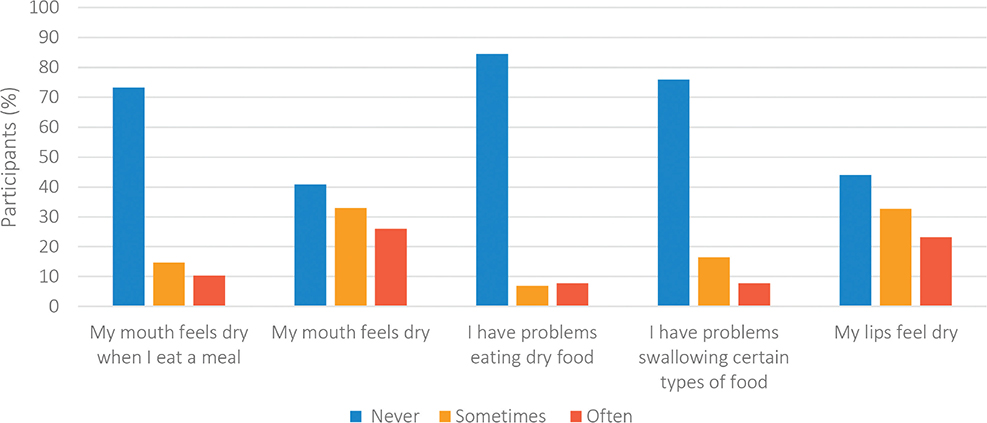
Figure 1. Frequency distribution of participants in relation to reported experiences of subjective dry mouth (N = 116).
Oral health-related quality of life
One in five older adults in the study reported having experienced problems or discomfort fairly often/very often, whereas no problems or discomfort at all were reported by 44.7%. The median OHIP-14 score in the study population was 1 (IQR 0–4). The proportion of participants reporting problems or discomfort within the dimensions varied from 2.6% to 11.2%. Functional limitation was reported most often (11.2%), followed by physical pain (9.5%) and psychological discomfort (8.6%). Psychological disability and handicap were reported by 6.9% and 6.0%, respectively. The most prevalent problems reported by participants were problems in pronouncing words and being self-conscious followed by a worsened sense of taste, painful aching in the mouth, discomfort eating food and life to be less satisfying (Table 3).
Relationship between OHRQoL and associated factors
Table 4 shows bivariate associations between negative impact on OHRQoL and median OHIP-14 scores, and with background and general health variables.
Younger individuals (65–74 years) had significantly higher median OHIP-14 scores compared with the other two age groups (Figure 2). Older adults who were less dependent on help (ADL score < 2) and those with lower income reported a negative oral health impact significantly more often than more dependent individuals and those with higher income, respectively.
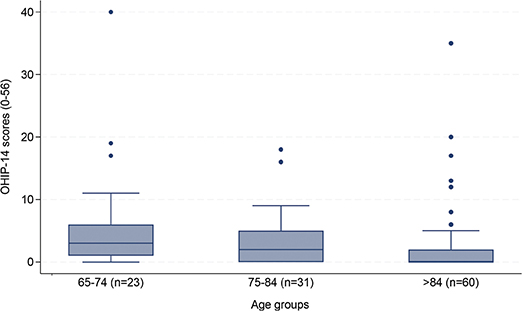
Figure 2. Boxplots illustrating the median with interquartile ranges (IQRs) of OHIP-14 total scores in participants within different age groups. Kruskal-Wallis; p < 0.05. Dots in the figure represent outliers (N = 114).
Table 5 shows the results from bivariate analysis for associations between having a negative impact on OHRQoL and higher median OHIP-14 scores in relation to self-reported oral health status and symptoms. Individuals with a few remaining natural teeth and those who were edentulous had significantly higher median OHIP-14 scores. Having pain/discomfort and a bad taste or bad breath were significantly associated with a negative impact on OHRQoL and a higher median OHIP-14 score. Having loose teeth was significantly associated with a negative impact. Moreover, associations were found between poor self-perceived oral health status and having a negative impact and higher median OHIP-14 scores.
Discussion
This study aimed to map self-reported oral health status, OHRQoL, and associated factors among older adults receiving HCS in Norway. It is one of few studies focusing on the self- reported oral health and OHRQoL of older adults ≥ 65 years living at home and depending on help from HCS. The findings indicate that a large proportion of care-dependent older adults retained their natural teeth, and crowns and bridges were common tooth replacements. Nearly one in five reported pain/discomfort during the last month and nearly half reported dry mouth symptoms. Despite this, the majority of care-dependent older adults rated their perceived oral health as good. Nearly half reported no impact on OHRQoL, while younger (< 75 years) and less dependent (ADL score < 2) individuals and those missing five or more natural teeth reported a negative impact on OHRQoL more often.
Around half of the participants in this study retained most of their natural teeth. This observation is in line with a previous study showing that older adults today retain more of their natural teeth [3, 4], and a large proportion in our study reported having tooth replacements such as crowns or bridges. Having fixed prosthetic appliances requires a good regular oral hygiene routine in order to maintain good oral health. However, 73% of all participants were highly dependent on daily care (ADL score > 2). Reduced self-care ability may affect individuals’ capability to maintain good oral hygiene, and thereby increase the risk of oral diseases such as caries and periodontitis [25].
The most common symptom was pain and discomfort, reported by almost one of five study participants. Moreover, a negative impact on the physical pain dimension was reported by 9.2%. Few studies have reported pain and discomfort among older adults, and measures were not standardized. Physical pain dimension in OHIP-14 has been reported more frequently (43%) among the general population of older adults in Norway [26]. Among dependent older adults, gum bleeding and pain were reported by 29% [27], and pain by 33.6% respectively [4]. Our findings indicate that the level of pain and discomfort is lower than previously reported. This may be due to a general improvement in oral health in the elderly. In addition, it may be speculated that medications used to relieve chronic pain conditions might further suppress oral symptoms [28, 29].
The high prevalence of xerostomia that was found among older adults in our study corresponds with results from previous studies on dependent older adults in Norway and other countries [27, 30, 31]. Nevertheless, the prevalence of xerostomia was higher in the present study than in a general population of young elderly individuals in Norway [32]. This may be attributed to the participants in our study being older adults with health problems, reliant on help from HCS. Prevalence of xerostomia has been shown to increase with age, medication use and reduced health conditions in populations aged 65–70 in Norway and Sweden [33]. The association between a number of medications used and xerostomia has been reported earlier [34]. However, in our study, and somewhat unexpectedly, we did not find any statistically significant associations between xerostomia and medication use, and the reason for this is not entirely clear. However, we had access only to information on the number of medicines, not specific classes or types of medication. However, medication use is just one of several factors associated with xerostomia in older adults. Other causes of xerostomia have been reported to be local factors such as poor dental health and oral infections, as well as chronic systemic or autoimmune diseases [35]. Prior research has established that dry mouth is one of the risk factors for dental caries. Therefore, the high prevalence of reported dry mouth symptoms is concerning [36].
Despite many participants indicating a negative impact on OHRQoL, 61.2% reported good self-perceived oral health status, a finding that is in line with previous studies [37, 38]. Holst et al. noted that 60% and 69% of individuals in the general population in Norway aged ≥ 60 years reported good self-perceived oral health status [39]. Quality of life has been described as ‘the individuals’ perception of their position in life in the context of the culture and value system in which they live and in relation to their goals expectations, standards and concern’ [40]. People assess quality of life based on their expectations and experiences, which can be influenced by factors such as their age or health condition. If they feel that their quality of life does not meet their expectations, they may perceive it as a poor quality of life [41]. Dahl et al. suggest that individuals who typically have good oral health may notice significant effects on their OHRQoL from relatively minor oral issues due to their high expectations regarding oral health [26].
More than half of the participants of our study reported experiencing one or more impacts of oral health status on daily life during the last year. In our study, age and daily function affected OHRQoL as individuals in the younger age group and with an ADL score < 2 more often reported poor OHRQoL compared with older individuals and those more dependent on help. This aligns with the results reported by Steele et al. who noted a lower impact of oral health problems on quality of life among individuals aged ≥ 70 years, than among younger individuals [42]. As suggested earlier, older and more dependent individuals may have lower expectations regarding their oral health than those who are younger and healthier. According to Baltes et al., individuals adjust their goals and expectations as they age and begin to prioritize different aspects of life. Consequently, they compensate for the losses and focus on what they now see as more important [43]. Previous results on OHRQoL among dependent older adults are not consistent. Despite different instruments have been used to investigate this, previous research indicates that OHRQoL may be challenging to capture among dependent older adults [44]. In Sweden, older adults who were more dependent on help reported having a lower quality of life [45], whereas elsewhere no relationship between ADL score and OHRQoL was found [46].
Several subjective oral health variables were associated with OHRQoL. Individuals with a higher number of natural teeth reported better OHRQoL more frequently, which accords with previous findings [30, 38, 45]. Having a full or partial denture was associated with poor OHRQoL, as found elsewhere [26, 38, 47]. Reduced chewing ability due to few teeth or poorly fitted dentures may impact QoL.
As the participants of this study were recruited by the HCS personnel using convenience sampling, the possibility of selection bias cannot be completely ruled out
Data collection was interrupted and delayed due to COVID-19 restrictions, which limited the number of participants. If data collection had proceeded as originally planned, a larger sample size could have been achieved.
However, data from Statistics Norway on 65+ year-olds show that the distribution of participants in the present study was similar in terms of sex, education level, and income compared with the general population [48]. Still, generalization of our findings should be done with caution, as users of HCS are a heterogeneous group in terms of general health and need for assistance.
Given the cross-sectional design of the present study, no conclusions on causal associations can be drawn. The age and health condition of the participants may impact the accuracy of reporting and filling out questionnaires, particularly in an interview-administered questionnaire, because the interviewer’s manner of asking questions may also influence participants’ responses [49]. Furthermore, recall bias cannot be excluded because participants’ cognitive and general health status may influence their responses to the questionnaire. Another factor that may have impacted the results is the lack of information regarding housing type, modernity, and ownership, which might have influenced participants’ ADL and well-being. Therefore, the findings of this study should be interpreted with caution.
Due to COVID-19 restrictions, clinical examinations could not be performed. Although our results are based on self-reported data, previous studies have demonstrated that self-reported oral health variables such as number of teeth and edentulousness are valid measures when conducting clinical examinations is not possible [50]. The use of validated questionnaires makes our results comparable with other studies.
Internal consistency of the OHIP-14 was assessed using Cronbach’s alpha and the calculated value was 0.85, which indicates high internal consistency of the questionnaire. OHIP-14 have been previously tested and found to be valid, for determining oral health-related impact on quality of life among older adults in Norway [51].
Because data on dependent elderly individuals are seldom available from population-based surveys, our findings from the present study shed light on the oral health conditions of a group with increasing treatment needs. The results from the present study provide important information about individuals in HCS who often have multiple health issues, including oral diseases. The WHO resolution on oral health from 2021 recommends an increased focus on a preventive and interprofessional approach in dental care to help older adults retain better oral health and OHRQoL [13]. The findings from this study can be used for decision support in planning dental and HCS for dependent older adults in the future.
Conclusion
The results from this study indicate that half of older adults receiving assistance from HCS in Norway retain most of their natural teeth, few are edentulous, and xerostomia is common. Younger and less dependent individuals and those missing five or more natural teeth reported a negative impact on OHRQoL more often.
Acknowledgements
The authors would like to thank all the older adults who participated in this study, and the PDS, Innlandet County, Norway, for contributing to the implementation of the project. Thanks to Annemarie Schuller for help with the questionnaire, dentist Ellen Thea Gjelseth Dalbak, and dental hygienists Kevser Kaya Holter, Kristin Forren Lund, Leyla Kurdi and Vinnie Huser for help collecting the data. We are grateful to all HCS personnel in the municipalities for recruiting the participants to the study.
Data availability statement
The data that support the findings of this study are not publicly available because they contain information that could compromise the privacy of research participants. Further inquiries can be directed to the corresponding author (HIH).
References
[1] Rechel B, Grundy E, Robine JM, Cylus J, Mackenbach JP, Knai C, et al. Ageing in the European Union. Lancet. 2013;381(9874):1312–22. https://doi.org/10.1016/S0140-6736(12)62087-X
[2] United Nations Department of Economic and Social Affairs Population Division. World population prospects 2022, summary of results [Internet]. 2022 [cited 2024 May 27]. Available from: https://www.un.org/development/desa/pd/sites/www.un.org.development.desa.pd/files/wpp2022_summary_of_results.pdf:www.un.org
[3] Hugoson A, Koch G, Göthberg C, Helkimo AN, Lundin S-A, Norderyd O, et al. Oral health of individuals aged 3–80 years in Jönköping, Sweden during 30 years (1973–2003). II. Review of clinical and radiographic findings. Swed Dent J. 2005;29(4):139–55.
[4] Gluzman R, Meeker H, Agarwal P, Patel S, Gluck G, Espinoza L, et al. Oral health status and needs of homebound elderly in an urban home-based primary care service. Spec Care Dentist. 2013;33(5):218–26. https://doi.org/10.1111/j.1754-4505.2012.00316.x
[5] Ástvaldsdóttir Á, Boström AM, Davidson T, Gabre P, Gahnberg L, Sandborgh Englund G, et al. Oral health and dental care of older persons – a systematic map of systematic reviews. Gerodontology. 2018;35(4):290–304. https://doi.org/10.1111/ger.12368
[6] Ministry of Health and Care Services. Forskrift om kvalitet i pleie- og omsorgstjenestene for tjenesteyting etter lov av 19. november 1982 nr. 66 om helsetjenesten i kommunene og etter lov av 13. desember 1991 nr. 81 om sosiale tjenester m.v.: lovdata.no [Internet]; 2003 [cited 2024 Mar 30]. Available from: https://lovdata.no/forskrift/2003-06-27-792
[7] Ministry of Health and Care Services (Helse- og omsorgsdepartementet). Lov om tannhelsetjenesten (tannhelsetjenesteloven) 01.01.1984 [cited 2024 May 25]. Available from: https://lovdata.no/dokument/NL/lov/1983-06-03-54
[8] Statistics Norway (Statistisk sentralbyrå). ssb.no: statistisk sentralbyrå [Internet]. [cited 2024 Jun 11]. Available from: https://www.ssb.no/statbank/table/11961/tableViewLayout1/
[9] Rødseth SC, Høvik H, Schuller AA, Bjertness E, Skudutyte-Rysstad R. Dental caries in a Norwegian adult population, the HUNT4 oral health study; prevalence, distribution and 45-year trends. Acta Odontol Scand. 2023;81(3):202–10. https://doi.org/10.1080/00016357.2022.2117735
[10] Holmén A, Strömberg E, Hagman-Gustafsson M-L, Wårdh I, Gabre P. Oral status in home-dwelling elderly dependent on moderate or substantial supportive care for daily living: prevalence of edentulous subjects, caries and periodontal disease. Gerodontology. 2012;29(2):e503–e11. https://doi.org/10.1111/j.1741-2358.2011.00507.x
[11] Czwikla J, Herzberg A, Kapp S, Kloep S, Schmidt A, Rothgang H, et al. Home care recipients have poorer oral health than nursing home residents: results from two German studies. J Dent. 2021;107:103607. https://doi.org/10.1016/j.jdent.2021.103607
[12] Wong FMF, Ng YTY, Leung WK. Oral health and its associated factors among older institutionalized residents – a systematic review. Int J Environ Res Public Health. 2019;16(21):4132.
[13] World Health Organization (WHO). Oral health [Internet]. WHO; [cited 2024 May 22]. Available from: https://www.who.int/news-room/fact-sheets/detail/oral-health
[14] Glick M, Williams DM, Kleinman DV, Vujicic M, Watt RG, Weyant RJ. A new definition for oral health developed by the FDI World Dental Federation opens the door to a universal definition of oral health. J Am Dent Assoc. 2016;147(12):915–7. https://doi.org/10.1016/j.adaj.2016.10.001
[15] Ramsay SE, Whincup PH, Watt RG, Tsakos G, Papacosta AO, Lennon LT, et al. Burden of poor oral health in older age: findings from a population-based study of older British men. BMJ Open. 2015;5(12):e009476. https://doi.org/10.1136/bmjopen-2015-009476
[16] Gary D S, Spencer AJ. Development and evaluation of the oral health impact profile. Community Dent Health. 1994;11:3–11.
[17] Locker D, Clarke M, Payne B. Self-perceived oral health status, psychological well-being, and life satisfaction in an older adult population. J Dent Res. 2000;79(4):970–5. https://doi.org/10.1177/00220345000790041301
[18] Van Leeuwen KM, Van Loon MS, Van Nes FA, Bosmans JE, De Veti HCW, Ket JCF, et al. What does quality of life mean to older adults? A thematic synthesis. PLoS One. 2019;14(3):e0213263. https://doi.org/10.1371/journal.pone.0213263
[19] Henni SH, Skudutyte‐Rysstad R, Ansteinsson V, Hellesø R, Hovden EAS. Oral health and oral health‐related quality of life among older adults receiving home health care services: a scoping review. Gerodontology. 2023;40(2):161–71. https://doi.org/10.1111/ger.12649
[20] Registration of Health and Care Data in the Municipality. National guidelines [Internet]. https://www.helsedirektoratet.no: The Norwegian Directorate of Health; 2018 [updated 2023 Dec 12; cited 2024 Feb 09]. Available from: https://www.helsedirektoratet.no/veiledere/registrering-av-iplos-data-i-kommunen/om-funksjonsvurdering-og-skarinndeling#oversikt-over-skarinndelingen
[21] Thomson W, Van der Putten G, De Baat C, Ikebe K, Matsuda K, Enoki K, et al. Shortening the Xerostomia Inventory. Oral Surg Oral Med Oral Pathol Oral Radiol Endod. 2011;112(3):322–7. https://doi.org/10.1016/j.tripleo.2011.03.024
[22] Van der Putten G-J, Brand HS, Schols JMGA, De Baat C. The diagnostic suitability of a xerostomia questionnaire and the association between xerostomia, hyposalivation and medication use in a group of nursing home residents. Clin Oral Investig. 2011;15(2):185–92. https://doi.org/10.1007/s00784-010-0382-1
[23] Slade GD. Derivation and validation of a short-form oral health impact profile. Community Dent Oral Epidemiol. 1997;25(4):284–90. https://doi.org/10.1111/j.1600-0528.1997.tb00941.x
[24] Von Elm E, Altman DG, Egger M, Pocock SJ, Gøtzsche PC, Vandenbroucke JP. The strengthening the reporting of observational studies in epidemiology (STROBE) statement: guidelines for reporting observational studies. PLoS Med. 2007;4(10):1623–7. https://doi.org/10.1371/journal.pmed.0040296
[25] Kossioni AE, Hajto‐Bryk J, Maggi S, McKenna G, Petrovic M, Roller‐Wirnsberger RE, et al. An expert opinion from the European College of Gerodontology and the European Geriatric Medicine Society: European policy recommendations on oral health in older adults. J Am Geriatr Soc. 2018;66(3):609–13. https://doi.org/10.1111/jgs.15191
[26] Dahl KE, Wang NJ, Holst D, Öhrn K. Oral health-related quality of life among adults 68–77 years old in Nord-Trøndelag, Norway: oral health-related quality of life in elderly. Int J Dent Hyg. 2011;9(1):87–92. https://doi.org/10.1111/j.1601-5037.2010.00445.x
[27] Lee Y-S, Kim H-G, Moreno K. Xerostomia among older adults with low income: nuisance or warning?: Xerostomia among older adults. J Nurs Scholarsh. 2016;48(1):58–65. https://doi.org/10.1111/jnu.12185
[28] Bruun T, Denison TM-L, Gjersing , Husøy L, Skrindo Knudsen AK, Strand BH, et al. Public health report, Health status in Norway; 2018 [Internet]. Available from: https://www.fhi.no: Norwegian Institute of Public Health (NIPH) Helse- og omsorgsdepartementet F. [cited 21.August.2024]
[29] Soldato M, Liperoti R, Landi F, Finne-Sovery H, Carpenter I, Fialova D, et al. Non malignant daily pain and risk of disability among older adults in home care in Europe. Pain. 2007;129(3):304–10. https://doi.org/10.1016/j.pain.2006.10.016
[30] Willumsen T, Fjaera B, Eide H. Oral health-related quality of life in patients receiving home-care nursing: associations with aspects of dental status and xerostomia. Gerodontology. 2010;27(4):251–7. https://doi.org/10.1111/j.1741-2358.2009.00344.x
[31] Nihtilä A, Tuuliainen E, Komulainen K, Nykänen I, Hartikainen S, Tiihonen M, et al. The combined effect of individually tailored xerostomia and nutritional interventions on dry mouth among nutritionally compromised old home care clients. Gerodontology. 2019;36(3):244–50. https://doi.org/10.1111/ger.12405
[32] Diep MT, Jensen JL, Skudutyte‐Rysstad R, Young A, Sødal ATT, Petrovski BÉ, et al. Xerostomia and hyposalivation among a 65‐yr‐old population living in Oslo, Norway. Eur J Oral Sci. 2021;129(1):e12757. https://doi.org/10.1111/eos.12757
[33] Åstrøm AN, Lie SA, Ekback G, Gülcan F, Ordell S. Self‐reported dry mouth among ageing people: a longitudinal, cross‐national study. Eur J Oral Sci. 2019;127(2):130–8. https://doi.org/10.1111/eos.12601
[34] Cannon I, Robinson-Barella A, McLellan G, Ramsay SE. From drugs to dry mouth: a systematic review exploring oral and psychological health conditions associated with dry mouth in older adults with polypharmacy. Drugs Aging. 2023;40(4):307–16. https://doi.org/10.1007/s40266-023-01017-5
[35] Lee YH, Won JH, Auh QS, Noh YK, Lee SW. Prediction of xerostomia in elderly based on clinical characteristics and salivary flow rate with machine learning. Sci Rep. 2024;14(1):3423. https://doi.org/10.1038/s41598-024-54120-x
[36] Diep MT, Skudutyte-Rysstad R, Sødal ATT, Young A, Hove LH. Caries experience and risk indicators of having decayed teeth among 65-year-olds in Oslo, Norway: a cross-sectional study. BMC Oral Health. 2023;23(1):1–726. https://doi.org/10.1186/s12903-023-03432-x
[37] Dahl KE, Wang NJ, Skau I, Öhrn K. Oral health-related quality of life and associated factors in Norwegian adults. Acta Odontol Scand. 2011;69(4):208–14. https://doi.org/10.3109/00016357.2010.549502
[38] Åstrøm AN, Haugejorden O, Skaret E, Trovik TA, Klock KS. Oral impacts on daily performance in Norwegian adults: the influence of age, number of missing teeth, and socio-demographic factors. Eur J Oral Sci. 2006;114(2):115–21. https://doi.org/10.1111/j.1600-0722.2006.00336.x
[39] Holst D, Skau I, Grytten J. Egenvurdert tannhelse, generell helse og tannstatus i den voksne befolkning i Norge i 2004 (Self-assessment of oral health, general health and dental status in a national sample of adult Norwegians in 2004). Nor Tannlegeforen Tid. 2005;115(10): 576-80
[40] Kuyken W, Orley J, Power M, Herrman H, Schofield H, Murphy B, et al. The World Health Organization quality of life assessment (WHOQOL): position paper from the World Health Organization. Soc Sci Med. 1995;41(10):1403–9. https://doi.org/10.1016/0277-9536(95)00112-K
[41] Carr AJ, Gibson B, Robinson PG. Measuring quality of life: is quality of life determined by expectations or experience? BMJ. 2001;322(7296):1240–3. https://doi.org/10.1136/bmj.322.7296.1240
[42] Steele JG, Sanders AE, Slade GD, Allen PF, Lahti S, Nuttall N, et al. How do age and tooth loss affect oral health impacts and quality of life? A study comparing two national samples. Community Dent Oral Epidemiol. 2004;32(2):107–14. https://doi.org/10.1111/j.0301-5661.2004.00131.x
[43] Baltes PB, Baltes MM. Psychological perspectives on successful aging: The model of selective optimization with compensation. Successful Aging,1990. p. 1-34.
[44] Lantto A, Lundqvist R, Wårdh I. Quality of life related to tooth loss and prosthetic replacements among persons with dependency and functional limitations. Acta Odontol Scand. 2020;78(3):173–80. https://doi.org/10.1080/00016357.2019.1668054
[45] Strömberg E, Holmèn A, Hagman-Gustafsson M-L, Gabre P, Wårdh I. Oral health-related quality-of-life in homebound elderly dependent on moderate and substantial supportive care for daily living. Acta Odontol Scand. 2013;71(3–4):771–7. https://doi.org/10.3109/00016357.2012.734398
[46] Jensen PM, Saunders RL, Thierer T, Friedman B. Factors associated with oral health-related quality of life in community-dwelling elderly persons with disabilities. J Am Geriatr Soc. 2008;56(4):711–7. https://doi.org/10.1111/j.1532-5415.2008.01631.x
[47] Hoeksema AR, Peters LL, Raghoebar GM, Meijer HJA, Vissink A, Visser A. Health and quality of life differ between community living older people with and without remaining teeth who recently received formal home care: a cross sectional study. Clin Oral Investig. 2018;22(7):2615–22. https://doi.org/10.1007/s00784-018-2360-y
[48] Statistics Norway (Statistisk sentralbyrå). ssb.no2024 [Internet] [cited 2024 Sept 02]. Available from: https://www.ssb.no/en/befolkning
[49] Coughlin SS. Recall bias in epidemiologic studies. J Clin Epidemiol. 1990;43(1):87–91. https://doi.org/10.1016/0895-4356(90)90060-3
[50] Høvik H, Kolberg M, Gjøra L, Nymoen LC, Skudutyte-Rysstad R, Hove LH, et al. The validity of self-reported number of teeth and edentulousness among Norwegian older adults, the HUNT Study. BMC Oral Health. 2022;22(1):82. https://doi.org/10.1186/s12903-022-02116-2
[51] Melbye EL. Dimensional structure of the OHIP-14 and associations with self-report oral health-related variables in home-dwelling Norwegians aged 70. Acta Odontol Scand. 2023;81(1):66–72. https://doi.org/10.1080/00016357.2022.2083674