REVIEW ARTICLE
Effects of total temporomandibular joint replacement with alloplastic prosthesis – a systematic review
Pär Morina,b, Jani Talvilahtib, Mattias Ulmnerc,d, Per Alstergrene, Eva Nordendahld,f and Aron Naimi-Akbara
aHealth Technology Assessment-Odontology (HTA-O), Faculty of Odontology, Malmö University, Malmö, Sweden; bRegion Dalarna, Department of Oral and Maxillofacial Surgery, Falun, Sweden; cMedical Unit for Reconstructive Plastic- and Craniofacial Surgery, Karolinska University Hospital, Stockholm, Sweden; dDivision of Oral Diagnostics and Rehabilitation, Department of Dental Medicine, Karolinska Institute, Stockholm, Sweden; eFaculty of Odontology, Malmö University, Malmö, Sweden; fDepartment of Periodontology, Eastman Institute, Folktandvården Stockholm AB, Stockholm, Sweden
ABSTRACT
Objectives: This paper studies the treatment effect of total joint replacement (TJR) of the temporomandibular joint (TMJ) with alloplastic joint prosthesis regarding function, symptoms and health-related quality of life compared to other surgical and non-surgical treatments in patients with TMJ disorders.
Methods: Three databases (PubMed, Cochrane Library and Web of Science) were searched up to 11 March 2025. Studies in which TJR was compared with other surgical or non-surgical methods were searched and analyzed. Data extraction and quality assessments were performed by at least two investigators independently. Risk of bias was assessed with the ROBINS-I-tool. Certainty of evidence was assessed with GRADE.
Results: A total of 2,891 studies were identified in the search. One study met the criteria with comparison of TJR with a control group consisting of patients treated with another surgical method, namely, interpositional arthroplasty. The study investigated the outcome variables such as pain reduction and improvement in mouth opening and had a moderate risk of bias. No significant difference between the groups was found after regression analysis. Quality of life assessment was not the objective of this study. No meta-analysis could be performed from this literature search, for obvious reasons.
Conclusion: TMJ reconstruction with alloplastic prostheses is rapidly evolving, with new systems continually entering the market. This review highlights the urgent need for further scientific efforts, including well-designed trials capable of demonstrating the comparative effectiveness of alloplastic TJR against other treatment modalities, ideally randomized trials with controls.
KEYWORDS: Total joint replacement; patient reported outcome measures; quality of life; temporomandibular joint; temporomandibular joint disorders; arthroplasty; replacement
Citation: ACTA ODONTOLOGICA SCANDINAVICA 2025; VOL. 84: 258–265. DOI: https://doi.org/10.2340/aos.v84.43641.
Copyright: © 2025 The Author(s). Published by MJS Publishing on behalf of Acta Odontologica Scandinavica Society. This is an Open Access article distributed under the terms of the Creative Commons Attribution 4.0 International License (http://creativecommons.org/licenses/by/4.0/), allowing third parties to copy and redistribute the material in any medium or format and to remix, transform, and build upon the material, with the condition of proper attribution to the original work.
Received: 28 January 2025; Accepted: 14 April 2025; Published: 20 May 2025.
CONTACT: Pär Morin par.morin@mau.se Faculty of Odontology, Malmö University, Carl Gustafs väg 34, 214 21 Malmö, Sweden
Competing interests and funding: The authors declare that there are no conflicts of interest to declare.
Introduction
The temporomandibular joint (TMJ) is a functional complex joint that serves to facilitate movement of the jaw and thereby allows speech, chewing etc. The TMJ is subject to local or systemic diseases and disorders as other joints in the human body. Temporomandibular disorders (TMDs) is an umbrella term for musculoskeletal disorders in the orofacial region causing pain and dysfunction [1]. TMDs are common conditions, affecting 30% of the adult population [2, 3] with the highest incidence from adolescence to 60 years of age, and affect women to a higher extent [4]. These conditions can eventually lead to cartilage and bone tissue destruction, adhesions and/or heterotrophic bone formation [5]. Dysfunction of the TMJ, for example internal derangements, is associated with pain and restrictions of the jaws [6]. There are reasons to believe that dysfunction of the TMJ also leads to poor health-related quality of life (QoL) due to the many situations where jaw function is crucial.
Most patients with TMJ disease will benefit from conservative treatment, arthrocentesis [7], or arthroscopy [8, 9]; but in more severe conditions with, for example, severe TMJ destruction or ankylosis, more invasive surgical treatments are indicated [10–12]. The surgical treatments aim to re-establish anatomy and function, which may in turn reduce pain in end-stage conditions of the TMJ. For the most severe conditions, there might be a need for total joint replacement (TJR) of the TMJ with alloplastic total joint prosthesis [13].
TJR of the TMJ with alloplastic joint prosthesis is a surgically advanced treatment for managing severe disease or deformity or dysfunction of the TMJ [14]. The TJR procedure implies replacement of the condylar head and temporal fossa with alloplastic material [15]. Both alloplastic materials as well as autologous materials and techniques have been proposed and used for arthroplastic reconstructive surgery for complex conditions of the TMJ. Gap osteotomies and autologous methods such as costochondral grafts [16] and temporalis muscle flap have been, and are still, used [17]. Different types of alloplastic prostheses have been used for severe conditions of the TMJ [18]. There has been a number of devices with the purpose of replacing the condyle alone and as TJR with both condyle and fossa replacement [19]. Today, the most commonly used joint prosthesis of the TMJ is a device with a mandibular component made of cobalt-chrome molybden/titanium and a fossa component of ultra-high-molecular-weight polyethylene. The TJR with alloplastic joint prosthesis has shown promising results, and there are indications that it could be considered reliable over time [13].
One desired goal of the alloplastic device is to re-establish the anatomy and function and to prevent malocclusion from the lack of posterior height in the ramus [20]. Using such an alloplastic device for reconstruction of the TMJ might decrease the risk of further tissue degeneration or other local pathology and pain, which has been shown for autologous grafts and arthroplasty [21, 22].
To our knowledge, there is no systematic review (SR) that examines the effectiveness of TJR with alloplastic joint pro-sthesis to treat severe TMJ diseases with QoL as the primary outcome measure. Therefore, the aim of this paper is to analyze the scientific evidence for this treatment in a SR.
Methods
This paper was written in accordance with Preferred Reporting Items for Systematic Reviews and Meta-Analysis (PRISMA) checklist. The study protocol was registered on the international prospective register of systematic reviews (PROSPERO) (https://www.crd.york.ac.uk/prospero/) with the protocol no. CRD42020195987.
Research question
What is the treatment effect of TJR with alloplastic joint prosthesis regarding function, symptoms, and QoL, compared to other surgical and non-surgical treatments in patients with severe TMJ dysfunction?
Eligibility criteria
PICO is a framework for structured research questions by outlining the Population (P), Intervention (I), Comparison (C), and Outcome (O) of interest.
Population
Patients with severe disorders, acquired deformities or disease of the TMJ, congenital deformities or disease of the TMJ.
Intervention
TJR with alloplastic joint prosthesis of the TMJ.
Control
Controls are patients receiving one or more of the following approaches for managing TMJ disorders:
Plastic or reconstructive surgery of the TMJ
Physiotherapy interventions (including acupuncture)
Injection treatments
Other surgical procedures targeting the TMJ or surrounding tissues
No active treatment (observation only)
Outcomes
QoL or other patient-related outcome measures. Measures of TMJ function, symptoms or pain, other measures of TMJ disease or dysfunction.
We included clinical longitudinal studies with a control group such as randomized controlled trials, controlled clinical trials or cohort studies.
Literature search
The literature search was performed in PubMed, Cochrane Library and Web of Science. The reference lists of the included papers were hand-searched for relevant literature. Only studies in English and Scandinavian languages were included. Details of the search strategy for the different databases are presented in Table 2.
Selection
The identified publications from the literature search were subjected to an initial screening process based on title and abstract using the Rayyan software (https://www.rayyan.ai/). The titles and abstracts were read independently by at least two reviewers. Selected publications were retrieved and read in full-text by each reviewer independently and each publication by at least two reviewers. Any potential disagreement during any stage of the screening process was resolved through a consensus discussion between the authors. The list of excluded studies after being read in full-text is presented in Table 3.
Data extraction
The relevant data in the included studies were extracted by one of the authors (PM), and the data extraction was checked by another author (ANA). Information about author names, publication year, country, study design, study population (age, sex, general health, TMJ-diseases), type of intervention and control, number of included patients and follow-up time, outcome measures, effect measures and relevant results was extracted.
Risk of bias assessment
The risk of bias in the included non-randomized studies was assessed using the ROBINS-I tool [23]. Before the assessment, the following confounding factors were specified as important: severity of TMJ disorder, number of preceding surgical procedures, pain prior to intervention, age, general health, smoking, and gender. At least two of the authors independently evaluated the studies and assessed the risk of bias of the included studies. If the risk of bias was determined as critical, the study was excluded.
Synthesis methods
Only one study was included in the final analysis, thus no synthesis was made.
Reporting bias assessment
Only one study was included, thus no reporting bias assessment was made.
Certainty assessment
The certainty of evidence was assessed according to GRADE [24] as high, moderate, low or very low.
Results
Study selection
The result of the selection process is presented in Figure 1. A total of 2,891 studies were identified after removing 310 duplicates. After reading all titles and abstracts, 40 studies were included to be read in full text. Nineteen studies were excluded after full-text eligibility assessment, and the reasons for exclusion can be viewed in Table 3. Twenty-one studies were assessed for risk of bias and only one study was found to meet the criteria for moderate risk of bias (Table 4).
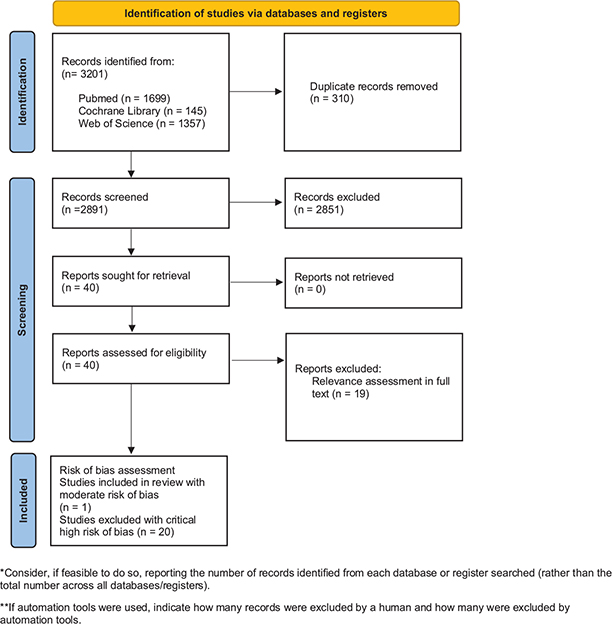
Figure 1. PRISMA 2020 flow diagram.
Risk of bias in studies
The included study is presented in Figure 2. The study met the criteria for moderate risk of bias.
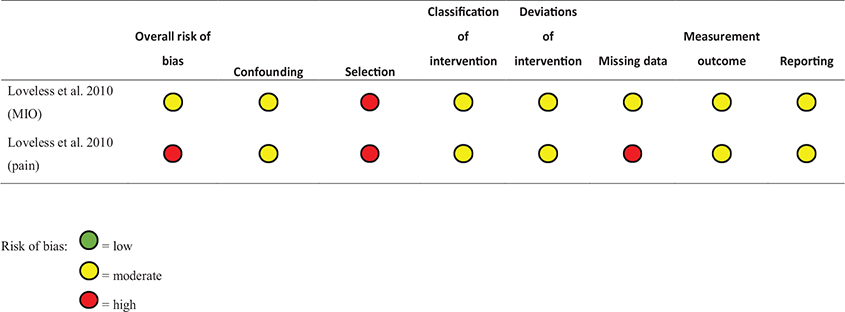
Figure 2. Risk of bias assessment using ROBINS-I-tool.
Study characteristics
The included study compared TJR with interpositional arthroplasty (IA) [25]. The study had a retrospective study design and included treatments from two different centers. The reason for treatment was TMJ ankylosis.
The study by Loveless et al. showed increased maximum interincisal opening (MIO) and reduced pain for both groups. The MIO improvement was greater in the IA group; but after regression analysis, the difference was not significant. Pain reduction was greater for TJR, but not significant. For this measure, data was acquired only for 50% of the patients in TJR and 45% of the patients in IA (Table 5).
| Study variable | TJR | IA |
| Study population | ||
| Sample size (n = 36) | 14 (39%) | 22 (61%) |
| Women | 11 (79%) | 14 (64%) |
| Etiology | ||
| Iatrogenic | 5 (36%) | 4 (18%) |
| Systemic | 3 (21%) | 4 (18%) |
| Other | 6 (43%) | 14 (64%) |
| Unilateral treatment | 5 (36%) | 16 (73%) |
| Age (yr) | 45.6 ± 7.3 | 36.6 ± 14.9 |
| Median follow-up (mo) | 12 (0.3–105) | 12 (0.3–71.9) |
| Previous operations | 3.7 ± 3.5 | 1.1 ± 1.2 |
| Outcome | ||
| MIO (mm) | ||
| Preoperative | 15.6 ± 7.3 | 10.3 ± 8.5 |
| Postoperative | 24.9 ± 10 | 28 ± 8.6 |
| Change | 9.4 ± 6.7 | 18 ± 9.7 |
| Regression coeff.a | 0 (ref.) | 7.2 (95% CI: -0.2–14.6) |
| Pain (VAS) | ||
| Preoperative | 6.1 ± 3.6 (n = 7) | 2.3 ± 3.3 (n = 10) |
| Postoperative | 3.1 ± 3.5 (n = 7) | 2.2 ± 2.9 (n = 10) |
| Change | 3 ± 3.1 (n = 7) | 0.1 ± 1.3 (n = 10) |
| Regression coeff.b | 0 (ref.) | -1.9 (95%CI: -4.6–0.8) |
| IA: interpositional arthroplasty; TJR: total joint replacement. aAdjusted for institution, age, laterality and previous procedures. bAdjusted for geography and preoperative pain scores. |
||
Certainty of evidence
The certainty of evidence for MIO and pain reduction was assessed and was found very low, as shown in Table 6.
Discussion
This SR could identify and include only one study that met our criteria.
It was therefore not possible to draw any broader conclusions from the results in this particular study. The included study by Loveless et. al compared TJR with IA in a retrospective cohort from two clinical centers [25]. The study has limitations, such as small sample size and heterogeneous study groups. Most likely, the difference between the groups in that study regarding the pre-existing group differences may explain their results. The authors discussed this matter and acknowledged that the groups were heterogeneous and that the TJR group most likely had a more severe condition and as well was more likely to have had more previous surgeries. Their results must therefore be interpreted with caution. The choice of TJR or IA should not be made from expected differences in clinical outcome.
Many of the studies investigating TJR were observational and did not include control groups. There is a high risk for confounding factors in these type of studies. We could not identify any randomized clinical trials.
This SR reveals a significant gap in the literature: there are no randomized controlled trials on this critical topic, and even observational studies with control groups are scarce. The field of TMJ reconstruction with alloplastic prostheses is rapidly evolving, with new systems continually entering the market [26, 27]. Despite this fact, not even the oldest and most established TJR alloplastic brands have been sufficiently reviewed in a controlled setting. This review highlights the urgent need for further scientific efforts, including well-designed trials capable of demonstrating the comparative effectiveness of alloplastic TJR against other treatment modalities. However, a knowledge gap has been identified, strongly suggesting randomized trials to be conducted, enabling measurements of the true effects of TMJ TJR with alloplastic prosthesis.
Acknowledgements
This study was funded by CKF, Healthcare Dalarna, Region Dalarna, Sweden.
The authors thank Daniel Sundgren and Martina Vall for providing literature search.
References
[1] Locker D, Slade G. Prevalence of symptoms associated with temporomandibular disorders in a Canadian population. Community Dent Oral Epidemiol. 1988;16(5):310–3. https://doi.org/10.1111/j.1600-0528.1988.tb01783.x
[2] Goulet JP, Lavigne GJ, Lund JP. Jaw pain prevalence among French-speaking Canadians in Québec and related symptoms of temporomandibular disorders. J Dent Res. 1995;74(11):1738–44. https://doi.org/10.1177/00220345950740110401
[3] Rutkiewicz T, Könönen M, Suominen-Taipale L, Nordblad A, Alanen P. Occurrence of clinical signs of temporomandibular disorders in adult Finns. J Orofac Pain. 2006;20(3):208–17.
[4] Yekkalam N, Wänman A. Prevalence of signs and symptoms indicative of temporomandibular disorders and headaches in 35-, 50-, 65- and 75-year-olds living in Västerbotten, Sweden. Acta Odontol Scand. 2014;72(6):458–65. https://doi.org/10.3109/00016357.2013.860620
[5] Ringold S, Thapa M, Shaw EA, Wallace CA. Heterotopic ossification of the temporomandibular joint in juvenile idiopathic arthritis. J Rheumatol. 2011;38(7):1423–8. https://doi.org/10.3899/jrheum.101198
[6] Wilkes CH. Internal derangements of the temporomandibular joint. Pathol variations. Arch Otolaryngol Head Neck Surg. 1989;115(4):469–77. https://doi.org/10.1001/archotol.1989.01860280067019
[7] Nitzan DW, Naaman HL. Athrocentesis: what, when, and why? Atlas Oral Maxillofac Surg Clin North Am. 2022;30(2):137–45. https://doi.org/10.1016/j.cxom.2022.06.008
[8] Garstka AA, Kozowska L, Kijak K, Brzózka M, Gronwald H, Skomro P, et al. Accurate diagnosis and treatment of painful temporomandibular disorders: a literature review supplemented by own clinical experience. Pain Res Manag. 2023;2023:1002235. https://doi.org/10.1155/2023/1002235
[9] Al-Moraissi EA. Arthroscopy versus arthrocentesis in the management of internal derangement of the temporomandibular joint: a systematic review and meta-analysis. Int J Oral Maxillofac Surg. 2015;44(1):104–12. https://doi.org/10.1016/j.ijom.2014.07.008
[10] Feinberg SE, Larsen PE. The use of a pedicled temporalis muscle- pericranial flap for replacement of the TMJ disc: preliminary report. J Oral Maxillofac Surg. 1989;47(2):142–6. https://doi.org/10.1016/S0278-2391(89)80104-1
[11] Widmark G. On surgical intervention in the temporomandibular joint. Swed Dent J Suppl. 1997;123:1–87.
[12] Sidebottom AJ. Guidelines for the replacement of temporomandibular joints in the United Kingdom. Br J Oral Maxillofac Surg. 2008;46(2):146–7. https://doi.org/10.1016/j.bjoms.2006.12.001
[13] Wolford LM, Mercuri LG, Schneiderman ED, Movahed R, Allen W. Twenty-year follow-up study on a patient-fitted temporomandibular joint prosthesis: the Techmedica/TMJ Concepts device. J Oral Maxillofac Surg. 2015;73(5):952–60. https://doi.org/10.1016/j.joms.2014.10.032
[14] Wolford LM, Mehra P. Custom-made total joint prostheses for temporomandibular joint reconstruction. Proceedings (Baylor University Medical Center). 2000;13(2):135–8. https://doi.org/10.1080/08998280.2000.11927656
[15] Giannakopoulos HE, Sinn DP, Quinn PD. Biomet microfixation temporomandibular joint replacement system: a 3-year follow-up study of patients treated during 1995 to 2005. J Oral Maxillofac Surg. 2012;70(4):787–94; discussion 95–6. https://doi.org/10.1016/j.joms.2011.09.031
[16] Svensson B, Adell R. Costochondral grafts to replace mandibular condyles in juvenile chronic arthritis patients: long-term effects on facial growth. J Cranio-Maxillofac Surg. 1998;26(5):275–85. https://doi.org/10.1016/S1010-5182(98)80055-3
[17] Al-Moraissi EA, El-Sharkawy TM, Mounair RM, El-Ghareeb TI. A systematic review and meta-analysis of the clinical outcomes for various surgical modalities in the management of temporomandibular joint ankylosis. Int J Oral Maxillofac Surg. 2015;44(4):470–82. https://doi.org/10.1016/j.ijom.2014.10.017
[18] Driemel O, Ach T, Müller-Richter UD, Behr M, Reichert TE, Kunkel M, et al. Historical development of alloplastic temporomandibular joint replacement before 1945. Int J Oral Maxillofac Surg. 2009;38(4):301–7. https://doi.org/10.1016/j.ijom.2008.12.014
[19] De Meurechy N, Braem A, Mommaerts MY. Biomaterials in temporomandibular joint replacement: current status and future perspectives-a narrative review. Int J Oral Maxillofac Surg. 2018;47(4):518–33. https://doi.org/10.1016/j.ijom.2017.10.001
[20] Sidebottom AJ, Salha R. Management of the temporomandibular joint in rheumatoid disorders. Br J Oral Maxillofac Surg. 2013;51(3):191–8. https://doi.org/10.1016/j.bjoms.2012.04.271
[21] Holmlund A, Lund B, Weiner CK. Mandibular condylectomy with osteoarthrectomy with and without transfer of the temporalis muscle. Br J Oral Maxillofac Surg. 2013;51(3):206–10. https://doi.org/10.1016/j.bjoms.2012.05.011
[22] Bazsefidpay N, Ulmner M, Lund B. Did temporomandibular gap arthroplasty with temporalis interpositional flap improve function and pain in patients with end-stage joint disease? A 5-year retrospective follow-up. J Craniomaxillofac Surg. 2024;52(5):578–84. https://doi.org/10.1016/j.jcms.2024.02.013
[23] Sterne JA, Hernán MA, Reeves BC, Savović J, Berkman ND, Viswanathan M, et al. ROBINS-I: a tool for assessing risk of bias in non-randomised studies of interventions. BMJ (Clinical Research Ed). 2016;355:i4919. https://doi.org/10.1136/bmj.i4919
[24] Zeng L, Brignardello-Petersen R, Hultcrantz M, Siemieniuk RAC, Santesso N, Traversy G, et al. GRADE guidelines 32: GRADE offers guidance on choosing targets of GRADE certainty of evidence ratings. J Clin Epidemiol. 2021;137:163–75. https://doi.org/10.1016/j.jclinepi.2021.03.026
[25] Loveless TP, Bjornland T, Dodson TB, Keith DA. Efficacy of temporomandibular joint ankylosis surgical treatment. J Oral Maxillofac Surg. 2010;68(6):1276–82. https://doi.org/10.1016/j.joms.2009.10.014
[26] Mercuri LG, Neto MQ, Pourzal R. Alloplastic temporomandibular joint replacement: present status and future perspectives of the elements of embodiment. Int J Oral Maxillofac Surg. 2022;51(12):1573–8. https://doi.org/10.1016/j.ijom.2022.05.015
[27] Elledge R, Mercuri LG, Attard A, Green J, Speculand B. Review of emerging temporomandibular joint total joint replacement systems. Br J Oral Maxillofac Surg. 2019;57(8):722–8. https://doi.org/10.1016/j.bjoms.2019.08.009