ORIGINAL ARTICLE
Risk of early death after treatment with curative intent for head and neck squamous cell carcinoma: a retrospective population-based study
Mahmoud Bazinaa,b  , Rayan Nikkiläa,b,c,d, Aaro Haapaniemia, Leif Bäcka, Sami Venteläe,f,g and Antti Mäkitiea,b,i
aDepartment of Otorhinolaryngology – Head and Neck Surgery, University of Helsinki and HUS Helsinki University Hospital, Helsinki, Finland; bResearch Program in Systems Oncology, Faculty of Medicine, University of Helsinki, Helsinki, Finland; cFinnish Cancer Registry, Institute for Statistical and Epidemiological Cancer and Research, Helsinki, Finland; dDepartment of Oral and Maxillofacial Surgery, Lahti Central Hospital, Päijät-Häme Joint Authority for Health and Wellbeing, Lahti, Finland; eFICAN West Cancer Centre, Turku, Finland; fDepartment for Otorhinolaryngology – Head and Neck Surgery, University of Turku and Turku University Hospital, Turku, Finland; gTurku Bioscience Centre, University of Turku and Åbo Akademi University, Turku, Finland; iDivision of Ear, Nose and Throat Diseases, Department of Clinical Sciences, Intervention and Technology, Karolinska Institutet and Karolinska Hospital, Stockholm, Sweden
ABSTRACT
Background and purpose: Knowledge regarding the risk factors for early death in patients with head and neck squamous cell carcinoma (HNSCC) is scarce. This study aims to evaluate the rate of early death (during or within 6 months of treatment) and its associated risk factors in HNSCC patients treated with curative intent.
Materials and methods: A retrospective, population-based analysis of all HNSCC patients (n = 762) treated with curative intent at the Helsinki University Hospital (Helsinki, Finland) during 2012–2015 was conducted. Using the chi-square test, associations between categorical variables were assessed. Univariate and multivariate analyses were performed to identify independent factors for early death.
Results: The rate of early death was 10.1% with a median age of 70 years at diagnosis. Advanced stage, smoking > 40 pack-years, and heavy alcohol consumption were associated with increased odds of early death. Elevated thrombocyte levels > 380 (× 10⁹L) were observed more frequently in the early-death group when comparing the levels with the late-death group (p < 0.01). However, only age (odds ratio [OR] 1.05; 95% confidence interval [CI]:1.02–1.08), T4 class (OR 5.98; 95% CI: 2.60–13.74), N2 class (OR 2.98; 95% CI: 2.60–13.74), and N3 class (OR 12.24; 95% CI: 2.99–50.19) emerged as independent risk factors for early death.
Interpretation: Early death risk is increased in older patients and those with advanced-stage HNSCC. Elevated thrombocyte count requires further studies to assess its utility as a potential clinical marker.
KEYWORDS: Mortality; risk factors; curative intent; surgery; radiotherapy; chemoradiotherapy
Citation: ACTA ONCOLOGICA 2025, VOL. 64, 339–348. https://doi.org/10.2340/1651-226X.2025.42202.
Copyright: © 2025 The Author(s). Published by MJS Publishing on behalf of Acta Oncologica. This is an Open Access article distributed under the terms of the Creative Commons Attribution 4.0 International License (http://creativecommons.org/licenses/by/4.0/).
Received: 23 October 2024; Accepted: 14 February 2025; Published: 4 March 2025
CONTACT: Mahmoud Bazina mahmoud.bazina@helsinki.fi Department of Otorhinolaryngology-Head and Neck Surgery, Helsinki University Hospital P.O. Box 263, FI-00029 HUS, Helsinki, Finland
Competing interests and funding: The authors declare no conflicts of interest.
This study was supported by the State Research Funding for the Helsinki University Hospital and the Sigrid Jusélius Foundation.
Introduction
According to GLOBOCAN estimates in 2022, head and neck cancer (HNC) accounted for an estimated 947,000 new cases and 482,000 deaths worldwide [1]. Approximately 90% of HNCs are head and neck squamous cell carcinomas (HNSCCs) [2]. While treatment with curative intent aims at long-term survival, HNC is also associated with early death within 6 months of diagnosis or after treatment with rates ranging from 3% to 11% [3–6]. Most recently, in Sweden, Talani et al. [3] reported that 6-month death rate after HNC diagnosis among patients treated with curative intent decreased from 4.7% (2008–2012) to 2.5% (2017–2020).
The research on the risk of early death among HNC patients remains, however, scarce with most the existing studies focusing on a narrow range of clinical factors, such as tumor stage and location, and treatment methods. Previously published studies have shown that older patients with advanced disease, high WHO score, primary tumor in the hypopharynx, and those receiving palliative treatment are more likely than others to die of HNC within 6 months of diagnosis [4, 7, 8]. n addition, patients with HPV-positive (Human papillomavirus) oropharynx cancer commonly have better survival than patients with HPV-negative tumors, and smoking is a negative prognostic factor for overall survival in patients with HPV-positive cancer [9]. Indeed, a notable lack of information exists regarding lifestyle factors, such as alcohol use and smoking habits, HPV status, patient comorbidities, and postoperative complications.
The current study aims to identify risk factors associated with early death among patients with HNSCC undergoing treatment with curative intent. Identifying these factors may aid in optimizing treatment strategies and healthcare resources. Our tertiary care center is the biggest healthcare provider in Finland (5.6M) and is responsible for delivering treatment for 2.2 million residents, allowing us to conduct a population-based study.
Materials and methods
This retrospective cohort comprises all patients diagnosed with a histologically confirmed HNSCC and treated with curative intent at the Helsinki University Hospital (HUS, Helsinki, Finland) between January 1, 2012, and December 31, 2015. The data were gathered in collaboration with the HUS Data Service. Patients were identified by ICD-10 diagnosis codes (International Classification of Diseases 10th revision). The included tumor sites were: lip (C00.0–2, C00.6, C00.8, C00.9), oral cavity (C00.3, C00.4, C02, C03, C04, C05, C06), oropharynx (C01.9, C05.1, C05.2, C05.8, C05.9, C09, C10), salivary glands (C07, C08), nasopharynx (C11), hypopharynx (C12, C13), larynx (C10.1, C32), nose and paranasal sinuses (C30.0, C31), and HNSCC unknown primary (C77.0).
Patients’ hospital records were reviewed and clinicopathological data were collected on the following: sex, age, smoking history and alcohol consumption habits before diagnosis, date of diagnosis according to the pathology report, tumor location, tumor class, node class, and distant metastasis class (i.i.e. Union for International Cancer Control UICC TNM classification, 7th edition), p16 status, histological grade, multidisciplinary tumor board decision and intent of treatment (curative intent included only), surgery, postoperative or definitive oncological treatment – radiotherapy (RT) or chemoradiotherapy (CRT). Outcome and follow-up data comprised residual tumor growth and its treatment, location and date of disease recurrence, date and status at last follow-up, and date and cause of death.
Moreover, patients who died within 2 years of treatment were identified and additional data were collected: Age-adjusted Charlson Comorbidity Index (ACCI) and Adult Comorbidity Evaluation-27 (ACE-27) as indicators of comorbidity, Clavien-Dindo classification system to assess surgical complications and preoperative thrombocyte count. Hemoglobin and albumin levels, if available, were recorded for patients in the early-death group.
Patients were excluded if they had received prior cancer treatment to the head and neck or were treated with palliative intent. Patients diagnosed with a synchronous second primary malignancy were not excluded from the study.
Descriptive statistics were calculated for numerical and categorical variables (Table 1). Early death was defined as death during treatment or within 6 months of the end of treatment. This ensures that both the treatment period and the immediate post-treatment period are included in the analysis of early deaths, allowing for a more comprehensive assessment of survival. Late death was defined as death within 7–24 months of the end of treatment. These patients were compared with patients alive at 2 years. The association between categorical variables was tested using the chi-square test. Means were compared using t-tests. Survival analysis after treatment completion was conducted using the Kaplan–Meier method and differences between survival curves were assessed with the log-rank test. Unadjusted odds ratios (ORs) were calculated by conditional maximum likelihood estimation and 95% confidence intervals (CI) using exact methods. A generalized linear model was employed to calculate adjusted ORs. ORs were adjusted for sex, age, smoking history, alcohol use, T class, N class, and treatment. The variables were selected a priori. A p-value less than 0.05 was regarded as having statistical significance. All statistical analyses were performed using R software (The R Project for Statistical Computing, version 4.3.1).
Study permission was granted by the Research Administration of the Helsinki and Uusimaa Hospital District (HUS/307/2019). Research Ethics Board approval for the retrospective registry study was not needed under Finnish legislation due to the retrospective chart review design of the study.
Results
The characteristics of the study population are given in Tables 1 and 2. Of the 762 patients, 77 (10.1%) died within 180 days of treatment, 97 (12.7%) died between 181 and 731 days, and 544 patients (71.4%) were alive at 2 years. A total of 44 patients (5.6%) were lost to follow-up within 2 years after treatment completion: 20 (2.6%) within 180 days, and 24 (3.1%) within 181–731 days. We divided the risk factors for early death into three categories: patient-, tumor-, and treatment-related factors. Figure 1 shows the overall survival for the 762 patients stratified by tumor location, tumor class, node class, and treatment.
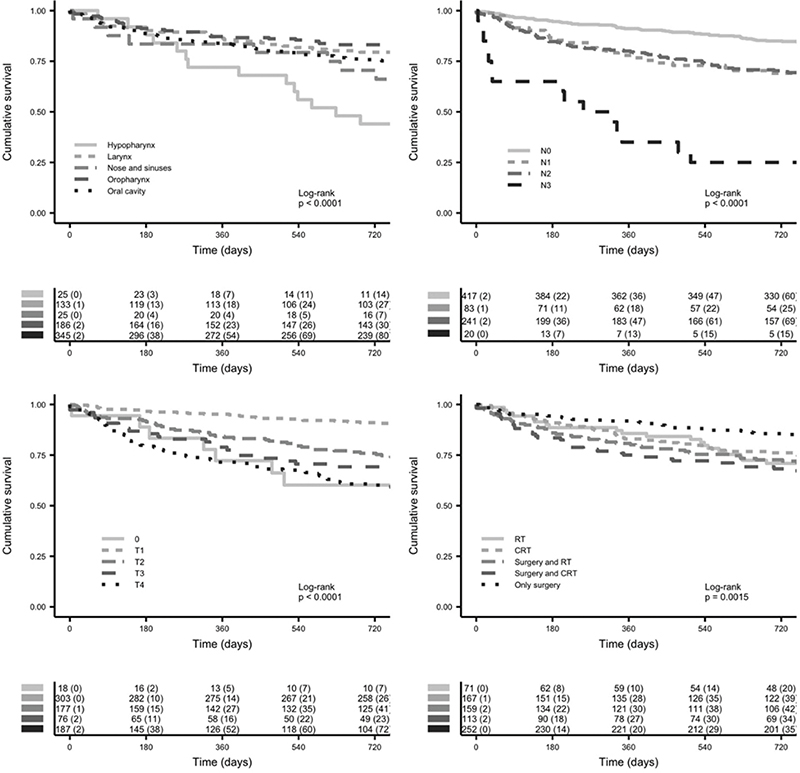
Figure 1. Overall survival for 762 patients treated with curative intent at the HUS Helsinki University Hospital (Helsinki, Finland) between January 1, 2012 and December 31, 2015, stratified by tumor location, tumor class, node class, and treatment.
Patient-related factors
Sex
Most of the patients were male (n = 500, 78%), with a 11% (n = 56) death rate during or within 6 months after treatment. For female patients, 10% (n = 21) died within 6 months. Conversely, 75% (n = 377) of all men and 77% (n = 167) of all women were alive at 2 years.
Age
Patients in the early-death group and patients alive at 2 years had a median age of 70 years (mean 68.6, range 33–86) and 64 years (mean 63.6, range 17–93), respectively. Each additional year of age induced the odds of early death by a factor of 5% (OR 1.05, 95%-CI 1.02–1.08).
ACE-27 score
In the early-death group, 40 (52%) patients had an ACE-27 score of 1, 18 (23%) patients had a score of 2, and 19 (25%) patients had a score of 3. Correspondingly, in the late-death group, 58 (60%) patients had an ACE-27 score of 1, 18 (19%) patients had a score of 2, and 21 (22%) patients had a score of 3 (Table 2). There were no statistically significant differences between early- and late-death groups regarding the ACE-27 grading.
ACCI-score
The early- and late-death groups included 29 (38%) and 29 (30%) patients with an ACCI score of ≥5, respectively (p = n.s., Table 2).
Smoking and alcohol history
Patients with a history of 20 alcoholic drinks per week had higher odds of early death than patients consuming less than 10 alcoholic drinks a week (OR 1.83, 95% CI: 1.03–3.15). Similarly, patients with a smoking history of more than 40 pack-years had a higher OR (1.91) than individuals with less than 10 pack-years (1.0). However, these variables were not statistically significant in the multivariate analysis.
Preoperative thrombocyte count, hemoglobin, and albumin
Differences were observed in the thrombocyte count when comparing early- and late-death groups (p = 0.008). Twenty-three per cent of early deaths and 7% of late deaths had a thrombocyte count > 380 (× 10⁹L) (p < 0.01). A subset analysis of tumor stage showed that 56% of patients with early death and 25% of those with late death had a thrombocyte count > 380 (× 10⁹L) along with N2 class.
In the early-death group, hemoglobin levels were available for 95% of the patients. The median hemoglobin level was 130 g/L (range, 82–177) for males and 123 g/L (range, 95–143) for females. Preoperative serum albumin levels were available for 57% of the patients, with a median level of 33 g/L (range, 18–42). Postoperative albumin levels were available for 65% of the group, with a median of 29 g/L (range, 17–42).
Tumor-related factors
Site
The majority of HNSCCs occurred in the oral cavity, accounting for 49% (n = 38), 45% (n = 44), and 44% (n = 238) of tumors in the groups with early death, late death, and those alive at 2 years, respectively. Hypopharyngeal cancer represented 4% (n = 3), 11% (n = 11), and 2% (n = 11) of the tumors in the groups with early death, late death, and those alive at 2 years, respectively.
Tumor class
Advanced T class correlated with a worse survival prognosis. Patients with a T3 class had an OR of 4.74 (95% CI: 1.90–11.97) and patients with a T4 class had an OR of 7.33 (95% CI: 3.67–16.03) for early death when compared with patients with a T1 tumor. Adjusted OR for T3 tumors was 4.10 (95% CI: 1.44–11.72; p = n.s) and for T4 tumors 5.98 (95% CI: 2.60–13.74; p < 0.001) (Table 3).
Node class
A lower N class correlated with a better prognosis. Patients with an N2 class had an OR of 3.13 (95% CI: 1.81–5.56) and patients with an N3 class had an OR of 9.33 (95% CI: 3.18–25.61) for early death when compared with patients with an N0 class. Adjusted OR for patients with N2 was 2.98 (95% CI: 2.60–13.74; p < 0.001) and for those with N3 12.24 (95% CI: 2.99–50.19; p < 0.001) (Table 3).
p16 status for oropharyngeal tumors
Early- and late-death groups comprised 50% and 40% p16-positive tumors respectively, while 83% of the patients alive at 2 years had a p16-positive tumor.
Treatment-related factors
Treatment modality
Among 236 patients treated by primary surgery alone, the rate of early death was 6% (n = 14). The primary surgery was combined with postoperative RT in 149 patients with an early death rate of 15% (n = 22). Postoperative CRT was administered to 103 patients with an early death rate of 17% (n = 18). Additionally, early death rates were 12% among those with definitive RT and 9% with definitive CRT. After neck dissection (n = 379), 13% (n = 49) of the patients died within 6 months.
Surgical complications
We found no statistically significant differences between early and late death groups when using the Clavien-Dindo classification to assess the severity of surgical complications (Table 2). Only two patients had a Grade 5 complication.
Disease recurrence
Early- and late-death groups comprised more disease recurrences (n = 25, 32%, p < 0.001 and n = 54, 56%, p < 0.001, respectively) when compared with patients alive at 2 years (n = 73, 13%). Disease recurrence led to higher odds of early death (OR 1.94, 95% CI: 1.15–2.23).
Cause of death
For 75% (n = 58) of the patients in the early-death group and 58% (n = 56) in the late-death group, the cause of death was HNSCC. In the early-death group, five patients died during treatment, 25 patients had a disease recurrence, and the remaining 28 patients’ cause of death was not available in the hospital records; however, it was captured from the Finnish Electronic Patient Data Repository (Kanta) and was attributed to HNSCC. The specific cause of death was unavailable for 8% and 24% of the patients in the early- and late-death groups, respectively (see Table 2).
Discussion
We investigated risk factors associated with early death among 762 patients with HNSCC undergoing treatment with only curative intent. In this cohort, 10.1% of the patients died during or within 6 months after treatment. Advanced T and N class, over 40 pack-years of smoking, and heavy alcohol consumption were associated with increased odds of early death. Additionally, elevated thrombocyte levels > 380 (× 109L) were observed in the early-death group. Additionally, only age, along with T4, N2, and N3 class emerged as independent risk factors for early death.
In Denmark, Jensen et al. [10] analyzed data between 2000 and 2017 from the Danish Head and Neck Cancer Group (DAHANCA). The authors reported a 7.1% mortality within 180 days from the first fraction of RT in 11,419 HNC patients treated with curatively intended RT/CRT with or without prior surgery. Similarly, Kouka et al. [7] reviewed data from 8,288 HNC patients treated between 1996 and 2006 in Germany and reported 30-day, 90-day, and 180-day mortality rates of 1.8%, 5.1%, and 9.6%, respectively, following HNC diagnosis. Previous nationwide research conducted on Finnish and Swedish databases revealed that the mortality rate within 6 months after being diagnosed with HNC was 9.5% in Finland between 1953 and 2012, and 9.8% in Sweden between 2008 and 2013 [5]. Hamilton et al. [8] analyzed 5,658 HNSCC patients treated from 1998 to 2014 in Canada. The 90-day risk of death after starting curatively intended RT, with/without concurrent CRT, or up-front surgery, stood at 3.6%. Aligning with our findings, patients older than 75 years at the time of diagnosis with advanced T and N classification had the highest early mortality. Older age was indeed associated with higher odds of early mortality, in line with previous studies [3, 4, 6–8, 10, 11]. However, Chang et al. found no significant differences in age, gender, TNM stage, cancer location, or the Charlson Comorbidity Index (CCI) between those who died within 60 days after completing chemoradiation and those who survived. Our findings indicated that sex did not affect the early death rate of HNSCC patients, corroborating the results of several earlier studies [4, 6, 8, 10, 12–14]. However, other studies have shown male patients have a higher risk of early death [3, 7, 15, 16].
Classification of comorbidities remains important in head and neck oncology when considering treatment-related outcomes. The ACE-27 index, specifically developed for cancer patients, has been validated in HNSCC patients [17–21]. The Age-adjusted Charlson Comorbidity Index (ACCI) incorporates the patient’s age as an adjustment factor in the final CCI, with several studies demonstrating its effectiveness in predicting both short-term and long-term outcomes in various cancers [22–24]. In our study, there was no significant difference between early- and late-death groups when comparing ACE-27 and ACCI scores. However, we did not account for all comorbidities within the cohort, specifically among patients alive at 2 years, which may have affected our results. Nonetheless, earlier studies have shown a relationship between comorbidities and early mortality. Nieminen et al. [6] found that HNC patients with higher ACE-27 scores faced an increased risk of early postoperative death following microvascular free flap surgery. Patients who died within 6 months of surgery had higher CCI, ACCI, and ACE-27 scores compared to surviving patients. Additionally, ACE-27 has been recognized as a significant independent predictor of 90-day mortality [25]. Bøje et al. [26] showed that 36% of HNSCC patients with comorbidities and a higher CCI score had poorer overall survival (OS) rates. Dixon et al. [14] showed that the presence of multiple comorbidities (ACE-27 ≥1) was associated with an increased risk of death either during the treatment or within 90 days after completing radical RT. Kim et al. [27] identified comorbidity (CCI ≥ 2) at the time of diagnosis as an independent predictor of non-cancer mortality after definitive treatment for advanced-stage HNC.
Our results showed that a history of 20 alcoholic drinks per week carried higher odds of early death than 10 alcoholic drinks (including also non-drinkers). Similarly, patients with a smoking history of more than 40 pack-years had 1.91 times the odds of early death than individuals with less than 10 pack-years (including non-smokers). However, these variables were not statistically significant in the multivariate analysis. Hoff et al. [28] showed that smoking during RT negatively impacts HNC treatment outcomes and the risk of death increases with each additional pack-year of smoking. Schlumpf et al. [29] conveyed an early mortality rate of 5.4% in 167 HNSCC patients who died during or within 30 days after completion of concurrent RT/CRT. Further, 90% of the patients who died during treatment had smoked on average 54 pack-years and consumed alcohol. However, none of these factors were significantly associated with death while under treatment. Denissoff et al. [30] reported that continuation of alcohol use, even at a moderate level (10–20 drinks/week) is associated with increased mortality risk after receiving HNSCC diagnosis, independent of age at diagnosis, tumor stage, and tobacco use status. However, drinking behavior around the time of diagnosis of HNC was not associated with a higher mortality risk in the analysis by Beynon et al. [31].
We observed no differences in tumor location between early-death patients and patients alive at 2 years. Yet, Hamilton et al. [8] showed that oral cavity cancer was associated with an increased risk of early mortality when compared with oropharyngeal cancer. This observation is supported by a Surveillance, Epidemiology, and End Results (SEER) population-based analysis, particularly for tumors located in the tongue [32]. Talani et al. [3, 4] identified hypopharyngeal cancer as a significant independent risk factor for early mortality, aligning with prior research [10, 16, 33]. Kouka et al. [7] further highlighted the fact that the sites of the oral cavity (OR 3.47), oropharynx (OR 3.01), and hypopharynx (OR 3.27) were associated with significantly higher 180-day mortality in multivariate analyses.
Our findings indicate that advanced T or N class increase early mortality, with T4, N2, and N3 class independently linked to this risk after curative treatment. This aligns with previous research [6–8]. In addition, Tighe et al. [11] found that extracapsular spread was an independent risk factor for 30-day postoperative mortality for HNSCC. Stage IV disease is an independent risk factor for early death in accordance with previous studies [4, 7, 10].
Previous studies have described an association between elevated thrombocytes and poor survival in HNSCC patients, supportive of our observations. A meta-analysis by Takenaka et al. [34] reported that thrombocyte counts greater than the cutoff value (ranging from 150 to 400 × 109L) were associated with poorer OS (HR 1.81; 95% CI 1.16–2.82). The physiological roles of thrombocytes can facilitate cancer progression by binding immune cells and modulating the immune response. Furthermore, thrombocytes inhibit tumorlytic activity by aggregating around tumor cells and may promote tumor growth and metastasis [34]. Indeed, antithrombotic therapies have been associated with better oncologic outcomes in patients with HNSCC [35, 36]. In this cohort, the T class distribution between early- and late-death groups is relatively similar, which suggests that the association between thrombocyte count and early death is less likely to be confounded by the T class. However, the N class distribution shows more variation between the groups, indicating that nodal metastasis could play a role in this association. Indeed, 56% of early-death patients and 25% of late-death had a thrombocyte count > 380 (× 10⁹L) along with N2 class. Due to the limited number of cases, a multivariate analysis would not be feasible. Giannakeas et al. stated that higher thrombocyte counts were associated with cancer-specific death for various cancer sites. Therefore, thrombocyte count might indicate residual disease post-treatment and could be a potential risk stratification tool to guide the need for intensified treatment [37].
In previous reports, low albumin levels have been associated with early mortality in univariable logistic regression analysis [6, 12]. Also in our series, both the pre- and post-operative median albumin levels in the early-death group were slightly lower than normal values. In HNC patients, a hemoglobin level below 100 g/L at diagnosis has been identified as an independent risk factor of noncancer mortality [27]. Additionally, pre-treatment hemoglobin levels below the normal lower range have been recognized as a significant independent predictor of 90-day mortality [25]. In the present cohort, the median hemoglobin level was 130 g/L for males (slightly lower than normal) and 123 g/L for females (within normal range).
The causes of death were investigated for patients who died within 2 years. In the early-death group, 32% of patients had a recurrence, while 75% died from HNSCC. Some patients in the early-death group died during treatment, which does not count as a recurrence, as these patients did not survive long enough for a recurrence to be documented. Furthermore, the number of deaths from HNSCC includes cases where recurrence data may not have been explicitly recorded but where the cause of death was attributed to the primary disease (28 and 2 such cases for the early and late death groups, respectively). This explains why in the late-death group, 56% of patients had a recurrence but 58% of patients died from HNSCC.
Limitations of our study include those inherent in the retrospective design, including some missing data on smoking and alcohol history especially concurrent use, and specific cause of death. In addition, we were not able to assess the impact of factors such as pre-treatment body weight, nutrition status, low fat-free mass index, or peripheral blood total lymphocyte count, all of which have been shown to confer a higher risk of early mortality [12, 14, 27, 38, 39]. Also, due to the small cohort size, the relationship between thrombocyte counts, disease stage, and survival remains unclear. Additionally, we did not account for treatment delay which was reported to have independently increased mortality risk [40]. Furthermore, ACCI and ACE-27 as indicators of comorbidity, Clavien-Dindo classification system to assess surgical complications and preoperative thrombocyte count were only collected for early and late mortality group patients. Lastly, during the time frame between 2012 and 2015, the 7th edition of the UICC TNM staging system was used in Finland. The UICC 8th edition introduces updates, particularly regarding HPV-associated oropharyngeal cancer, which may influence staging accuracy. However, applying the UICC 8th edition retrospectively could lead to inconsistencies in data interpretation, as treatment decisions and documentation were based on the earlier system.
The main strength of this study is that it can be regarded as a population-based series as practically all HNSCC patients of the Helsinki University Hospital referral area were included during the study period. Finland has a population of approximately 5.6 million inhabitants [41], and the HUS catchment area encompasses nearly 2.2 million inhabitants [42]. According to the Finnish Cancer Registry, the number of new annual HNC cases is relative to the population size within each hospital’s catchment area. Also, according to the Finnish Cancer Registry’s statistics in 2022, the Southern Finland collaborative area accounted for approximately 40% of the total oropharyngeal and tongue cancer cases in Finland during 2018–2022. However, there may be some dropouts, as only since 2018, the treatment planning of HNC by a multidisciplinary team has been centralized to the five university hospitals of Finland by law. Consequently, some patients diagnosed with small tumors may have received treatment at district hospitals during the specified time frame. Besides the relatively large cohort size, further strengths of our study lie in the absence of selection bias caused by socioeconomic or insurance status-related issues, given its population-based nature and the fact that all treatments within the HUS referral area are administered through our hospital, ensuring the homogeneity of healthcare provided to all patients.
Conclusions
The death rate during or within 6 months after treatment with curative intent was 10.1%. Advanced T and N class, over 40 pack-years of smoking, and heavy alcohol consumption were associated with increased odds of early death. Yet, only age, along with T4, N2, and N3 class were independent risk factors for early death. Additionally, elevated thrombocyte levels >380 (×109L) were observed in the early mortality group. As previously known, older patients with advanced disease have the highest risk of early death. Further prospective research on thrombocyte count as a readily measurable prognostic marker is required to assess its role in identifying patients at risk of early death. This could help clinicians assess their patients’ risk of early death and to find effective strategies to mitigate it.
Statement of author contributions
The study was designed by Mahmoud Bazina, Rayan Nikkilä, and Antti Mäkitie. Rayan Nikkilä performed all statistical analyses. The first draft of the manuscript was devised by Mahmoud Bazina. All authors contributed to the revision of the manuscript and had final approval of the submitted and published versions.
Data availability
Data is available upon request from the corresponding author.
References
[1] Bray F, Laversanne M, Sung H, Ferlay J, Siegel RL, Soerjomataram I, et al. Global cancer statistics 2022: Globocan estimates of incidence and mortality worldwide for 36 cancers in 185 countries. CA: A Cancer J Clin. 2024;74(3):229–63. https://doi.org/10.3322/caac.21834
[2] Curado MP, Hashibe M. Recent changes in the epidemiology of head and neck cancer. Curr Opin Oncol. 2009;21(3):194–200. https://doi.org/10.1097/CCO.0b013e32832a68ca
[3] Talani C, Högmo A, Laurell G, Mäkitie A, Farnebo L. Six-month mortality has decreased for patients with curative treatment intent for head and neck cancer in Sweden. PLoS One. 2024;19(4):e0296534. https://doi.org/10.1371/journal.pone.0296534
[4] Talani C, Mäkitie A, Beran M, Holmberg E, Laurell G, Farnebo L. Early mortality after diagnosis of cancer of the head and neck – A population-based nationwide study. PLoS One. 2019;14(10):e0223154. https://doi.org/10.1371/journal.pone.0223154
[5] Farnebo L, Malila N, Mäkitie A, Laurell G. Early death among head and neck cancer patients. Curr Opin Otolaryngol Head Neck Surg. 2016;24(2):115–20. https://doi.org/10.1097/MOO.0000000000000236
[6] Nieminen T, Tolvi M, Lassus P, Wilkman T, Lehtonen L, Mäkitie A. Risk factors for evaluating early mortality after microvascular reconstruction of head and neck cancers. Scand J Surg. 2022;111(4):83–91. https://doi.org/10.1177/14574969221117010
[7] Kouka M, Buentzel J, Kaftan H, Boeger D, Mueller AH, Wittig A, et al. Early Mortality among Patients with Head and Neck Cancer Diagnosed in Thuringia, Germany, between 1996 and 2016 - A Population-Based Study. Cancers. 2022;14(13):3099. https://doi.org/10.3390/cancers14133099
[8] Hamilton SN, Tran E, Berthelet E, Wu J, Olson R. Early (90‐day) mortality after radical radiotherapy for head and neck squamous cell carcinoma: A population‐based analysis. Head Neck. 2018;40(11):2432–40. https://doi.org/10.1002/hed.25352
[9] Alotaibi M, Valova V, Hänsel T, Stromberger C, Kofla G, Olze H, et al. Impact of Smoking on the Survival of Patients With High-risk HPV-positive HNSCC: A Meta-analysis. In Vivo. 2021;35(2):1017–26. https://doi.org/10.21873/invivo.12345
[10] Jensen KH, Vogelius I, Kristensen CA, Andersen E, Overgaard J, Eriksen JG, et al. Early Mortality after Radical Radiotherapy in Head and Neck Cancer - A Nationwide Analysis from the Danish Head and Neck Cancer Group (DAHANCA) Database. Clin Oncol (R Coll Radiol). 2021;33(1):57–63. https://doi.org/10.1016/j.clon.2020.07.004
[11] Tighe D, Kwok A, Putcha V, McGurk M. Identification of appropriate outcome indices in head and neck cancer and factors influencing them. Int J Oral Maxillofac Surg. 2014;43(9):1047–53. https://doi.org/10.1016/j.ijom.2014.03.010
[12] Chang PH, Yeh KY, Huang JS, Lai CH, Wu TH, Lan YJ, et al. Pretreatment performance status and nutrition are associated with early mortality of locally advanced head and neck cancer patients undergoing concurrent chemoradiation. Eur Arch Otorhinolaryngol. 2013;270(6):1909–15. https://doi.org/10.1007/s00405-012-2290-2
[13] Datema FR, Ferrier MB, van der Schroeff MP, Baatenburg de Jong RJ. Impact of comorbidity on short-term mortality and overall survival of head and neck cancer patients. Head Neck. 2010;32(6):728–36. https://doi.org/10.1002/hed.21245
[14] Dixon L, Garcez K, Lee LW, Sykes A, Slevin N, Thomson D. Ninety day mortality after radical radiotherapy for head and neck cancer. Clin Oncol (R Coll Radiol). 2017;29(12):835–40. https://doi.org/10.1016/j.clon.2017.08.005
[15] Gaubatz ME, Bukatko AR, Simpson MC, Polednik KM, Adjei Boakye E, Varvares MA, et al. Racial and socioeconomic disparities associated with 90-day mortality among patients with head and neck cancer in the United States. Oral Oncol. 2019;89:95–101. https://doi.org/10.1016/j.oraloncology.2018.12.023
[16] Massa ST, Osazuwa-Peters N, Christopher KM, Arnold LD, Schootman M, Walker RJ, et al. Competing causes of death in the head and neck cancer population. Oral Oncol. 2017;65:8–15. https://doi.org/10.1016/j.oraloncology.2016.12.006
[17] Rogers SN, Aziz A, Lowe D, Husband DJ. Feasibility study of the retrospective use of the Adult Comorbidity Evaluation index (ACE-27) in patients with cancer of the head and neck who had radiotherapy. Br J Oral Maxillofac Surg. 2006;44(4):283–88. https://doi.org/10.1016/j.bjoms.2005.06.025
[18] Sanabria A, Carvalho AL, Vartanian JG, Magrin J, Ikeda MK, Kowalski LP. Validation of the Washington University Head and Neck Comorbidity Index in a cohort of older patients. Arch Otolaryngol Head Neck Surg. 2008;134(6):603–7. https://doi.org/10.1001/archotol.134.6.603
[19] Tanvetyanon T, Padhya T, McCaffrey J, Zhu W, Boulware D, Deconti R, et al. Prognostic factors for survival after salvage reirradiation of head and neck cancer. J Clin Oncol. 2009;27(12):1983–91. https://doi.org/10.1200/JCO.2008.20.0691
[20] Paleri V, Wight RG. A cross-comparison of retrospective notes extraction and combined notes extraction and patient interview in the completion of a comorbidity index (ACE-27) in a cohort of United Kingdom patients with head and neck cancer. J Laryngol Otol. 2002;116(11):937–41. https://doi.org/10.1258/00222150260369499
[21] Paleri V, Wight RG. Applicability of the adult comorbidity evaluation – 27 and the Charlson indexes to assess comorbidity by notes extraction in a cohort of United Kingdom patients with head and neck cancer: a retrospective study. J Laryngol Otol. 2002;116(3):200–5. https://doi.org/10.1258/0022215021910528
[22] Zhou S, Zhang X-H, Zhang Y, Gong G, Yang X, Wan W-H. The aAge-adjusted Charlson Comorbidity Index predicts prognosis in elderly cancer patients. Cancer Management and Research. 2022;14:1683–91. https://doi.org/10.2147/CMAR.S361495
[23] Qu W-F, Zhou P-Y, Liu W-R, Tian M-X, Jin L, Jiang X-F, et al. Age-adjusted Charlson Comorbidity Index predicts survival in intrahepatic cholangiocarcinoma patients after curative resection. Ann Transl Med. 2020;8(7):487. https://doi.org/10.21037/atm.2020.03.23
[24] Lin J-X, Huang Y-Q, Xie J-W, Wang J-B, Lu J, Chen Q-Y, et al. Age-adjusted Charlson Comorbidity Index (ACCI) is a significant factor for predicting survival after radical gastrectomy in patients with gastric cancer. BMC Surg. 2019;19(1):53. https://doi.org/10.1186/s12893-019-0513-9
[25] Tsui T, Cheung KM, Chow J, Wong KH. Risk factors for early mortality in head and neck cancer patients undergoing definitive chemoradiation. Hong Kong J Radiol. 2022;25:127–35. https://doi.org/10.12809/hkjr2217471
[26] Bøje CR, Dalton SO, Primdahl H, Kristensen CA, Andersen E, Johansen J, et al. Evaluation of comorbidity in 9388 head and neck cancer patients: A national cohort study from the DAHANCA database. Radiother Oncol. 2014;110(1):91–7. https://doi.org/10.1016/j.radonc.2013.11.009
[27] Kim YH, Roh J-L, Kim S-B, Choi S-H, Nam SY, Kim SY. Risk factors for competing non-cancer mortality after definitive treatment for advanced-stage head and neck cancer. Oral Dis. 2018;24(7):1217–1225. https://doi.org/10.1111/odi.12904
[28] Hoff CM, Grau C, Overgaard J. Effect of smoking on oxygen delivery and outcome in patients treated with radiotherapy for head and neck squamous cell carcinoma – A prospective study. Radiother Oncol. 2012;103(1):38–44. https://doi.org/10.1016/j.radonc.2012.01.011
[29] Schlumpf M, Fischer C, Naehrig D, Rochlitz C, Buess M. Results of concurrent radio-chemotherapy for the treatment of head and neck squamous cell carcinoma in everyday clinical practice with special reference to early mortality. BMC Cancer. 2013;13(1):610. https://doi.org/10.1186/1471-2407-13-610
[30] Denissoff A, Huusko T, Ventelä S, Niemelä S, Routila J. Exposure to alcohol and overall survival in head and neck cancer: A regional cohort study. Head Neck. 2022;44(10):2109–17. https://doi.org/10.1002/hed.27125
[31] Beynon RA, Lang S, Schimansky S, Penfold CM, Waylen A, Thomas SJ, et al. Tobacco smoking and alcohol drinking at diagnosis of head and neck cancer and all‐cause mortality: Results from head and neck 5000, a prospective observational cohort of people with head and neck cancer. Int J Cancer. 2018;143(5):1114–27. https://doi.org/10.1002/ijc.31416
[32] Rusthoven K, Ballonoff A, Raben D, Chen C. Poor prognosis in patients with stage I and II oral tongue squamous cell carcinoma. Cancer. 2008;112(2):345–51. https://doi.org/10.1002/cncr.23183
[33] Jakobsen KK, Grønhøj C, Jensen DH, Karnov KKS, Agander TK, Specht L, et al. Increasing incidence and survival of head and neck cancers in Denmark: a nation-wide study from 1980 to 2014. Acta Oncol. 2018;57(9):1143–51. https://doi.org/10.1080/0284186X.2018.1438657
[34] Takenaka Y, Oya R, Kitamiura T, Ashida N, Shimizu K, Takemura K, et al. Platelet count and platelet‐lymphocyte ratio as prognostic markers for head and neck squamous cell carcinoma: Meta‐analysis. Head Neck. 2018;40(12):2714–23. https://doi.org/10.1002/hed.25366
[35] Furlan C, Steffan A, Polesel J, Trovo M, Gobitti C, Vaccher E, et al. Lower platelet counts and antiplatelet therapy independently predict better outcomes in patients with head and neck squamous cell carcinoma: a retrospective analysis. Biomark Res. 2015;3(1):25. https://doi.org/10.1186/s40364-015-0051-2
[36] Rachidi S, Wallace K, Day TA, Alberg AJ, Li Z. Lower circulating platelet counts and antiplatelet therapy independently predict better outcomes in patients with head and neck squamous cell carcinoma. J Hematol Oncol. 2014;7(1):65. https://doi.org/10.1186/s13045-014-0065-5
[37] Giannakeas V, Kotsopoulos J, Brooks JD, Cheung MC, Rosella L, Lipscombe L, et al. Platelet count and survival after cancer. Cancers. 2022;14(3):549. https://doi.org/10.3390/cancers14030549
[38] Datema FR, Ferrier MB, Baatenburg de Jong RJ. Impact of severe malnutrition on short-term mortality and overall survival in head and neck cancer. Oral Oncol. 2011;47(9):910–4. https://doi.org/10.1016/j.oraloncology.2011.06.510
[39] Talani C, Astradsson T, Farnebo L, Mäkitie A, Ehrsson YT, Laurell G. Pretreatment fat‐free mass index correlates with early death in patients with head and neck squamous cell carcinoma. Head Neck. 2024;46(4):808–18. https://doi.org/10.1002/hed.27628
[40] Murphy CT, Galloway TJ, Handorf EA, Egleston BL, Wang LS, Mehra R, et al. Survival impact of increasing time to treatment initiation for patients with head and neck cancer in the United States. J Clin Oncol. 2016;34(2):169–78. https://doi.org/10.1200/JCO.2015.61.5906
[41] Finland S. Preliminary population statistics [Internet] Statistics Finland; 2024 [cited 2024 Apr 03]. Available from: https://www.stat.fi/en/statistics/vamuu
[42] HUS. About HUS: HUS [Internet]. 2024 [cited 2024 April 03]. Available from: https://www.hus.fi/en/about-us