ORIGINAL ARTICLE
Lower MeDiC score is associated with non-referral to multidisciplinary team meeting discussion in bladder cancer patients: a nationwide and population-based study
Jessica Wihla,b,c  , Oskar Hagbergd, Firas Aljaberye, Truls Gårdmarkf, Abolfazl Hosseinig, Staffan Jahnsone, Tomas Jerlströmh, Viveka Ströcki, Karin Söderkvistj, Anders Ullénk,l, Lars Holmbergm,n, Christel Häggströmm,o and Fredrik Liedbergd,p
aDepartment of Clinical Sciences, Division of Oncology and Pathology, Lund University, Lund, Sweden; bRegional Cancer Centre South, Region Skåne, Lund, Sweden; cDepartment of Hematology, Oncology and Radiation Physics, Skåne University Hospital, Lund, Sweden; dDepartment of Translational Medicine, Lund University, Malmö, Sweden; eDepartment of Clinical and Experimental Medicine, Division of Urology, Linköping University, Linköping, Sweden; fDepartment of Clinical Sciences, Danderyd Hospital, Karolinska Institute, Stockholm, Sweden; gDepartment of Molecular Medicine and Surgery, Karolinska Institutet, Stockholm, Sweden; hDepartment of Urology, School of Medical Sciences, Faculty of Medicine and Health, Örebro University, Örebro, Sweden; iDepartment of Urology, Sahlgrenska University Hospital and Institute of Clinical Sciences, Sahlgrenska Academy, University of Gothenburg, Sweden; jDepartment of Diagnostics and Intervention, Umeå University, Sweden; kDepartment of Oncology-Pathology, Karolinska Institutet, Stockholm, Sweden; lDepartment of Pelvic Cancer, Genitourinary Oncology and Urology Unit, Karolinska University Hospital, Stockholm, Sweden; mDepartment of Surgical Sciences, Uppsala University, Uppsala, Sweden; nSchool of Cancer and Pharmaceutical Sciences, King’s College London, London, UK; oDepartment of Diagnostics and Intervention, Registry Center North, Umeå University, Umeå, Sweden; pDepartment of Urology, Skåne University Hospital, Malmö, Sweden
ABSTRACT
Background and purpose: The Measure of Case-Discussion Complexity (MeDiC) tool was created to gauge case complexity at multidisciplinary team meetings (MDTM) for case selection and prioritization. We aimed to assess applicability and association with MeDiC score and non-compliance with national guideline-recommendations for MDTM referral in a bladder cancer setting.
Material and methods: A modified MeDiC scoring system was applied in 8955 subjects with localized (T1-T4N0M0) or metastasized disease as per the Bladder Cancer Data Base Sweden (BladderBaSe) 2.0. Association between MeDiC score and not being discussed at MDTM was investigated by multivariable logistic regression, and further explored in relation to calendar time period, healthcare region, age at diagnosis and hospital volume.
Results and interpretation: Median total MeDiC score was lower in individuals not being discussed at an MDTM (7.0 Inter Quartile Range [IQR] 6.0–9.0) compared to those who were (8.0 IQR 6.0–10.0). Adjusted odds ratio for not being discussed at an MDTM was 2.1 (95% confidence interval [CI] 1.8–2.4) for a MeDiC score in the lower quartile, as compared to the highest quartile, with higher estimates when performing stratified analyses in later calendar years and in specific healthcare regions. Our data indicate that the MeDiC score is applicable in bladder cancer patients, and we identified an association between lower MeDiC score and not being discussed at an MDTM.
KEYWORDS: Bladder cancer; multidisciplinary team meeting; treatment recommendation; guidelines; scoring system; complexity factors
Citation: ACTA ONCOLOGICA 2025, VOL. 64, 616–622. https://doi.org/10.2340/1651-226X.2025.42756.
Copyright: © 2025 The Author(s). Published by MJS Publishing on behalf of Acta Oncologica. This is an Open Access article distributed under the terms of the Creative Commons Attribution 4.0 International License (http://creativecommons.org/licenses/by/4.0/).
Received: 20 December 2024; Accepted: 16 April 2025; Published: 5 May 2025
CONTACT Jessica Wihl jessica.wihl@med.lu.se Regional Cancer Center South, Medicon Village, Scheeletorget 1, SE-223 81 Lund, Sweden
Supplemental data for this article can be accessed online at https://doi.org/10.2340/1651-226X.2025.42756
Competing interests and funding: The authors report there are no competing interests to declare.
This work was supported by the Swedish Cancer Society (grant numbers CAN 22 2021 and CAN 2023/2807), Swedish Research Council (2021-00859), Lund Medical Faculty (ALF), the Regional Cancer Centre South, Region Skåne, Skåne University Hospital Research Funds, The Cancer Research Fund at Malmö General Hospital, Maud and Birger Gustavsson Research Foundation, The Hjelm Family Foundation for Medical research, Gösta Jönsson Research Foundation, the Foundation of Urological Research (Ove and Carin Carlsson bladder cancer donation), and Hillevi Fries Research Foundation.
Introduction
The Measure of Case-Discussion Complexity (MeDiC) tool was developed to increase the understanding of different aspects of case complexity [1]. MeDiC may be used to ensure balanced prioritization strategies and as a clinical quality assurance for multidisciplinary team meeting (MDTM) management and treatment planning.
Among all urological malignancies, bladder cancer is the most frequently subjected to altered diagnosis and/or treatment after referral to MDTM [2–4]. Since May 2013, the Swedish National Guidelines on Urothelial Carcinoma recommend an MDTM discussion for all invasive bladder cancer patients with stage T1 and above, including those with metastasized disease [5]. Thus, patients with stage Ta and carcinoma in situ (approximately 50% of all bladder cancer patients) are treated according to guidelines but without need of MDTM discussion. Concerns about prolonged waiting times to MDTM and patient safety related to limited case discussion time slots have been raised in different types of cancers [6–14]. More vulnerable bladder cancer patients (advanced age, stage and/or poorer performance status) have been reported to less frequently being referred to MDTM [15]. Theoretically, applying the MeDiC score in bladder cancer could help improve patient prioritization.
To study the possible clinical applicability of the MeDiC score, we applied a modified version of the score to patients diagnosed with bladder cancer in the Bladder Cancer Data Base Sweden (BladderBaSe) 2.0 [16] and investigated if MeDiC score was associated with not being referred to MDTM discussion. Additionally, we performed stratified analyses to disentangle if associations were modified by age at diagnosis, calendar year, hospital volume or healthcare region.
Material and methods
Bladder Cancer Data Base Sweden 2.0, study population, and selected variables
Patients in the Swedish National Urinary Bladder Cancer Register (SNRUBC) have been linked to registers at the National Board of Health and Welfare and the Statistics Sweden to form BladderBaSe 2.0 [14]. To calculate a drug comorbidity index (DCI) [17] in BladderBaSe 2.0, we retrieved data from the Prescribed Drug Register. From Statistics Sweden we also retrieved data on the highest education level. In BladderBaSe 2.0, we ascertained data on age, gender, grade, clinical T stage, clinical N stage, M stage at diagnosis, and healthcare region from the SNRUBC. The study population consisted of all patients diagnosed with bladder cancer stage T1–T4 and/or lymph node metastases and/or distant metastases from August 1st, 2008, from when SNRUBC registered whether patients were discussed at an MDTM until December 31st, 2019. To quantify hospital volume while accounting for time trends, we assessed period-specific mean annual volume (PSMAV) dynamically by using data on all patients fulfilling the inclusion criteria specified earlier in the text. We defined PSMAV as the volume per year for the preceding 3 years, and a PSMAV was calculated separately for each hospital unit and year of diagnosis for the individual patient [18].
The Measure of Case-Discussion Complexity score and outcome definitions
The MeDiC tool was developed by multidisciplinary team experts in the UK to assess cancer case complexity as a screening instrument for MDTM consideration through case selection and prioritization [1]. Originally developed for breast, colorectal, and gynecological cancer, the MeDiC score has also previously been evaluated in prostate cancer patients [19]. Individual patient MeDiC scores were compared to preformed clinical MDTM case-selection processes and key MDTM predictive factors were identified correlating with MeDiC scoring [19]. The MeDiC tool measures clinical and logistical complexities and consists of a template of 26 complexity items divided into three main categories: pathology, patient factors, and treatment factors. The items are each differently weighted, between 1 to 4 points for complexity following predefined descriptions [1]. We adapted the scoring system for the 26 complexity items in the MeDiC tool template to indicators of the variables in BladderBaSe 2.0 [16, 17]. Following the predefined description of the MeDiC tool [1], items were weighted between 1 to 4 points for complexity. The exact definition and weight for each item are presented in Supplementary Table 1. Information on items 10, 12, and 17–24 was not available in BladderBaSe 2.0., and therefore missing in the study population, although item 22 (unusual anatomy) is not applicable in a bladder cancer context. Three of the original MeDiC 26 items (item no. 3, 4, and 5) are not relevant in the bladder cancer context, and consequently all patients scored 0 in these items. Our modified version of the MeDiC score was calculated for all patients with a minimum score of 3, as a consequence of that all patients fulfilled one point for item 1, 6, and 26, whereas theoretically the maximum score was 28. The primary outcome measure was to not being discussed at an MDTM.
Statistical methods
For each individual in the study population a modified MeDiC score was calculated. For the total study population, and in quartiles of the MeDiC score, categorical variables were presented as proportions, and age was presented with medians and interquartile ranges (IQR). To visualize the distribution of patients not being discussed at an MDTM, we displayed the proportion of not being discussed at an MDTM over calendar time.
Associations between MeDiC score and not being discussed at an MDTM were investigated in a multivariable logistic regression model adjusting for age and gender with the MeDiC score in quartiles, and the highest quartile used as reference by calculating odds ratios (ORs) with 95% confidence intervals (CIs). Given that age and gender parameters are not included in the MeDiC score and motivate these factors as adjustment factors, we checked proportions of not being discussed at an MDT by age in tertiles and gender.
To explore interaction, we applied a similar logistic regression model in subgroups by calendar year of diagnosis (2008–2013 and 2014–2019 (as MDTM-discussion was recommended for all patients with stage T1-T4 and those with metastasized disease from 2014 and onwards)), healthcare region, age at diagnosis in tertiles (<68/68–75/≥76), and PSMAV (in tertiles), respectively. Analyses were adjusted for age and gender, except for the subgroup analysis by age, where adjustment was performed for gender only. A formal likelihood ratio test was also performed to assess differences between the regression models. Additionally, we used the same logistic regression model to assess the potential linear association between the MeDiC score and the probability of not being discussed at an MDTM, calculating ORs for each one-unit decrease in the MeDiC score. The R statistical package version 4.3.0 was used for all analyses.
Ethical aspects
This study was approved by The Research Ethics Board at Uppsala University, Sweden (Dnr 2015-277, 2019-03574, 2020-05123, and 2022-01747-02).
Results
Our study included 8955 patients with distribution of MeDiC score by referral to MDTM discussion (Figure 1). The median MeDiC score was lower in individuals not discussed at an MDTM 7.0 (IQR 6.0–9.0) versus 8.0 (IQR 6.0–10.0). From August 2008 to 2019 the proportion of patients with tumor stages T1–T4 or metastasized disease not being discussed at an MDTM declined sharply in 2013 (Figure 2). The median age of the studied population was 72 (IQR 66–78) years and 24% were females. Further data of patient characteristics, pathologic and treatment factors separated by MeDiC score in quartiles are given in Table 1. Of patients in the highest MeDiC score quartile, 26% were not discussed at an MDTM whereas 40% were not discussed in the lowest quartile. A larger proportion of patients ≥76 years was not discussed at MDTM, as compared to younger ages (Supplementary Table 2).
| MeDiC score (quartiles) | 3–6 | 7–8 | 9–10 | 11–19 | Total |
| Numbers (Row %) | 2884 (32) | 2493 (28) | 1980 (22) | 1598 (18) | 8955 |
| MDTM | |||||
| No | 1141 (37) | 871 (28) | 638 (21) | 408 (13) | 3058 |
| Yes | 1743 (30) | 1622 (28) | 1342 (23) | 1190 (20) | 5897 |
| Median age (IQR) years | 70 (63–75) | 72 (66–78) | 73 (67–79) | 76 (70–81) | 72 (66–78) |
| Sex | |||||
| Female | 669 (31) | 567 (27) | 476 (22) | 426 (20) | 2138 |
| Male | 2215 (32) | 1926 (28) | 1504 (22) | 1172 (17) | 6817 |
| Grade WHO 1999 | |||||
| G1/LMP | 38 (60) | 14 (22) | 6 (10) | 5 (8) | 63 |
| G2 | 929 (52) | 447 (25) | 267 (15) | 142 (8) | 1785 |
| G3-G4/anaplastic | 1825 (27) | 1922 (28) | 1634 (24) | 1379 (20) | 6760 |
| Gx | 92 | 110 | 73 | 72 | 347 |
| Clinical T-stage group | |||||
| T1 | 2329 (50) | 1321 (28) | 758 (16) | 286 (6) | 4694 |
| T2 | 460 (15) | 877 (28) | 886 (28) | 920 (29) | 3143 |
| T3-T4 and/or N+ and/or M1 | 95 (8) | 295 (26) | 336 (30) | 392 (35) | 1118 |
| Clinical N-stage | |||||
| N0/Nx | 2865 (34) | 2358 (28) | 1837 (22) | 1398 (17) | 8458 |
| N1 | 5 (2) | 49 (24) | 59 (29) | 88 (44) | 201 |
| N2 | 10 (5) | 55 (28) | 57 (29) | 76 (38) | 198 |
| N3 | 2 (2) | 31 (33) | 26 (28) | 35 (37) | 94 |
| Clinical M-stage | |||||
| M0/MX | 2863 (33) | 2403 (28) | 1872 (22) | 1457 (17) | 8595 |
| M1 | 19 (5) | 90 (25) | 107 (30) | 141 (39) | 357 |
| Previous cancer within 10 years of bladder cancer diagnosis | |||||
| N | 2727 (35) | 2218 (28) | 1691 (22) | 1153 (15) | 7789 |
| Y | 157 (13) | 275 (24) | 289 (25) | 445 (38) | 1166 |
| Previous abdominal surgery | |||||
| N | 2880 (34) | 2439 (29) | 1850 (22) | 1227 (15) | 8396 |
| Y | 4 (1) | 54 (10) | 130 (23) | 371 (66) | 559 |
| DCI (tertiles) | |||||
| −0.75 | 1878 (53) | 948 (27) | 521 (15) | 172 (5) | 3519 |
| 0.75–2 | 784 (28) | 892 (32) | 582 (21) | 514 (19) | 2772 |
| 2- | 222 (8) | 653 (25) | 877 (33) | 912 (34) | 2664 |
| Mental comorbidities | |||||
| N | 2759 (36) | 2145 (28) | 1657 (21) | 1156 (15) | 7717 |
| Y | 125 (10) | 348 (28) | 323 (26) | 442 (36) | 1238 |
| Educational level* | |||||
| Low | 116 (4) | 715 (22) | 1165 (35) | 1289 (39) | 3285 |
| Middle | 1761 (48) | 1160 (31) | 572 (15) | 200 (5) | 3693 |
| High | 955 (51) | 586 (31) | 227 (12) | 104 (6) | 1872 |
| Increased risk of treatment toxicity** | |||||
| N | 2884 (33) | 2479 (29) | 1912 (22) | 1355 (16) | 8630 |
| Y | 0 (0) | 14 (4) | 68 (21) | 243 (75) | 325 |
| PSMAV (tertiles) | |||||
| -49 | 938 (31) | 824 (27) | 695 (23) | 552 (18) | 3009 |
| 49–77 | 1001 (34) | 783 (26) | 631 (21) | 540 (18) | 2955 |
| 77–229 | 945 (32) | 886 (30) | 654 (22) | 506 (17) | 2991 |
| Healthcare region | |||||
| Stockholm | 573 (35) | 468 (29) | 327 (20) | 253 (16) | 1621 |
| Mid Sweden | 651 (33) | 513 (26) | 453 (23) | 357 (18) | 1974 |
| Southeastern | 339 (31) | 308 (28) | 248 (22) | 216 (19) | 1111 |
| Southern | 595 (31) | 547 (29) | 436 (23) | 326 (17) | 1904 |
| Western | 474 (31) | 445 (29) | 325 (21) | 281 (18) | 1525 |
| Northern | 252 (31) | 212 (26) | 191 (23) | 165 (20) | 820 |
| MDTM: multidisciplinary team meeting; IQR: Inter Quartile Range; LMP: Low malignant potential; NA: Not available; DCI: Drug Comorbidity Index; PSMAV: Period Specific Mean Annual Volume in hospitals where the individual patient was diagnosed with bladder cancer. Grey rows represent items included when calculating MeDiC-points. *Missing data for 105 individuals. **Cystectomy in an individual 80 years and above or neoadjuvant chemotherapy in an individual 76 years and above. |
|||||
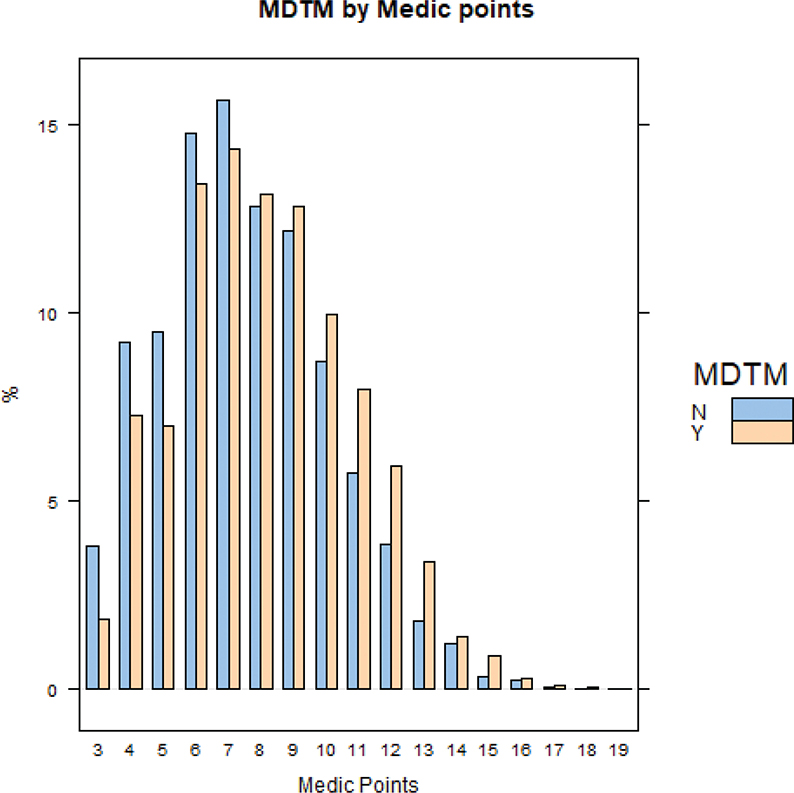
Figure 1. Distribution of MeDiC-points in patients not discussed at MDTM (N) and those who were discussed (Y), respectively.
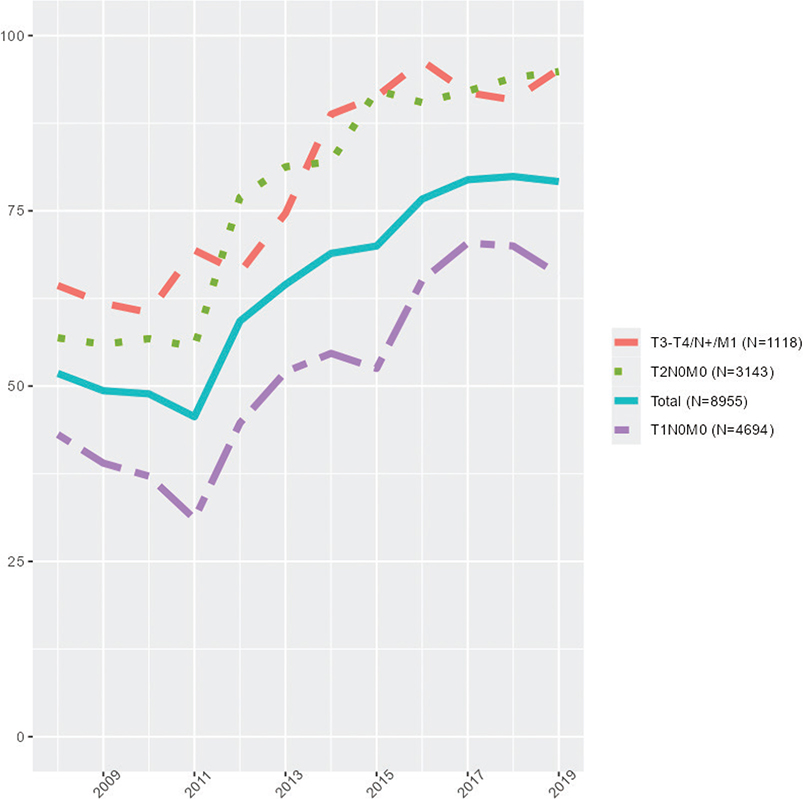
Figure 2. Registration of proportions (%) discussed at an MDTM over time from August 1st 2008 to December 31st 2019.
In a logistic regression model adjusting for age and gender, a MeDiC score in the lowest quartile, as compared to highest, was associated with not being discussed at an MDTM, OR of 2.1 (95% CI 1.8–2.4) (Table 2).
The association between MeDiC score and not being discussed at an MDTM was modified by calendar year of diagnosis (p = 0.004), with larger estimates during the later years for lower MeDiC scores (Supplementary Table 3). Furthermore, the healthcare region interacted with the association between MeDiC score and not being discussed at an MDTM (p < 0.001). We found larger estimates for not being discussed at an MDTM in lower MeDiC scores in the Southeastern and Northern healthcare regions (data not shown). No interactions were identified between MeDiC score and not being discussed at MDTM for age at diagnosis and PSMAV.
Discussion
In this nationwide population-based study utilizing BladderBase 2.0, a lower MeDiC score was associated with not being discussed at an MDTM. The association was reinforced during the second half of the study period (2014–2019) and the estimates were higher in the Southeastern and Northern healthcare regions when corresponding stratified analyses were performed.
To the best of our knowledge this is the first study using a modified version of the MeDiC tool in the context of bladder cancer, and also the first study that includes a large number of patients (n = 8,955) from an unselected population. The study is limited by lacking some of the original MeDiC items due to retrospective setting and lack of information in the dataset (Supplementary Table 1). In a future prospective setting, these items need to be included to ensure granular assessment of bladder cancer patient complexity in the clinical situation, to adequately validate the MeDiC score in bladder cancer patients.
Although current Swedish guidelines on urothelial carcinoma [5] recommend MDTM for all the investigated patients, this study suggests that urologists and oncologists refrain from referring less complex bladder cancer patients to MDTM, and especially so from 2014 and onwards. Whether this is related to MDTM capacity issues during later years or varying MDTM-capacity between healthcare regions in Sweden or practice patterns, is unclear. The MeDiC score has hitherto not been applied in Swedish bladder cancer care. However, the association between lower MeDiC scores with lower probability of MDTM referral in our retrospective investigation indicate that the MeDiC scoring system reflects a practice to prioritize more complex patients for MDTM referral. Refraining from MDTM referral for stage Ta is already recommended by Swedish national guidelines [5]. Still, not referring 26% of patients with a MeDiC score in the highest quartile among those recommended by guidelines for MDTM referral is a too high figure, and these patients may miss out on being offered a treatment tailored to their needs. Whether a prospective application of MeDiC score can decrease the proportion of those 26% not referred to MDTM, despite a complex situation, needs to be further studied.
According to a former study physicians cannot reliably predict which patients that will have an altered treatment plan after a urooncologic MDTM [20]. The MeDiC score could be one supplementary method to prioritize bladder cancer patients for MDTM, especially when resources are limited. However, while the MeDiC score considers tumor, treatment, and patient factors, it does not – importantly in bladder cancer – include age [1]. In a recent Dutch study higher age was associated with not being discussed at an MDTM [15]. In that population-based study, not being referred to MDTM was also associated with a lower probability of receiving curative treatment [15]. However, older patients might especially benefit from MDTM referral. They could be offered curative bladder-sparing treatments, be eligible for new combinations of complex oncologic systemic treatment options [21, 22], and for other palliative treatment modalities with local radiation [23] or even urinary diversion. In our study, age was not used to discriminate between patients, that is did not modify the association between MeDiC score and not being discussed at an MDTM. We were unable to define older patients not referred for MDTM suitable for the above-mentioned treatment options in our study. Further studies are needed to disentangle if and how age needs to be considered if MeDiC score is applied to prioritize bladder cancer patients for MDTM-referral.
Another possible drawback by using MeDiC scores to prioritize referral to MDTM is that referral of patients with less advanced stage T1-disease, where a pathological stage review at MDTM has been reported to frequently (20%) both up- and downstage the primary pathology and such altered tumor stage after pathology review was associated with progression-free survival [24]. Thus, as stage T1-patients receive a lower MeDiC score compared to patients with more advanced tumors, one cannot rule out that prioritizing individual patients to MDTM referral strictly by MeDiC score might result in both missed radical treatment opportunities or overtreatment for some patients.
Conclusion
The association between a low MeDiC score and not being referred to an MDTM seems to reflect a rational policy to prioritize more complex patients to MDTM, but our data still indicate that many patients might miss out on being offered personalized treatment through a MDTM-referral. Our findings also indicate that the MeDiC score may be a help in MDTM prioritization for bladder cancer patients in the future. For further understanding of its role and how age should be integrated in a score for bladder cancer, prospective studies defining optimal cut-off scores to avoid undertreatment are needed.
Author contributions
Conceptualization, methodology, formal analysis, and validation: JW, OH, CH, FL. Investigation: JW, OH, FL. Resources: FL. Data curation and visualization: OH, FL. Writing, original draft preparation: JW, FL. Writing, review, and editing: all authors.
All authors have read and agreed to the published version of the manuscript.
Data availability statement
Data are available on reasonable request. Reports from the SNRUBC are available online (only in Swedish). Researchers can apply for data by submitting a proposal to the BladderBaSe 2.0 steering committee and data files for studies can be uploaded to remote servers for secure analysis. For more information contact the corresponding author.
Acknowledgements
This project was made possible with help of the data collected in the SNRUBC, and to the authors thank the steering committee, and all involved who support the SNRUBC. They also thank Pia Mårtensson-Löthgren, Anton Svensson, and Therese Lithner for organizing the data deliveries from their different authorities to create BladderBaSe 2.0.
Ethics declarations
This study was approved by The Research Ethics Board at Uppsala University, Sweden (Dnr 2015-277, 2019-03574, 2020-05123, and 2022-01747-02).
References
[1] Soukup T, Morbi A, Lamb BW, Gandamihardja TAK, Hogben K, Noyes K, et al. A measure of case complexity for streamlining workflow in multidisciplinary tumor boards: mixed methods development and early validation of the MeDiC tool. Cancer Med. 2020;9:5143–54. https://doi.org/10.1002/cam4.3026
[2] Kurpad R, Kim W, Rathmell WK, Godley P, Whang Y, Fielding J, et al. A multidisciplinary approach to the management of urologic malignancies: does it influence diagnostic and treatment decisions? Urol Oncol. 2011;29:78–82. https://doi.org/10.1016/j.urolonc.2009.04.008
[3] Gil M, Guerra J, Andrade V, Medeiros M, Guimarães T, Bernardino R, et al. The impact of multidisciplinary team conferences in urologic cancer in a tertiary hospital. Int Urol Nephrol. 2021;53:41–7. https://doi.org/10.1007/s11255-020-02608-6
[4] Gordetsky J, Collingwood R, Lai WS, Del Carmen Rodriquez Pena M, Rais-Bahramiet S. Second opinion expert pathology review in bladder cancer: implications for patient care. Int J Surg Pathol. 2018;26:12–17. https://doi.org/10.1177/1066896917730903
[5] Liedberg F, Kjellström S, Lind AK, Sherif A, Söderkvist K, Falkman K, et al. Swedish National Guidelines on Urothelial Carcinoma: 2021 update on non-muscle invasive bladder cancer and upper tract urothelial carcinoma. Scand J Urol. 2022;56:137–46. https://doi.org/10.1080/21681805.2022.2041086
[6] Lamb BW, Sevdalis N, Benn J, Vincent C, Green JS. Multidisciplinary cancer team meeting structure and treatment decisions: a prospective correlational study. Ann Surg Oncol. 2013;20(3):715–22. https://doi.org/10.1245/s10434-012-2691-x
[7] Ke KM, Blazeby JM, Strong S, Carroll FE, Ness AR, Hollingworth W. Are multidisciplinary teams in secondary care cost-effective? A systematic review of the literature. Cost Eff Resour Alloc. 2013;11(1):7. https://doi.org/10.1186/1478-7547-11-7
[8] Alexandersson N, Rosell L, Wihl J, Ohlsson B, Steen Carlsson K, Nilbert M. Determinants of variable resource use for multidisciplinary team meetings in cancer care. Acta Oncol. 2018;57(5):675–80. https://doi.org/10.1080/0284186x.2017.1400682
[9] Munro AJ. Multidisciplinary team meetings in cancer care: an idea whose time has gone? Clin Oncol (R Coll Radiol) 2015;27(12):728–31. https://doi.org/10.1016/j.clon.2015.08.008
[10] Reyes Veliz A, Gray J, Karnon J. Economics of multidisciplinary teams in oncology: a scoping review protocol. JBI Evid Synth. 2020;18(6):1285–91. https://doi.org/10.11124/jbisrir-d-19-00103
[11] Edney LC, Gray J, Karnon J. A scoping review of the economics of multidisciplinary teams in oncology care. J Cancer Policy. 2020;26:100257. https://doi.org/10.1016/j.jcpo.2020.100257
[12] Soukup T, Gandamihardja TAK, McInerney S, Green JSA, Sevdalis N. Do multidisciplinary cancer care teams suffer decision-making fatigue: an observational, longitudinal team improvement study. BMJ Open. 2019;9(5):e027303. https://doi.org/10.1136/bmjopen-2018-027303
[13] He C. Multidisciplinary team meetings: barriers to implementation in cancer care. Oncology (Williston Park). 2024;38(9):339–44. https://doi.org/10.46883/2024.25921026
[14] Lamprell K, Arnolda G, Delaney GP, Liauw W, Braithwaite J. The challenge of putting principles into practice: resource tension and real-world constraints in multidisciplinary oncology team meetings. Asia Pac J Clin Oncol. 2029;15(4):199–207. https://doi.org/10.1111/ajco.13166
[15] Walraven JEW, Ripping TM, Oddens JR, van Rhijn BWG, Goossens-Laan CA, Hulshof MCCM, et al. The influence of multidisciplinary team meetings on treatment decisions in advanced bladder cancer. BJU Int. 2023;131:244–52. https://doi.org/10.1111/bju.15856
[16] Häggström C, Hagberg O, Gårdmark T, Aljabery F, Ströck V, Hosseini A, et al. Cohort profile: Bladder Cancer Data Base Sweden (BladderBaSe) 2.0. BMJ Open. 2022;12:e064898. https://doi.org/10.1136/bmjopen-2022-064898
[17] Fallara G, Gedeborg R, Bill-Axelson A, Garmo H, Stattin P. A drug comorbidity index to predict mortality in men with castration resistant prostate cancer. PLoS One. 2021;16:e0255239. https://doi.org/10.1371/journal.pone.0255239
[18] Liedberg F, Hagberg O, Aljabery F, Gårdmark T, Hosseini A, Jahnson S, et al. Period-specific mean annual hospital volume of radical cystectomy is associated with outcome and perioperative quality of care: a nationwide population-based study. BJU Int. 2019;124:449–56. https://doi.org/10.1111/bju.14767
[19] Wihl J, Falini V, Borg S, Stahl O, Jiborn T, Ohlsson B, et al., Implementation of the measure of case discussion complexity to guide selection of prostate cancer patients for multidisciplinary team meetings. Cancer Med. 2023;12:15149–58. https://doi.org/10.1002/cam4.6189
[20] Scarberry K, Ponsky L, Cherullo E, Larchian W, Bodner D, Cooney M, et al. Evaluating the impact of the genitourinary multidisciplinary tumour board: should every cancer patient be discussed as standard of care? Can Urol Assoc J. 2018;12:E403–8. https://doi.org/10.5489/cuaj.5150
[21] Balar AV, Castellano DE, Grivas P, Vaughn DJ, Powles T, Vuky J, et al. Efficacy and safety of pembrolizumab in metastatic urothelial carcinoma: results from KEYNOTE-045 and KEYNOTE-052 after up to 5 years of follow-up. Ann Oncol. 2023;34:289–99. https://doi.org/10.1016/j.annonc.2022.11.012
[22] Powles T, Valderrama BP, Gupta S, Bedke J, Kikuchi E, Hoffman-Censits J, et al. Enfortumab Vedotin and Pembrolizumab in Untreated Advanced Urothelial Cancer. N Engl J Med. 2024;390:875–88. https://doi.org/10.1056/NEJMoa2312117
[23] Okada M, Shindo T, Fujino K, Maeda T, Ito N, Takahashi A, et al. Prevention of local symptoms in muscle invasive bladder cancer patients: clinical significance of local radiation therapy. Support Care Cancer. 2023;31:607. https://doi.org/10.1007/s00520-023-08087-6
[24] van Rhijn BW, van der Kwast TH, Kakiashvili DM, Fleshner NE, van der Aa MN, Alkhateeb S, et al. Pathological stage review is indicated in primary pT1 bladder cancer. BJU Int. 2010;106:206–11. https://doi.org/10.1111/j.1464-410X.2009.09100.x