SHORT REPORT
Clinical outcomes of genomically guided trametinib monotherapy across cancer types: results from the IMPRESS-Norway trial
Kathinka Schmidt Slørdahla  , Katarina Pucob , Ragnhild Sørum Falkc , Ingrid Dyvikb,d , Sigmund Brabranda , Pitt Niehusmanna,e , Eli Sihn Samdal Steinskogf , Egil S. Blixg , Åsmund Flobakh,i,j , Irja Alida Oppedalk , Sebastian Meltzerl , Cecilie Fredvik Torkildsenm,n , Hanne Blakstada , Kristina Lindemannd,p , Anita Amundseng, Sigbjørn Smelanda , Kjetil Taskénb,d , Åslaug Hellanda,b,d and InPreD Consortium
aDepartment of Oncology, Oslo University Hospital, Oslo, Norway; bInstitute for Cancer Research, Oslo University Hospital, Oslo, Norway; cOslo Centre for Biostatistics and Epidemiology, Oslo University Hospital, Oslo, Norway; dInstitute of Clinical Medicine, Faculty of Medicine, University of Oslo, Oslo, Norway; eDepartment of Pathology, Oslo University Hospital, Oslo, Norway; fDepartment of Oncology and Medical Physics, Haukeland University Hospital, Bergen, Norway; gDepartment of Oncology, University Hospital of North Norway, Tromsø, Norway; hThe Cancer Clinic, St. Olavs University Hospital, Trondheim, Norway; iDepartment of Clinical and Molecular Medicine, Norwegian University of Science and Technology, Trondheim, Norway; jDepartment of Biotechnology and Nanomedicine, Sintef Industry, Trondheim, Norway; kDepartment of Thoracic Medicine, Haukeland University Hospital, Bergen, Norway; lDepartment of Oncology, Akershus University Hospital, Lørenskog, Norway; mDepartment of Gynecology and Obstetrics, Stavanger University Hospital, Stavanger, Norway; nCentre for Cancer Biomarkers, University of Bergen, Bergen, Norway; pSection for Gynecological Oncology, Department of Surgical Oncology, Oslo University, Oslo, Norway
ABSTRACT
Background and purpose: Molecular profiling guides cancer treatment, by identifying actionable genomic alterations. The IMPRESS-Norway trial (NCT04817956) is a nation-wide precision medicine trial evaluating the efficacy of approved cancer drugs on a novel indication in patients with advanced cancers harbouring potentially actionable alterations. Trametinib, a selective MEK1/2 inhibitor targeting the Mitogen-Activated Protein Kinase (MAPK) signalling pathway, is approved for BRAF V600 mutant melanoma but may also show activity in tumours with other alterations. This sub-study aimed to assess the efficacy of trametinib monotherapy across tumour types with alterations activating the MAPK signalling pathway.
Patient/material and methods: In the IMPRESS-Norway trial patients are screened with the TruSight Oncology 500 panel or circulating tumour DNA profiling. Eligible patients are offered biomarker matched targeted therapies. In this subgroup analysis, we identified patients treated with trametinib monotherapy. Primary endpoints were disease control rate (DCR) after 16 weeks and safety. Secondary endpoints included progression-free survival (PFS) and overall survival (OS).
Results: DCR after 16 weeks of treatment was 39% in 52 response evaluable patients, with four patients (8%) experiencing partial response, and 16 (31%) stable disease. Responses were seen in tumours harbouring BRAF fusions, GNA11, GNAQ, KRAS, NF1, and NRAS alterations, most frequently in low-grade serous ovarian cancer, central nervous system tumours, and uveal melanoma. Forty-eight percent of patients experienced treatment-related adverse events, including two treatment related deaths. Median PFS and OS were 4 and 9 months, respectively.
Interpretation: Trametinib monotherapy achieved a 39% DCR in patients lacking standard options, supporting further studies to confirm efficacy and identify predictive biomarkers for treatment response.
Citation: ACTA ONCOLOGICA 2026, VOL. 65, 90–96. https://doi.org/10.2340/1651-226X.2026.45086.
Copyright: © 2026 The Author(s). Published by MJS Publishing on behalf of Acta Oncologica. This is an Open Access article distributed under the terms of the Creative Commons Attribution 4.0 International License (http://creativecommons.org/licenses/by/4.0/).
Received: 26 November 2025; Accepted: 15 January 2026; Published: 10 February 2026
CONTACT: Kathinka Schmidt Slørdahl katslo@ous-hf.no Department of Oncology, Oslo University Hospital, P.B. 4953 Nydalen, N-0424 Oslo, Norway
Competing interests and funding: Katarina Puco: Advisory board or invited speeker: Astellas, Bayer, Bristol-Myers Squibb, Ipsen, MSD, Pfizer, AstraZeneca. Sigmund Brabrand: Invited speaker: Pfizer, Bayer, Ipsen og Astellas. Ingrid Dyvik: Illumina and Roche provided diagnostic tests for research, no personal benefits were received by the author. Egil Blix: Advisory board or invited speaker: AstraZeneca, Daiichi Sankyo, Eli Lilly, Novartis, Pfizer, Roche Åslaug Helland: Research Funding: Roche, AstraZeneca, Novartis, Incyte, Eli Lilly, Bristol-Myers Squibb, Ultimovacs, Merck, GlaxoSmithKline, Illumina, Nanopore, Johnson and Johnson, BeOne. Advisory boards and Honoraria: ABBVIE, Takeda, AstraZeneca, Roche, Pfizer, Janssen, EliLilly, Bristol-Myers Squibb, PierreFabre, Bayer, Merck Sharp & Dome, Novartis, Merck, Sanofi, Medicover. All funds go to Oslo University Hospital. Receipt of honoraria or consultation fees from Astellas, Bayer, Bristol-Myers Squibb, Ipsen, MSD, Pfizer. Participation in a company sponsored speaker’s bureau: Bayer, Astellas, AstraZeneca, Ipsen.
Introduction
Molecular profiling has become an important part of cancer diagnostics in several cancer types, guiding treatment selection, and identifying emerging therapeutic targets or resistance mechanisms at progression. Additionally, the European Society for Medical Oncology (ESMO) Precision Medicine Working Group recommends multigene sequencing to identify patients eligible for clinical trials [1].
The IMPRESS-Norway study is an ongoing prospective, non-randomised clinical trial evaluating efficacy of off-label, commercially available anti-cancer drugs prescribed for patients with advanced cancer diagnosed with potentially actionable alterations revealed by molecular profiling [2]. Preliminary results have shown an overall disease control rate (DCR) of 40% [3].
One of the available drugs in the IMPRESS-Norway study is trametinib. Trametinib is a reversible and selective inhibitor of MEK1 and MEK2 kinases resulting in MAPK signalling pathway inhibition [4]. Trametinib received regulatory approval for unresectable/metastatic melanoma based on the Phase III METRIC trial, which demonstrated significantly improved progression-free survival (PFS) and overall survival (OS) compared with chemotherapy in patients with BRAF V600E/K mutant metastatic melanoma [5]. Trametinib has later become standard treatment in combination with dabrafenib for several tumour types harbouring the BRAF V600 mutations.
Hyperactivation of the MAPK signalling pathway, by activating mutations and fusions of protein kinases and inactivation of tumour suppressor genes, is promoting cell proliferation and tumour growth. Therefore, it is reasonable to assume that trametinib could be effective in the presence of MAPK pathway activating alterations beyond BRAF V600. Earlier studies have shown that trametinib may be effective in tumours harbouring GNAQ, NF1, KRAS, or NRAS alterations, supporting the rationale to investigate the efficacy of trametinib monotherapy [6–12].
This subgroup analysis aimed to evaluate the efficacy of trametinib monotherapy in patients with alterations in the MAPK signalling pathway enrolled in the IMPRESS-Norway trial.
Patients/material and methods
Study design
IMPRESS-Norway is a prospective, non-randomised, nationwide clinical trial evaluating the efficacy of off-label, commercially available and approved anti-cancer drugs in patients with advanced cancers harbouring potentially actionable genomic alterations. The study employs a combined umbrella and basket design with a Simon two-stage model to assess potentially effective biomarker-drug combinations for specific indications [2].
All patients were screened using the comprehensive genomic profiling panel TruSight Oncology 500 (TSO500, Illumina). For patients with no available tissue, genomic profiling of circulating tumour DNA (ctDNA) using the FoundationOne Liquid CDx assay (Foundation Medicine, Inc.) was performed. A predefined biomarker list was used to allocate patients to treatment with trametinib, and the following potentially actionable alterations were included: BRAF activating fusions, activating mutations in GNAQ, GNA11, GNAS, MAP2K1 or MAP2K2, NF1 mono- or biallelic inactivation (CNS tumours only), NRAS activating mutations or amplification, HRAS and KRAS activating mutations (low grade serous ovarian carcinoma only), and MAP2K4, MAP3K1 or LZTR1 biallelic inactivation. MAP2K1, MAP2K2, MAP2K4, MAP3K1 and LZTR1 were abandoned during the study due to slow accrual and uncertain predictive value of the biomarkers. As of October 2025, trametinib was no longer available in the study.
Study population
Adult patients with advanced solid or haematological malignancies who had progressed on all standard therapies were eligible for inclusion. DNA/RNA profiling had to reveal one of the pre-defined molecular biomarkers for trametinib treatment, adequate performance status and organ function, a life expectancy of at least 3 months, and meet all study and drug-specific inclusion and exclusion criteria.
Patients included in the response-evaluable population used for efficacy analysis had received at least one cycle of trametinib (28 days) and had been evaluated according to protocol. Clinical deterioration and inability to complete per protocol evaluation were considered to be signs of progressive disease at the discretion of the treating physician. All treated patients were included in the safety analysis.
Patients included in this subgroup analysis were enrolled from April 2021 and followed up until data cut-off at September 9, 2025.
Study endpoints
The primary study endpoints were DCR after 16 weeks of treatment and treatment safety. DCR was defined as radiologically confirmed complete response (CR), partial response (PR), or stable disease (SD), after a minimum of 4 weeks. RECIST v1.1 [13] and RANO [14, 15] evaluation criteria were used for solid cancers and primary brain tumours, respectively, while ELN-AML criteria [16] were used for haematological cancers. Patients were evaluated at treatment weeks 8, 16, 24, and every 3 months thereafter.
Toxicity was assessed by the Common Terminology Criteria for Adverse Events v5.0. Treatment-related adverse events (TRAEs) ≥ grade 3 and treatment related serious adverse events of any grade were collected up to 30 days after last treatment dose.
Secondary endpoints were PFS and OS.
Treatment with trametinib
Patients started at a dose level of 2 mg once daily. In cases of toxicity the dose was reduced according to protocol. Left ventricular ejection fraction was evaluated in all patients at baseline, after 1 month and every 3 months thereafter. Patients received treatment until disease progression, unacceptable toxicity, death or withdrawal of any reason. However, treatment beyond progression was permitted in certain cases.
Data collection and statistical analysis
Data included in this analysis were collected from the electronic case report form Viedoc. Stata version 18 was used for statistical analysis. Patient characteristics and tumour responses were summarised using descriptive statistics. DCR was calculated as the proportion of patients with CR, PR, or SD in the response evaluable population. PFS was defined as the time from treatment initiation to the first recorded progression or death of any cause. Event date for progression was defined by the date of CT- or MRI-scan or the date of bone marrow/blood procedure for haematological cancers. Otherwise, in cases of clinical deterioration, the time point of progression was the visit date where the unequivocal progression was recorded. Patients who stopped treatment due to any cause without recorded progression or death were censored for PFS time at the date of their last visit. OS was defined as the time from treatment initiation to death of any cause, or censored at last date known to be alive, whichever occurred first. PFS and OS were assessed by the Kaplan–Meier method and presented with accompanying 95% confidence intervals (CI).
Results
Patient and tumour characteristics
In total, 65 patients started treatment with trametinib monotherapy. Median age at treatment start was 62 years (range 19–83), and 63% of treated patients were females. The majority of patients had an ECOG performance status of 0–1 (81%) and had received 1–3 prior treatment lines. The most common included tumour types were uveal melanoma and ovarian cancer. Patient characteristics are presented in Table 1.
The most frequently detected actionable alterations among patients who received trametinib were NRAS Q61 H/K/L/R (n = 14), and KRAS G12 D/V (n = 9) identified in different tumour types, GNAQ Q209 P/L (n = 8) identified in uveal melanomas, and NF1 inactivating mutations (n = 8) identified in central nervous system (CNS) tumours. Detailed overview of actionable alterations in treated patients is presented in Supplementary Table 1.
The median time from inclusion to the data-cutoff was 22 months (range 0.4–35).
Efficacy assessment
Of the 65 patients who started treatment, 13 were considered not evaluable according to protocol. Among the 52 patients in the response evaluable population, the DCR was 39%; four patients (8%) achieving PR and 16 (31%) SD after 16 weeks of treatment (Figure 1). No CR were observed. Three patients with low-grade serous ovarian cancer (LGSOC) and one with high-grade astrocytoma with piloid features experienced PR. In addition, six patients with LGOSC, one patient with recurrent pilocytic astrocytoma and one patient with diffuse leptomeningeal glioneuronal tumour, six patients with uveal melanoma, one patient with mucosal melanoma and one patient with cholangiocarcinoma had SD. Three of these patients are still on treatment. Three patients received treatment beyond progression.
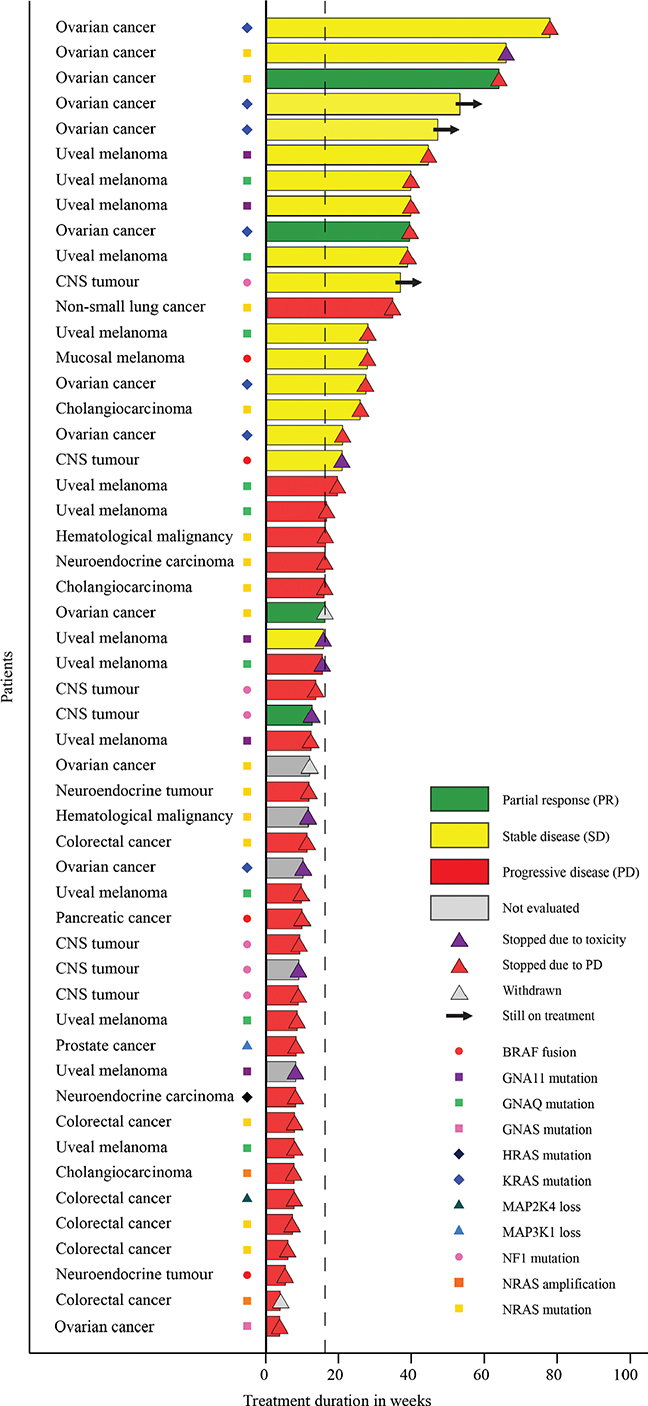
Figure 1. Swimmers plot of ‘response evaluable’ patients treated with trametinib monotherapy, n = 52.
PR and SD were observed in tumours harbouring BRAF fusions, and GNA11, GNAQ, KRAS, NF1 and NRAS activating or inactivating alterations, whereas no responses were seen in patients with tumours harbouring NRAS amplifications, HRAS activating mutations or MAP2K4 and MAP3K1 biallelic inactivation. A detailed overview over responses according to biomarkers and tumour types are shown in Supplementary Table 1.
In the response evaluable population, the median OS was 9 months (95% confidence interval [CI]: 6–10), median PFS was 4 months (95% CI: 3–6) and 1-year PFS was 14% (95% CI: 6–27) (Figure 2).
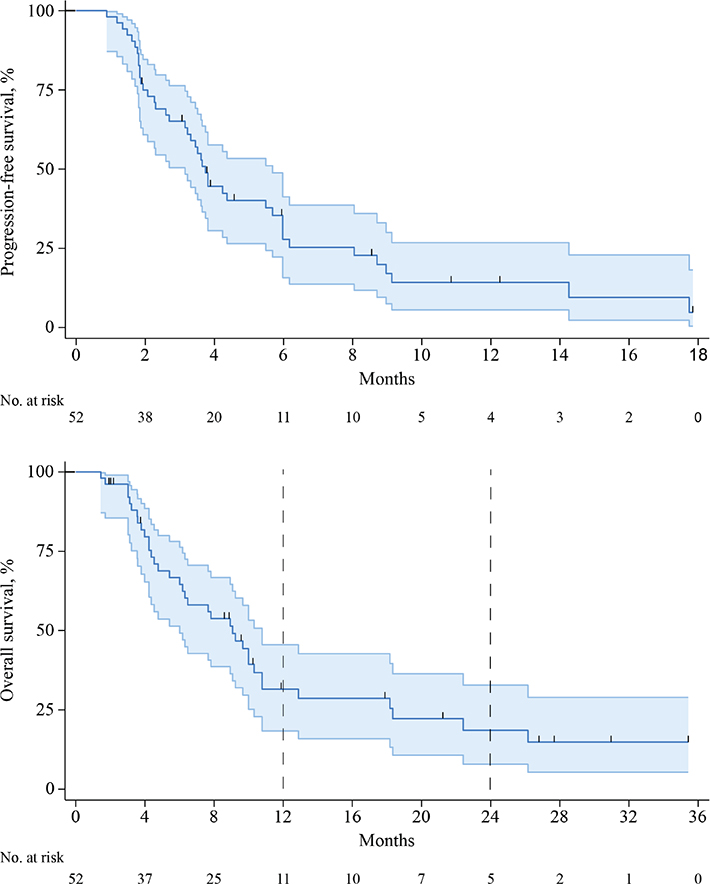
Figure 2. Progression-free survival and overall survival (with 95% CI) of ‘response evaluable’ patients treated with trametinib monotherapy, n = 52. (A) Progression-free survival, (B) Overall survival.
Safety
Out of 65 patients treated with trametinib, 31 (48%) experienced TRAEs. In total, 58 TRAEs were reported, with 38 (66%) being serious adverse reactions. The most commonly reported TRAEs were rash, increased liver enzymes, and mucositis. Six suspected unexpected serious adverse reactions (SUSARs) were registered, including myocardial infarction, sepsis, stroke, and thromboembolic event all registered in one patient, and an additional two thromboembolic events in two patients. Two treatment-related deaths were reported, one related to a thromboembolic event, and the other to an intra-abdominal haemorrhage. A total of 14 patients (22%) stopped treatment due to TRAEs. The overview of all reported TRAEs is shown in Supplementary Table 2.
Discussion and conclusion
This subgroup analysis of clinical outcomes in patients treated with trametinib monotherapy in the IMPRESS-Norway trial, demonstrated clinical benefit with a DCR of 39%. The observed responses were seen in patients with LGSOC, CNS tumours, uveal and mucosal melanoma and cholangiocarcinoma harbouring BRAF fusions, and GNA11, GNAQ, KRAS, NF1 and NRAS activating or inactivating mutations.
Patients with LGSOC represented the largest subgroup with observed clinical benefit, including both PR and SD. Trametinib monotherapy has been shown to be effective in this patient group in a recurrent setting, regardless of mutational status, although the effect seems to be stronger in those with BRAF/NRAS/KRAS mutations [9]. According to the ESMO guidelines, patients with LGSOC relapse should be considered for treatment with trametinib after platinum failure [17]. This study supports previous findings that this patient group may benefit from trametinib monotherapy. A more detailed analysis of this cohort will be presented in a separate publication.
Patients with metastatic uveal melanoma have limited systemic treatment options. Mutations in GNA11 and GNAQ, which occur in 80–90% of tumours, represent potential molecular targets [18]. A systematic review by Steeb et al. [19] summarises the literature on MEK inhibitors in uveal melanoma. Selumetinib (MEK1/MEK2 inhibitor) was described being the best documented substance, where an effect on PFS was found in a phase II trial [6], but not confirmed in the subsequent phase III- trial [20]. Previous studies on MEK inhibitors have shown only low response rates; however, trametinib remains less well studied [19]. In this study no patients had PR/CR, but several had SD. Metastatic uveal melanoma can follow an indolent course; however, all patients were required to have disease progression before treatment start. Therefore, while part of the disease stabilisation may be due to the indolent nature of metastatic uveal melanoma, a treatment effect cannot be ruled out. The small patient population should also be considered. Thus, these results should be interpreted with caution.
The EANO guidelines recommend testing of NF1 in gliomas, glioneuronal, and neuronal tumours due to the potential efficacy of MEK inhibitors in these patients [21]. This effect was demonstrated in this study, showing both PR and SD in these patients. A more detailed analysis of the CNS patients will be presented in a separate publication.
The overall safety profile of trametinib was, in general, as expected [22]. However, two treatment-related deaths were reported, including one patient with advanced age, and multiple comorbidities, experiencing severe toxicity not previously reported. Out of six reported SUSARs, three were thromboembolic events, known side effect of trametinib, but still needed to be reported due to regulatory demands. The relatively high treatment toxicity must therefore be balanced against the anticipated benefit, particularly in patients with advanced age and comorbidities.
A limitation of this study is the small number of patients in each biomarker and tumour type. Another limitation is that the two largest groups of patients with effect have tumour biology in which the tumour progression may be slow, potentially influencing the primary endpoint. The strengths of this study include the prospective design and the opportunity to treat and compare results from different types of cancer based on the same molecular target. Furthermore, this trial is conducted in a near real-world setting where heavily pretreated patients with ECOG 0–2 and comorbidities received experimental treatment.
Conclusion
Patients treated with trametinib monotherapy in this biomarker driven study achieved a DCR of 39%, representing a clinically meaningful result in a patient population with no standard treatment options available. However, toxicity profile may be challenging in patients with poor ECOG status and comorbidities. Given these findings, further research is needed to confirm whether this effect persists in a larger cohort and to investigate potential molecular or other predictive factors that may forecast treatment response.
Acknowledgements
The authors would like to acknowledge patients and their families for participating in the study, the national Infrastructure for Precision Diagnostics in Cancer (InPreD) for performing molecular analyses and operating molecular tumour board meetings, and IMPRESS-Norway sites across Norway for their efforts in conducting the study.
This study is sponsored by Oslo University Hospital. The Regional Health Authorities of Norway support the tissue diagnostics, the National Clinical Trials Program KlinBeForsk, the Norwegian Cancer Society, and the Norwegian Radium Hospital . Foundation Novartis provided study drug and financial support. Illumina and Roche are providing diagnostic support with research funds for analyses of ctDNA.
Nordic Precision Cancer Medicine (NPCM) 2025 was financially supported by the Acta Oncologica Foundation.
Data availability statement
The full clinical dataset consists of de-identified patient-level data obtained from VieDoc. The sponsor and data owner is Oslo University Hospital. Access to full raw patient-level data is limited, but project partners can apply for access through the data and biobank committee of the trial, in accordance with Data Privacy and Ethical Approval for the study project. All authors have full access to complete study data, study analysis performed, tables and figures. The study protocol is available.
Ethics declarations and trial registry information
This study is conducted in accordance with Good Clinical Practice and other relevant research practices, legal requirements and ethical guidelines. The study is approved by the Regional Committees for Medical Research Ethics South East Norway (#200764) and registered at ClinicalTrials.gov (NCT04817956). The study is also approved in CTIS (2023-507894-16-00). Written informed consents were obtained for each patient prior to study inclusion.
Authors’ contributions
KSS: Literature review, data analysis, writing the original draft, reviewing and editing the manuscript. KP: Literature review, data analysis, reviewing and editing the manuscript. RSF: Data analysis, statistical analysis, reviewing the manuscript. ID, SB, PN, ESSS, ESB, ÅF, IAO, SM, CFT, HB, KL, AA, SS, KT: Reviewing the manuscript. ÅH: Conceptualisation, study design, methodology, data analysis, project administration, reviewing manuscript.
References
[1] Mosele MF, Westphalen CB, Stenzinger A, Barlesi F, Bayle A, Bièche I, et al. Recommendations for the use of next-generation sequencing (NGS) for patients with advanced cancer in 2024: a report from the ESMO Precision Medicine Working Group. Ann Oncol. 2024;35(7):588–606. https://doi.org/10.1016/j.annonc.2024.04.005
[2] Helland Å, Russnes HG, Fagereng GL, Al-Shibli K, Andersson Y, Berg T, et al. Improving public cancer care by implementing precision medicine in Norway: IMPRESS-Norway. J Transl Med. 2022;20(1):225. https://doi.org/10.1186/s12967-022-03432-5
[3] Puco K, Fagereng GL, Brabrand S, Niehusmann P, Støre Blix E, Samdal Steinskog ES, et al. IMPRESS-Norway: improving public cancer care by implementing precision medicine in Norway; inclusion rates and preliminary results. Acta Oncol. 2024;63:379–84. https://doi.org/10.2340/1651-226x.2024.28322
[4] Gilmartin AG, Bleam MR, Groy A, Moss KG, Minthorn EA, Kulkarni SG, et al. GSK1120212 (JTP-74057) is an inhibitor of MEK activity and activation with favorable pharmacokinetic properties for sustained in vivo pathway inhibition. Clin Cancer Res. 2011;17(5):989–1000. https://doi.org/10.1158/1078-0432.Ccr-10-2200
[5] Flaherty KT, Robert C, Hersey P, Nathan P, Garbe C, Milhem M, et al. Improved survival with MEK inhibition in BRAF-mutated melanoma. N Engl J Med. 2012;367(2):107–14. https://doi.org/10.1056/NEJMoa1203421
[6] Carvajal RD, Sosman JA, Quevedo JF, Milhem MM, Joshua AM, Kudchadkar RR, et al. Effect of selumetinib vs chemotherapy on progression-free survival in uveal melanoma: a randomized clinical trial. JAMA. 2014;311(23):2397–405. https://doi.org/10.1001/jama.2014.6096
[7] Cleary JM, Wang V, Heist RS, Kopetz ES, Mitchell EP, Zwiebel JA, et al. Differential outcomes in Codon 12/13 and Codon 61 NRAS-mutated cancers in the phase II NCI-MATCH trial of Binimetinib in patients with NRAS-mutated tumors. Clin Cancer Res. 2021;27(11):2996–3004. https://doi.org/10.1158/1078-0432.Ccr-21-0066
[8] Dummer R, Schadendorf D, Ascierto PA, Arance A, Dutriaux C, Di Giacomo AM, et al. Binimetinib versus dacarbazine in patients with advanced NRAS-mutant melanoma (NEMO): a multicentre, open-label, randomised, phase 3 trial. Lancet Oncol. 2017;18(4):435–45. https://doi.org/10.1016/s1470-2045(17)30180-8
[9] Gershenson DM, Miller A, Brady WE, Paul J, Carty K, Rodgers W, et al. Trametinib versus standard of care in patients with recurrent low-grade serous ovarian cancer (GOG 281/LOGS): an international, randomised, open-label, multicentre, phase 2/3 trial. Lancet. 2022;399(10324):541–53. https://doi.org/10.1016/s0140-6736(21)02175-9
[10] Klesse LJ, Jordan JT, Radtke HB, Rosser T, Schorry E, Ullrich N, et al. The use of MEK inhibitors in neurofibromatosis type 1-associated tumors and management of toxicities. Oncologist. 2020;25(7):e1109–16. https://doi.org/10.1634/theoncologist.2020-0069
[11] Monk BJ, Grisham RN, Banerjee S, Kalbacher E, Mirza MR, Romero I, et al. MILO/ENGOT-ov11: binimetinib versus physician’s choice chemotherapy in recurrent or persistent low-grade serous carcinomas of the ovary, fallopian tube, or primary peritoneum. J Clin Oncol. 2020;38(32):3753–62. https://doi.org/10.1200/jco.20.01164
[12] Yan J, Wu X, Yu J, Yu H, Xu T, Brown KM, et al. Analysis of NRAS gain in 657 patients with melanoma and evaluation of its sensitivity to a MEK inhibitor. Eur J Cancer. 2018;89:90–101. https://doi.org/10.1016/j.ejca.2017.11.011
[13] Eisenhauer EA, Therasse P, Bogaerts J, Schwartz LH, Sargent D, Ford R, et al. New response evaluation criteria in solid tumours: revised RECIST guideline (version 1.1). Eur J Cancer. 2009;45(2):228–47. https://doi.org/10.1016/j.ejca.2008.10.026
[14] Wen PY, Macdonald DR, Reardon DA, Cloughesy TF, Sorensen AG, Galanis E, et al. Updated response assessment criteria for high-grade gliomas: response assessment in neuro-oncology working group. J Clin Oncol. 2010;28(11):1963–72. https://doi.org/10.1200/jco.2009.26.3541
[15] van den Bent MJ, Wefel JS, Schiff D, Taphoorn MJ, Jaeckle K, Junck L, et al. Response assessment in neuro-oncology (a report of the RANO group): assessment of outcome in trials of diffuse low-grade gliomas. Lancet Oncol. 2011;12(6):583–93. https://doi.org/10.1016/s1470-2045(11)70057-2
[16] Tefferi A, Cervantes F, Mesa R, Passamonti F, Verstovsek S, Vannucchi AM, et al. Revised response criteria for myelofibrosis: International Working Group-Myeloproliferative Neoplasms Research and Treatment (IWG-MRT) and European LeukemiaNet (ELN) consensus report. Blood. 2013;122(8):1395–8. https://doi.org/10.1182/blood-2013-03-488098
[17] Ledermann JA, Matias-Guiu X, Amant F, Concin N, Davidson B, Fotopoulou C, et al. ESGO-ESMO-ESP consensus conference recommendations on ovarian cancer: pathology and molecular biology and early, advanced and recurrent disease. Ann Oncol. 2024;35(3):248–66. https://doi.org/10.1016/j.annonc.2023.11.015
[18] Silva-Rodríguez P, Fernández-Díaz D, Bande M, Pardo M, Loidi L, Blanco-Teijeiro MJ. GNAQ and GNA11 genes: a comprehensive review on oncogenesis, prognosis and therapeutic opportunities in uveal melanoma. Cancers (Basel). 2022;14(13). https://doi.org/10.3390/cancers14133066
[19] Steeb T, Wessely A, Ruzicka T, Heppt MV, Berking C. How to MEK the best of uveal melanoma: a systematic review on the efficacy and safety of MEK inhibitors in metastatic or unresectable uveal melanoma. Eur J Cancer. 2018;103:41–51. https://doi.org/10.1016/j.ejca.2018.08.005
[20] Carvajal RD, Piperno-Neumann S, Kapiteijn E, Chapman PB, Frank S, Joshua AM, et al. Selumetinib in combination with dacarbazine in patients with metastatic uveal melanoma: a phase III, multicenter, randomized trial (SUMIT). J Clin Oncol. 2018;36(12):1232–9. https://doi.org/10.1200/jco.2017.74.1090
[21] Capper D, Reifenberger G, French PJ, Schweizer L, Weller M, Touat M, et al. EANO guideline on rational molecular testing of gliomas, glioneuronal, and neuronal tumors in adults for targeted therapy selection. Neuro-Oncology. 2023;25(5):813–26. https://doi.org/10.1093/neuonc/noad008
[22] Agency EM. Trametinib (Mekinist) [Summary of Product Characteristics]: European Medicines Agency; 2024 [updated 2025 Jan 10; cited 2025 Nov 23]. Available from: https://www.ema.europa.eu.