ORIGINAL ARTICLE
Temporal trends in diagnostic work-up, treatment, and mortality in locally advanced prostate cancer in 2016–2024: nationwide, population-based study in Sweden
Armando Galdieria,b,c  , Hans Garmoa , Rolf Gedeborga , Mats Ahlberga , Andri Wilberg Orrasona , Eugenio Ventimigliaa , Pär Stattina and Marcus Westerberga
aDepartment of Surgical Sciences, Uppsala University, Uppsala, Sweden; bUnit of Urology/Division of Oncology, Gianfranco Soldera Prostate Cancer Lab, IRCCS San Raffaele Scientific Institute, Milan, Italy; cVita-Salute San Raffaele University, Milan, Italy
ABSTRACT
Background and purpose: We aimed to describe temporal changes in diagnostic work-up, treatment, and prostate cancer (PCa) mortality in locally advanced PCa in 2016–2024 in Sweden.
Patient/material and methods: Men registered in the National Prostate Cancer Register of Sweden in 2016–2024 with locally advanced PCa; clinical T stage 3–4, no distant metastases, and prostate-specific antigen < 100 ng/ml were included. We computed the proportion of use of prostate magnetic resonance imaging (MRI) before biopsy, radical prostatectomy, radical radiotherapy, androgen deprivation therapy, and abiraterone, and described the trend in PCa mortality across three calendar periods.
Results: During the 9-year study period 7,484 men with locally advanced PCa were identified. Use of MRI before biopsy increased from 3% in 2016 to 73% in 2024. Concomitantly, radical treatment increased from 35% to 48%, entirely due to increased use of radiotherapy. Abiraterone was not used before 2022 but 31% received this treatment in 2024. The 3-year PCa mortality decreased from 8% (95% confidence interval [CI]: 7–9) in 2016–2018 to 6% (95% CI: 4–8) in 2022–2024.
Interpretation: In this nationwide, population-based study of men with locally advanced PCa, the use of MRI before biopsy, radical radiotherapy, and treatment with abiraterone increased over time. These changes coincided with a modest decrease in 3-year PCa mortality.
KEYWORDS: Locally advanced prostate cancer; treatment; mortality; diagnosis; staging
Citation: ACTA ONCOLOGICA 2026, VOL. 65, 282–288. https://doi.org/10.2340/ao.v65.45593.
Copyright: © 2026 The Author(s). Published by MJS Publishing on behalf of Acta Oncologica. This is an Open Access article distributed under the terms of the Creative Commons Attribution 4.0 International License (http://creativecommons.org/licenses/by/4.0/).
Received: 19 February 2026; Accepted: 27 March 2026; Published: 15 April 2026
CONTACT: Marcus Westerberg, marcus.westerberg@uu.se, Akademiska Sjukhuset, ingång 70, 1 tr 751 85 Uppsala, Sweden
Supplemental data for this article can be accessed online at https://doi.org/10.2340/1651-226X.2026.45593
Competing interests and funding: The authors report that there are no competing interests to declare.
Introduction
There have been major changes in diagnostic work-up of prostate cancer (PCa) in the last decade. The introduction of prostate magnetic resonance imaging (MRI) prior to biopsy has increased the diagnostic accuracy for clinically significant PCa while prostate-specific membrane antigen positron emission tomography (PSMA-PET) has improved the detection of nodal and distal metastases [1–3].
In parallel, the use of radical radiotherapy (RT) with neoadjuvant and adjuvant androgen deprivation therapy (ADT) for men diagnosed with locally advanced PCa has increased [4–9]. The androgen receptor pathway inhibitor (ARPI) abiraterone has been shown to prolong survival for men with locally advanced PCa. Therefore, abiraterone is recommended since 2022 in American, European and Swedish guidelines for men with PCa with additional risk factors for more aggressive disease [10–15].
It has previously been shown that the use of radical treatment in men with locally advanced PCa increased between 2000 and 2016 in Sweden, with a concomitant decrease in 5-year prostate cancer mortality [16], but the impact on clinical practice of these recent recommendations and the concomitant trend in PCa mortality is unknown.
The aim of this study was to describe the temporal changes in diagnostic work-up, treatment, and PCa mortality in men diagnosed with locally advanced PCa in Sweden in 2016–2024.
Patients/material and methods
Data sources
The National Prostate Cancer Register (NPCR) of Sweden captures 98% of all men diagnosed with PCa in Sweden since 1998, compared with the Cancer Register, to which reporting is mandated by law. The NPCR contains comprehensive data on cancer characteristics at diagnosis, as well as detailed information on diagnostic work-up and primary treatment. The primary aim of NPCR is to assess adherence to national guidelines and thereby ensure high-quality care of men with PCa [17–19].
In Prostate Cancer data Base Sweden (PCBase), NPCR has been linked to multiple national health care registers and demographic databases by use of the unique Swedish personal identity number [20]. These linkages include the Patient Register, the Cancer Register, the Prescribed Drug Register, the Total Population Register, and the Cause of Death Register. In 2025, data from healthcare information systems from all 21 regions in Sweden on prostate specific antigen (PSA), prostate biopsies, and prostate MRI, and hospital administered treatments were added to PCBase to create PCBase Xtend [21].
This project was approved by the Swedish Research Ethics Authority.
Variables extracted
Data on age at diagnosis, date of diagnosis, MRI before diagnostic biopsy, PSMA-PET use imaging of lymph nodes, PSA values, Gleason score (GS), clinical TNM stage, date of radical treatment (radical prostatectomy or radical radiotherapy), and fraction and total dose of radiotherapy, was extracted from NPCR. The start of ADT (Anatomical Therapeutic Chemical [ATC] codes: L02BB03 [bicalutamide], L02BX02 [degarelix], L02BX04 [relugolix]) or abiraterone (ATC code L02BX03) were defined as the earliest date of a dispensed prescription for these drugs in the Prescribed Drug Register or a recorded administration by healthcare staff. Health-adjusted life expectancy at diagnosis was estimated based on age at diagnosis and comorbidity burden measured with a Multidimensional Diagnosis-based Comorbidity index (MDCI) and a Drug Comorbidity Index (DCI) [22–24]. Date of emigration was extracted from the Total Population Register. Date and cause of death were extracted from the Cause of Death Register.
Study population
All men diagnosed with locally advanced PCa between 2016 and 2024 and registered in NPCR were included. Locally advanced PCa was defined as clinical T stage 3–4, no evidence of metastatic disease (M0), any N stage, any GS, and PSA < 100 ng/ml.
Outcomes
We assessed the use of prostate MRI before biopsy, PSMA-PET and the use of imaging for nodal staging in the diagnostic work-up. Treatment with radical prostatectomy, RT, ADT, and abiraterone was assessed up to 6 months after diagnosis. We also assessed death from PCa and overall mortality.
Follow-up
Follow-up started at date of diagnosis and ended 31 December 2024, date of emigration, or date of death, whichever occurred first.
Statistical analysis
We described the annual use of MRI before biopsy, PSMA-PET, nodal imaging, type of radical treatment received, ADT, and abiraterone using crude proportions. Cumulative incidence of PCa mortality up to 5 years after diagnosis was described while considering death from other causes as a competing risk. Mortality data were presented with 95% confidence intervals (CI).
Analyses were stratified in three calendar periods (2016–2018, 2019–2021, and 2022–2024) and further stratified by age at diagnosis (< 70, 70–79, > 79 years). We assessed the use of abiraterone separately in men with one STAMPEDE risk factor, that is, stage T3-4 that was an inclusion criteria to our study group, and in men with two or more STAMPEDE risk factors (T3-4 + at least one of: N+, GS 8–10 or PSA > 40 ng/ml) [15].
Analyses of treatment were also stratified according to life expectancy (< 5, 5–10, and > 10 years).
All analyses were performed using R: A language and environment for statistical computing (R Foundation for Statistical Computing, Vienna, Austria), version 4.5.1.
Results
Baseline characteristics
There were 7,484 men diagnosed with locally advanced prostate cancer in 2016–2024. Median PSA value at diagnosis showed a slight decrease over time and there was modest shift towards higher GS over time (Table 1).
Trends in diagnostic work-up
Between 2016 and 2024, the use of MRI before biopsy increased from 3% to 73% and use of imaging of lymph nodes increased from 48% to 55%. The increase in MRI use was largest in men under 70 years, rising from 4% to 89% (Figure 1), while lymph node imaging showed the largest increase in men over 79 years (from 10% to 42%). PSMA-PET was not used before 2020 and was 17% in 2024, with the highest use in men aged below 70 (26%).
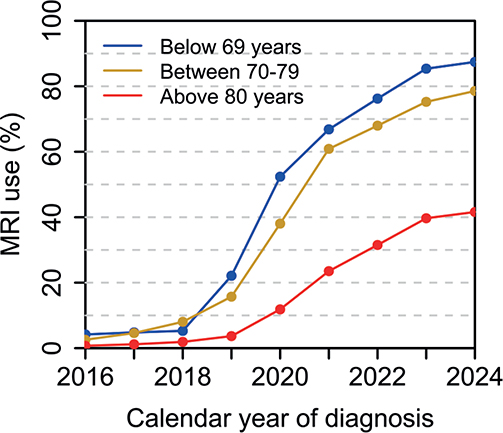
Figure 1. Use of prostate magnetic resonance imaging before biopsy in all men with locally advanced prostate cancer.
Treatment trends
Between 2016 and 2024, radical treatment within 6 months from diagnosis increased from 35% to 48%, primarily due to an increase use of radiotherapy, which increased from 26% to 43% (Figure 2). A majority (63%) of men with life expectancy above 10 years underwent radical treatment while few men (4%) with life expectancy below 5 years underwent radical treatment (Supplementary Figure 1).
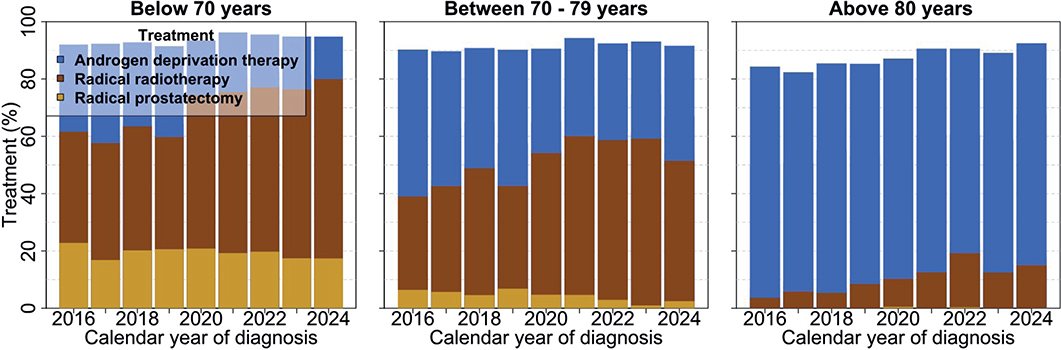
Figure 2. Use of radical treatments and androgen deprivation therapy within 6 months from date of diagnosis stratified by age. The white area represents men who did not receive any treatment.
Among men who received radiotherapy the use of conventional radiotherapy decreased whereas use of hypofractionated radiotherapy increased almost two-fold, from 26% to 43%, and use of ultra-hypofractionated radiotherapy increased from no use to 15% (Supplementary Figure 2). Lymph nodes were included in the RT field in 4% of men who underwent RT in 2016 and 16% of men in 2024.
Among men who received radical prostatectomy (RP) the use of robotic-assisted laparoscopic prostatectomy (RALP) increased from 79% to 100%. No laparoscopic RP or open RP was performed in 2024. Use of lymph node dissection during RP decreased from 64% to 24%.
The use of ADT decreased from 54% in 2016 to 45% in 2024 (Figure 2). Neoadjuvant and adjuvant ADT with RT increased from 95% to 99%.
Use of abiraterone increased from no use before 2022 to 31% in 2024 (Figure 3). This increase occurred almost exclusively in men with two or more risk factors, out of which 44% received abiraterone. Among these, 69% of men with life expectancy > 10 years received abiraterone.
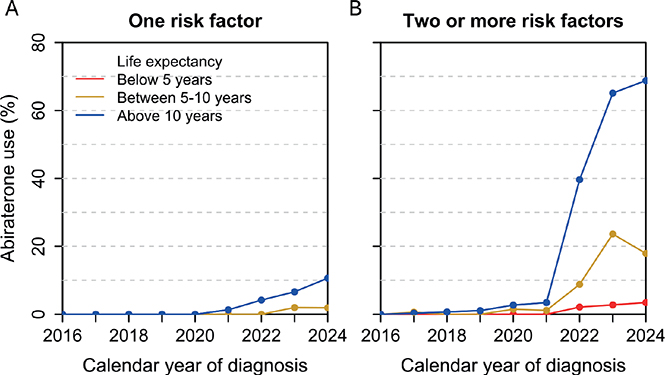
Figure 3. Use of abiraterone within 6 months from date of diagnosis according to life expectancy. (A) Men with one STAMPEDE risk factor (T3-4 stage, which was inclusion criteria to the study group). (B) Two or more STAMPEDE risk factors (T3-4 + at least one of: N+, Gleason score 8–10 or PSA > 40 ng/ml).
Mortality trends
The 3-year PCa mortality risk was 8% (95% CI: 7–9) in 2016–2018 and 6% (95% CI: 4–8) in 2022–2024 and the 3-year overall mortality risk was 18% in 2016–2018 and 16% in 2022–2024. In the subgroup of men below age 70, the 3-year PCa mortality risk was 4% (95% CI: 2–5) in 2016–2018 and 1% (95% CI: 0.3–2) in 2022–2024 (Figure 4). In this group the 5-year PCa mortality was 5.7% (95% CI: 4–7) in 2016–2018 and 6.5% (95% CI: 4–9) in 2019–2021. Other age-groups followed the overall trend.
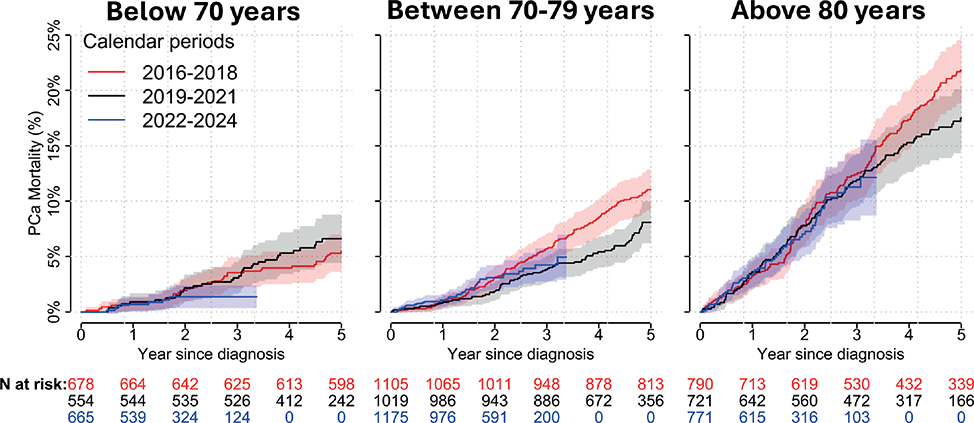
Figure 4. Cumulative incidence proportion of up to 5-year prostate cancer mortality stratified by age.
Discussion and conclusion
Summary of findings
In this nationwide, population-based study of men with locally advanced PCa diagnosed in 2016–2024, use of MRI before biopsy increased drastically. Use of radical radiotherapy increased slightly and use of abiraterone increased from no use before 2022 to one third of men with an even higher use in men with multiple risk factors and long life expectancy. These trends were parallelled by a modest decrease in 3-year prostate cancer mortality and overall mortality.
Interpretation and previous studies
The decreased PSA levels at diagnosis and increase of high-grade disease (GS > 8) are consistent with the previously reported trends [16]. During the study period, prostate MRI use before biopsy increased as expected following the 2019 guideline recommendations, and PSMA-PET use started in 2020 after its inclusion in major guidelines [1, 3, 10, 11, 25].
The trends in the use of radical treatment previously reported from 2000 to 2016 continued in this study period [15]. The increase in radical RT use was driven by more hypofractionated and ultra-hypofractionated radiotherapy. This change follows the 2019 guideline recommendations based on the HYPO-RT-PC trial [13, 26, 27]. Use of radical RT was the highest in men with life expectancy > 10 years, in line with recommendations in current guidelines [13, 24]. The results of the ongoing SPCG-15 trial that compares radical prostatectomy with radiotherapy in men with locally advanced PCa, may further influence future guidelines and clinical practice [28].
The STAMPEDE trial demonstrated improved survival for the addition of abiraterone to ADT compared with standard of care (76 vs. 45 months) in men with high risk PCa, after a median follow-up of 7 years. These findings led to the incorporation of abiraterone into Swedish guidelines in 2022 [10–14, 29].
By 2024, nearly half of men with two or more risk factors received abiraterone. The follow-up in this study was short, in particular for men diagnosed in the latest calendar period (2022–2024), and longer follow-up is needed to fully assess how the uptake of abiraterone affects PCa mortality.
The modest decrease in 3-year PCa mortality in 2016–2024 that we observed in all men diagnosed with locally advanced PCa in Sweden, not just men who received recommended treatment, is a robust finding that corroborates improved outcome for men with locally advanced PCa. This finding is a continuation of the improvement that we observed in our previous study [16], and is in accordance with the decline in PCa mortality in all stages in the Nordic countries [30]. The higher 5-year PCa mortality in men aged below 70 years in 2019–2021 compared to 2016–2018 is counterintuitive. Further investigation is warranted to understand the cause of this increase.
Strengths and limitations
A strength of this study is that virtually all men with locally advanced PCa in Sweden could be included [17] with comprehensive data on cancer characteristics, primary treatment, use of ADT, and follow-up was virtually complete. The recency of the data is another strength, the last date of follow-up was December 2024. The study also has some limitations. The follow-up time for men who were recently diagnosed was short, so we did not capture the full effect of improvements in diagnostics and treatment. Stage migration is likely a contributing factor to the observed decrease in mortality since improved imaging can detect small metastases [3, 31, 32, 33]. Finally, we were unable to fully assess the cost-benefit ratio of more radical treatment, which ideally would have been done, given that radical radiotherapy with neoadjuvant and adjuvant ADT has well-known long-term side effects.
Conclusions
In this nationwide, population-based study of men with locally advanced PCa we observed, in accordance with changes in national guidelines, increased use of MRI before biopsy, radical radiotherapy, and abiraterone over time. In parallel, there was a continued modest decrease in prostate cancer mortality.
Acknowledgements
This project was made possible by the continuous work of the National Prostate Cancer Register of Sweden (NPCR) steering group: David Robinson, Johan Styrke, Johan Stranne, Jon Kindblom, Camilla Thellenberg, Andreas Josefsson, Ingrida Verbiene, Hampus Nugin, Stefan Carlsson, Anna Kristiansen, Mats Andén, Thomas Jiborn, Olof Ståhl, Olof Akre, Per Fransson, Eva Johansson, Magnus Törnblom, Fredrik Jäderling, Marie Hjälm Eriksson, Lotta Renström, Jonas Hugosson, Ola Bratt, Maria Nyberg, Fredrik Sandin, Mia Brus, Anna Hedström, Nina Hageman, Christofer Lagerros, Hans Joelsson, and Gert Malmberg.
Rolf Gedeborg is employed by the Medical Products Agency (MPA) in Sweden. The MPA is a Swedish Government Agency. The views expressed in this article may not represent the views of the MPA
Data availability statement
Data used in this study were extracted from the Prostate Cancer data Base Sweden (PCBase), which is based on the National Prostate Cancer Register (NPCR) of Sweden and linkage to several national health-data registers. The data cannot be shared publicly because the individual-level data contain potentially identifying and sensitive patient information and cannot be published due to legislation and ethical approval (https://etikprovningsmyndigheten.se). Use of the data from national health-data registers is further restricted by the Swedish Board of Health and Welfare (https://www.socialstyrelsen.se/en/) and Statistics Sweden (https://www.scb.se/en/), which are Government Agencies providing access to the linked healthcare registers. The data will be shared on reasonable request in an application made to any of the steering groups of NPCR and PCBase (contact npcr@npcr.se). To request data or analytic code from this study, contact the corresponding author. For detailed information, please see www.npcr.se/in-english, where registration forms, manuals, and annual reports from NPCR are available alongside a full list of publications from PCBase.
Ethics declarations & trial registry information
This study was approved by the Swedish Ethical Review Authority Etikprövningsmyndigheten (2020-03437, 2022-05083-02) and the need for informed consent was waived by Swedish Ethical Review Authority. All research was performed in accordance with relevant guidelines and regulations.
Authors’ contributions
Drs Galdieri and Westerberg had full access to all of the data in the study and take responsibility for the integrity of the data and the accuracy of the data analysis. Concept and design: Galdieri, Ventimiglia, Garmo, Gedeborg, Stattin, Westerberg; Acquisition, analysis, or interpretation of data: Galdieri, Ventimiglia, Garmo, Gedeborg, Stattin, Westerberg; Drafting of the manuscript: Galdieri, Ventimiglia, Stattin, Westerberg; Critical review of the manuscript for important intellectual content: All authors; Statistical analysis: Galdieri, Garmo, Westerberg; Obtained funding: Stattin; Administrative, technical, or material support: Stattin; Supervision: Ventimiglia, Garmo, Stattin, Westerberg.
This project was supported by the Swedish Research Council (2022-00544), the Swedish Cancer Society (25 4524), FORTE (2024-01652), the Swedish Prostate Cancer Association, and Uppsala University Hospital. The sponsors had no involvement with the planning, execution or completion of the study.
References
[1] Ahmed HU, El-Shater Bosaily A, Brown LC, Gabe R, Kaplan R, Parmar MK, et al. Diagnostic accuracy of multi-parametric MRI and TRUS biopsy in prostate cancer (PROMIS): a paired validating confirmatory study. Lancet. 2017;389(10071):815–22. https://doi.org/10.1016/S0140-6736(16)32401-1
[2] Kasivisvanathan V, Rannikko AS, Borghi M, Panebianco V, Mynderse LA, Vaarala MH, et al. MRI-targeted or standard biopsy for prostate-cancer diagnosis. N Engl J Med. 2018;378(19):1767–77. https://doi.org/10.1056/NEJMoa1801993
[3] Hofman MS, Lawrentschuk N, Francis RJ, Tang C, Vela I, Thomas P, et al. Prostate-specific membrane antigen PET-CT in patients with high-risk prostate cancer before curative-intent surgery or radiotherapy (proPSMA): a prospective, randomised, multicentre study. Lancet. 2020;396(10255):1208–16. https://doi.org/10.1016/S0140-6736(20)30314-7
[4] Freedland SJ, Nair S, Lin X, Karsh L, Pieczonka C, Potluri R, et al. A US real-world study of treatment patterns and outcomes in localized or locally advanced prostate cancer patients. World J Urol. 2023;41(12):3535–42. https://doi.org/10.1007/s00345-023-04680-w
[5] Widmark A, Klepp O, Solberg A, Damber JE, Angelsen A, Fransson P, et al. Endocrine treatment, with or without radiotherapy, in locally advanced prostate cancer (SPCG-7/SFUO-3): an open randomised phase III trial. Lancet. 2009;373(9660):301–8. https://doi.org/10.1016/S0140-6736(08)61815-2
[6] Fosså SD, Wiklund F, Klepp O, Angelsen A, Solberg A, Damber JE, et al. Ten- and 15-yr prostate cancer-specific mortality in patients with nonmetastatic locally advanced or aggressive intermediate prostate cancer, randomized to lifelong endocrine treatment alone or combined with radiotherapy: final results of the Scandinavian Prostate Cancer Group-7. Eur Urol. 2016;70(4):684–91. https://doi.org/10.1016/j.eururo.2016.03.021
[7] Mason MD, Parulekar WR, Sydes MR, Brundage M, Kirkbride P, Gospodarowicz M, et al. Final report of the intergroup randomized study of combined androgen-deprivation therapy plus radiotherapy versus androgen-deprivation therapy alone in locally advanced prostate cancer. J Clin Oncol. 2015;33:2143–50.
[8] Sargos P, Mottet N, Bellera C, Richaud P. Long-term androgen deprivation, with or without radiotherapy, in locally-advanced prostate cancer: updated results from a phase III randomised trial. BJU Int. 2019. https://doi.org/10.1111/bju.14768
[9] Demogeot N, Sargos P, Salleron J, Guérif S, de Crevoisier R, Calais G, et al. Short-term androgen deprivation therapy and high-dose radiotherapy in intermediate- and high-risk localized prostate cancer: results from the GETUG 14 randomized phase 3 trial. Eur Urol. 2025;88(5):510–8. https://doi.org/10.1016/j.eururo.2025.07.019
[10] EAU Guidelines. Edn. presented at the EAU Annual Congress Amsterdam 2025. Arnhem, The Netherlands: EAU Guidelines Office; 2025.
[11] National Comprehensive Cancer Network. NCCN clinical practice guidelines in oncology: prostate cancer. Version 4.2023. Plymouth Meeting, PA: National Comprehensive Cancer Network; 2023.
[12] Eastham JA, Auffenberg GB, Barocas DA, Chou R, Crispino T, Davis JW, et al. Clinically localized prostate cancer: AUA/ASTRO guideline, part I: introduction, risk assessment, staging, and risk-based management. J Urol. 2022;208(2):245–53. https://doi.org/10.1097/JU.0000000000002757
[13] Bratt O, Carlsson S, Fransson P, Thellenberg Karlsson C, Stranne J, Kindblom J, et al. The Swedish national guidelines on prostate cancer, part 1: early detection, diagnostics, staging, patient support and primary management of non-metastatic disease. Scand J Urol. 2022;56(4):265–73. https://doi.org/10.1080/21681805.2022.2094462
[14] Stranne J. 2023/2024 update of the national prostate cancer guidelines in Sweden. Scand J Urol. 2024;59:210–1. https://doi.org/10.2340/sju.v59.42656
[15] Attard G, Murphy L, Clarke NW, Cross W, Jones RJ, Parker CC, et al. Abiraterone acetate and prednisolone with or without enzalutamide for high-risk non-metastatic prostate cancer: a meta-analysis of primary results from two randomised controlled phase 3 trials of the STAMPEDE platform protocol. Lancet. 2022;399(10323):447–60. https://doi.org/10.1016/S0140-6736(21)02437-5
[16] Orrason AW, Westerberg M, Garmo H, Lissbrant IF, Robinson D, Stattin P. Changes in treatment and mortality in men with locally advanced prostate cancer between 2000 and 2016: a nationwide, population-based study in Sweden. BJU Int. 2020;126(1):142–51. https://doi.org/10.1111/bju.15077
[17] Tomic K, Sandin F, Wigertz A, Robinson D, Lambe M, Stattin P. Evaluation of data quality in the National Prostate Cancer Register of Sweden. Eur J Cancer. 2015;51(1):101–11. https://doi.org/10.1016/j.ejca.2014.10.025
[18] Bratt O, Butt ST, Carlsson C, Jelf-Eneqvist L, Gunnarsson O, Ihre A, et al. Swedish regional population-based organised prostate cancer testing: why, what and how? Scand J Urol. 2025;60:97–104. https://doi.org/10.2340/sju.v60.43809
[19] Stattin P. How to improve cancer care by use of guidelines and quality registers. Scand J Urol. 2024;59:190–2. https://doi.org/10.2340/sju.v59.42272
[20] Westerberg M, Holm L, Garmo H, Stattin P, Gedeborg R. Cohort profile update: the National Prostate Cancer Register of Sweden and PCBase. Int J Epidemiol. 2025;54(5):dyaf172. https://doi.org/10.1093/ije/dyaf172
[21] Westerberg M, Ahlberg M, Orrason AW, Gedeborg R. Assessment of variability in life expectancy in older men by use of new comorbidity indices: a nationwide population-based study. Scand J Urol. 2024;59:207–9. https://doi.org/10.2340/sju.v59.42504
[22] Westerberg M, Irenaeus S, Garmo H, Stattin P, Gedeborg R. Development and validation of a multi-dimensional diagnosis-based comorbidity index that improves prediction of death in men with prostate cancer: nationwide, population-based register study. PLoS One. 2024;19(1):e0296804. https://doi.org/10.1371/journal.pone.0296804
[23] Gedeborg R, Sund M, Lambe M, Plym A, Fredriksson I, Syrjä J, et al. An aggregated comorbidity measure based on history of filled drug prescriptions: development and evaluation in two separate cohorts. Epidemiology. 2021;32(4):607–15. https://doi.org/10.1097/EDE.0000000000001358
[24] Van Hemelrijck M, Ventimiglia E, Robinson D, Gedeborg R, Holmberg L, Stattin, P, et al. Population-based estimates of age and comorbidity specific life expectancy: a first application in Swedish males. BMC Med Inform Decis Mak. 2022;22(1):35. https://doi.org/10.1186/s12911-022-01766-0
[25] Orrason AW, Scilipoti P, Garmo H, Gedeborg R, Styrke J, Westerberg M. Improved adherence to prostate cancer guidelines concomitant with public reporting: nationwide population-based study. Scand J Urol. 2025;60:50–8. https://doi.org/10.2340/sju.v60.43107
[26] Widmark A, Gunnlaugsson A, Beckman L, Thellenberg-Karlsson C, Hoyer M, Lagerlund M, et al. Ultra-hypofractionated versus conventionally fractionated radiotherapy for prostate cancer: 5-year outcomes of the HYPO-RT-PC randomised, non-inferiority, phase 3 trial. Lancet. 2019;394(10196):385–95. https://doi.org/10.1016/S0140-6736(19)31131-6
[27] Fransson P, Nilsson P, Gunnlaugsson A, Beckman L, Tavelin B, Norman D, et al. Ultra-hypofractionated versus conventionally fractionated radiotherapy for prostate cancer (HYPO-RT-PC): patient-reported quality-of-life outcomes of a randomised, controlled, non-inferiority, phase 3 trial. Lancet Oncol. 2021;22(2):235–45. https://doi.org/10.1016/S1470-2045(20)30581-7
[28] Stranne J, Brasso K, Brennhovd B, Johansson E, Jäderling F, Kouri M, et al. SPCG-15: a prospective randomized study comparing primary radical prostatectomy and primary radiotherapy plus androgen deprivation therapy for locally advanced prostate cancer. Scand J Urol. 2018;52(5–6):313–20.
[29] Attard G, Murphy L, Clarke NW, Sachdeva A, Jones C, Hoyle A, et al. Abiraterone acetate plus prednisolone with or without enzalutamide for patients with metastatic prostate cancer starting androgen deprivation therapy: final results from two randomised phase 3 trials of the STAMPEDE platform protocol. Lancet Oncol. 2023;24(5):443–56. https://doi.org/10.1016/S1470-2045(23)00148-1
[30] Kvåle R, Ursin G, Ekanger C, Møller B. Considerable decline in prostate cancer mortality in Nordic countries after 2000. Acta Oncol. 2025;64:114–9. https://doi.org/10.2340/1651-226X.2025.41334
[31] Albers P, Miandashti N, Broomfield S, Kinnaird A. Does the digital rectal exam still provide value in the age of MRI? Can Urol Assoc J. 2025;19(10):357–60. https://doi.org/10.5489/cuaj.9164
[32] Desai MM, Cacciamani GE, Gill K, Zhang J, Liu L, Abreu A, et al. Trends in incidence of metastatic prostate cancer in the US. JAMA Netw Open. 2022;5(3):e222246. https://doi.org/10.1001/jamanetworkopen.2022.2246
[33] Kleiburg F, Dirix P, Fonteyne V, Bral S, De Troyer B, Sautois B, et al. Stage migration on prostate-specific membrane antigen positron emission tomography/computed tomography in comparison to conventional imaging in patients with high-risk prostate cancer referred for radiation therapy: results from the phase 2/3 THUNDER trial. Eur Urol Oncol. 2025;8(5):1333–9. https://doi.org/10.1016/j.euo.2025.08.005