ORIGINAL ARTICLE
Role of cold atmospheric plasma alone or combined with conventional surface treatments on shear bond strength of 3Y-TZP and 5YSZ ceramics bonded with composite resin
Ahmad Abdulkareem Alnazzawia, Mohamed F Aldamatyb,c, Mohammed H. AbdElaziza, Ahmed Yaseen Alqutaibia, Ahmed E. Farghala, Jamal Qernas Almarashid, Abdel-Aleam H. Mohamedd and Muhammad Sohail Zafare,f,g
aDepartment of Substitutive Dental Science, College of Dentistry, Taibah University, Al-Madinah Al-Munawwarah, Saudi Arabia; bDepartment of Fixed Prosthodontics, Faculty of Dental Medicine, Al-Azhar University, Cairo, Egypt; cDepartment of Restorative and Aesthetic Dentistry, College of Dentistry, Almaaqal University, Basrah, Iraq; dPhysics Department, College of Science, Taibah University, Al-Madinah, Saudi Arabia; eDepartment of Clinical Sciences, College of Dentistry, Ajman University, Ajman, United Arab Emirates; fCenter of Medical and Bio-allied Health Sciences Research, Ajman University, Ajman, United Arab Emirates; gSchool of Dentistry, University of Jordan, Amman, Jordan
ABSTRACT
Objective: To evaluate the role of cold atmospheric plasma (CAP), alone or in combination with conventional surface treatments, on the shear bond strength (SBS) and failure mode of 3Y-TZP and 5YSZ ceramics bonded to composite resin using two adhesive protocols.
Materials and methods: A total of 200 zirconia specimens (3Y-TZP and 5YSZ) were assigned to five surface-treatment groups: No treatment (control), airborne-particle abrasion (APA), CAP, APA + CAP, and hydrofluoric acid (HF) + CAP. Each group was further divided according to the use of a primer. The zirconia specimens were bonded to composite resin using a self-adhesive cement. After artificial aging, SBS testing and failure-mode analysis were performed. Data were analyzed using appropriate parametric tests (α = 0.05).
Results: Compared with the control group, surface treatments significantly improved SBS (p < 0.001). Applying self-adhesive cement with surface primer further improved SBS (p < 0.001). Different yttria contents of zirconia materials did not impact SBS (p > 0.05). There was no benefit to combining APA and CAP or CAP and HF. Failure modes were predominantly adhesive in the control group and mixed on treated zirconia surfaces.
Conclusions: CAP provides bond strength comparable to APA while potentially minimizing surface damage, supporting its use as a conservative surface-treatment option. Additional combined or aggressive surface treatments do not offer further clinical benefit for bonding zirconia restorations.
KEYWORDS: adhesive protocol; dental ceramic; surface treatment; translucent zirconia; zirconia primer
Citation: BIOMATERIAL INVESTIGATIONS IN DENTISTRY 2026, VOL. 13, 179–187. https://doi.org/10.2340/biid.v13.45567.
Copyright: © 2026 The Author(s). Published by MJS Publishing on behalf of Acta Odontologica Scandinavica Society. This is an Open Access article distributed under the terms of the Creative Commons Attribution 4.0 International License (http://creativecommons.org/licenses/by/4.0/), allowing third parties to copy and redistribute the material in any medium or format and to remix, transform, and build upon the material, with the condition of proper attribution to the original work.
Received: 10 October 2025; Accepted: 03 February 2026; Published: 30 March 2026
CONTACT: Muhammad Sohail Zafar muhammad.zafar@ajman.ac.ae Department of Clinical Sciences, College of Dentistry, Ajman University, Ajman, 346, United Arab Emirates
Competing interests and funding: The authors declare that they have no conflicts of interest.
None.
Introduction
Ceramics are the most desirable and applicable materials in restorative and prosthetic dentistry, particularly zirconia [1]. Since the introduction of zirconia at the beginning of the third millennium, it has undergone several developmental stages at both chemical and structural levels [2]. The first two generations of zirconia contain approximately 3 mol% yttria and are referred to as 3Y-TZP (3 mol% yttria-stabilized tetragonal zirconia polycrystal) [2]. This material has been utilized in a wide range of dental applications, from simple restorations to complete arch dental prostheses, due to its high biocompatibility, relatively good esthetic value, and high flexural strength. Additionally, the transformation toughening inhibits crack propagation, thereby increasing fracture strength [3]. Nevertheless, 3Y-TZP is relatively opaque compared to other ceramics. To address this limitation, a third generation of zirconia was introduced, characterized by increased yttria contents such as 4 and 5 mol% Yttria-stabilized zirconia (YSZ) [2]. Translucent zirconia is more suitable for esthetic restorations, particularly 5YSZ, which has been employed for anterior esthetic veneers and full crowns [4]. This increase in yttria content results in a higher cubic crystalline phase, which is responsible for the enhanced translucency in 4YSZ and 5YSZ [5, 6].
The reliable and durable bonding of dental restorations and prostheses necessitates high-adhesion potential surfaces. Some restorative materials, such as resinous restorations, require no surface treatment before adhesive procedures, whereas other restorations, such as glass and oxide ceramics, require surface preparation before adhesion. The most effective treatment for glass ceramic materials is hydrofluoric acid (HF) etching [7]. However, oxide ceramics, particularly zirconia, characterized by having an inert structure that is resistant to chemical etching, and airborne particle abrasion (APA) is deemed as the most effective and recommended surface treatment [8]. Despite its widespread clinical application, this method can adversely affect the zirconia surface. Some particles might remain embedded within the zirconia surface after abrasion, leading to the generation of multiple microcracks and premature transformation toughening, possibly weakening the surface strength of the treated specimens [9, 10].
Several laboratory investigations assessed the viability of efficient and more inert surface treatment methods, including cold atmospheric plasma (CAP) [11–13] high-temperature HF acid solution etching [14–16], and the application of phosphate monomer-containing primers [17–19]. A notable example of zirconia primers is Z-prime, which contains the 10-methacryloyloxydecyl dihydrogen phosphate (MDP) phosphate monomer and the biphenyl di-methacrylate (BPDM) carboxyl monomer, believed to exert a synergistic effect that results in elevated bond strength [20]. In recent years, plasma technology has emerged as a method to improve the performance of biomaterials [11–13]. Plasma, identified as the fourth state of matter, comprises atoms, molecules, and highly energized radicals. This surface treatment includes both thermal and nonthermal (cold) variants, with the cold plasma type operating at gas temperatures close to room temperature under atmospheric pressure [21]. Atmospheric plasma is employed for surface activation, influencing the uppermost atomic layers of the material’s surface. An untreated surface typically exhibits minimal polar groups capable of interacting with liquids, whereas plasma treatment introduces such polar end groups onto the surface molecules [21, 22]. The utilization of CAP may present a promising methodology, as this treatment enhances the wettability of ceramic surfaces, potentially enhancing bonding potential [23, 24].
The present study aimed to evaluate the role of CAP, alone or in combination with conventional surface treatments, on the shear bond strength (SBS) and failure mode of 3Y-TZP and 5YSZ ceramics bonded with composite resin using two adhesive protocols. The null hypotheses were: (1) Various surface treatments would show comparable SBS values of 3Y-TZP and 5YSZ. (2) The type of monolithic zirconia would not significantly influence SBS. (3) Various luting protocols, with or without zirconia primers, would not impact on the SBS values.
Materials and methods
Study design and sample size calculation
Two hundred square-shaped zirconia specimens (100 for both materials; 13.3×13.3×3.3 mm3) were fabricated using 3Y-TZP (ceraMotion® Z HT Multishade, Dentaurum, Germany) and 5YSZ (ceraMotion® Z Cubic Multishade, Dentaurum, Germany). The sample size was calculated to assess the impact of five different surface treatments on the SBS of two zirconia tested types (3Y-TZP and 5YSZ) when bonded to composite. The following test groups were assigned for experiment (1) Control (without any treatment), (2) airborne-particle abrasion (APA), (3) CAP, (4) APA and CAP, and (5) HF acid, 9.5% (HF) etching, and CAP, each with and without primer, resulted in a total of 10 experimental groups. Based on Xie et al. and according to G*Power statistical software (v. 3.1.9.4), more than 48 specimens may suffice to identify the large effect size (f = 0.51) with an actual power (1-β error) of 0.8 (80%) and a significance level (α error) 0.05 (5%) for a two-sided hypothesis test [25]. To increase study power, 200 specimens (100 for each material) were divided into surface treatment groups (n = 20) and primer subgroups (n = 10).
Preparation of zirconia specimens
A precision cutting saw (IsoMet4000 microsaw, Buehler, Illinois, USA) was used to cut zirconia blanks into square-shaped specimens along with water coolant. A diamond disc (0.6 mm thick) was operated at 2500 rpm (feed rate of 10 mm/min). The dimensions of the cut specimens were carefully coordinated using a digital micrometer and a traveling stage. A 600-grit SiC mounted on an Automet 500 (Buehler, Esslingen, Germany) was used to wet-grind discs for 60 seconds. Prior to subsequent testing, prepared specimens were ultrasonicated and completely dried [26]. Zirconia specimens were placed in an infire HTC speed furnace (Sirona, Germany) for sintering following the manufacturer’s recommendations. After sintering, shrinkage of zirconia occurs by a ratio of 25%. Therefore, the dimensions of each sintered specimen were approximately 10×10×2.5 mm.
Composite specimen fabrication
Custom-designed Teflon molds were used to standardize the dimensions and alignment of the composite resin specimens (n = 200). Mold (Z) comprised an inner square Teflon mold featuring a central aperture measuring 10 × 10 × 2.5 mm, specifically designed to accommodate the zirconia specimens. Mold (C) consisted of a circular, split Teflon mold having an internal square cavity possessing a surface area (6 × 4 mm), intended to hold the composite resin material directly above Mold (Z). An external ring was fabricated to stabilize the entire mold assembly.
A transparent glass slab was positioned under the mold, and a nanohybrid composite (Tetric N-Ceram, Ivoclar Vivadent AG, Liechtenstein) was incrementally applied within Mold (C). Each layer was densely compacted and light cured for 40s utilizing a halogen curing light (Elipar, 3M ESPE, Leicestershire, England) with the output power set at 1350 mW/cm². The maximum thickness for each increment was established at 2 mm. Upon removal of the molds and glass slab, an additional curing period of 20 seconds was implemented to ensure complete polymerization. Excess composite at the margins was trimmed using a micro-motor, and the samples underwent visual inspection for porosities and defects and were measured for standardization.
Surface treatment of zirconia discs
Zirconia specimens were categorized into five groups (n = 20) based on the surface treatments:
C (control group); No additional surface treatment was applied.
APA (airborne particle abrasion): The zirconia surfaces were subjected to airborne particle abrasion for 20 s with 50 µm aluminum oxide (Al₂O₃) particles (Korox 50, BEGO, Bremen, Germany), maintaining 2 bar pressure from 10 mm [24]. A tailor-designed frame was employed to regulate the perpendicular orientation and distance between the zirconia specimens and the microblaster nozzle. The specimens were then ultrasonically cleaned and completely dried.
CAP: Zirconia specimens received CAP treatment before the application of the adhesive cement. Dielectric barrier discharge plasma system was utilized at atmospheric pressure [27]. This system comprises two metallic electrodes, spaced 4 mm apart. The upper electrode is constructed from brass (45 mm diameter) and covered in Teflon for safety, while the lower electrode is made of stainless steel (50 mm diameter, 3 mm thick) and is grounded. The upper electrode was connected to an alternating current power supply (Plasma Driver PVM500, Information Unlimited Co.), which delivers a high voltage (20 kV) and a frequency of 20 kHz in a sinusoidal signal (33.33 kΩ resistor) to limit current [27]. Each specimen was placed on the grounded lower electrode and treated with CAP for 5 minutes (Figure 1).
APA + CAP (combination of APA and CAP): Zirconia specimens were first subjected to APA as in group 2, followed by CAP treatment as outlined in group 3.
HF + CAP: (Combination of HF acid etching and CAP), Specimens were subjected to etching for 1 hour at room temperature using HF acid gel (9.5%) (Porcelain Etch Gel, Bisco, USA) [15], then washed, completely dried, and followed by CAP treatment as described in group CAP.
Scanning electron microscopy
An environmental scanning electron microscope (Thermo Fisher Scientific™ Inc., USA) was used to analyze randomly selected specimens (n = 2) from each surface treatment group (30 kV accelerating voltage, 2500x magnification). Randomization was performed by assigning each specimen a numerical code, followed by selection using a computer-generated random number list. The complimentary software (Thermo Scientific™ Maps™ Software) was used to adjust the image contrast and analysis.
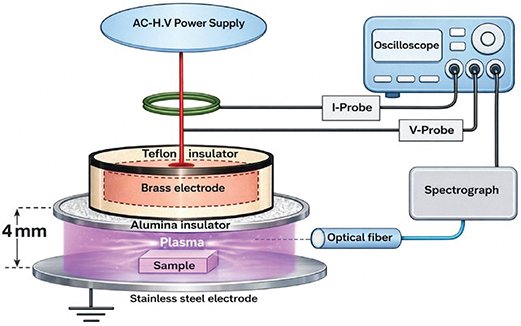
Figure 1. Diagram showing cold atmospheric plasma surface treatment.
Adhesive cementation procedure
A zirconia primer (Z-Prime Plus; BISCO, Schaumburg, Illinois, USA) was coated for 10 s (control and four experimental groups, total n = 100), followed by a drying period of 15 seconds. Zirconia and composite discs were bonded utilizing a universal luting resin with a cleanup indicator (Maxcem Elite Chroma, Kerr Corporation, Italy) under a 0.2-kg constant load to ensure uniform cementation [28, 29]. Excess luting was carefully wiped using a cotton pellet, followed by light curing each side of margins for 40s using a halogen curing light (Elipar, 3M ESPE, Leicestershire, England) at an intensity of 1350 mW/cm². For the remaining specimens from control and four experimental groups (n = 100), identical procedural steps were applied, however, without applying the zirconia primer. Following the adhesive cementation procedure, all samples were placed in distilled water 24 h at 37°C prior to thermocycling.
Thermocycling of specimens
All samples underwent a cumulative total of 10,000 cycles in a thermocycler (SD Mechatronic, Westerham, Germany), oscillating between 5°C and 55°C. Each temperature was maintained for a dwell time (30s), with a transfer time of 10 s between temperature changes [26].
SBS testing
A universal mechanical tester (Instron, England) with a mono-beveled chisel attachment was utilized for assessing the assembly of the zirconia/composite specimens. The testing protocol involved the application of a load (5000 g) with a constant crosshead speed (0.5 mm/min). The SBS (τ) was evaluated using the following equation:
τ = F/A
where τ denotes SBS in MPa; F and A represent the force and the bonding area (mm²), respectively. The bonded area is obtained by the area of the circle (A= πr2 = 28.27 mm2). The resulting findings were recorded using BlueHill software (Universal Instron, England).
Analysis of failure mode
The modes of failure were systematically categorized utilizing an optic microscope (Nikon SMZ745T, Japan) at a magnification of 30×. Failures were classified into three distinct categories: adhesive failures, which occur at the resin cement/zirconia interface; cohesive failures, which take place within either the composite or the zirconia; and mixed failures, which involve a combination of both adhesive and cohesive mechanisms.
Statistical analysis
Data were statistically analyzed using SPSS (v.20, SPSS Inc., Chicago, IL, USA). Numerical findings were expressed as means ± standard deviations, accompanied by confidence intervals and ranges. The normality of the data distribution was assessed using the Kolmogorov-Smirnov and Shapiro-Wilk tests. Since the data conformed to a normal distribution, group comparisons were performed employing a one-way Analysis of Variance (ANOVA) and Bonferroni’s post-hoc test. Intragroup comparisons were performed using the independent t-test, while a multi-way ANOVA was executed to examine interactions among study variables. The p-values were analyzed as two tailed, with statistical significance established at p ≤ 0.05.
Results
Scanning electron microscopy
Different surface treatments revealed different surface topography under environmental scanning electron microscopy. The control untreated group showed a surface without markable surface roughness, the surface characterized by parallel grooves that could be representative of the sandpaper polishing of the specimens, Figure 2a. The specimens treated with APA revealed high surface topographic change; the surface roughness is more prominent, and there are also noticeable ditches representative of sharp edges of Al2O3 particles impingement on the surface, Figure 2b. CAP specimen showed no remarkable changes in the surface topography, Figure 2c. Subjecting the specimens to APA followed by CAP did not significantly change the appearance compared to solely APA treatment; however, the surface appears less random and smoother while preserving the APA-generated irregularities (Figure 2d). HF acid application before CAP did not produce a significant alteration of the surface; it remained comparable to the control specimens although the zirconia granules appeared more pronounced than in the other specimens (Figure 2e).
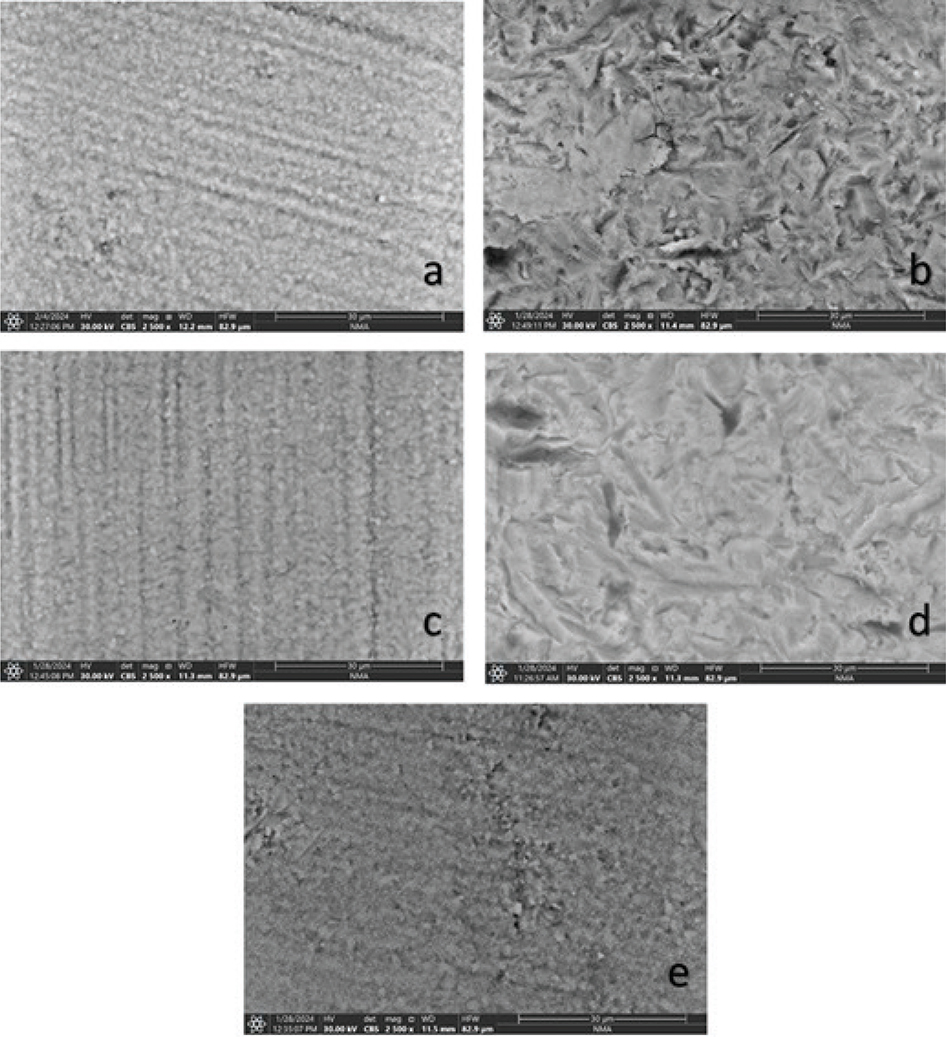
Figure 2. Representative SEM images: (a) Control group specimen without surface treatment. (b) Air particle abrasion surface treatment. (c) Cold atmospheric plasma specimen. (d) Air particle abrasion followed by cold atmospheric plasma. (e) Hydrofluoric acid etching followed by cold atmospheric plasma.
SBS
All surface treatments demonstrated a significant increase in SBS compared with the control group (p < 0.001). Similarly, self-adhesive cement applied in conjunction with a surface primer significantly enhanced SBS compared to groups that did not use a surface primer (p < 0.001). In the case of the 3Y-TZP groups, all specimens subjected to surface treatment exhibited comparable mean SBS values within the no primer groups (p > 0.05). However, within the primer groups, the APA and CAP surface treatments demonstrated statistically significantly higher SBS values than the APA + CAP and CAP + HF treatments (p < 0.001). For the primer 3Y-TZP groups, the mean SBS values ranged from 18.34 ± 1.68 MPa to 21.90 ± 3.07 MPa, with the latter representing the highest SBS value observed among all groups. Conversely, for the no primer 3Y-TZP groups, the SBS values ranged from 14.01 ± 1.37 MPa to 14.79 ± 1.42 MPa. The lowest SBS values for the 3Y-TZP specimens were associated with control specimens lacking primer, recorded at 4.72 ± 0.96 MPa (p < 0.001).
In the 5YSZ groups, all specimens with surface treatment exhibited comparable mean SBS values within the primer (p > 0.05) and no primer groups (p > 0.05). For the primer 5YSZ groups, the mean SBS values ranged from 18.03 ± 2.18 MPa to 19.36 ± 1.48 MPa. In contrast, for the no primer 5YSZ groups, the SBS values ranged from 13.54 ± 0.91 MPa to 14.79 ± 1.42 MPa. The lowest SBS values for the 5YSZ specimens were associated with control specimens without primer, recorded at 4.62 ± 1.04 MPa (p < 0.001). Descriptive statistics, along with comparisons among various groups and their interactions, are presented in Tables 1 and 2. The statistical power of the study, based on different variables, ranged from 0.94 (94%) to 1 (100%).
| Source | Type III sum of squares | df | Mean square | F | P value | Partial eta squared | Observed power |
| Surface ttt | 3852.05 | 4.00 | 963.01 | 368.59 | 0.0001* | 0.891 | 1.00 |
| Primer | 1068.10 | 1.00 | 1068.10 | 408.82 | 0.0001* | 0.694 | 1.00 |
| Zr (3Y & 5Y) | 33.09 | 1.00 | 33.09 | 12.66 | 0.0001* | 0.066 | 0.94 |
| Surface ttt × Primer | 91.17 | 4.00 | 22.79 | 8.72 | 0.0001* | 0.162 | 1.00 |
| Surface ttt × Zr | 24.61 | 4.00 | 6.15 | 2.35 | 0.056 ns | 0.050 | 0.67 |
| Primer × Zr | 3.15 | 1.00 | 3.15 | 1.20 | 0.274 ns | 0.007 | 0.19 |
| Surface ttt × Primer × Zr | 37.57 | 4.00 | 9.39 | 3.60 | 0.008* | 0.074 | 0.87 |
| 3Y: 3 mol% yttria-partially stabilized monolithic zirconia. 5Y: 5 mol% yttria-partially stabilized monolithic zirconia. Significance level p ≤ 0.05, *significant. ns: nonsignificant. | |||||||
Mode of failure
In the present study, the identified failure modes were exclusively adhesive or mixed failures, without instances of pure cohesive failures. Furthermore, within the mixed failure modes, the cohesive failure components were situated within the composite material. Notably, neither pure nor mixed cohesive failure modes were associated with zirconia materials. The control groups demonstrated only adhesive failures, suggesting an early detachment of the cement layer from the untreated zirconia surfaces. Conversely, all groups with surface treatment exhibited both adhesive and mixed failures (Figures 3 and 4).
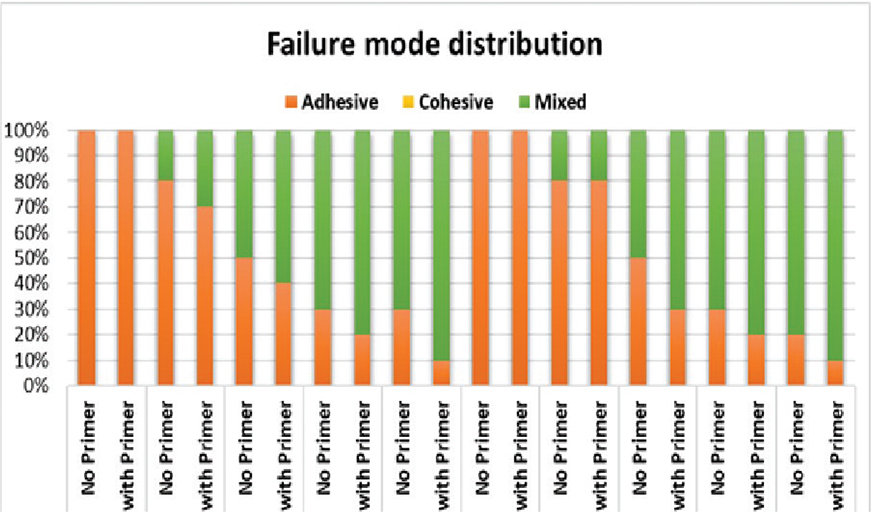
Figure 3. Comparison of the distribution pattern of the mode of failure of 3Y-TZP and 5YSZ.
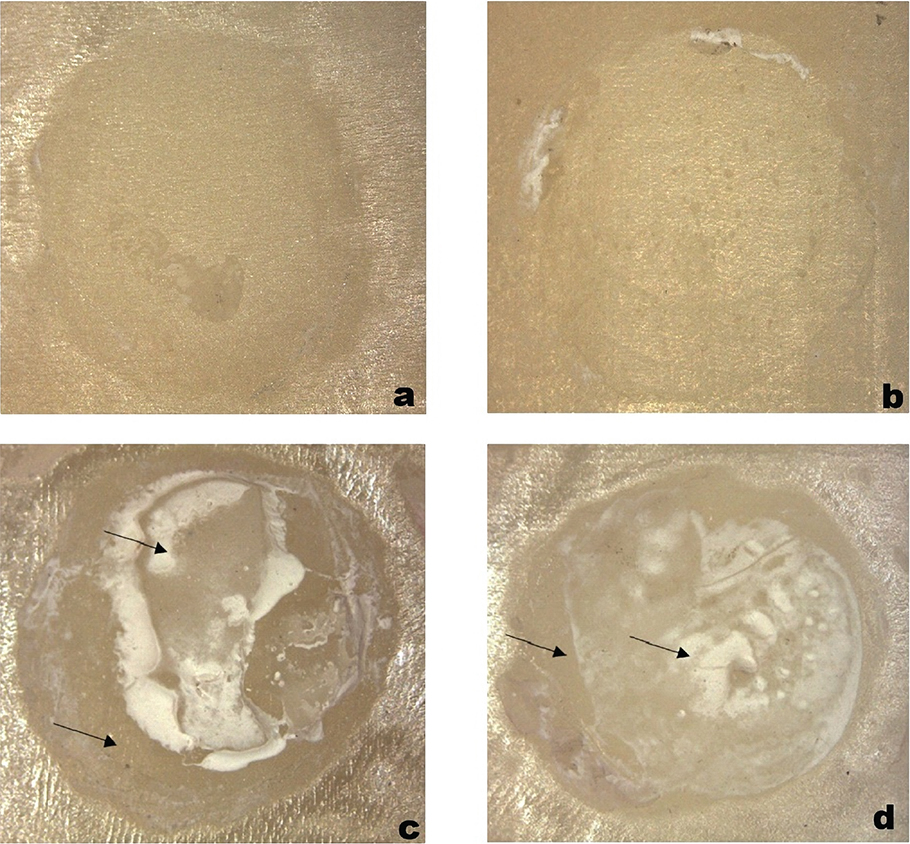
Figure 4. (a and b) Complete adhesive failure at the zirconia surface. (c) Mixed failure showing adhesive failure at a composite surface, cohesive within the cement surface, and adhesive failure at the zirconia surface. (d) Mixed failure mode showing adhesive failure at the composite resin cement interface and cohesive failure within the composite material.
Discussion
This study evaluated the influence of surface treatments and luting protocols on SBS of two monolithic zirconia materials (3Y-TZP and 5YSZ) bonded to composite resin with a self-adhesive resin cement. Surface treatment significantly enhanced the SBS of zirconia, leading to the rejection of the first null hypothesis. In contrast, the yttria content of zirconia did not significantly influence SBS, and therefore the second null hypothesis was accepted. The application of a zirconia primer significantly improved SBS, resulting in rejection of the third null hypothesis.
Achieving reliable and durable adhesion to zirconia remains a clinical challenge due to its chemically inert surface and absence of a glassy phase. APA remains the most commonly used surface treatment for zirconia, as it increases surface roughness and surface area, thereby enhancing micromechanical interlocking and surface wettability [30, 31]. In the present study, APA using 50 µm alumina particles at 0.2 MPa effectively improved SBS, consistent with previous reports [24, 32].
Beyond micromechanical retention, CAP modifies zirconia surfaces primarily through physicochemical mechanisms. CAP increases surface energy by removing organic contaminants and introducing highly reactive oxygen- and nitrogen-containing functional groups, such as hydroxyl and peroxide radicals [31, 33, 34]. These plasma-induced radicals significantly enhance surface wettability and promote improved spreading and penetration of primers and resin cements. Unlike APA, CAP alters surface chemistry without inducing additional surface damage, which may reduce the risk of microcrack formation in zirconia [35].
Although CAP combined with APA did not result in statistically significant SBS improvements compared to CAP alone, the observed trend suggests a complementary effect. These findings are consistent with those of Inokoshi et al. [36], who reported that CAP primarily enhances chemical bonding rather than surface roughness. Therefore, the principal advantage of CAP lies in optimizing the chemical reactivity of zirconia surfaces rather than further increasing topographical irregularities.
HF etching was found to be ineffective for zirconia surface treatment, confirming previous evidence that zirconia lacks an etchable glass phase and is resistant to acid dissolution [37, 38]. Even prolonged exposure to highly concentrated HF produces minimal surface alteration without meaningful improvement in bond strength. Accordingly, the present findings further support the clinical consensus that HF etching is incompatible with zirconia restorations.
Chemical bonding to zirconia is predominantly achieved through phosphate monomer-containing primers, particularly 10-MDP. The 10-MDP molecule forms stable chemical bonds with zirconium oxide via its phosphate group while copolymerizing with resin cement through its methacrylate group [39–41]. In the current study, the application of a 10-MDP–containing primer significantly improved SBS, even after artificial aging. Although the manufacturer suggests potential synergistic effects of multiple phosphate monomers, recent evidence indicates that bond durability is primarily attributed to 10-MDP alone [39].
The absence of significant SBS differences between 3Y-TZP and 5YSZ observed in this study aligns with some previous reports although conflicting findings exist in the literature [42]. Variations among studies may be attributed to differences in aging protocols, luting agents and testing methods [43]. The modest SBS values observed in untreated control groups further emphasize that surface treatment and primer application are essential for zirconia restorations that rely on adhesive retention [34, 44].
Failure mode analysis supported these findings, as untreated zirconia predominantly exhibited adhesive failures, whereas treated groups showed mixed failure patterns indicative of improved interfacial bonding [45–48]. CAP-treated surfaces likely enhance primer–zirconia interaction by increasing surface polarity and chemical reactivity, thereby improving adhesion quality [47].
From a clinical perspective, CAP offers promising adjunctive surface treatment for zirconia restorations in both dental laboratories and clinical settings. CAP devices operate at room temperature, require short application times, and do not alter zirconia surface morphology, making them suitable for chairside or laboratory use. When combined with 10-MDP primers, CAP may improve bonding reliability while minimizing mechanical damage associated with aggressive air abrasion. However, practical considerations such as equipment cost, training requirements, and workflow integration must be addressed before widespread clinical adoption.
This study is limited by the exclusive use of a single self-adhesive resin cement, which may behave differently from adhesive luting systems. Additionally, only two zirconia compositions were evaluated; inclusion of 4YSZ could provide a broader comparison. Finally, as an in vitro investigation, the findings may not fully replicate intraoral conditions, and long-term clinical studies are needed to validate these results.
Conclusions
The present in vitro study concluded that airborne particle abrasion utilizing alumina in conjunction with the application of a primer resulted in the highest SBS of zirconia to resin composite. CAP provides bond strength comparable to APA while potentially minimizing surface damage, supporting its use as a conservative surface-treatment option. Additional combined or aggressive surface treatments do not offer further clinical benefit for bonding zirconia restorations. The bonding efficacy was significantly enhanced when surface treatments were utilized in conjunction with primers containing MDP. This combination indicates the establishment of a reliable bond even after exposure to artificial aging conditions. The present study identified no significant difference in monolithic zirconia with varying yttria content, confirming that bond strength was primarily influenced by the surface treatment and adhesive protocol used, rather than the yttria content or the mechanical-physical properties of zirconia ceramic materials.
Declarations
Availability of data and material
The data will be made available as per requirement.
Code availability
Not applicable.
Ethics approval
Not applicable.
Consent to participate
Not applicable.
Consent for publication
Not applicable.
References
[1] Miyazaki T, Nakamura T, Matsumura H, Ban S, Kobayashi T. Current status of zirconia restoration. J Prosthodont Res. 2013;57:236–61. https://doi.org/10.1016/j.jpor.2013.09.001
[2] Stawarczyk B, Keul C, Eichberger M, Figge D, Edelhoff D, Lümkemann N. Three generations of zirconia: from veneered to monolithic. Part I. Quintessence Int. 2017;48:369–80.
[3] Alqutaibi AY, Ghulam O, Krsoum M, Binmahmoud S, Taher H, Elmalky W, et al. Revolution of current dental zirconia: a comprehensive review. Molecules. 2022;27:1699. https://doi.org/10.3390/molecules27051699
[4] Sulaiman TA, Suliman AA, Abdulmajeed AA, Zhang Y. Zirconia restoration types, properties, tooth preparation design, and bonding. A narrative review. J Esthet Restor Dent. 2024;36:78–84. https://doi.org/10.1111/jerd.13151
[5] Ban S. Chemical durability of high translucent dental zirconia. Dent Mater J. 2020;39:12–23. https://doi.org/10.4012/dmj.2019-109
[6] Kwon SJ, Lawson NC, McLaren EE, Nejat AH, Burgess JO. Comparison of the mechanical properties of translucent zirconia and lithium disilicate. J Prosthet Dent. 2018;120:132–7. https://doi.org/10.1016/j.prosdent.2017.08.004
[7] Singhal S, Antonson SA, Antonson DE. Effect of surface treatment of lithium disilicate on shear-bond strength. Dent Mater. 2015;31:e54–5. https://doi.org/10.1016/j.dental.2015.08.121
[8] Brown T, Kee E, Xu X, Chapple A, Stamitoles C, Armbruster P, et al. Shear bond strength of orthodontic brackets bonded to high-translucent dental zirconia with different surface treatments: an in vitro study. Int Orthod. 2024;22:100822. https://doi.org/10.1016/j.ortho.2023.100822
[9] Zhang Y, Lawn BR, Malament KA, Van Thompson P, Rekow ED. Damage accumulation and fatigue life of particle-abraded ceramics. Int J Prosthodont. 2006;19:442–8.
[10] Jassim SJ, Majeed MA. Effect of plasma surface treatment of three different CAD/CAM materials on the micro shear bond strength with resin cement (A comparative in vitro study). Heliyon. 2023;9:e17790. https://doi.org/10.1016/j.heliyon.2023.e17790
[11] Muraev AA, Murzabekov AI, Ivanov SY, Tarasov YV, Orlov EA, Dolgalev AA. Plasma electrolytic oxidation for dental implant surface treatment. Sovrem Tekhnologii Med. 2023;15:18–24. https://doi.org/10.17691/stm2023.15.3.02
[12] Yang Y, Zheng M, Yang Y, Li J, Su YF, Li HP, et al. Inhibition of bacterial growth on zirconia abutment with a helium cold atmospheric plasma jet treatment. Clin Oral Investig. 2020;24:1465–77. https://doi.org/10.1007/s00784-019-03179-2
[13] Alqutaibi AY, Aljohani A, Alduri A, Masoudi A, Alsaedi AM, Al-Sharani HM, et al. The effectiveness of cold atmospheric plasma (CAP) on bacterial reduction in dental implants: a systematic review. Biomolecules. 2023;13:1528. https://doi.org/10.3390/biom13101528
[14] Smielak B, Klimek L. Effect of hydrofluoric acid concentration and etching duration on select surface roughness parameters for zirconia. J Prosthet Dent. 2015;113:596–602. https://doi.org/10.1016/j.prosdent.2015.01.001
[15] Sriamporn T, Thamrongananskul N, Busabok C, Poolthong S, Uo M, Tagami J. Dental zirconia can be etched by hydrofluoric acid. Dent Mater J. 2014;33:79–85. https://doi.org/10.4012/dmj.2013-243
[16] Kim SH, Cho SC, Lee MH, Kim HJ, Oh NS. Effect of 9% hydrofluoric acid gel hot-etching surface treatment on shear bond strength of resin cements to zirconia ceramics. Medicina (Kaunas, Lithuania). 2022;58:1469. https://doi.org/10.3390/medicina58101469
[17] Kim SH, Oh KC, Moon HS. Effects of surface-etching systems on the shear bond strength of dual-polymerized resin cement and zirconia. Materials (Basel). 2024;17:3096. https://doi.org/10.3390/ma17133096
[18] Alqutaibi AY, Alghauli MA, Dewedar K, AbdElaziz MH, Saker S. The influence of Zircos-E® etchant, silica coating, and alumina air-particle abrasion on the debonding resistance of endocrowns with three different preparation designs. Clin Exp Dent Res. 2024;10:e901. https://doi.org/10.1002/cre2.901
[19] Zhao L, Jian YT, Wang XD, Zhao K. Bond strength of primer/cement systems to zirconia subjected to artificial aging. J Prosthet Dent. 2016;116:790–6. https://doi.org/10.1016/j.prosdent.2016.03.020
[20] Sharafeddin F, Shoale S. Effects of universal and conventional MDP primers on the shear bond strength of zirconia ceramic and nanofilled composite resin. J Dent (Shiraz). 2018;19:48–56.
[21] Seker E, Kilicarslan MA, Deniz ST, Mumcu E, Ozkan P. Effect of atmospheric plasma versus conventional surface treatments on the adhesion capability between self-adhesive resin cement and titanium surface. J Adv Prosthodont. 2015;7:249–56. https://doi.org/10.4047/jap.2015.7.3.249
[22] Liu JF, Yang CC, Luo JL, Liu YC, Yan M, Ding SJ. Bond strength of self-adhesive resin cements to a high transparency zirconia crown and dentin. J Dent Sci. 2022;17:973–83. https://doi.org/10.1016/j.jds.2021.12.008
[23] Smeets R, Henningsen A, Heuberger R, Hanisch O, Schwarz F, Precht C. Influence of UV irradiation and cold atmospheric pressure plasma on zirconia surfaces: an in vitro study. Int J Oral Maxillofac Implants. 2019;34:329–36. https://doi.org/10.11607/jomi.7017
[24] Bunz O, Kalz P, Benz CI, Naumova EA, Arnold WH, Piwowarczyk A. Cold atmospheric plasma improves shear bond strength of veneering composite to zirconia. Dent J (Basel). 2021;9:59. https://doi.org/10.3390/dj9060059
[25] Xie H, Chen C, Dai W, Chen G, Zhang F. In vitro short-term bonding performance of zirconia treated with hot acid etching and primer conditioning etching and primer conditioning. Dent Mater J. 2013;32:928–38. https://doi.org/10.4012/dmj.2013-010
[26] Zhu X, Shi J, Ye X, Ma X, Zheng M, Yang Y, et al. Influence of cold atmospheric plasma on surface characteristics and bond strength of a resin nanoceramic. Materials (Basel). 2022;16:44. https://doi.org/10.3390/ma16010044
[27] El-Sayed WS, Ouf SA, Mohamed AA. Deterioration to extinction of wastewater bacteria by non-thermal atmospheric pressure air plasma as assessed by 16S rDNA-DGGE fingerprinting. Front Microbiol. 2015;6:1098. https://doi.org/10.3389/fmicb.2015.01098
[28] Tian T, Tsoi JK-H, Matinlinna JP, Burrow MF. Evaluation of microtensile bond strength on ceramic-resin adhesion using two specimen testing substrates. Int J Adhes Adhes. 2014;54:165–71. https://doi.org/10.1016/j.ijadhadh.2014.06.003
[29] Alqutaibi AY, Alnazzawi AA, AbdElaziz MH, Farghal AE, Aldamaty MF, Alghauli MA. Effect of Nd:YAG Laser Surface Pretreatments and Bonding Protocols on Shear Bond Strength of Monolithic Zirconia with Varying Yttria Contents to Composite Resin. Eur J Dent. 2026 Feb;20(1):195-203. https://doi.org/10.1055/s-0045-1808260
[30] D’Amario M, Piccioni C, Di Carlo S, De Angelis F, Caruso S, Capogreco M. Effect of airborne particle abrasion on microtensile bond strength of total‐etch adhesives to human dentin. BioMed Res Int. 2017;2017:2432536. https://doi.org/10.1155/2017/2432536
[31] Abi-Rached FO, Martins SB, Campos JA, Fonseca RG. Evaluation of roughness, wettability, and morphology of an yttria-stabilized tetragonal zirconia polycrystal ceramic after different airborne-particle abrasion protocols. J Prosthet Dent. 2014;112:1385–91. https://doi.org/10.1016/j.prosdent.2014.07.005
[32] Özcan M, Bernasconi M. Adhesion to zirconia used for dental restorations: a systematic review and meta-analysis. J Adhes Dent. 2015;17:7–26.
[33] Zhu XM, Zhou JF, Guo H, Zhang XF, Liu XQ, Li HP, et al. Effects of a modified cold atmospheric plasma jet treatment on resin-dentin bonding. Dent Mater J. 2018;37:798–804. https://doi.org/10.4012/dmj.2017-314
[34] Alghauli MA, Alqutaibi AY, Wille S, Kern M. Clinical reliability of self-adhesive luting resins compared to other adhesive procedures: a systematic review and meta-analysis. J Dent. 2023;129:104394. https://doi.org/10.1016/j.jdent.2022.104394
[35] Vilas Boas Fernandes Júnior V, Barbosa Dantas DC, Bresciani E, Rocha Lima Huhtala MF. Evaluation of the bond strength and characteristics of zirconia after different surface treatments. J Prosthet Dent. 2018;120:955–9. https://doi.org/10.1016/j.prosdent.2018.01.029
[36] Inokoshi M, De Munck J, Minakuchi S, Van Meerbeek B. Meta-analysis of bonding effectiveness to zirconia ceramics. J Dent Res. 2014;93:329–34. https://doi.org/10.1177/0022034514524228
[37] Blatz MB, Phark JH, Ozer F, Mante FK, Saleh N, Bergler M, et al. In vitro comparative bond strength of contemporary self-adhesive resin cements to zirconium oxide ceramic with and without air-particle abrasion. Clin Oral Investig. 2010;14:187–92. https://doi.org/10.1007/s00784-009-0278-0
[38] You GE, Lim MJ, Min KS, Yu MK, Lee KW. Surface property changes observed in zirconia during etching with high-concentration hydrofluoric acid over various immersion times. Dent Mater J. 2024;43:52–7. https://doi.org/10.4012/dmj.2023-091
[39] Calamita RS, Oliveira AAD, Pizzanelli GG, Salvador MVO, Mesquita AMM, Pecorari VGA, et al. Interaction of different concentrations of 10-MDP and GPDM on the zirconia bonding. Dent Mater. 2023;39:665–8. https://doi.org/10.1016/j.dental.2023.05.003
[40] Su C, Lu ZC, Yu H. [10-Methacryloyloxydecyl dihydrogen phosphate in resin-to-zirconia bonding durability: a systematic review and meta-analysis]. Zhonghua Kou Qiang Yi Xue Za Zhi. 2023;58:1281–90.
[41] Li X, Liang S, Inokoshi M, Zhao S, Hong G, Yao C, et al. Different surface treatments and adhesive monomers for zirconia-resin bonds: a systematic review and network meta-analysis. Jpn Dent Sci Rev. 2024;60:175–89. https://doi.org/10.1016/j.jdsr.2024.05.004
[42] Hansson M, Ågren M. Shear bond strength of adhesive cement to zirconia: effect of added proportion of yttria for stabilization. J Prosthet Dent. 2024;131:934.e1–.e7. https://doi.org/10.1016/j.prosdent.2024.02.010
[43] Comba A, Baldi A, Tempesta RM, Carossa M, Perrone L, Saratti CM, et al. Do chemical-based bonding techniques affect the bond strength stability to cubic zirconia? Materials (Basel). 2021;14:3920. https://doi.org/10.3390/ma14143920
[44] Hajjaj MS, Barboud HM, Almashabi HK, Alzahrani SJ, Abu Haimed TS, Alnoury AS, et al. Evaluation of different priming agents with conventional and bioactive self-adhesive resin cements on shear bond strength to zirconia. Appl Sci. 2023;13:8369. https://doi.org/10.3390/app13148369
[45] Akrawatcharawittaya P, Sriamporn T, Vuddhakanok S, Thamrongananskul N, Klaisiri A. The effect of a dual cure activator on self-adhesive resin cements and zirconia shear bonds. Ceramics. 2024;7:1237–46. https://doi.org/10.3390/ceramics7030082
[46] Kim DS, Ahn JJ, Bae EB, Kim GC, Jeong CM, Huh JB, et al. Influence of non-thermal atmospheric pressure plasma treatment on shear bond strength between Y-TZP and self-adhesive resin cement. Materials (Basel). 2019;12:3321. https://doi.org/10.3390/ma12203321
[47] Khanlar LN, Takagaki T, Abdou A, Inokoshi M, Ikeda M, Takahashi A, et al. Effect of air-particle abrasion protocol and primer on the topography and bond strength of a high-translucent zirconia ceramic. J Prosthodont. 2022;31:228–38. https://doi.org/10.1111/jopr.13372
[48] Ahn JJ, Kim DS, Bae EB, Kim GC, Jeong CM, Huh JB, et al. Effect of non-thermal atmospheric pressure plasma (NTP) and zirconia primer treatment on shear bond strength between Y-TZP and resin cement. Materials (Basel). 2020;13:3934. https://doi.org/10.3390/ma13183934