ORIGINAL REPORT
IDENTIFYING CLINICALLY IMPORTANT FUNCTIONAL IMPAIRMENTS AND REHABILITATION NEEDS IN CANCER SURVIVORS AND A PILOT VALIDATION OF THE CANCER REHABILITATION QUESTIONNAIRE
Jia Min Yen, MMed (INTMED)1#, Ning Tang, PhD1#, Shuk In Tong, Bachelor of Science (Physiotherapy), University of Melbourne2 and Effie Chew, MBBS, MRCP, FAMS1,3
From the 1Division of Rehabilitation Medicine, Department of Medicine, 2Department of Rehabilitation and 3Department of Medicine, Yong Loo Lin School of Medicine, National University of Singapore, Singapore
#These authors contributed equally as first authors.
Objectives: Despite the availability of cancer rehabilitation, utilization at our institution was low. We designed the Cancer Rehabilitation Questionnaire (CRQ) to investigate the prevalence of functional impairments amongst cancer survivors and attitudes towards rehabilitation participation. We evaluated the performance of CRQ as a screening tool for detecting clinically important physical dysfunction.
Design: A cross-sectional study was performed, recruiting cancer survivors at a university outpatient oncology clinic. Cancer survivors completed the CRQ and European Organization for Research and Treatment of Cancer (EORTC) Quality of Life Questionnaire – Core 30 Questionnaires. Descriptive statistical analysis and receiver operator characteristics analysis were performed to assess the ability of the CRQ to detect clinically important physical dysfunction, as measured by the EORTC QLQ-C30.
Results: Of 204 participants, 87.3% reported impairments in at least 1 CRQ domain. Pain and weakness were most common. The number of positive items correlated with EORTC global health status and functional scales. A cut-off of ≥ 4 on the CRQ predicted clinically important physical dysfunction (sensitivity 61.8%, specificity 75.5%). Of those with impairments, 53.9% were unwilling to participate in rehabilitation. Transportation, need for caregivers, and cost were the main barriers.
Conclusion: Our findings will guide resource allocation to overcome barriers to participation. The CRQ can help to stratify cancer survivors requiring further rehabilitation interventions.
LAY ABSTRACT
Functional impairments due to cancer and its treatment are common, and can be effectively addressed with rehabilitation. To better provide cancer rehabilitation, the Cancer Rehabilitation Questionnaire was designed to investigate what functional problems cancer survivors have and their attitudes towards participation in rehabilitation. We compared the cancer rehabilitation questionnaire with the European Organization for Research and Treatment of Cancer (EORTC QLQ-C30) to see if it could be used as a screening tool for rehabilitation needs. Of 204 participants, 87.3% reported functional impairments in at least 1 Cancer Rehabilitation Questionnaire domain. Pain and weakness were most common. The number of positive Cancer Rehabilitation Questionnaire items correlated with EORTC scales: ≥ 4 positive items in the Cancer Rehabilitation Questionnaire indicated that the number of physical impairments was clinically significant. Among participants with impairments, 53.9% were unwilling to participate in rehabilitation. Transportation, need for caregivers, and cost were cited as barriers. A simple screening tool, such as the Cancer Rehabilitation Questionnaire can help to stratify cancer patients requiring further rehabilitation and intervention.
Key words: functional impairments in cancer survivors; cancer rehabilitation; screening tool; rehabilitation needs; quality of life.
Citation: J Rehabil Med 2022; 54: jrm00354. DOI: https://dx.doi.org/10.2340/jrm.v54.1379
Copyright: © Published by Medical Journals Sweden, on behalf of the Foundation for Rehabilitation Information. This is an Open Access article distributed under the terms of the Creative Commons Attribution-NonCommercial 4.0 International License (https://creativecommons.org/licenses/by-nc/4.0/)
Accepted: Oct 24, 2022; Published: Dec 16, 2022
Correspondence address: Effie Chew, Division of Rehabilitation Medicine, Department of Medicine, National University Hospital, Singapore, 1E Kent Ridge Road, Singapore 119228, Singapore. E-mail: effie_chew@nuhs.edu.sg
Competing interests and funding: The authors have no conflicts of interest to declare.
Advancements in cancer therapeutics have led to more effective treatments and increased cancer survival (1, 2). However, cancer survivors may experience cancer-related disabilities and adverse consequences of cancer treatment (3, 4). Rehabilitation and exercise are effective for treating physical functional decline and addressing symptoms across multiple domains and at multiple points along the cancer disease continuum (5–7). A recent systematic review of functional outcomes after a variety of rehabilitative interventions for cancer survivors at any point in the continuum of care showed statistically significant improvements in function in 71% of studies, particularly in the domains of health-related quality of life (HRQoL), performing activities of daily living (ADL) and instrumental ADL, cancer-related fatigue and functional mobility, amongst other benefits (8). These interventions ranged from exercise-based interventions to cognitive behavioural therapy and cognitive therapy (8).
In Singapore, the prevalence of functionally significant cancer-related impairments remains unknown. The uptake of cancer rehabilitation programmes is also low despite its availability in most public hospitals.
There is currently no universally accepted multidimensional screening tool to assess rehabilitation needs in cancer survivors. Validated screening tools for specific impairments, such as fatigue (Brief Fatigue Inventory, Functional Assessment of Cancer Therapy-Fatigue scales) and general physical functioning and HRQoL, such as the Functional Assessment of Cancer Therapy-General (FACT-G) and European Organization for Research and Treatment of Cancer Quality of Life Questionnaire – Core 30 (EORTC QLQ-C30) (version 3) exist, but do not specifically identify rehabilitation needs.
To identify the gaps and inform the development of cancer rehabilitation programmes at National University Hospital Singapore, we developed the Cancer Rehabilitation Questionnaire (CRQ) (Appendix S1) with the aims of: (i) identifying the prevalence of different domains of functional impairments across a broad spectrum of cancer survivors in an outpatient setting; (ii) assessing awareness of rehabilitation as a treatment modality and as an available service for management of functional impairments; and (iii) assessing willingness and barriers to accessing these services, and attitudes towards cancer rehabilitation. Secondarily, this study investigated the reliability and validity of the CRQ as a screening tool to identify clinically important impairments in physical functioning. This information will be valuable in developing an impairment-based patient-centric cancer rehabilitation programme.
METHODS
To design the CRQ, a panel of domain experts experienced in the rehabilitation of cancer patients, comprising physiotherapists, occupational therapist, social worker and rehabilitation physician, identified the domains and functional impairment items based on the prevalence in clinical practice, literature review and rehabilitation interventions available to address the issues (9–11). Feasibility and face validity were assessed through feedback from 8 senior therapists and a pilot performed with feedback from 10 patients. The number of functional impairments was rationalized from 30 to 12 common cancer-associated functional issues and simplified from continuous rating scales for each item, to binary yes/no answers. CRQ score was calculated as the total number of symptoms/impairments reported in item 1 of the CRQ.
The CRQ was validated against the EORTC QLQ-C30 (12), which comprises 30 items for 15 dimensions/scales, including a global health status scale, 5 functional scales (physical, role, cognitive, social, and emotional functioning), 3 symptom scales (fatigue, nausea/vomiting, and pain), 5 single-item symptom scales (dyspnoea, sleep disturbances, appetite loss, constipation, and diarrhoea), and a single-item scale for the financial difficulties from the disease and treatment. The EORTC QLQ-C30 was chosen as it is a validated measure of HRQoL in cancer survivors with good correlation with aspects of physical function, activity limitation and participation on the International Classification of Functioning, Disability and Health (ICF) relevant to rehabilitation interventions (13, 14).
The 2 questionnaires were administered by 3 trained student volunteers from the National University of Singapore in a cross-sectional study of cancer survivors at the oncology specialist outpatient clinics of the National University Cancer Institute, Singapore (NCIS), from May 2014 to July 2014. Ethics approval was obtained from the National Healthcare Group Domain Specific Review Board in Singapore (DSRB 2014/00357). Participants included all patients diagnosed with cancer, more than 21 years old. Those who were unable to answer questions for any reason (e.g. cognitive impairment) were excluded from the study.
Statistical analyses were carried out using SPSS version 19 software (SPSS Inc., WA, USA). Patient characteristics was analysed descriptively. The Mann–Whitney U was used for comparing differences in EORTC variables between groups, and the χ2 test was used for categorical ones. Spearman’s correlation between the number of functional impairments, with the functional scales of the EORTC was calculated. The level of significance for all tests was p < 0.05, with no adjustment for multiple comparisons. The threshold for clinical important functional limitation for EORTC physical functioning domain was previously determined to be 83 points with a sensitivity of 0.87 and specificity of 0.68 (15). To assess the discriminatory power of the CRQ score to detect clinically important functional limitation as defined by this threshold, the effect sizes (Cohen’s d) for the CRQ score were calculated for participants whose EORTC physical functioning was ≥ 83 and those < 83. Internal consistency of the number of CRQ items was assessed using the Cronbach alpha coefficient. Receiver operating characteristic (ROC) and area under the curve (AUC) analyses were performed to evaluate the sensitivity and specificity of the CRQ to detect clinically important functional limitation, as described by the EORTC physical functioning domain (15–17).
RESULTS
Of 207 participants screened, 3 did not meet the inclusion criteria. Responses from 204 participants were included. The characteristics of the participants are described in Table I. Of 204 participants, 87.3% (178) reported some functional impairment following cancer diagnosis, 83.7% (149) reported impairment in 2 or more domains, 59.3% (121/204) in 3 or more domains, 44.6% (91) in 4 or more domains in the CRQ form. The 4 most frequently reported domains were pain, weakness, difficulty with ADL and numbness/tingling (Table II).
| Characteristics | n | % |
| Sex | ||
| Male | 76 | 37.3 |
| Female | 128 | 62.7 |
| Age range | ||
| 20–30 years | 10 | 4.9 |
| 30–40 years | 10 | 4.9 |
| 40–50 years | 28 | 13.7 |
| 50–60 years | 64 | 31.4 |
| 60–70 years | 60 | 29.4 |
| 70–80 years | 27 | 13.2 |
| 80–90 years | 4 | 2.0 |
| Not known | 1 | 0.5 |
| Cancer type | ||
| Breast | 67 | 32.8 |
| Genitourinary | 31 | 15.2 |
| Colorectal | 26 | 12.7 |
| Leukaemia | 22 | 10.8 |
| Lung | 15 | 7.4 |
| Lymphoma | 13 | 6.4 |
| Other gastrointestinal | 12 | 5.9 |
| Head and neck | 11 | 5.4 |
| Others | 7 | 3.4 |
| Cancer stage | ||
| I | 16 | 7.8 |
| II | 44 | 21.6 |
| III | 42 | 20.6 |
| IV | 50 | 24.5 |
| Not known | 52 | 25.5 |
| Time from diagnosis | ||
| < 1 year | 82 | 40.2 |
| ≥ 1 years, < 5 years | 75 | 36.8 |
| ≥ 5 years | 35 | 17.2 |
| Not known | 12 | 5.9 |
| Treatment status | ||
| Pre-treatment | 3 | 1.5 |
| On-going | 141 | 69.1 |
| Completed | 57 | 27.9 |
| Not known | 3 | 1.5 |
| Treatment type* | ||
| Chemotherapy | 180 | 88.2 |
| Surgery | 76 | 37.3 |
| Radiotherapy | 71 | 34.8 |
| Stem cell transplant | 6 | 2.9 |
| Hormone therapy | 1 | 0.5 |
| Not known | 3 | 1.5 |
| *Data referring to treatment types total 337 as some participants had > 1 treatment. | ||
Characteristics of cancer survivors with functional impairments
Age, cancer stage, cancer duration and treatment status were significantly associated with the presence of functional impairments, as screened by the CRQ and EORTC QLQ-C30 functioning scales (Table III). Cancer survivors ≥ 70 years old were more likely to report limitations in ADL (61.3% vs 40.7%, p = 0.033), unsteady gait (41.9% vs 23.8%, p = 0.036), swelling (16.3% vs 32.3%, p = 0.036), and decline in cognitive function (83.9 ± 19.1 vs 73.1 ± 22.2, p = 0.005) compared with younger cancer survivors. Those with more advance stage cancer (stage 3+4) reported significantly higher percentage of symptoms (93.5% vs 81.7%, p = 0.024) and worse EORTC-global health score (55.0 ± 20.8 vs 62.9 ± 19.0, p = 0.019). Those with cancer diagnosed less than 1 year ago had worse EORTC-physical functioning (73.7 ± 20.9 vs 80.6 ± 18.2, p = 0.015) and role functioning scores (66.5 ± 30.6 vs 76.2 ± 29.0, p = 0.026), compared with those diagnosed ≥ 1 year ago. Those who had completed treatment had better EORTC-global health score (63.9 ± 23.0 vs 56.4 ± 18.2, p = 0.016), physical functioning (83.5 ± 18.9 vs 74.1 ± 21.2, p = 0.004), role functioning (81.0 ± 26.8 vs 67.6 ± 30.7, p = 0.004), emotional functioning (84.4 ± 20.8 vs 75.8 ± 22.9, p = 0.016) and social functioning (86.8 ± 23.7 vs 74.5 ± 28.2, p = 0.004) compared with those on treatment. They also reported fewer symptoms (fatigue, nausea, pain, appetite loss) compared with those on treatment.
| Age | Cancer stage | Cancer duration | Treatment status | |||||||||
| < 70 years | ≥ 70 years | p-value | Stage 1 + 2 | Stage 3 + 4 | p-value | < 1 year | ≥ 1 year | p-value | On-going | Completed | p-value | |
| CRQ, % | ||||||||||||
| Having symptoms | 85.5 | 96.8 | > 0.05 | 81.7 | 93.5 | 0.024* | 85.4 | 89.1 | > 0.05 | 89.4 | 82.5 | > 0.05 |
| Pain/aching | 48.3 | 58.1 | > 0.05 | 51.7 | 54.3 | > 0.05 | 42.7 | 54.5 | > 0.05 | 54.6 | 42.1 | > 0.05 |
| Numbness/tingling sensation | 41.3 | 32.3 | > 0.05 | 33.3 | 46.7 | > 0.05 | 39.0 | 40.0 | > 0.05 | 43.3 | 33.3 | > 0.05 |
| Persistent fatigue | 37.8 | 41.9 | > 0.05 | 41.7 | 39.1 | > 0.05 | 42.7 | 35.5 | > 0.05 | 39.0 | 38.6 | > 0.05 |
| Easily breathless | 29.1 | 22.6 | > 0.05 | 20.0 | 30.4 | > 0.05 | 29.3 | 28.2 | > 0.05 | 30.5 | 24.6 | > 0.05 |
| Stiffness | 24.4 | 22.6 | > 0.05 | 25.0 | 25.0 | > 0.05 | 18.3 | 27.3 | > 0.05 | 22.0 | 29.8 | > 0.05 |
| Swelling | 16.3 | 32.3 | 0.036* | 21.7 | 15.2 | > 0.05 | 18.3 | 19.1 | > 0.05 | 19.9 | 15.8 | > 0.05 |
| Change in posture | 12.2 | 16.1 | > 0.05 | 15.0 | 12.0 | > 0.05 | 9.8 | 13.6 | > 0.05 | 13.5 | 12.3 | > 0.05 |
| Weakness | 45.3 | 45.2 | > 0.05 | 43.3 | 44.6 | > 0.05 | 45.1 | 45.5 | > 0.05 | 49.6 | 36.8 | > 0.05 |
| Affected daily activities | 40.7 | 61.3 | 0.033* | 36.7 | 50.0 | > 0.05 | 48.8 | 41.8 | > 0.05 | 45.4 | 36.8 | > 0.05 |
| Unsteady gait | 23.8 | 41.9 | 0.036* | 28.3 | 27.2 | > 0.05 | 23.2 | 29.1 | > 0.05 | 29.1 | 22.8 | > 0.05 |
| Recent falls | 12.2 | 12.9 | > 0.05 | 10.0 | 15.2 | > 0.05 | 11.0 | 13.6 | > 0.05 | 13.5 | 10.5 | > 0.05 |
| Dysphagia | 14.0 | 3.2 | > 0.05 | 11.7 | 15.2 | > 0.05 | 13.4 | 10.9 | > 0.05 | 13.5 | 12.3 | > 0.05 |
| EORTC, | ||||||||||||
| Global health status | 59.3 ± 20.3 | 55.4 ± 16.6 | > 0.05 | 62.9 ± 19.0 | 55 ± 20.8 | 0.019* | 57.9 ± 18.7 | 59.1 ± 20.6 | > 0.05 | 56.4 ± 18.2 | 63.9 ± 23.0 | 0.016* |
| Physical functioning. | 77.9 ± 20.9 | 71.0 ± 21.8 | > 0.05 | 79.3 ± 18.0 | 76.1 ± 23.4 | > 0.05 | 73.7 ± 20.9 | 80.6 ± 18.2 | 0.015* | 74.1 ± 21.2 | 83.5 ± 18.9 | 0.004* |
| Role functioning. | 70.6 ± 30.7 | 74.7 ± 27.5 | > 0.05 | 74.2 ± 27.2 | 71.6 ± 31.0 | > 0.05 | 66.5 ± 30.6 | 76.2 ± 29.0 | 0.026* | 67.6 ± 30.7 | 81.0 ± 26.8 | 0.004* |
| Emotional functioning. | 78.0 ± 22.8 | 78.8 ± 21.5 | > 0.05 | 80.1 ± 21.7 | 76.3 ± 22.9 | > 0.05 | 74.7 ± 24.7 | 80.1 ± 20.3 | > 0.05 | 75.8 ± 22.9 | 84.4 ± 20.8 | 0.016* |
| Cognitive functioning. | 83.9 ± 19.1 | 73.1 ± 22.2 | 0.005* | 84.2 ± 19.3 | 80.8 ± 19.4 | > 0.05 | 81.9 ± 19.8 | 83.5 ± 19.6 | > 0.05 | 81.0 ± 20.3 | 85.4 ± 19.2 | > 0.05 |
| Social functioning. | 77.5 ± 27.4 | 78.0 ± 29.0 | > 0.05 | 83.6 ± 24.1 | 75.9 ± 27.4 | > 0.05 | 73.6 ± 29.6 | 81.1 ± 25.4 | > 0.05 | 74.5 ± 28.2 | 86.8 ± 23.7 | 0.004* |
| CRQ data shows the percentage of participants having the symptom and impairment, χ2 test was used to analyse the differences in CRQ scores between groups. EORTC data shows Mean ± SD of the scores, Mann–Whitney U test was used to analyse the differences in EORTC scores between groups. *indicates results that meet significance. | ||||||||||||
Awareness of cancer rehabilitation
Of 204 participants, 131 (64.2%) knew how to access rehabilitation services for treatment of their functional impairments, but only 85 (41.7%) had undergone or were seeking treatment. More than half who had reported functional impairments (96/178 or 53.9%) were not willing to undergo rehabilitation. The most frequently reported reasons included difficulties with transport arrangements (43.2%), lack of accompanying caregivers (39.0%) and cost of rehabilitation (31.4%). Disease-related fatigue or feeling unwell (23.7%), as well as time commitment for the rehabilitation programme (16.1%) were also cited as reasons. Of the remaining 94 participants who were willing to participate, 43 were willing to attend weekly sessions, 18 preferred fortnightly sessions, and 33 preferred monthly sessions.
Cancer Rehabilitation Questionnaire as a screening tool to detect clinically significant physical functioning decline
In terms of reliability of CRQ score to detect clinically important physical dysfunction, as defined by the EORTC physical functioning scale, the AUC of the ROC curve was 0.75 (95% confidence level (95% CI) 0.68–0.82) (Fig. 1). Three or more positive responses on the CRQ predicted for clinically important physical dysfunction, with a sensitivity of 74.5% and a specificity of 58.5%. Four or more positive responses resulted in a sensitivity of 61.8% and a specificity of 75.5%.
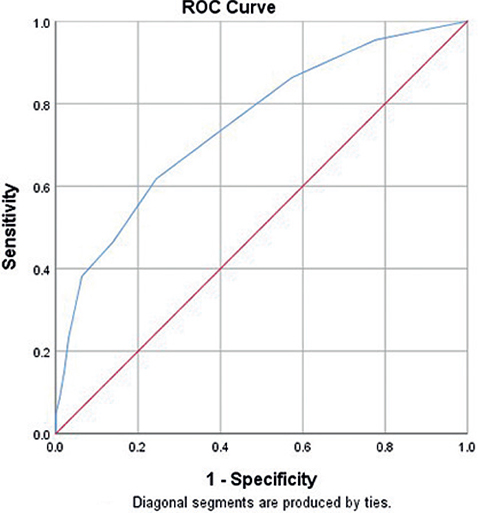
Fig. 1. Receiver operator characteristic (ROC) curve for number of positive items on the Cancer Rehabilitation Questionnaire.
Internal consistency was acceptable for 13 functional impairments screened on item 1 of the CRQ (Cronbach’s alpha coefficient = 0.76).
The discriminatory power of the CRQ to differentiate those with clinically significant decline in physical functioning was good. Effect size (Cohen’s d) for the mean difference in CRQ score between participants whose EORTC physical functioning was ≥ 83 and those < 83, was large (0.96) (15).
Participants who reported functional impairments on the CRQ scored significantly lower on the EORTC global health status (57.6 ± 19.8 vs 65.7 ± 18.5, p = 0.029), total functional scale (379.8 ± 7.1 vs 432.1 ± 71.6, p = 0.003), physical functioning (75.1 ± 21.0 vs 89.5 ± 17.3, p < 0.001) and emotional functioning (76.2 ± 22.8 vs 91.4 ± 15.4, p < 0.001). The number of impairments on the CRQ correlated with the EORTC global health status (r = –0.37, p < 0.001) and all functional scales. Moderate correlation was found between CRQ score and physical functioning (r = – 0.50, p < 0.001), emotional functioning (r = – 0.39, p < 0.001) and social functioning (r = – 0.31, p < 0.001). Weaker correlations were also seen in role functioning (r = – 0.30, p < 0.001) and cognitive functioning (r = – 0.27, p ≤ 0.001) (Table IV).
DISCUSSION
To our knowledge, this is the first study to describe the extent of self-reported functional issues and cancer rehabilitation needs and attitudes in cancer survivors in Singapore, a multicultural Asian population. The study found a high prevalence of various functional impairments, particularly in those who were older, those on cancer treatment or closer to the time of cancer diagnosis, and those with later stage disease. The presence and number of symptoms and functional impairments reported on the CRQ correlated well with HRQoL, particularly in the domains of total and physical functioning. This information will help to guide the development of holistic screening and tailored interventions for these at-risk patient groups.
Cancer rehabilitation is an interdisciplinary, multidimensional and coordinated intervention to minimize the impact of functional impairments and maximize function. Rehabilitation needs vary among cancer survivors. While physical activity and exercise are key modifiers of outcome (5), a process of stratification and further evaluation is required to systematically address the variety of needs while optimizing the use of limited resources.
The current study identified a higher prevalence of functional impairments in older cancer survivors. Rehabilitation of this population can be complex. Age-related decline in functional organ reserves (18), together with accumulating comorbidities, not only interact with cancer to produce debilitating functional impairments, but can also hamper rehabilitation and limit progress. Social issues also often directly impact delivery of rehabilitation. A geriatric assessment (GA) (19) to assess multiple domains, including comorbidities, functional status, cognition, psychological status, nutritional status, polypharmacy and social support, is useful to identify patients who require complex multidisciplinary interventions, including individually tailored rehabilitation, to address interacting issues. However, GA is resource intensive and challenging to implement at scale. Strategies at multiple levels of the healthcare system are required to address this, which is outside the scope of this discussion (20).
The current study also highlighted low levels of willingness and perceived barriers reported by cancer survivors to participate in cancer rehabilitation programmes. Cancer survivors with functional limitations often rely on caregivers to access care. Repeated lengthy hospital visits can deter participation in rehabilitation. Effectiveness of cancer rehabilitation is not restricted by setting (21). In addition to the traditional hospital setting for rehabilitation, a low-to-moderate-intensity, home-based exercise programme has also been shown to improve mood and anxiety (22). Paper-based or video-based individually tailored unsupervised exercise programmes have also been demonstrated to be feasible in helping cancer survivors maintain physical function during cancer treatment (23). Alternative modes, such as telehealth platforms, can be explored in appropriate patients to improve outreach, facilitate interdisciplinary assessments and treatment, and overcome some of the barriers identified in the current study (25). Alternatively, services can be centralized via multidisciplinary clinics in the hospital setting (24), allowing assessment and prescription of interventions in a single setting. Finally, systematic education to increase awareness of the benefits of rehabilitation to address functional issues could influence participation and improve treatment outcomes.
Screening tools for cancer-related functional issues currently focus on specific symptoms, such as fatigue or numbness, or specific populations, such as frailty screening in the geriatric population (26). There is a lack of simple, validated multidimensional screening tools to identify those with functional impairments who might benefit from rehabilitative interventions. Functional evaluations are also time-consuming to perform. The CRQ is a simple, multidimensional screening tool with adequate sensitivity and specificity to detect clinically important physical dysfunction in a wide-range of cancer survivors.
Study limitations
This study has several limitations. The CRQ does not assess the severity of each impairment that would impact on treatment decisions. There is significant construct overlap between items. The CRQ does not explore social factors impacting participation restriction, including community and vocational participation, which is another important domain impacting HRQoL. In evaluating the willingness of participants to undergo rehabilitation, an individualized rehabilitation prescription and plan was not provided, which may have contributed to higher-than-expected rates of rejection of rehabilitation.
CONCLUSION
This study identified the extent of functional impairments, willingness to participate and barriers to access cancer rehabilitation among cancer survivors in Singapore. The majority of cancer survivors had multiple functional impairments, which was significantly associated with reduction in HRQoL. This supports the need for holistic screening of functional impairments and to systematically address this gap in cancer survivorship care. This can be done through the use of simple, multidimensional tools, such as the CRQ. This better understanding will help enable future efforts to better allocate and site resources in order to improve access to cancer rehabilitation.
ACKNOWLEDGEMENTS
The authors thank the Singapore Cancer Society for supporting this study with student volunteer participation and Ms Hui Qi Koh, Ms Grace Mei Yi Ooi and Ms Vanessa Zi Kun Lim for administration of the survey; and Dr Shen Liang from NUS Medicine Biostatistics Unit (BSU) for reviewing the biostatistics.
REFERENCES
- American Cancer Society. Cancer facts & figures 2012. Atlanta: American Cancer Society; 2012.
- Gallagher DJ, Kemeny N. Metastatic colorectal cancer: from improved survival to potential cure. Oncology 2010; 78: 237–248. DOI: 10.1159/000315730.
- Alfano CM, Cheville AL, Mustian K. Developing high-quality cancer rehabilitation programs: a timely need. Am Soc Clin Oncol Educ Book 2016; 35: 241–249. DOI: 10.14694/EDBK_156164.
- Short PF, Vasey JJ, Belue R. Work disability associated with cancer survivorship and other chronic conditions. Psycho-oncology 2008; 17: 91–97. DOI: 10.1002/pon.1194.
- Smith SR, Zheng JY, Silver J, Haig AJ, Cheville A. Cancer rehabilitation as an essential component of quality care and survivorship from an international perspective. Disabil Rehabil 2020; 42: 8–13. DOI: 10.1080/09638288.2018.1514662.
- Tay SS, Ng YS, Lim PA. Functional outcomes of cancer patients in an inpatient rehabilitation setting. Ann Acad Med Singap 2009; 38: 197–201.
- Campbell KL, Winters-Stone KM, Wiskemann J, May AM, Schwartz AL, Courneya KS, et al. Exercise guidelines for cancer survivors: consensus statement from International Multidisciplinary Roundtable. Med Sci Sports Exerc 2019; 51: 2375–2390. DOI: 10.1249/MSS.0000000000002116.
- Sleight A, Gerber LH, Marshall TF, Livinski A, Alfano CM, Harrington S, et al. Systematic review of functional outcomes in cancer rehabilitation. Arch Phys Med Rehabil 2022; 103: 1807–1826. DOI: 10.1016/j.apmr.2022.01.142.
- Nicholas PK, Leuner JD, Hatfield JM, Corless IB, Marr KH, Mott MK, et al. Using the Cancer Rehabilitation Questionnaire in patients with colorectal cancer. Rehabil Nurs 2006; 31: 106–113.
- Cella DF, Tulsky DS, Gray G, Sarafian B, Linn E, Bonomi A, et al. The Functional Assessment of Cancer Therapy scale: development and validation of the general measure. J Clin Oncol 1993; 11: 570–579. DOI: 10.1200/JCO.1993.11.3.570.
- Heinrich RL, Schag CC, Ganz PA. Living with cancer: the cancer inventory of problem situations. J Clin Psychol 1984; 40: 972–980.
- Aaronson NK, Ahmedzai S, Bergman B, Bullinger M, Cull A, Duez NJ, et al. The European Organization for Research and Treatment of Cancer QLQ-C30: a quality-of-life instrument for use in international clinical trials in oncology. J Natl Cancer Inst 1993; 85: 365–376. DOI: 10.1093/jnci/85.5.365.
- Fernandes L, Holm CE, Villadsen A, Sorensen MS, Zebis MK, Petersen MM. Clinically important reductions in physical function and quality of life in adults with tumor prostheses in the hip and knee: a cross-sectional study. Clin Orthop Relat Res 2021; 479: 2306–2319. DOI: 10.1097/CORR.0000000000001797.
- Letellier ME, Dawes D, Mayo N. Content verification of the EORTC QLQ-C30/EORTC QLQ-BR23 with the International Classification of Functioning, Disability and Health. Qual Life Res 2015; 24: 757–768. DOI: 10.1007/s11136-014-0791-8.
- Giesinger JM, Kuijpers W, Young T, Tomaszewski KA, Friend E, Zabernigg A, et al. Thresholds for clinical importance for four key domains of the EORTC QLQ-C30: physical functioning, emotional functioning, fatigue and pain. Health Qual Life Outcomes 2016; 14: 87. DOI: 10.1186/s12955-016-0489-4.
- Hosmer DW, Jr, Lemeshow S. Applied logistic regression. Hoboken: Wiley & Sons, 1989.
- Youden WJ. Index for rating diagnostic tests. Cancer 1950; 3: 32–35. DOI: 10.1002/1097-0142(1950)3:1<32::aid-cncr2820030106>3.0.co;2-3.
- Berben L, Floris G, Wildiers H, Hatse S. Cancer and aging: two tightly interconnected biological processes. Cancers (Basel) 2021; 13. DOI: 10.3390/cancers13061400.
- Wildiers H, Heeren P, Puts M, Topinkova E, Janssen-Heijnen ML, Extermann M, et al. International Society of Geriatric Oncology consensus on geriatric assessment in older patients with cancer. J Clin Oncol 2014; 32: 2595–2603. DOI: 10.1200/JCO.2013.54.8347.
- McKenzie GAG, Bullock AF, Greenley SL, Lind MJ, Johnson MJ, Pearson M. Implementation of geriatric assessment in oncology settings: a systematic realist review. J Geriatr Oncol 2021; 12: 22–33. DOI: 10.1016/j.jgo.2020.07.003.
- Stout NL, Baima J, Swisher AK, Winters-Stone KM, Welsh J. A systematic review of exercise systematic reviews in the cancer literature (2005–2017). PM R 2017; 9: S347–S384. DOI: 10.1016/j.pmrj.2017.07.074.
- Loh KP, Kleckner IR, Lin PJ, Mohile SG, Canin BE, Flannery MA, et al. Effects of a home-based exercise program on anxiety and mood disturbances in older adults with cancer receiving chemotherapy. J Am Geriatr Soc 2019; 67: 1005–1011. DOI: 10.1111/jgs.15951.
- Shehu E, Roggendorf S, Golla A, Koenig A, Stangl GI, Diestelhorst A, et al. Development and evaluation of a multimodal supportive intervention for promoting physical function in older patients with cancer. Cancers (Basel) 2022; 14: 2599. DOI: 10.3390/cancers14112599.
- Presley CJ, Krok-Schoen JL, Wall SA, Noonan AM, Jones DC, Folefac E, et al. Implementing a multidisciplinary approach for older adults with cancer: geriatric oncology in practice. BMC Geriatr 2020; 20: 231. DOI: 10.1186/s12877-020-01625-5.
- Chien L, Roberts E, Soto-Perez-de-Celis E, Katheria V, Hite S, Tran R, et al. Telehealth in geriatric oncology: a novel approach to deliver multidisciplinary care for older adults with cancer. J Geriatr Oncol 2020; 11: 197–199. DOI: 10.1016/j.jgo.2019.06.011.
- Garcia MV, Agar MR, Soo WK, To T, Phillips JL. Screening tools for identifying older adults with cancer who may benefit from a geriatric assessment: a systematic review. JAMA Oncol 2021; 7: 616–627. DOI: 10.1001/jamaoncol.2020.6736.