Key words: back pain; work disability; rehabilitation; health services accessibility; observational study; time-to-event analysis; rehabilitation access; application barriers.
Accepted Dec 16, 2021; Epub ahead of print Jan 12, 2022
J Rehabil Med 2022; 54: jrm00274
DOI: 10.2340/jrm.v53.1408
Correspondence address: Julia-Marie Zimmer, Institute for Rehabilitation Medicine, Martin Luther University Halle-Wittenberg, Magdeburger Straße 8, 06112 Halle (Saale), Germany. E-mail: julia-marie.zimmer@uk-halle.de
lay abstract
Medical rehabilitation in Germany aims to enable participation and work ability in persons with chronic conditions, but requires an active decision to apply. This study included 690 persons with severe back pain and followed them for 1.5 years. The aim was to analyse applications for medical rehabilitation in this group and to determine the influencing factors. Only 12% of persons included in the study applied for rehabilitation, mostly after approximately 1 year. Factors making an application more likely were: more disability days and support of the application by their physician, family, and friends. Factors that made an application less likely were: better work ability and being more strained by household chores. The results show that only 1 out of 10 persons in need because of back pain actually end up in rehabilitation, and that possible barriers must be addressed.
INTRODUCTION
Musculoskeletal disorders comprise half of all work-related diseases and are a major cause of lost working days and long-term work disability in Europe (1). Back pain in the German population is particularly widespread, with a 1-year prevalence of 61%, approximately one-third of whom have severe or very severe back pain (2). Chronic back pain (occurring almost daily for at least 3 months) is reported by 25% of women and 17% of men in Germany, with increasing prevalence with age (3). Therefore, back pain is related to approximately 4.5 billion euro of annual medical costs (4) and represents a major and increasing factor in years lived with disability (5), with associated limitations in multiple areas of life (6).
Preserving the long-term work ability and functional capacity of persons with back pain is a major concern of medical rehabilitation. In the German rehabilitation system, rehabilitation is a social security service, which is provided by various institutions (pension, health, and accident insurance). For working-aged people, the German Pension Insurance is the primary provider with the highest expenditure for medical rehabilitation among all providers (4.6 billion euros in 2019) (7, 8). The German Pension Insurance is a compulsory pension insurance scheme offering rehabilitation services in particular to prevent or postpone premature work disability. In 14.5% of cases, back pain (International Classification of Diseases 10th Revision (ICD-10) M50-54) was the primary reason for inpatient rehabilitation (9). Access to medical rehabilitation services, however, requires an active decision and an application by the insurant, accompanied by a medical report (8).
Previous data suggest an underutilization of medical rehabilitation in the German Pension Insurance. Despite the principle of “rehabilitation before pension”, approximately half of the persons receiving a disability pension did not apply for rehabilitation before pension onset (10, 11). A sudden deterioration in health, a lack of knowledge and awareness about rehabilitation, as well as job-related concerns, seem to be contributing factors (12). Furthermore, socially disadvantaged persons are more likely to be on disability pension without previous rehabilitation (13).
There is some evidence of applications being predicted by poor work ability, poor health, more days of sick leave, and physician support (14, 15) and some reported barriers being shaped by misconceptions (16). However, previous analyses of the application process have produced some inconsistent results and were mainly cross-sectional (17). To date, there has been no systematic longitudinal study of the application process in persons with back pain.
The current analysis was part of a larger study that systematically investigated and tracked all stages of the rehabilitation application process for back pain against the background of the presumed underutilization. Previous analysis showed factors influencing the determinants of the preliminary stages in the application process with cross-sectional data (18, 19). This longitudinal analysis aimed to determine the realization of the wish for rehabilitation and the intention to apply into the next phase, the application. Data from middle-aged employees with severe back pain at risk of future work disability, identified in a random sample of insurants of the German Pension Insurance, were analysed, covering a follow-up time of approximately 1.5 years. This study examined the duration until applications were submitted and identified relevant influencing factors.
METHODS
Study design
Data were derived from a prospective cohort study (German Clinical Trials Register: DRKS00011554) conducted to analyse barriers to access to rehabilitation and effectiveness of medical rehabilitation services for persons with back pain (17). At the beginning of 2017, a sample of 45,000 insured persons was randomly drawn from the populations of 2 pension agencies in Germany (German Pension Insurance North and German Pension Insurance Central Germany). Following the inclusion criteria, the sample consisted of employed persons aged 45–59 years who had not applied for or claimed medical rehabilitation services in the previous 4 years, and who had not yet applied for or received disability pension benefits. The sample was stratified according to sex (1:1) and days of sickness absence benefits in the previous year (<7 days vs ≥7 days). Sickness absences of less than 7 days were oversampled in a 2:1 ratio.
If participants gave their consent, questionnaire data were linked to administrative data of the German Pension Insurance. The questionnaires were returned between March and August 2017. Administrative data on applications for medical rehabilitation services were available until 31 December 2018. The ethics committees of the University of Lübeck (15-144) and Martin-Luther University Halle-Wittenberg (2015-49) approved the study protocol.
Participants
For the present analysis, persons most likely to have a need for a multidimensional rehabilitation programme were considered. As the combination of functional limitations and reduced work ability is a key prerequisite for access to medical rehabilitation provided by the German Pension Insurance, the analysis sample consisted of persons with a high degree of limitations due to back pain (pain grades III or IV; (20)) and a self-reported risk of permanent work disability (≥2 points; (21)).
In order to ensure back pain as a rehabilitation-related main diagnosis leading to the application, persons with an application due to documented non-musculoskeletal diagnoses (e.g. neurological, oncological or cardiological diagnosis groups) were excluded. Moreover, persons whose application was rejected were also excluded, because application diagnoses were not available for these cases.
Outcome
The outcome was an approved application for medical rehabilitation due to musculoskeletal disorders extracted from the administrative records of the 2 pension agencies. The binary variable indicated whether an approved rehabilitation application was submitted during the follow-up period until the end of 2018.
Covariates
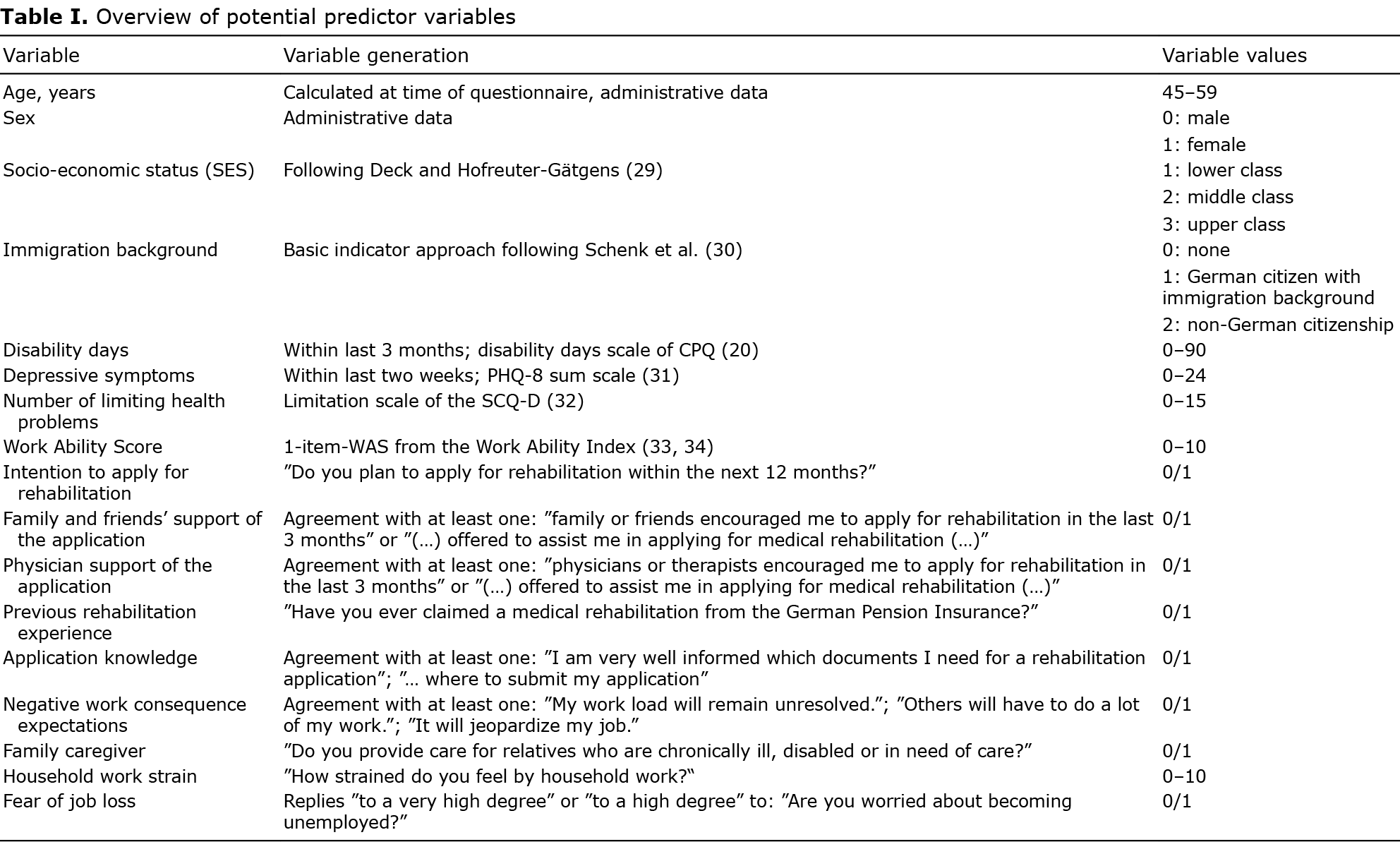
For investigation of potential factors influencing the application, relevant predictor variables were selected from the following overarching domains: additional health impairments, work ability, application process expectations, cognitions and experience regarding rehabilitation, contextual factors and sociodemographic background. The variables and their formation are shown in Table I. Age and sex were extracted from the administrative data of the German Pension Insurance, while all other variables were derived from the questionnaire.
Statistical analysis
Descriptive statistics were used to characterize the total sample, applicants and non-applicants. The time at risk for an approved application for medical rehabilitation was defined as the days between the return of the questionnaire and the application date. For non-applicants, the duration between the questionnaire and the last date of available data (31 December 2018) was used (right-censored).
In order to examine the rehabilitation applications within the time-to-event-analysis, Kaplan–Meier estimators were calculated. Cox regression models were estimated to examine the influence of the independent variables. The proportional hazards assumption was assessed by comparing the Kaplan–Meier log-minus-log curves. Variables violating this assumption were excluded from the Cox models. Two multivariable Cox regression models were computed: 1 for all remaining variables and 1 model excluding the variable “intention to apply”, as it relates closely to the dependent variable and can be considered to represent a later stage in the application process. Additional multivariable logistic regression models with all variables were computed as a sensitivity analysis for the Cox regression, since it is not dependent on the assumption of proportional hazards.
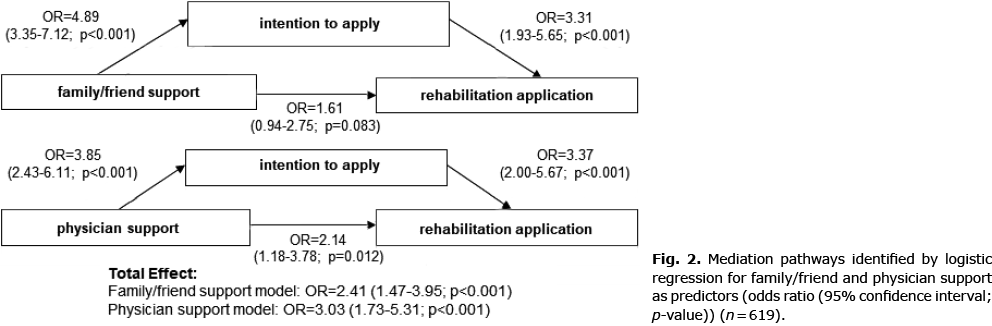
Furthermore, it was suspected that the intention to apply could also represent a potential mediator. This assumes that a large part of the influence of other independent variables on the application in the uncontrolled model would be explained by their respective association with the application intention. Accordingly, mediation analyses were carried out. As all variables involved were dichotomous, logistic regressions were calculated for each mediation pathway (22, 23). Mediation would be present if both the relationship between predictor and mediator, as well as mediator and outcome, are significant. In case of full mediation, the mediator-controlled effect between predictor and outcome is no longer significant. Partial mediation can be assumed if this path is still significant, but decreased in effect size.
Missing self-reported baseline data were treated via listwise exclusion. Since the variable amount varied between the 2 Cox regression models, a filter ensured the inclusion of the same number of cases. All statistical analyses were performed using IBM SPSS Statistics 25.
RESULTS
Recruitment and sample characteristics
A total of 45,000 persons were contacted via postal questionnaires. Of these, 10,365 persons completed the baseline questionnaire, 6,940 of whom reported back pain in the last 3 months with varying pain grades between I and IV. A total of 759 cases exhibited both a self-reported risk of future work disability and limiting back pain. Of these, 69 had to be excluded due to other diagnoses (n = 42), denied applications (n = 20), transfers of the application to other providers of rehabilitation services (n = 4), and conversions to disability pensions (n = 3).
In total, 690 persons were eligible for analysis. The majority (58.7%) had back pain of grade III and a third (30.9%) were considering applying for a disability pension at the time of the questionnaire.
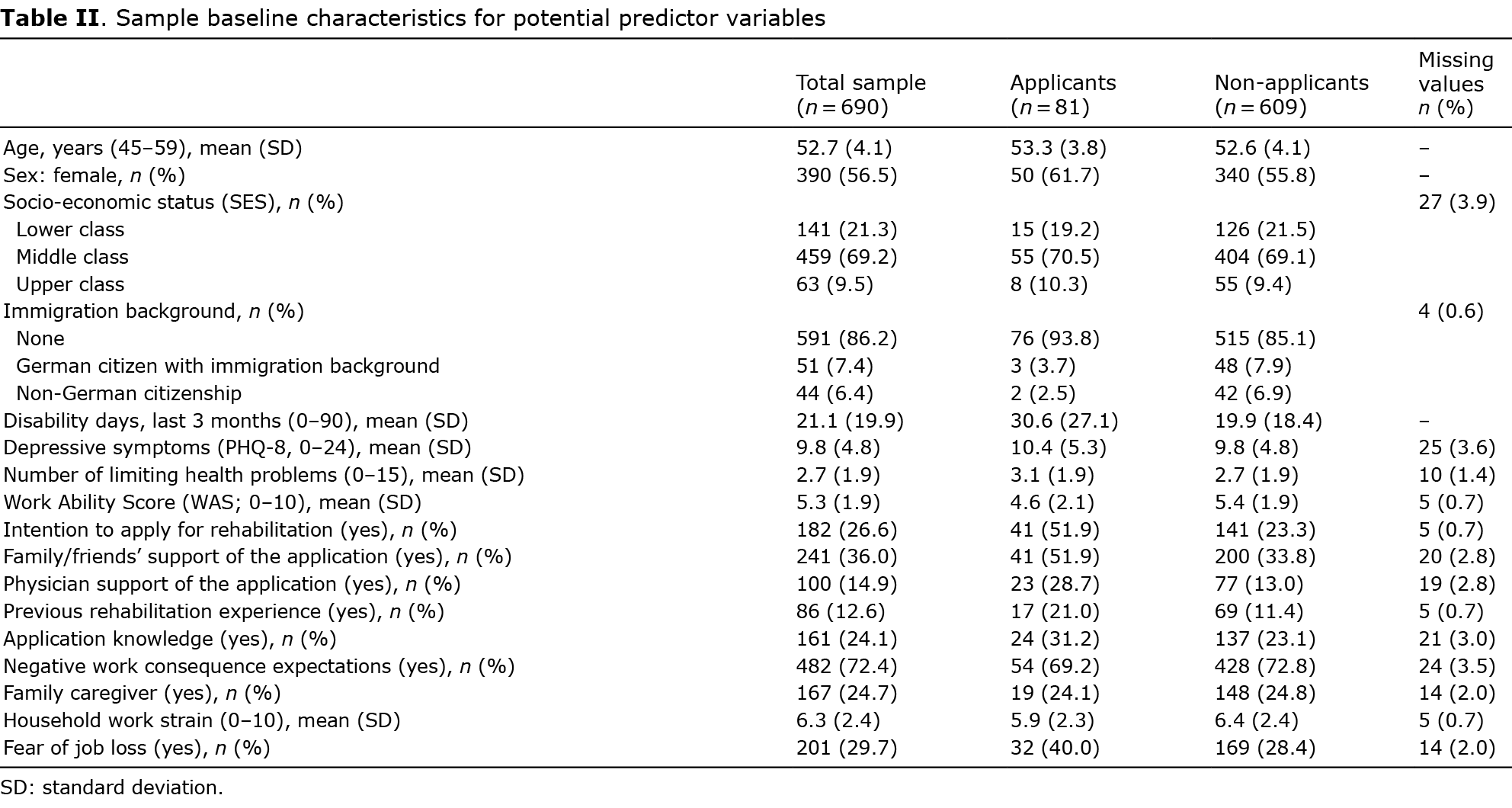
The sample comprised slightly more women than men. The majority were persons with a medium socio-economic status and without an immigration background (see Table II). The reported mean health burden was rather high, with nearly 3 limiting health problems and more than 20 days of pain-related disability in the last 3 months. While only one-quarter of respondents had the intention or knowledge to apply for rehabilitation at baseline, the majority (76%) expected negative work-related consequences in case of rehabilitation utilization.
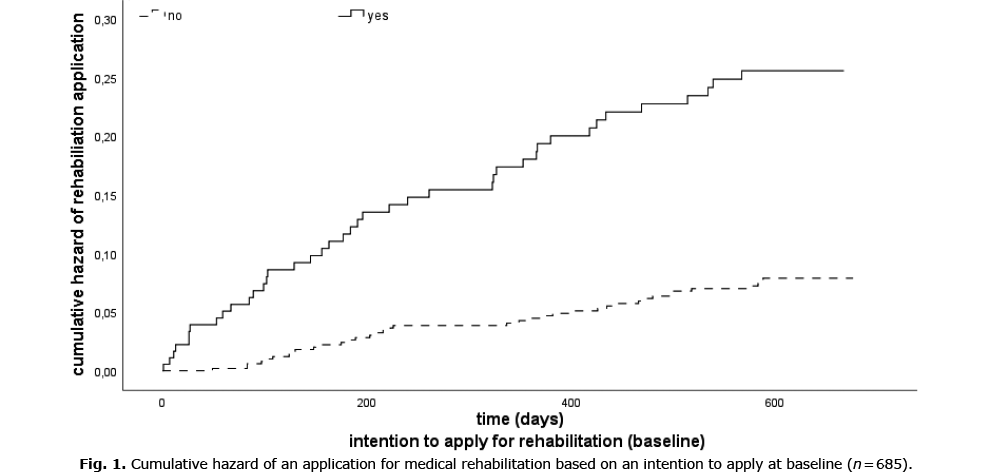
Of the 690 cases observed, 81 approved applications for medical rehabilitation (11.7%) were registered during a mean follow-up period of 580 days (SD=132). The mean duration from questionnaire to rehabilitation application was 261 days (SD=174). The rate of applications after 1 year was 8%. The cumulative hazard for an application over the observation time is shown in Fig. 1, stratified for persons with and without an application intention at baseline.
Predictors of an application for rehabilitation
The following variables did not exhibit proportional hazards and could not be included in the Cox regression model: previous rehabilitation experience, application knowledge, negative consequence expectations (work), family caregiver, sex, socio-economic status, and immigration background. The resulting 10 variables were included in the Cox proportional-hazard regression models with (Model 1) and without (Model 2) the intention to apply (Table III).
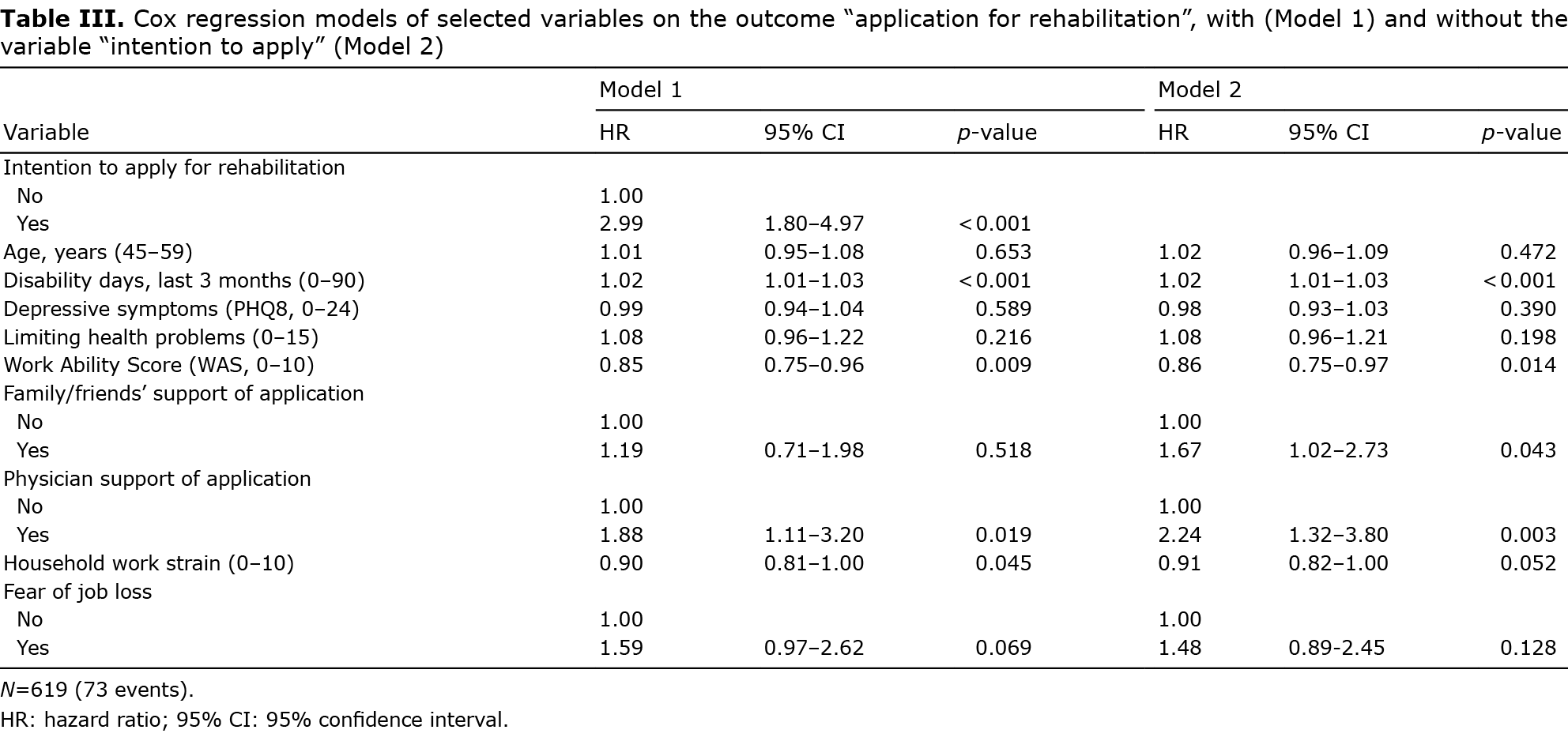
In the first model, a rehabilitation application was predicted by an intention to apply for rehabilitation at the time of the questionnaire, physician support in the application process, as well as an increasing number of disability days. Persons with an application intention had a 3 times greater HR for an application than those without an intention at that time (HR=2.99; 95% CI 1.80–4.97). Physician support almost doubled the risk of an application (HR=1.88, 95% CI 1.11–3.20). An increase of 10 disability days corresponded to a 20% higher risk of an application (HR=1.02; 95% CI 1.01–1.03). A higher amount of reported household work strain (HR=0.90; 95% CI 0.81–1.00), as well as a more favourable assessment of work ability (HR=0.85; 95% CI 0.75–0.96), decreased the risk of applying for rehabilitation by 10% and 15%, respectively. Support from family and friends exhibited a positive HR, but a high p-value, and the CI was also compatible with a similar negative effect on the application, as well as a much larger positive effect (HR=1.19; 95% CI 0.71–1.98). Similarly, there was also a tendency towards a positive HR for the fear of job loss (HR=1.59; 95% CI 0.97–2.62). Depressive symptoms and age showed a very small effect (in light of their value range) and a high p-value, suggesting hardly any influence when controlling for the other factors included.
The model excluding the intention to apply showed increased HRs for the variables of family and friends’ as well as physician support of the application. Persons reporting support from their physicians had more than twice the risk of an application as those without support (HR=2.24; 95% CI 1.32–3.80). The risk of an application in persons stating family or friends’ support was 67% higher than in persons with no support at that time, now also with a strongly reduced p-value and a CI compatible only with a positive effect (HR=1.67; 95% CI 1.02–2.73). The other estimates were similar in both models.
A sensitivity analysis using multivariable logistic regression and including all potential variables showed similar results (see Table SI). The 7 variables included only in the logistic regressions did not show an additional influence on the application (wide CIs, high p-value). This suggests robust results and no notable bias due to variable exclusion.
Mediation analysis
The increase in effect size (HR) for the variables indicating support from a physician or family and friends in the model not controlling for an intention to apply suggested that the intention could function as a mediator for the relationship between support experienced and the actual application. The results of the path analysis for both assumed mediations are shown in Fig. 2. For family and friends’ support, the results are consistent with a full mediation through the intention to apply (direct effect: odds ratio (OR)=1.61; 95% CI 0.94–2.75; p = 0.083). For physician support, partial mediation was identified, since the direct effect remained significant but decreased (OR=2.14; 95% CI 1.18–3.87; p = 0.012).
DISCUSSION
This study showed that persons with disabling back pain and a risk of future work disability rarely applied for rehabilitation, and identified predictors for an application. Only 12% of the high-risk group applied for rehabilitation during the follow-up period of 1.5 years. This proportion is even lower than in a previous sample of employed persons with a subjective need for rehabilitation without filtering for health risks (24). In most cases, it took almost a year until the application was submitted. This delay may, in part, be explained by the precondition of using unimodal outpatient treatment previously. In addition, the application procedure includes many documents and individual steps, which is commonly experienced as complicated and requires a lot of initiative (25). Even among persons who applied for rehabilitation, sufficient knowledge about the application process was reported by only 31% of participants in the current study.
This could explain why the expected support of the application among family and friends as well as physicians was instrumental in forming an intention to apply within the next 12 months. Support in this study was measured as “encouragement” and “assistance”. Expected support thereby increases awareness of rehabilitation as a possibility, and might make the application process seem more manageable. The influence of family and friends emphasizes the involvement of caregivers in health-related processes. The mediation analysis also showed that, while part of the association between physician support and rehabilitation application is mediated through the intention to apply, there is also an independent partial effect on the outcome. This could be explained by the active role physicians play in the application process. While family and friends’ support of, and help with, the application mainly seem to determine the plan to apply, support from physicians is needed, not only to provide information about rehabilitation, but also for the preparation of a medical report. Given this instrumental role of physicians in the application process, the prevailing information deficits and needs among practising physicians identified in previous research should be considered an additional barrier (26).
Other contextual factors also seemed to play a role in the decision. While other reports cited concern about the employer as a possible reason not to apply (16), the fear of losing one’s job made an application slightly more likely in this sample. Concerns regarding unemployment might be due to disease-related expected work incapacity, since the analysis sample already consisted of persons with a self-reported risk of permanent work disability. Household work strain, in turn, decreased the odds of applying; indicating that the respondents might feel needed at home too much to use rehabilitation services. Another explanation is reduced time and energy for the rather complex application process. Commitments at home also add further stress to persons who already report pain-related limitations in their daily life. Therefore, it presents an application barrier that needs more attention (27).
Previous analyses point to misconceptions and lack of awareness regarding rehabilitation (16, 28). While not included in the Cox regression model, previous rehabilitation experience and application knowledge were slightly more common among applicants. They also stated less frequently that they expected negative consequences in their private lives if they entered rehabilitation. Considering the complexity of the application process, previous experience may facilitate this, even in the preliminary stages (18).
The fact that persons with a higher health burden and poorer work ability are more likely to apply for rehabilitation is in line with the rehabilitation requirements. However, only a small part of the risk group applied for rehabilitation during the observation period. Although the applicants reported less favourable health-related outcomes and work ability scores, the non-applicants also displayed many disability days and a similar number of limiting health problems and depressive symptoms. Especially considering the inclusion criteria, which mapped the eligibility for rehabilitation, the low number of applications cannot be attributed to the fact that non-applicants were less burdened.
These results indicate barriers to access and underutilization of rehabilitation. At the time of the baseline survey, 27% of participants planned to apply for rehabilitation within the next year. However, after 1.5 years, less than 12% of the sample actually applied for rehabilitation. In addition, it must be considered that 31% of the sample had already considered claiming disability pension, i.e. a larger proportion of persons than those who intended a rehabilitation claim. These analyses cannot clarify whether non-applicants were too challenged by barriers or whether other treatments led to improved health. Further study of this group using longitudinal data collected after 2 years is planned to determine the course of pain as well as the extent of disability pensions and the utilization of other medical services.
Strengths and limitations
This study has several limitations. First, the administrative data slightly limited the analyses, as denied applications had to be excluded, as in these cases no diagnosis was recorded. However, this was only a minor number of cases. This was weighed against the expected bias due to the inclusion of cases applying for rehabilitation on the basis of other medical conditions. Secondly, listwise deletion of missing data was used. While each included potential predictor variable included less than 5% of missing cases, the combined missing dropout in the Cox models amounted to 10%, reducing the number of available cases for the regression analysis. Thirdly, the application process might be quite specific to the German rehabilitation system. However, despite the data being obtained within the German system, the analysed factors are mainly individual, not structural. Hence, the results should still be applicable to other healthcare systems.
The current analysis also has a number of strengths. First, the initial sample was randomly drawn from German Pension Insurance registers. Thus, employees with back pain and a possible need for rehabilitation could be identified regardless of their utilization of healthcare and their status in the application planning. Secondly, this study identified persons with a high risk of permanent work disability for which rehabilitation services are frequently relevant and needed. Thirdly, the long follow-up period after back pain reporting in the baseline survey, and the linkage of questionnaire and administrative data enabled the comprehensive consideration of all relevant applications. Fourthly, the modelling of applications in a time-to-event analysis is more in line with the actual process and takes censored cases into account in the estimation. The sensitivity analysis confirmed the robustness of the results.
Conclusion
This study indicates underutilization of rehabilitation, and identified barriers to, and facilitators of, an application for medical rehabilitation among employees with back pain. The results highlight the importance of targeted information for patients, physicians, and close persons of the patient to resolve persistent misconceptions and facilitate access to rehabilitation for those in need of it.
ACKNOWLEDGEMENTS
The study was funded by the German Research Foundation (DFG, grant numbers: BE 5885/2–1; MA 6981/2–1). The sampling was carried out by the German Pension Insurance North and German Pension Insurance Central Germany. The authors thank the contact persons of the regional institutions for their support.
The authors have no conflicts of interest to declare.
REFERENCES
- Bevan S. Economic impact of musculoskeletal disorders (MSDs) on work in Europe. Best Pract Res Clin Rheumatol 2015; 29: 356–373.
- Lippe E von der, Krause L, Porst M, Wengler A, Leddin J, Müller A, et al. Prevalence of back and neck pain in Germany. Results from the BURDEN 2020 Burden of Disease Study. J Health Monit 2021; 6 (S3).
- Kuntz B, Hoebel J, Fuchs J, Neuhauser H, Lampert T. Soziale Ungleichheit und chronische Rückenschmerzen bei Erwachsenen in Deutschland. Bundesgesundheitsbl 2017; 60: 783–791.
- Gesundheit. In: Statistisches Bundesamt (Destatis), editor. Statistisches Jahrbuch 2019, p. 127–162.
- Plass D, Vos T, Hornberg C, Scheidt-Nave C, Zeeb H, Krämer A. Trends in disease burden in Germany: results, implications and limitations of the Global Burden of Disease study. Dtsch Arztebl Int 2014; 111: 629–638.
- Mattila K, Leino M, Kemppi C, Tuominen R. Perceived disadvantages caused by low back pain. J Rehabil Med 2011; 43: 684–688.
- Bundesarbeitsgemeinschaft für Rehabilitation (BAR e.V.). Trägerübergreifende Ausgabenstatistik der BAR 2021 [cited 2021 Nov 15]. Available from: https://www.bar-frankfurt.de/service/reha-info-und-newsletter/reha-info-2021/reha-info-012021/traegeruebergreifende-ausgabenstatistik-der-bar.html.
- Gerdes N, Zwingmann C, Jäckel W. The system of rehabilitation in Germany. In: Jäckel W, Bengel J, Herdt J, editors. Research in rehabilitation: results from a research network in Southwest Germany. Stuttgart: Schattauer; 2006: p. 3–19.
- Rehabilitation 2019. In: Deutsche Rentenversicherung Bund, editor. Statistik der Deutschen Rentenversicherung 219. Deutsche Rentenversicherung Bund, Berlin; 2020.
- Rentenzugang 2014. In: Deutsche Rentenversicherung Bund, editor. Statistik der Deutschen Rentenversicherung 203. Deutsche Rentenversicherung Bund, Berlin; 2015.
- Mittag O, Reese C, Meffert C. (Keine) Reha vor Rente: Analyse der Zugänge zur Erwerbsminderungsrente 2005-2009. WSI 2014; 67: 149–155.
- Märtin S, Zollmann P. Keine Reha vor der Rente? Ergebnisse des Projekts “Sozioökonomische Situation von Personen mit Erwerbsminderung”. In: Deutsche Rentenversicherung Bund, editor. 22. Rehabilitationswissenschaftliches Kolloquium 2013 Mar 4–6; Mainz; 2013, 109–111.
- Weyermann M. Medical rehabilitation before the occurrence of early retirement in Germany. Eur J Public Health 2018; 28: 391–392.
- Spanier K, Peters E, Radoschewski FM, Bethge M. Wie kennzeichnen sich Personen mit beantragter und bewilligter medizinischer Rehabilitation? In: Deutsche Rentenversicherung Bund, editor. 25. Rehabilitationswissenschaftliches Kolloquium 2016 Feb 29–Mar 2; Deutsche Rentenversicherung Bund, Aachen; 2016, 127–128.
- Zimmermann M, Glaser-Möller N, Deck R, Raspe H. Subjektive Rehabilitationsbedürftigkeit, Antragsintention und Antragstellung auf medizinische Rehabilitation: Ergebnisse einer Befragung von LVA-Versicherten. Rehabilitation 1999; 38: S122–S127.
- Hesse B, Heuer J, Gebauer E. Rehabilitation aus der Sicht kleiner und mittlerer Unternehmen: Wissen, Wertschätzung und Kooperationsmöglichkeiten- Ergebnisse des KoRB-Projektes. Rehabilitation 2008; 47: 324–333.
- Bethge M, Mattukat K, Fauser D, Mau W. Rehabilitation access and effectiveness for persons with back pain: the protocol of a cohort study (REHAB-BP, DRKS00011554). BMC Public Health 2017; 18: 22.
- Schmitt N, Fauser D, Golla A, Zimmer J-M, Bethge M, Mau W. Determinanten des subjektiven Rehabilitationsbedürfnisses und der Antragsintention bei Personen mit Rückenschmerzen. Rehabilitation 2021; 60: 185–194.
- Fauser D, Schmitt N, Golla A, Zimmer J-M, Mau W, Bethge M. Employability and intention to apply for rehabilitation in people with back pain: a cross-sectional cohort study. J Rehabil Med 2020; 52: jrm00125.
- Korff M von, Ormel J, Keefe FJ, Dworkin SF. Grading the severity of chronic pain. Pain 1992; 50: 133–149.
- Mittag O, Raspe H. Eine kurze Skala zur Messung der subjektiven Prognose der Erwerbstätigkeit: Ergebnisse einer Untersuchung an 4279 Mitgliedern der gesetzlichen Arbeiterrentenversicherung zu Reliabilität (Guttman-Skalierung) und Validität der Skala. Rehabilitation (Stuttg) 2003; 42: 169–174.
- Iacobucci D. Mediation analysis and categorical variables: the final frontier. J Consum Psych 2012; 22: 582–594.
- Baron RM, Kenny DA. The moderator-mediator variable distinction in social psychological research: conceptual, strategic, and statistical considerations. J Pers Soc Psychol 1986; 51: 1173–1182.
- Mittag O, Meyer T, Glaser-Möller N, Matthis C, Raspe H. Prädiktoren der Reha-Antragstellung in einer Bevölkerungsstichprobe von 4225 Versicherten der Arbeiterrentenversicherung. Praxis Klin Verhaltensmed Rehab 2007; 77: 161–166.
- Spanier K, Mohnberg I, Peters E, Michel E, Radoschewski M, Bethge M. Motivationale und volitionale Prozesse im Kontext der Beantragung einer medizinischen Rehabilitationsleistung. Psychother Psychosom Med Psychol 2016; 66: 242–248.
- Walther AL, Pohontsch NJ, Deck R. Informationsbedarf zur medizinischen Rehabilitation der Deutschen Rentenversicherung: Ergebnisse eines Online-Surveys mit niedergelassenen Ärzten. Gesundheitswesen 2015; 77: 362–367.
- Richter C, Bethge M, Spanier K, Mau W, Mattukat K. Is strain due to household and family work associated with a subjective need for rehabilitation among employees? A cross-sectional study. ZEFQ 2021; 162: 32–39.
- Zimmer J-M, Fauser D, Golla A, Schmitt N, Bethge M, Mau W. Warum wird kein Rehabilitationsantrag gestellt?: Individuelle Gründe aus der Perspektive von Personen mit Rückenschmerzen und subjektivem Rehabilitationsbedürfnis. In: Deutsches Netzwerk Versorgungsforschung, editor. 19. Deutscher Kongress für Versorgungsforschung (DKVF) Sep 30-Oct 1 2020; German Medical Science (GMS), Düsseldorf; 2020.
- Deck R, Hofreuter-Gätgens K. Soziale Ungleichheit in der medizinischen Rehabilitation. Bundesgesundheitsbl 2016; 59: 245–251.
- Schenk L, Bau A-M, Borde T, Butler J, Lampert T, Neuhauser H, et al. Mindestindikatorensatz zur Erfassung des Migrationsstatus Empfehlungen für die epidemiologische Praxis. Bundesgesundheitsbl Gesundheitsforsch Gesundheitsschutz 2006; 49: 853–860.
- Kroenke K, Strine TW, Spitzer RL, Williams JBW, Berry JT, Mokdad AH. The PHQ-8 as a measure of current depression in the general population. J Affect Disorders 2009; 114: 163–173.
- Streibelt M, Schmidt C, Brünger M, Spyra K. Komorbidität im Patientenurteil - geht das? Validität eines Instruments zur Selbsteinschätzung der Komorbidität (SCQ-D). Orthopäde 2012; 41: 303–310.
- Ilmarinen J. The Work Ability Index (WAI). Occup Med-C 2007; 57: 160.
- El Fassi M, Bocquet V, Majery N, Lair ML, Couffignal S, Mairiaux P. Work ability assessment in a worker population: comparison and determinants of Work Ability Index and Work Ability score. BMC Public Health 2013; 13: 305.