ORIGINAL REPORT
INDIVIDUALIZED GOALS EXPRESSED BY PATIENTS UNDERGOING STROKE REHABILITATION: AN OBSERVATIONAL STUDY
Janne EVENSEN, PT, MSc1, Helene Lundgaard SOBERG, PT, PhD2,3, Unni SVEEN, OT, PhD2,3, Knut A. HESTAD, PhD4, Jennifer L. MOORE, PT, DHS5,6 and Berit Arnesveen BRONKEN, RN, PhD7
From the 1Department of Physical Medicine and Rehabilitation, Innlandet Hospital Trust, Gjøvik, 2Faculty of Health Sciences, Oslo Metropolitan University, Oslo, 3Department of Physical Medicine and Rehabilitation, Oslo University Hospital, Oslo, 4Department of Research, Innlandet Hospital Trust, Brumunddal, 5Regional Center of Knowledge Translation in Rehabilitation, Sunnaas Rehabilitation Hospital, Oslo/Nesodden, Norway, 6Institute for Knowledge Translation, Carmel, IN, USA, and 7Department of Health and Nursing Sciences, Faculty of Health and Social Sciences, The Inland Norway University of Applied Sciences, Elverum, Norway
Objectives: To explore the rehabilitation goals measured with the Patient-Specific Functional Scale (PSFS) in patients undergoing acute and subacute stroke rehabilitation. In addition, to assess whether PSFS goals corresponded to impairments and activity limitations, as identified by standardized measures.
Design: Observational study.
Participants: A total of 71 participants undergoing inpatient stroke rehabilitation.
Methods: The PSFS goals were linked to second-level categories in the International Classification of Functioning, Disability and Health (ICF), using established linking rules. Frequencies of the linked ICF categories were calculated. Frequencies of participants with limitations in walking, activities of daily living (ADL), vision, language, and cognition, were calculated, along with goals in corresponding areas of functioning.
Results: The participants’ goals were linked to 50 second-level ICF categories, comprising areas such as walking and moving, ADL, language, vision, and cognition. The most frequent ICF categories were “Moving around in different locations” (n = 24), “Walking” (n = 23), “Toileting” (n = 16), “Hand and arm use (n = 12) and “Fine hand use (n = 12)”. Of participants with limitations in walking, cognition, and vision, 85%, 10%, and 16%, respectively, had goals in these areas.
Conclusion: Participants’ goals included walking, ADL, language, vision, and cognition. Few with impairments in cognition or vision had goals in these corresponding areas on the PSFS.
LAY ABSTRACT
This study explored the rehabilitation goals of 71 participants undergoing rehabilitation after stroke. The goals were identified using the Patient-Specific Functional Scale (PSFS). The study also assessed whether participants’ goals corresponded to their impairments and activity limitations, as identified by standardized measures. The study linked the PSFS goals to the framework International Classification of Functioning, Disability and Health (ICF), in order to categorize the participants’ goals. “Walking and moving” and “self-care” were the most frequently stated goals. Most participants with walking limitations had goals related to walking, yet only a few participants with cognitive or visual impairments stated goals related to those areas of functioning. Only half of the ICF categories linked from the PSFS goals were related to areas assessed by the standardized measures. This indicates that PSFS captures aspects of functioning that standardized measures in this study do not.
Key words: goals; International Classification of Functioning, Disability, and Health (ICF); Patient-Specific Functional Scale (PSFS); rehabilitation; stroke.
Citation: J Rehabil Med 2024; 56: jrm15305. DOI: https://doi.org/10.2340/jrm.v56.15305.
Copyright: © Published by Medical Journals Sweden, on behalf of the Foundation for Rehabilitation Information. This is an Open Access article distributed under the terms of the Creative Commons Attribution-NonCommercial 4.0 International License (https://creativecommons.org/licenses/by-nc/4.0/)
Submitted: Jun 21, 2023; Accepted: Dec 6, 2023; Published: Jan 16, 2024
Correspondence address: Janne Evensen, Department of Physical Medicine and Rehabilitation, Innlandet Hospital Trust, NO-2819 Gjøvik, Norway. E-mail: janne.evensen@sykehuset-innlandet.no
Competing interests and funding: The authors have no conflicts of interest to declare.
Stroke is a leading cause of disability worldwide, and an ageing population has increased the number of people impacted (1). Following a stroke, individuals often experience challenges across several areas of functioning. Approximately 50% of patients with acute stroke, 40% at 3 weeks and 15% at 6 months after stroke, have walking limitations (2, 3). Approximately 33% have cognitive impairments and ~34% demonstrate language impairment in a rehabilitation setting (4, 5). Other affected areas include visual impairments (~60%) and dysphagia (42–67%) in an acute phase. Furthermore, ~25% have urinary incontinence at hospital discharge (6, 7). Thus, rehabilitation goals may include many areas of functioning.
Patients’ rehabilitation goals provide information about activities that are important to patients and allow rehabilitation professionals to develop individual treatment plans that align with patient needs. Rehabilitation facilitates the achievement of an individual’s functional potential, and goal-setting directs the rehabilitation intervention (8). Evidence suggests that goal-directed interventions contribute to improved outcomes, patient engagement in rehabilitation, and occupational performance (9, 10). Goals should be developed using a shared decision-making approach between the patient and the rehabilitation professionals, and be documented, monitored, and adjusted over time as patient performance improves (10–12).
Standardized measures, such as the modified Rankin Scale (mRS), Barthel ADL Index, and gait speed, have been recommended to assess functional changes during rehabilitation (6, 13). To administer these measures, rehabilitation professionals observe and score patients as they perform specific tasks. In addition, patient-reported outcome measures (PROMs) are recommended to capture patients’ perspectives using questionnaires (6, 11). Patient-specific outcome measures are PROMs that allow patients to identify and rate their current functional level within self-identified areas. While administering patient-specific measures, patients are actively involved in identifying problems, whereupon individualized treatment goals can be set (14). The Patient-Specific Functional Scale (PSFS) is a patient–specific measure in which patients identify 1–5 activities that are important to them and that create a challenge. They rate their current performance level for each activity using a numerical rating scale from 0 (low) to 10 (high) (15).
Researchers have explored the PSFS goals of patients with musculoskeletal disorders, dizziness, and balance problems (16–18), who have predominantly reported limitations in mobility, recreation and leisure, housework, domestic activities, and ADL. Patients in 1 study cited themes related to improved hand function and improved cognition as key goals in their stroke rehabilitation (19). Furthermore, in a study of 19 individuals with chronic stroke living in the same community, patients stated a high frequency of goals related to ADL (42%), household maintenance (32%), and outdoor walking (32%) (20). Yet, to our knowledge, few studies have examined the goals of patients undergoing acute and subacute stroke rehabilitation. Nor are we aware of studies that have examined whether patients’ goals correspond to their impairments and activity limitations as identified by standardized measures.
The primary aim of this study was to explore rehabilitation goals measured with the PSFS in patients undergoing acute and subacute stroke rehabilitation. The secondary aim was to assess whether these PSFS goals corresponded to impairments and activity limitations, as identified by standardized measures.
METHODS
Study design, participants, and setting
This observational study involved patients with stroke who had spent more than 10 days in a specialized rehabilitation unit in a Norwegian regional hospital. Patients were excluded if they were: (i) > 6 months post-stroke at admission, (ii) unable to communicate in Norwegian language, (iii) unable to provide informed consent; (iv) unable to complete the PSFS, or (v) diagnosed with a progressive cancer or a progressive neurological disorder.
Each patient and a designated coordinator (a nurse, occupational therapist, or physical therapist) used a collaborative goal-setting approach to identify PSFS goals. Based on evidence, a local procedure for shared decision-making in goal-setting was developed and implemented at the rehabilitation unit (10, 12). The coordinators received training that included observation of a collaborative goal-setting dialogue, role-play exercises, and supervision.
Data collection and measures
The PSFS was used to identify the rehabilitation goals within 2 days after admission. The measure has good to excellent measurement properties for patients with stroke (21). To document the participants’ impairments and activity limitations, the following standardized and validated measures were used: Functional Ambulation Categories (FAC), 4-Meter Walk Test (4MWT), Barthel ADL-index, The National Institutes of Health Stroke Scale (NIHSS), Aphasia Severity Rating (ASR), and Montreal Cognitive Assessment (MoCA). Furthermore, we used the Modified Rankin Scale, (mRS) to describe the patients’ functional independence. These measures are recommended in guidelines and research in stroke rehabilitation, and they assess patients’ challenges in several areas of functioning. The measures are based on observation and scored by health professionals (6, 13). Table I reports the measures descriptions and scoring.
One of the authors (JE) and rehabilitation professionals from the interdisciplinary rehabilitation team collected data from January 2020 to December 2021. Rehabilitation professionals who administered the MoCA completed the official training requirements for the measure (22). The physical therapists conducting the 4MWT were trained in administration of the test. Medical and sociodemographic information were extracted from the participants’ medical records. Post-stroke time was grouped into acute (5–6 days), early subacute (7–89 days), and late subacute (90–180 days) periods based on critical time-points during recovery (23).
Analytical framework
The International Classification of Functioning, Disability, and Health (ICF) was applied to categorize the content of the participants’ individual PSFS goals. The ICF is a framework for classifying health and health-related domains and includes the components of bodily functions (b), body structures (s), and activities and participation (d), within the context of personal and environmental factors (e). The framework is arranged in a taxonomy, in which each component is divided into categories denoted by codes that serve as units of classification (e.g. Walking, d450) (24). The flowchart (Fig. 1) illustrates the steps in the analysis process and the statistical analyses applied.
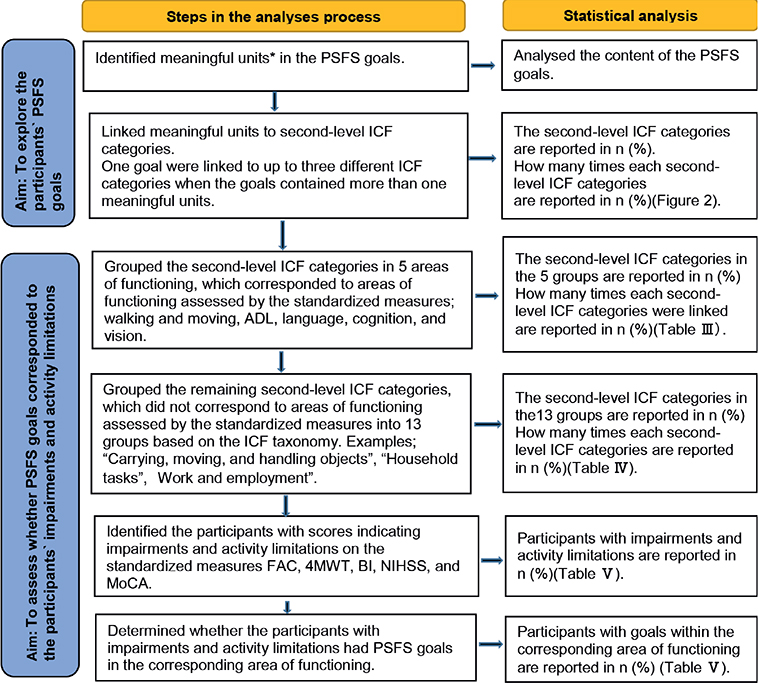
Fig. 1. Flowchart of the steps in the analyses process and the statistical analysis applied. *Meaningful unit refers to health information in text data. ICF: International Classification of Functioning, Disability and Health; PSFS: Patient-Specific Functional Scale; BI: Barthel ADL Index; FAC: Functional Ambulation Categories; 4MWT: 4-Meter Walk Test; NIHSS: The National Institutes of Health Stroke Scale; MoCA: Montreal Cognitive assessment.
Linking the content of the PSFS goals to the ICF
The recently updated ICF Linking rules were applied to link the PSFS goals to second-level ICF categories (3 digits) (25). The linking rules are an established method to identify meaningful units in the actual source of health information and link them to ICF categories. A meaningful unit refers to health information in text data, which, in this study, is included in the PSFS goals (25). If a participant’s rehabilitation goal was “to walk steadily”, for example, “walk” was linked to the ICF category Walking, d450 and “steadily” was linked to the ICF category “Involuntary movement reaction functions – balance”, b755. As demonstrated in this example, a goal that included multiple meaningful units could be linked to up to 3 different ICF categories.
The ICF online browser guided the linking process (26). Two of the authors (JE and BAB) independently identified meaningful units from the patients’ PSFS goals and linked them to second-level ICF categories. JE and BAB compared the first 50 goals and consulted a third author (HLS) in cases of ambiguity. The authors agreed on the most appropriate ICF category to use, and JE linked the remaining PSFS goals to the ICF according to the agreed linking strategy.
Comparing PSFS goals with impairments and activity limitations, as identified by the standardized measures
To assess whether PSFS goals corresponded to impairments and activity limitations, the second-level ICF categories were grouped in 5 areas of functioning which corresponded to areas of functioning assessed by the standardized measures (described in Table I). These 5 groups were walking and moving, ADL, language, cognition, and vision. This strategy allowed us to calculate the frequencies of participants with PSFS goals within the 5 areas of functioning. For the ICF categories of Reading, d166, Writing, d170, Speaking, d330, Conversation, d350, and Communication, d399, information about the underlying problem was extracted from the participant’s medical record. When the reading problem was caused by language impairment, for example, the category Reading, d166 was pooled in the group of ICF categories labelled “Language”. When the reading problem was caused by visual impairments, Reading d166 was pooled into the group of ICF categories labelled “Vision”. The remaining second-level ICF categories, which did not correspond to areas of functioning assessed by the standardized measures, were pooled into 13 groups based on the ICF taxonomy.
The study then identified the participants with scores indicating impairments and activity limitations on the FAC, 4MWT, BI, NIHSS, and MoCA, and determined whether these participants had PSFS goals in the corresponding area of functioning.
Data analyses
The data were tested for normal distribution with a visual inspection, Q–Q plots, and Shapiro-Wilk tests. Continuous data are presented as means and standard deviations (SDs) for normally distributed data and as range, median, and interquartile range (IQR) for skewed data. The categorical variables are presented as frequencies (n) and percentages (%).
The second-level ICF categories linked from the PSFS goals were reported in n (%). In addition, how many times each ICF category was linked were reported in n (%). The most frequently linked second-level ICF categories (linked ≥ 8 times) are reported.
The second-level ICF categories in the 5 groups based on areas of functioning and the 13 groups based on the ICF taxonomy, were reported in n (%). In addition, the study reported how many times each second-level ICF category were linked in all groups in n (%).
The frequencies of patients with scores indicating impairments and activity limitations assessed by the standardized measures were calculated. In order to explore whether the PSFS goals corresponded to the participants’ impairments and activity limitations, the frequencies of participants with PSFS goals in the 5 areas of functioning: walking and moving, ADL, language, cognition, and vision were calculated. The study used IBM SPSS version 28 (Armonk, NY, 2017) for statistical analysis.
RESULTS
Participants
A total of 107 eligible patients were screened for inclusion in the study. Twenty-seven patients were excluded according to the exclusion criteria and 9 declined to participate. This left a final total sample of 71 participants. Table II presents participants’ characteristics at admission.
Content of the rehabilitation goals
At admission, the participants identified 232 PSFS goals, with a median of 3 goals per participant (range 1–5). From these goals, 290 ICF categories were identified and linked to a total of 50 second-level ICF categories. Approximately 50% (n = 148) corresponded to the 5 areas of functioning assessed by the standardized measures. These were linked to 23 second-level ICF categories (see Table III). The remaining 49% (n = 142) of the ICF categories did not correspond to what the standardized measures assessed. These were linked to 27 additional ICF categories (see Table IV). Of these, 22% were classified as bodily functions and 78% as activities and participation. “Moving in different locations”, d460 (n = 24) and “Walking”, d450 (n = 23) were the most frequently linked ICF categories, followed by “Toileting”, d530 (n = 16). “Hand and arm use”, d445 (n = 12), and “Fine hand use”, d440 (n = 12). Fig. 2 presents the 15 most frequently linked ICF categories.
| Measurements | Groups based on areas of functioning | Second-level ICF categories linked from the PSFS goals | Linked ICF categories (n) | Linked ICF categories in groups n (%) |
| Functional Ambulation Categories (FAC) and 4-Meter Walk Test (4MWT) |
Walking and moving | d450 Walking d451 Going up and down stairs d460 Moving around in different locations d465 Moving around using equipment |
23 5 24 10 |
62 (21.38) |
| Barthel ADL Index (BI) | ADL | d510 Washing oneself d520 Caring for body parts d530 Toileting d540 Dressing d550 Eating d560 Drinking d570 Looking after one’s health d599 Self-care, unspecified |
6 1 15 10 8 2 1 4 |
47 (16.20) |
| National Institutes of Health Stroke Scale (NIHSS) and Aphasia Rating Scale (ARS) | Language | b167 Mental functions of language d166 Readinga d170 Writinga d330 Speakinga d350 Conversationa |
8 1 3 8 1 |
21 (7.24) |
| Montreal Cognitive Assessment (MoCA) | Cognition | b114 Orientation functions b144 Memory functions b156 Perceptual functions b164 Higher-level cognitive functions d160 Focusing attention |
4 4 1 1 1 |
11 (3.79) |
| National Institutes of Health Stroke Scale (NIHSS) | Vision | b210 Seeing functions d166 Readingb |
4 3 |
7 (2.41) |
| aCaused by language impairments. bCaused by vision impairments. | ||||
| Groups based on the ICF taxonomy | Second-level ICF categories linked from the PSFS goals | Linked ICF categories, (n) | Linked ICF categories in groups n (%) |
| Neuro-musculoskeletal and movement-related functions | b730 Muscle power functions b755 Involuntary movement reaction functions b760 Control of voluntary movements functions d170 Writinga d330 Speakinga d350 Conversationa d399 Communication, unspecifieda |
6 10 9 1 2 2 1 |
31 (10.69) |
| Carrying, moving, and handling objects | d430 Lifting and carrying objects d440 Fine hand use d445 Hand and arm use |
2 12 12 |
26 (8.97) |
| Household tasks | d630 Preparing meals d640 Doing housework |
10 6 |
16 (5.52) |
| General tasks and demands | d210 Undertaken a single task d220 Undertaken multiple tasks d230 Carrying out daily routine |
4 5 7 |
16 (5.52) |
| Changing and maintaining body position | d410 Changing body position d414 Maintaining a position d420 Transferring oneself |
4 2 8 |
14 (4.83) |
| Community and social life | d920 Recreation and leisure | 10 | 10 (3.45) |
| Sensory functions and pain | b235 Vestibular functions b265 Touch function b270 Sensory functions related to temperature and other stimuli b280 Sensation of pain |
2 1 1 4 |
8 (2.76) |
| Mental functions | b130 Energy and drive functions b134 Sleep |
5 2 |
7 (2.41) |
| Moving around using transportation | d475 Driving | 5 | 5 (1.72) |
| Functions related to the digestive system | b510 Ingestion functions | 3 | 3 (1.03) |
| Work and employment | d845 Maintaining a job | 3 | 3 (1.03) |
| Particular interpersonal relationship | d760 Family relationship | 2 | 2 (0.69) |
| Functions of the respiratory system | b450 Additional functions of the respiratory system | 1 | 1 (0.34) |
| aCaused by muscle weakness. | |||
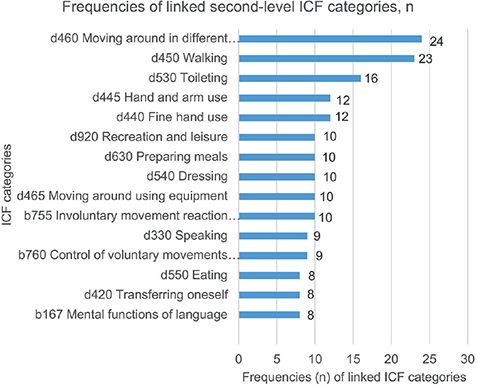
Fig. 2. The 15 most frequently linked second-level ICF categories from the PSFS goals linked ≥8 times by patients with stroke.
As described in Table III, the largest group of ICF categories based on areas of functioning were “Walking and moving” (linked 62 times), and “ADL” (linked 47 times). As reported in Table IV, the largest group, based on the ICF taxonomy, were “Neuro-musculoskeletal and movement-related functions” (linked 31 times) and “Carrying, moving, and handling objects” (linked 26 times).
How the participants’ goals corresponded to their impairments and activity limitations
Of the 60 participants who were unable to walk everywhere without assistance (FAC < 5), 51 stated goals related to walking and moving. Furthermore, 38 of the 45 who had limited gait function assessed with 4MWT (gait speed ≤ 0.80 m/s) stated goals related to walking. Moreover, 3 of the 11 participants who were able to walk everywhere without assistance (FAC = 5), and 16 of the 26 participants who were considered community ambulators (walk speed ≥ 0.81 m/s), also had goals related to walking function.
Of the 41 participants with identified visual impairments, 7 stated goals related to improving vision. Most participants (n = 58) had cognitive impairments according to the MoCA, and 6 identified goals related to improving cognition. Moreover, 2 of the 11 participants without cognitive impairments on the MoCA stated goals related to cognition. None of the 17 participants with urinary incontinence stated goals in this area. Table V describes the participants’ impairments and activity limitations assessed by standardized measures at admission and the frequencies of participants who had goals within the corresponding area of functioning.
DISCUSSION
Summary of the results
This study explored the rehabilitation goals measured with the PSFS in patients undergoing acute and subacute stroke rehabilitation. The study also assessed whether their goals corresponded to impairments and activity limitations as identified by standardized measures. The participants in this study described goals related to a wide range of areas of functioning, such as walking, ADL, language, cognition, and vision. The most frequently stated goals were related to walking, ADL, movement-related functions, and use of arms. Only half of the second-level ICF categories included areas assessed by the standardized measures used in this study. Of the participants with walking limitations, most stated walking-related goals. Only a few participants who demonstrated cognitive or visual impairments on standardized measures had goals related to those areas.
Exploring the rehabilitation goals
The 232 PSFS goals comprised 50 second-level ICF categories, demonstrating a wide range of content in the goals. In comparison, Valaas et al. (16) explored rehabilitation goals stated by patients with rheumatic and musculoskeletal diseases and linked 2096 rehabilitation goals to 39 second-level ICF categories. The higher number of ICF categories identified in the goals of patients undergoing stroke rehabilitation appears to reflect the many functional, sensory, and cognitive impacts of stroke (2, 4–7).
Of the 50 second-level ICF categories linked from the patients’ goals, 27 of them did not correspond to areas of functioning based on the standardized measures used in this study, a finding that may indicate that the PSFS captures aspects of function other than those indicated in standardized measures frequently applied in stroke rehabilitation. This result aligns with the Heldmann et al.’s (27) findings; they conclude that the PSFS was an appropriate complement to traditional measures to capture what matters to patients and for enhancing patient centredness.
The largest group of ICF categories, “Walking and moving”, was linked 62 times (21.4%). Walking is a priority among people with stroke, as it helps the patient to participate in other activities (28). Research indicates that walking ability is a determinant of long-term outcomes and predicts discharge location (2). Furthermore, walking speed predicts general health, functional dependence, frailty, cognitive decline, institutionalization, and mortality (29). Although previous research demonstrates the importance of prioritizing rehabilitation interventions that improve walking ability (2, 29), these data demonstrate that patients undergoing stroke rehabilitation also prioritize an improvement in walking function as a rehabilitation goal.
The “ADL” group of ICF categories was linked 47 times (16.2%); only 5.5% of the ICF categories were related to household activities. In comparison, a study of community-dwelling individuals with chronic sequelae after stroke identified the ability to shower as their most frequent goal (42%), followed by household activities (32%) and walking outdoors (32%) (20). This finding indicates that the content of the goals may change during the recovery trajectory (18) because most of the participants in the current study had not yet experienced living at home post-stroke.
The group labelled “carrying, moving, and handling objects” was the fourth largest group, linked 26 times (9%). Results of previous research in individuals > 6 months after stroke indicated; however, the most frequent goal was improved hand function, followed by improved mobility and cognition (19). Waddell et al. (30) found that most goals for individuals with chronic upper-extremity paresis following stroke were related to ADL, illustrating that ADL is often identified as a problem among patients with that condition.
How participants’ goals corresponded to their impairments and activity limitations
Among participants with walking limitations, 85% had goals within the corresponding area of functioning. On the other hand, only 10% of participants with cognitive impairments identified cognition-related goals. This finding is consistent with an earlier study reporting a low correlation between patient-rated and clinician-rated cognitive function (32). Patchick et al. (33) found that awareness of cognitive difficulties took time and became more apparent after participants returned to more cognitively demanding activities. The researchers suggested that patients should be asked directly about their cognitive limitations in addition to limitations in particular activities, since activity limitations such as those involved in dressing oneself may be related to cognitive skills (33). The PSFS asks patients about activities that they have difficulties performing, an approach in this study that may have been a barrier in identifying cognitive problems as goals. It is important to assess cognitive functions with an appropriate measure, because limitations in that area can cause reduced outcomes and hamper a return to social roles and works (31, 34).
Only 16% of the participants with visual impairments had goals related to that functional area. This finding aligns with that of Hepworth et al. (35), who found that 40% of people with recent-onset visual impairments did not report visual symptoms. Falkenberg et al. (36) also found that several patients < 3 months post-stroke experienced lack of awareness of their visual impairments. Berthold-Lindstedt et al. (37) revealed that it is necessary to combine both symptom assessment and vision examination in order to capture complex visual impairments and activity limitations. Furthermore, visual impairments may have impacted PSFS goals that included such activities as ADL, including housework and walking.
Some participants who were community ambulators (assessed using gait speed) and some participants who were able to walk everywhere without assistance (assessed using the FAC) also had walking-related goals. Similarly, some participants who did not have cognitive impairments identified by the MoCA had cognitive-related goals, indicating that the severity of their limitation was not decisive for the identification of a goal.
The rehabilitation professionals in the current study considered the participants to have impairments and limitations in several areas of functioning assessed by standardized measures. However, the participants did not have goals related to all these areas of functioning. This finding is consistent with those of Ellis et al. (28), who identified a mismatch in perceptions of post-stroke functional problems. Patients identified fewer difficulties than the rehabilitation professionals did. The participants in the current study did not have the opportunity to identify more than 5 PSFS goals. This could explain why they did not state goals in every area of functioning in which the rehabilitation professionals identified impairments and activity limitations. Yet only 16% of the participants identified 5 goals, suggesting that the goal limit may not have had a serious impact on these results.
Study limitations
Goals related to carrying, moving, and handling objects were linked 26 times, which indicates that this goal is important for many patients undergoing stroke rehabilitation. Because this study did not use a standardized measure assessing hand and arm function, it could not investigate the correspondence between participants’ goals and their functional limitations in this area.
The study did not collect data about the participants’ premorbid functioning, and some impairments and activity limitations may have been present before stroke onset. Patients in this age group may have problems in areas such as urinary incontinence, mobility, cognition, and vision before stroke onset. Therefore, the standardized measures may have identified functional problems that were present before stroke onset, thereby increasing the mismatch between the incidence of impairments and activity limitations identified by rehabilitation professionals and the PSFS goals identified by the participants.
Although the clinicians followed a procedure during the goal-setting process, in some cases, the collaboratively arrived-upon goals were not precisely described or lacked details. For goals linked to the ICF categories Reading d166, Writing d170, Speaking d330, Conversation d350, and Communication d399, information about the underlying problem from the participants’ medical journal was required to pool the ICF category into appropriate groups based on the areas of functioning. Because of the lack of details that participants provided for their goals, this study may have misunderstood the participants’ intentions and incorrectly linked the ICF category.
Conclusion
The PSFS goals consisted of many areas of functioning, including walking, ADL, language, vision, and cognition. Most participants with walking limitations had goals related to walking; yet only a few of those who demonstrated cognitive or visual impairments had cognitive or vision goals. Only half of the linked second-level ICF categories were related to areas assessed by the standardized measures, indicating that the PSFS captures aspects of functioning other than those captured by the standardized measures used in this study.
Implications for practice and for future studies
The results indicate that the PSFS may capture aspects of function other than those assessed by the standardized measures administered in this study. Therefore, the PSFS may be an appropriate complement to these measures.
Whether a functional limitation is important to a patient and identified as a goal may not be related to the severity of the limitation. Hence, rehabilitation professionals should not predetermine patients’ rehabilitation goals based on the scores of standardized measures.
The PSFS focus on activities may be a barrier to identifying such underlying impairments as cognitive and visual impairments. Therefore, the rehabilitation professionals should also use appropriate standardized measures to identify these impairments. Rehabilitation professionals in clinical practice and researchers should also ask their patients directly about cognitive and visual limitations to identify goals in these areas of functioning.
ACKNOWLEDGEMENTS
The authors would like to thank the participants and the staff at Innlandet Hospital Trust for their support and Innlandet Hospital Trust for its financial support.
This study was funded by Innlandet Hospital Trust (grant number 150408). The funders played no role in the design, conducting, or reporting of this study.
Participants received information about the study and provided written informed consent in accordance with the Declaration of Helsinki. The study was approved by the Data Protection Officer (#121442) and by the Regional Committees for Medical and Health Research Ethics (#71114 (0302/2020)). Because of the sensitive nature of the data collected for this study and because of the restrictions of health privacy laws in Norway, we are unable to provide public access to the data set.
REFERENCES
- Global, regional, and national burden of stroke and its risk factors, 1990-2019: a systematic analysis for the Global Burden of Disease Study 2019. Lancet Neurol 2021; 20: 795–820. DOI: 10.1016/s1474-4422(21)00252-0
- Louie DR, Simpson LA, Mortenson WB, Field TS, Yao J, Eng JJ. Prevalence of walking limitation after acute stroke and its impact on discharge to home. Phys Ther 2022; 102. DOI: 10.1093/ptj/pzab246
- Wade DT, Hewer RL. Functional abilities after stroke: measurement, natural history and prognosis. J Neurol Neurosurg Psychiatry 1987; 50: 177–182. DOI: 10.1136/jnnp.50.2.177
- Flowers HL, Skoretz SA, Silver FL, Rochon E, Fang J, Flamand-Roze C, et al. Poststroke aphasia frequency, recovery, and outcomes: a systematic review and meta-analysis. Arch Phys Med Rehabil 2016; 97: 2188–2201. DOI: 10.1016/j.apmr.2016.03.006
- McClure JA, Salter K, Foley N, Mahon H, Teasell R. Adherence to Canadian Best Practice Recommendations for Stroke Care: vascular cognitive impairment screening and assessment practices in an Ontario inpatient stroke rehabilitation facility. Top Stroke Rehabil 2012; 19: 141–148. DOI: 10.1310/tsr1902-141
- Winstein CJ, Stein J, Arena R, Bates B, Cherney LR, Cramer SC, et al. Guidelines for adult stroke rehabilitation and recovery: a guideline for healthcare professionals from the American Heart Association/American Stroke Association. Stroke 2016; 47: e98–e169. DOI: 10.1161/str.0000000000000098
- Rowe FJ, Hepworth LR, Howard C, Hanna KL, Cheyne CP, Currie J. High incidence and prevalence of visual problems after acute stroke: an epidemiology study with implications for service delivery. PLoS One 2019; 14: e0213035. DOI: 10.1371/journal.pone.0213035
- World Health Organization. Rehabilitation in health systems. Geneva: World Health Organization; 2017. report no.: 978-92-4-154997-4,.
- Knutti K, Björklund Carlstedt A, Clasen R, Green D. Impacts of goal setting on engagement and rehabilitation outcomes following acquired brain injury: a systematic review of reviews. Disabil Rehabil 2022; 44: 2581–2590. DOI: 10.1080/09638288.2020.1846796
- Sugavanam T, Mead G, Bulley C, Donaghy M, van Wijck F. The effects and experiences of goal setting in stroke rehabilitation – a systematic review. Disabil Rehabil 2013; 35: 177–190. DOI: 10.3109/09638288.2012.690501
- Moore JL, Potter K, Blankshain K, Kaplan SL, O’Dwyer LC, Sullivan JE. A Core Set of outcome measures for adults with neurologic conditions undergoing rehabilitation: a clinical practice guideline. J Neurol Phys Ther 2018; 42: 174–220. DOI: 10.1097/npt.0000000000000229
- Rose A, Rosewilliam S, Soundy A. Shared decision making within goal setting in rehabilitation settings: a systematic review. Patient Educ Couns 2017; 100: 65–75. DOI: 10.1016/j.pec.2016.07.030
- Taylor-Rowan M, Wilson A, Dawson J, Quinn TJ. Functional assessment for acute stroke trials: properties, analysis, and application. Front Neurol 2018; 9: 191. DOI: 10.3389/fneur.2018.00191
- Stevens A, Beurskens A, Koke A, van der Weijden T. The use of patient-specific measurement instruments in the process of goal-setting: a systematic review of available instruments and their feasibility. Clin Rehabil 2013; 27: 1005–1019. DOI: 10.1177/0269215513490178
- Stratford P, Gill C, Westaway M, Binkley J. Assessing disability and change on individual patients: a report of a patient specific measure. 1995; 47 258–263. DOI: 10.3138/ptc.47.4.258
- Valaas HL, Klokkerud M, Hildeskår J, Hagland AS, Kjønli E, Mjøsund K, et al. Rehabilitation goals described by patients with rheumatic and musculoskeletal diseases: content and attainment during the first year after rehabilitation. Disabil Rehabil 2022; 44: 7947–7957. DOI: 10.1080/09638288.2021.2003879
- Storløs B, Roaldsen KS, Soberg HL, Kleffelgaard I. Patient-specific functioning related to dizziness and balance problems after traumatic brain injury – a cross sectional study using an ICF perspective. Cogent medicine 2021; 8: 1932247. DOI: 10.1080/2331205X.2021.1932247
- Røe Y, Rysstad T, Tveter AT, Sandbakk TB, Jæger M, Grotle M. What are the most important problems in functioning among patients with shoulder pain? An analysis of the patient-specific functional scale. Phys Ther 2021; 101: pzab141. DOI: 10.1093/ptj/pzab141
- Rice DB, McIntyre A, Mirkowski M, Janzen S, Viana R, Britt E, et al. Patient-centered goal setting in a hospital-based outpatient stroke rehabilitation center. PM R 2017; 9: 856–865. DOI: 10.1016/j.pmrj.2016.12.004
- Harris JE, Eng JJ. Goal priorities identified through client-centred measurement in individuals with chronic stroke. Physiother Can 2004; 56: 171–176. DOI: 10.2310/6640.2004.00017
- Evensen J, Soberg HL, Sveen U, Hestad KA, Moore JL, Bronken BA. Measurement properties of the patient-specific functional scale in rehabilitation for patients with stroke: a prospective observational study. Phys Ther 2023; 10.1093/ptj/pzad014. DOI: 10.1093/ptj/pzad014
- Nasreddine Z. MoCA Montreal Cognitive Assessment. 2021 [cited 2023 Dec 10]. Available from: https://www.mocatest.org/faq/
- Bernhardt J, Hayward KS, Kwakkel G, Ward NS, Wolf SL, Borschmann K, et al. Agreed definitions and a shared vision for new standards in stroke recovery research: The Stroke Recovery and Rehabilitation Roundtable taskforce. Int J Stroke 2017; 12: 444–450. DOI: 10.1177/1747493017711816
- World Health Organization. World Health Organization. International Classification of Function Disability and Health: ICF. 2001 [cited 2023 Jan 20] Available from: https://www.who.int/classifications/icf/en/
- Cieza A, Fayed N, Bickenbach J, Prodinger B. Refinements of the ICF Linking rules to strengthen their potential for establishing comparability of health information. Disabil Rehabil 2019; 41: 574–583. DOI: 10.3109/09638288.2016.1145258
- Modernized International Classification of Functioning, Disability and Health (ICF) online browser [database on the internet]. 2022. [Cited 2022 Aug 04] Available from: https://icd.who.int/dev11/l-icf/en.
- Heldmann P, Hummel S, Bauknecht L, Bauer JM, Werner C. Construct validity, test-retest reliability, sensitivity to change, and feasibility of the patient-specific functional scale in acutely hospitalized older patients with and without cognitive impairment. J Geriatr Phys Ther 2022; 45: 134–144. DOI: 10.1519/jpt.0000000000000303
- Ellis C, Focht KL, Grubaugh AL. Perceptions of stroke recovery: an exclusion of communication and cognition. NeuroRehabilitation 2013; 33: 233–239. DOI: 10.3233/nre-130950
- Middleton A, Fritz SL, Lusardi M. Walking speed: the functional vital sign. J Aging Phys Act 2015; 23: 314–322. DOI: 10.1123/japa.2013-0236
- Waddell KJ, Birkenmeier RL, Bland MD, Lang CE. An exploratory analysis of the self-reported goals of individuals with chronic upper-extremity paresis following stroke. Disabil Rehabil 2016; 38: 853–857. DOI: 10.3109/09638288.2015.1062926
- Evensen J, Soberg HL, Sveen U, Hestad KA, Bronken BA. The applicability of the Patient-Specific Functional Scale (PSFS) in rehabilitation for patients with acquired brain injury (ABI) – a cohort study. J Multidiscip Healthc 2020; 13: 1121–1132. DOI: 10.2147/jmdh.S259151
- Tarvonen-Schröder S, Hurme S, Laimi K. The World Health Organization Disability Assessment Schedule (WHODAS 2.0) and the WHO Minimal Generic Set of Domains of Functioning and Health versus Conventional Instruments in subacute stroke. J Rehabil Med 2019; 51: 675–682. DOI: 10.2340/16501977-2583
- Patchick EL, Horne M, Woodward-Nutt K, Vail A, Bowen A. Development of a patient-centred, patient-reported outcome measure (PROM) for post-stroke cognitive rehabilitation: qualitative interviews with stroke survivors to inform design and content. Health Expect 2015; 18: 3213–3224. DOI: 10.1111/hex.12311
- Culler KH, Wang YC, Byers K, Trierweiler R. Barriers and facilitators of return to work for individuals with strokes: perspectives of the stroke survivor, vocational specialist, and employer. Topics Stroke Rehabil 2011; 18: 325–340. DOI: 10.1310/tsr1804-325
- Hepworth LR, Howard C, Hanna KL, Currie J, Rowe FJ. “Eye” don’t see: an analysis of visual symptom reporting by stroke survivors from a large epidemiology study. J Stroke Cerebrovasc Dis 2021; 30: 105759. DOI: 10.1016/j.jstrokecerebrovasdis.2021.105759
- Falkenberg HK, Mathisen TS, Ormstad H, Eilertsen G. “Invisible” visual impairments. A qualitative study of stroke survivors’ experience of vision symptoms, health services and impact of visual impairments. BMC Health Serv Res 2020; 20: 302. DOI: 10.1186/s12913-020-05176-8
- Berthold-Lindstedt M, Johansson J, Ygge J, Borg K. How to assess visual function in acquired brain injury – asking is not enough. Brain Behav 2021; 11: e01958. DOI: 10.1002/brb3.1958
- Rankin J. Cerebral vascular accidents in patients over the age of 60. III. Diagnosis and treatment. Scott Med J 1957; 2: 254–268. DOI: https://doi.org/10.1177/003693305700200504
- Mehrholz J, Wagner K, Rutte K, Meissner D, Pohl M. Predictive validity and responsiveness of the functional ambulation category in hemiparetic patients after stroke. Arch Phys Med Rehabil 2007; 88: 1314–1319. DOI: 10.1016/j.apmr.2007.06.764
- Mahoney FI, Barthel DW. Functional evaluation: the Barthel index. Md State Med J 1965; 14: 61–65.
- Brott T, Adams HP, Jr., Olinger CP, Marler JR, Barsan WG, Biller J, et al. Measurements of acute cerebral infarction: a clinical examination scale. Stroke 1989; 20: 864–870. DOI: 10.1161/01.str.20.7.864
- Kagan A, Winckel J, Black S, Duchan JF, Simmons-Mackie N, Square P. A set of observational measures for rating support and participation in conversation between adults with aphasia and their conversation partners. Topics Stroke Rehabil 2004; 11: 67–83. DOI: 10.1310/cl3v-a94a-de5c-cvbe
- Toglia J, Fitzgerald KA, O’Dell MW, Mastrogiovanni AR, Lin CD. The Mini-Mental State Examination and Montreal Cognitive Assessment in persons with mild subacute stroke: relationship to functional outcome. Archives Phys Med Rehabil 2011; 92: 792–798. DOI: 10.1016/j.apmr.2010.12.034
- Munthe-Kaas R, Aam S, Saltvedt I, Wyller TB, Pendlebury ST, Lydersen S, et al. Test accuracy of the montreal cognitive assessment in screening for early poststroke neurocognitive disorder: the Nor-COAST Study. Stroke 2021; 52: 317–320. DOI: 10.1161/strokeaha.120.031030