ORIGINAL REPORT
RELIABILITY AND VALIDITY OF A CHINESE VERSION OF THE LYSHOLM SCORE AND TEGNER ACTIVITY SCALE FOR KNEE ARTHROPLASTY
Hongshi HUANG, MD1#, Si ZHANG, BS1#, Yi WANG, BS1, Yelverton TEGNER, MD, PHD2, Yongjian WANG, MD1, Yanfang JIANG, MS1* and Yingfang AO, MS1*
From the 1Department of Sports Medicine, Peking University Third Hospital, Institute of Sports Medicine of Peking University, Beijing Key Laboratory of Sports Injuries, Beijing, China and 2Department of Health, Education and Technology, Division of Health and Rehabilitation, Luleå University of Technology, Luleå, Sweden
Objective: To verify the reliability and validity of Chinese versions of the Lysholm score and the Tegner activity scale for knee arthroplasty.
Methods: Sixty-four patients undergoing total knee arthroplasty and 28 healthy volunteers were included in this study. Participants were divided into 4 groups: a pre-operation group; a 3 months post-operation group; a 1-year post-operation group; and a control group of healthy volunteers. Participants completed the Lysholm score and Tegner activity scale twice over a period of 3–7 days.
Results: The intraclass correlation coefficients of the Lysholm score and Tegner scale were both relatively high, at 0.99 and 0.97, respectively. Moreover, the Cronbach’s alpha of the Lysholm score was 0.71. The items “locking” and “instability” differed slightly between groups (Kruskal–Wallis: for locking, χ2 (p) = 13.48, p = 0.0037; for instability, χ2 (p) = 4.32, p = 0.2292).
Conclusion: The simplified-Chinese versions of the Lysholm score and the Tegner scale are applicable for use with patients undergoing total knee arthroplasty, and have relatively high validity and reliability. The items “locking” and “instability” should be combined with clinical data to make the Lysholm score more suitable for assessment of total knee arthroplasty.
LAY ABSTRACT
The aim of this study was to verify the reliability and validity of Chinese versions of the Lysholm score and the Tegner activity scale for assessment of knee arthroplasty. A total of 64 patients undergoing total knee arthroplasty (TKA) and 28 healthy volunteers were included in the study. Participants were divided into 4 groups: a pre-operation group; a 3 months post-operation group; a 1-year post-operation group; and a control group of healthy volunteers. Study participants completed the Lysholm score and Tegner activity scale score twice for over a period of 3–7 days, and the results analysed. The simplified-Chinese versions of the Lysholm score and the Tegner scale were found to be applicable for use with total knee arthroplasty patients, and to have relatively high validity and reliability. Furthermore, the items “locking” and “instability” should be combined with clinical data to make the Lysholm score more suitable for assessment of total knee arthroplasty.
Key words: Lysholm score; Tegner activity scale; knee; arthroplasty.
Citation: J Rehabil Med 2022; 54: jrm00317. DOI: https://doi.org/10.2340/jrm.v54.2304.
Copyright: © Published by Medical Journals Sweden, on behalf of the Foundation for Rehabilitation Information. This is an Open Access article distributed under the terms of the Creative Commons Attribution-NonCommercial 4.0 International License (https://creativecommons.org/licenses/by-nc/4.0/)
Accepted: Dec 16, 2021; Epub ahead of print: May 18, 2022; Published: Jul 15, 2022
Correspondence address: Yanfang Jiang and Yingfang Ao, Department of Sports Medicine, Peking University Third Hospital, Institute of Sports Medicine of Peking University, Beijing Key Laboratory of Sports Injuries, Beijing, 100191, China. E-mail: anthea_jiang@126.com; aoyingfang@163.com
Arthropathy is a major disease that affects many people worldwide, with the knee regarded as the most affected joint (1). Degenerative osteoarthritis significantly affects patients’ quality of life. Total knee replacement (TKR) is the one of optimal way to reduce pain and recover function in severely damaged knee joints (2). As the overall burden to society of knee arthritis is increasing, the use of TKRs is also increasing (3). Thus, it is important that clinicians and patients have a good understanding of the clinical effects of TKR, with standard outcome measures, including measurements of pain, functioning and level of activity. Most previous studies have used the Western Ontario and McMaster Universities Osteoarthritis Index (WOMAC) to evaluate postoperative function and recovery of patients undergoing TKR. The WOMAC questionnaire comprises 3 dimensions of evaluation, but includes many questions (4–6). Although there are many rating scales used to evaluate knee condition after surgery, there is no consensus on a single, effective evaluation system, due to the importance of knee functioning and the complexity of the knee joint anatomy (7). The evaluation systems cannot be used universally, due to cultural and language differences. Thus, convenient, simple and effective Chinese versions of the assessment scales are needed.
In a meta-analysis, Waleed Alrawashdeh’s team (4) found that the WOMAC is currently routinely used to assess postoperative functioning and recovery in patients undergoing TKR. The Lysholm score and the Tegner activity scale were initially designed for evaluation of cruciate ligament injuries, especially injuries of the anterior cruciate ligament (ACL) (8–10). The Tegner activity scale score ranges from 0 (sick leave or disability pension due to knee problems) to 10 (competitive sports at a relatively high level) on a numerical scale (11). The Lysholm Knee Score, was proposed by Yelverton Tegner and Jack Lysholm, and was published in the Journal of Clinical Orthopaedics and Related Research in 1985 (10). The Lysholm score characterizes the way the knee is used in work, sports and leisure activities to assess the functioning of knee joint; moreover, the scale is used as a supplement to the knee functional rating system (10). Verification of the Lysholm and Tegner scales could provide better ACLR (Anterior Cruciate Ligament Reconstruction) data and support for clinicians and researchers. Osteoarthrosis of the knee joint is a highly prevalent condition; therefore, if assessment with the Lysholm score and Tegner scale are suitable for patients with TKA, then they may also be useful for assessment of patients with knee osteoarthrosis.
The International Knee Documentation Committee (IKDC) Subjective Knee Evaluation Form (SKEF) was published in 1993 and modified in 1994; however, the most widely used version was published in 2001 (12). Moreover, the Chinese version of the IKDC-SKEF was translated and verified in 2010 (13). The IKDC system is currently one of the most popular knee assessment scale systems.
Many international rating scales are used in China; however, most of the scales have not undergone verification for rehabilitation and validity. Currently, the only Chinese versions that have undergone a verification process are the IKDC 2000, Knee Injury and Osteoarthritis Outcome Score (KOOS), the Lysholm Knee Score and the Tegner activity scale. The simplified-Chinese version of the Lysholm Knee Score has recently been proven to be reliable and effective in an ACLR group (14); however, the reliability and effectiveness of the simplified-Chinese version of the Lysholm Score has not been verified in a TKA group (14).
METHODS
Translation procedure
The Lysholm Knee Score was translated from English to simplified-Chinese by 2 bilingual translators whose mother tongue is simplified-Chinese. The project and score settings were completely in accordance with the original English settings. The translator translated and calibrated the items according to the Oxford English Dictionary and Chinese customs. The 2 translation results were integrated into a single version, which was accepted by both translators. Another 2 bilingual translators, who spoke English as their native language, independently translated the single version back to English. The items in the back-translated English version were the same as in the original scale.
The Tegner activity scale has been successfully translated into a simplified-Chinese version in previous studies, and its reliability and validity have been verified (15). The translation procedure was consistent with that of the Lysholm Knee Score (15).
Participants
Sixty-four patients undergoing total knee arthroplasty and 28 healthy volunteers were included in this study. Participants were divided into 4 groups: pre-operation, 3 months post-operation, 1-year post-operation, and a control group comprising healthy volunteers. There were 22 patients in the pre-operative group, 21 in the 3-months post-operation group and 21 in the 1-year post-operation group. The participants had to be able to read and communicate with others. All of the patients were undergoing TKA surgery at the Institute of Sports Medicine at Peking University Third Hospital within the year 2019. Health volunteers recruited a total of 28 people. Criteria for inclusion were unconscious cognitive disorders, absence of any symptoms of lower limb joint and confirmed disease, and age 40 years or older. All volunteers got in touch with the team through the recruiter’s advertisement and enrolled in the group.
Validation process
Demographic and clinical features were obtained upon screening of participants. All participants completed the rating scale under the instructions of study team members. The instructions provided by the research assistant were identical to those in the questionnaire (11). In addition, the patients completed the IKDC. The participants then completed the same Lysholm and Tegner scales again 3–7 days later. If the participants could not attend the hospital to complete the questionnaires, the study team members contacted them to complete the questionnaires by telephone.
Statistical analysis
The baseline characteristics are reported as means ± standard deviations (SD). Mann–Whitney U test was used to determine if there were any differences among measures, sexes, etc. Intraclass correlation coefficient (ICC) and 95% confidence interval (95% CI) were used to calculate relative reliability, and the result was considered acceptable when ICC was greater than 0.70. To obtain internal consistency within the Lysholm score, Cronbach’s alpha was calculated; however, because of the particularity of the Tegner scale, which consists of only 1 question, Cronbach’s alpha could not be used (16). The standard error of measurement (SEM) and the smallest detectable change (SDC) are usually used to assess absolute reliability. As for the differences among the pre-operation, 3 months post-operation, 1-year post-operation, and control groups, the Kruskal–Wallis test was used for each item. Spearman’s coefficient values were used to indicate the relationship between 2 items that were extremely good (> 0.9), good (0.7–0.9), moderate (0.5–0.69), fair (0.2–0.5), or minimal to absent (0.0–0.2). Furthermore, floor and ceiling effects were also calculated, and were considered to be nonexistent (10). All statistical analyses were performed using STATA SE 13.0 software (Statacorp, College Station, TX, USA). The significance level alpha was 0.05 and for post-hoc analysis was set at 0.05/4 = 0.0125.
RESULTS
According to the forward and backward translations, no major modifications were made by the translators, except for the terms “limp”, “instability”, “swelling” and “squatting”, which were modified slightly by the translators for clarity. However, no other problems were found according to the response in the process of scales application.
A total of 92 volunteers participated in this study, 27 men and 65 women, mean age 65 ± 8 years (range 40–85 years). Moreover, all participants returned to the hospital to complete the follow-up assessments. There were 20 participants in the pre-operation group, all of whom completed all of the questions. There were 28 participants in the control group (age 62 ± 13 years), 20 in the pre-operation group (66 ± 7 years), 24 in the 3-month post-operation group (66 ± 4 years) and 20 in the 1-year post-operation group (66 ± 6 years). All of the baseline characteristics for the participants are shown in Table I. Most participants were in the older age range due to the particular nature of the TKA surgery. The overall sex ratio was approximately 1:2 (men:women), and the Mann–Whitney U test showed no significant differences between the 2 measurements (p > 0.05). However, it proved that there are differences between the sexes with regards to the Tegner scale (p = 0.0051, p < 0.01), for which the scores for men were higher than those for women.
The mean and median results are shown in Table II. According to the ICC, there was good reliability for both measurements, with results of 0.99 for the Lysholm score and 0.97 for the Tegner scale in all participants. At the same time, Cronbach’s alpha was 0.71 for the Lysholm score; because the Tegner scale only had 1 question, the alpha value was not calculated. SEM and SDC values were also calculated. For the Lysholm score, the SEM was 1.95 and the SDC was 5.41, and, for the Tegner scale, the SEM was 0.24 and the SDC was 0.68. The Kruskal–Wallis test is used to show if there is an overall significant difference among the groups; the results showed that differences exist among the 4 groups (p < 0.001). The Mann–Whitney U post-hoc test was used to calculate the relationship between groups. For the Tegner scale, the control group was significantly different from the pre-operation group, the 3 months post-operation group and the 1-year post-operation group (p < 0.05). Compared with the Tegner scale, not only the control group, but also the pre-operation group has significant differences compared with other groups (p < 0.05).
Spearman’s ρ coefficient values are used to show the relationship between 2 items; moderate correlations were found between the IKDC and Lysholm scores (ρ = 0.74, p < 0.001), the IKDC and Tegner scales (ρ = 0.76, p < 0.001), and the Tegner scales and Lysholm scores (ρ = 0.68, p < 0.001). None of the groups, except for the control group, displayed floor and ceiling effects. Specific results are shown in Table III.
Both the Lysholm and the Tegner scales seemed to have a constant variance between 2 measurements, as shown in Fig. 1. Correlations of the 2 rating scales’ with the IKDC are shown in Tables IV and V. Most items appeared to have good correlation with the IKDC.
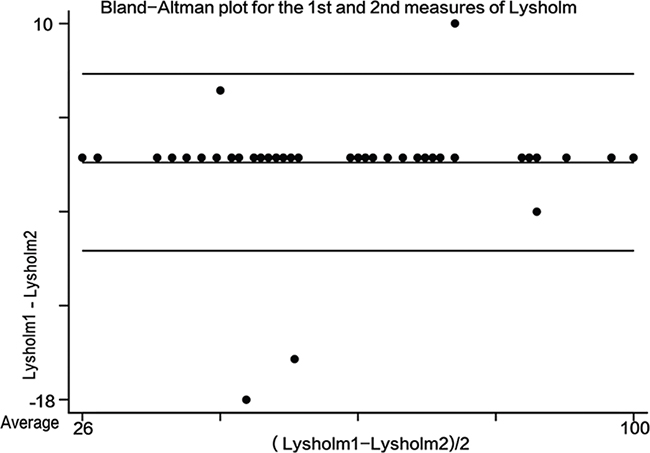
Fig. 1. Bland–Altman plot for the reliability of test-retest related to the Lysholm scale (patients with total knee arthroplasty (TKA) only).
DISCUSSION
This study is the first to validate the Lysholm score and Tegner activity scale for Chinese patients undergoing TKA, for quantification of the functional level of the knee in sports activities, as well as in daily life. The Lysholm score and Tegner activity scale are valid and reliable, thus both scales can enable the assessment of knee function and activities of patients undergoing TKA. Clinicians and the researchers could use the Lysholm score in combination with the Tegner scale as an easy assessment tool to evaluate the results of TKA. Due to cultural differences, although all participants were willing to cooperate with the study and could individually complete the Lysholm-C and Tegner-C assessments, some of them responded that they could not choose their answers by themselves because of the ambiguous options.
In contrast to previous research, an ICC value of approximately 0.98 was satisfactory in this study, except for the case of the “locking” item. Furthermore, Cronbach’s alpha for the Lysholm score, which is used to assess homogeneity, was 0.71. The alpha value was similar to a Chinese ACL group; however, the ICC from this study was a little better than that group (14). Thus, it can be inferred that although every condition is different and exhibits diverse symptoms, the participants’ scores remained similar. The SDC of the Lysholm score (5 points) for TKA participants in this study was slightly lower than for patients with meniscal (9 points) or ACL injuries (11–14.6 points) (8, 14, 17–19). It can be concluded that the condition of participants is similar. Furthermore, although the SDC of the Tegner scale for participants in this study was 0.68 points, which is slightly lower than the SDC (1 point) in ACL injury populations (8, 14, 17–19), it can be ensured that a measured change is not caused by errors in measurement. In conclusion, the Lysholm and Tegner scales are valid for use in clinical practice.
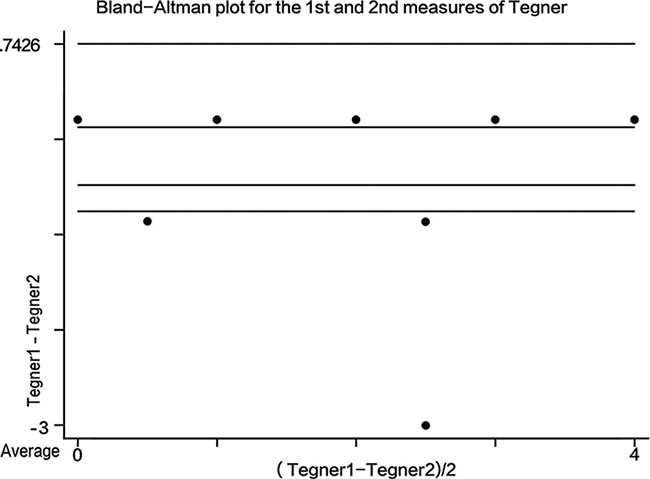
Fig. 2. Bland–Altman plot for reliability of test-retest related to the Tegner scale (patients with total knee arthroplasty (TKA) only).
For the Tegner activity scale, the overall score of participants in this study appears to be a slightly lower compared with other studies (8, 11, 15, 17, 19). The Tegner scale is a unique questionnaire scaling system, because it consists of only 1 item. The objective of this study was to evaluate the functioning and structure of TKA patients who were at least 60 years old. Moreover, the demands and expectations for elderly patients are different from those for young people. Most elderly people do not play sports, and their only activity is housework; thus, they do not need as much function and structure as young people (20). In this study, the IKDC scale was regarded as the gold standard; hence the Lysholm and Tegner scales were compared with the IKDC (14). The results show that both the Lysholm and Tegner scales correlated with the IKDC. This conclusion is similar to that found for ACL patients (14, 15).
In general, the best scale for measuring patients’ function and ability depends on evaluation of the scale dimensions. In the current study only 1 or 2 participants in each of the 3 experimental groups attained the highest possible score; therefore, there was no ceiling or floor effect for the Lysholm score. Ceiling and floor effects exist if the effects are observed for more than 30% of the group; the control group was excluded from this analysis. Thus, the absence of these effects indicates that the items were able to distinguish well between the different groups. As a result, most of the patients have different scores. The Karen K. (8) found that, in ACL patients in Germany, the items “support” and “locking” had high ceiling effects, and the item “squatting” had high floor effects (8). In contrast, the current data imply that the Lysholm and Tegner scales are more suitable for assessment of Chinese TKA patients.
This study has a number of limitations. The limited time and patient availability resulted in a small sample size, which limits the conclusions that can be drawn. Further research, using groups with longer times post-operation and larger sample sizes, is needed to assess the sensitivity and validation of these tests. In addition, this study followed up only on patients who underwent surgery within 1 year of participation. Future studies should follow up patients for a longer time after surgery. Moreover, each group was comprised of different participants; further studies should follow the same individuals and evaluate them prior to surgery and at 3 months and 1 year or more after surgery. In addition, more detailed standards should be developed, so that the patients can better understand the questions despite differences in language and culture. Further studies, aimed specifically at TKA patients, are needed to verify more rating scales that perform better than the Lysholm and Tegner assessments, for development of a gold standard for assessment of these patients.
CONCLUSION
Overall, the Chinese version of the Lysholm score and the Tegner activity scale displayed acceptable reliability and validity for use in assessing patients with TKA.
ACKNOWLEDGEMENTS
The authors have no conflicts of interest to declare.
REFERENCES
- Gaweł J, Fibiger W, Starowicz A, Szwarczyk W. Early assessment of knee function and quality of life in patients after total knee replacement. Ortopedia Traumatologia Rehabilitacja 2010; 12: 329.
- Lizaur-Utilla A, Miralles-Munoz FA, Gonzalez-Parreno S, Lopez-Prats FA. Validation of the Spanish Version of the Knee Injury and Osteoarthritis Outcome Score (KOOS) for Elderly Patients With Total Knee Replacement. J Orthop Res 2019; 37: 2157–2162.
- Cram P, Lu X, Kates SL, Singh JA, Li Y, Wolf BR. Total knee arthroplasty volume, utilization, and outcomes among Medicare beneficiaries, 1991–2010. Jama 2012; 308: 1227–1236.
- Alrawashdeh W, Eschweiler J, Migliorini F, El Mansy Y, Tingart M, Rath B. Effectiveness of total knee arthroplasty rehabilitation programmes: a systematic review and meta-analysis. J Rehabil Med 2021; 53: jrm00200.
- Lee SJ, Kim BR, Kim SR, Nam KW, Lee SY, Park YG, et al. Preoperative physical factors that predict stair-climbing ability at one month after total knee arthroplasty. J Rehabil Med 2020; 52: jrm00064.
- Naylor JM, Crosbie J, Ko V. Is there a role for rehabilitation streaming following total knee arthroplasty? Preliminary insights from a randomized controlled trial. J Rehabil Med 2015; 47: 235–241.
- Xin L, Su J. Current situation and prospects of knee function rating scales. J Clin Rehabil Tissue Engin Res 2010; 14: 7367–7370.
- Briggs KK, Lysholm J, Tegner Y, Rodkey WG, Kocher MS, Steadman JR. The reliability, validity, and responsiveness of the Lysholm score and Tegner activity scale for anterior cruciate ligament injuries of the knee: 25 years later. Am J Sports Med 2009; 37: 890–897.
- Lysholm J, Gillquist J. Evaluation of knee ligament surgery results with special emphasis on use of a scoring scale. Am J Sports Med 1982; 10: 150–154.
- Tegner Y, Lysholm J. Rating systems in the evaluation of knee ligament injuries. Clin Orthop Relat Res 1985: 43–49.
- Swanenburg J, Koch PP, Meier N, Wirth B. Function and activity in patients with knee arthroplasty: validity and reliability of a German version of the Lysholm Score and the Tegner Activity Scale. Swiss Medical Weekly 2014; 144: w13976.
- Collins NJ, Misra D, Felson DT, Crossley KM, Roos EM. Measures of knee function: International Knee Documentation Committee (IKDC) Subjective Knee Evaluation Form, Knee Injury and Osteoarthritis Outcome Score (KOOS), Knee Injury and Osteoarthritis Outcome Score Physical Function Short Form (KOOS-PS), Knee Outcome Survey Activities of Daily Living Scale (KOS-ADL), Lysholm Knee Scoring Scale, Oxford Knee Score (OKS), Western Ontario and McMaster Universities Osteoarthritis Index (WOMAC), Activity Rating Scale (ARS), and Tegner Activity Score (TAS). Arthritis Care Res (Hoboken) 2011; 63: S208–S228.
- Fu SN, Chan YH. Translation and validation of Chinese version of International Knee Documentation Committee Subjective Knee Form. Disabil Rehabil 2011; 33: 1186–1189.
- Wang W, Liu L, Chang X, Jia ZY, Zhao JZ, Xu WD. Cross-cultural translation of the Lysholm knee score in Chinese and its validation in patients with anterior cruciate ligament injury. BMC Musculoskel Dis 2016; 17: 436.
- Huang H, Zhang D, Jiang Y, Yang J, Feng T, Gong X, et al. Translation, validation and cross-cultural adaptation of a simplified-Chinese version of the Tegner Activity Score in Chinese patients with anterior cruciate ligament injury. PLoS One 2016; 11: e0155463.
- Irrgang JJ, Snyder-Mackler L, Wainner RS, Fu FH, Harner CD. Development of a patient-reported measure of function of the knee. JBJS 1998; 80: 1132.
- Briggs KK, Kocher MS, Rodkey WG, Steadman JR. Reliability, validity, and responsiveness of the Lysholm knee score and Tegner activity scale for patients with meniscal injury of the knee. The Journal of bone and joint surgery American volume 2006; 88: 698–705.
- Paxton EW, Fithian DC, Stone ML, Silva P. The reliability and validity of knee-specific and general health instruments in assessing acute patellar dislocation outcomes. Amer J Sports Med 2003; 31: 487–492.
- Wirth B, Meier N, Koch PP, Swanenburg J. Development and evaluation of a German version of the Tegner activity scale for measuring outcome after anterior cruciate ligament injury. Sportverletz Sportschaden 2011; 27: 21–27.
- Bashkireva AS, Bogdanova DY, Bilyk AY, Shishko AV, Kachan EY, Arutyunov VA. Quality of life and physical activity among elderly and old people. Advances in gerontology = Uspekhi gerontologii 2018; 31: 743–750.