REVIEW ARTICLE
INTERVENTIONS IN SUBACUTE PAEDIATRIC INPATIENT NEUROREHABILITATION: AN UMBRELLA REVIEW
Ivan ROBERTSON, MD1, Denise TAYLOR, PROF2 and Jimmy CHONG, MD3
From the 1Department of Women’s and Children’s Health, Waikato Hospital, Te Whatu Ora Waikato, Hamilton, 2Health & Rehabilitation Research Institute, Auckland University of Technology, Auckland, and 3Starship Paediatric Rehabilitation Service, Te Whatu Ora Te Toka Tumai Auckland, Auckland, New Zealand
Background: Rehabilitation is vital for optimizing recovery following neurological injuries. However, much of what is done for the paediatric population relies heavily on the adult literature or is based on expert opinion. No previous attempt has been made to collate high-quality evidence pertaining to the subacute period.
Objectives: To summarize and appraise the evidence from systematic reviews regarding the efficacy of inpatient neurorehabilitation interventions for paediatric patients in the 6 months immediately following neurological injury.
Method: A systematic search was conducted of PubMed, Ovid Medline, Cumulative Index to Nursing and Allied Health Literature, Embase, and Cochrane databases, as well as using Google Scholar. Selection required an appraisal of efficacy of an inpatient rehabilitation intervention delivered within 6 months of injury.
Results: 1,250 papers were found. Titles and abstracts were compared against the selection criteria, with 52 papers being selected for full-text review. None of these met the selection criteria. Exclusions were often due to setting and chronicity.
Conclusions: This review reveals a critical lack of systematically reviewed evidence within the scope investigated. There is a pressing need for evaluation of current interventions. In the future, alternative approaches to identifying and appraising different forms of available evidence could be considered.
LAY ABSTRACT
This review aimed to assess the effectiveness of hospital-based rehabilitation treatments for children recovering from neurological injuries in the early months following their injury. Although rehabilitation is crucial for recovery, most practices for children are based on expert opinion. The researchers searched multiple databases to find reviews that systematically outlined and evaluated studies in this space. Of 1,250 studies, none met the criteria for inclusion in this review. This highlights the need for more research specifically focused on children, to ensure they receive the most effective care.
Key words: neurological rehabilitation; paediatric; hospital; rehabilitation; subacute care.
Citation: J Rehabil Med 2025; 57: jrm42328. DOI: https://doi.org/10.2340/jrm.v57.42328.
Copyright: © 2025 The Author(s). Published by MJS Publishing, on behalf of the Foundation for Rehabilitation Information. This is an Open Access article distributed under the terms of the Creative Commons Attribution 4.0 International License (http://creativecommons.org/licenses/by/4.0/).
Submitted: Oct 23, 2024; Accepted after revision: Mar 3, 2025; Published: Apr 2, 2025.
Correspondence address: Ivan Robertson, Department of Women’s and Children’s Health, Waikato Hospital, Te Whatu Ora Waikato, 182 Pembroke St, Hamilton, New Zealand. Email: ivan.robertson@waikatodhb.health.nz
Competing interests and funding: The authors have no conflicts of interest to declare.
Paediatric neurorehabilitation is a critical component of care for children recovering from neurological injuries, such as traumatic brain injuries, strokes, and spinal cord injuries. These conditions often result in significant physical and cognitive impairments that adversely impact development and quality of life. Early, effective neurorehabilitation is considered essential for optimizing recovery and reducing the risk and severity of long-term disabilities (1).
According to the World Health Organization, rehabilitation is defined as “a set of interventions designed to optimise functioning and reduce disability in individuals with health conditions in interaction with their environment” (2). For the purposes of this review, we define “neurorehabilitation” as rehabilitation primarily directed towards optimizing deficits from insults to the neurological system. The “sub-acute” phase is the period following primary treatment when medical stability is well established. In severe and some moderate cases, this is typically but not exclusively when patients are suitable for transfer to a dedicated rehabilitation unit.
Rehabilitation within the subacute phase requires careful consideration due to the physiological changes that occur during this period, which can significantly influence recovery outcomes. Effective rehabilitation during this phase can enhance neuroplasticity and functional recovery, making it a crucial period for intervention (3).
Much of what is done for the paediatric population in this domain relies heavily on expert opinion (4) and extrapolation from practice for adults. Children’s neurodevelopmental processes and responses to rehabilitation likely differ significantly from those of adults. Whereas adult rehabilitation is often aimed at a return to baseline, for children the goal is to minimize the impact on their developmental trajectory. Despite neuroplasticity, early disruption to development may have greater long-term effects than later disruption (5, 6). Additionally, the modality of intervention delivery needs to be developmentally appropriate. Because of differences in neurophysiology, the pathophysiology of injury in children is different from comparable injuries in adults (7). As such, it is important to base guidelines on evidence relevant to the paediatric population.
No previous attempt has been made to collate high-quality evidence pertaining specifically to the sub-acute period in paediatric neurorehabilitation. A comprehensive evaluation of neurorehabilitation interventions is crucial. It is necessary for clinicians to understand which approaches are most effective for different types of neurological injuries and patient needs. Additionally, the relative effectiveness of interventions needs to be understood. There is a concerning lack of high-grade evidence underpinning current guidelines (4), and the hope is that consolidating what is available would inform treatment approaches and provide clarity around gaps future research needs to address.
Viewing rehabilitation through the lens of the International Classification of Functioning, Disability and Health: Children & Youth Version (ICF-Y) framework provides a valuable perspective, as it emphasizes not just the treatment of diseases but the optimization of overall functioning and participation in society. The ICF-Y framework allows for a comprehensive and structured approach to rehabilitation, ensuring that all aspects of a child’s functioning – physical, cognitive, and social – are considered. The use of ICF-Y can serve as a roadmap for structuring rehabilitation goals and interventions, facilitating improved communication among multidisciplinary teams, and ensuring that rehabilitation efforts are aligned with the child’s long-term developmental needs (8, 9).
This review seeks to address the need for evidence-based interventions in 1 arena of paediatric rehabilitation. An umbrella review, also known as a systematic review of systematic reviews, aims to consolidate evidence from existing systematic reviews and meta-analyses on a particular topic (10). By providing a broader synthesis of findings, umbrella reviews are useful in fields like paediatric neurorehabilitation, where the evidence base is complex and multifaceted, encompassing various interventions and outcomes. We shall focus exclusively on the state of evidence from systematic reviews for paediatric neurorehabilitation interventions in the inpatient setting during the subacute period. This umbrella review represents a novel and timely effort to consolidate the available evidence, providing much-needed clarity regarding the evidence-base for the future.
The primary objective of this review was to summarize and appraise the evidence from systematic reviews regarding the efficacy of inpatient neurorehabilitation for paediatric patients in the subacute phase after neurological injury or insult. This review will critically evaluate the quality, scope, and conclusions of the existing evidence, with the goal of offering insights into both well-established interventions and areas where further research is necessary.
METHODOLOGY
This umbrella review was performed in accordance with the Protocol submitted to Prospero (11) under the same title and authorship.
Search strategy
A comprehensive search of peer-reviewed published literature was conducted using healthcare-related databases, namely PubMed, Ovid Medline, Cumulative Index to Nursing and Allied Health Literature, Embase, Cochrane Database of Systematic Reviews, and Google Scholar.
There is a large range of potentially relevant neurological terms, and it is possible that relevant papers may not use broad terms in their titles or abstracts. To avoid overly complex searches and to avoid missing reviews investigating rare conditions, rehabilitation generally was included in the search strategy without limiting it using neurological terms. Similarly, parameters to filter for the subacute phase of injury were not included, given that some papers may not include specific reference to this in titles or abstracts.
It is acknowledged that, within paediatrics, a broad range of stages of development and rehabilitative needs are represented. While findings that diverge from evidence for adults would be expected to be most common in younger age groups, an age range was adopted that aligns with the paediatric literature at large, and that approximately corresponds to the ages seen by inpatient paediatric rehabilitation centres in the researchers’ locality.
Search strategies for each database were developed with assistance from Middlemore Hospital Library staff. These are outlined in Table I.
Eligibility of studies
We included systematic reviews (SRs), including meta-analyses, published from 1990 onwards. Eligible SRs had to:
- Include patients aged between 1 month and 18 years, with specific analysis available for these patients.
- Include papers explicitly set in the inpatient setting.
- Evaluate the efficacy of a medical or Allied Health intervention for neurological injury or insult.
SRs were excluded if they:
- Did not evaluate interventions occurring within 6 months of neurological injury or insult. Papers including only chronic conditions such as cerebral palsy or congenital conditions were deemed to fall into this category.
- Focused on cancer, cardiac, or pulmonary conditions, unless specifically evaluating an intervention for a neurological insult or injury outside of the expected evolution of the primary condition.
- Focused on complex pain, primary psychiatric, or functional disorders.
- Focused on rehabilitation following orthopaedic surgery, burns, or amputations.
- If the intervention studied was unclear.
- No full text available.
- Focused on interventions in acutely unstable patients in the period shortly after injury. For clarity, SRs with interventions occurring in intensive care settings were excluded, unless it was explicitly stated that patients were stable enough for management on less intensive wards. This exclusion criterion was added early in the review process in order to restrict paper selection to be within the scope of the review objective.
Data collection
Titles and abstracts were screened by 2 reviewers, with a third reviewer available to resolve disputes. Papers of potential relevance were identified. This included some papers that had titles but no abstracts readily available. Full texts were obtained. The full texts were appraised by 2 reviewers, with a third reviewer available to resolve disputes.
The intention was that for each selected SR, overall objectives, paediatric population information, interventions, and outcomes for paediatric groups would be extracted using a predefined data extraction form.
Assessment of quality and bias
SRs would be evaluated for quality using the AMSTAR 2 (A Measurement Tool to Assess Systematic Reviews) tool (12) and for bias with the ROBIS (Risk Of Bias In Systematic reviews) tool (13). Finally, selected SRs would be mapped onto the ICF framework (the International Classification of Functioning, Disability and Health) (14).
RESULTS
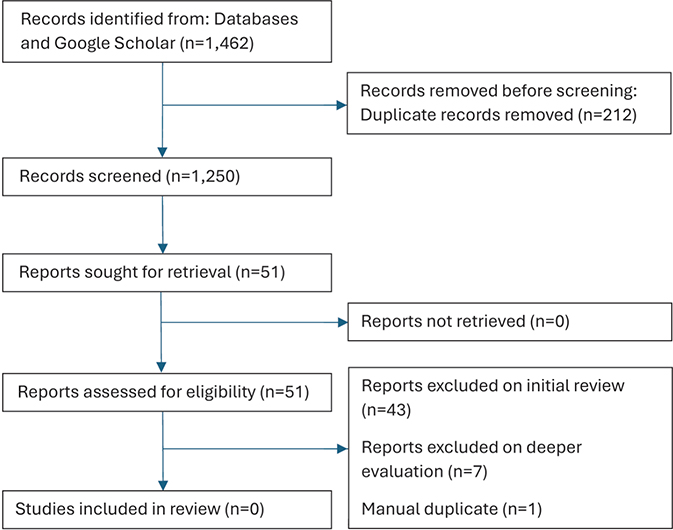
The electronic search identified 1,462 papers in total. These were uploaded into RefWorks (https://refworks.proquest.com/), after which 212 duplicates were omitted. A single further duplicate was manually identified. After the title and abstract screen, 51 papers underwent full text evaluation. Where an SR appeared promising but there was some ambiguity regarding whether it would meet the selection criteria, the papers reviewed by the SR were accessed for clarification. None of the selected papers met the selection criteria (see Fig. 1).
Explanations of exclusions
Exclusions often were due to injury occurring more than 6 months before intervention or chronic conditions being investigated, an outpatient setting for intervention delivery, no paediatric patients included or no paediatric sub-analysis possible from the text. A summary of reasons for exclusion for papers that underwent full text review is in Table II. There were 8 SRs that were initially expected to meet selection criteria and were excluded on further evaluation.
| Paper | Reference | Reason for exclusion |
| Cuello-Garcia et al., 2018* | (28) | Not inpatient rehabilitation OR No explicit subacute period intervention analysis |
| Freire et al., 2023 | (39) | Not inpatient rehabilitation OR No explicit subacute period systematic intervention analysis |
| Getz et al., 2006 | (40) | Chronic conditions/Over 6 months since injury |
| Deng et al., 2018 | (41) | Chronic conditions/Over 6 months since injury |
| Cibinello et al., 2023 | (42) | Chronic conditions/Over 6 months since injury |
| Mirkowski et al., 2019 | (43) | Chronic conditions/Over 6 months since injury |
| Laufer et al., 2011 | (44) | Chronic conditions/Over 6 months since injury |
| Ross et al., 2011# | (32) | Chronic conditions/Over 6 months since injury |
| Nguyen et al., 2021 | (45) | Chronic conditions/Over 6 months since injury |
| Parsons et al., 2009 | (46) | Chronic conditions/Over 6 months since injury OR intervention not targeted at neurorehabilitation |
| Morgan et al., 2012 | (31) | Chronic conditions/Over 6 months since injury |
| Lukens et al., 2014 | (47) | Chronic conditions/Over 6 months since injury |
| Rutkowski et al., 2020# | (25) | Chronic conditions/Over 6 months since injury |
| Getz et al., 2006* | (40) | Chronic conditions/Over 6 months since injury |
| Clapp et al., 2019 | (48) | Chronic conditions/Over 6 months since injury |
| Shen et al., 2020# | (21) | Chronic conditions/Over 6 months since injury OR Outpatient setting OR Insufficient information |
| Galvin et al., 2011 | (49) | Chronic conditions OR cannot differentiate between chronic and acquired cases |
| Jurdi et al., 2018# | (16) | Does not evaluate efficacy of interventions AND setting and chronicity unclear |
| Posadzki et al., 2013 | (50) | Only chronic OR non-neurological conditions included |
| Treurnicht Naylor et al., 2011 | (51) | Patients either chronic/injury >6 months ago OR efficacy of interventions not satisfactorily quantifiably evaluated |
| Morgan et al., 2008 | (52) | Patients either outpatients OR Chronic conditions/Over 6 months since injury |
| Lindsay et al., 2015# | (15) | Patients either outpatients OR Chronic conditions/Over 6 months since injury |
| Jones et al., 2005 | (53) | No Intervention evaluation |
| Hartman et al., 2015 | (54) | No appraisal of efficacy of intervention |
| Kaelin et al., 2021 | (55) | No appraisal of efficacy of intervention |
| Scurlock-Evans et al., 2014 | (56) | No efficacy of intervention appraisal |
| Bagagiolo et al., 2016 | (57) | No inpatient neurorehabilitation interventions in age group |
| Feng et al., 2021 | (58) | No rehabilitation intervention appraised |
| Knight et al., 2019# | (4) | No systematic review directed at efficacy of appraised interventions |
| Mahan et al., 2017 | (33) | Not inpatient setting |
| Franke et al., 2022 | (59) | Not inpatient rehabilitation |
| Bogner et al., 2022*# | (17) | Not inpatient setting |
| Stocchetti et al., 2010 | (60) | Not systematic review |
| Sturrock et al., 2017 | (61) | Oral presentation |
| Lindsay et al., 2015 | (62) | Oral presentation |
| Bragg et al., 2019 | (63) | Outpatient setting AND scoping review |
| Fuke et al., 2018 | (64) | No paediatric patients |
| Wang et al., 2019 | (65) | No paediatric patients |
| Synnot et al., 2017 | (66) | No paediatric patients |
| Cahill et al., 2020 | (67) | No paediatric patients |
| Wong et al., 2013 | (68) | No paediatric sub-analysis |
| Williamson et al., 2018 | (69) | No paediatric sub-analysis |
| Harvey et al., 2017 | (70) | No paediatric sub-analysis |
| Christie et al., 2018# | (18) | No paediatric sub-analysis OR Insufficient information |
| Lorusso et al., 2022 | (71) | No paediatric patients |
| Song et al., 2022 | (72) | No paediatric sub-analysis AND Retracted article |
| Law et al., 2018 | (73) | No paediatric sub-analysis |
| Jiang et al., 2021 | (74) | No paediatric patients |
| Glickman et al., 2010 | (75) | Only chronic conditions for paediatric papers |
| *Abstract was not available at the time of title and abstract review. #Reasons for exclusion are elaborated upon in the main body of the text. “OR” indicates when different papers or patients within a review were excluded for different reasons. |
||
Lindsay et al. (15) is an SR of interventions aimed at hospital-to-school transition. It was excluded as all reviewed papers either concerned interventions delivered as an outpatient or more than 6 months post-injury.
Jurdi et al. (16) is an SR on how game technologies are being used to improve children’s experience in hospital. It is largely descriptive regarding how game technologies are being used. It does not evaluate the efficacy of rehabilitation-relevant interventions in a way that is meaningful for this umbrella review. Information on chronicity and setting of interventions is also unclear.
Bogner et al. (17) is an SR looking at the effects on children with brain injuries’ behaviour of interventions targeted at parents. It evaluates interventions delivered online, as well as interventions traditionally associated with outpatient therapy that do not have the setting explicitly stated. Also, the time from injury when the interventions were delivered are unclear.
Christie et al. (18) is an SR looking at rehabilitation interventions for patients with encephalitis. It includes 3 papers that it reports as being focused on paediatrics. The only paediatric patient in Rao and Costa (19) was 19 years old, and as such does not meet this umbrella review’s eligibility criteria. The nature of the interventions investigated in both Tailor et al. (20) and Moorti et al. (76) are unclear both in Christie et al. and the papers themselves. No specific paediatric sub-analysis is available for Moorthi et al.
Knight et al. (4) is an SR of rehabilitation guidelines for children with both moderate and severe acquired brain injury. It reviewed whether guidelines include the presence and the quality of evidence available for recommendations. There is no systematic review of the evidence for the interventions themselves, so this paper did not meet our selection criteria. However, given some overlap in goals, further comment is made in our discussion.
Shen et al. (21) is an SR aiming to determine the effectiveness of virtual reality based paediatric traumatic brain injury rehabilitation. It included 3 papers of relevance. Tatla et al. (22) actually includes patients that meet our selection criteria, but did not meet Shen’s. This was because Shen focused on traumatic brain injury only. The patient that Shen did extract from Tatla did not meet our selection criteria as the intervention occurred over 6 months post-injury. Burdea et al. (23) reported on interventions performed in the outpatient setting. There was insufficient information available regarding Palma et al. (24) The original paper was unable to be sourced, and at time of writing the authors had not responded to a request via ResearchGate to supply it.
Rutkowski et al. (25) analysed the effectiveness of virtual reality in several fields of rehabilitation. Two paediatric patients were included, 1 with developmental coordination disorder and 1 with cerebral palsy, so were excluded due to these being chronic conditions.
A few further comments on exclusions follow.
Some other papers assessing transition to school were excluded when it was identified that all interventions took place (either explicitly or implicitly) after discharge (15, 26, 27).
Additionally, a decision was made to exclude papers that focussed on the intensive care setting where it was unclear whether the patients had been sufficiently medically stabilized to be usefully considered under a rehabilitation framework (28).
Meyling et al. (29) was identified outside of our search as being of relevance. It was not incorporated as it is a scoping review, which despite having parallel aims is not considered a systematic review (30).
DISCUSSION
This umbrella review highlights a significant gap in systematically reviewed evidence supporting inpatient neurorehabilitation interventions for paediatric patients during the subacute period following neurological injury. Our comprehensive search strategy aimed to maximize sensitivity while relying on predefined selection criteria to ensure specificity. As anticipated, this approach yielded a large number of initial results. Despite this, none of the systematic reviews identified met our selection criteria. The findings emphasize the challenges in building a robust evidence base in this field, a trend also noted in other reviews of paediatric neurorehabilitation, where evidence supporting specific interventions is frequently lacking.
Several recurrent themes emerged from our exclusion criteria. The common reasons for exclusion were interventions not being performed in the inpatient setting, interventions targeting chronic rather than subacute conditions, and reviews focused on adult patients. This pattern reflects broader issues in the literature, where paediatric-specific interventions are often not adequately studied.
Positioning our review within the wider literature
Our findings align with observations from other reviews in the field. A scoping review on subacute rehabilitation for acquired brain injury in children with some criteria overlapping with this review did not find any SRs to include. With regard to the inpatient setting, only cohort studies without concurrent controls were found (29). Other SRs struggled to find robust evidence for paediatric neurorehabilitation interventions. For example, a review on interventions for dysarthria following acquired brain injury (ABI) failed to identify studies focusing on the subacute inpatient period (31). Similarly, a review of psychosocial interventions post-ABI found no studies where interventions were delivered within 6 months of injury (32). Christie et al., discussed earlier, failed to find usable studies pertaining to paediatric encephalitis rehabilitation (18). Mahan et al., also discussed earlier, searched for prospective memory impairments and failed to find inpatient paediatric papers, as well as concluding that there is a lack of research overall relevant to their goals (33). These examples reinforce the broader trend of limited evidence available to guide clinical practice in paediatric neurorehabilitation.
The Knight et al. review of guidelines for inpatient paediatric rehabilitation further supports that weak evidence underpins current clinical recommendations. It found that many guidelines are based on expert opinion rather than empirical data, highlighting the need for more rigorous research to inform best practices (4). This issue is not confined to the inpatient setting. For example, a review of guidelines for managing mild acquired brain injury (ABI) in children similarly found that most recommendations lacked a solid evidence base, further reflecting the broader challenge of evidence generation in paediatric neurorehabilitation (34).
The reasons for the lack of SRs with positive findings cannot be conclusively determined from our results. A paucity of SRs is a contributor. However, given that reviews with overlap in scopes either failed to find relevant papers or found only low-quality evidence such as case series, the greater deficiency may be at the level of primary research. Breaking the field into domains and conducting scoping reviews may provide valuable additional insight to clarify where gaps lie.
Further potential reasons for review outcome
Paediatric neurorehabilitation is a high-complexity, low-volume field. The relative rarity of paediatric neurological injuries requiring inpatient rehabilitation may reduce both research feasibility and funding interest. Although neurological injuries constituted 71% of inpatient paediatric rehabilitation admissions in Australasia, the absolute incidence requiring such care remains low at approximately 0.9 per 100,000 population (35–37). It was not possible to obtain complete international figures. It is also possible that numbers of centres providing inpatient paediatric rehabilitation are low, limiting opportunities for admission and research. Further work is needed to determine the burden of paediatric patients who might benefit from inpatient neurorehabilitation and the numbers and capacities of facilities available internationally to provide care.
Limitations
A key limitation of this review was the exclusion of outpatient and online interventions, many of which could feasibly also be delivered in an inpatient setting. This focus was necessary to maintain the review’s scope, but future research should consider including studies where the setting is not a defining factor, to capture a broader range of relevant data. Likewise, reviewing the adult and chronic condition literature for translatable interventions was outside the scope of this review.
Practical implications and opportunities for future research
In the first instance, the extent and research level of the deficiency should be better demarcated, such as through a series of scoping reviews.
Subsequently, ideally, generating more high-quality research in the inpatient setting would provide a stronger foundation for clinical practice. However, the diverse range of conditions and severities, the lack of universal outcome measures, and the absence of consensus on discharge endpoints complicate the feasibility of conducting randomized control trials and large-scale observational studies. A key priority for future research should be achieving greater uniformity and consensus on the use of existing outcome measures across different centres. This would facilitate more consistent evaluation of interventions and enhance the comparability of study results. This calls for international collaboration.
In the adult neurorehabilitation space, there is a growing shift towards community-based care models that emphasize rehabilitation outside of inpatient settings. A recent model of care for adult rehabilitation integrates therapy-led interventions with community resources to maximize patient recovery (38). While this shift offers potential benefits, it also highlights the need for a flexible model of care in paediatric neurorehabilitation, one that may need to rely more heavily on outpatient evidence where inpatient data are insufficient. Parallel movements in paediatrics are gaining traction, with an increasing interest in optimizing hospital to school and community transitions being 1 example (15, 26, 27).
Given the challenges in generating new high-quality evidence in paediatric inpatient neurorehabilitation, it is crucial, first, to carefully consider which potentially important interventions could feasibly be studied through RCTs and high-quality observational studies. In parallel, future efforts should focus on consolidating and leveraging existing data, including evidence from outpatient and hybrid rehabilitation models. A coordinated international effort, potentially involving a consortium dedicated to paediatric neurorehabilitation research, could help to overcome some of the barriers currently limiting progress in this field.
In summary, this review highlights possible gaps in the evidence surrounding paediatric inpatient neurorehabilitation in the subacute setting. While the challenges are considerable, a combination of targeted research, multidisciplinary approaches, and reliance on emerging evidence from outpatient settings may provide a way forward. Addressing these gaps will be essential for improving clinical outcomes and optimizing the care provided to paediatric patients during this critical phase of recovery.
REFERENCES
- Curran A. Gross motor function measure (GMFM-66) trajectories in children recovering after severe acquired brain injury. Dev Med Child Neurol 2015; 57: 209–210. https://doi.org/10.1111/dmcn.12597
- World Health Organization Regional Office for Europe. FACTSHEET Sustainable Development Goals: health targets REHABILITATION. Mishra S, Huber M. Copenhagen: WHO Regional Office for Europe [cited 2024 Oct 19]. p. 1. Available from: https://www.who.int/europe/publications/i/item/WHO-EURO-2019-2384-42139-58051
- Kleim JA, Jones TA. Principles of experience-dependent neural plasticity: implications for rehabilitation after brain damage. J Speech Lang Hear Res 2008; 51. https://doi.org/10.1044/1092-4388(2008/018)
- Knight S, Takagi M, Fisher E, Anderson V, Lannin NA, Tavender E, et al. A systematic critical appraisal of evidence-based clinical practice guidelines for the rehabilitation of children with moderate or severe acquired brain injury. Arch Phys Med Rehabil 2019; 100: 159–173. https://doi.org/10.1016/j.apmr.2018.07.434
- Anderson V, Moore C. Age at injury as a predictor of outcome following pediatric head injury: a longitudinal perspective. Child Neuropsychol 1995; 1: 187–202. https://doi.org/10.1080/09297049508400224
- Anderson V, Jacobs R, Harvey AS. Prefrontal lesions and attentional skills in childhood. J Int Neuropsychol Soc 2005; 11: 817–831. https://doi.org/10.1017/s1355617705051052
- Figaji AA. Anatomical and physiological differences between children and adults relevant to traumatic brain injury and the implications for clinical assessment and care. Front Neurol 2017; 8: 685. https://doi.org/10.3389/fneur.2017.00685
- Martinuzzi A, Salghetti A, Betto S, Russo E, Leonardi M, Raggi A, et al. The International Classification of Functioning Disability and Health, version for children and youth as a road-map for projecting and programming rehabilitation in a neuropediatric hospital unit. J Rehabil Med 2010; 42:49–55. https://doi.org/10.2340/16501977-0480
- World Health Organization. International Classification of Functioning, Disability and Health: Children & Youth Version (ICF-CY). Geneva: WHO; 2007. Available from: https://apps.who.int/iris/bitstream/handle/10665/43737/9789241547321_eng.pdf
- Choi GJ, Kang H. The umbrella review: a useful strategy in the rain of evidence. Korean J Pain 2022; 35: 127–128. https://doi.org/10.3344/kjp.2022.35.2.127
- National Institute for Health and Care Research. PROSPERO: International prospective register of systematic reviews [Internet]. York: Centre for Reviews and Dissemination, University of York [cited 2024 Oct 19]. Available from: https://www.crd.york.ac.uk/prospero/
- Shea BJ, Reeves BC, Wells G, Thuku M, Hamel C, Moran J, et al. AMSTAR 2: a critical appraisal tool for systematic reviews that include randomised or non-randomised studies of healthcare interventions, or both. BMJ 2017; 358: j4008. https://doi.org/10.1136/bmj.j4008
- Whiting P, Savović J, Higgins JP, Caldwell DM, Reeves BC, Shea B, et al; ROBIS group. ROBIS: A new tool to assess risk of bias in systematic reviews was developed. J Clin Epidemiol 2016; 69: 225–234. https://doi.org/10.1016/j.jclinepi.2015.06.005
- World Health Organization. The ICF: An Overview. ICF working paper. [Internet]. Geneva: WHO; 2013 [cited 2024 Sept 3]. Available from: https://www.cdc.gov/nchs/data/icd/icfoverview_finalforwho10sept.pdf.
- Lindsay S, Hartman LR, Reed N, Gan C, Thomson N, Solomon B. A systematic review of hospital-to-school reintegration interventions for children and youth with acquired brain injury. PLoS ONE 2015; 10: e0124879. https://doi.org/10.1371/journal.pone.0124879
- Jurdi S, Montaner J, Garcia-Sanjuan F, Jaen J, Nacher V. A systematic review of game technologies for pediatric patients. Comput Biol Med 2018; 97: 89–112. https://doi.org/10.1016/j.compbiomed.2018.04.013
- Bogner J, Brenner L, Kurowski B, Malec J, Cermak CA, McCabe SA, et al. Parent interventions improve behavior after pediatric traumatic brain injury: a systematic review and meta-analysis. J Head Trauma Rehabil 2022; 37: 194–208. https://doi.org/10.1097/HTR.0000000000000713
- Christie S, Chan V, Mollayeva T, Colantonio A. Systematic review of rehabilitation intervention outcomes of adult and paediatric patients with infectious encephalitis. BMJ Open 2018; 8: e015928. https://doi.org/10.1136/bmjopen-2017-021421
- Rao N, Costa JL. Rehabilitation of three patients after treatment for herpes encephalitis. Am J Phys Med Rehabil 1991; 70: 73–75. https://doi.org/10.1097/00002060-199104000-00005
- Tailor YI, Suskauer SJ, Sepeta LN, Ewen JB, Dematt EJ, Trovato MK, et al. Functional status of children with encephalitis in an inpatient rehabilitation setting: a case series. J Pediatr Rehabil Med 2013; 6: 163–173. https://doi.org/10.3233/PRM-130248
- Shen J, Johnson S, Chen C, Xiang H. Virtual reality for pediatric traumatic brain injury rehabilitation: a systematic review. Am J Lifestyle Med 2020; 14: 47–58. https://doi.org/10.1177/1559827619849034
- Tatla SK, Radomski A, Cheung J, Maron M, Jarus T. Wii-habilitation as balance therapy for children with acquired brain injury. Dev Neurorehabil 2014; 17: 1–15. https://doi.org/10.3109/17518423.2013.832742
- Burdea GC, Jain A, Rabin B, Pellosie R, Golomb M. Long-term hand tele rehabilitation on the PlayStation 3: benefits and challenges. Conf Proc IEEE Eng Med Biol Soc 2011; 2011: 1835–1838. https://doi.org/10.1109/IEMBS.2011.6090541
- Palma P, McFarling E, Flynn S, Romero T, Van den Eynde E, Sholas M. Is virtual reality gaming an effective adjunct to traditional therapy in children and adolescents with traumatic brain injury? J Head Trauma Rehabil 2011; 26: 409–410. https://doi.org/10.1097/HTR.0b013e318224ebc7
- Rutkowski S, Kiper P, Cacciante L, Mazurek J, Turolla A. Use of virtual reality-based training in different fields of rehabilitation: a systematic review and meta-analysis. J Rehabil Med 2020; 52: jrm00121. https://doi.org/10.2340/16501977-2755
- Hartman LR, Duncanson M, Farahat SM, Lindsay S. Clinician and educator experiences of facilitating students’ transition back to school following acquired brain injury: a qualitative systematic review. Brain Inj 2015; 29: 1225–1239. https://doi.org/10.3109/02699052.2015.1045043
- Lindsay S, Hartman LR, Reed N, Gan C, Thomson N, Solomon B. Transition from hospital to school following pediatric ABI: a systematic review of interventions. Arch Phys Med Rehabil 2015. Available from: https://www.academia.edu/107707840/Transition_from_Hospital_to_School_Following_Pediatric_ABI_A_Systematic_Review_of_Interventions?uc-sb-sw=40061250
- Cuello-Garcia C, Mai SHC, Simpson R, Al-Harbi S, Choong K. Early mobilization in critically ill children: a systematic review. J Pediatr 2018; 203: 34–39. https://doi.org/10.1016/j.jpeds.2018.07.039
- Meyling CG, Verschuren O, Rentinck IR, Engelbert RHH, Gorter JW. Physical rehabilitation interventions in children with acquired brain injury: a scoping review. Dev Med Child Neurol 2022; 64: 40–48. https://doi.org/10.1111/dmcn.14997
- Munn Z, Peters MDJ, Stern C, Tufanaru C, McArthur A, Aromataris E. Systematic review or scoping review? Guidance for authors when choosing between a systematic or scoping review approach. BMC Med Res Methodol 2018; 18: 143. https://doi.org/10.1186/s12874-018-0611-x
- Morgan AT, Vogel AP. Intervention for dysarthria associated with acquired brain injury in children and adolescents. Cochrane Database Syst Rev 2012; 10: CD009456. https://doi.org/10.1002/14651858.CD009456.pub2
- Ross KA, Dorris L, McMillan T. A systematic review of psychological interventions to alleviate cognitive and psychosocial problems in children with acquired brain injury. Dev Med Child Neurol 2011; 53: 692–701. https://doi.org/10.1111/j.1469-8749.2011.03973.x
- Mahan S, Rous R, Adlam A. Systematic review of neuropsychological rehabilitation for prospective memory deficits as a consequence of acquired brain injury. J Int Neuropsychol Soc 2017; 23: 254–265. https://doi.org/10.1017/S1355617716001065.
- Peloso PM, Carroll LJ, Cassidy JD, Borg J, von Holst H, Holm L, et al. Critical evaluation of the existing guidelines on mild traumatic brain injury. J Rehabil Med 2004; 43: 106–112. https://doi.org/10.1080/16501960410023868.
- Australasian Rehabilitation Outcomes Centre (AROC). AROC State of Nations Report: The state of rehabilitation in Australia 2023. Wollongong, Australia: AROC, University of Wollongong; 2023. Available from: https://aos.aroc.uow.edu.au/AOS/DataVis/ViewDataVis/18?token=public.
- Australian Bureau of Statistics (ABS). National, state and territory population – latest release [Internet]. Canberra: ABS; 2024 Dec 12 [cited 2025 Mar 1]. Available from: https://www.abs.gov.au/statistics/people/population/national-state-and-territory-population/latest-release
- Stats NZ. 2023 Census population counts (by ethnic group, age, and Māori descent) and dwelling counts [Internet]. Wellington: Stats NZ; 2024 May 29 [cited 2025 Mar 1]. Available from: https://www.stats.govt.nz/information-releases/2023-census-population-counts-by-ethnic-group-age-and-maori-descent-and-dwelling-counts/
- NHS England. A new community rehabilitation and reablement model [Internet]. London: NHS England; 2023 [cited 2025 Mar 1]. Available from: https://www.england.nhs.uk/wp-content/uploads/2023/09/PRN00761ii-a-new-community-rehabilitation-and-reablement-model.pdf
- Freire GC, Beno S, Yanchar N, Weiss M, Stang A, Stelfox T, et al. Clinical practice guideline recommendations for pediatric multisystem trauma care: a systematic review. Ann Surg 2023 1; 278: 858-864. https://doi.org/10.1097/SLA.0000000000005966
- Getz M, Hutzler Y, Vermeer A. Effects of aquatic interventions in children with neuromotor impairments: a systematic review of the literature. Clin Rehabil 2006; 20: 927–936. https://doi.org/10.1177/0269215506070693
- Deng Y, Dong Y, Liu Y, Zhang Q, Guan X, Chen X, et al. A systematic review of clinical studies on electrical stimulation therapy for patients with neurogenic bowel dysfunction after spinal cord injury. Medicine (Baltimore) 2018; 97: e12778. https://doi.org/10.1097/MD.0000000000012778
- Cibinello FU, Caroliny de Jesus Neves J, Janeiro Valenciano P, Shizuko Fujisawa D, Augusto Marçal Camillo C. Effects of Pilates in children and adolescents: a systematic review and meta-analysis. J Bodyw Mov Ther 2023; 35: 400–412. https://doi.org/10.1016/j.jbmt.2023.04.028
- Mirkowski M, McIntyre A, Faltynek P, Sequeira N, Cassidy C, Teasell R. Nonpharmacological rehabilitation interventions for motor and cognitive outcomes following pediatric stroke: a systematic review. Eur J Pediatr 2019; 178: 433–454. https://doi.org/10.1007/s00431-019-03350-7
- Laufer Y, Weiss PL. Virtual reality in the assessment and treatment of children with motor impairment: a systematic review. J Phys Ther Educ 2011; 25: 59–71. https://doi.org/10.1097/00001416-201110000-00011
- Nguyen L, Cross A, Rosenbaum P, Gorter JW. Use of the International Classification of Functioning, Disability and Health to support goal-setting practices in pediatric rehabilitation: a rapid review of the literature. Disabil Rehabil 2021; 43: 884–894. https://doi.org/10.1080/09638288.2019.1643419
- Parsons TD, Rizzo AA, Rogers S, York P. Virtual reality in paediatric rehabilitation: a review. Dev Neurorehabil 2009; 12: 224–238. https://doi.org/10.1080/17518420902991719
- Lukens CT, Silverman AH. Systematic review of psychological interventions for pediatric feeding problems. J Pediatr Psychol 2014; 39: 903–917. https://doi.org/10.1093/jpepsy/jsu040
- Clapp LA, Taylor EP, Di Folco S, Mackinnon VL. Effectiveness of art therapy with pediatric populations affected by medical health conditions: a systematic review. Arts Health 2019; 11: 183–201. https://doi.org/10.1080/17533015.2018.1443952
- Galvin J, McDonald R, Catroppa C, Anderson V. Does intervention using virtual reality improve upper limb function in children with neurological impairment: a systematic review of the evidence. Brain Inj 2011; 25: 435–442. https://doi.org/10.3109/02699052.2011.558047
- Posadzki P, Lee MS, Ernst E. Osteopathic manipulative treatment for pediatric conditions: a systematic review. Pediatrics 2013; 132: 140–152. https://doi.org/10.1542/peds.2012-3959
- Treurnicht Naylor K, Kingsnorth S, Lamont A, McKeever P, Macarthur C. The effectiveness of music in pediatric healthcare: a systematic review of randomized controlled trials. Evid Based Complement Alternat Med 2011; 2011: 464759. https://doi.org/10.1155/2011/464759
- Morgan AT, Vogel AP. Intervention for dysarthria associated with acquired brain injury in children and adolescents. Cochrane Database Syst Rev 2008; 2008: CD006279. https://doi.org/10.1002/14651858.CD006279.pub2
- Jones P, Drummond A, Vella K. Occupational therapy for children with acquired brain injury: a survey of current practice. Br J Occup Ther 2007; 70: 154–160. https://doi.org/10.1177/030802260707000404
- Hartman LR, Duncanson M, Farahat SM, Lindsay S. Clinician and educator experiences of facilitating students’ transition back to school following acquired brain injury: a qualitative systematic review. Brain Inj 2015; 29: 1387–1399. https://doi.org/10.3109/02699052.2015.1071431
- Kaelin VC, Valizadeh M, Salgado Z, Parde N, Khetani MA. Artificial intelligence in rehabilitation targeting the participation of children and youth with disabilities: a scoping review. J Med Internet Res 2021; 23: e25745. https://doi.org/10.2196/25745
- Scurlock-Evans L, Upton P, Upton D. Evidence-based practice in physiotherapy: a systematic review of barriers, enablers and interventions. Physiotherapy 2014; 100: 208–219. https://doi.org/10.1016/j.physio.2014.03.001
- Bagagiolo D, Didio A, Sbarbaro M, Priolo CG, Borro T, Farina D. Osteopathic manipulative treatment in pediatric and neonatal patients and disorders: clinical considerations and updated review of the existing literature. Am J Perinatol 2016; 33: 1050–1054. https://doi.org/10.1055/s-0036-1586113.
- Feng Y, Lin Y, Zhang N, Jiang X, Zhang L. Effects of animal-assisted therapy on hospitalized children and teenagers: a systematic review and meta-analysis. J Pediatr Nurs 2021; 60: 11–23. https://doi.org/10.1016/j.pedn.2021.01.020.
- Franke H, Franke JD, Fryer G. Effectiveness of osteopathic manipulative treatment for pediatric conditions: a systematic review. J Bodyw Mov Ther 2022; 31: 113–133. https://doi.org/10.1016/j.jbmt.2022.03.013
- Stocchetti N, Conte V, Ghisoni L, Canavesi K, Zanaboni C. Traumatic brain injury in pediatric patients. Minerva Anestesiol 2010; 76: 1052–1059.
- Sturrock B, Lees-Deutsch L, Varley D, Phillips S. Factors affecting functional outcome during inpatient rehabilitation for children with traumatic brain injury: a literature review. Physiotherapy 2017; 103: e48–e49. https://doi.org/10.1016/j.physio.2017.11.215
- Lindsay S, Hartman LR, Reed N, Gan C, Thomson N, Solomon B. Transition from hospital to school following pediatric ABI: a systematic review of interventions. Arch Phys Med Rehabil 2015 [Conference Abstract]. Presented at 2015 American Congress of Rehabilitation Medicine Annual Conference (ACRM); 2015; Dallas, TX, USA.
- Bragg E, Pritchard-Wiart L. Wheelchair physical activities and sports for children and adolescents: a scoping review. Phys Occup Ther Pediatr 2019; 39: 567–579. https://doi.org/10.1080/01942638.2019.1609151
- Fuke R, Hifumi T, Kondo Y, Hatakeyama J, Takei T, Yamakawa K, et al. Early rehabilitation to prevent postintensive care syndrome in patients with critical illness: a systematic review and meta-analysis. BMJ Open 2018; 8: e019998. https://doi.org/10.1136/bmjopen-2017-019998
- Wang M, Pei ZW, Xiong BD, Meng XM, Chen XL, Liao WJ. Use of Kinesio taping in lower-extremity rehabilitation of post-stroke patients: a systematic review and meta-analysis. Complement Ther Clin Pract 2019; 35: 22–32. https://doi.org/10.1016/j.ctcp.2019.01.008
- Synnot A, Chau M, Pitt V, O’Connor D, Gruen RL, Wasiak J, et al. Interventions for managing skeletal muscle spasticity following traumatic brain injury. Cochrane Database Syst Rev 2017; 11: CD008929. https://doi.org/10.1002/14651858.CD008929.pub2
- Cahill LS, Carey LM, Lannin NA, Turville M, Neilson CL, Lynch EA, et al. Implementation interventions to promote the uptake of evidence-based practices in stroke rehabilitation. Cochrane Database Syst Rev 2020; 10: CD012575. https://doi.org/10.1002/14651858.CD012575.pub2
- Wong V, Cheuk DK, Lee S, Chu V. Acupuncture for acute management and rehabilitation of traumatic brain injury. Cochrane Database Syst Rev 2011; 5: CD007700. https://doi.org/10.1002/14651858.CD007700.pub2
- Williamson D, Frenette AJ, Burry LD, Perreault M, Charbonney E, Lamontagne F, et al. Pharmacological interventions for agitated behaviours in patients with traumatic brain injury: a systematic review. BMJ Open 2019; 9: e029604. https://doi.org/10.1136/bmjopen-2019-029604
- Harvey LA, Katalinic OM, Herbert RD, Moseley AM, Lannin NA, Schurr K. Stretch for the treatment and prevention of contracture: an abridged republication of a Cochrane systematic review. J Physiother 2017; 63: 67–75. https://doi.org/10.1016/j.jphys.2017.02.014
- Lorusso M, Tagliamonte NL, Tramontano M, Fresch A, Granelli G, Smania N, et al. Technology-assisted balance assessment and rehabilitation in individuals with spinal cord injury: a systematic review. NeuroRehabilitation 2022; 51: 213–230. https://doi.org/10.3233/NRE-220060
- Song X, Zhang X, Weng Y, Liu Y, Shan Q, Chen W, et al. Effects of acupuncture combined with biofeedback therapy on limb motor rehabilitation in patients with acute stroke: systematic review and meta-analysis. Biomed Res Int 2022; 2022: 9582077. https://doi.org/10.1155/2022/9582077
- Law YM, Feng LF, Liang Q, Meng LJ, Shen P, Yu SJ, et al. Effect of exercise on physical recovery of people with locked-in syndrome after stroke: what do we know from the current evidence? A systematic review. Cerebrovasc Dis Extra 2018; 8: 90–95. https://doi.org/10.1159/000490312
- Jiang LH, Zhao LJ, Liu Y, Zhang H, Qi R. Effectiveness of motor imagery training for lower extremity motor function in patients with stroke: a systematic review and meta-analysis. Arch Phys Med Rehabil 2021; 102: e111–e112. https://doi.org/10.1016/j.apmr.2021.07.453
- Glickman LB, Geigle PR, Paleg GS. A systematic review of supported standing programs. J Pediatr Rehabil Med 2010; 3: 197–213. https://doi.org/10.3233/PRM-2010-0129
- Moorthi S, Schneider WN, Dombovy ML. Rehabilitation outcomes in encephalitis: a retrospective study 1990–1997. Brain Inj 1999; 13: 139–146. https://doi.org/10.1080/026990599121646